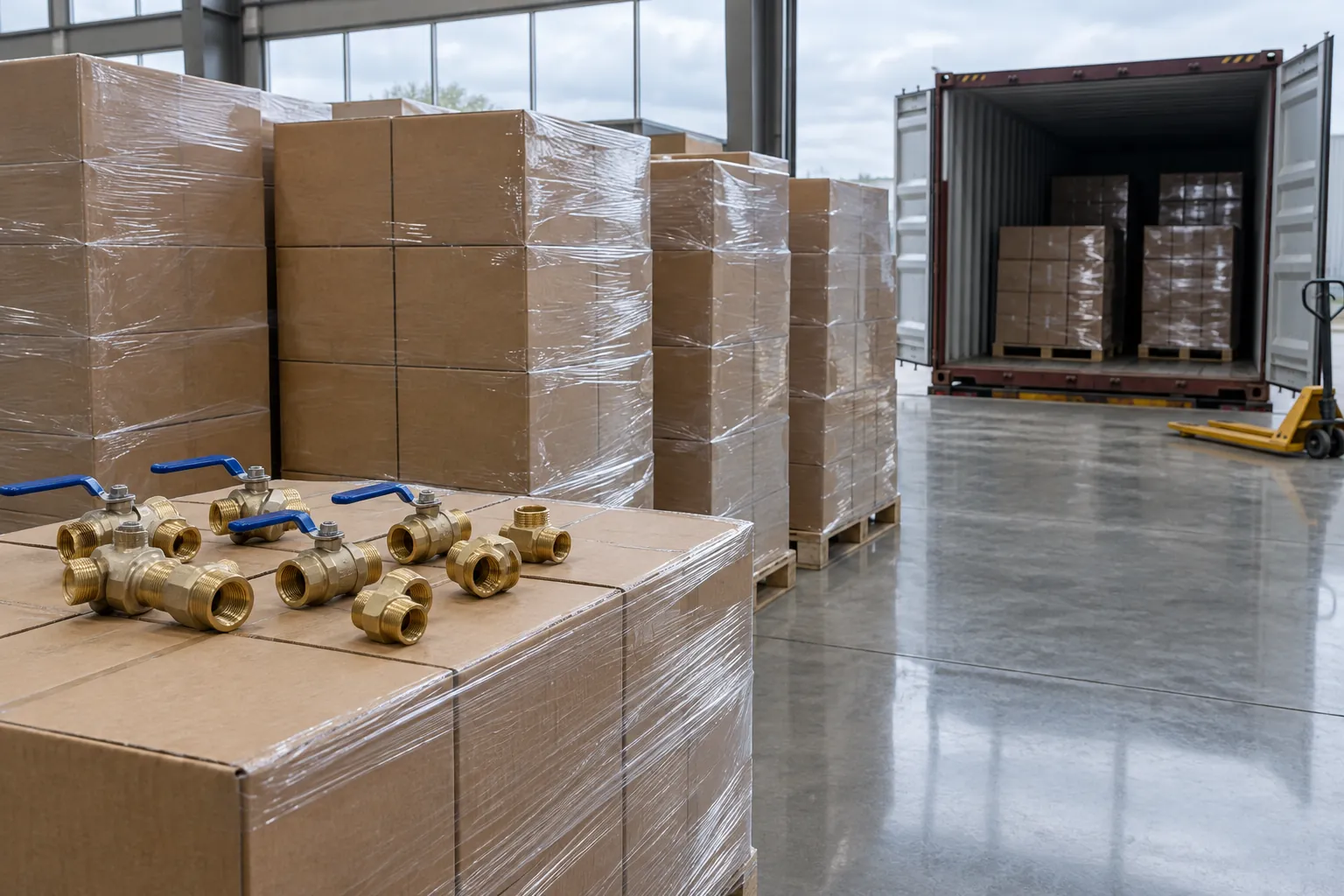
A container of brass valves clears customs in Long Beach. The packing list holds three 2-inch main gate valves, a box of hose bibbs, two dozen shower valves, and the rest potable-branch fittings. Which lines needed a lead-free certificate before loading?
Section 1417 of the Safe Drinking Water Act answers it, at 42 U.S.C. §300g-6, with the EPA’s regulation under it at 40 CFR part 143, subpart B. Federal law reaches every pipe, fitting and fixture introduced into US commerce for potable use. It exempts two blocks named in the statute, plus a third the EPA added in its own regulation. What decides the block is the product’s use, not the description on the invoice.
Read it wrong and the exposure is not a held shipment: the EPA puts the maximum civil penalty at $71,545 for each day a violation continues.
Key Takeaways
- “Lead free” is two numbers: 0.2 percent lead in solder and flux, and a weighted average of 0.25 percent on wetted surfaces. Both applied from 4 January 2014.
- Two prohibitions run in parallel. The commerce ban has one statutory exception: a pipe used in manufacturing or industrial processing. Not a fitting, not a valve.
- The exemption list has three blocks. The third one, at 40 CFR §143.16(c), exists only in the EPA regulation and covers sump pumps, eyewash devices and fire suppression sprinklers.
- The “2 inches in diameter or larger” qualifier applies to water distribution main gate valves alone. The EPA settles that with a parenthesis the statute does not have.
- Third-party certification has been enforceable since 1 September 2023. Self-certification is open only to makers with fewer than 10 employees, or to custom fabricated products.
- NSF/ANSI 61 alone proves nothing about lead content. Annex G moved out to NSF/ANSI 372 in 2010 and was retired from 61 in October 2013.
At 2:39 NSF defines a listing agency — the accredited body the federal rule means.

Two Prohibitions, Not One: What You Install and What You Import
Section 1417 bans two acts, and mixing them up is how supplier and buyer argue past each other. The first ban is on use. Nobody may use product that is not lead free in the installation or repair of a public water system, or of “any plumbing in a residential or nonresidential facility providing water for human consumption”. Nonresidential sits in the text: a school and a factory canteen are covered like a house. The only carve-out is a leaded joint repairing cast iron pipe.
The second ban is on supply. Section 1417(a)(3) makes it unlawful to introduce into commerce any pipe, fitting or fixture that is not lead free, “except for a pipe that is used in manufacturing or industrial processing”. Read that exception closely: it says a pipe, so a non-compliant industrial valve has no shelter, and 40 CFR §143.15(a) repeats it unchanged. Nor does the duty stop at the factory gate: §143.10(a) reaches “manufacturers, importers, wholesalers, distributors, re-sellers, and retailers”. If you are the importer of record, the obligation is yours.
Lead free is defined identically at §300g-6(d) and 40 CFR §143.12: 0.2% lead in solder and flux, and a weighted average of 0.25% across wetted surfaces. The weighting runs component by component, each scaled by its share of total wetted surface area. One clause catches suppliers out. Where lead content is quoted as a range, 40 CFR §143.12(b) says “the maximum content of the range must be used”. A datasheet band is read at its top.
The Exemption List Has Three Blocks, and the EPA Wrote the Third
Block A is a use test, not a product list. Section 1417(a)(4)(A) exempts pipes, fittings and fixtures, “including backflow preventers”, used exclusively for nonpotable service. Exclusively does the work: a valve that can serve either duty does not qualify because most of its installations are irrigation.
Block B is a closed list of ten named products in §1417(a)(4)(B), and its size qualifier is the most misquoted clause in the section. The sentence leaves it unclear whether “that are 2 inches in diameter or larger” limits the whole list or only the last item. The EPA settled it: 40 CFR §143.16(b) puts the size condition in a parenthesis attached to water distribution main gate valves alone. A 1-inch shower valve is exempt. A 1-inch main gate valve is not.
Fire hydrants joined late, inserted by Congress on 20 December 2013, fifteen days before the section applied.
Block C has no statutory parent. Its seven products live only in 40 CFR §143.16(c); none of those words appears in §1417(a)(4). Buyers working from the statute alone either reject a compliant supplier over an eyewash line that never needed certifying, or buy certification nobody owed.

| Exemption block and authority | Products it covers | Condition that must hold | Verdict for the PO line |
|---|---|---|---|
| Block A, use based. §1417(a)(4)(A); 40 CFR §143.16(a) | Industrial, irrigation and outdoor watering lines; backflow preventers | Used exclusively for nonpotable service, evidenced by label, incompatibility or marketing | Exempt only if you hold the evidence; file it with the entry |
| Block B, ten named products. §1417(a)(4)(B); 40 CFR §143.16(b) | Toilets, bidets, urinals, fill valves, flushometer valves, tub fillers, shower valves, fire hydrants, service saddles | Main gate valves qualify only at 2 inches diameter or larger | Exempt by name; no lead-free certificate owed |
| Block C, regulation only. 40 CFR §143.16(c) | Clothes washers, drench showers, eyewash devices, fire sprinklers, steam dryers, sump pumps | None; the block is categorical and absent from the statute | Exempt; do not buy certification for these lines |
Three Tests to Run Against a Purchase Order Line
Scope is decided line by line against the 0.25% limit, and three questions settle each. Blocks B and C are categorical, so a product-name match ends it. Block A is not. It asks what the product will be used for, and the answer must be exclusive.
- Is it a product the rule defines? The EPA’s fixture definition at 40 CFR §143.11 is wider than the trade’s. It names drinking water coolers, fountains, bottle fillers and dishwashers. It names plumbed-in devices such as point-of-use treatment units, coffee makers and refrigerator ice dispensers. And it names “water heaters, water meters, water pumps, and water tanks, unless such fixtures are not used for potable uses”. A water meter is a fixture here; most purchasing systems file it as an instrument.
- Which block covers it, and does the condition hold? Work down Table 1 and record the block letter against the line. A block B or block C match ends the question. A block A claim starts the next one.
- What evidence do you hold for exclusive nonpotable use? The EPA gives three routes at §143.16(a). A clear label on the item, package or tag saying something like “Not for use with water for human consumption”. Or physical incapability of use in potable service. Or plain identification and marketing solely for a non-water duty: air, chemicals, hydraulic fluid, refrigerant, gas. A supplier’s verbal assurance is not one of the three.
Check how far potable use stretches before calling a line exempt. Section 143.11 defines it as providing water for human ingestion, “such as for drinking, cooking, food preparation, dishwashing, teeth brushing, or maintaining oral hygiene”. Teeth brushing decides bathroom lines. It is why brass fittings feeding a lavatory branch are potable-use products, and why calling a bathroom group nonpotable is the commonest scoping error on a mixed order. For the alloy side of the same limit, see our guide to lead-free brass fittings.
What the Federal Rule Requires You to Hold on File
The EPA’s Lead Free Rule was published at 85 FR 54235 on 1 September 2020, effective that 1 October, but the certification duty ran on a later clock. Under 40 CFR §143.19(a), products inside the 0.25% limit must be certified “by September 1, 2023, or prior to product introduction into commerce, whichever occurs later”. The documentation behind it is kept “for at least 5 years from the date of the last sale”. Three things are carved out:
- components of an assembled product that is itself lead-free certified;
- direct replacement parts whose wetted-surface lead content is no worse than the original part;
- dishwashers, which §143.19(a)(3) excludes outright.
Self-certification exists and it is narrow. Section 143.19(c)(1) opens it to manufacturers with fewer than 10 employees, counted across the entity and all affiliates over the latest 12 calendar months, and to importers buying from one. Cross 10 employees and you have 1 year to obtain third-party certification. Section 143.19(c)(2) covers custom fabricated products at any size: one-offs with no UPC and no catalogue number.
What a valid certificate of conformity contains
A self-certification is a defined document rather than a supplier letter. Sections 143.19(d) to (g) require all of the following:
- a signature from a responsible corporate officer, general partner or proprietor, or their authorised representative;
- publication on a United States website with continuing public access, or delivery with the product to the end-use installer;
- English text carrying the entity name, street and mailing address, phone and email, plus the foreign manufacturer’s contact details for imported goods;
- a product listing with model names and numbers, and an attestation both of compliance and of eligibility to self-certify;
- a statement of how conformance was verified, with the calculation records held at a primary place of business inside the United States.
Ask for that last line first. A certificate that never says how the lead content was determined is telling you nothing was. Cost is rarely why a supplier stalls: the EPA put a first third-party certification at a composite $6,000 per product family, and a family covers one material formulation and similar configurations. Set that against the EPA compliance advisory: as of 8 January 2025 a person may be liable for a maximum civil penalty of $71,545 for each day a violation occurs. Two days of exposure buys the certificate.
What to ask any supplier, including us
- Which certification body issued the listing, what the certificate number is, and when it expires.
- Whether the listing is third-party or a self-certification under §143.19(c), and on which of the two grounds.
- The scope line of the certificate, checked against the exact part numbers on your order rather than the product family name.
- How the weighted average was calculated, and whether any quoted alloy range was taken at its maximum.
- For any line you are treating as exempt, which block it sits in and what evidence of exclusive nonpotable use exists.
What We Check on a Lead-Free Order, and Where We Stop
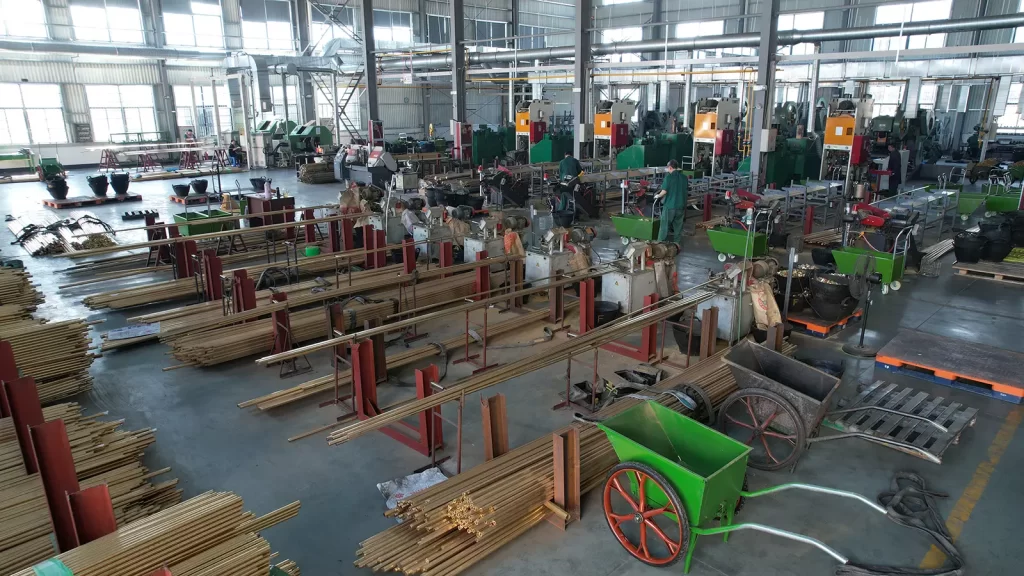
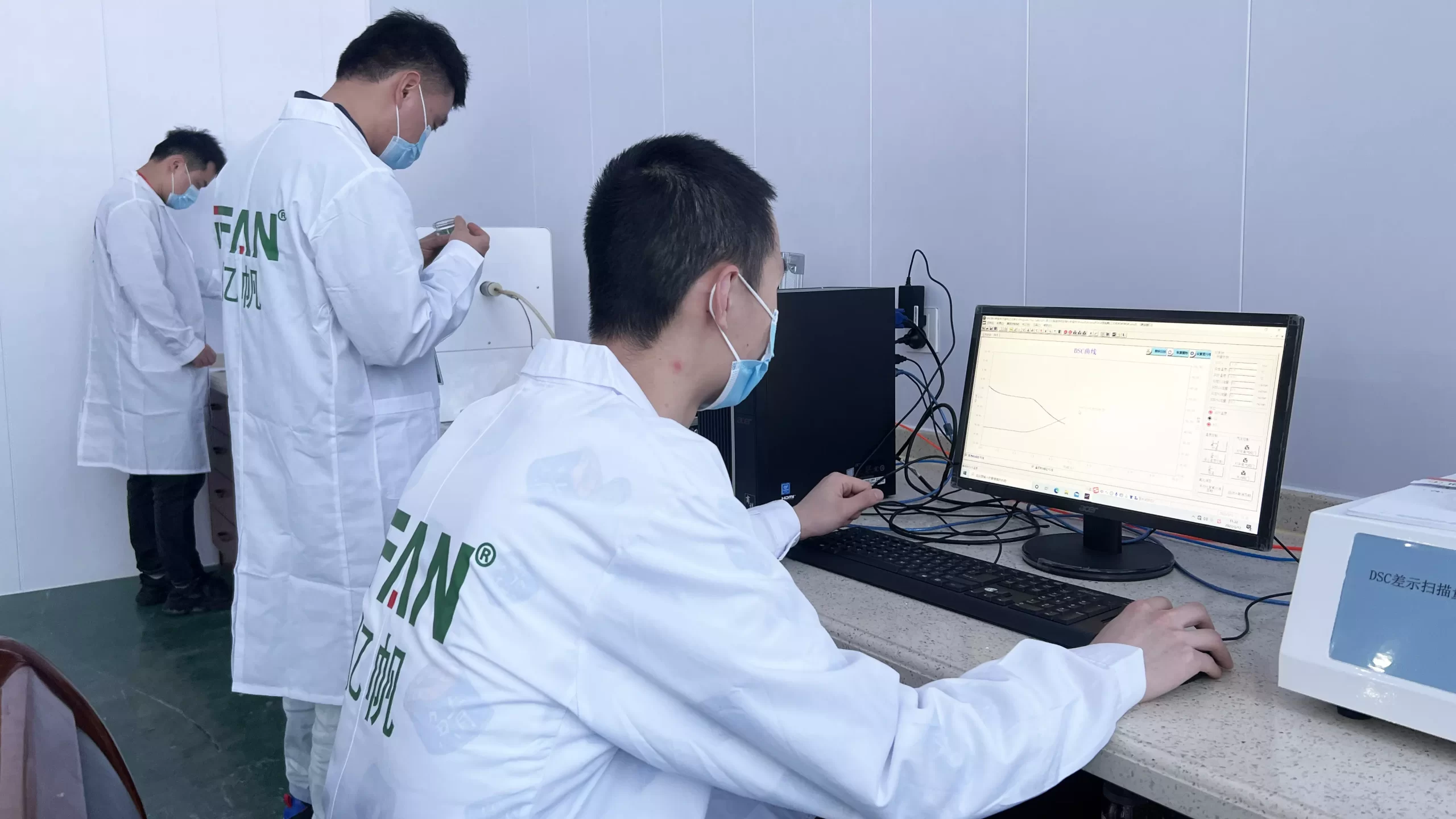
IFAN makes PPR, PEX, HDPE, PVC, PPH and brass lines in one 120,000 m² plant. This page describes the law, not our listings, and these are the limits we hold to:
- We will not call a product certified to the 0.25% limit without a certificate number, an issuing body and an expiry date you can check against that body’s own listing.
- We will not read a state exemption list back to you as a federal defence, because the two govern different acts.
- We mark each purchase-order line potable or nonpotable in writing before quoting, so an exemption claim sits on the order rather than in an email.
- We do not take an alloy range at its midpoint, because 40 CFR §143.12(b) requires the maximum of the range.
Why NSF/ANSI 372 Is Not Annex G, and Why a 61 Mark Alone Proves Nothing
The commonest document failure on a lead-free order is a certificate for the wrong question. NSF/ANSI/CAN 61 evaluates what leaches out of a component; NSF/ANSI/CAN 372 measures how much lead is in it. A product can pass 61 and still sit outside the 0.25% limit, so a bare 61 certificate settles nothing about content. Our page on NSF 61 certification sets out what that standard does test.
The chronology matters because old marks still circulate on datasheets:
- December 2008 — NSF introduces Annex G to NSF/ANSI 61, a weighted-average lead content procedure for the 0.25% requirement.
- 2010 — those procedures are moved out of Annex G into a standalone standard, NSF/ANSI 372.
- October 2013 — Annex G is retired from NSF/ANSI 61 altogether.
- 2019 — 60 and 61 are renamed NSF/ANSI/CAN to record their acceptance as national standards of Canada.
So 372 is not a companion to Annex G. It is Annex G, lifted out and republished, and the EPA describes the same sequence in its 2020 preamble. The scopes differ too. NSF states that 372 addresses lead content only, that most regulations also want a leaching standard alongside it, and that 372 reaches products outside the scope of 61. Maryland’s code says it in code language, requiring components within the scope of NSF 61 to comply with “NSF 61 and NSF 372”, and components outside it to comply with 372.
The federal rule names no mandatory standard. 40 CFR §143.11 defines an accredited third party certification body as one ANSI accredits to certify to the 0.25% weighted average, “such as certification to the NSF/ANSI 372 standard”. Eight are named in the 2020 preamble, among them NSF International, CSA Group, IAPMO R&T, Intertek and UL. Model codes go further: the 2018 International Plumbing Code requires fittings, valves and faucets supplying drinking or cooking water to comply with NSF/ANSI 372. For orders also shipping to the United Kingdom, our WRAS versus NSF comparison covers that split.
State Overlays: Where the Federal Floor Caught Up and Where It Did Not
California arrived first. Health and Safety Code §116875 became operative on 1 January 2010 with the two numbers the federal statute later adopted, via AB 1953 (Stats. 2006, Ch. 853) and a 2008 amendment. The EPA’s 2020 preamble records that California’s definition “was the basis of the RLDWA lead free definition”, and on 4 January 2014 the federal limit matched it. California is no longer the stricter limit, and a datasheet saying so has not read the 2014 change.
What California still does differently is proof. Section 116875(g)(1) requires covered products to “be certified by an independent American National Standards Institute (ANSI) accredited third party”, with no headcount or custom-fabrication exception of the kind at 40 CFR §143.19(c). A factory of 6 employees that may self-certify into the wider United States may not self-certify into California.
Vermont and Louisiana went opposite ways. Act 193 asks a Vermont seller only for a reasonable basis to believe, while Louisiana’s Act 362 wrote an NSF/ANSI 372 listing into the rule itself.
Maryland, and why a state exemption is not a federal defence
Maryland is the one that catches manufacturers. COMAR 09.20.01.05.B(2) bars platings, coatings and acid wash from meeting the 0.25% weighted average at all. The federal rule folds the coating into the arithmetic instead. 40 CFR §143.12(c) requires the maximum lead content of both the coating and the alloy in the calculation, whatever that measured maximum turns out to be. A barrier plating that passes federally can still fail the Maryland code.
Maryland also publishes a longer not-required list: lavatory faucets in public restrooms, hose bibbs, laundry and service sink faucets, the supply to dishwashers. None appear in §1417(a)(4) or 40 CFR §143.16.
The two documents govern different acts. COMAR 09.20.01 is the Maryland State Plumbing Code, reaching installation inside Maryland; the federal rule reaches introduction into commerce nationwide. Treat a state exemption as a federal defence and you have relied on a rule never addressed to you. Section 1417(b)(1) does hand the installation ban to the states, backed by up to 5% of their program grants. The commerce ban stays federal.
| Jurisdiction and authority | Date the 0.25 percent rule applied | Third-party certificate required | What still differs from the federal rule |
|---|---|---|---|
| United States. 42 U.S.C. §300g-6; 40 CFR part 143 subpart B | 4 January 2014 | Yes, from 1 September 2023, with two self-certification routes | Baseline for this table |
| California. Health and Safety Code §116875 | 1 January 2010 | Yes, ANSI-accredited, with no self-certification route | Two-tier definition; only three products excluded from its commerce ban |
| Vermont. Act 193 | 1 January 2010 | No; the seller needs a reasonable basis to believe | Bites on sale into the state rather than installation |
| Louisiana. Act 362; LAC Title 51 | 1 January 2013 | Yes; an NSF/ANSI 372 listing is named in the rule | Names the standard, not only the limit |
| Maryland. COMAR 09.20.01.05 | Plumbing code regulation adopted 2 January 2017 | Through compliance with NSF 61 and NSF 372 | Platings and coatings barred; a longer not-required list |
Conclusión
Work the order, not the standard. Pull the line list, mark every item conveying water anyone might drink, cook with or brush teeth with, and treat the rest as in scope until a block covers it. For each exempt line, record the block and the condition; that note is what an inspector asks for.
Then ask every supplier, including us, for the certificate saying how the weighted average was calculated and who accredited the checking body. Put that into the specification stage, as our guide to working with a brass valve manufacturer sets out.
One boundary. This is sourcing guidance, not legal advice, and four state texts are no fifty-state survey. Read the current text for your destination state first. Europe runs a separate regime under the EU Drinking Water Directive.
Frequently Asked Questions
Does the lead-free rule apply to importers or only to manufacturers?
Both. 40 CFR §143.10(a) applies the subpart to any person who introduces these products into commerce, naming manufacturers, importers, wholesalers, distributors, re-sellers and retailers. Section 143.11 defines an importer as anyone introducing product entering the United States.
Are toilets and urinals really exempt from the lead-free requirement?
Yes. Section 1417(a)(4)(B) names toilets, bidets, urinals, fill valves, flushometer valves, tub fillers, shower valves, fire hydrants and service saddles, plus water distribution main gate valves 2 inches in diameter or larger. State plumbing codes may still reach them.
When did the 0.25 percent lead limit take effect?
On 4 January 2014. The Reduction of Lead in Drinking Water Act was enacted on 4 January 2011, and its section 2(b) delayed the new definition and the exemption list until 36 months after enactment.
Does NSF/ANSI 61 certification mean a product is lead free?
No. NSF/ANSI/CAN 61 evaluates what leaches from a component; NSF/ANSI/CAN 372 evaluates lead content against the 0.25 percent weighted average. Annex G, which once carried the content procedure inside 61, was retired from that standard in October 2013.
Can my supplier self-certify instead of using a third-party body?
Only in two cases under 40 CFR §143.19(c): a manufacturer with fewer than 10 employees across all affiliates, or a custom fabricated product with no UPC and no catalogue listing. Everything else needs an ANSI-accredited third party.
Is California’s lead limit stricter than the federal limit?
Not since 4 January 2014. California reached 0.25 percent on 1 January 2010 and the federal definition later adopted the same figure. California still differs on proof, because Health and Safety Code §116875(g)(1) allows no self-certification route.


 Español
  English
  Français
  Русский
Comentarios recientes