Conocimientos

Which Plumbing Products Must Be Lead-Free Under SDWA 1417: The Statutory Exemptions, State Overlays and Why NSF/ANSI 372 Is Not Annex G

A container of brass valves clears customs in Long Beach. The packing list holds three 2-inch main gate valves, a box of hose bibbs, two dozen shower valves, and the rest potable-branch fittings. Which lines needed a lead-free certificate before loading? Section 1417 of the Safe Drinking Water Act answers it, at 42 U.S.C. §300g-6,

Which Plumbing Products Must Be Lead-Free Under SDWA 1417: The Statutory Exemptions, State Overlays and Why NSF/ANSI 372 Is Not Annex G Leer Más "

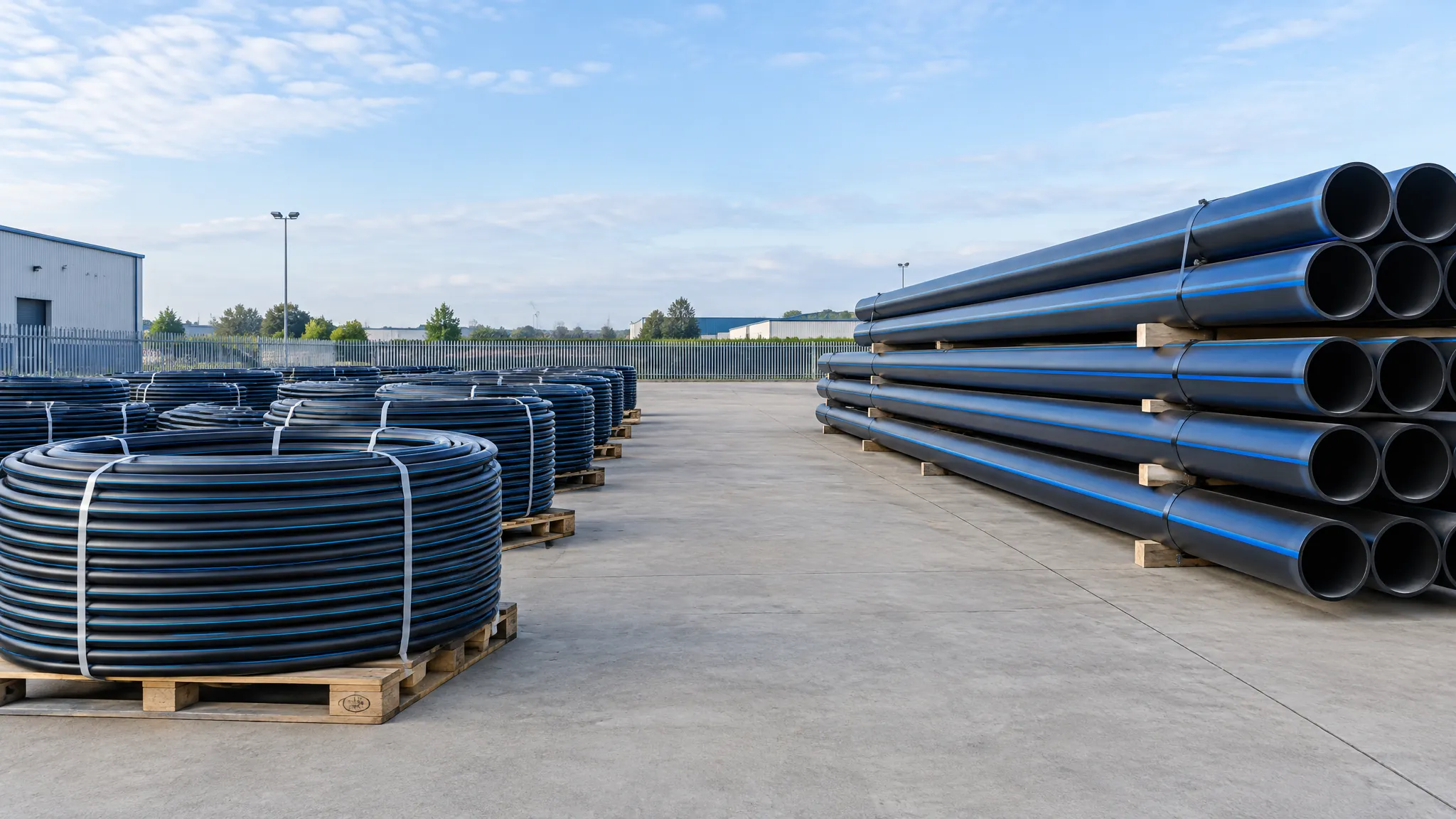
Black polyethylene pipe coils and green polypropylene pipe bundles stacked on a sandy yard under harsh midday sun, one bundle covered with a grey tarpaulin, desert hills behind

How Much Pressure Rating Do You Actually Lose to Heat and Sun? De-Rating Curves for PPR, PEX, HDPE and PVC

A specifier in Riyadh, Lagos or Seville reads PN20 on a PP-R pipe and PN16 on a PE100 coil, and the site runs at 45 °C ambient for four months a year. Every one of those ratings is silently a 20 °C number. Polymer pipe UV and temperature derating comes down to one question: how

How Much Pressure Rating Do You Actually Lose to Heat and Sun? De-Rating Curves for PPR, PEX, HDPE and PVC Leer Más "

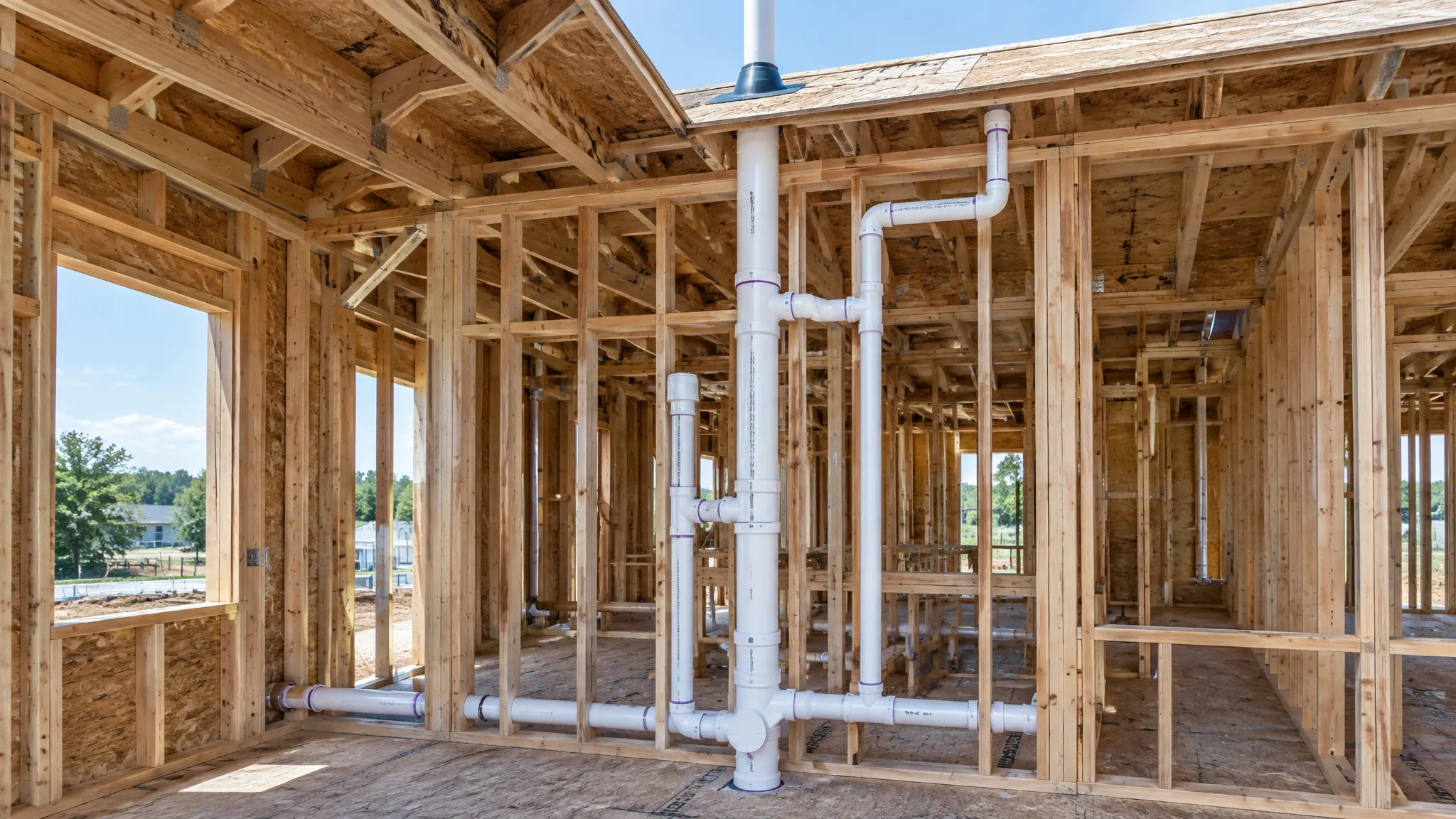
Cut sections of a solvent-welded PVC socket, an HDPE butt-fusion joint, a PP socket-fusion joint and a threaded plastic elbow laid out on a bench for failure analysis

Why Plastic Pipe Joints Fail: Six Failure Modes Read Back From the Fracture Surface

Plastic pipe joints fail in a small number of readable ways, and the joint surface is where the reading starts. This guide covers six failure modes across the four jointing methods a mixed-material project actually uses: solvent weld, socket and butt fusion, electrofusion, and mechanical or threaded transitions. Each mode leaves a different surface, arrives

Why Plastic Pipe Joints Fail: Six Failure Modes Read Back From the Fracture Surface Leer Más "

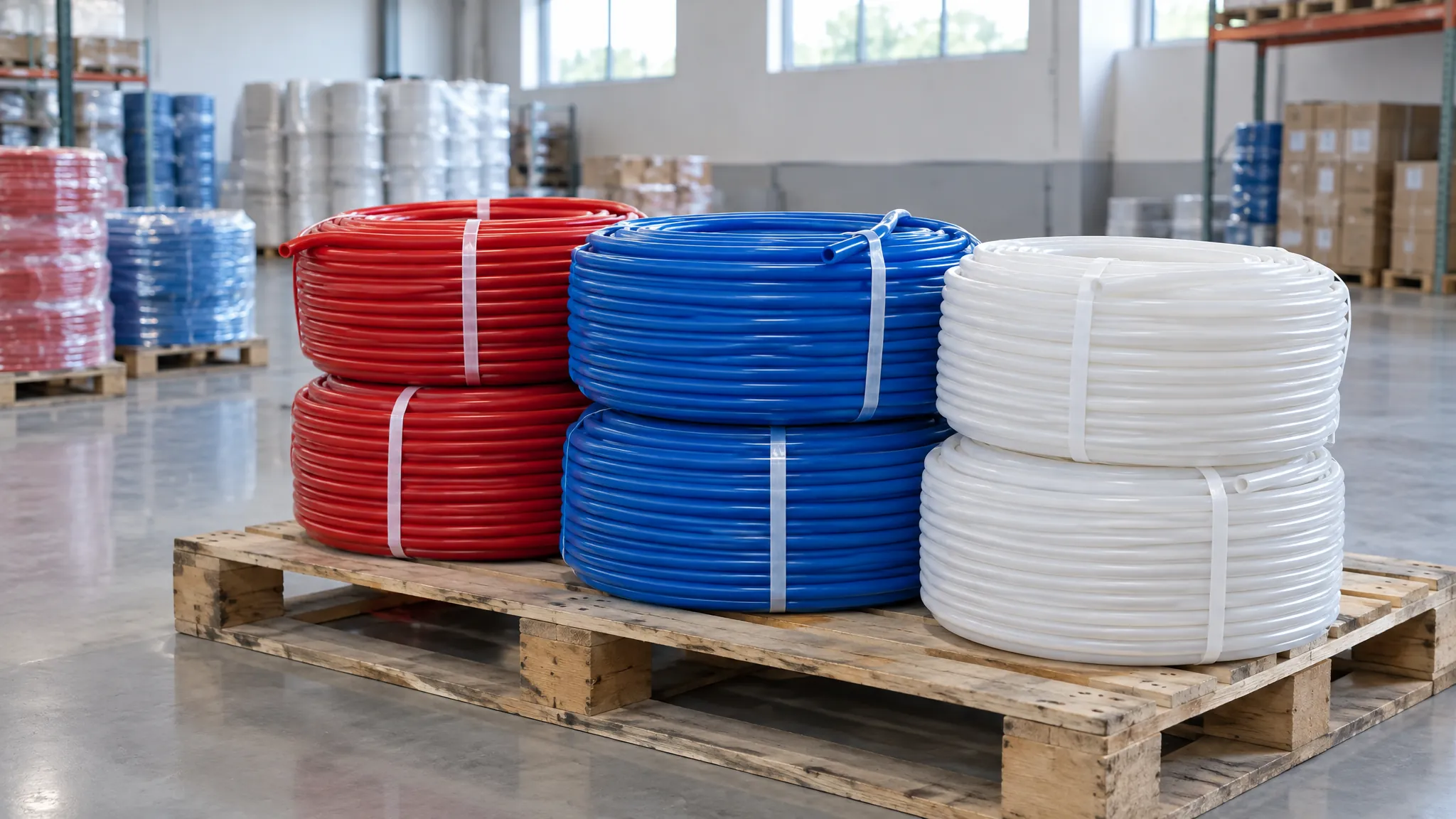
Red and blue PEX tubing coils with brass and polymer press fittings and copper crimp rings on a workbench

Types of PEX Fittings: The Five Families, and Which Ones Can Legally Share a Wall

There are five types of PEX fittings once you count them the way a plumbing code does, by the standard that lists each one. The five: cold expansion, insert bodies gripped by a copper crimp ring, the same bodies gripped by a stainless steel clamp, push-fit, and threaded or transition adapters. One adopted US fitting

Types of PEX Fittings: The Five Families, and Which Ones Can Legally Share a Wall Leer Más "

China Pipe Supplier Middleman: 8 Signs You’re Not at the Factory

Every importer has met the pitch: a ‘factory’ with a catalogue spanning every pipe material, a price that beats everyone, and a salesperson who answers each technical question with a brochure. Some of those suppliers make the pipes they sell. Many do not. Across China, thousands of trading companies sit between overseas buyers and the

China Pipe Supplier Middleman: 8 Signs You’re Not at the Factory Leer Más "

WRAS vs NSF Certification: Which Approval Your Market Requires, and How to Check the One You Were Sent

The practical difference between WRAS and NSF certification is jurisdictional, not qualitative: WRAS Approval is the route British water companies recognise for demonstrating that a fitting meets the Water Supply (Water Fittings) Regulations, and NSF/ANSI/CAN 61 is the health-effects standard North American plumbing codes are written around. Neither one substitutes for the other. A buyer

WRAS vs NSF Certification: Which Approval Your Market Requires, and How to Check the One You Were Sent Leer Más "

es_ESEspañol

Apoyamos muestra gratis, póngase en contacto con nosotros lo antes posible.

IFAN desde 1993, ofrece PPR, PEX, PVC, HDPE, accesorios de latón, válvulas de latón, grifos de latón, etc.