
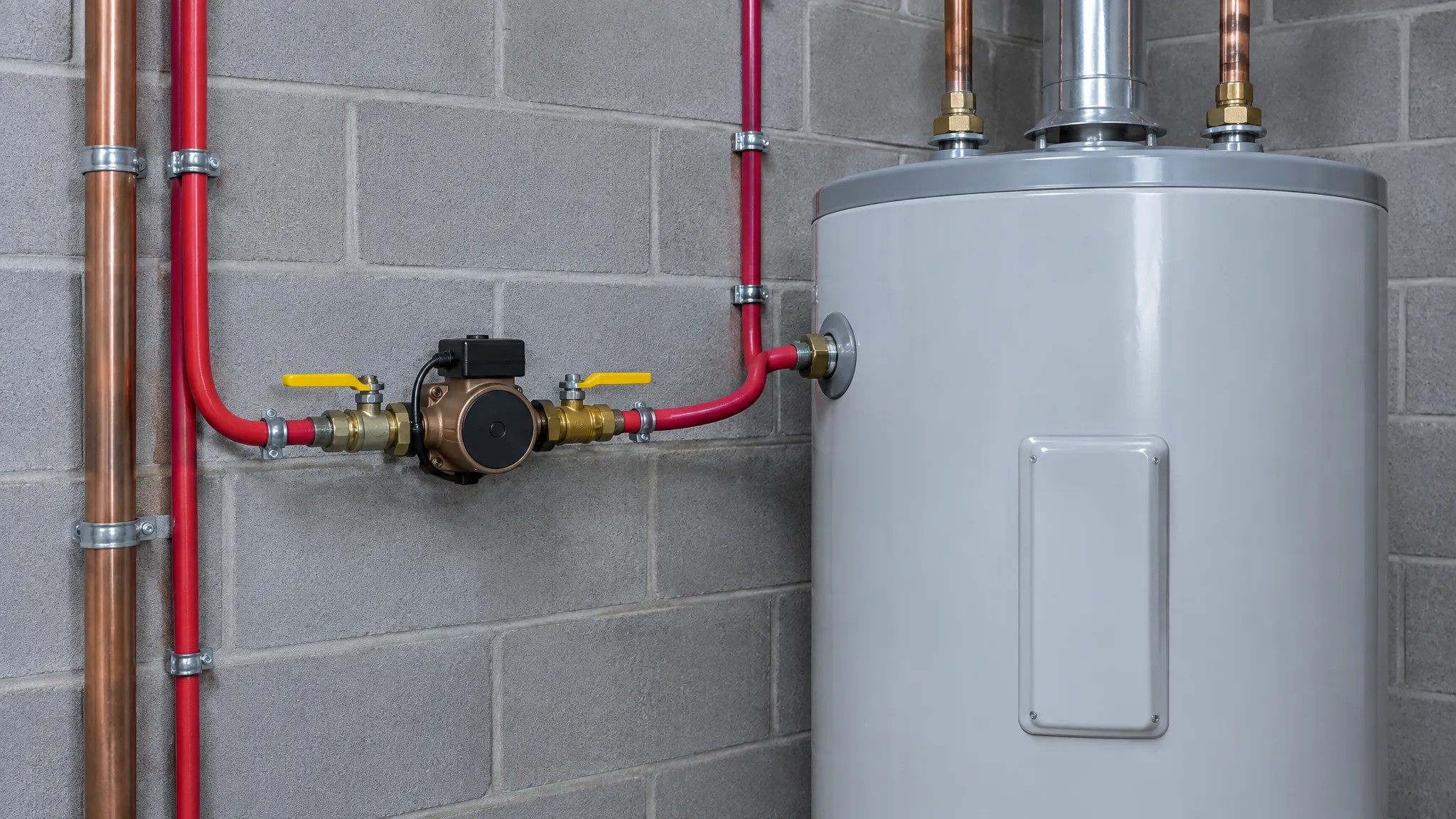
No US plumbing code orders you to build a hot-water return leg. IPC 2024 Section 607.2 caps developed length at 50 feet and counts recirculating piping as a source of hot water; the sentence requiring a dedicated return pipe sits in the energy code, at IECC 2024 Section C404.6.1. Which listed pipe may form it is settled by the water-distribution table of the code your state adopted, plus one rating figure the IPC states and the UPC does not.
That split is why one question gets three answers from three competent engineers.
Key Takeaways
- IPC 2024 Section 607.2 limits developed length to 50 feet and treats recirculating and heat-traced piping as sources of hot water. It does not require a return leg.
- “The system return pipe shall be a dedicated return pipe” is energy-code text, at IECC 2024 Section C404.6.1. IPC 607.2.2 points there rather than repeating it.
- Return the hot water through the cold water piping instead and the IPC reclassifies the system as demand recirculation, capped at 104 degrees F entering the cold side.
- The IPC puts a number on the pipe: NSF 61, a Table 605.4 standard, and not less than 100 psi at 180 degrees F. The UPC materials table states no equivalent figure.
- PVC is absent from IPC Table 605.4 and is restricted by UPC Table 604.1 to building supply and exterior cold water, not water distribution.
- No code clause names a chlorine-resistance class. PPI TN-53 grades PEX Class 5 at 100 percent of the time at 140 degrees F, which is what a continuous loop is.
SPEER, an energy-efficiency non-profit rather than a pipe or pump vendor, walks through what Section C404.6 of the 2024 IECC asks of a commercial recirculation loop and its controls.

The Return Leg Is an Energy-Code Duty Before It Is a Plumbing-Code One
IPC 2024 Section 607.2 says the developed length of hot or tempered water piping, from the source of hot water to the fixtures, shall not exceed 50 feet (15 240 mm), and that recirculating and heat-traced piping count as sources of hot or tempered water. That is a permission, not an instruction.
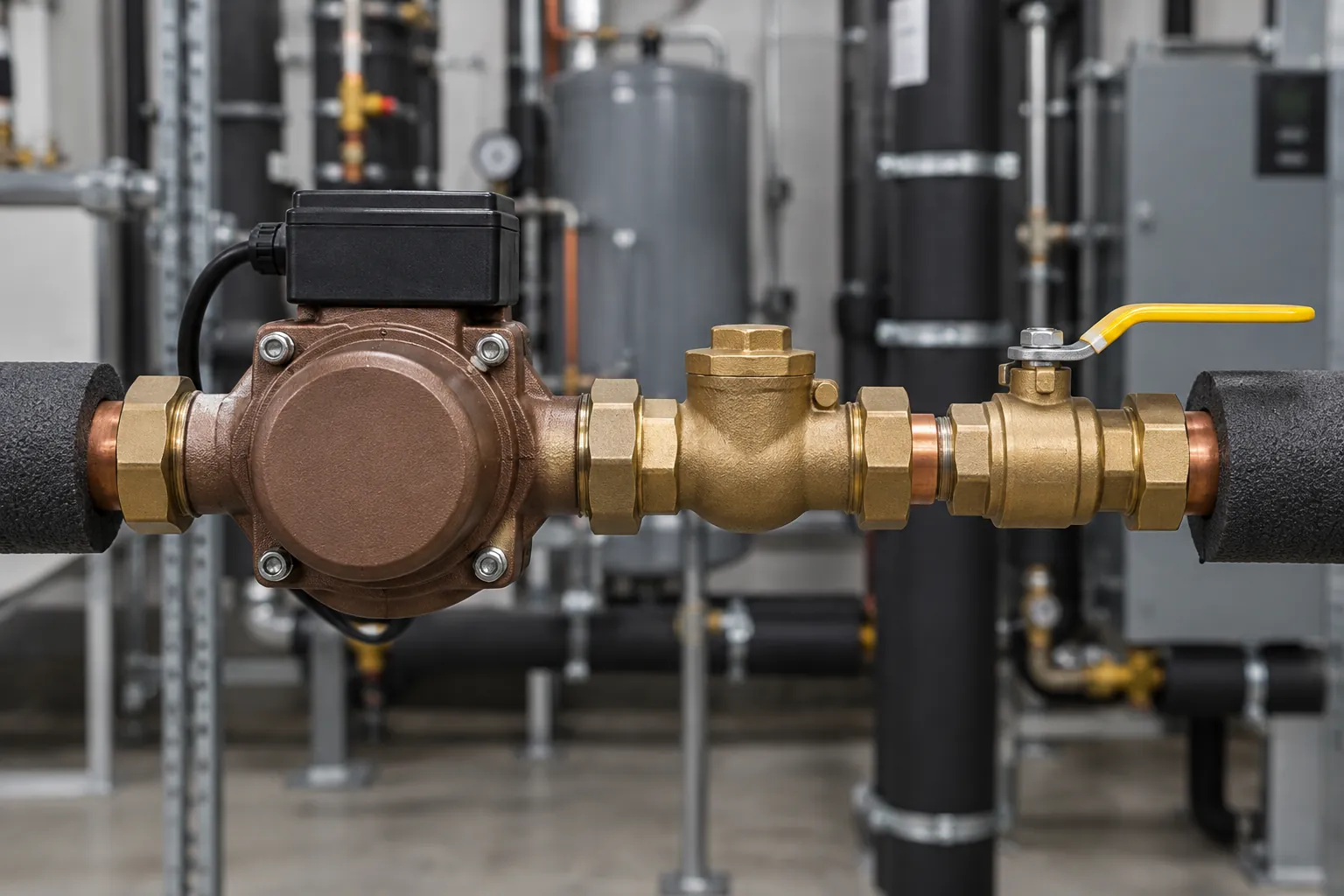
Section 607.2.2 sends the loop itself elsewhere: to IECC Section R403.5.1 for Group R-2, R-3 and R-4 occupancies three stories or less above grade plane, and to C404.6 for everything else. IECC 2024 Section C404.6.1 requires a circulation pump and prohibits gravity and thermo-syphon circulation. The system return pipe shall be a dedicated return pipe; controls shall stop the pump on no demand; and self-actuating thermostatic balancing valves are required where one pump serves multiple risers.
Return the cooling water through the cold water supply instead and Section 607.2.2.2 reclassifies the job as a demand recirculation water system: the pump may start only on a user action, presence sensing or flow sensing, and the control shall limit water entering the cold piping to 104 degrees F.
UPC or IPC: What Changes When You Cross a State Line
On the pipe the gap between the codes is measurable. IPC 2024 Section 605.4 carries a figure the UPC materials clause does not: hot water distribution pipe rated not less than 100 psi at 180 degrees F. UPC Section 604.1 — quoted here from the Hawaii Plumbing Code 2021, a UPC 2021 base, because the 2024 chapter is paywalled — requires NSF 61 and, for copper alloys above 15 percent zinc used in plastic piping systems, resistance to dezincification and stress corrosion cracking in compliance with NSF 14.
IAPMO published the 2024 UPC after a three-year ANSI-accredited consensus cycle, and the California Plumbing Code 2025 is built on it. Read through that California printing, the 2024 edition defines a balancing valve as a valve that regulates and controls the return of water to the water heater in a recirculating hot water piping system. None of that is what an inspector enforces: a state or city adoption with amendments is, which is why the crosswalk names editions.
| Duty | IPC 2024 | UPC as read | IECC 2024 |
|---|---|---|---|
| Dedicated return pipe | 607.2.2 defers to the IECC | — | C404.6.1 requires it |
| Pump control | 607.2.2.2: 104 degrees F cold-side cap | — | C404.6.1 shutoff; C404.6.3 five-minute limit |
| Riser balancing | — | 224.0 defines the valve | C404.6.1 thermostatic valves |
| Materials gate | 605.4: 100 psi at 180 degrees F | 604.1: NSF 61, NSF 14 | Insulation, not materials |
Source: IPC 2024 and IECC 2024 on UpCodes, read 16 September 2026; UPC editions per the caption. A dash means absent from the sections read.
Read across a row and the verdicts fall out. The dedicated-pipe duty is energy-code text, so cite the IECC, not the plumbing code. Name the control type: “recirculation” alone chooses neither a dedicated loop nor a demand system. Budget the balancing valves at design stage: an energy-code duty, not a plumbing-code one. On materials the IPC states a number where the UPC defers to the product standard.
What ASHRAE 90.1 Adds, and Why the Edition Year Decides the Answer
A specification citing ASHRAE 90.1 rather than the IECC is not avoiding the energy code: IECC 2024 Section C401.2.2 lists compliance with ANSI/ASHRAE/IES 90.1 as an application option for commercial buildings.
The current standard is ANSI/ASHRAE/IES 90.1-2025, Energy Standard for Sites and Buildings Except Low-Rise Residential Buildings, carrying 105 addenda. Service water heating is Section 7. In the 2019 edition, on ASHRAE’s own compliance form, piping insulation sits at 7.4.3 and circulating-system pump controls at 7.4.4.2. Quote those numbers at a 2025 project and the clause may have moved.
Adoption lags. DOE issued its determination on 90.1-2022 on 6 March 2024, finding savings of 9.8 percent site energy, 9.4 percent source energy and 8.9 percent energy cost against 90.1-2019, and that set a state certification deadline of 6 March 2026. A submittal naming a standard without a year is not a specification.
Which Listed Pipe May Actually Form the Return
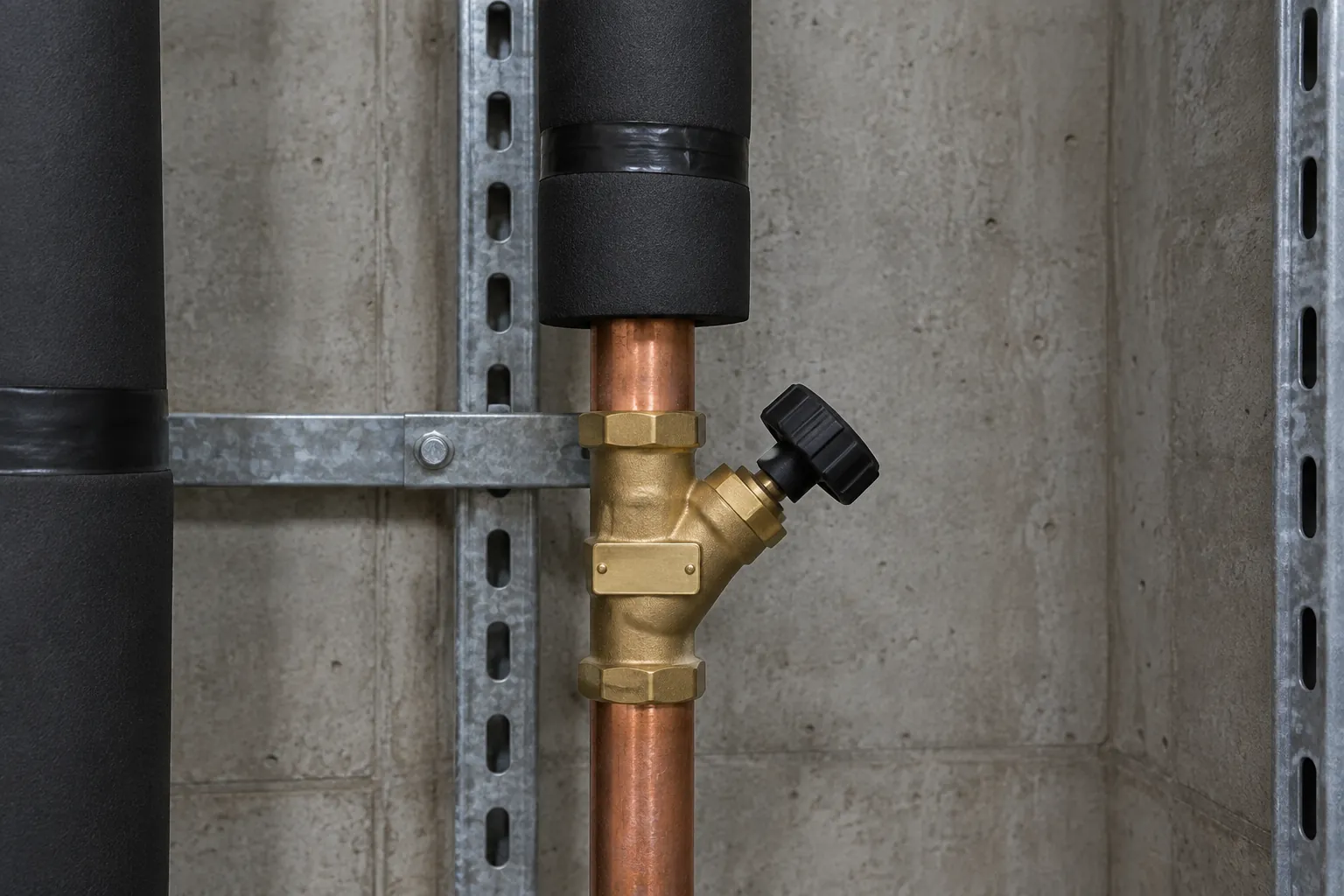
Neither code writes a materials table for the return. The return carries potable hot water back toward the heater, so it is hot-water distribution piping and the distribution table governs it, which is how IPC Section 607.2.3 treats it. The gate is therefore Section 605.4 in an IPC jurisdiction, and Section 604.1 with Table 604.1 — again the Hawaii-adopted 2021 printing — in a UPC one.
One material takes the hit. PVC does not appear in IPC Table 605.4, and in UPC Table 604.1 both PVC and PE carry a note restricting them to building supply or exterior cold-water applications, not water distribution piping. A schedule 40 PVC return leg is outside both tables, as we set out in PEX versus PVC. Everything else is live; jointing method decides, with what the PEX pipe and fittings or metal line you stock can be certified to.
| Material | IPC 2024 Table 605.4 | UPC Table 604.1 | Verdict |
|---|---|---|---|
| PEX | ASTM F876; CSA B137.5 | Listed; fittings ASSE 1061, ASTM F877/F1807/F1960/F2080 | Allowed |
| CPVC | ASTM D2846, F441, F442; CSA B137.6 | Listed | Allowed |
| Copper tube, K/L/M | ASTM B88, B75, B251, B447 | Listed | Allowed |
| PE-RT | ASTM F2769; CSA B137.18 | Listed | Allowed |
| Polypropylene (PP-R) | ASTM F2389; CSA B137.11 | Listed | Allowed |
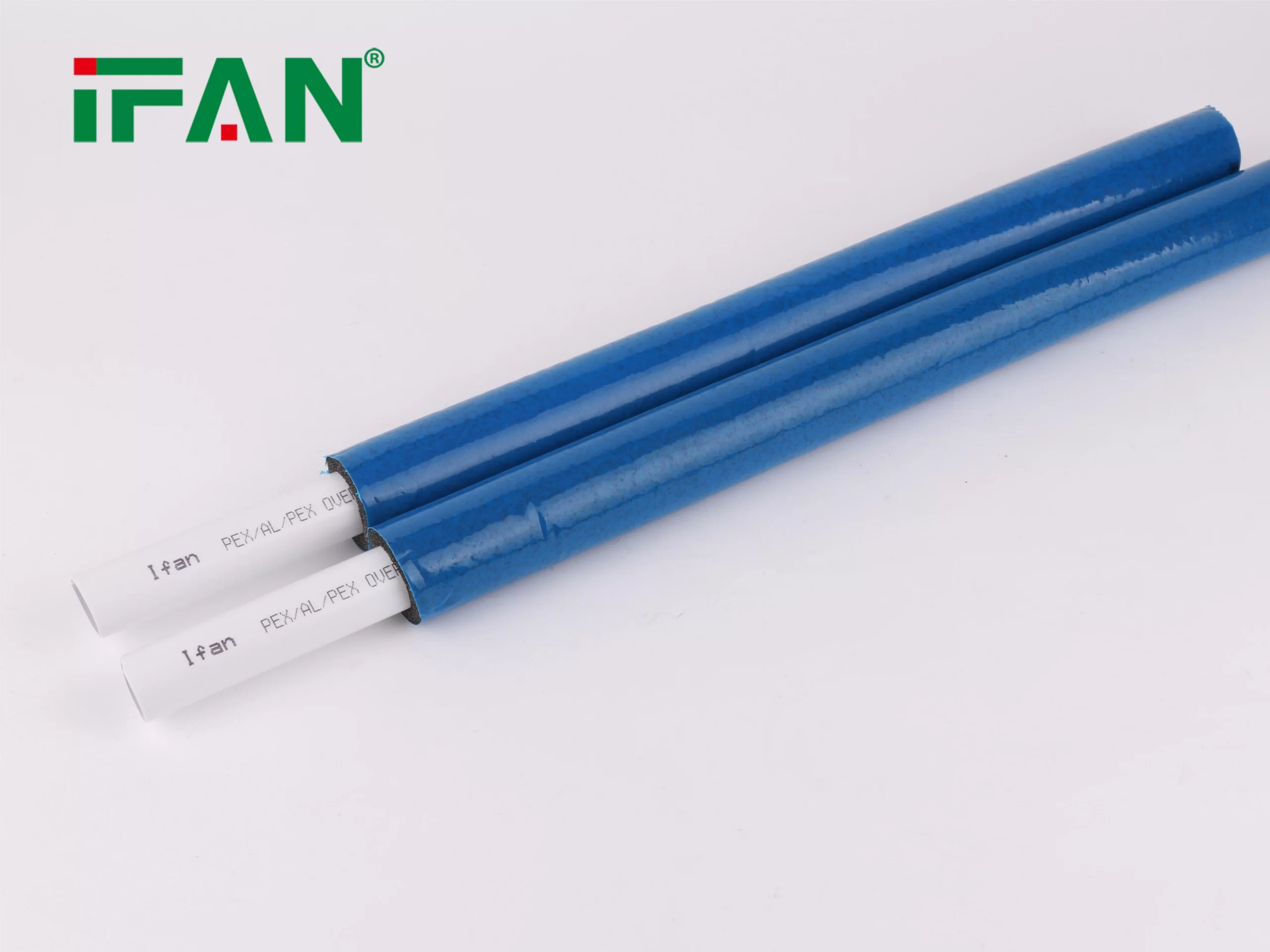
| PEX-AL-PEX | ASTM F1281, F2262; CSA B137.10 | Listed | Allowed |
| Stainless 304/304L, 316/316L | ASTM A312, A778, A269 | Listed | Allowed |
| PVC | Absent | Building supply, exterior cold only | Not permitted |
Source: IPC 2024 Table 605.4 and UPC Table 604.1 on UpCodes, read 16 September 2026.
Every row but the last is allowed. PEX needs its chlorine class read off the print line; CPVC is solvent-cemented, so the cure schedule sets the commissioning date; PP-R needs trained fusion crews and a record; PEX-AL-PEX press fittings are system-specific, so keep one brand per loop.
The Spec Line No Code Clause Contains: Chlorine Resistance Class
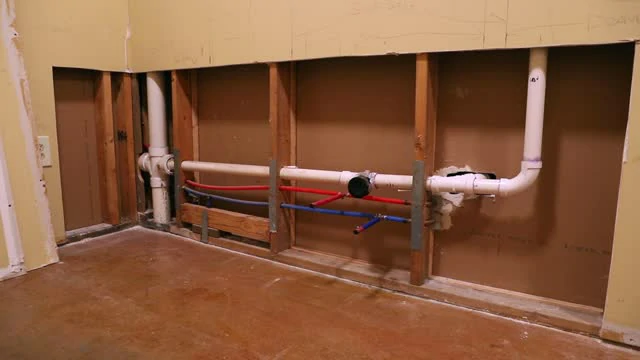
A code-compliant return leg can still fail early. A branch line sees hot water for minutes a day; a return leg on a continuous pump sees it permanently. Oxidative attack on polyolefin pipe is driven by hot chlorinated water and time at temperature, not pressure.
The plastics industry grades it. PPI TN-53, 2025 edition, sets out four material designation categories, evaluated under ASTM F2023 on reverse-osmosis water at 4 ppm free chlorine. Category 1 is rated for 25 percent of the time at 140 degrees F and 75 percent at 73 degrees F; category 3 is 50 and 50; category 5 is 100 percent at 140 degrees F. PPI maps them onto practice: intermittent hot water at 6 hours a day, timed recirculation at 12, continuous with no timer.
A loop with a timer or a demand control can live on a class 3 material; a loop running around the clock is a class 5 duty, and that class is a digit in the designation code printed on the tubing, which no code compels a supplier to supply. A submittal naming a material standard and a pressure rating but no chlorine class has specified a branch line; the failure is set out in PEX pipe lifespan and failure modes.
| PPI TN-53 material designation class | Rated time at 140 F (%) | Rated time at 73 F (%) |
|---|---|---|
| Class 1 | 25 | 75 |
| Class 3 | 50 | 50 |
| Class 5 | 100 | 0 |
What We Check on a Recirculation-Line Order, and Where We Stop
On a US recirculation order we check material standard, size and SDR, a rating of at least 100 psi at 180 degrees F, and for PEX the designation code carrying the chlorine class. Where a mark is claimed we ask for the certificate, not the logo — see WRAS versus NSF certification.
Which code edition your jurisdiction enforces, how many balancing valves the loop needs and what the pump control must do belong to the design engineer and the authority having jurisdiction, not a supplier. Nor does a marketing page certify a product: see the lead-free scope guide.
Conclusión
Before the next return leg goes on a drawing, settle five things. The model code and amended edition the jurisdiction adopted. Whether the loop is dedicated or a demand system capped at 104 degrees F on the cold side. Which energy path applies. The material in the adopted table, and whether it clears 100 psi at 180 degrees F. And, for polymer pipe, the chlorine class the duty cycle needs. Loop geometry lives in the PEX sizing chart and manifold guide, and return-to-copper joints in the transition-fittings guide.
Frequently Asked Questions
Does US plumbing code require a hot water return line?
No. IPC 2024 Section 607.2 caps developed length at 50 feet and counts recirculating piping as a source of hot water. The requirement for a dedicated return pipe is energy-code text, at IECC 2024 Section C404.6.1.
Can PEX be used for a hot water recirculation return line?
Both codes list it: IPC Table 605.4 and UPC Table 604.1, read here in its Hawaii 2021 printing, name ASTM F876 and CSA B137.5. For a loop that runs continuously, specify the chlorine resistance class as well, because no code clause does.
Can PVC pipe be used for a hot water return?
No. PVC does not appear in IPC 2024 Table 605.4, and in UPC Table 604.1, read here in its Hawaii 2021 printing, it is restricted by table note to building supply or exterior cold-water applications, not water distribution piping.
What pressure rating does the IPC require of hot water distribution pipe?
IPC 2024 Section 605.4 requires not less than 100 psi at 180 degrees F, alongside conformance to NSF 61 and to one of the material standards listed in Table 605.4.
Which edition of ASHRAE 90.1 applies to my project?
The edition your jurisdiction adopted. ANSI/ASHRAE/IES 90.1-2025 is the current standard, while DOE’s determination on 90.1-2022 set a state certification deadline of 6 March 2026, so adoption is still in motion.











 Español
  English
  Français
  Русский
Comentarios recientes