
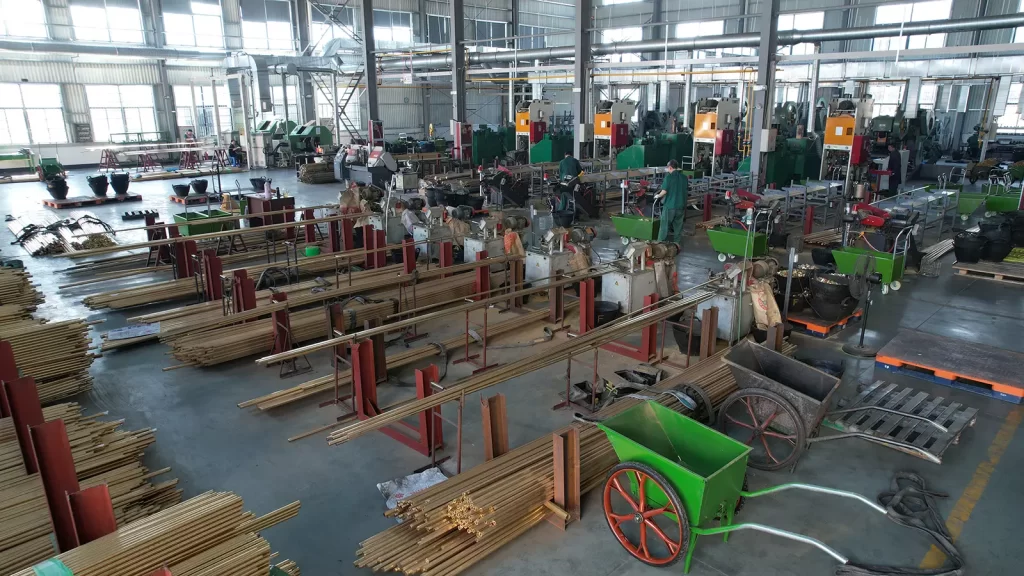
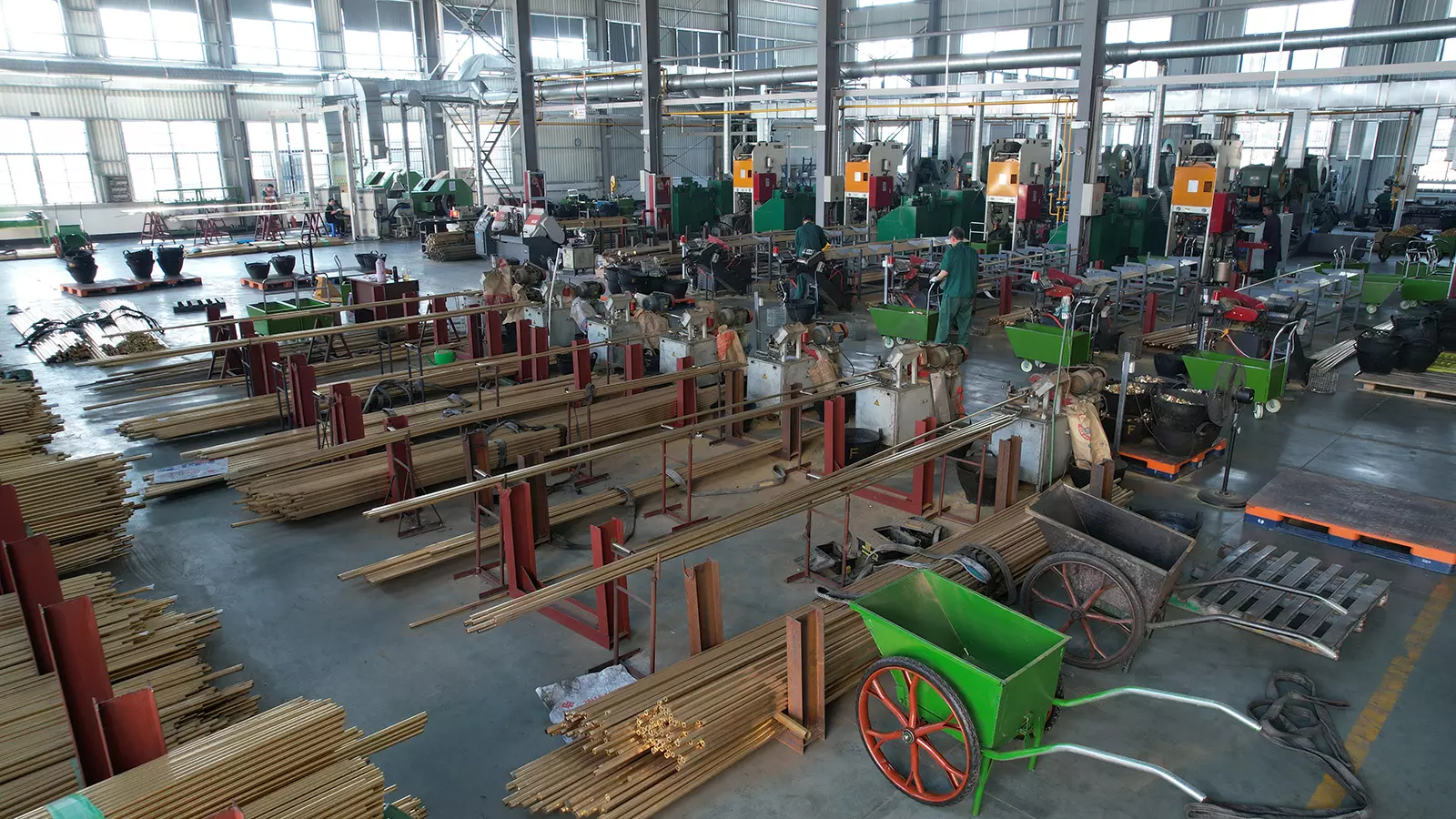
A distributor in Singapore places a repeat order for brass angle valves in January 2027. Same factory as last time, same drawing, same quoted price, and the quotation says “lead-free” exactly as it did before. The goods clear customs. Then a licensed plumber refuses to install them, because the alloy stamped on the body is a grade that stops being legal to supply in that market five weeks later.
Nothing in that transaction was fraudulent. The valves were low-lead. The factory was competent. The buyer simply bought against a marketing phrase instead of against a designation, and the phrase did not carry the one piece of information that mattered.
This is the gap this article closes. It is not a list of Chinese brass valve manufacturers — every page competing for this search is already that, and each one is written by a factory that ranks itself first. It is the instrument you use to grade any supplier, including us. If you can read a test report and write a purchase order clause, you no longer need anyone’s top-ten list.
Key Takeaways
- “Lead-free” is a legal term, not a description. Under the US Safe Drinking Water Act it means a weighted average of 0.25% lead across wetted surfaces — not zero lead.
- NSF/ANSI/CAN 372 and NSF/ANSI/CAN 61 answer different questions. 372 limits lead content in the material; 61 limits what leaches into the water. A supplier can send you a genuine certificate that does not cover what you asked about.
- The only enforceable thing you can write on a purchase order is the copper alloy designation — CW511L, CW625N, CW626N, CW724R or CW725R — not the words “lead-free brass”.
- Singapore withdraws CW602N, CW709R and CC491K from supply on 1 March 2027. If you hold or are ordering those grades for that market, you have a dated inventory problem.
- A test report is worth something only if it names the accredited laboratory, the alloy actually tested, and the method. Get all three or treat it as decoration.
On this page:
- What “Lead-Free” Legally Means — And Why It Is Not Zero
- NSF 61 and NSF 372 Are Not the Same Certificate
- The Alloy Designation Is the Only Thing You Can Put on a Purchase Order
- March 2027: Three Alloy Grades Are Being Withdrawn From Supply
- How to Read a Brass Valve Test Report Without Being Fooled
- The Purchase Order Clause, and What Drives Your Price and MOQ
- How to Choose, and What to Do Next
- Frequently Asked Questions
A short neutral explainer on the most common misreading of NSF 372 — that the mark says something about lead removal rather than lead content.
What “Lead-Free” Legally Means — And Why It Is Not Zero
Start with the number, because almost every dispute between an importer and a factory traces back to two people using the same word for different things.
Under Section 1417 of the US Safe Drinking Water Act, as amended by the Reduction of Lead in Drinking Water Act, “lead free” for pipes, pipe fittings, plumbing fittings and fixtures means a weighted average of 0.25% lead calculated across the wetted surfaces. For solder and flux the limit is 0.2%. The US EPA publishes both figures, and the requirements are codified at 40 CFR 143.10–143.20. The certification requirement itself took effect on 1 September 2023, three years after the final rule published on 1 September 2020.
Two consequences follow immediately, and they are the ones buyers miss.
0.25% is a ceiling, not a description of the metal
A compliant valve contains lead. It is permitted to contain lead. A supplier who tells you their product is “100% lead-free” is either using loose language or does not understand their own certification — and in a first conversation you cannot tell which. The useful follow-up is not “is it lead-free?” but “which alloy, and what does the composition analysis say?”
It also means the number moved. Before the 2011 amendment, the maximum lead content for pipes under the same statute was 8%. Tooling, alloy stock and machining practice built around an 8% world did not vanish in 2011; they were re-purposed. That is why alloy provenance is a live question in 2026 and not a historical one.
“Weighted average” is doing quiet work
The rule averages across wetted surfaces, weighted by surface area. It is not a per-component limit. A valve is an assembly — body, cap, ball, stem, seats — and the calculation looks at the whole wetted assembly, with larger surfaces carrying more influence than smaller ones.
The practical effect: a stem machined from a higher-lead bar can sit inside an assembly that still calculates as compliant, because the stem’s wetted area is small relative to the body. That is legal. It is also exactly why “we use lead-free brass” is not the same statement as “this assembly is certified”, and why you want the calculation or the certification, not a reassurance about the raw material.
NSF 61 and NSF 372 Are Not the Same Certificate
Here is the most common way a well-intentioned importer ends up holding the wrong evidence.
You ask a supplier to prove the valve is lead-free. A PDF arrives. It is genuine, it is current, it carries a real certification body’s mark — and it answers a question you did not ask.
| Standard | What it actually measures | Ask for it when |
|---|---|---|
| NSF/ANSI/CAN 372 | Lead content of the water-contact material — the weighted-average calculation plus lead-content verification | You need to show the product meets the 0.25% lead-free definition |
| NSF/ANSI/CAN 61 | What leaches out of the material into drinking water — extraction testing on the finished product | A specification or a plumbing code calls for drinking-water contact safety |
They are not substitutes and neither implies the other. A material can be low in lead content and still be evaluated separately for what it releases into water; a product can be assessed for leaching without that assessment being a statement about bulk composition. When a specification names both, you need both documents, and a supplier offering one in place of the other is not necessarily being evasive — very often nobody in the chain has been precise about which was requested.
Write the request this way instead. Not “please send lead-free certification”, which invites whichever PDF is nearest to hand. Instead: “please send the NSF/ANSI/CAN 372 documentation for the wetted components, and separately the NSF/ANSI/CAN 61 documentation if the product is listed to it — and confirm which part numbers each document covers.” The second clause is the one that catches a certificate issued for a different part.
If drinking-water contact approval is the specific hurdle in your market, our longer explainer on what NSF 61 certification covers walks through the listing scope question in more detail.
The Alloy Designation Is the Only Thing You Can Put on a Purchase Order
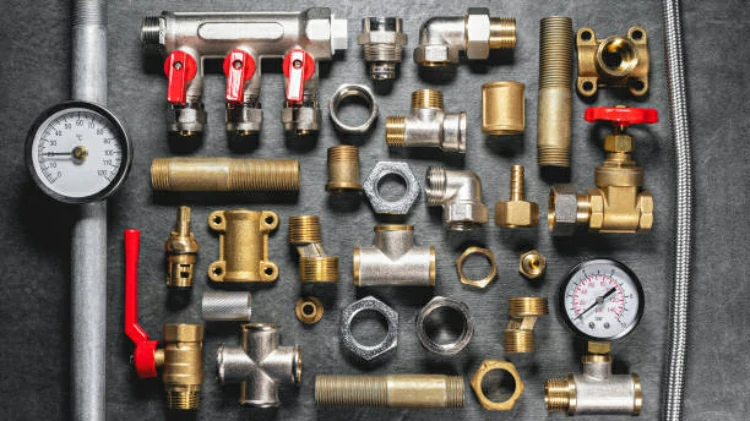
“Lead-free brass” is not a specification. It is a category, it has no test attached to it, and a purchase order carrying only that phrase gives you nothing to reject goods against.
A copper alloy designation does the opposite. It names a defined composition, it appears on a mill certificate, it can be checked by composition analysis, and it is the unit that regulators actually work in. Singapore’s national water agency, for example, does not write rules about “lead-free brass” — it writes them about CW511L and CW602N by name.
These are the designations worth knowing before you write a specification.
| Designation | What it is | Status |
|---|---|---|
| CW511L | CuZn38As — arsenic added for dezincification resistance. EN 12164 caps lead at ≤ 0.20% (below the 0.25% SDWA ceiling, but above silicon brass CW724R at ≤ 0.10%) | On the 4MS Positive List |
| CW724R | CuZn21Si3P silicon brass — roughly 21% zinc, 3% silicon, phosphorus addition. EN 12164 caps lead at ≤ 0.10% | On the 4MS Positive List |
| CW625N, CW626N, CW725R | Further accepted potable-water copper alloy grades | On the 4MS Positive List |
| CW602N, CW709R, CC491K | Previously accepted grades; CC491K is a gunmetal/bronze | Withdrawn from Singapore supply 1 Mar 2027 |
The reference list to specify against is the 4MS “Common Approach on Metallic Materials Part B: Positive List of Compositions”, maintained under the joint initiative of four European member states. It is the list Singapore’s regulator points at directly, and it is a more durable thing to write into a contract than any single national rule, because it is the list national rules increasingly defer to.
Why the arsenic and silicon matter to you commercially
CW511L and CW724R solve the same problem by different routes, and that difference reaches your bill.
CW511L is a conventional brass with arsenic added to resist dezincification — the failure mode where zinc leaches out of the alloy and leaves porous copper behind that looks intact and holds no pressure. CW724R takes a different path: replace much of the lead’s machinability role with silicon. Silicon brasses generally machine and behave differently from conventional brasses, which is why a factory tooled for one does not necessarily quote the other at the same price or the same lead time. If your quotation moves sharply when you change the designation, that is usually the reason, not opportunism.
Dezincification is worth understanding on its own terms, because it is the failure that shows up two years after installation rather than at inspection — we cover the mechanism in our guide to dezincification-resistant brass.
March 2027: Three Alloy Grades Are Being Withdrawn From Supply
This is the part of the sourcing picture that has a date on it, and it is the reason the alloy table above is not an academic exercise.
On 1 March 2023, Singapore’s PUB — the national water agency — issued circular WSN 92413/90/202301/COPPERALLOY to water fitting suppliers, test laboratories, licensed plumbers and the trade associations. It does two things.
First, it sets a withdrawal. With effect from 1 March 2027, copper alloy water fittings of grades CW602N, CW709R and CC491K will no longer be allowed for supply in Singapore. The circular is explicit that the four-year runway exists to let existing stock of those grades clear the market. Fittings of those grades tested after 1 March 2023 are allowed for supply until end February 2027, and then not at all.
Second, it sets what replaces them. From 1 March 2027, acceptable copper alloys are those listed in the 4MS Positive List of Compositions — which the circular notes currently covers CW511L, CW625N, CW626N, CW724R and CW725R.
The importer’s arithmetic. This article publishes in August 2026. That leaves roughly six months before the transitional window closes at the end of February 2027. If you are running a 60–90 day production cycle plus sea freight, an order placed for CW602N or CC491K goods today is landing into a market where its remaining saleable life is measured in weeks. The risk is not that the goods are unsafe — they are the same goods that were compliant last year. The risk is that they become unsupplyable while they are sitting in your warehouse.
Why this matters outside Singapore too
You may not ship a single valve to Singapore. The deadline still tells you something useful, for one specific reason: PUB did not invent its own list. It deferred to the 4MS Positive List, and stated plainly that it was aligning with other countries’ practices on copper alloys suitable for potable water use.
That is the pattern to watch. A national regulator retiring its own bespoke grade list in favour of a shared European composition list is a directional signal about where acceptance is consolidating. Specifying a 4MS-listed grade is the lower-variance choice even in markets that have not yet made it mandatory — it costs you nothing today and it is the grade least likely to require a re-qualification later.
If your buyers span several markets, the practical move is to standardise your own catalogue on 4MS-listed designations rather than maintaining grade variants per destination. Our overview of lead-free brass fittings and where they are required sets out how the market requirements differ.
How to Read a Brass Valve Test Report Without Being Fooled

“Ask for a test report” is advice every sourcing article gives and almost none makes usable. A report will arrive. Then what?
The same PUB circular is unusually helpful here, because it states what a compliant evidence package actually consists of. From 1 March 2023, based on the date of the test reports, new copper alloy water fittings — other than exposed terminal fittings such as taps and mixers — must be tested against three things.
The three methods, and what each one catches
- Chemical composition analysis. This is what confirms the alloy is the alloy. It is the check that connects the designation on your purchase order to the metal in the casting, and it is the only one of the three that speaks directly to a substitution concern.
- AS/NZS 4020:2018 Appendix H, Extraction of metals. A leaching test — what comes out of the product into water, rather than what the product is made of. Note that this is a different question from composition, in the same way NSF 61 differs from NSF 372.
- Dezincification resistance under ISO 6509-1:2014 and ISO 6509-2:2017, where applicable to the grade. The circular advises suppliers to consult the accredited laboratory on whether the DZR test applies to their alloy — it does not apply uniformly.
ISO 6509-1 is worth picturing, because it explains why a DZR result takes time and why “we’ll send it tomorrow” is a slightly odd answer. A polished cross-section of the material is exposed to a copper(II) chloride solution — 12.7 g of CuCl2·2H2O per 1000 ml of de-ionised water — held at 75 °C for 24 hours. The sample is then sectioned and the depth of the dezincified layer is measured under magnification.
One honest limitation. The numeric acceptance depths live in ISO 6509-2:2017, which is a paywalled standard we have not read first-hand, so this article will not quote you a threshold. Do not accept one from us or from anyone else who has not read it either — instead require the report to state the measured depth and the acceptance criterion applied, and require the laboratory to name which part of the standard it judged against. A report that gives a pass with no measured value and no criterion is not a result, it is an assertion on letterhead.
The accreditation check most buyers skip
PUB is specific about who may issue the report: a laboratory accredited by the Singapore Accreditation Council, or by one of its Mutual Recognition Arrangement partners. Reports must bear the SAC-SINGLAS mark, or the ILAC-MRA mark where the laboratory is accredited through an MRA partner.
Those marks are the transferable part of the lesson. ILAC-MRA is an international arrangement, so in practice you are asking one question in any market: is the issuing laboratory accredited, and does the report carry the mark that proves it? A report from an unaccredited lab may be perfectly honest and is still worth very little, because nothing external stands behind it.
Match the report to the goods, not to the supplier
The last check is the one that catches genuine documents used loosely. A test report is evidence about a specific alloy from a specific material batch, tested by a specific method, on a specific part. Before you accept it, confirm three matches.
- Alloy match. The designation on the report is the designation on your purchase order — not a “similar” grade, not the family name.
- Part match. The part numbers or product description on the report cover the items you are buying. A report covering a 1/2″ ball valve body says nothing about the angle valve on the same order.
- Batch and date match. Composition analysis relates to a material heat. Ask which heat or production batch the report covers, and how the supplier links incoming alloy batches to finished goods. A supplier who cannot answer that is not necessarily hiding anything — but their report cannot be traced to your goods, which means it cannot protect you.
That third question is also the most informative thing you can ask a new supplier, because it is about their internal traceability rather than about their marketing.
For importers and procurement buyers writing a specification against our 1/2″–3/4″ range: our published SKUs carry no alloy designation, so name the grade you need and we will tell you whether it is on file or needs a new heat.
The Purchase Order Clause, and What Drives Your Price and MOQ
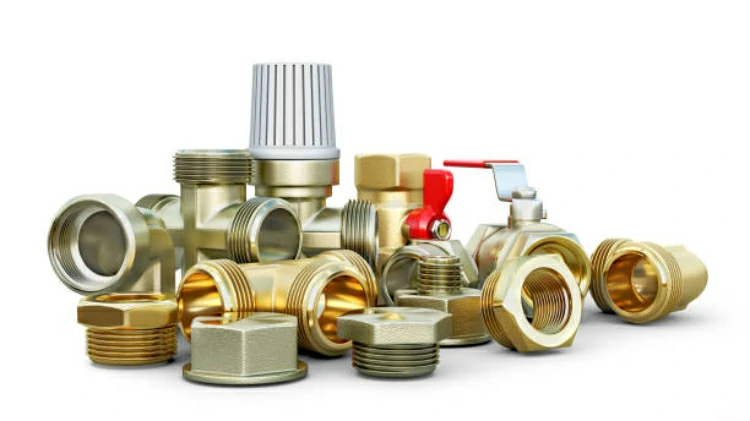
Everything above is only useful if it survives contact with a purchase order. Here is the whole thing assembled into something you can reuse.
A worked specification clause
The clause below is an illustrative template, not a record of any particular transaction. Adapt the designation and the destination market to your own order.
Material: all wetted components shall be copper alloy designation CW511L (or an alternative grade listed in the 4MS Common Approach on Metallic Materials Part B: Positive List of Compositions, subject to written approval by the Buyer prior to production). Grades CW602N, CW709R and CC491K are not acceptable.
Evidence: Seller shall supply, prior to shipment, (a) chemical composition analysis identifying the alloy and the material heat; (b) dezincification resistance test results under ISO 6509-1:2014, stating the measured dezincification depth and the acceptance criterion applied; (c) where the destination market requires it, extraction-of-metals results and the applicable drinking-water contact documentation. All reports shall be issued by a laboratory holding ILAC-MRA recognised accreditation and shall bear the accreditation mark. Reports shall identify the part numbers covered and be traceable to the production batch supplied.
Two clauses in there do the heavy lifting. “Subject to written approval prior to production” stops a substitution being discovered at inspection. “Traceable to the production batch supplied” is what turns a report from a sales document into evidence.
What actually moves your price
Four variables, roughly in order of impact. Read the right-hand column as the question to ask before you accept a quoted number.
| Factor | Sourcing implication |
|---|---|
| Alloy grade | Silicon brass and arsenical brass are different raw materials bought on different markets, and they machine differently. A grade change is a real cost change, not a negotiating position — so pushing back on it as if it were margin gets you nowhere. |
| Certification scope | Testing to one method for one market is a different exercise from carrying a listing across several. On small orders, scope is often a larger cost driver than unit volume — which means trimming the markets you certify for can save more than raising the quantity. |
| Thread form | Parallel versus tapered changes tooling, not just a dimension. If that decision is still open, our comparison of BSP versus NPT thread forms is the place to settle it before you ask anyone to quote. |
| Size mix spread | Each size carries its own setup, so a spread of sizes across a small total quantity costs more per unit than a concentrated order. Consolidating to fewer sizes is usually the cheapest lever a buyer actually controls. |
How MOQ is structured, and what we cannot tell you here
We are not going to print a minimum order quantity in an article, and you should be sceptical of any supplier who does — because MOQ on certified brass valves is not one number. It is set per alloy heat, per thread form, per size and per certification scope. An order for one designation in three sizes with a single certification requirement behaves completely differently from the same unit count spread across two alloys and two markets.
So the quantity question cannot be answered until the specification exists — which is why building the specification first, as above, is what gets you a real number rather than a placeholder.
What our own catalogue commits to — and where it stops
So that you can judge us by the same standard this article asks you to apply to anyone else, here is what our own published catalogue actually commits to, and where it stops.
The published brass valve range on this site runs to 26 listed items across three pages: nineteen in the 81068 ball valve series — including FF, FM, FM-B, MM, C and F variants and one with an integrated drain port — plus one angle valve, one water meter valve, one mini valve and one float valve, and three manifold items (a 205 manifold mould, a 108 manifold mould with union, and a 104/52718 manifold ball valve). If you only read the first page of that category you will see twelve tiles and undercount the ball valve series by more than half. The ball valves are published at a working pressure of up to 16 bar across a service range of −10 °C to 120 °C. The angle valve is listed in three inlet-by-outlet combinations only: 1/2″×3/8″, 1/2″×1/2″ and 1/2″×3/4″.
The mini valve is 1/2″FM, the water meter valve 3/4″FM, the float valve 1/2″ and 3/4″. Stated the way a metric specification would carry it, that is a published size range of DN15 to DN20 — available in two nominal sizes, not a size chart.
Read that list for what it does not say. The published range is a 1/2″ to 3/4″ range — it is not a DN15-to-DN50 range, and a supplier page that implies otherwise is describing an industry convention rather than its own stock. If your specification calls for 1″ or 2″ bodies, that is a custom enquiry for us, not a catalogue pick, and you should hear that from us before you build a schedule around it.
We also publish no alloy designation, no lead figure and no test report number against these SKUs — which, by the standard set out above, means our own catalogue currently fails the test this article tells you to apply. The honest position is that the designation has to be confirmed per order against what is on file, and that is a conversation, not a web page.
Lead time works the same way. The variable that moves it most is not production; it is whether your specification can be filled against alloy and documentation already qualified, or requires a new heat and a fresh test cycle.
| Scenario | Calendar impact |
|---|---|
| Existing qualified alloy heat, accredited reports already on file | Standard production lead time. The documentation is a retrieval task, not a testing task, so the schedule is driven by the production queue alone. |
| New designation requiring a new alloy heat plus fresh test reports | Add material procurement for the heat, plus the laboratory test cycle, on top of production. Ask for the two to be quoted separately — a supplier who cannot split them is quoting a guess. |
Which of those two rows your order falls into is a fair question to ask any factory before you commit, and the answer is checkable afterwards against the heat number on the composition report.
The tariff line your broker will use
For US imports, hand-operated valves of copper are classified under HTS 8481.80.10 — “taps, cocks, valves and similar appliances for pipes, boiler shells, tanks, vats or the like, hand operated, of copper” — with statistical suffixes distinguishing pressure ratings, such as 8481.80.1050 for units rated under 850 kPa. The general (MFN) column for that subheading is 4% ad valorem.
Treat that percentage as the base column only, not as your landed duty. Trade-remedy and additional duties can stack on top of the MFN rate and they change far faster than any article can track. The durable, useful part of this paragraph is the subheading — knowing that hand-operated copper valves sit at 8481.80.10 lets you ask your customs broker a precise question and get a current, binding answer. Confirm the applicable rate with your broker before you price the order.
For importers and wholesalers who already know the alloy designation they need: the published range is 26 items over three catalogue pages — nineteen 81068-series ball valves rated to 16 bar, plus angle, water meter, mini and float valves and three manifold items, in 1/2″ and 3/4″. Send the designation, sizes and destination market, and we will respond against your specification.
How to Choose, and What to Do Next
Choosing a brass valve manufacturer in China is not really a supplier-selection problem. It is a specification problem wearing a supplier-selection costume — because once your specification is precise, the field of factories that can meet it narrows on its own, and the ones that cannot will tell you by how they answer.
Best for, and not for
This approach fits you if you are importing for resale or distribution, carrying warranty exposure, or shipping into a market with an enforced potable-water regime. The documentation work is proportionate to what you are carrying.
It is more than you need if you are buying a small quantity for a non-potable application — compressed air, an industrial line with no drinking-water contact, or an isolation valve where dezincification and lead simply are not in play. In that case the alloy conversation is overhead, and you should say so to your supplier rather than paying for certification you will never use.
The checklist
- Name the designation. Pick a 4MS-listed grade — CW511L, CW625N, CW626N, CW724R or CW725R — and write it on the purchase order, not “lead-free brass”.
- Check your exposure to the 2027 withdrawal. If you hold or are ordering CW602N, CW709R or CC491K for Singapore, count the weeks against the end of February 2027 now, not after the goods ship.
- Ask for the right certificate. NSF/ANSI/CAN 372 for lead content, NSF/ANSI/CAN 61 for leaching — by name, with the covered part numbers confirmed.
- Check the accreditation mark on every report: SAC-SINGLAS, or ILAC-MRA where the lab is accredited through a partner.
- Demand the measured value, not a pass. A DZR result with no depth figure and no stated acceptance criterion tells you nothing.
- Verify the three matches — alloy, part number, batch — before you accept any report as evidence for your goods.
- Get the classification confirmed by your own broker against HTS 8481.80.10 rather than relying on a published rate.
Work through that list and the “how do I know they are not lying to me” question mostly dissolves, because you have replaced trust with documents that can be checked by someone other than the person selling to you. That is the only durable answer to sourcing risk at distance.
For distributors and agents evaluating territory terms — our agency policy page sets out how we work with distribution partners.
Frequently Asked Questions
Does “lead-free brass” mean the valve contains no lead?
No. Under the US Safe Drinking Water Act, “lead free” means a weighted average of 0.25% lead across wetted surfaces. Compliant valves contain lead below that ceiling.
What is the difference between NSF 372 and NSF 61?
NSF/ANSI/CAN 372 limits the lead content of the water-contact material. NSF/ANSI/CAN 61 limits what leaches from the product into drinking water. Neither one implies the other, so ask for each by name.
Which brass alloy should I specify for potable water?
Choose a grade on the 4MS Positive List of Compositions — CW511L, CW625N, CW626N, CW724R or CW725R. Write the designation on the purchase order, because “lead-free brass” is not testable.
What happens to CW602N and CC491K fittings in March 2027?
Singapore’s PUB circular WSN 92413/90/202301 withdraws CW602N, CW709R and CC491K from supply with effect from 1 March 2027. Fittings of those grades may be supplied until end February 2027.
How do I verify a Chinese supplier’s test report?
Check that it carries an accreditation mark such as SAC-SINGLAS or ILAC-MRA, states a measured value rather than only a pass, and matches your alloy designation, part numbers and production batch.
What HTS code applies to brass valves imported into the US?
Hand-operated copper valves fall under HTS 8481.80.10, with a 4% general MFN rate. Additional duties can apply on top, so confirm the current landed rate with your customs broker.
What is the minimum order quantity for lead-free brass valves?
There is no single figure. MOQ is set per alloy heat, thread form, size and certification scope. Our own published range is 1/2″–3/4″ across 26 SKUs — nineteen of them 81068-series ball valve variants — so send the size and grade mix to get a real number.










 Español
  English
  Français
  Русский
Comentarios recientes