
Complete PEX Plumbing Pipe And Fittings Guide
Core keyword: PEX plumbing pipe fittings | Reading time: ~12 minutes | For: Plumbing contractors and specifiers
If you have installed plumbing systems in the last decade, you have almost certainly worked with PEX. Cross-linked polyethylene pipe has moved well past the “alternative material” stage. For many residential contractors, PEX is now the default specification for domestic water distribution. But the material options, fitting systems, and code requirements around PEX plumbing pipe fittings have grown more complex. There are three distinct PEX types, at least three mainstream connection methods, and certifications that vary by jurisdiction.
This guide breaks down the technical details that matter on the job. We cover PEX type differences from a manufacturing perspective, compare fitting systems with cost and reliability data, walk through sizing and color coding, and lay out the installation practices that prevent callbacks. Whether you are specifying pipe for a new-build subdivision or repiping a commercial building, this reference should answer the questions that come up between the blueprint and the pressure test.
Table of Contents
- What Is PEX Pipe and Why It Changed Plumbing
- PEX-A vs PEX-B vs PEX-C: Types Compared
- PEX Fitting Types: Crimp, Clamp, and Push-to-Connect
- PEX Pipe Sizes and Color Coding
- Where PEX Plumbing Excels (and Where It Doesn’t)
- Installation Best Practices for PEX Plumbing
- PEX Standards and Certifications
- Choosing the Right PEX System for Your Project
- Frequently Asked Questions
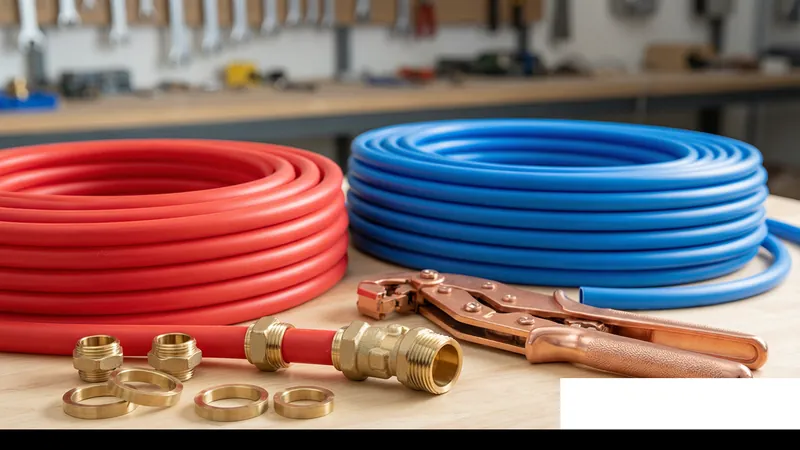

What Is PEX Pipe and Why It Changed Plumbing
PEX stands for cross-linked polyethylene. The base material is high-density polyethylene (HDPE), and the “X” denotes a chemical or physical process that creates cross-links between polymer chains. These cross-links transform the molecular structure from a thermoplastic into a thermoset material, which gives PEX its characteristic combination of flexibility, temperature resistance, and long-term durability under pressure.
The shift to PEX in residential plumbing did not happen overnight. Copper dominated for decades, and CPVC held a significant share in certain markets. What changed the calculus was a combination of factors: PEX offered lower material cost, faster installation through flexible long-length runs, freeze-damage resistance (the pipe can expand and contract without cracking), and fewer fittings, which means fewer potential leak points. PEX pipe is rated for operating temperatures up to 200°F at 80 psi working pressure, which covers virtually every domestic hot and cold water application.
From a contractor’s standpoint, the labor savings are significant. A crew can rough-in a standard residential plumbing system with PEX in roughly half the time it takes with copper soldering or CPVC solvent welding. Fewer tool changes, no open flame, and the ability to run long lengths through framing without intermediate joints all add up on the schedule.
If you are sourcing PEX pipe and fittings for upcoming projects, understanding the differences between PEX types and fitting systems helps you specify the right combination for each application.
PEX-A vs PEX-B vs PEX-C: Types Compared
All three PEX types meet the same base ASTM standards (F876 for pipe, F877 for fittings), but they differ in how the cross-linking is achieved during manufacturing. These differences affect flexibility, kink resistance, cost, and field handling characteristics. Here is the breakdown from a factory production perspective.
| Недвижимость | PEX-A (Engel/Peroxide) | PEX-B (Silane/Moisture) | PEX-C (Electron Beam) |
|---|---|---|---|
| Crosslinking Method | Peroxide (hot extrusion) | Silane (moisture cure) | Electron beam (radiation) |
| Crosslink % | ~80% (highest) | ~65-70% | ~70-75% |
| Гибкость | Most flexible | Moderate | Least flexible of the three |
| Kink Resistance | Best — kinks can be repaired with heat gun | Good — kinks typically require cutting out | Moderate — kinks require cutting out |
| Memory / Shape Retention | Strong memory — returns to coil shape | Holds bent shape better | Moderate memory |
| Relative Cost | Highest | Lowest (most produced in NA) | Mid-range |
| Typical Applications | Expansion systems, radiant floor heat, retrofits | Residential water distribution, crimp/clamp systems | Specialty applications, geo-thermal |
PEX-A earns its premium price through the Engel process, which uses peroxide to create cross-links during extrusion. The result is the highest cross-link percentage at roughly 80%, giving PEX-A superior flexibility and kink resistance. On a job site, a kink in PEX-A can often be repaired by applying heat with a heat gun, whereas a kink in PEX-B or PEX-C generally means cutting the section out.
PEX-B dominates the North American residential market. The Silane method is less expensive to produce at scale, and the pipe performs reliably with crimp and clamp fitting systems. Its slightly stiffer wall can actually be an advantage when running long horizontal pulls, because it holds shape better and does not spring back from coil as aggressively as PEX-A.
PEX-C is the least common in general plumbing. The electron beam process does not require chemical agents during extrusion, which appeals to certain specification requirements. However, the process is slower and more expensive. You will encounter PEX-C most often in specialized applications like geothermal loops.
Factory note: From a manufacturing standpoint, PEX-B accounts for the majority of global PEX pipe production volume. If you are sourcing from a factory for a large project, PEX-B typically has shorter lead times and more competitive pricing. PEX-A is also widely available, though depending on the supplier, certification and region it typically carries a 10-20% material cost premium that can show up in per-foot pricing.
PEX Fitting Types: Crimp, Clamp, and Push-to-Connect
The pipe gets the attention, but the fittings determine whether your system holds pressure for twenty years or develops a weep joint in two. Three connection methods dominate professional PEX installations: copper crimp rings, stainless steel clamp rings, and push-to-connect fittings. Each has distinct tool requirements, per-connection costs, and field characteristics.
| Attribute | Crimp (ASTM F1807) | Clamp (ASTM F2092) | Push-to-Connect |
|---|---|---|---|
| Ring Material | Copper | Stainless steel | Integrated collet + O-ring |
| Tool Type | Crimp tool (ratchet or press jaw) | Clamp tool (cinch tool) | No special tool (push to seat) |
| Verification | Go/no-go gauge check | Visual: tabs flush with tool head | Visual: collar seated, pull test |
| Cost per Connection | Typical retail: low ($0.50-$1.50 per ring) | Typical retail: low ($0.60-$1.80 per clamp) | Typical retail: high ($3-$8+ per fitting) |
| Best Use Case | Full-system installs, high volume | Full-system installs, tight spaces | Repairs, retrofits, tight access |
| Removability | Cut off, replace ring | Cut off, replace clamp | Disconnect collar, pull apart |
| Long-Term Track Record | 30+ years in market | 20+ years in market | 15+ years, growing adoption |
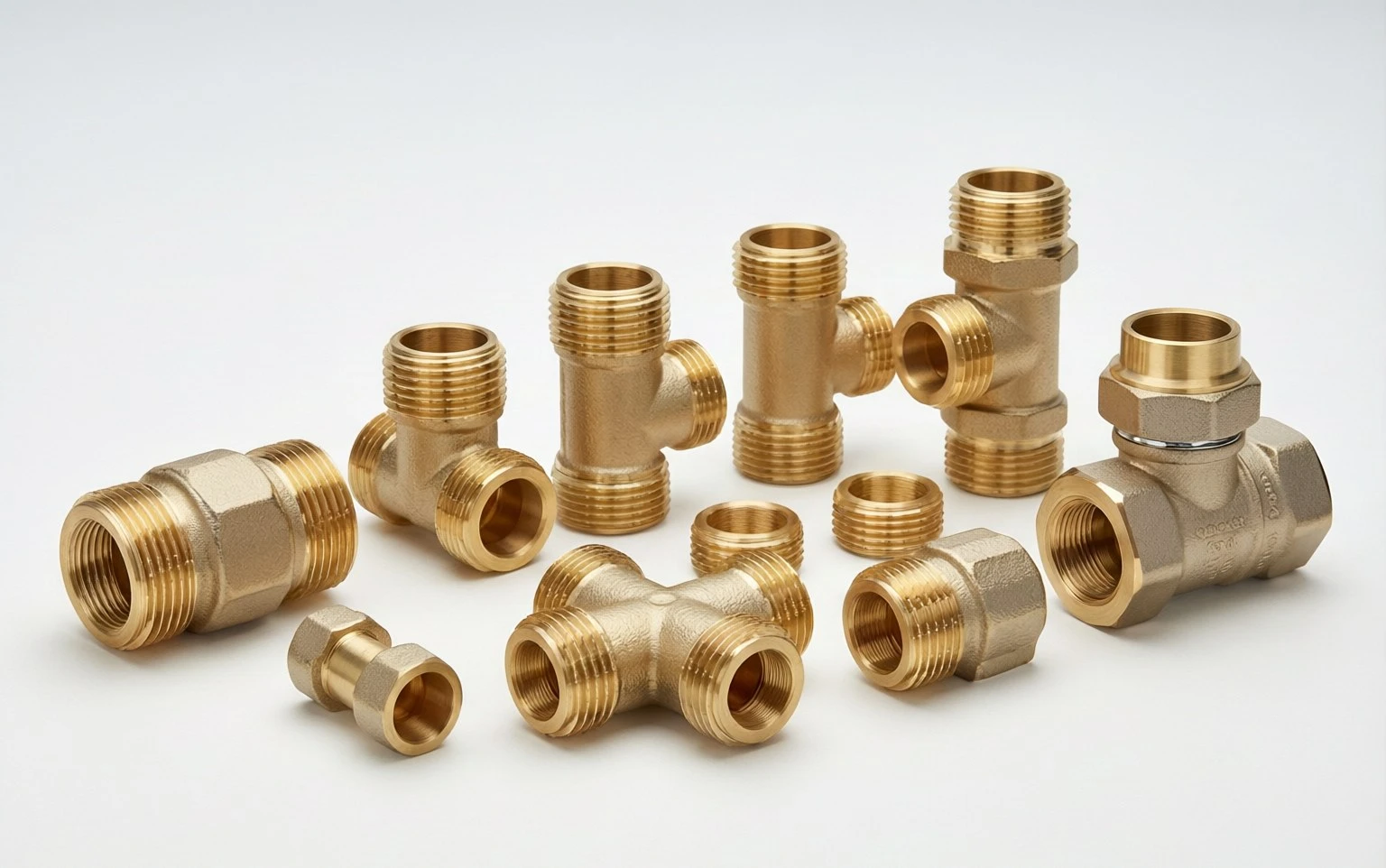
Crimp fittings use copper rings compressed around the pipe and fitting barb with a ratchet or press tool. The ASTM F1807 standard governs the fitting dimensions and ring specifications. After crimping, you verify the connection with a go/no-go gauge. This system has the longest field history and remains the default choice for high-volume residential installations.
Clamp fittings (also called cinch fittings) use stainless steel rings instead of copper. The ASTM F2092 standard covers these. The cinch tool is generally smaller and lighter than a crimp tool, which makes it easier to use in confined spaces. Stainless steel clamps also offer better corrosion resistance in environments where copper crimp rings might degrade. Verification is visual: the clamp ears should be flush with the tool head after cinching.
Push-to-connect fittings eliminate the need for a compression tool entirely. An internal stainless steel collet grips the pipe, and an O-ring provides the seal. These are significantly more expensive per connection, which is why most contractors reserve them for repairs, tight-access situations, or temporary bypasses. They are a legitimate permanent connection method, but the cost differential matters on a whole-house repipe.
PEX Pipe Sizes and Color Coding
PEX pipe for residential and light commercial plumbing is available in sizes from 3/8 inch through 1 inch nominal. The two most common sizes are 1/2 inch for branch lines feeding individual fixtures and 3/4 inch for main distribution lines. Understanding the relationship between nominal size, outside diameter, and flow capacity helps you avoid undersized runs.
| Nominal Size | OD (inches) | ID (inches, approx.) | Typical Use |
|---|---|---|---|
| 3/8″ | 0.500 | 0.358 | Ice maker lines, single fixture supply |
| 1/2″ | 0.625 | 0.475 | Branch lines to fixtures (standard) |
| 5/8″ | 0.750 | 0.579 | Extended branch runs, higher flow demand |
| 3/4″ | 0.875 | 0.681 | Main distribution lines, manifold feed |
| 1″ | 1.125 | 0.875 | Main trunk lines, service entry |
Color coding follows an industry convention: red for hot water lines, blue for cold water lines, and white for either. The color is compounded into the PEX material during extrusion, so it runs through the entire pipe wall. This is not a code requirement in every jurisdiction, but it simplifies identification during installation and future service work. Most inspectors and contractors expect to see the color convention followed.
One sizing consideration that catches some contractors off guard: PEX has a smaller inside diameter than copper at the same nominal size. A 1/2-inch PEX pipe has a smaller ID than 1/2-inch Type L copper. In most residential applications, this does not cause problems, but if you are replacing copper with PEX in a system that was already marginal on flow, you may need to upsize the PEX to maintain equivalent performance.
Where PEX Plumbing Excels (and Where It Doesn’t)
PEX is not the right choice for every situation, and specifying it honestly builds more trust with clients than overselling. Here is an application matrix based on where PEX performs best and where you should consider alternatives.
| Application | PEX Suitability | Notes |
|---|---|---|
| Residential hot/cold water distribution | Excellent | Default choice for most contractors |
| Radiant floor heating loops | Excellent | PEX-A preferred for flexibility in tight loops |
| Whole-house repipes | Excellent | Flexible pipe reduces wall openings needed |
| Underground service (buried) | Good | Use sleeved pipe; check local code on burial depth |
| Commercial buildings (metal-required specs) | Limited | Some commercial specs require metal piping |
| UV-exposed exterior runs | Not recommended | UV degrades PEX; many manufacturers limit unprotected UV exposure before install, commonly 30-60 days (confirm the exact limit on the pipe’s technical data sheet) |
| Steam distribution | Not suitable | PEX rated to 200°F; steam exceeds this |
PEX’s freeze resistance is one of its most valued properties in cold climates. The pipe can expand when water freezes inside it and contract back when the ice thaws, often without damage. This does not mean PEX is freeze-proof — repeated freeze-thaw cycles will eventually fatigue the material — but it provides a margin of safety that rigid pipe systems cannot match.
The UV limitation is worth emphasizing. Most manufacturers specify a maximum of 30 to 60 days of UV exposure before installation. If you have exterior runs that will see sunlight, protect the pipe with insulation or conduit, or specify a different material for that section.
Installation Best Practices for PEX Plumbing
Most PEX installation problems trace back to a handful of preventable mistakes. The following practices come from manufacturer installation guides, field experience, and the kind of lessons learned after a pressure test failure or a callback for a leak.
Support spacing. PEX requires more frequent support than rigid pipe. Horizontal runs should be supported every 26 to 32 inches (check your local code; some jurisdictions specify 30 inches maximum). Vertical runs need support at each floor level and at intervals not exceeding the manufacturer’s recommendation. Use plastic or copper hangers — avoid steel hangers that can create a galvanic reaction or cut into the pipe wall.
Bend radius. PEX can bend around corners, but every type has a minimum bend radius. For 1/2-inch PEX, this is typically 5 inches. For 3/4-inch, it is about 7 inches. Bending tighter than the minimum radius stresses the pipe wall and can cause premature failure. Use bend supports or 90-degree elbow fittings when you cannot achieve the minimum radius naturally.
Thermal expansion. PEX expands and contracts with temperature changes at a rate of approximately 1.1 inches per 100 feet of pipe per 10 degrees Fahrenheit temperature change. In long hot water runs, this adds up. Plan for expansion with offset bends, expansion loops, or directional changes in the routing. Ignoring thermal expansion is the most common cause of PEX noise complaints — pipes banging or ticking as they expand against framing.
Crimp and clamp technique. Cut PEX square using a dedicated PEX cutter. A skewed cut prevents the ring from seating evenly on the fitting barb. Slide the ring onto the pipe before inserting the fitting. After crimping or clamping, verify with a go/no-go gauge (crimp) or visual inspection (clamp). A connection that fails the gauge check must be cut out and redone.
Pro tip: Keep your crimp tool jaws calibrated. A crimp tool that has dropped 20+ times on a job site can drift out of spec. Check calibration monthly with the manufacturer’s go/no-go gauge. A poorly crimped ring may look fine visually but fail under pressure cycling over time.
Pressure testing. After completing the installation, pressure test the entire system before closing walls. Test at 1.5 times the working pressure (typically 75-100 psi for residential) for a minimum of 15 minutes. Check every fitting visually during the test. A slow leak at any connection point is easier to find and fix before drywall goes up.
PEX Standards and Certifications
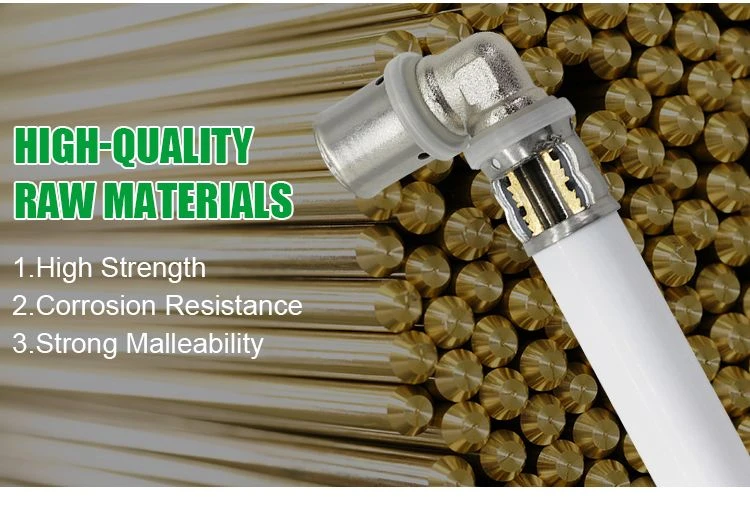
Specifying PEX plumbing pipe fittings that meet the right standards protects you from code violations, failed inspections, and liability issues. Here are the key certifications to verify on any PEX product you purchase.
ASTM F876 covers the dimensional, mechanical, and hydrostatic requirements for PEX tubing. ASTM F877 covers PEX fittings. Together, these are the baseline material standards. Any PEX pipe or fitting sold for plumbing use in the US should be listed as compliant with both.
NSF/ANSI 61 certifies that the product is safe for drinking water contact. This is non-negotiable for any potable water application. NSF/ANSI 372 certifies lead-free status, defined as a weighted average lead content of no more than 0.25% across the wetted surfaces of the product. Both certifications are required by the US Safe Drinking Water Act for any product that contacts drinking water.
UPC/IAPMO listing indicates that the product has been evaluated by the Uniform Plumbing Code authority. Many local jurisdictions adopt the UPC and require listed products. Look for the UPC mark on the pipe or fitting, or verify the product appears in the IAPMO online directory.
CSA B137.5 is the Canadian standard for PEX piping systems. If you are supplying projects in Canada, products must meet this standard in addition to or in place of ASTM standards, depending on the province.
Request certification documentation from your supplier before placing a bulk order. Reputable manufacturers provide test reports and certification numbers that you can verify independently.
Choosing the Right PEX System for Your Project
The right PEX system depends on the project type, your crew’s tooling, local code requirements, and budget. Here is a decision framework that simplifies the choice for common scenarios.
For new residential construction with high-volume production, PEX-B with crimp or clamp fittings offers the best balance of material cost, speed, and proven reliability. Most production builders and plumbing contractors in North America have standardized on this combination.
For лучистое отопление пола systems, PEX-A is the typical choice. Its flexibility allows tighter loop spacing without stress on the pipe, and its kink resistance matters when you are routing hundreds of feet through a manifold system. The expansion fitting method used with PEX-A also provides a full-flow connection with no reduction at the fitting point.
For repipes and retrofits where you are working in occupied spaces with limited access, push-to-connect fittings can save significant time at specific connection points. Use them selectively for repairs and transitions, and stick with crimp or clamp for the bulk of the system to keep material costs manageable.
For commercial projects, check the specification first. Some commercial projects require metal piping by spec, and PEX may not be acceptable for certain riser or main lines. Where PEX is permitted, the same residential guidelines apply, with extra attention to support spacing and expansion management.
When you are ready to source materials, reviewing the full product catalog gives you a clear picture of available PEX pipe sizes, fitting types, and connection systems. For project-specific guidance or bulk pricing, contact our team directly. We also offer agency partnership programs for contractors with recurring supply needs.
Frequently Asked Questions
How long does PEX pipe last?
PEX manufacturers typically rate their products for a 50-year service life under normal operating conditions (73.4°F at 80 psi continuous). Actual lifespan depends on water chemistry, temperature cycling, and installation quality. PEX systems installed in the early 1990s are still performing well in many homes.
Can I connect PEX to copper pipe?
Yes. Transition fittings are available to connect PEX to copper pipe using threaded, sweat (solder), or push-to-connect ends on the copper side and crimp, clamp, or expansion connections on the PEX side. These transitions are common during repipes where you are replacing part of the system.
Is PEX approved for use in all states?
PEX is approved under the major model plumbing codes (UPC, IPC) used across the United States. However, local jurisdictions may have specific amendments or restrictions. Check with your local building department before specifying PEX for a project.
What is the difference between crimp and clamp PEX fittings?
Both create a mechanical seal by compressing a ring around the pipe and fitting barb. Crimp fittings use copper rings (ASTM F1807) verified with a go/no-go gauge. Clamp fittings use stainless steel rings (ASTM F2092) verified visually. The clamp tool is smaller and works better in tight spaces. Stainless steel clamps offer better corrosion resistance. Both are proven, code-approved connection methods.
Can PEX be used for underground water service?
PEX can be used for underground water service lines, but best practice is to sleeve it inside a protective conduit or use PEX pipe specifically rated for direct burial. Check local code for burial depth requirements.
Which PEX type is best for radiant floor heating?
PEX-A is the most commonly specified type for radiant floor heating due to its superior flexibility, which allows tighter loop spacing and easier routing through manifold systems. PEX-B with an oxygen barrier layer is also used in radiant systems and offers a lower-cost alternative.










 Русский
  English
  Français
  Español
Последние комментарии