
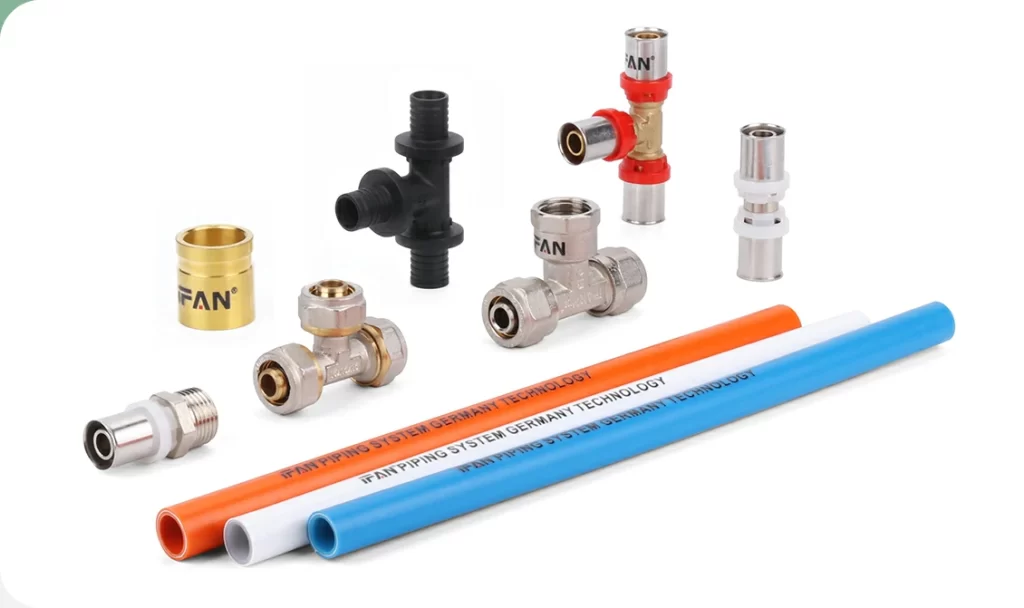
1. Key Factors in Choosing Pipe Fittings
- The “joints” of piping systems: Critical for connection, redirection, and flow control
- Four Core Selection Criteria:
▶ Material Compatibility (temperature/pressure resistance, corrosion resistance)
▶ Application Scenarios (industrial/residential, high/low pressure, indoor/outdoor)
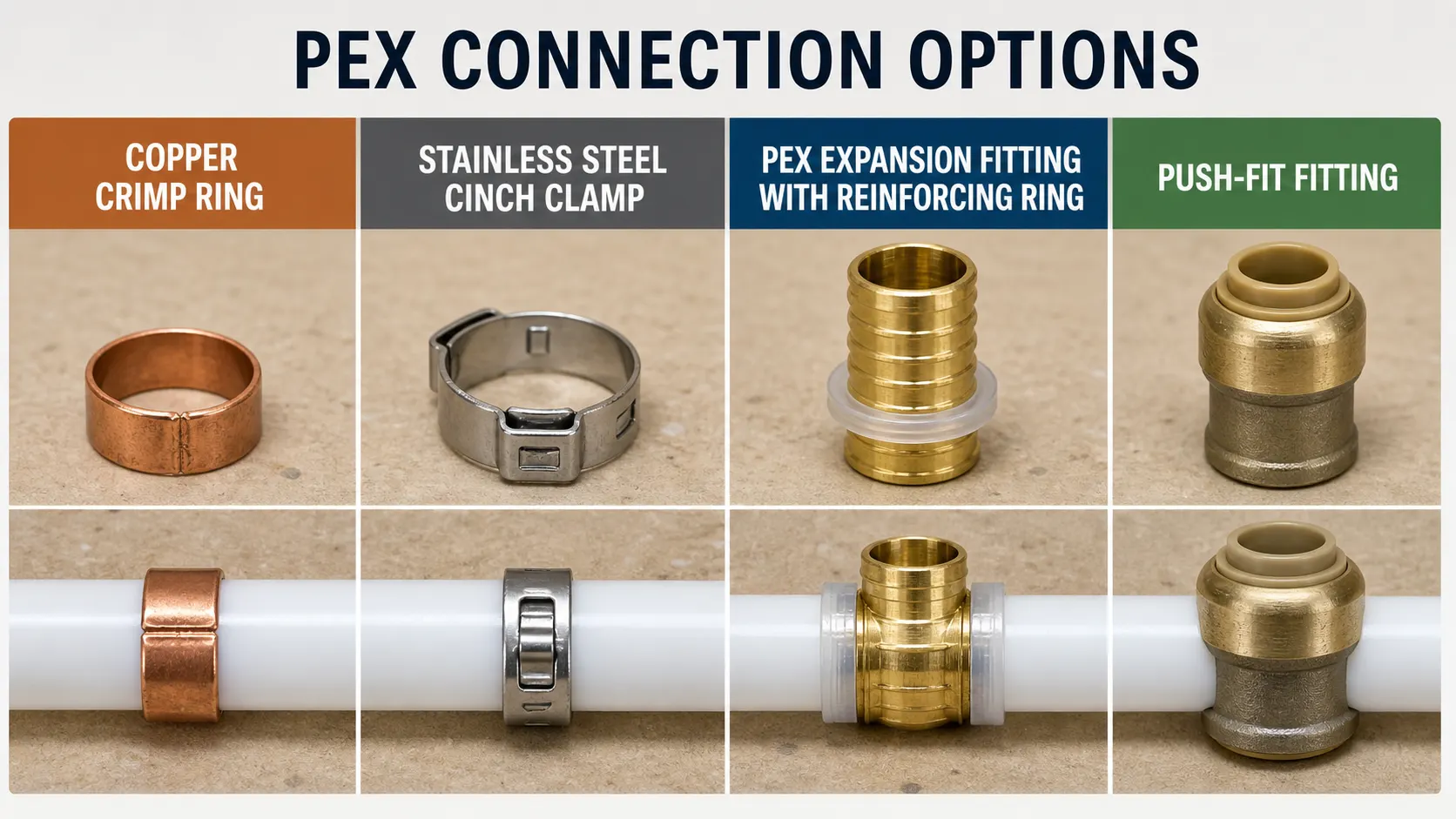
▶ Connection Methods (threaded/welded/crimped/fusion)
▶ Standards & Certifications (ISO, ASME, GB/T, etc.)
2. Main Materials for Pipe Fittings: Pros and Best Uses
| Material | Examples | Key Advantages | Ideal Applications | Lifespan (Years) |
|---|---|---|---|---|
| Metallic | Copper, Stainless Steel, Carbon Steel | High strength, high temp resistance (300℃+) | Industrial high-pressure systems, gas transmission | 20-50 |
| Plastic | PPR, PEX, PVC | Corrosion resistance, easy installation, cost-effective | Residential water supply, underfloor heating | 15-30 |
| Composite | Steel-plastic, Aluminum-plastic | Balances metal strength and plastic corrosion resistance | Complex environments (moisture, acid-base) | 25-40 |
3. Best Fittings by Application
① High-Pressure Industrial Systems (e.g., Petrochemical)
- Top Picks: Stainless steel flanges, forged steel valves, welded elbows
- Key Metrics: Pressure rating (ANSI 150LB+/PN16+), stress corrosion resistance
② Residential Water Supply/Drainage
- Top Picks: PPR fusion fittings, brass threaded connectors, PVC push-fit fittings
- Key Metrics: Hygiene certification (e.g., NSF 61), installation ease
③ Gas Transmission Systems
- Top Picks: Stainless steel corrugated hoses, copper compression fittings, explosion-proof valves
- Key Metrics: Gas-specific certification (e.g., CE EN 10241), airtightness
④ Underfloor Heating/Hot Water Systems
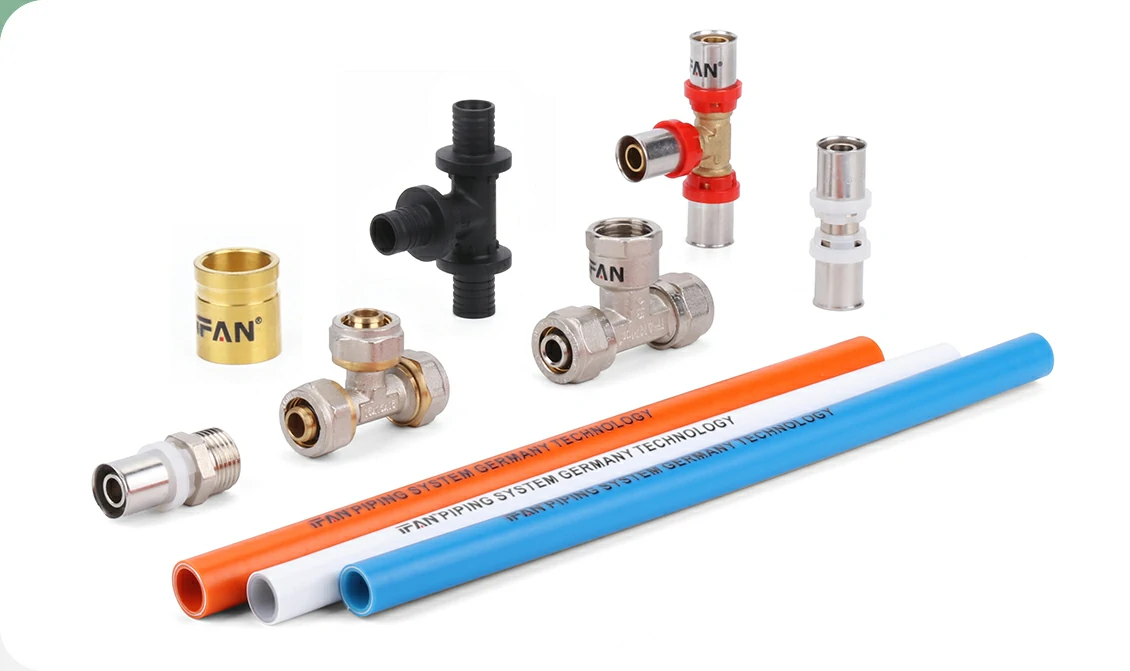
- Top Picks: PEX-A crimp fittings, PB fusion elbows, aluminum-plastic composite fittings
- Key Metrics: Temperature range (-40℃~95℃), anti-aging properties
4. How Connection Methods Impact Performance
- Threaded: Pros – Universal and easy; Cons – Leak-prone under high pressure (best for low-pressure)
- Fusion/Welded: Pros – Leak-free; Cons – Non-reversible (best for permanent systems)
- Compression/Push-fit: Pros – Tool-free installation; Cons – Regular sealing checks needed (best for temporary/repair)
- Flanged: Pros – High-strength and detachable; Cons – High cost and weight (best for large industrial pipes)
5. Risks of Choosing Low-Quality Fittings
- Safety Hazards: Non-certified materials may release harmful substances (e.g., PVC for drinking water)
- Shortened Lifespan: Stress cracking from material mismatch (e.g., metal fittings with plastic pipes)
- Higher Maintenance Costs: Long-term leaks from poor-quality seals
6. ifan Pipeline’s Professional Solutions
- Full Material Range: 20+ materials including SS304/316, PPR, copper, etc.
- Customization: Non-standard sizes and special pressure ratings (e.g., PN40) available
- Certifications: ISO 9001, CE, SGS, and other international standards
- Free Technical Support: System compatibility analysis and fitting selection advice
Conclusion
The “best” pipe fittings depend on your specific environment, performance needs, and budget. Prioritize strength and certifications for industrial use, and ease of installation/hygiene for residential. As a 20-year manufacturer, ifan Pipeline provides tailored solutions for any project. Visit ifanultra.com today for a free selection guide and case studies.




 Français
  English
  Русский
  Español
Commentaires récents