
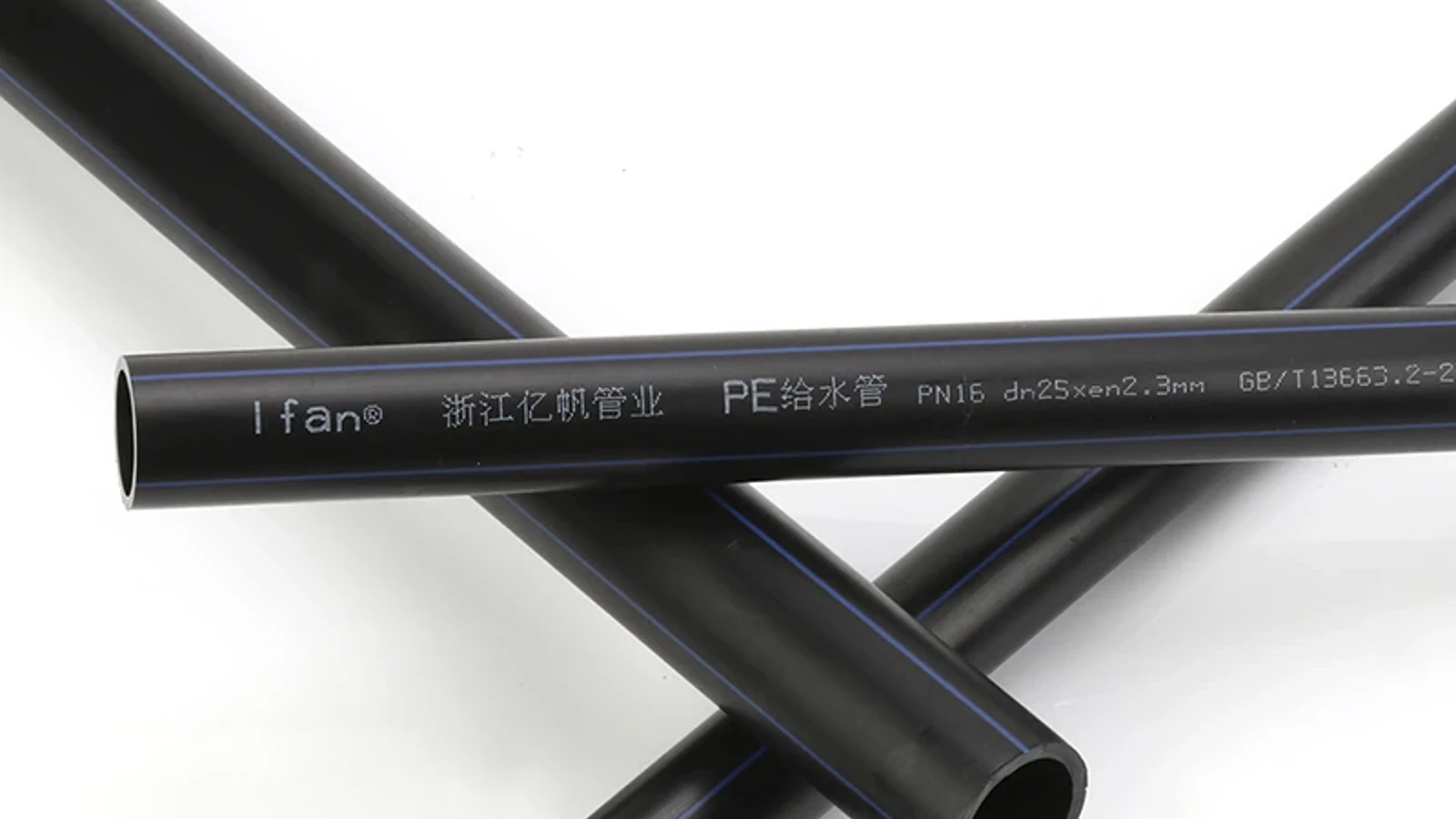
An HDPE pipe repair clamp can be a permanent local repair when the exact product is documented for the pipe, damage and service. A permanent seal does not automatically provide a joint or axial restraint. If the repair must reconnect cut or separated ends, assess the joining and restraint of the complete assembly; an unknown clamp that has stopped leaking remains unqualified.
The leak has stopped, the excavation is awkward and the temptation is to backfill. Before accepting that repair, write down what the clamp is actually being asked to do. This water-service guide helps a maintenance supervisor or repair buyer choose between a supported local-seal candidate, a documented replacement connection and a hold for missing evidence. It does not prescribe live-line work, bolt settings or gas repairs.
Key Takeaways
- Some manufacturers explicitly offer HDPE clamps for permanent repair; “all clamps are temporary” is too broad.
- Local sealing and joining separated pipe ends impose different duties.
- A product can offer permanent full-fracture sealing while explicitly providing no axial restraint.
- Check the exact model against the actual pipe, defect and service, rather than transferring another clamp’s limits.
- When damaged pipe must be cut out, qualify the replacement spool’s connections and restraint as a complete assembly.
- Several leak-free days establish an observation, not documented long-term suitability.
A leak seal and a restrained joint solve different problems
A local repair clamp encloses a damaged area and seals against the surrounding pipe. Its documentation must cover that repair. A replacement connection has an additional responsibility: it joins pipe ends that can separate. The load path is a separate acceptance question. A dry gasket does not show what carries the axial force across a cut or break.
Start with the condition of the pipe and the proposed arrangement. If a local defect can be enclosed by a qualified repair device, evaluate that device’s permitted damage and service. If the damaged length has to be removed, the resulting ends need a documented joining arrangement. Calling both products “repair couplings” on an order does not make their functions interchangeable.
| Proposed duty | What must be established | What a stopped leak leaves unanswered |
|---|---|---|
| Seal a supported local defect | The identified clamp covers that host pipe, damage and service. | Whether its qualification and installation conditions match the actual repair. |
| Repair across a fracture with separate restraint | The sealing device and the approved restraint arrangement cover their respective duties together. | Whether the separate restraint exists and is accepted for this configuration. |
| Join cut or separated ends | A documented joining assembly provides the necessary sealing and axial restraint. | Whether an enclosing band has any joining or restraint capability at all. |
This distinction is supported by the contrast between AVK’s named HDPE repair clamp and the Plastics Pipe Institute’s extensive-damage repair guidance. AVK describes a permanent repair while excluding axial restraint and pipe joining. PPI describes specified replacement connections that provide sealed, axially restrained joints. Neither description can be borrowed to fill a gap in the other.
Read the permanent-repair claim and its exclusions together
AVK variant 748/90-002 is a useful example because its product page makes both statements on the same page. It says that a pipe with a hole, crack or full fracture can be repaired permanently. It also says the product provides no axial restraint and should not be used to join pipe. Read those as simultaneous conditions, rather than selecting the sentence that supports a preferred answer.
The permanent-repair statement defeats a blanket rule that every mechanical band on HDPE is merely temporary. The exclusion defeats the opposite shortcut: treating the word “permanent” as proof that the band reconnects and restrains separated ends. A manufacturer’s claim has a defined product and application scope; the adjective does not supply capabilities the same manufacturer excludes.
A full fracture therefore needs a more careful question than “Is every clamp forbidden?” Suppose a project has a separately engineered and approved restraint arrangement covering the fracture and its possible movement. That arrangement may address the axial duty while an appropriate qualified device provides the local seal. The assessment concerns the complete configuration. The clamp has not acquired axial restraint merely because another component provides it.
Now change the condition: no separate restraint is identified, and the repair proposal relies on the nonrestraining band alone to connect separated ends. The manufacturer’s joining exclusion remains unresolved. Return that proposal for a supported assembly or another repair route. Do not assume restraint from buried soil, limited access or the fact that the pipe has not visibly moved.
These are conditional selection examples, not approval of an AVK installation or another manufacturer’s fracture repair. Use the selected product’s current instructions and the operating authority’s acceptance requirements. The AVK example establishes why local sealing and restraint must be checked independently; it does not select the clamp for an unidentified main.
Source and scope
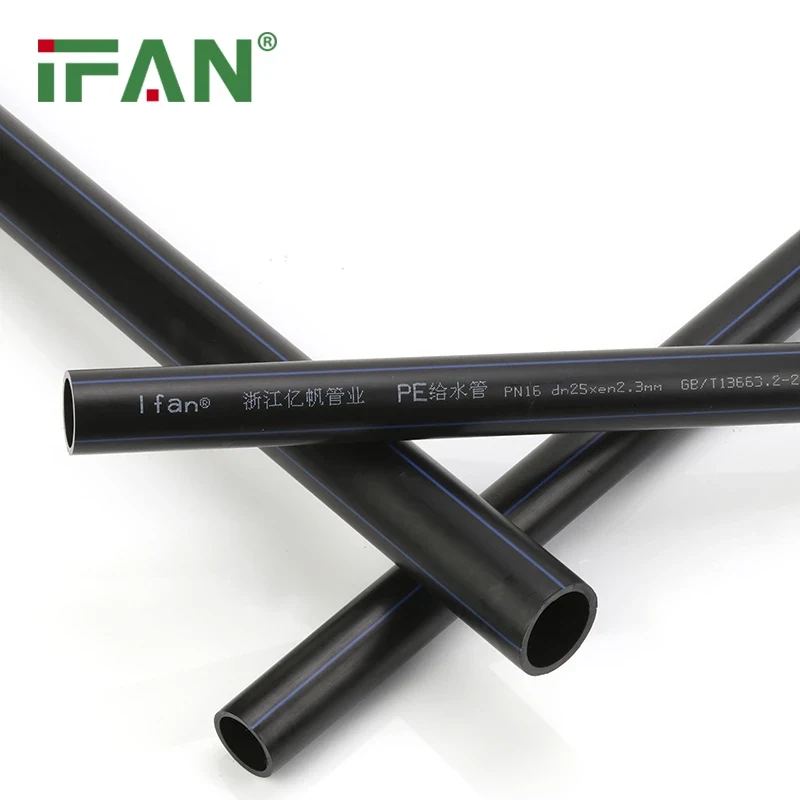
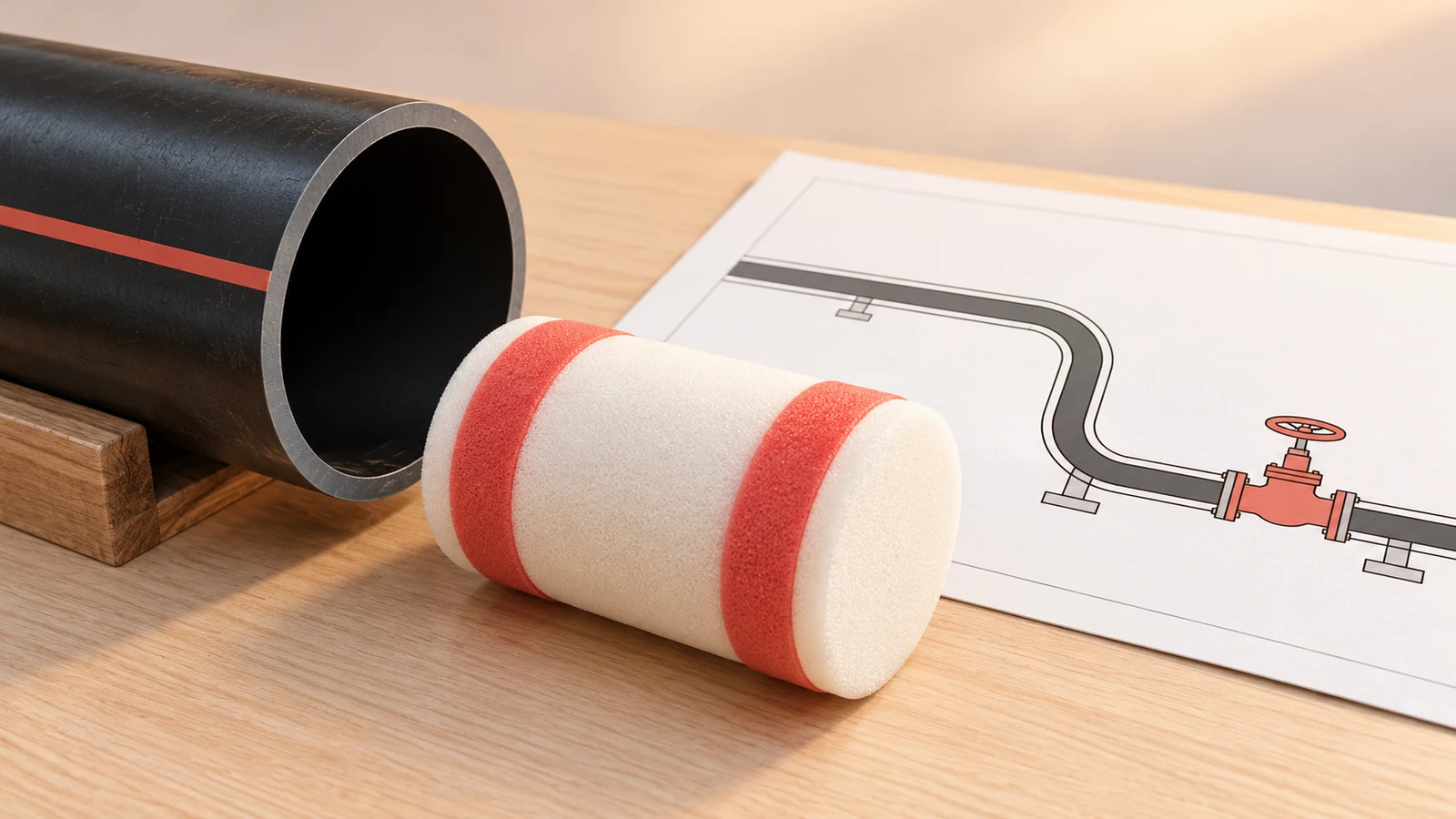
Photo from the existing IFANPRO backend library. No claim that the shown pipe dimensions match the repair example.
Check the exact assembly against the pipe, defect and service
HDPE-specific design matters after the first seal is made. Romac’s SS1-H page describes spring washers on its named HDPE repair clamps to compensate for pipe contraction during temperature and pressure changes. That is a concrete manufacturer response to dimensional change, not evidence that any stainless band with a rubber gasket performs the same way.
PPI’s extensive-damage guidance also discusses creep and temperature-related dimensional changes when explaining the general recommendation for stiffeners in HDPE couplings, unless otherwise specified. Keep the device categories distinct. A recommendation concerning a coupling does not establish that every wraparound clamp needs an internal stiffener, and a spring-washer design does not establish universal bolt torque or retightening intervals.
A pipe-family name is not a clamp qualification. Match the identified repair model to the actual outside diameter and the permitted pipe wall or SDR, then to the defect and the fluid, pressure and temperature duty. Check the documented conditions together. A pressure rating from a different size, material or configuration is not a substitute for the selected assembly’s scope.
Record the damage extent as well as the visible leak point. The sealing area must correspond to what the product is intended to repair; a photograph of one wet spot does not establish the full crack extent or the condition beneath an existing band. Where that extent is unknown, the defect assessment is a missing input. It cannot be resolved by choosing a familiar catalogue photograph.
Source and scope
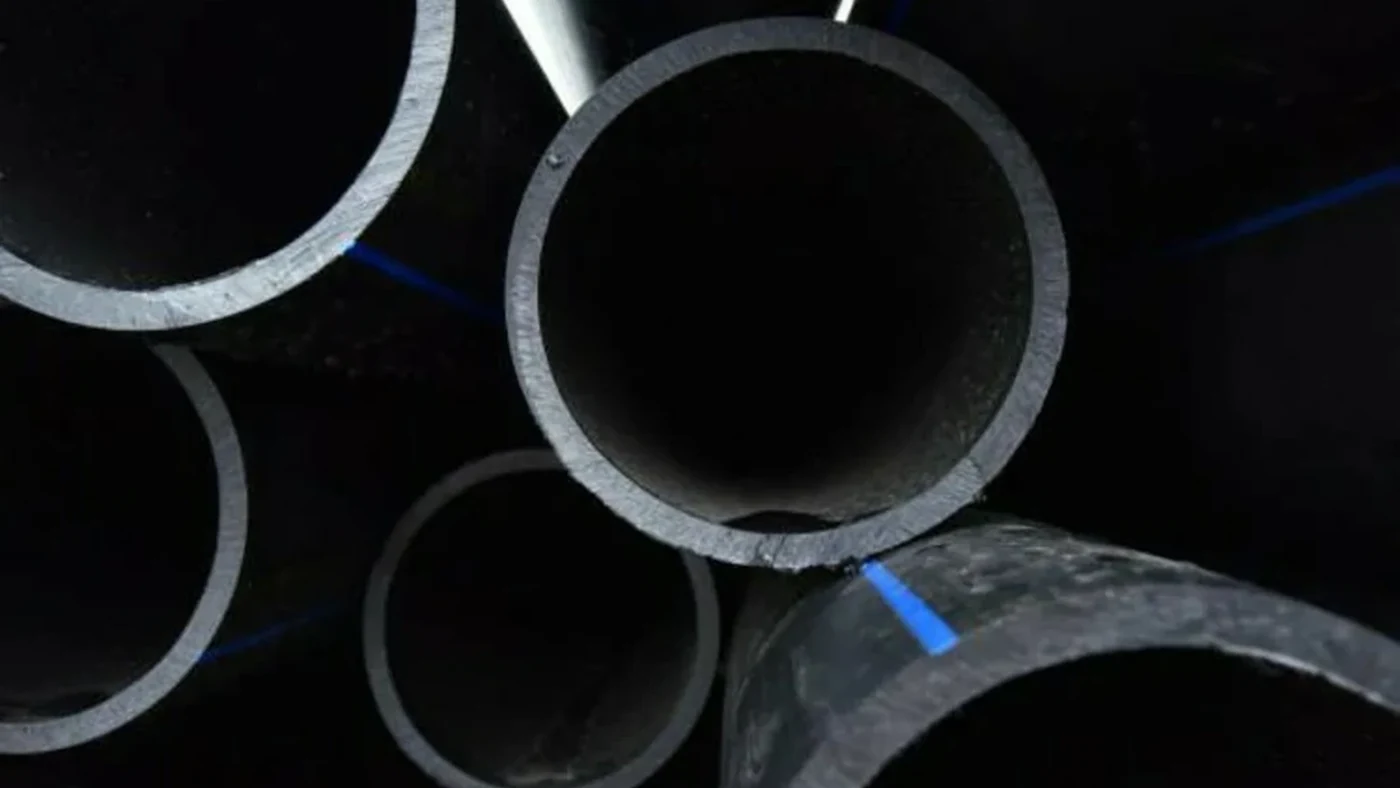
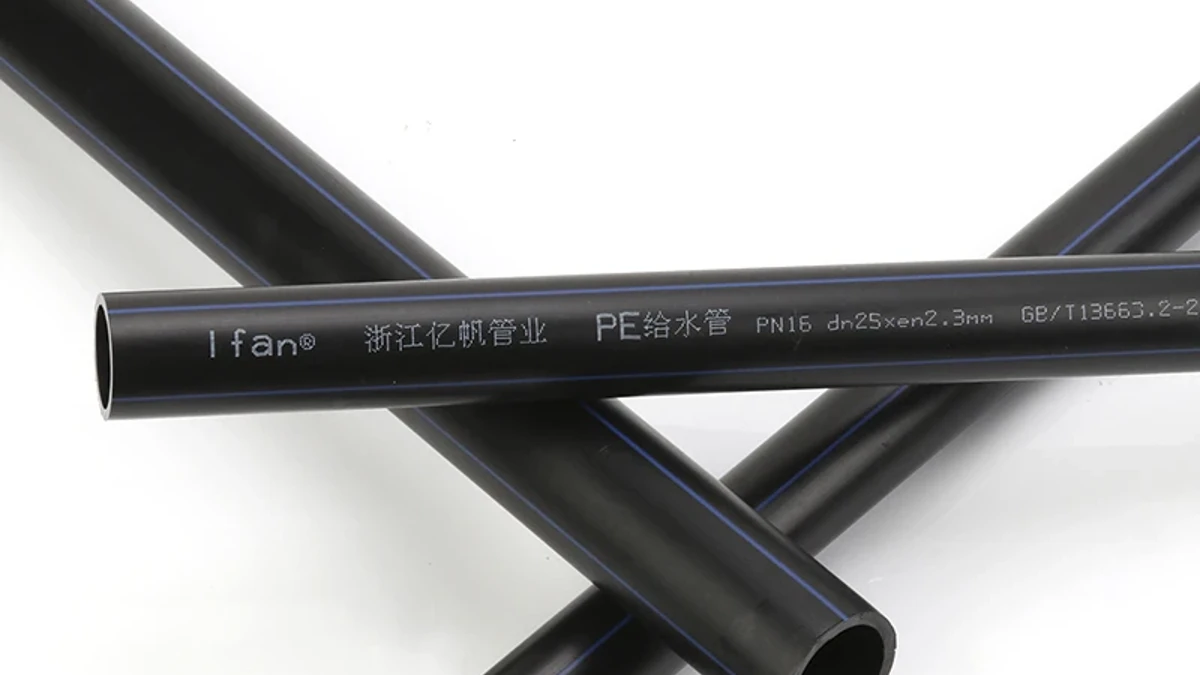
Existing backend-library closeup. No dimensions are measured or inferred from the photograph.
Access affects whether a documented repair can be installed as specified. An arrangement that needs pipe movement, room for a tool or an internal component may not suit the excavation as found. Conversely, awkward access does not enlarge the product’s approved application. Resolve access alongside the assembly instructions, rather than choosing an undocumented repair because it is the only one that appears easy to fit.
Source and scope
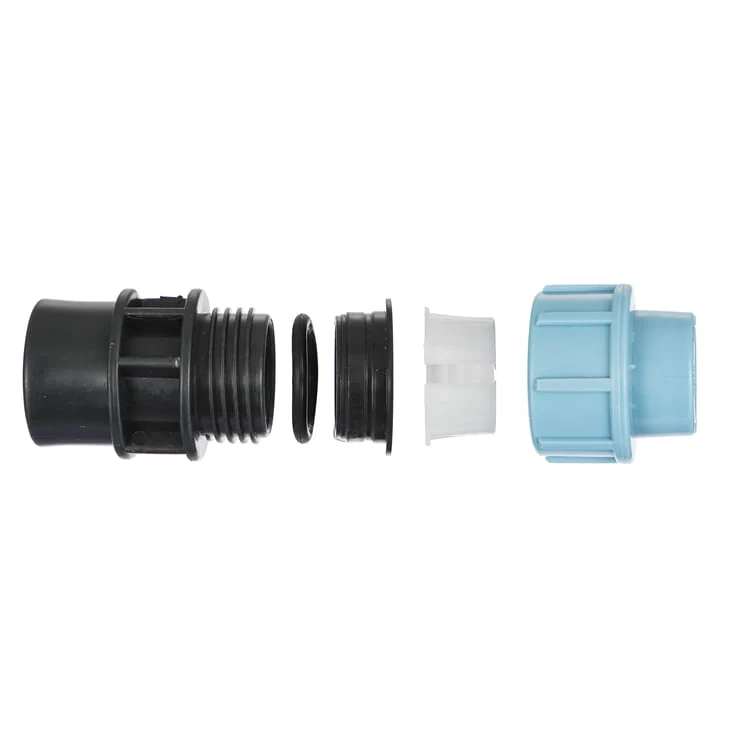
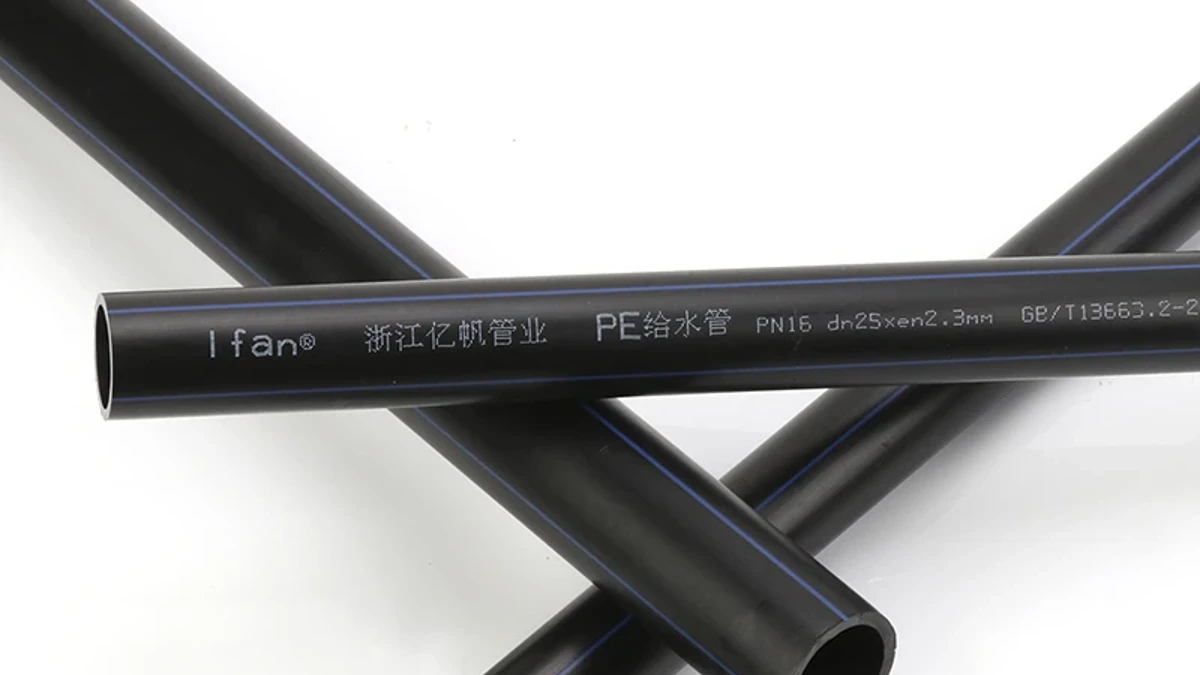
Existing site-library component photograph. This ordinary fitting is not presented as a qualified repair clamp or restrained replacement coupling.
A clamp that held five days still leaves a decision unfinished
The practical problem appears in a public question about a private-well pipe described as HDPE. The questioner reported a crack near a pitless adapter, little room beside a walkway and difficulty moving the pipe. A follow-up said a stainless repair clamp had held for five days and considered leaving it in place. This is an attributed question, not a verified failure investigation or an IFANPRO repair case.
Five leak-free days answer an observation: the reported arrangement stopped the visible leak during that period. They do not identify the clamp model, establish the pipe dimensions or determine whether the manufacturer covers that defect and duty. The account also cannot show that the surrounding pipe is sound or that the repair has the necessary restraint. None of those conclusions follows from elapsed time alone.
Apply the qualification rather than diagnosing the photograph. The first unresolved item is the exact pipe and clamp identity. Without it, there is no reliable document scope to compare. The next is whether the proposed repair is a local seal or must connect ends with a separation risk. Then check the actual damage, service and access against the identified assembly.
If that information establishes a documented local repair under the applicable acceptance process, the result can advance as a permanent-repair candidate. If the pipe needs cutting and replacement, change to a documented connection arrangement. If the identity, defect or load path remains unknown, the result stays on hold. The useful answer is which condition would change the decision, not a guess that every clamp will fail or that this one has already proved itself.
When damaged pipe must be replaced, qualify the connections
Changing the damage can change the winning repair route even when the pipe material and service remain the same. PPI’s spool-repair guidance describes removing extensive damage that cannot be addressed by a local full-circle band or electrofusion patch, then using a correctly sized replacement length with two mechanical fittings. The guidance identifies this route for situations such as wet conditions or unavailable fusion equipment.
Once a length is cut out, selecting the replacement pipe alone is insufficient. Both interfaces must seal and provide the required axial restraint through the documented assembly. PPI’s companion extensive-damage page lists HDPE-specific mechanical solutions and explains that the specified products, installed to their instructions, provide sealed, axially restrained joints. It generally recommends coupling stiffeners unless otherwise specified to reduce the effects of creep and dimensional change on sealing.
That qualification matters in both directions. Do not omit a stiffener that the chosen coupling requires. Do not add a generic insert and assume that it converts any coupling into an accepted restrained HDPE connection. The particular fitting’s instructions and assembly coverage decide what belongs there.
For comparison, consider two planning inputs. In the first, the remaining pipe is assessed as suitable for a manufacturer-documented local seal, with no unresolved joining duty. A qualified clamp may remain a candidate. In the second, the same area has extensive damage requiring removal. The repair now creates two pipe-end interfaces; a local sealing band cannot be assumed to replace the joining and restraint those interfaces require. The changed condition is the cut-out duty, not whether the band looks heavy enough.
A fused replacement may be another appropriate route where the pipe, access, conditions and approved procedure support it. The HDPE fusion guide introduces joining methods, while squeeze-off eligibility addresses a separate isolation decision. Neither a joining-method name nor an isolation tool approves the whole repair.
Use the qualification sequence and keep an acceptance record
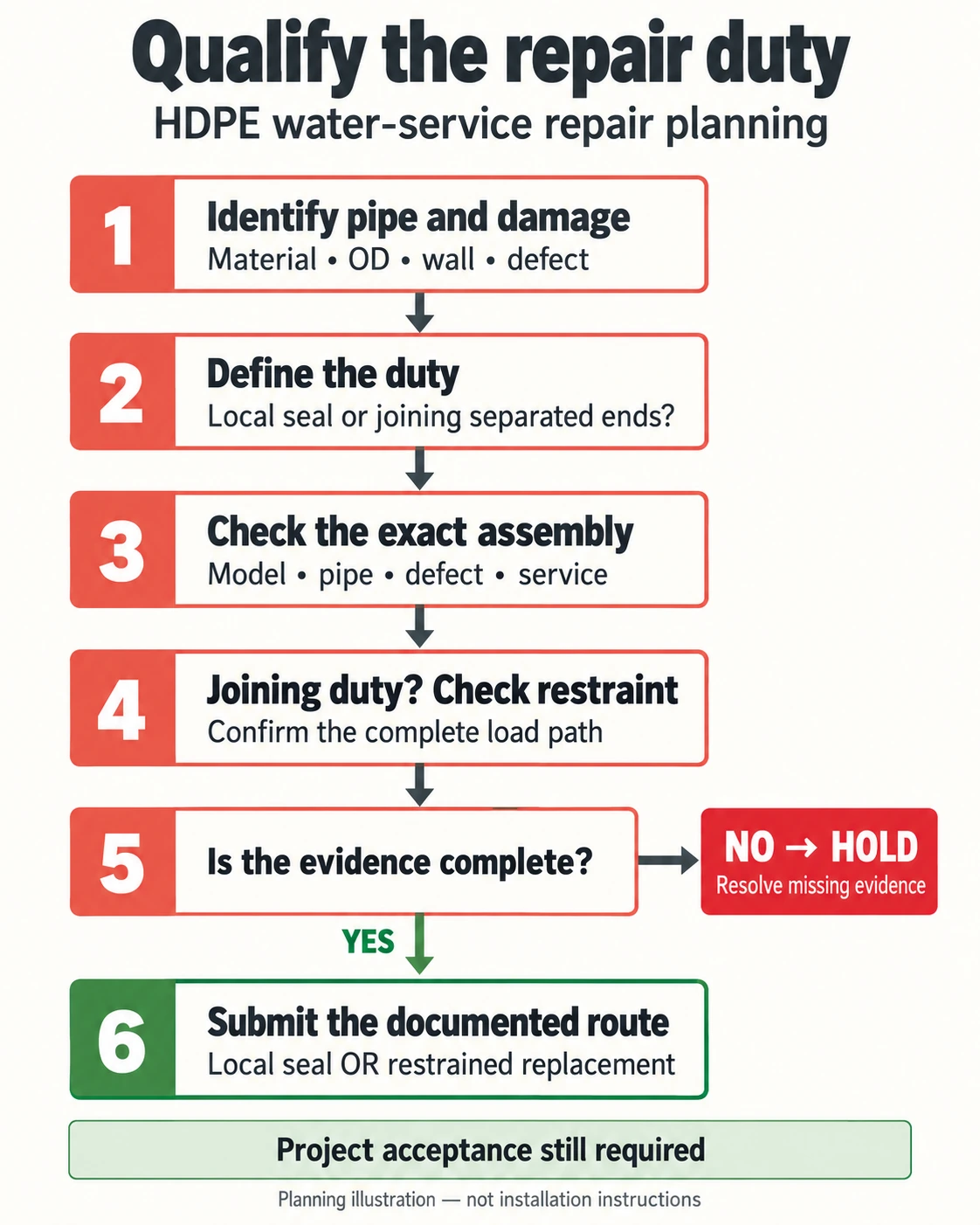
Use the qualification sequence below before ordering the permanent repair. It is a planning screen: a supported candidate advances to the responsible authority’s acceptance process. It is not permission to work on a pressurized main or to backfill an unaccepted repair.
- Identify pipe and damage. Record the material, actual outside diameter, wall or SDR and assessed defect extent. An unknown pipe or incomplete defect assessment blocks model matching.
- Define the duty. State whether the device seals local damage or the assembly must also join cut or separated ends. Include any proposed external restraint.
- Check the exact assembly. Compare the named model and its current instructions with the pipe, defect, fluid and operating duty. Include access and applicable authority requirements.
- For joining duty, check restraint. Identify the complete load path, supported connections and any coupling stiffeners specified. A nonrestraining seal alone does not close this check.
- Hold unresolved evidence. Name the missing input and the decision it prevents. Do not replace a compatibility gap with additional torque or a longer observation period.
- Submit the documented route for acceptance. Advance the supported local seal or joined/restrained replacement proposal with its evidence. Keep qualification, installation requirements and project acceptance linked.
| Record | Evidence to attach | Decision if unresolved |
|---|---|---|
| Pipe and defect identity | Marking, actual dimensions and assessed damage extent. | Hold matching; identify the host pipe and defect. |
| Local seal or joining duty | Repair arrangement showing intact pipe, fracture or cut-out interfaces. | Hold assembly selection; establish what must be connected and restrained. |
| Exact model and service | Current model-specific instructions covering pipe, defect, fluid and operating conditions. | Return an unsupported substitution; assess a documented alternative. |
| Axial load path where required | Documented restrained connections or separately approved restraint, with required components. | Do not accept a nonrestraining band as the sole joining solution. |
| Installation and acceptance | Feasible access, specified procedure and responsible authority’s requirements. | Resolve the outstanding condition before accepting the repair. |
The record should make a reviewer’s answer reproducible. “Permanent clamp” is not enough. “Identified local defect, named HDPE clamp, documented service coverage, joining duty assessed and accepted procedure” describes why the proposal can advance. For a replacement spool, name both connections and how the required restraint is provided. Where an item is missing, state how obtaining it will change the branch.
For pipe and fitting procurement, retain this duty statement alongside the specification when reviewing the HDPE pipe and fittings category. A product category does not establish that a particular repair clamp, restrained connector or service is available. AVK and Romac are third-party technical examples here; no IFANPRO supply relationship or qualification for those products is claimed.
Заключение
Before accepting a permanent HDPE clamp repair, close three checks: the documented local-seal duty, compatibility with the actual pipe and service, and the joining/restraint duty of the complete arrangement. Keep the full-fracture claim and its exclusions together. If damage requires cut-out, qualify the replacement connections. If a controlling input is missing, hold that decision and resolve it before acceptance.
Frequently Asked Questions
Are all HDPE repair clamps temporary?
No. Some named products are offered for permanent repair. Their exact pipe, defect and service scope still applies, and a permanent sealing claim does not establish axial restraint.
Can a nonrestraining clamp repair a full fracture?
A manufacturer may offer that sealing duty, but it does not make the clamp a restrained joint. Assess any separately approved restraint and the complete arrangement; do not assume the band alone joins separated ends.
Does every HDPE repair device need an internal stiffener?
No universal rule is established here. PPI generally recommends stiffeners for HDPE couplings unless otherwise specified; use the exact coupling’s instructions rather than transferring that recommendation to every repair band.
Does a leak-free clamp prove a permanent repair?
No. It records performance during observation. Exact product compatibility, defect coverage, service limits and any joining/restraint requirements still need documented acceptance.










 Русский
 English
 Français
 Español
Последние комментарии