
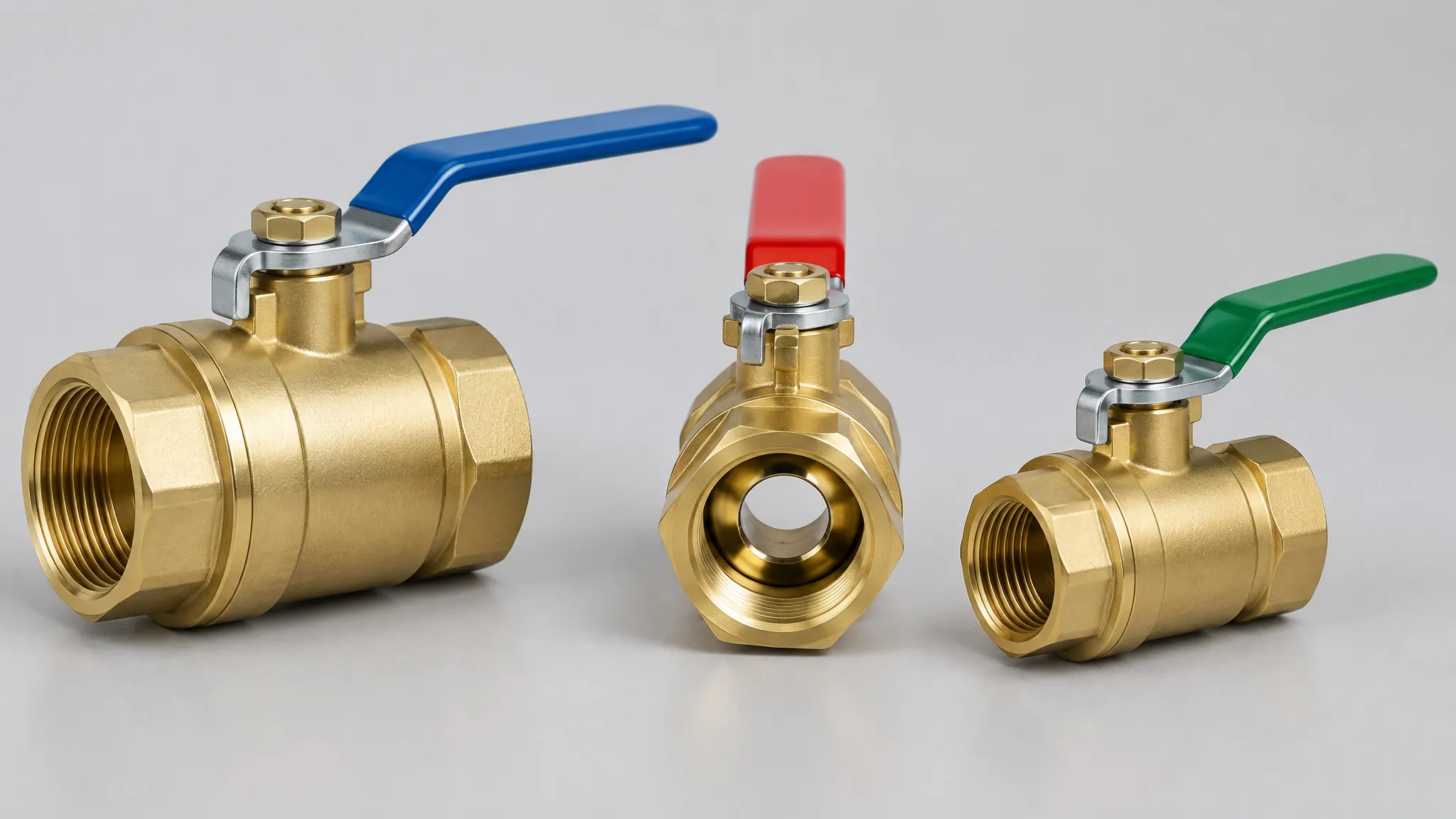
Specify a half-inch brass ball valve as full port and you will pay more for exactly nothing. In the flow-test data published by Apollo Valves, its standard-port bronze series and its full-port series both read a flow coefficient of 15 at 1/2 in — the same number, from the same lab, at the same 600 psig rating.
The gap only opens as the line gets bigger: 1.58× at 1 in, and 3.60× at 2 in. So the honest answer to full port vs reduced port brass ball valve is that the port class is a duty decision, not a quality ladder. Full port buys measurably more flow above about 3/4 in, and for on/off isolation at normal building-service velocities the reduced or standard body costs you a fraction of a psi — which is why it is frequently the correct spec rather than the cheap one.
What follows is the arithmetic: the port classes as MSS SP-110 defines them, a matched Cv pair that varies port and nothing else, and the one duty where full port returns about 3,440 kWh a year.
Key Takeaways
- At 1/2 in, Apollo’s standard-port (70-100) and full-port (77-100) bronze series both carry a published Cv of 15. The full-port body adds no flow at that size.
- The ratio is not a constant: 1.00× at 1/2 in, 1.58× at 1 in, 3.60× at 2 in. A single multiplier is a guess.
- At building-service flows the choice costs under 0.6 psi from 1/2 in to 2 in — 0.130 psi on a 1 in line at 20 gpm.
- At a 200 gpm continuous duty on 2 in, the same two valves differ by 3.16 psi, or roughly 3,440 kWh a year. That is where full port pays.
- “Full port” does not mean the bore matches the pipe: MSS SP-110 allows 0.06 in undersize, so a compliant 1/2 in valve can measure 0.51 in against a 0.622 in pipe ID.
- Port class and lead-free status are independent. SDWA 1417 turns on the service the valve is put to, never on the size of its bore.
Full Port, Standard Port, Reduced Port: What the Standard Actually Sets
The three names are dimension classes, not marketing tiers. MSS SP-110-2010, Ball Valves Threaded, Socket-Welding, Solder Joint, Grooved and Flared Ends, sets the minimum opening dimension for full-port valves and for the regular (standard) and reduced classes alike. Milwaukee Valve had to put that in writing in a June 2024 technical bulletin, after a customer measured two “full port” valves and concluded one of them was mislabelled. Neither was. The MSS SP-110-2010 edition is still the current one listed on the ANSI Webstore, superseding the 1996 edition.
Here is the part that catches specifiers: full port does not mean the bore equals the bore of your pipe. The standard allows the opening to run 0.06 in under the specified dimension and still be classified as full port, while setting no upper limit at all — a manufacturer may make the hole as large as it likes.
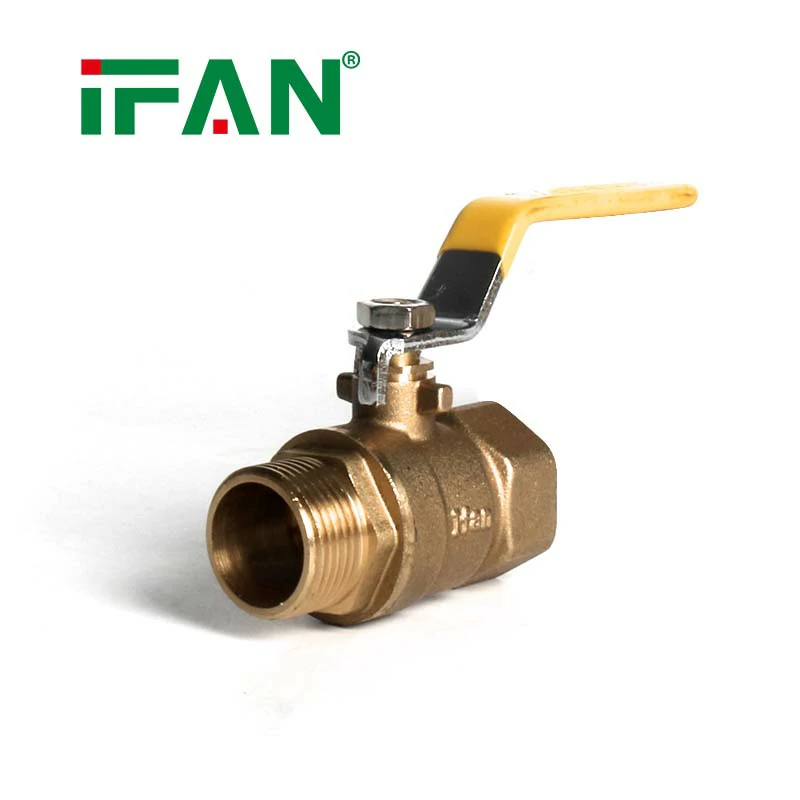
In Milwaukee Valve’s own worked example, its BA-475B carries a stated 1/2 in opening of 0.51 in and a competitor’s carries 0.59 in, a difference of about 3/32 in. The internal diameter of 1/2 in standard weight pipe is 0.622 in. Both valves are compliant; neither matches the pipe. If you have been treating “full bore” as a promise of an unobstructed straight-through pipe, that assumption has never been true.
| Port class | What the standard fixes | Typical duty | Verdict / best for |
|---|---|---|---|
| Full port | Largest minimum opening of the three classes; undersize tolerance 0.06 in, no oversize limit | Pumped mains, pigged or rodded lines, slurries | Best for continuous high-velocity flow and anything that must pass a tool |
| Regular / standard port | A smaller specified opening than full port at the same nominal size | General isolation and shutoff in building services | Best for the majority of on/off duty — the default unless flow says otherwise |
| Reduced (double-reduced) port | The smallest of the three specified openings | Instrument taps, drains, gauge and sampling points | Best for low-flow service where compactness beats capacity |
Source: Port classes and the full-port tolerance rule as stated in Milwaukee Valve, “Full Port vs. Reduced Port in the REAL World.”, 5 June 2024, quoting MSS SP-110. Duty and verdict columns are this article’s reading of the Apollo flow data charted in the next section.
The Cv Numbers: One Flow Lab, Two Port Classes, Everything Else Held Constant
Most comparisons of this pair stop at “full port flows better.” That is true in the direction it points and useless in magnitude, because the honest answer changes with every size. The cleanest public evidence is a matched pair from Apollo Valves: the 70-100/200 series (standard port) and the 77-100/200 series (full port). Both are two-piece threaded bodies, both rated 600 psig cold non-shock, both rated 150 psig saturated steam, both stated to conform to MSS SP-110, and both use an ASTM B16 brass ball, chrome plated.
The bodies are bronze (ASTM B584-C84400) rather than brass, which is worth saying out loud, because everything that follows rests on one assumption that is better stated than buried: we treat these bronze-body flow figures as representative of brass bodies in the same port class. The reasoning is that Apollo publishes one Cv per series and port class rather than one per alloy, and that the water meets nothing but the bore and the body passage on its way through.
That is an assumption, not a sourced finding — no side-by-side brass-versus-bronze flow test is cited here, and none was found in the public record. What the data below supports without leaning on it is the shape of the gap between the two port classes, size by size, which is what this article is about. If you need a certified flow coefficient for one specific brass valve, ask its maker for that valve’s own tested number.
Apollo does not model these figures. Its specification sheet states they are “derived from actual flow testing” at Conbraco Industries in Pageland, South Carolina, using off-the-shelf valves with no special preparation on standard schedule 40 pipe, with water, measured as the gallons per minute that pass at a 1 psig differential. The same values repeat across Apollo’s other bronze series — the standard-port 71 AR matches the 70-100 line for line, and the full-port 77 AR matches the 77-100 — so this is a port-class pattern, not one product’s quirk.
| Nominal valve size (in) | Standard port (Apollo 70-100/200) | Full port (Apollo 77-100/200) |
|---|---|---|
| 0.25 | 8.4 | 8.1 |
| 0.375 | 7.2 | 15 |
| 0.5 | 15 | 15 |
| 0.75 | 30 | 51 |
| 1.0 | 43 | 68 |
| 1.25 | 48 | 125 |
| 1.5 | 84 | 177 |
| 2.0 | 108 | 389 |
| 2.5 | 190 | 503 |
| Nominal size (in) | Ratio (full Cv ÷ standard Cv) | Verdict |
|---|---|---|
| 1/4 | 0.96× | Standard port reads marginally higher — full port is pure cost |
| 3/8 | 2.08× | Full port matters if the line is genuinely flowing |
| 1/2 | 1.00× | Identical. No flow reason to pay for full port |
| 3/4 | 1.70× | Worth it only on pumped or sustained flow |
| 1 | 1.58× | Isolation duty: standard port is the correct spec |
| 1-1/4 | 2.60× | Gap widens; check your velocity before deciding |
| 1-1/2 | 2.11× | Judgement call — see the pressure drop in Table 3 |
| 2 | 3.60× | Largest penalty of any size; full port earns its price here |
| 2-1/2 | 2.65× | Full port available, but this is the series ceiling |
Source: ratio computed by this article as full ÷ standard, size for size, from the Cv factors transcribed from the Apollo Valves (Conbraco Industries) 77-100 Series specification sheet, FLOW DATA page M-3, ©2016; series port classes per the Apollo Ball Valves catalogue (APBVCA). Every row’s Cv pair is charted, with its data table, immediately above.
Read down the ratio column and the shape of the decision appears. Below 1/2 in there is no flow argument for full port at all, and at 1/4 in the standard-port valve actually reads fractionally higher. From 3/4 in upward the full-port body is genuinely bigger-bore, and at 2 in it moves 3.6 times the water for the same pressure drop. That single column is the reason a blanket “always specify full port” policy wastes money at the small end of a bill of materials and under-specifies at the large end.
What the Port Difference Costs You in Pressure Drop
A flow coefficient only becomes a purchasing argument once you turn it into pressure. Apollo publishes the formula on the same page as the table, so nothing here needs inventing: for a liquid, ΔP = (Q² × SpGr) ÷ Cv², where Q is flow in US gpm, ΔP is the drop in psi and SpGr is specific gravity at the flowing temperature. Water at ordinary temperatures is 1.0, which reduces the arithmetic to flow squared over Cv squared.
Run it on a 1 in line carrying 20 gpm. A standard-port valve (Cv 43) gives 400 ÷ 1,849 = 0.216 psi. Its full-port equivalent (Cv 68) gives 400 ÷ 4,624 = 0.087 psi. That is a difference of 0.130 psi, or about 0.30 ft of head. On a building riser that number is invisible — it is smaller than the error in most people’s estimate of the fitting losses on either side of the valve. Table 3 runs the same calculation across the range at flows representative of building service.
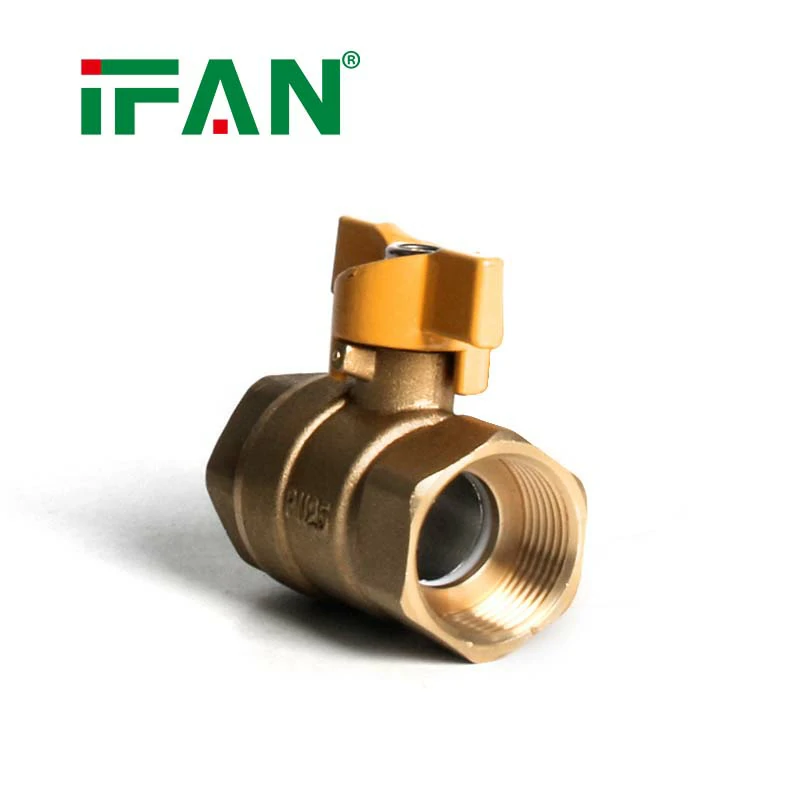
| Size and assumed flow | Standard port ΔP (psi) | Full port ΔP (psi) | Difference (psi) | Verdict |
|---|---|---|---|---|
| 1/2 in at 5 gpm | 0.111 | 0.111 | 0.000 | No difference exists to buy |
| 3/4 in at 10 gpm | 0.111 | 0.038 | 0.073 | Immaterial for isolation |
| 1 in at 20 gpm | 0.216 | 0.087 | 0.130 | Immaterial for isolation |
| 1-1/4 in at 30 gpm | 0.391 | 0.058 | 0.333 | Still under half a psi |
| 1-1/2 in at 45 gpm | 0.287 | 0.065 | 0.222 | Still under half a psi |
| 2 in at 80 gpm | 0.549 | 0.042 | 0.506 | Matters only if this flow runs continuously |
| 2 in at 200 gpm | 3.43 | 0.264 | 3.16 | Full port is the correct spec |
Source: Computed by this article from the Apollo Cv factors charted in the previous section, using Apollo’s published liquid formula ΔP = Q² × SpGr ÷ Cv², water at SpGr 1.0. The flow rate at each size is a stated assumption, not a measured value — substitute your own duty and the arithmetic still works.
Six of those seven rows land under 0.6 psi. That is the whole case against reflexively specifying full port: for on/off isolation at the velocities buildings actually run, the port class is not a performance decision. The seventh row is the exception and it is worth reading carefully — the same two 2 in valves, moved from an 80 gpm intermittent duty to a 200 gpm continuous one, go from a half-psi curiosity to a 3.16 psi penalty, which is 7.3 ft of head.
Put that through the hydraulic power relationship (gpm × psi ÷ 1,714) and it is 0.369 hp; at an assumed 70% combined pump and motor efficiency running 8,760 hours a year, roughly 3,440 kWh. Change the efficiency, the hours or the flow and the number moves — the point is that it stops being a rounding error only when the pump never stops.
When the Reduced Port Body Is the Correct Spec, Not the Cheap One
Procurement treats the reduced or standard body as the budget option because it usually costs less, and that framing is backwards. The smaller body is the right engineering answer whenever the valve’s job is to be fully open or fully shut and the line is not running at pump velocities. Table 3 puts a number on “right”: under a tenth of a psi at 3/4 in and 1 in at ordinary flows.
The half-inch case is the clearest
At 1/2 in, Apollo’s two series carry the identical published Cv of 15. There is no flow difference to buy at that size, so a full-port line item on a half-inch valve is money moved from your margin to your supplier’s with nothing coming back. On a bill of materials where half-inch isolation valves outnumber everything else — fixture stops, branch isolation, gauge and drain points — that single correction is usually the largest saving available on the valve line.
Space, clearance and the things nobody quotes
A standard-port body is physically smaller at the same nominal size, which matters in meter sets, tight risers and prefabricated assemblies where handle swing and wrench clearance decide whether the assembly goes together at all. There is a second specification step that never appears on a quotation: actuation.
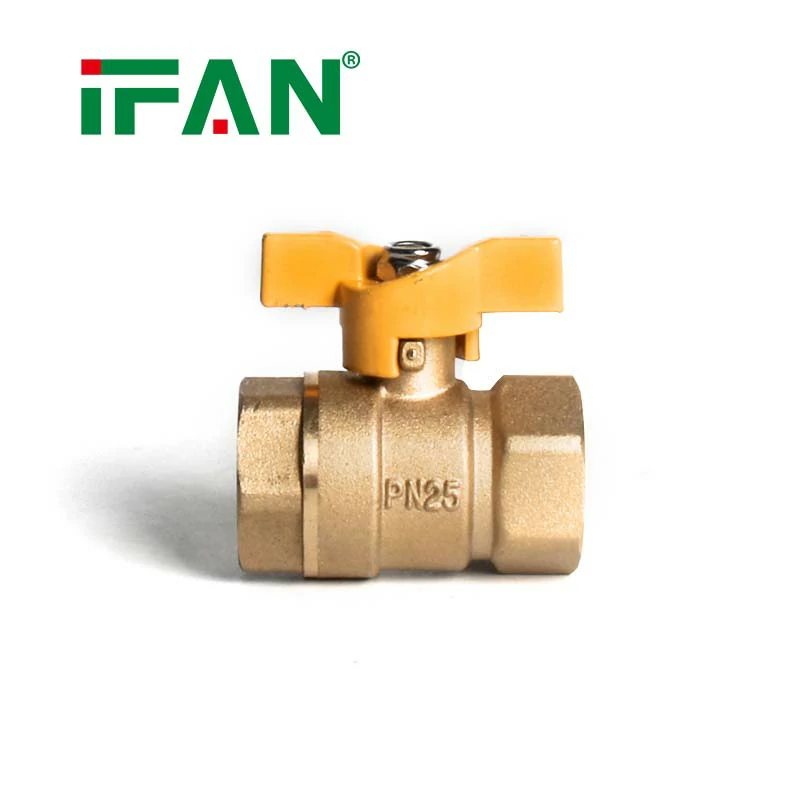
Operating torque scales with the ball, and on Jomar’s brass full-port T-100 series it climbs from 23 in-lb at 1/4 in to 35 in-lb at 1/2 in, 89 in-lb at 1 in, 222 in-lb at 2 in and 620 in-lb at 4 in. If the valve is going to be actuated, size the actuator against the manufacturer’s published torque table for the exact series and size you are buying, and get that figure in writing before the order goes out.
Note what is not in those figures: Jomar publishes torque for its full-port brass series, and there is no matched standard-port brass torque table to set beside it. The public data licenses no rule of thumb about which port class is heavier to turn, in either direction. Treat actuation as a per-valve check against the maker’s own numbers, not something you can read off the port column.
None of that makes full port wrong. It makes it a specification you should be able to justify on the duty, the same way you justify a pressure class. If your answer to “why full port here” is “because it is better,” the numbers above say you have not checked.
When Full Port Earns Its Price
There are four duties where the bigger bore stops being a preference and becomes the specification, and they have nothing to do with the valve feeling more substantial in the hand.
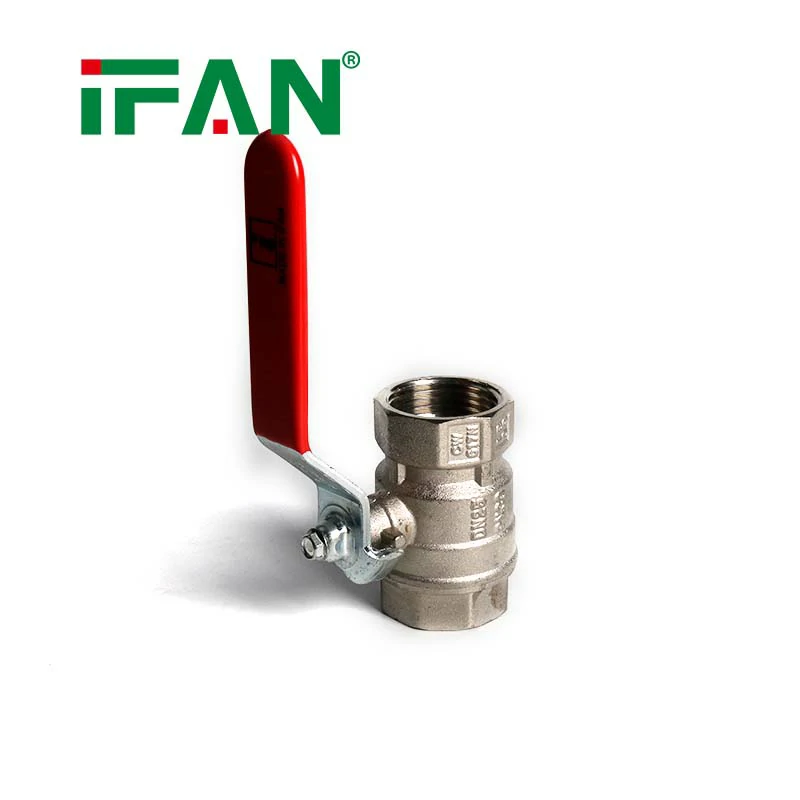
- Continuous pumped flow. The 2 in at 200 gpm row in Table 3 is the whole argument: 3.16 psi of avoidable drop, about 3,440 kWh a year on the stated assumptions. Anything that runs at pump velocity for most of the year pays for the full-port body in energy, usually within the first year.
- Lines that must pass a tool. Swabs, brushes, rods, camera heads and test probes need a clear bore. A step change in diameter is where a rod jams, and retrieving it costs more than every valve in the run.
- Slurries, solids and settling fluids. Any reduction is a place for solids to accumulate, and accumulation in a ball valve fouls the seat before it blocks the line. If the fluid carries anything, specify the straight bore.
- Suction-side service with thin NPSH margin. When available margin is already tight, a fraction of a psi on the suction side is not a rounding error — it is the difference between a pump that runs and one that cavitates.
One procurement constraint goes with that decision, and it catches people mid-project: the full-port series runs out before the standard-port series does. Apollo lists its 77-100 full-port line in sizes 1/4 in to 2-1/2 in, while the standard-port 70-100 line runs 1/4 in through 4 in. Above 2-1/2 in you are no longer choosing between two versions of the same valve — you are changing series, and often changing body style and end connection with it. Decide the port class before you size the line, not after, or the 3 in and 4 in items on your bill of materials will quietly force a different product family.
If you are sourcing brass ball valves for stock rather than for one project, that ceiling is the thing to check first with any manufacturer. Our own approach to it is covered in the guide on sourcing lead-free brass valves from China, and the current range sits on the латунный клапан catalogue page.
Port Class and Lead-Free Compliance Are Two Independent Specs
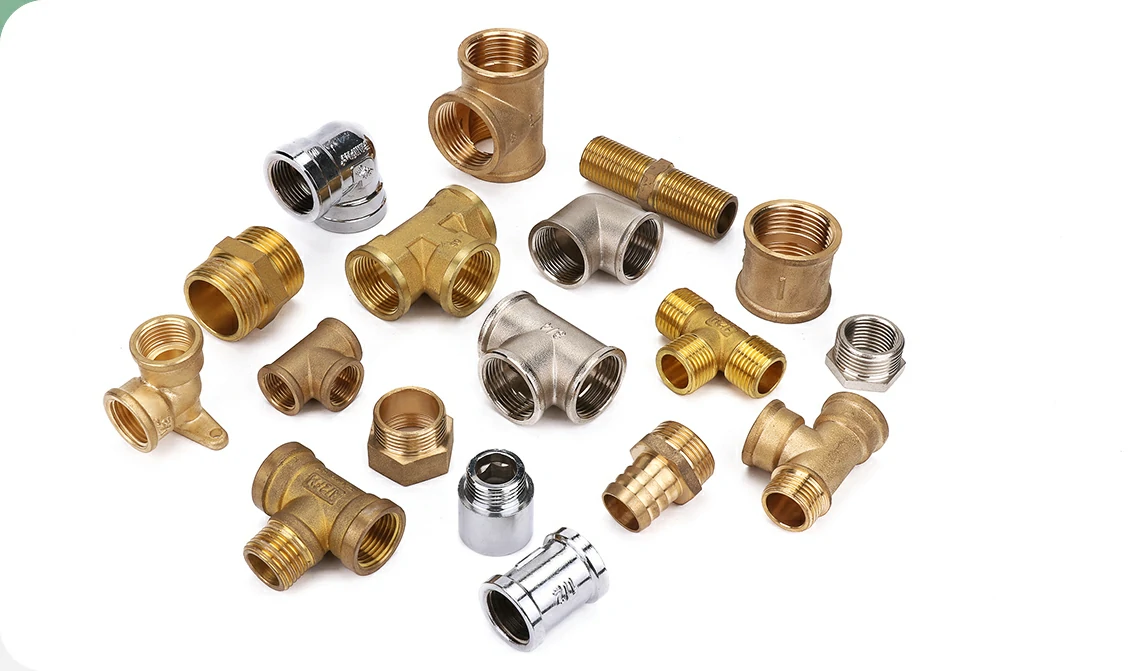
This one comes up in RFQs constantly, and the confusion is expensive in exactly one direction: buyers assume a reduced-port valve is somehow the less compliant product, or that a “full port lead-free” valve is a special build. Neither is so. A lead-free brass full-port ball valve with a dezincification-resistant alloy and wetted surfaces under 0.25% lead is an ordinary catalogue item — Jomar’s A101 is exactly that, in 1/2 in to 2 in at 600 WOG. Nothing in the US lead-free regime mentions the bore.
What the regime does turn on is service. Section 1417 of the Safe Drinking Water Act defines “lead free” as not more than 0.2% lead for solder and flux and not more than a weighted average of 0.25% lead across the wetted surfaces of pipes, fittings and fixtures (42 U.S.C. 300g-6).
The exemption that decides whether your valve is inside or outside that rule is at 300g-6(a)(4)(A), and it covers products “used exclusively for nonpotable services such as manufacturing, industrial processing, irrigation, outdoor watering, or any other uses where the water is not anticipated to be used for human consumption.” An irrigation or compressed-air ball valve can sit outside the statute. The identical valve on a potable branch does not — and the port class is irrelevant to which side of that line it lands on.
Do not claim the exemption on a supplier’s say-so. EPA gives three tests at 40 CFR 143.16(a): the product is clearly labelled on the product, package or tag as being for nonpotable use; or its design or configuration makes it unsuitable for potable use; or it is sold or distributed for an application not anticipated to convey water for human consumption.
And the obligation reaches further up the chain than most importers expect. 40 CFR 143.19(a) required covered products to be certified by an accredited third-party body by 1 September 2023 or before being introduced into commerce. The applicability clause goes wider still: 40 CFR 143.10(a) applies the subpart to “any person who introduces these products into commerce, such as manufacturers, importers, wholesalers, distributors, re-sellers, and retailers” — importers are named on the face of the rule, not only factories.
The full scope test, the statutory exemption blocks and the state overlays are set out in our article on which plumbing products must be lead-free under SDWA 1417; the alloy side of the same question is in lead-free brass fittings and dezincification.
Which Port to Specify: The Decision Table
Everything above reduces to one question — is this valve moving fluid, or is it just opening and closing? If it spends its life fully open on a line that runs hard, buy the bore. If it is there to isolate, the standard body is the correct engineering answer and the cheaper one, which is a rare combination worth taking.
| Application | Укажите | Why, in one line | Best for |
|---|---|---|---|
| Fixture stops, branch and riser isolation, 1/2 in | Standard / reduced | Published Cv is identical at 1/2 in — 15 either way | Wholesalers stocking high-volume small sizes |
| General building isolation, 3/4 in to 2 in | Standard | Under 0.6 psi at service flows (Table 3) | Contractors pricing competitive bids |
| Pump discharge or suction running continuously | Full port | 3.16 psi and about 3,440 kWh/yr at 2 in, 200 gpm | MEP and industrial procurement |
| Lines that are pigged, rodded, swabbed or camera-surveyed | Full port | A bore step is where the tool jams | Utility and municipal contractors |
| Slurries, solids-bearing or settling fluids | Full port | Any reduction collects solids and fouls the seat | Process and industrial buyers |
| Instrument taps, drains, gauge and sampling points | Reduced | Flow is irrelevant; compactness is not | Panel builders and instrument fitters |
| Any line above 2-1/2 in | Check availability first | Full-port threaded brass/bronze series often stop at 2-1/2 in | Importers planning a full size range |
Source: This article’s decision matrix, derived from the Apollo flow data charted under “The Cv Numbers”, the ratio verdicts in Table 2 and the pressure-drop calculations in Table 3.
What to put on the RFQ so quotes are comparable
Port class alone is not enough to make two quotations comparable, because “full port” has a 0.06 in tolerance band inside it and no upper limit. Ask for the port class and the stated opening dimension in inches or millimetres, the Cv at each size you are buying, the pressure rating (600 WOG is the common threaded brass benchmark), the standard claimed — MSS SP-110 for threaded ball valves — and, for anything going into US potable service, the third-party lead-free certification. Thread form belongs on the same line; if you are buying across markets, our BSP vs NPT breakdown covers what to specify.
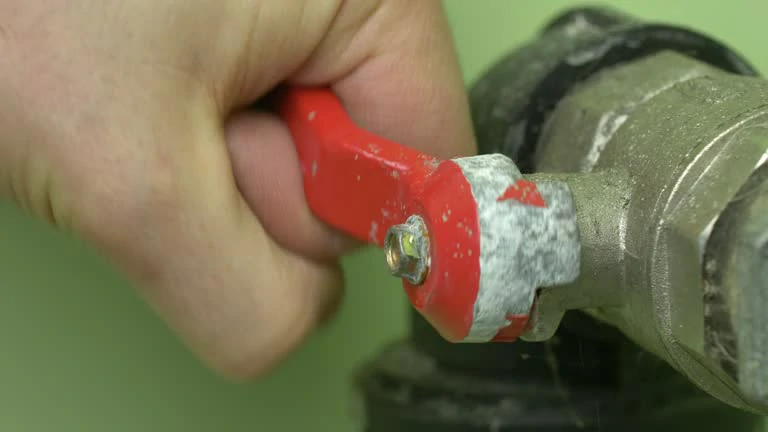
When the application is genuinely borderline, three questions settle it: does this valve ever need to pass a tool, will it be actuated, and does the line run at pump velocity for more than a few hours a day? A yes to any of the three points at full port. Three noes point at the standard body, and the flow data says you lose almost nothing by taking it.
Where we stop short, and what we will put in writing
One piece of honesty belongs in an article like this. Every flow figure above is Apollo’s published flow-test data, not ours — IFANPRO has not yet run its own bench test on its brass ball valve line, so there is no IFANPRO Cv table to show you, and we would rather cite a competitor’s measured numbers than print a “typical” table nobody measured. That test is on our list precisely because this page needed it.
What we will put in writing on a quotation is the part we do control: the port class and the stated opening dimension for each size, the pressure rating, the standard claimed, the alloy, and the third-party lead-free certification where the valve is going into US potable service. That is quality control you can check on arrival with a bore gauge — and given the 0.06 in undersize tolerance MSS SP-110 allows, checking it is reasonable. IFANPRO has been manufacturing since 1993 across a 120,000 m² plant with 600+ employees and 200+ production and testing machines, under ISO 9001 and ISO 14001, with WRAS and NSF/IAPMO certification on the relevant lines.
Frequently Asked Questions
Is a reduced port ball valve bad for water flow?
Not at normal building-service flows. Using Apollo’s published flow coefficients, a standard-port 1 in valve at 20 gpm drops 0.216 psi against 0.087 psi for the full-port equivalent — a difference of 0.130 psi, or about 0.30 ft of head. It matters when the line runs continuously at pump velocity, where the same comparison at 2 in and 200 gpm is worth 3.16 psi.
What does full port actually mean on a valve?
It is a dimension class defined by MSS SP-110, not a guarantee that the bore matches your pipe. The standard sets a minimum opening for the full, regular/standard and reduced classes, allows a full-port opening to run 0.06 in under the specified figure, and sets no upper limit. A compliant 1/2 in full-port valve can measure 0.51 in against a 0.622 in pipe internal diameter.
When should I use a full port ball valve?
Four cases: continuous pumped or high-velocity flow, lines that must pass a swab, rod, brush or camera, fluids carrying solids or slurry, and suction-side service where NPSH margin is already thin. Outside those, the standard-port body is usually the correct spec.
Do full port and reduced port valves have different lead-free requirements?
No. SDWA 1417 turns on the service the product is used in, not on the bore. Its 0.25% weighted-average wetted-surface limit applies to potable-service products, and the 42 U.S.C. 300g-6(a)(4)(A) exemption covers products used exclusively for nonpotable services such as industrial processing or irrigation. Port class appears nowhere in the statute or in 40 CFR 143.
Is full port always larger flow than standard port?
No, and the small sizes are the exception people miss. In Apollo’s flow-test data the two classes are identical at 1/2 in (Cv 15 both), and at 1/4 in the standard-port valve reads marginally higher at 8.4 against 8.1. The full-port advantage appears from 3/4 in upward and peaks at 2 in, where the ratio is 3.60×.
What size do full port brass ball valves stop at?
It depends on the series, and you should check before sizing the line. Apollo’s threaded full-port bronze series is listed in 1/4 in to 2-1/2 in while its standard-port series runs to 4 in, so above 2-1/2 in you are usually changing product family rather than choosing a port class.
Заключение
The trade-off is narrower than the industry talks about. Full port buys real capacity from 3/4 in upward and buys nothing at all at 1/2 in, while the standard body costs you a fraction of a psi on any line that is there to be opened and closed. Pay for the bore when the fluid is moving continuously, when a tool has to pass, or when solids are in suspension; take the standard body everywhere else and put the difference into alloy and certification, which are the specs that actually fail an order.
If you are building a brass ball valve range and want the port class, Cv and lead-free position checked line by line before you commit to a container, talk to our technical team.











 Русский
  English
  Français
  Español
Последние комментарии