
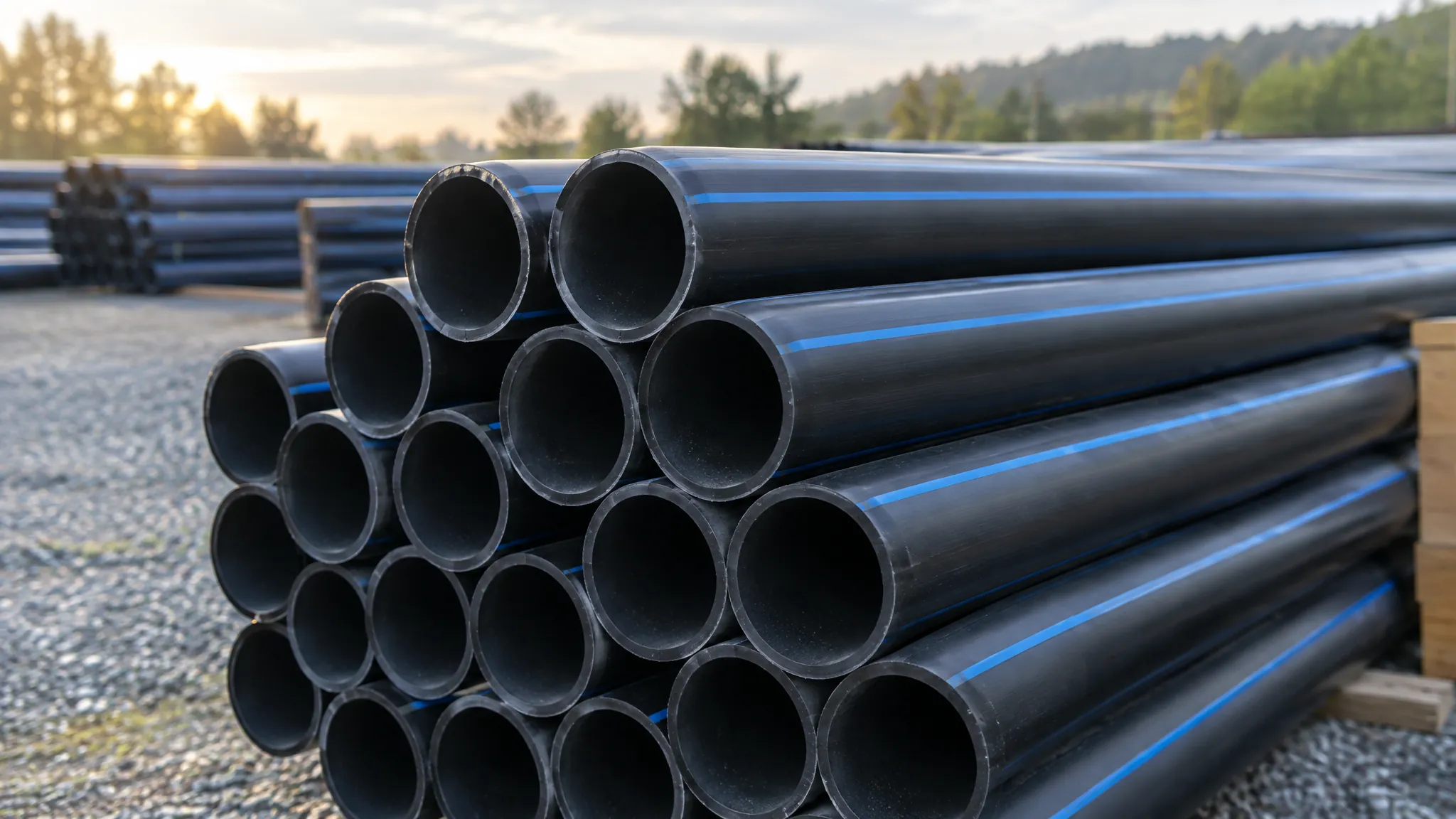
The PPI Municipal Advisory Board’s model specification for PE4710 water pipe, revised in June 2026, asks for a compound meeting ASTM D3350 minimum cell classification PE445574C-CC3. That string answers what the standard is for. ASTM D3350 identifies a polyethylene pipe or fittings compound by six cell numbers and a letter: density, melt index, flexural modulus, tensile strength at yield, slow crack growth resistance, hydrostatic design basis, then color and UV stabilizer. The fifth digit is the PENT result. Cell 7 means an average of at least 500 hours at 80 °C and 2.4 MPa. The CC3 suffix is an oxidative-resistance category for chlorinated drinking water. The current edition is D3350-25.
What the callout does not do is approve a pipe for a job. D3350 says so in its first clause, and that limit shapes what you should ask a supplier for.
Key Takeaways
- A D3350 callout is “PE” plus six cell numbers plus one letter for color and UV stabilizer.
- A minimum 500-hour PENT result is required for the PE4710 designation. PENT runs at 80 °C and 2.4 MPa.
- PE4710 reads only the density, PENT and hydrostatic cells, so 445474C and 445574C are both PE4710.
- MAB-3 2026 sets potable-water PE4710 at minimum cell classification PE445574C-CC3. CC3 = 16,200 hours at 90 °C and 2.48 MPa.
- A lot-specific PENT adds at least 500 hours, 20.8 days, to a delivery.
Decoding PE445574C, One Cell at a Time
Read left to right, each digit is a cell number from Table 1 of the standard, and each cell is a range rather than a value. The limits below come from the D3350-21 text, the most recent full text we could read; ASTM has since issued D3350-24 and the current D3350-25, neither of which we could read, so confirm the edition on the certificate.
| Digit in PE445574C | Property (test method) | D3350-21 limit (unit) | Verdict: document to demand |
|---|---|---|---|
| 1st: 4 | Density (D1505) | >0.947 to 0.955 g/cm³, base resin | Base-resin density and carbon black % |
| 2nd: 4 | Melt index (D1238, 190/2.16) | Below 0.15 g/10 min (flow rate at 190/21.6: 4.0 to 20 g/10 min) | Resin datasheet value |
| 3rd: 5 | Flexural modulus (D790) | 758 to <1103 MPa | Resin datasheet value |
| 4th: 5 | Tensile strength at yield (D638) | 24 to <28 MPa | Resin datasheet value |
| 5th: 7 | Slow crack growth, PENT (F1473) | 500 h at 80 °C, 2.4 MPa | PENT report: hours, specimens, test date |
| 6th: 4 | Hydrostatic design basis, 23 °C (D2837) | 11.03 MPa (1,600 psi) | Hydrostatic listing for the named compound |
| Letter: C | Color and UV stabilizer | Black, 2.0 to 3.0 % carbon black | Carbon black % per lot |
Procurement teams comparing compounds for a municipal tender can check the pipe range in our HDPE pipe and fittings catalogue, then hold each supplier’s paperwork against the last column.
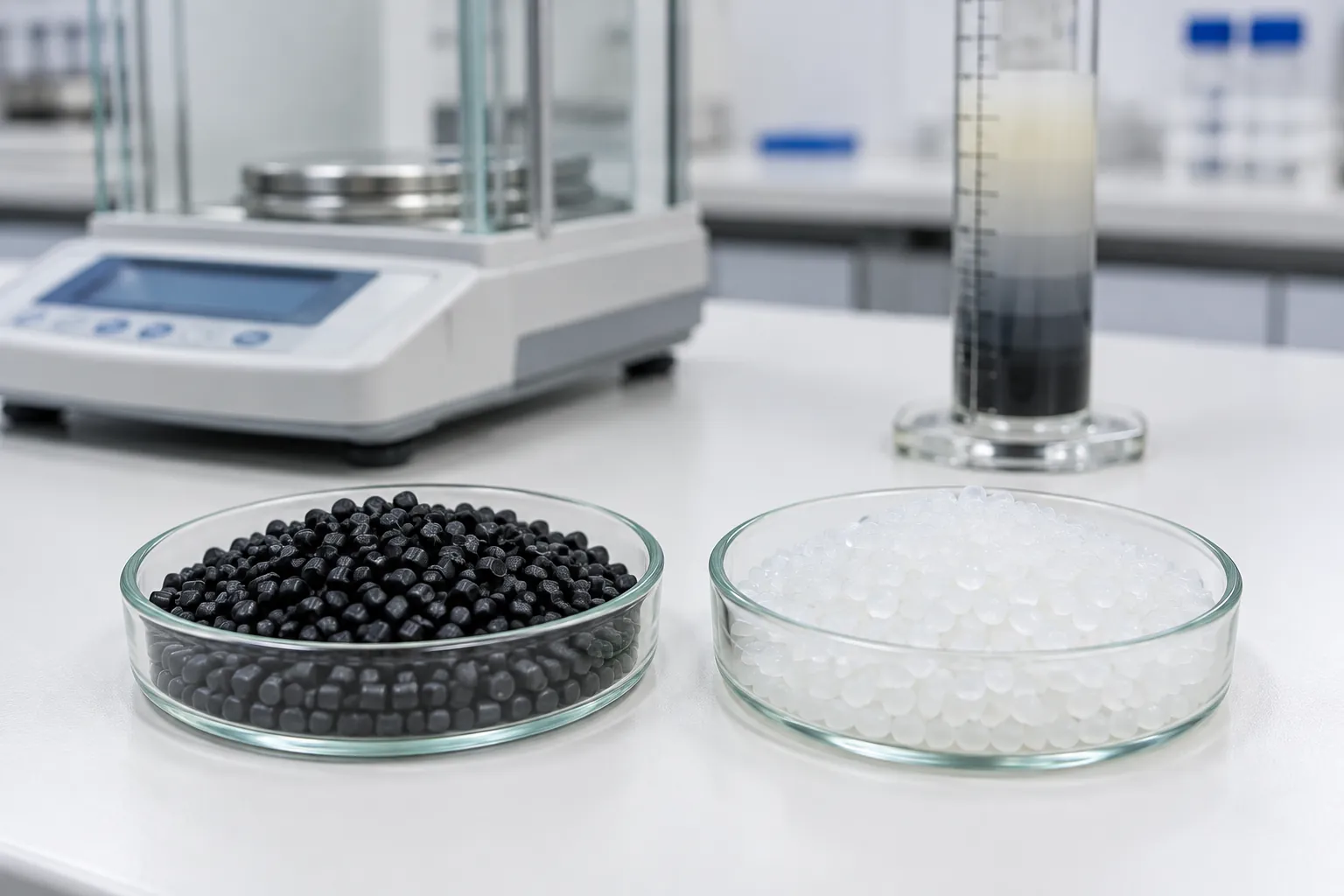
Density is the cell that catches people out. It is set on the base resin, so a black compound is corrected: resin density equals measured density minus 0.0044 times the carbon black percentage. A black compound measuring 0.959 g/cm³ with 2.5 % carbon black works back to 0.948, which is cell 4. A lot within ±0.002 g/cm³ of its nominal density conforms to that nominal.
The Fifth Digit Is the PENT Result
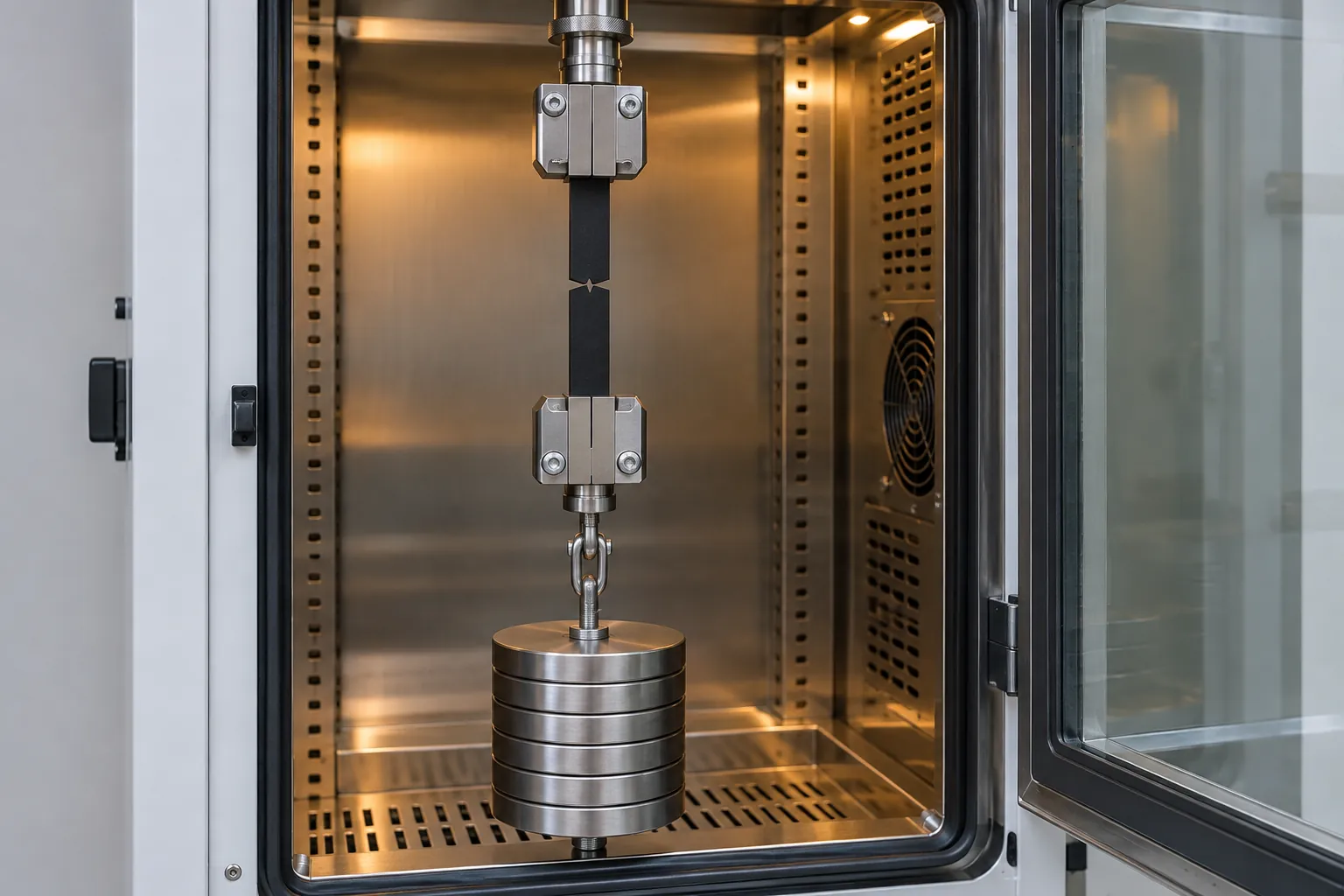
ASTM F1473-24a, the Pennsylvania Notch Test, loads a notched specimen at 80 °C and 2.4 MPa and times it to failure. Its scope is polyethylene only. D3350-21 turns that time into a cell: 10 hours is cell 4, 30 hours cell 5, 100 hours cell 6 and 500 hours cell 7. The cell is assigned on the average failure time of two specimens, and a dispute calls for at least four. The standard specimen is cut from a compression-molded plaque, so a PENT report describes the compound; check that the report states where its specimens came from.
| D3350 slow-crack-growth cell (fifth digit) | Min. PENT time (hours) |
|---|---|
| Cell 4 | 10 |
| Cell 5 | 30 |
| Cell 6 | 100 |
| Cell 7 | 500 |
A minimum 500-hour PENT result is required for the PE4710 designation. PPI’s technical note TN-68 (2023) sets that against studies by Brown of early gas-distribution compounds, where a 25 to 35 hour minimum drove slow-crack-growth failures to essentially zero in the systems studied. The 500-hour line is about 20 times that. Many current compounds test at 2,000, 5,000 or over 10,000 hours, but ASTM standards have not categorized performance above 500 hours PENT. A datasheet quoting 10,000 hours still carries a 7 in the fifth position.
Canada does reward the extra margin. CSA recognizes compounds with a minimum 2,000-hour PENT as PE 4710 PLUS and raises the water design factor from 0.63 to 0.71 under CSA B137.1. That designation is Canadian, so a request for “PE 4710 PLUS to ASTM” asks for something ASTM does not define. If you are tracing a split main back to this property, our note on why plastic pipe joints fail shows what slow crack growth looks like on the fracture face.
Why Two PE4710 Datasheets Can Show Different Callouts
The code PE4710 reads only three things from the callout: ‘4’ is the density cell, ‘7’ the slow-crack-growth cell and ‘10’ the hydrostatic design stress of 1,000 psi. Melt index, flexural modulus and tensile strength are free to move. Chevron Phillips Chemical’s technical note on D3350-05 lists PE4710 as 445474C, tensile cell 4 (21 to <24 MPa). MAB-3 2026 sets its potable-water minimum at 445574C, tensile cell 5 (24 to <28 MPa). Both compounds are PE4710, and only the second meets that specification.
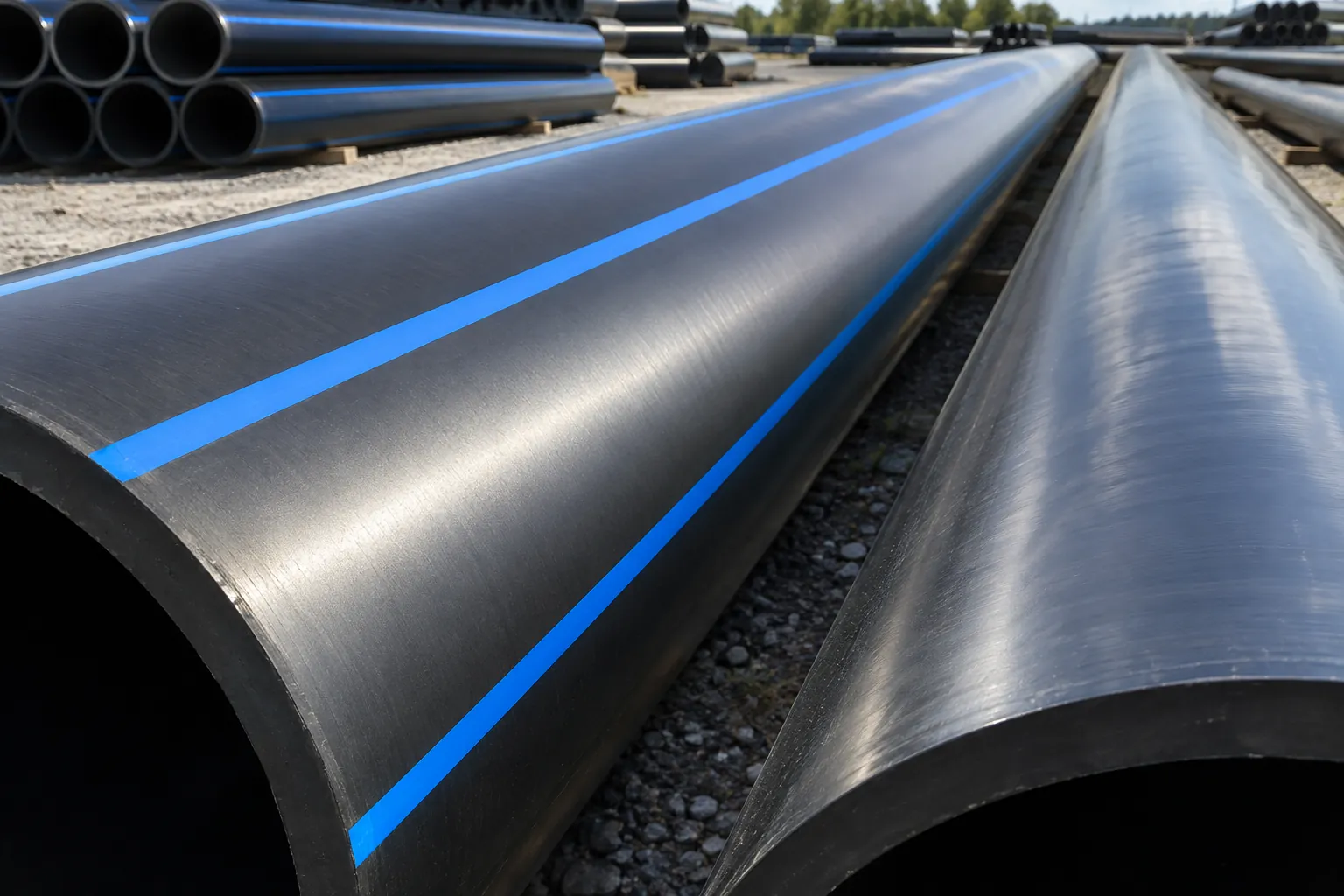
A tender that writes PE4710 alone accepts either. Write the full callout when a cell outside the code matters to you. The same resin note gives PE3608 as 345464C: density cell 3, PENT cell 6 at 100 hours, and the same 1,600 psi hydrostatic cell with a lower design stress of 800 psi.
Buyers working to ISO 4427 will not find a PENT cell at all. In the ASTM system the slow-crack-growth category is part of the material designation code; ISO puts its requirement in the product standard, as a notched-pipe test of more than 500 hours. PPI notes that many PE4710 compounds also achieve PE 100 classification under ISO 9080 and ISO 12162. The ISO grade question is covered in PE100-RC vs PE100 resin grades.
The CC3 Suffix Potable-Water Specs Now Add
D3350 carries a second classification after the letter: an oxidative-resistance category for compounds going into potable-water pressure pipe. It is tested to ASTM F2263 at 90 °C on 4-in. DR11 IPS pipe, at least five specimens, and graded by log-average time to failure.
| Category | Min. time at 2.48 MPa (h) | Min. time at 2.76 MPa (h) | Min. time at 3.10 MPa (h) | Pick it when |
|---|---|---|---|---|
| CC0 | Unspecified | Unspecified | Unspecified | Non-potable pipe, or no category required |
| CC1 | 2,700 | 1,900 | 1,200 | Only when the owner’s spec names it |
| CC2 | 7,400 | 5,100 | 3,400 | Only when the owner’s spec names it |
| CC3 | 16,200 | 11,100 | 7,400 | Potable PE4710 to MAB-3 2026 |
MAB-3 2026 writes CC3 into the compound callout and into the pipe marking, beside PE4710 and the pressure class, for pipe to ANSI/AWWA C906-21, which covers 4 in. through 65 in. MAB-3 is a model specification from PPI’s Municipal Advisory Board; it binds only where a utility copies it into contract documents. The category test is only required for the original validation of a compound. A supplier who says CC3 must be retested for your order is describing a new compound.
What the Callout Cannot Tell You, and What It Does to Lead Time
D3350’s first clause rules out three uses. The classification is not engineering data for design, it does not set manufacturing tolerances, and it does not decide whether a material suits a specific application. Pressure class, dimensions and fusion come from the product standard and the job. Our guide to HDPE pipe covers SDR and pressure. What the callout does give you is a checklist you control: for routine inspection, only the tests needed to identify the material to the purchaser’s satisfaction are required, and one sample per lot is enough when the lot averages comply.
Two of those tests are slow enough to move a delivery date. A PENT run to cell 7 needs at least 500 hours of test time, which is 20.8 days before specimen preparation or any lab queue. If your specification asks for PENT on the resin lot behind your order, rather than the compound’s classification report, plan for at least three extra weeks. The hydrostatic cell cannot be earned for an order at all: it needs pipe from three lots, one tested for at least 10,000 hours, about 417 days. The compound must already be classified, and lead time then depends on whether that exact compound is in the supplier’s resin stock.
Send these five requests with the enquiry, to any supplier, us included:
- Compound trade name and resin producer, with the full D3350 callout and the edition it was classified to.
- The PENT report: hours, number of specimens and test date.
- The hydrostatic listing for that compound, such as a PPI TR-4 entry.
- For drinking water, the CC category and its F2263 report.
- Whether that compound is in resin stock now, and the added days if you require lot-specific PENT.
We have not published a D3350 callout for our own HDPE range on this page, so treat the list above as the standard we expect to be held to as well.
Conclusión
Writing PE4710 on a tender is quick and accepts any compound with the right density, PENT and hydrostatic cells. Writing the full callout, plus CC3 for drinking water, costs one line and closes the tensile and oxidation gaps. Asking for PENT on your own resin lot buys certainty about the material you receive, at a cost of at least 500 hours, about three weeks. Pick the line that matches the risk your project carries, and send the five requests before you compare prices.
Frequently Asked Questions
What does PE445574C mean?
It is an ASTM D3350 cell classification. Read against D3350-21: density cell 4 (>0.947 to 0.955 g/cm3), melt index cell 4 (below 0.15 g/10 min), flexural modulus cell 5 (758 to <1103 MPa), tensile strength cell 5 (24 to <28 MPa), PENT cell 7 (500 hours), HDB cell 4 (11.03 MPa, 1,600 psi), and C for black with 2.0 to 3.0 % carbon black.
How many PENT hours does PE4710 need?
A minimum 500-hour PENT result is required for the PE4710 designation, tested to ASTM F1473 at 80 °C and 2.4 MPa. ASTM standards have not categorized performance above 500 hours PENT, so a compound that tests at 10,000 hours still carries a 7 in the fifth position.
What is the current edition of ASTM D3350?
ASTM D3350-25 is the current edition on the ASTM store, and D3350-24 is its predecessor. Ask the supplier which edition the compound was classified to and check that the certificate names it.
Is PE4710 the same as PE100?
No, they come from two systems. In the ASTM system the slow-crack-growth category is part of the material designation code, while ISO puts its slow-crack-growth requirement in the product standard. PPI notes that many PE4710 compounds also achieve PE 100 classification under ISO 9080 and ISO 12162.










 Español
  English
  Français
  Русский
Comentarios recientes