

The quotation is 14% under everyone else’s and the specification sheet says PP-R. You suspect recycled resin in the blend, and you are right to suspect it, but suspicion is not something you can put in an email. What you need is a number the supplier has to answer to.
Here it is. ISO 15874-2:2013 requires the melt flow rate of the finished pipe to sit within a 30 % maximum difference of the compound from the same batch, tested at 230 °C under 2,16 kg per ISO 1133-1. Two samples, one lab, one comparison. That single clause does more work than every visual inspection in this industry, and almost nobody writes it into a purchase order.
This article gives you the tests that discriminate virgin resin from recycled, the acceptance value for each, and — the part you will not find elsewhere — what each test cannot prove. That last column matters more than the first. Published research shows a 30 % recyclate blend sailing through the exact melt flow test most buyers are told to rely on, while its impact strength falls by roughly three quarters. A test you trust for the wrong reason is worse than no test at all.
Key Takeaways
- External recycled material is prohibited outright in PP-R and PE-X hot and cold water pipe under ISO 15874-1:2013 clause 5.3 and ISO 15875-1:2003 clause 5.3. A factory’s own production scrap is permitted; bought-in regrind is not.
- Write two figures into the purchase order: melt flow rate of the compound at 0,5 g/10 min maximum, and melt flow rate of the pipe within 30 % of that same batch’s compound (230 °C, 2,16 kg, ISO 1133-1).
- Melt flow rate misses moderate adulteration. Measured compounds at 30 % post-consumer recyclate still read 0,51–0,62 g/10 min while Charpy notched impact fell from 55,7 to 12,6 kJ/m².
- Specify the calcination temperature on any ash test. Run at 850 °C, calcium carbonate decomposes to the oxide and the filler you are hunting reports low.
- Wall-thickness tolerance in ISO 15874-2:2013 is +x/0 mm — positive only. An under-thick wall is a non-conformance, not a negotiation.
- PE-X needs different instruments: gel content per ISO 10147 and oxidation induction time per EN 728 / ISO 11357-6, not melt flow rate.
- The definitive thermal-stability test runs 8 760 hours — one year. That is precisely why the fast proxies above exist.
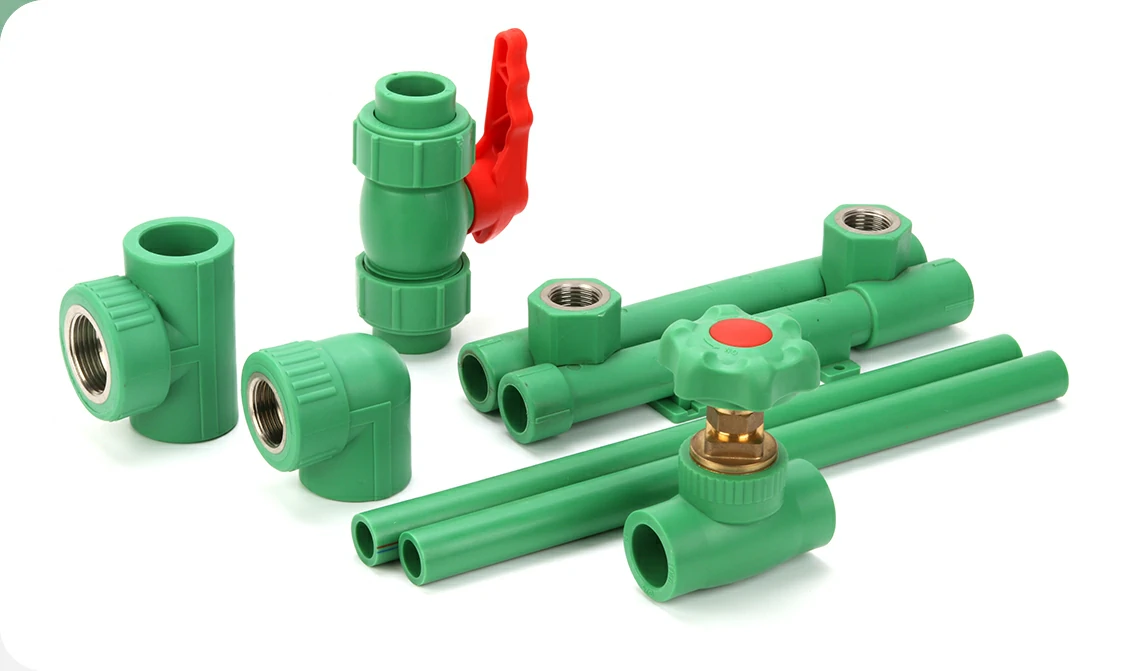
A note on who is writing this. IFANPRO is a Chinese pipe manufacturer. The tests below are the ones that would catch us if we cut corners, and we would rather hand you the instrument than ask you to take our word. Every acceptance value on this page comes from a published standard or peer-reviewed measurement, cited where it appears. Where a figure was not verifiable, this article says so instead of filling the gap.
On this page
- What the standard actually permits — and why that word matters in a dispute
- The two melt flow numbers to put in your purchase order
- Where melt flow testing fails you — the 30 % blend that passes
- Ash, density and the certificate that hides the filler
- The PE-X side: gel content, OIT, and what we cannot tell you
- What you can check on the dock with a tape and a caliper
- Pressure testing: the arbiter you cannot wait for
- Your verification plan, sequenced by when it is still cheap
- Is this level of verification worth it for your order?
- Where we stop, and what you should still ask us
- What to do before your next order ships
- Frequently asked questions
What the Standard Actually Permits — and Why That Word Matters in a Dispute
Most buyers open this conversation the wrong way. They ask whether recycled content is acceptable, and the supplier — who has heard the question a hundred times — explains that recycling is responsible, that everyone reprocesses, and that the pipe passes its tests. Every one of those statements can be true while the pipe in your container is still non-compliant.
The governing text is narrow and it is not about quality. ISO 15874-1:2013 clause 5.3, titled “Reprocessable material”, permits a manufacturer to use its own reprocessable material recovered during production and works testing of products conforming to the standard, in addition to virgin material. Reprocessable material obtained from external sources, and recyclable material, shall not be used. The PE-X standard carries the identical restriction at the identical clause number — ISO 15875-1:2003, clause 5.3.
Read that twice, because the distinction it draws is the one that settles arguments:
- Permitted — the trimmings from the factory’s own extrusion line, the start-up purge, the off-spec length cut out at the saw. Reground and fed back, and virtually every extrusion plant on earth does it.
- Prohibited — post-consumer material, bought-in regrind, scrap purchased from a broker, another factory’s waste. Not discouraged. Prohibited.
This is why “do you use recycled material?” is a question that gets you nowhere. A truthful supplier answers yes — his own regrind — and you have learned nothing. Ask instead: “Does any material in this order originate outside your own production line?” That question has one correct answer and it is difficult to fudge.
There is a second consequence, and it is commercial. Once you frame the issue as conformity rather than preference, you are no longer haggling over grade — you are pointing at a clause the supplier has already claimed to meet on his own datasheet. Compliance obligations do vary by destination market and by the standard your contract actually cites, so confirm which specification governs your order before you rely on this. But where ISO 15874 or ISO 15875 is named in the contract, clause 5.3 comes with it.
The same fraud runs through fittings and valves, where the wall sections are thicker and the visual clues even scarcer. Our companion piece on identifying inferior recycled-material PPR gate valves covers the field checks for that side of the order — visual inspection, simple site tests and certification verification — which pair with the laboratory methods below rather than replacing them.
The Two Melt Flow Numbers to Put in Your Purchase Order
Melt flow rate — MFR, and you will also see it called melt flow index or MFI — measures how much molten polymer is pushed through a standard die in ten minutes under a fixed weight. It is a proxy for molecular weight. Degrade a polymer, contaminate it, or blend in something that has already been through an extruder once, and the chains get shorter, the melt gets runnier, and the number goes up.
If you have never seen the apparatus, this walkthrough from a testing-instrument manufacturer shows the barrel, the die and the weighted piston, and what the operator is actually measuring.
ISO 15874-2:2013 sets two separate requirements in Table 11, and the second one is the one worth having.
| Requirement | Acceptance value | Test conditions | Samples |
|---|---|---|---|
| Melt flow rate (compound) | ≤ 0,5 g/10 min | 230 °C, 2,16 kg, ISO 1133-1 | 3 |
| Melt flow rate (pipe) | 30 % maximum difference compared with compound from the same batch | 230 °C, 2,16 kg, ISO 1133-1 | 3 |
The first line is an absolute ceiling on the raw compound. Useful, but a supplier can meet it with material you would still refuse. The second line is the instrument.
Here is why. The batch-matched comparison needs no reference library, no historical data and no trust. You take two samples from one production run — a handful of the compound pellets that went into the hopper, and a length of the pipe that came out — and you send both to one laboratory. If the pipe reads more than 30 % away from its own feedstock, something happened between the hopper and the die: excessive thermal history, contamination, or material that entered the process from somewhere other than that compound bag. The test is self-referencing, which is exactly what makes it hard to game.
Word the clause so that the supplier is obliged to make both samples available, and so that your inspector pulls them rather than receiving them by post. A sample the factory selects and mails is a sample the factory selected. Ask for compound and pipe from the same production batch, identified by the batch code marked on the pipe, retained and sealed at the time of production.
For importers and distributors buying PP-R or PE-X by the container who want to check a range against the clauses above. Our catalogue lists 572 products across PP-R, PE-X, HDPE and PVC — open it and see whether the line you are quoting has an equivalent you can write these test conditions against.
Where Melt Flow Testing Fails You — the 30 % Blend That Passes
Now the uncomfortable part, and the reason this article exists rather than stopping at the previous section.
A 2022 study in Polymers compounded virgin polypropylene pipe grades with post-consumer packaging recyclate at 10, 20 and 30 % by mass, then measured what changed. The recyclates on their own were wildly out of spec — its Table 2 lists them at 15,8 ± 0,1, 13,3 ± 0,3 and 9,1 ± 0,1 g/10 min against a virgin grade at 0,25 g/10 min. (Read the paper closely and you will find that its section 4.2 prose restates the first of those as 15,6, while Table 2 — the measured dataset, carried with its standard deviation — says 15,8. We quote the table. Either figure is around sixty times the virgin grade, so no part of the argument below turns on which one you take.) You would expect blends of that material to show up immediately.
They did not.
| Recyclate content | Melt flow rate (g/10 min) | Charpy notched impact, PP-2 series (kJ/m²) |
|---|---|---|
| 0 % (virgin PP-2) | 0,25 | 55,7 |
| 10 % | 0,35–0,42 | 50,7 |
| 20 % | 0,39–0,54 | 18,8 |
| 30 % | 0,51–0,62 | 12,6 |
Look at the two columns side by side. Across the whole range the melt flow rate roughly doubles — from 0,25 to about 0,6 — and stays in the region a casual reviewer would call normal. Meanwhile impact strength drops to 12,6 kJ/m², under a quarter of the virgin value. The mechanical property that determines whether a pipe survives a cold warehouse, a dropped bundle or a careless installer has collapsed, and the flow number barely twitched.
One caution on reading that table across to your own order: those compounds were assessed against drainage and sewerage specifications, where the melt flow ceiling is far looser than the 0,5 g/10 min that ISO 15874-2 sets for pressure pipe. Do not transplant the sewer limit onto a potable order. The lesson to transplant is the shape of the two curves, not the pass mark.
So what is melt flow rate actually good for? Gross substitution and thermal abuse. If someone has blended in a packaging-grade polypropylene at high loading, or run the extruder far too hot, MFR catches it and the batch-matched 30 % rule catches it decisively. What MFR is not is a purity assay. A commercially rational adulteration — enough cheap material to matter on cost, not enough to be obvious — sits precisely in the band where this test is weakest.
One unit trap while you are reading laboratory reports, because it catches experienced people. The same study measured oxidation induction by dynamic scanning and reported values of 260,9 °C for one virgin grade and 267,1–273,9 °C for the recyclate compounds. Those are temperatures, not the minutes an isothermal OIT test reports. Two different measurements share one acronym. If a certificate quotes OIT without a unit, it has told you nothing yet.
Ash, Density and the Certificate That Hides the Filler
Recycled resin is one adulteration. Mineral filler is the other, and often they travel together: calcium carbonate is cheap, it is heavy, and it lets a factory hit a price that virgin resin cannot.
Ash content is the direct measurement. ISO 3451-1 burns the polymer away in air and weighs what is left, which is the inorganic fraction — filler, mineral contamination, anything that does not combust. For a material that should be essentially all polymer, a meaningful ash residue is the filler you were looking for, quantified.
The trap that makes a clean certificate meaningless. Higher calcination temperatures, such as 850 °C, convert calcium carbonate and other carbonates to their oxides — and the oxide weighs less than the carbonate it came from. The result comes back low. The laboratory did nothing wrong, the certificate is genuine, and the commonest filler in the industry has been partially hidden by the test conditions. Specify the calcination temperature in your purchase order. “Ash content per ISO 3451-1” is not a specification; “ash content per ISO 3451-1, Method A, calcination at 600 °C” is.
Density gives you a faster and much cruder screen. Unfilled polypropylene random copolymer typically runs in the region of 0,890 to 0,910 g/cm³ measured to ISO 1183. Mineral filler is around three times denser than the polymer, so it pulls the figure up; published work on PP-R filled with calcium carbonate at 10 through 50 wt% found density, modulus and hardness all rising with loading, alongside a tensile strength shift from 25 MPa for the unfilled material to 28,7 MPa at 20 wt% filler.
Treat density as a triage tool and nothing more. It tells you something is heavier than it should be. It cannot tell you what, it cannot tell you how much, and it will not distinguish filler from a different polymer grade. Use it to decide which samples are worth an ash test, then let the ash test give you the number.
The PE-X Side: Gel Content, OIT, and What We Cannot Tell You
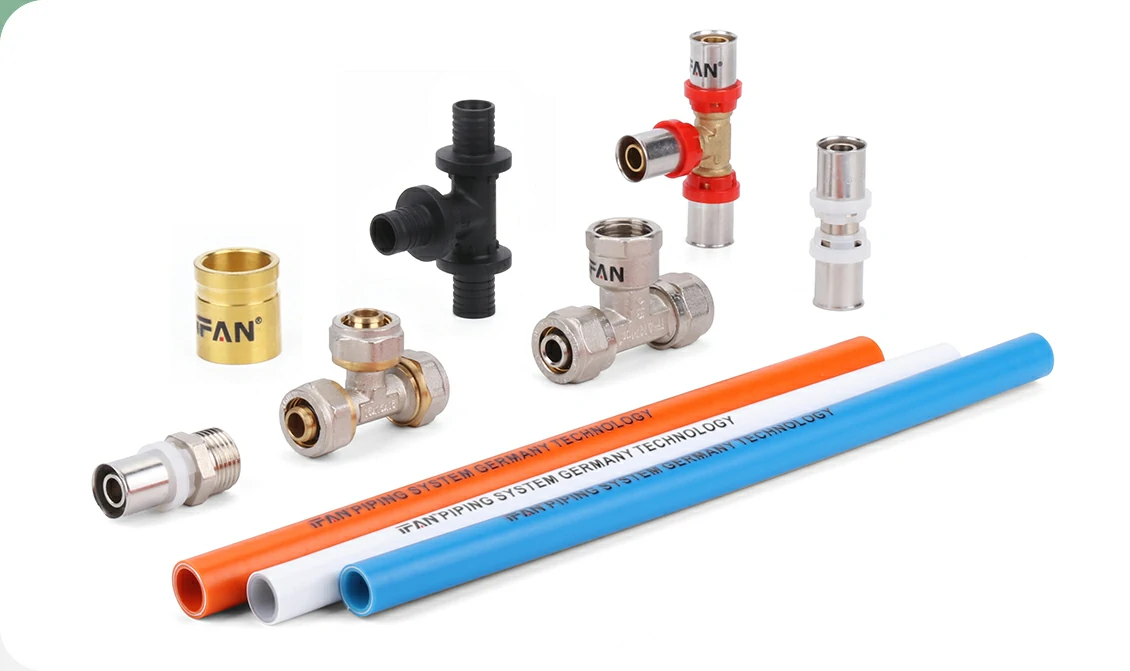
If your order is PE-X rather than PP-R, most of the section above does not apply to you, and the reason is chemical. Crosslinking ties the polymer chains into a network. A crosslinked material does not melt and flow the way a thermoplastic does, which means there is no melt flow rate to measure and no batch-matched comparison to run.
Two instruments replace it. ISO 10147 estimates the degree of crosslinking by determining gel content through solvent extraction: dissolve away everything that is not bound into the network, weigh what survives. Material that was never properly cured, or that has been diluted with feedstock that cannot crosslink, shows up here. EN 728, with its companion DSC method ISO 11357-6, measures oxidation induction time — how long the material resists oxidation at temperature before it starts to break down. That is effectively a measurement of the antioxidant package still present, and resin that has already been through a heat history once has spent part of it.
What we are not going to tell you, and why. The acceptance thresholds for both tests — the minimum gel-content percentage for each PE-X type, and the minimum oxidation induction time — sit inside standards texts we could not obtain in full for this article. You will find crosslinking percentages quoted confidently all over the web. We could repeat them and you would probably never know. Instead: take those two numbers from your own specification or from a purchased copy of the standard, and treat any figure a supplier volunteers as a claim to be verified rather than a fact.
That is not evasion, it is the same discipline this whole article is asking you to apply to your supplier. A number without a traceable source is decoration. The method names above are real, they are the correct instruments, and any competent polymer laboratory will run both — you supply the pass mark from the standard your contract cites.
What You Can Check on the Dock With a Tape and a Caliper
The container has landed and the laboratory results are days away. These checks cost nothing and they run in an hour.
Start with the mean outside diameter, because ISO 15874-2:2013 gives you a band rather than a target and the band is tight. For dimension class A: dn 20 must fall between 20 and 20,3 mm, dn 25 between 25 and 25,3 mm, dn 32 between 32 and 32,3 mm, dn 50 between 50 and 50,5 mm, dn 63 between 63 and 63,6 mm, and dn 110 between 110 and 111 mm. A pi-gauge reads this directly.
Then the wall, and here is the detail worth memorising. The tolerance in Table 9 is expressed as +x/0 mm. Positive only. A pipe may be thicker than its declared minimum wall; it may not be thinner by any amount. The permitted overshoot steps with size:
| Minimum wall thickness emin | Tolerance |
|---|---|
| over 1,0 up to 2,0 mm | +0,3 / 0 mm |
| over 2,0 up to 3,0 mm | +0,4 / 0 mm |
| over 3,0 up to 4,0 mm | +0,5 / 0 mm |
| over 4,0 up to 5,0 mm | +0,6 / 0 mm |
Anything under the declared minimum is a non-conformance, and framing it that way in your first email changes the conversation. Note too that pipe intended to be joined by fusion carries a floor of 2,0 mm minimum wall regardless of what the pressure calculation would allow.
Weight per metre is the fastest screen you own. Cut a metre, weigh it, compare against the supplier’s own declared figure and against other bundles in the same container. It integrates diameter, wall and density into one number, so it catches thin walls and heavy filler at once. What it cannot do is tell you which of the three you are looking at — a light pipe might be thin-walled or made of correctly specified material, and a heavy one might be filled or simply thick. It sorts your samples; it does not diagnose them.
Finally, read the marking. ISO 15874-2:2013 requires it printed or formed directly on the pipe at least once per metre, and Table 12 sets the minimum content: the standard number, the manufacturer’s name or trade mark, nominal outside diameter and wall thickness, the pipe dimension class, the material, the application class with operating pressure, and — for traceability — the production period as year and month in figures or code, plus a code for the production site where a manufacturer operates more than one. That production month and site code are what let you tie a failed length back to a specific run instead of arguing about a container.
These checks are one layer of a wider goods-in routine. If you want the full sequence, our 40-point pre-shipment inspection checklist for pipe and fittings sets out sampling, dimensional and documentation checkpoints in the order an inspector works through them.
Pressure Testing: The Arbiter You Cannot Wait For

Material tests tell you what the pipe is made of. Pressure tests tell you whether it works. When a shipment is genuinely in dispute, this is the evidence that ends it.
ISO 15874-2:2013 Table 10 sets four hydrostatic requirements for PP-R, each on three test pieces with no failure permitted during the period.
| Hoop stress | Temperature | Duration | Use in a dispute |
|---|---|---|---|
| 16,0 MPa | 20 °C | 1 h | The only one a live dispute can actually use |
| 4,3 MPa | 95 °C | 22 h | Feasible within a claim window |
| 3,8 MPa | 95 °C | 165 h | About a week — usually too slow |
| 3,5 MPa | 95 °C | 1 000 h | Type approval, not shipment arbitration |
The one-hour test at 20 °C is your practical weapon. It is fast enough to run while the container is still on your floor and while payment is still partly in your hands, and 16,0 MPa of hoop stress is a serious load for a pipe carrying a compromised wall or a degraded resin.
Two more Table 11 checks sit in the same speed bracket and are worth ordering alongside it. Longitudinal reversion must not exceed 2 % after an oven exposure at 135 °C for PP-R, and impact resistance is capped at a 10 % true impact rate on ten test pieces at 0 °C. Both are sensitive to exactly the processing abuse that accompanies adulterated feedstock, and both come back in days rather than weeks.
Now the number that reframes every certificate you have ever been handed. The thermal-stability requirement in Table 11 runs at 1,9 MPa and 110 °C for 8 760 hours — one full year — on a single test piece. That is the test standing behind the long-term performance claim on a datasheet. It was run once, years ago, on a qualification sample, by a manufacturer whose production has turned over many times since.
So when a supplier sends you a type-test certificate in response to a question about your container, notice what has happened: he has answered a question about a different pipe. The certificate is probably genuine and entirely irrelevant to the batch you are holding. That gap — between what was qualified once and what was extruded last month — is the whole reason the fast proxies in this article exist.
Your Verification Plan, Sequenced by When It Is Still Cheap

Every test above has a moment when it is cheap and a moment when it is merely evidence for a claim. The sequence matters more than the individual methods.
| Stage | What you do | What it catches |
|---|---|---|
| Before the PO | Write in the two MFR values, the ash method with its calcination temperature, and the material-origin question | Suppliers who will not accept the clause — the cheapest rejection available |
| During production | Your inspector pulls sealed compound and pipe samples from one batch | The batch-matched 30 % comparison; this window never reopens |
| At the dock | Diameter, wall, weight per metre, marking and batch code | Thin walls, heavy filler, missing traceability — before you sign |
| In dispute | 1 h hydrostatic at 16,0 MPa, ash content, impact resistance | Evidence that survives a supplier’s type-test certificate |
A worked example, illustrative rather than a real order. You are buying a mixed container of PP-R in dn 20, dn 25 and dn 32 and the price is 14 % below the next quotation. You write the clause: compound MFR at 0,5 g/10 min maximum, pipe MFR within 30 % of same-batch compound, ash per ISO 3451-1 at 600 °C, sealed samples pulled by your inspector. Two suppliers decline the wording. That is your first result and it cost you nothing.
The third accepts. His inspector-witnessed samples come back at 0,31 g/10 min for the compound and 0,37 for the pipe — a 19 % difference, inside the limit. Ash reads low. At the dock, dn 25 measures 25,1 mm and the wall is 0,2 mm over its declared minimum, both fine, and the marking carries a production month and site code. You sign. Nothing here required a laboratory you own or a relationship you do not have.
On cost, a deliberate refusal to give you a number. Commercial polymer laboratories quote rather than publish — the rate moves with market, accreditation scope, sample count and turnaround, and any range printed here would be a guess wearing a decimal point. Get two local quotations before you write the clause, and judge them against the value of the container rather than against each other. That last point is the one buyers get backwards: a test that looks expensive beside another test is almost always trivial beside the goods it clears.
Where these tests matter most is the market whose rules are tightening around material provenance; if you are shipping into the EU, our note on the EU Drinking Water Directive and its 2026 positive lists covers what is being asked of the materials themselves rather than of the pipe dimensions.
Is This Level of Verification Worth It for Your Order?
Not every order justifies laboratory work, and being honest about which ones do is part of the advice. The deciding factor is not order value on its own — it is how expensive the failure would be to reach and to be wrong about.
A container of pipe destined for a screed or a buried run is a different risk from the same pipe going into a surface-mounted plant room. In the first case the failure surfaces years later, behind finishes, and the cost of putting it right has almost nothing to do with the price of the pipe. In the second, a fitter reaches it with a spanner in twenty minutes.
| Worth the full sequence | Dock checks alone are enough |
|---|---|
| First order with a new supplier, container scale | Repeat order from a supplier whose batch-matched results you already hold |
| Pipe going into embedded or buried installations you cannot revisit | Surface-mounted work where a failure is accessible and cheap to fix |
| Potable water, or any market with material-provenance rules | Non-pressure, non-potable applications outside ISO 15874 scope |
| A quotation materially below the rest of your quotes | Pricing consistent with the market and a known production source |
The pattern in the left column is exposure. Where a failure is expensive to reach or expensive to be wrong about, the testing sequence is cheap insurance. Where you can get at the pipe with a spanner, the dock checks carry most of the value on their own.
One caution about reading the right-hand column as permission to relax. Every dock check in this article measures geometry and marking — diameter, wall, ovality, the production code. Not one of them sees resin. The 20 % blend that held its melt flow rate at 0,39–0,54 g/10 min while its Charpy impact fell from 55,7 to 18,8 kJ/m² would pass a caliper with room to spare, because nothing about adulterated compound changes the outside of a pipe. So the right-hand column is not “this pipe is fine”. It is a judgement that if this particular pipe is not fine, you will find out cheaply. Make that trade knowingly rather than by default.
Where We Stop, and What You Should Still Ask Us
Apply the same scepticism to this page that it recommends you apply to a quotation. Here is what IFANPRO can substantiate and what it cannot.
What is on the public record: a manufacturing operation founded in 1993, a 120,000 m² plant, 600+ employees including 50+ R&D and technical staff, and 200+ production and testing machines across PP-R, PE-X and PEX-AL-PEX, HDPE, PVC and PPH lines. Company-level certifications include ISO 9001, ISO 14001, CE, WRAS, NSF/IAPMO, Intertek, EAC, Watermark and SAI Global.
What that does not tell you, and where an honest supplier should say so: a company-level certificate list is not a product-level one, and it does not by itself establish which specific certificate covers which specific pipe line in your market. This article also does not publish an incoming-resin acceptance band, a wall-thickness control tolerance or a batch defect rate for our own production, because those figures are not on the public record and inventing them would be exactly the behaviour the article is teaching you to detect.
So ask us — and ask every other supplier on your list — the same three things, each with the figure attached rather than left vague:
- Which certificate number covers the exact line being quoted, and its expiry date — not the company list above.
- Will the factory accept, in writing, compound melt flow at 0,5 g/10 min maximum and pipe melt flow within 30 % of the same batch, both at 230 °C under 2,16 kg?
- May your own inspector pull the sealed samples, and will the pipe carry the production month and site code the marking clause requires at intervals of 1 m?
A supplier who answers all three plainly has told you more than any brochure. One who agrees to the 16,0 MPa one-hour hydrostatic check as a dispute mechanism before there is a dispute has told you more still.
Two figures you will reasonably want and will not find on this page: minimum order quantity and production lead time. Neither is published for these lines, and both genuinely move with the size mix, the colour and the season — a PP-R order spread across dn 20 to dn 110 does not carry the same minimum as a single-size run, and quoting one number here would mislead you in whichever direction the real answer differs. Ask for both against your actual size list rather than in the abstract, and expect any supplier’s answer to change when the list does.
What to Do Before Your Next Order Ships
Four actions, in order, none of which requires a laboratory of your own.
- Change the question. Stop asking whether the supplier uses recycled material. Ask whether any material in your order originates outside his own production line — the clause 5.3 distinction that has one correct answer.
- Put two numbers in the purchase order. Compound MFR at 0,5 g/10 min maximum and pipe MFR within a 30 % difference of the same batch’s compound, both at 230 °C and 2,16 kg per ISO 1133-1, on sealed samples your inspector pulls.
- Name the calcination temperature on any ash test you commission, or accept that a genuine certificate may report the filler low.
- Book the one-hour hydrostatic test at 16,0 MPa and 20 °C, not the 1 000-hour one, if a shipment goes into dispute — it is the only pressure test that runs inside a commercial argument.
One last thing to be clear-eyed about. None of this proves a pipe contains virgin resin. Testing establishes that material behaves within the limits the standard sets, which is a different claim and a weaker one, and any supplier who tells you a certificate proves purity is overselling it. What the sequence does is remove the easy fraud, make the harder fraud expensive, and give you evidence that stands up when the container is already on your floor and the money is still on the table.
Frequently Asked Questions
Is recycled material allowed in PPR pipe at all?
Only the manufacturer’s own reprocessable material from production and works testing. ISO 15874-1:2013 clause 5.3 prohibits reprocessable material from external sources and recyclable material. ISO 15875-1:2003 clause 5.3 sets the same rule for PE-X.
Can a melt flow index test detect recycled content?
Partly. It catches gross substitution and thermal abuse, especially through the batch-matched 30 % comparison. Measured blends at 30 % recyclate still read 0,51–0,62 g/10 min, so a moderate adulteration can pass while impact strength collapses.
What is the melt flow rate limit for PPR pipe?
ISO 15874-2:2013 Table 11 sets the compound at 0,5 g/10 min maximum and requires the finished pipe to be within a 30 % maximum difference of compound from the same batch, both at 230 °C under 2,16 kg per ISO 1133-1.
Why did my ash test come back clean on obviously filled pipe?
Check the calcination temperature. At 850 °C, calcium carbonate converts to its oxide and reports lower than the carbonate actually present. Specify the temperature in the purchase order rather than citing ISO 3451-1 alone.
How do I test PEX pipe for recycled content?
Not with melt flow rate — crosslinked material does not flow. Use gel content by solvent extraction per ISO 10147 for crosslinking, and oxidation induction time per EN 728 or ISO 11357-6 for antioxidant depletion. Take the pass marks from your governing specification.
Does a supplier’s type-test certificate prove my batch is compliant?
No. Type testing qualifies a sample, and the thermal-stability requirement alone runs 8 760 hours. The certificate describes a pipe made at some earlier date, not the container you are holding. Batch-level evidence is what settles a shipment.
Can I reject pipe for being thinner than specified?
Yes. The ISO 15874-2:2013 Table 9 tolerance is +x/0 mm — positive only. A wall below the declared minimum is a non-conformance, not a tolerance question. Fusion-jointed pipe also carries a 2,0 mm minimum wall floor.











 Español
  English
  Français
  Русский
Comentarios recientes