
The choice of schedule 40 vs 80 PVC comes down to one number that never changes and one that does: the outside diameter stays fixed, but the wall thickness grows. That single difference decides how much pressure the pipe holds, how much water flows through it, and whether an inspector signs off on your job. Spec the wrong schedule and you either overpay for wall you don’t need or install a line that fails under pressure it was never rated to hold.
This guide gives contractors and procurement teams the working numbers: wall thickness and pressure ratings from 1/2″ through 4″, where each schedule earns its place, and where it does not. If you also source polyethylene lines, note that PVC schedules and HDPE ratings use two completely different systems — see how HDPE sizing compares before you assume the logic carries over. Get the schedule right and the rest of the spec falls into place.
Key Takeaways
- Both schedules share the same outside diameter for a given size — a 1″ Sch 40 and 1″ Sch 80 pipe both measure 1.315″ OD and use the same fittings size class.
- Schedule 80 walls run roughly 30–45% thicker. A 1″ Sch 40 wall is about 0.133″; the same size in Sch 80 is about 0.179″.
- Thicker walls mean higher pressure: 1″ Sch 40 is rated near 450 psi, 1″ Sch 80 near 630 psi at 73°F (per ASTM D1785 published values).
- Schedule 80’s thicker wall shrinks the inside diameter, so it moves less water at the same nominal size — a real trade-off for flow-driven jobs.
- Color is a field cue, not a rule: Sch 40 is usually white, Sch 80 usually gray, but always confirm the printed wall marking.
- Use Sch 40 for low-pressure water, drainage and irrigation; use Sch 80 for high-pressure, industrial, chemical or impact-exposed lines.
- PVC schedule is not the same as HDPE SDR — schedule fixes wall by size, SDR sets a fixed OD-to-wall ratio.
This guide is part of our complete guide to PVC pipe and fittings — start there for the full PVC system overview.
What “Schedule” Means on PVC Pipe
“Schedule” is a wall-thickness plan carried over from the old iron pipe standards, and it survives on plastic pipe today under ASTM D1785. For any given nominal size, the outside diameter is locked. What the schedule number changes is the wall: a higher schedule means a thicker wall drilled inward from that fixed OD. That is why a 2″ pipe is always 2.375″ on the outside whether it is Schedule 40 or Schedule 80 — the extra material grows inward, not outward.
This fixed-OD design is the practical reason fittings, valves and threaded connections interchange across schedules of the same size. A Schedule 80 coupling slips over a Schedule 40 pipe end of matching nominal size because both share the 2.375″ outer surface. The catch: the pipe wall, not the coupling, sets the real pressure limit, so pairing a thin-wall pipe with a heavy fitting does not buy you the fitting’s rating.
Rule of thumb: outside diameter is set by nominal size, wall thickness is set by schedule, and pressure rating follows the wall. Change the schedule and you change the wall and the pressure — never the OD.
One warning that trips up buyers: nominal size is not a measured dimension. A “1-inch” pipe has neither a 1″ OD nor a 1″ bore — it is a legacy label. Always order by nominal size and schedule together, and confirm against the printed wall marking rather than eyeballing the pipe.
Schedule 40 vs Schedule 80: The Core Difference
The core difference between schedule 40 vs 80 PVC is wall thickness, and everything downstream flows from it. Schedule 80 carries a heavier wall, which raises the pressure rating, lowers the internal diameter, and adds weight and cost. Take the 1″ size as a concrete example: Schedule 40 runs about a 0.133″ wall rated near 450 psi, while Schedule 80 runs about a 0.179″ wall rated near 630 psi — roughly 40% more pressure headroom from the same nominal size.
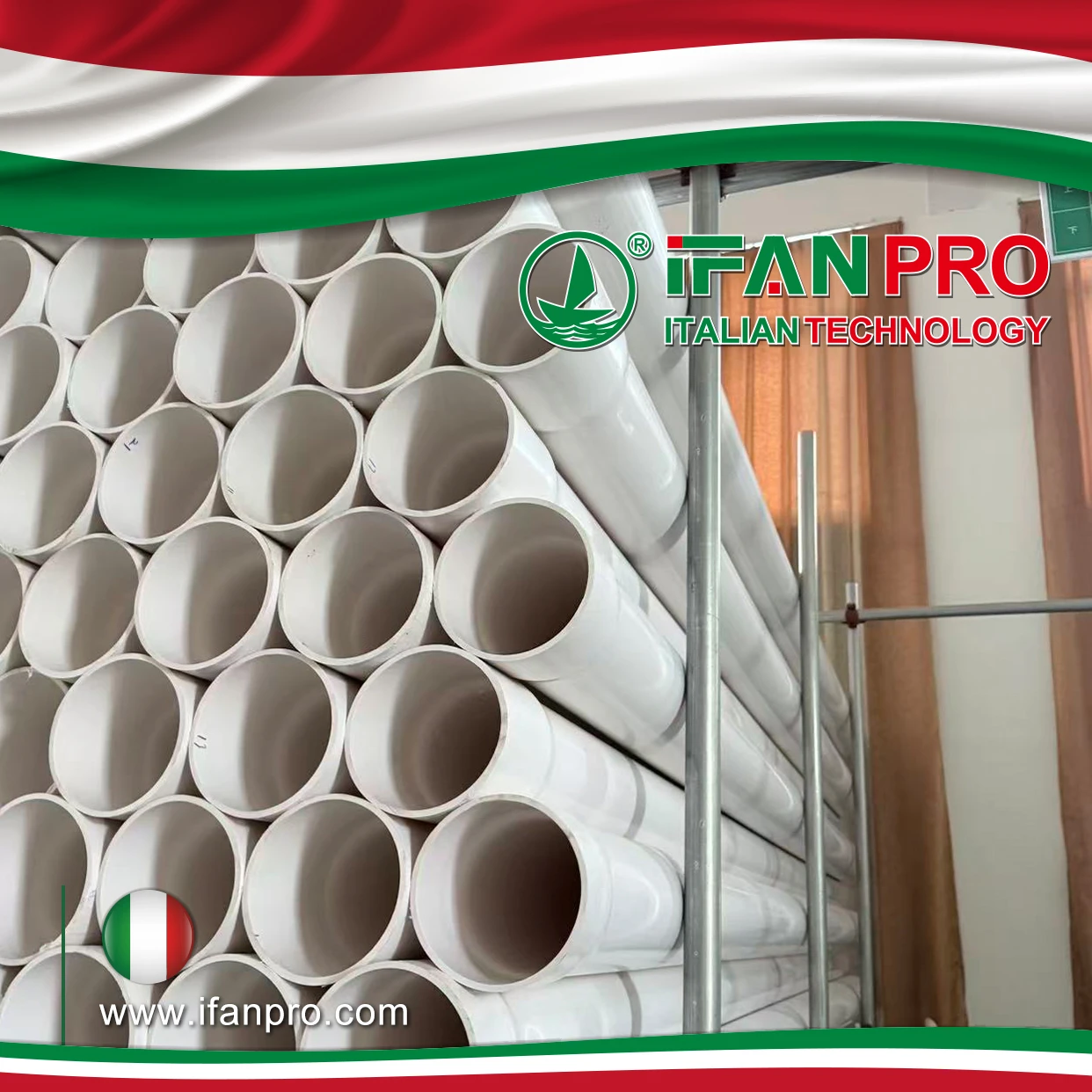
Color is the fast field cue. In most North American supply, Schedule 40 pressure pipe is white and Schedule 80 is gray, which lets a crew sort a pile at a glance. Treat that as a hint, not proof — color conventions vary by manufacturer and region, and gray Sch 40 or white Sch 80 both exist. The printed legend on the pipe stating the schedule and pressure rating is the only mark that settles it.
Weight, cost and handling
A heavier wall is heavier pipe. Schedule 80 typically weighs 30–40% more per foot than Schedule 40 of the same size, which shows up in freight, in the labor of hanging long runs, and in the price per length. For a procurement team, that means Schedule 80 is a deliberate upgrade you pay for — worth it when pressure, temperature or impact demand it, wasteful when a low-pressure line would run fine on Schedule 40.
Wall Thickness & Pressure by Size
Here are the working numbers from 1/2″ through 4″. Wall thicknesses follow ASTM D1785; pressure ratings are the published values for PVC 1120 (Type I) pipe at 73°F, before any temperature or safety derating. Note the pattern: pressure rating drops as the pipe gets larger, because the wall-to-diameter ratio falls even though the wall itself grows.
| Nominal Size | Sch 40 Wall (in) | Sch 40 Rating (psi) | Sch 80 Wall (in) | Sch 80 Rating (psi) |
|---|---|---|---|---|
| 1/2″ | 0.109 | 600 | 0.147 | 850 |
| 3/4″ | 0.113 | 480 | 0.154 | 690 |
| 1″ | 0.133 | 450 | 0.179 | 630 |
| 1-1/4″ | 0.140 | 370 | 0.191 | 520 |
| 1-1/2″ | 0.145 | 330 | 0.200 | 470 |
| 2″ | 0.154 | 280 | 0.218 | 400 |
| 3″ | 0.216 | 260 | 0.300 | 370 |
| 4″ | 0.237 | 220 | 0.337 | 320 |
Two cautions before you spec off this table. First, those ratings assume 73°F water; PVC loses strength as temperature climbs, and at 140°F the usable rating falls to roughly 20–22% of the listed figure. Second, published values are the pipe’s rating — your system also needs to account for surge, fittings, and any local code derating. Treat the table as the starting envelope, not the final number.
Flow, Fittings & Cement
Because Schedule 80 grows its wall inward, it steals from the bore. A 2″ Schedule 40 pipe carries roughly a 2.067″ inside diameter; the same 2″ in Schedule 80 drops to about 1.939″. That is a small number that matters at scale: less cross-sectional area means lower flow at the same velocity, or higher velocity and more friction loss to move the same volume. On long or flow-critical runs, that reduced bore can push you up a nominal size to recover capacity.
Fittings must match the schedule
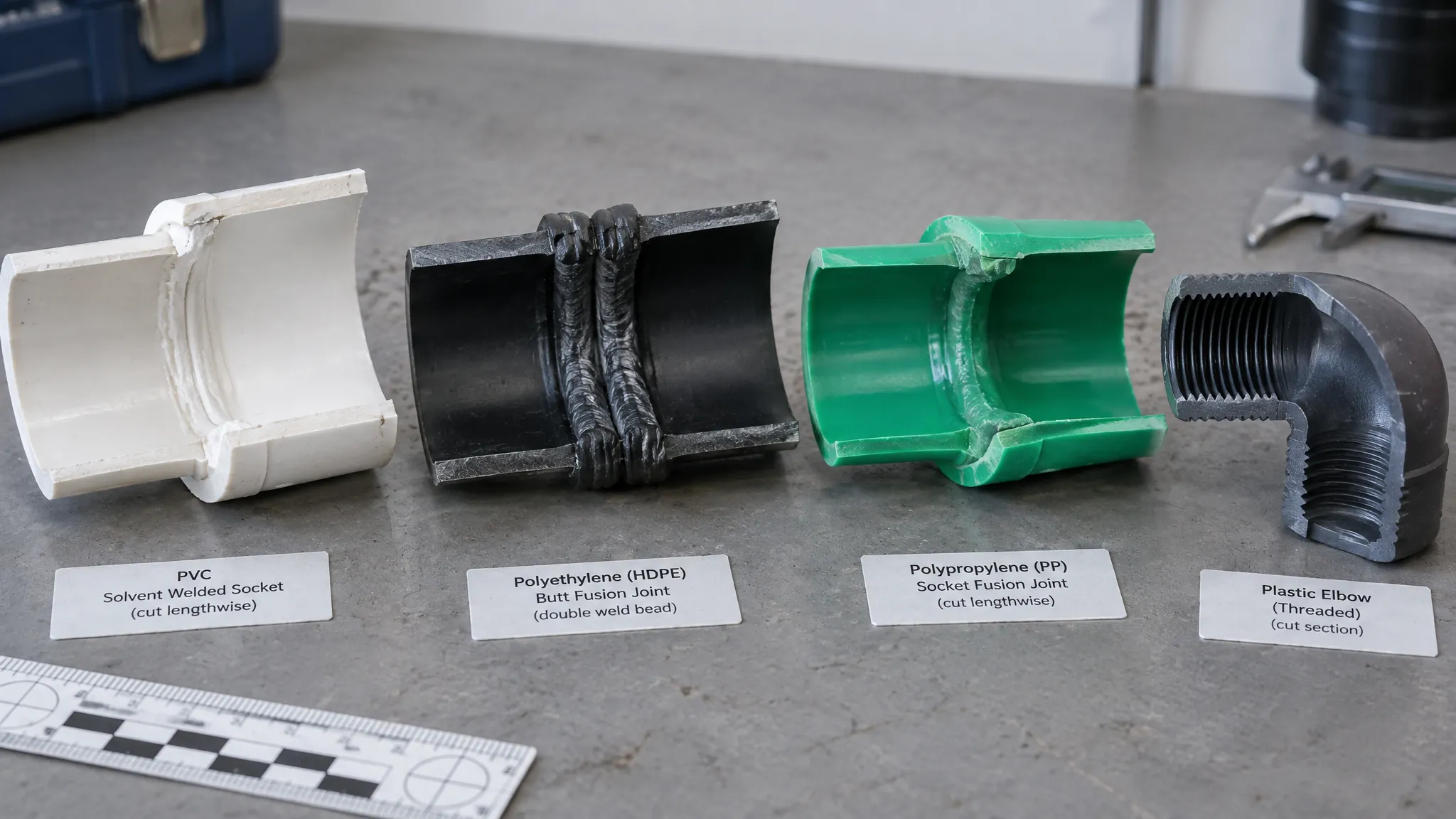
Pair fittings to the pipe’s schedule and pressure class. Socket dimensions interchange because the OD is shared, but a Schedule 40 fitting on a Schedule 80 high-pressure line becomes the weak link — the assembly is only as strong as its lowest-rated component. On threaded PVC, the rule tightens further: threading cuts into the wall, so most manufacturers thread only Schedule 80 and rate threaded joints at roughly half the pipe’s solvent-weld pressure. If you need threads under pressure, start with Schedule 80.
Both schedules solvent-weld the same way
Both Schedule 40 and Schedule 80 PVC join with solvent cement meeting ASTM D2564, applied over a primed surface. The chemistry fuses the pipe and fitting into a single mass rather than gluing them. Match the cement to pipe size and use the right body — heavy-bodied cement for larger diameters — and cure per the label before pressure testing. A rushed joint is the most common avoidable failure on a PVC line.
When to Use Each (Best for / Not for)
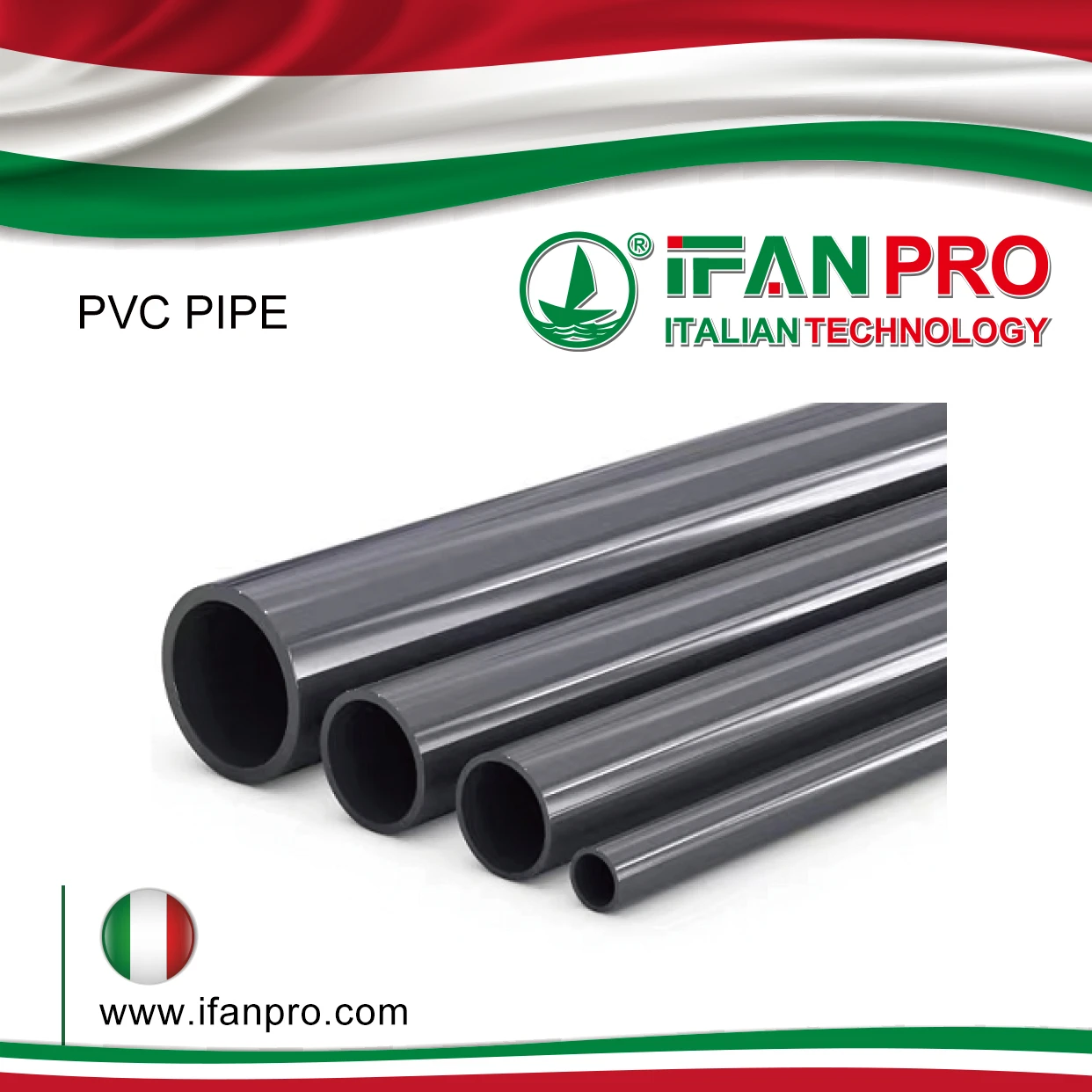
The honest default is Schedule 40 for most cold-water, drainage and irrigation work, and Schedule 80 when pressure, chemicals, heat or physical abuse enter the picture. Overspeccing every line to Schedule 80 wastes money and cuts flow; underspeccing a high-pressure or exposed line invites a burst. Match the schedule to the duty.
| Application | Recommended Schedule |
|---|---|
| Residential cold-water supply, low pressure | Schedule 40 |
| Drain, waste and vent (DWV) | Schedule 40 |
| Agricultural and landscape irrigation | Schedule 40 |
| High-pressure water mains and pump discharge | Schedule 80 |
| Chemical dosing and industrial process lines | Schedule 80 |
| Exposed, threaded or impact-prone runs | Schedule 80 |
| Compressed air or gas | Neither — not rated for gases |
One hard warning that overrides the whole table: standard PVC — Schedule 40 or 80 — is not rated for compressed air or gas, and many jurisdictions prohibit it outright. A PVC line stores energy when pressurized with a compressible fluid, and a failure shatters rather than splits. For hot potable water, look at CPVC instead of standard PVC, and check the local code that governs the install; requirements vary by jurisdiction.
PVC Schedule vs HDPE SDR — Don’t Confuse the Systems
Here is the insider trap that catches buyers who source both materials. PVC uses the schedule system: for each nominal size, the wall is a fixed value, and the pressure rating changes size to size (recall the table — a 1/2″ Sch 40 holds 600 psi but a 4″ Sch 40 only 220 psi). HDPE and many other plastic lines use SDR — Standard Dimension Ratio — where the wall is a fixed fraction of the outside diameter. Because that ratio is constant, every size of a given SDR shares the same pressure rating.
The practical fallout: you cannot cross-map “Schedule 80 equals SDR-X” as a clean rule, and you cannot assume a schedule number implies a pressure the way an SDR does. Quote and order PVC by nominal size plus schedule; quote HDPE by size plus SDR or pressure class. If your project mixes both, spell out each system on the submittal so nothing gets substituted by number alone. Our breakdown of HDPE SDR sizing lays out how the ratio drives the rating.
Schedule = fixed wall per size, pressure varies by size. SDR = fixed OD-to-wall ratio, pressure constant across sizes. Two systems, no shared shortcut.
If your PVC scope also involves connections and transitions, the fittings side follows the same match-the-schedule logic — our guide to the types of PVC fittings covers what pairs with what, and the PVC vs CPVC comparison covers the hot-water question the schedule table can’t answer.
What We Verify Before PVC Ships
At IFANPRO, we treat the schedule marking as a promise we have to prove, not a label we print. Every PVC production run is checked against the dimensional standard for its schedule before it leaves the floor. We measure outside diameter and wall thickness with calipers at multiple points around and along the pipe, because a wall that thins on one side quietly drops the pressure rating even when the average looks right.
Beyond dimensions, we hydrostatically pressure-test samples from production and hold the material and test certificates on file, so a procurement team can match what arrives to the standard it was ordered against. Producing pipe from a 120,000 m² facility under ISO 9001 and ISO 14001, with CE, WRAS and NSF/IAPMO certifications behind the range, means the schedule you specify is the schedule that reaches your site — with the paperwork to show it. That documentation trail is what lets a buyer sign off with confidence.
Conclusión
Schedule 40 and Schedule 80 PVC share an outside diameter and diverge on wall thickness, and that wall decides pressure, flow and cost. Choose Schedule 40 for low-pressure water, drainage and irrigation, and step up to Schedule 80 for high-pressure, industrial, chemical or exposed lines — then confirm the rating against temperature and code. When you’re ready to order either schedule with matching dimensional and pressure certificates, our team can spec the run to your standard.
Frequently Asked Questions
Is Schedule 80 PVC stronger than Schedule 40?
Yes. For the same nominal size, Schedule 80’s thicker wall raises the pressure rating by roughly 30–45% at 73°F — a 1″ size runs about 450 psi in Sch 40 versus 630 psi in Sch 80.
Do Schedule 40 and 80 PVC use the same fittings?
Socket dimensions match because the outside diameter is shared, so they physically fit. On pressure lines, match the fitting’s schedule and pressure class to the pipe, or the lower-rated part becomes the weak point.
Why is Schedule 40 white and Schedule 80 gray?
It is a common color convention that helps crews sort pipe fast, not a standard. Colors vary by maker and region, so always confirm the schedule from the printed legend on the pipe.
Can I use Schedule 40 or 80 PVC for compressed air?
No. Standard PVC is not rated for compressed air or gas and is prohibited for it in many jurisdictions, because a failure shatters instead of splitting. Use pipe listed for compressed gas service.
Does Schedule 80 reduce water flow?
Yes, slightly. The thicker wall shrinks the inside diameter — a 2″ size drops from about 2.067″ to 1.939″ bore — so it moves less water per size and may need a size bump on flow-critical runs.
Sources and standards: ASTM D1785 (PVC pressure pipe, Schedules 40, 80 and 120), ASTM D2564 (solvent cement for PVC), PVC material overview, and the Plastics Pipe Institute. For related sizing, see our PEX pipe size chart. Published pressure figures are nominal values at 73°F and require temperature and system derating for design.











 Español
  English
  Français
  Русский
Comentarios recientes