
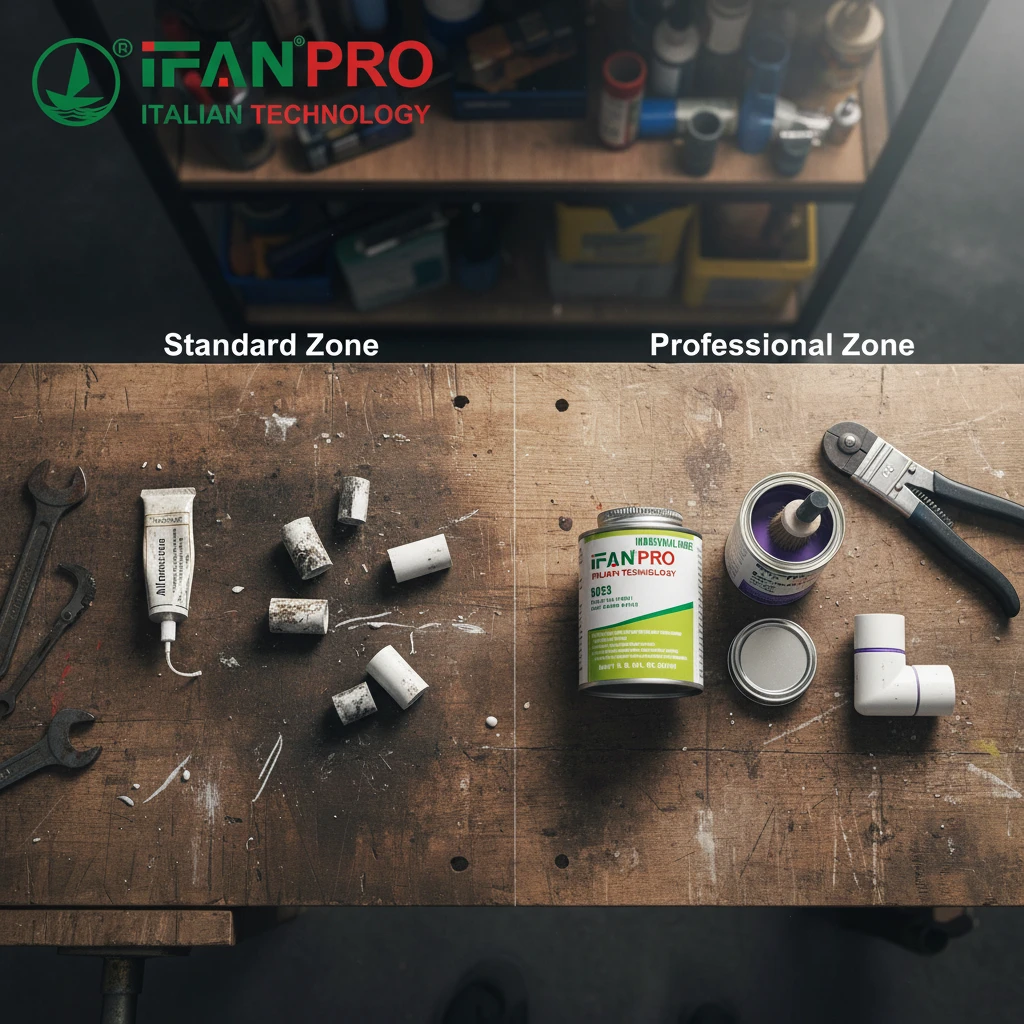
I once inspected a leaky irrigation system where a homeowner used a cheap, universal glue. The failed joints cost more to fix than the entire initial project.
Yes, professional-grade PVC glue is worth the higher cost for critical or long-term projects. It offers superior bond strength, faster curing times, and greater chemical resistance compared to standard glue. This prevents joint failures, leaks, and costly repairs, making it a wise investment for anyone who values a permanent and reliable PVC installation.
If you’re deciding between a standard tube and a professional can, understanding the real differences will save you time, money, and frustration.
What Specific Advantages Does Professional PVC Glue Offer Over Standard Glue?
Many DIYers think all PVC cement is the same. I’ve seen the messy, weak results of that assumption firsthand.
Professional PVC glue offers specific advantages like a thicker formula for better gap filling, faster set and cure times for efficient work, and higher solvent and resin content for a deeper, more complete weld. It is also often formulated for specific conditions, such as wet surfaces or cold weather, which standard glues cannot handle.
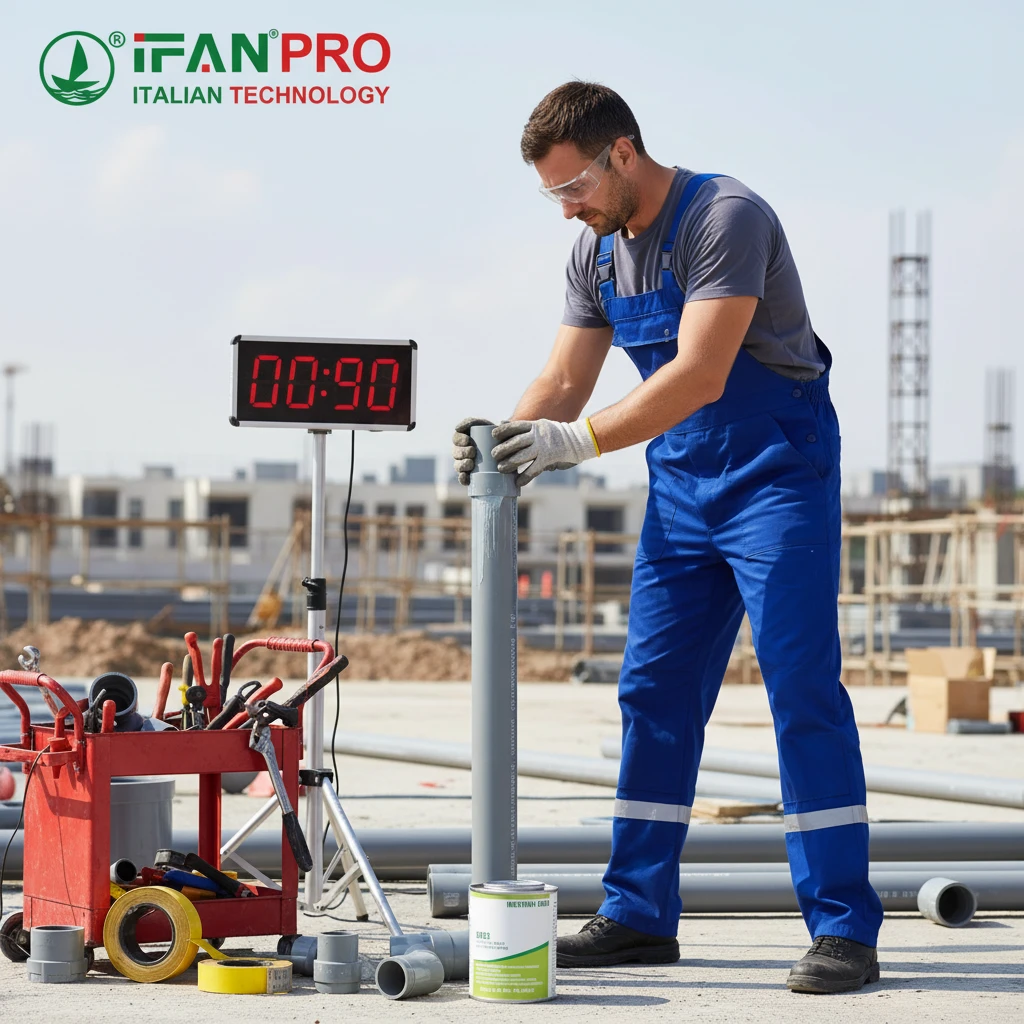
Beyond Just “Sticking” Pipes Together
Standard glue works for simple, low-pressure tasks. But professional glue is engineered for performance. The main difference is not just strength, but how it achieves a reliable bond.
First, let’s talk about consistency. Professional-grade cement is usually thicker. This is a big advantage. When you apply it, it doesn’t run or drip as easily. This thicker consistency allows it to fill tiny gaps or imperfections in the pipe or fitting. A standard, runny glue might leave voids, creating a weak spot that can fail under pressure or over time.
Speed and Precision in Application
Second, consider working time. Professional cements have a faster “set time.” This means the joint becomes solid enough to handle much quicker—often in just a minute or two. For a plumber on a job site, this speed is crucial for productivity. However, it also demands more skill and preparation, as you must align the pieces correctly on the first try. Standard glue gives you more time to adjust, but the wait for it to cure fully is much longer, slowing down the entire project.
Engineered for Real-World Conditions
Third, and most importantly, professional formulas are specialized. A standard “all-purpose” glue is a compromise. Professional products are tailored:
- For different pipe types: Specific formulas for Schedule 40, Schedule 80, or CPVC pipes.
- For different environments: Rain-R-Shine or cold-weather cements can be applied on damp surfaces or in low temperatures, where standard glue would simply not bond.
- For different applications: Heavy-duty formulas for pressure pipes, and clear or low-VOC formulas for sensitive installations.
Key Advantage Comparison
| Feature | Standard PVC Glue | Professional PVC Glue |
|---|---|---|
| Formula Consistency | Thinner, more runny | Thicker, better for gap filling |
| Set Time | Slower (several minutes) | Faster (1-2 minutes) |
| Cure Time | Longer (several hours) | Shorter for full strength |
| Химическая стойкость | Basic | Higher, withstands more aggressive fluids |
| Application Conditions | Ideal, dry, warm conditions only | Options for wet, cold, or dry conditions |
| Best For | Non-critical, low-pressure DIY crafts | Pressure systems, permanent installations, outdoor use |
In short, professional glue gives you control, speed, and reliability that standard glue cannot match. It’s the right tool for a lasting job.
How Do Professional-Grade Formulas Create Stronger and More Durable PVC Bonds?
A strong bond is more than just good adhesion. It’s about creating a single, new piece of material at the joint.
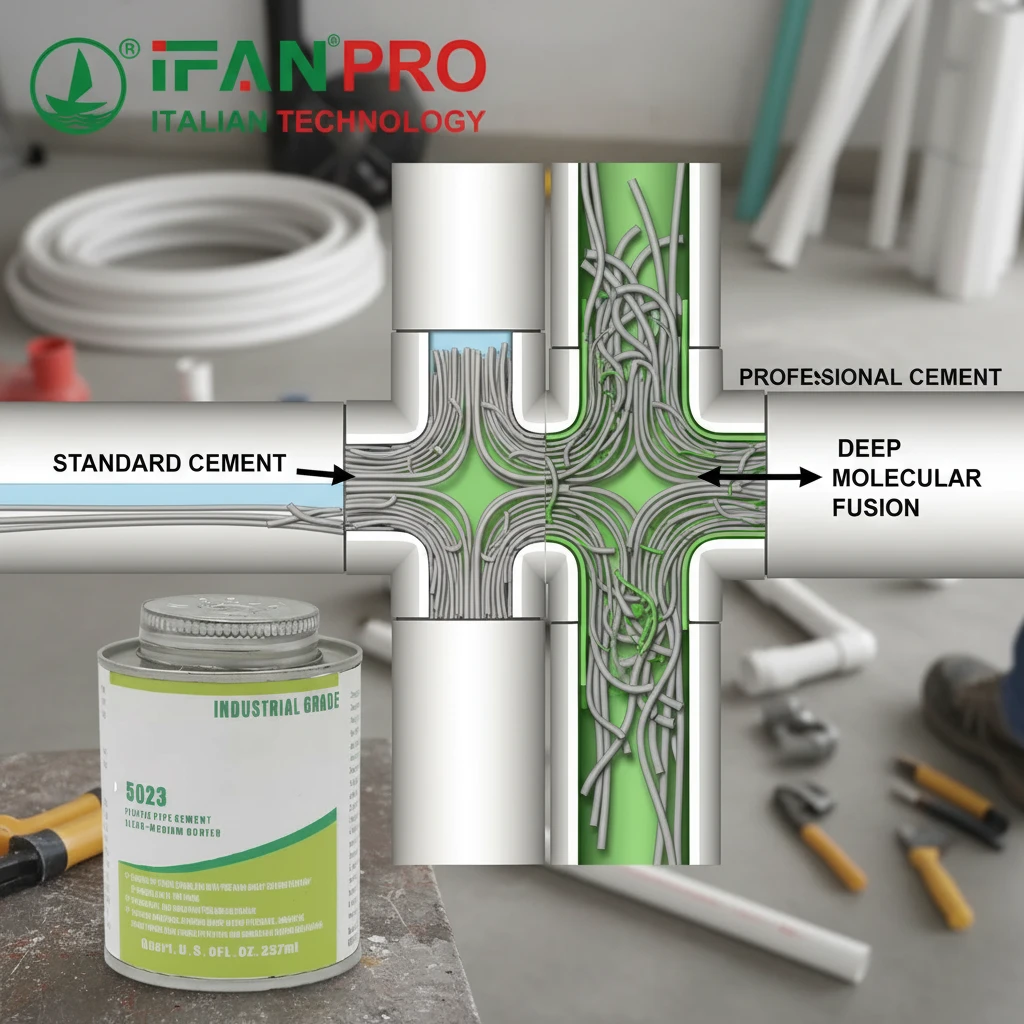
Professional-grade formulas create stronger bonds by containing a higher percentage of potent solvents and PVC resins. These solvents deeply soften the pipe and fitting material, allowing the resins to fully intertwine and fuse the plastic molecules together. This creates a permanent, homogeneous “welded” joint that is often stronger than the surrounding pipe.
The Science of a Solvent Weld
To understand why professional glue is better, you need to know how PVC cement works. It doesn’t “glue” in the traditional sense. It performs a solvent weld.
The process has three key stages:
- Solvent Action: The solvents in the cement chemically melt and soften the surface layer of the PVC.
- Material Mixing: The softened PVC from the pipe and the fitting mix together with the PVC resins in the cement itself.
- Reformation: The solvents evaporate, and the PVC re-hardens, now with the molecules from both pieces and the added resin fused into one solid piece.
Professional formulas excel at every stage because they have a more powerful and precise chemical composition.
Deeper Penetration for a Better Weld
The solvents in professional cement are stronger and/or present in higher volumes. This allows them to penetrate deeper into the PVC material before evaporating. A deeper softened zone means a larger area for the materials to mix. Think of it like welding metal: a deeper weld bead is stronger than a shallow surface tack. Standard glue only softens a superficial layer, resulting in a weaker, more brittle connection.
More Resin for a Reinforced Joint
Furthermore, professional cements have a higher solids content—these are the PVC resins. These resins don’t evaporate; they remain in the joint as the new “body” of the weld. More resin means there is more material to fill the entire joint space completely, leaving no microscopic voids or weak points. It actively reinforces the bond.
Result: A Homogeneous, Pressure-Resistant Joint
The final result is a joint that is no longer a connection between two pieces, but a single, reformed piece of PVC. This homogeneous bond has two major benefits:
- Uniform Strength: The stress from water pressure is distributed evenly across the entire joint, not concentrated at the glue line.
- Superior Fatigue Resistance: It can better handle the constant expansion, contraction, and vibration that pipes experience, which can cause a weaker adhesive bond to crack over time.
In essence, you are not sticking pipes together; you are welding them with chemicals. Professional-grade cement is simply a better, more consistent welding compound.
Can the Higher Cost of Professional PVC Glue Prevent Costly Future Repairs?
A leaking joint behind a wall or under a slab can cause thousands in damage. The glue is the cheapest insurance you can buy.
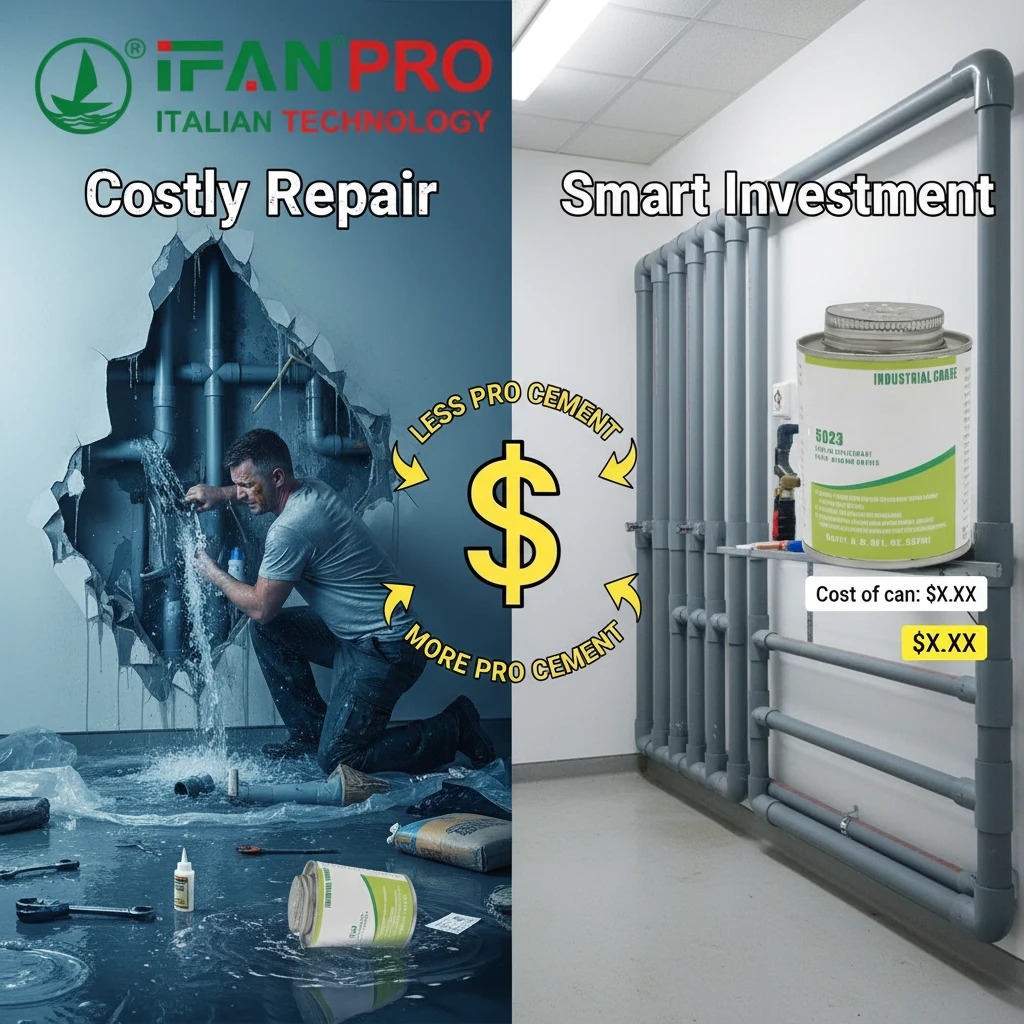
Yes, the higher initial cost of professional PVC glue can absolutely prevent costly future repairs. A single failed joint in a pressurized water line, sewer drain, or pool system can lead to massive water damage, mold remediation, landscape destruction, and expensive excavation and re-piping labor costs that dwarf the few dollars saved on substandard cement.
The Real Price of a Failed Joint
When we talk about “cost,” we must look beyond the price tag on the can. The true cost includes materials, labor, and the immense inconvenience of a repair. A professional-grade cement significantly reduces the risk of ever facing that repair bill.
Let’s break down a common scenario: a leak in a buried irrigation line or a home’s main drain.
- Step 1: Locate the Leak. This may require specialized electronic equipment or digging up multiple areas.
- Step 2: Excavate. This means breaking concrete, destroying landscaping, or digging a deep trench.
- Step 3: Repair. You must cut out the failed section and install new pipes and fittings.
- Step 4: Restore. You now have to repour concrete, re-sod the lawn, or replant gardens.
The table below estimates the costs, showing how the glue choice matters.
Cost Comparison: Prevention vs. Repair
| Item | Cost with Standard Glue (Risk of Failure) | Cost with Professional Glue (Reliable Install) |
|---|---|---|
| PVC Cement (for project) | $5 – $10 | $15 – $30 |
| Risk of Joint Failure | High for pressure/critical apps | Very Low |
| Potential Repair Cost | $500 – $5,000+ (Water damage, excavation, labor) | $0 (Proper install lasts decades) |
| Total Project “Risk Cost” | $505 – $5,010+ | $15 – $30 |
Protecting Your Investment and Peace of Mind
The financial logic is clear. For a difference of maybe $20 on your total project material cost, you are essentially buying an insurance policy against a potential $5,000 disaster. This is an excellent return on investment.
Moreover, consider the non-financial costs:
- Time: A repair project can take days or weeks.
- Stress: Dealing with water damage and contractors is highly stressful.
- Inconvenience: You may lose access to water or a bathroom for a period.
Professional-grade glue gives you confidence. Once the joint is made and cured, you can forget about it. It will last as long as the pipe itself. This peace of mind is invaluable, especially for projects in hard-to-access areas like under floors, inside walls, or deep underground.
When Should You Definitely Invest in Professional-Grade PVC Cement for Your Project?
Not every project demands the best glue. But for some, it’s the only smart choice.
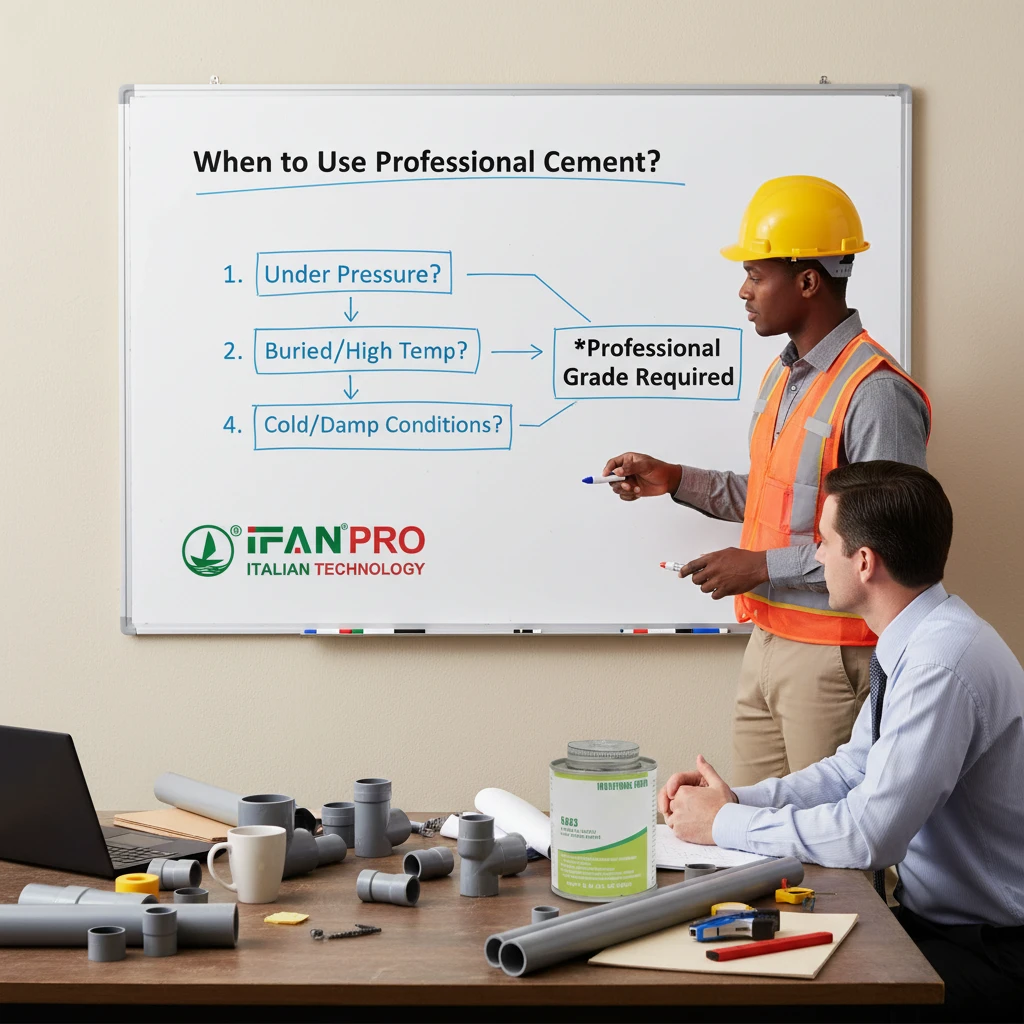
You should definitely invest in professional-grade PVC cement for any project involving pressurized water, buried lines, structural supports, chemical transport, or installations in challenging conditions like cold or damp environments. In these cases, the cost of failure is too high to risk using a standard adhesive.
The Rule of Thumb: Critical vs. Non-Critical
A simple way to decide is to ask: “What happens if this joint fails?” If the answer is “a big mess, damage, or danger,” you need professional cement.
Here is a detailed guide to help you choose:
Scenario 1: Pressurized Water Systems
This is the most critical application. Any joint failure will lead to active spraying or leaking water.
- Examples: Household potable water supply lines (cold and hot), irrigation mainlines, pool and spa plumbing, sprinkler systems.
- Why Professional Glue: It can handle constant water pressure (PSI), thermal cycling from hot/cold water, and resists leaching into drinking water (use NSF-certified cement).
Scenario 2: Buried or Concealed Lines
If a joint fails, finding and fixing it is extremely difficult and expensive.
- Examples: Underground sewer and drain lines, landscape irrigation lines, pipes under a concrete slab or behind finished walls.
- Why Professional Glue: Its superior bond strength and chemical resistance ensure a one-time, permanent install. You do not want to excavate your yard or open a wall twice.
Scenario 3: Structural and Safety Applications
The pipe is holding weight or is part of a safety system.
- Examples: Handrails, frame structures, non-potable water lines in RVs or boats, drain lines from high places.
- Why Professional Glue: The joint must bear mechanical stress and vibration without cracking. Standard glue bonds are more brittle.
Decision Guide Table
| Your Project Type | Recommended Glue Grade | Key Reason |
|---|---|---|
| Household Water Supply (Hot/Cold) | Professional, NSF-certified | Safety, pressure, and temperature resistance. |
| Underground Sewer/Drain Pipe | Professional, Heavy-Body | Permanent bond to avoid excavation repairs. |
| Mainline Irrigation | Professional | Must withstand constant water pressure. |
| Outdoor Project in Cold/Damp Weather | Professional Cold/Wet Weather | Standard glue will not cure properly. |
| Non-Pressurized Drain Vent | Standard | Low consequence of failure. |
| DIY Craft or Costume Prop | Standard or Medium-Body | No pressure or weather exposure. |
The Bottom Line
Investing in professional-grade cement is about risk management. If your project falls into a high-risk category—where failure means water damage, major repair work, or safety issues—the extra few dollars are non-negotiable. For low-risk, above-ground, non-critical crafts, a standard glue is sufficient. When in doubt, especially for outdoor or permanent projects, go professional. It’s the right tool for a job done right.
Заключение
For critical plumbing, the higher cost of professional PVC glue is a small price for lasting reliability and peace of mind. For your next project, choose the right bond with IFAN’s range of professional-grade PVC cements and fittings.






 Русский
  English
  Français
  Español
Последние комментарии