

I once faced a client’s panic: a leaking pipe behind a wall. Replacing the whole section meant days of work and high cost. A simple brass adapter provided a perfect, lasting fix in just an hour.
A brass adapter is essential because it acts as a universal translator and connector for your plumbing system. It allows you to join pipes of different materials, sizes, or thread types quickly and securely, enabling targeted repairs, seamless system upgrades, and the integration of new appliances without the need for extensive, costly replacements.
Let’s look at the specific ways this small part solves big problems in home plumbing.
How Does a Brass Adapter Enable Quick Fixes Without Replacing Entire Pipe Sections?
Plumbing leaks often cause major stress. The immediate thought is to cut out and replace a long section of pipe, which is disruptive and expensive.
A brass adapter enables quick fixes by allowing you to isolate and repair only the damaged section of pipe. You can cut out the faulty part and use adapters to connect a new pipe segment, or use an adapter to fix a broken fitting directly. This targeted approach saves time, money, and avoids unnecessary destruction of walls or flooring.
The Problem with “Full Replacement” Thinking
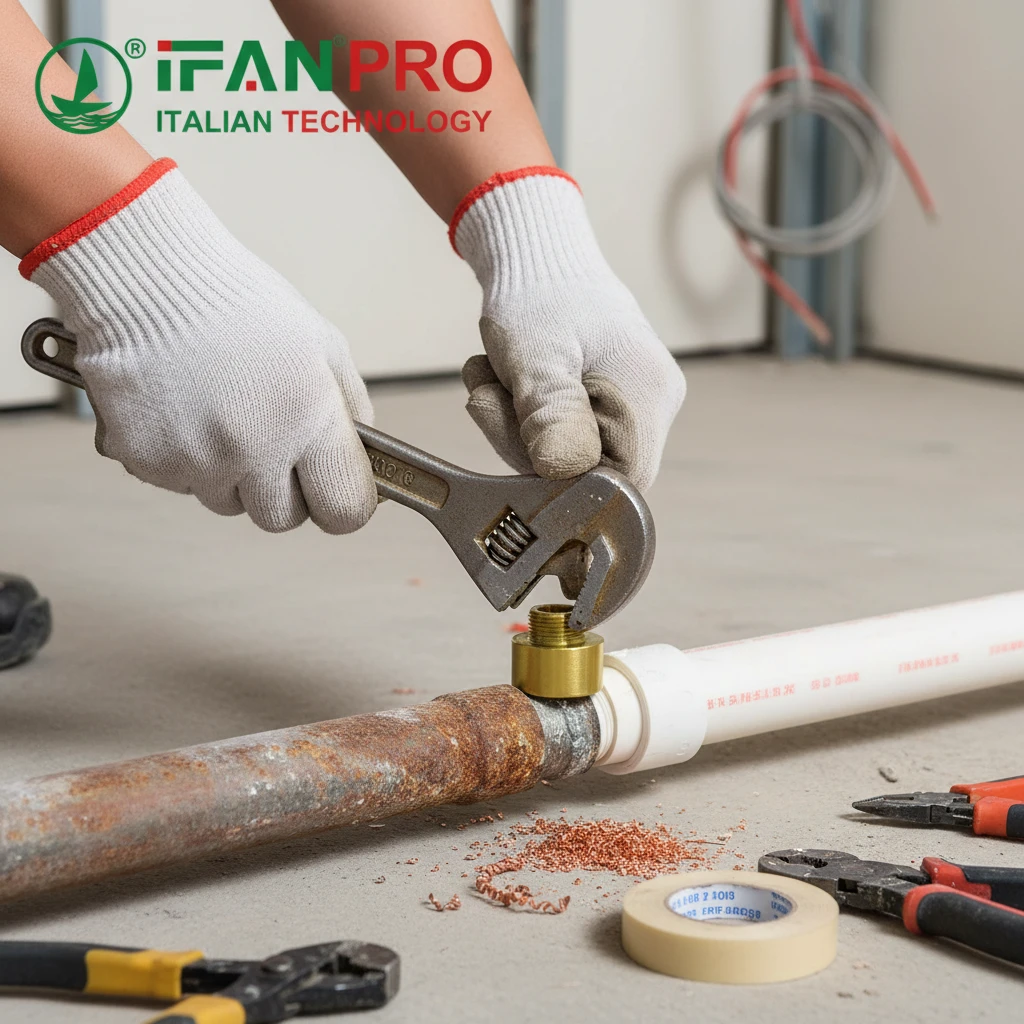
When a pipe leaks at a joint or a small section corrodes, the damage is usually localized. However, traditional repair logic often leads to replacing several feet of pipe. This is because directly connecting a new piece of pipe to an old one can be difficult if the ends don’t match perfectly in thread type, size, or condition.
This is where the brass adapter becomes a problem-solver. Its primary role is to create a secure bridge between two different connection points. For example, if you have a corroded galvanized steel pipe, the threads at its end might be damaged. Instead of trying to re-thread it (which is often impossible), you can cut it back to good metal.
Step-by-Step Adapter Repair Process
Here is a common repair scenario using adapters:
- Cut: Cut out the damaged section of the old pipe.
- Prepare: Clean the threads on the existing pipe ends (if they are usable) or use a pipe threader to create new threads.
- Adapt: Screw a brass adapter onto each of the two existing pipe ends. These adapters will have a female thread on one side (to connect to the old pipe) and a different connection type on the other (e.g., a male thread for a union, or a compression fitting outlet).
- Connect: Install a new section of pipe (which can be a modern material like PEX or CPVC) between the two adapters using the appropriate method (soldering, crimping, or a union).
This method confines the work to the immediate area of the leak. You avoid dismantling long, otherwise-good pipe runs. The brass adapter is the perfect choice for this job because it is strong, corrosion-resistant, and can handle the different thermal expansion rates of the old and new materials without failing.
Common Quick-Fix Adapter Types
The table below shows adapters used for common quick repairs.
| Adapter Type | What It Does | Ideal For Fixing |
|---|---|---|
| Coupling | Connects two pipes of the same size and type. | A small burst section in the middle of a pipe run. |
| Union | Allows easy disconnection of pipes. | Repairing a valve or fixture that needs future service. |
| Male/Female Threaded Adapter | Changes the thread type or gender of a connection. | Connecting a new valve to old, threaded pipe. |
| Compression Adapter | Connects a threaded pipe to a smooth pipe (like copper or PEX) without soldering. | Fast, tool-light repairs on water supply lines. |
By using the right adapter, what seemed like a major demolition project becomes a manageable, same-day repair. The strength and durability of brass ensure that this “quick fix” is actually a permanent solution.
Why is a Brass Adapter Indispensable for Updating Old Systems with New Materials?
Most homes have plumbing made from different eras of materials. Connecting old galvanized steel to new PEX, or copper to CPVC, is a constant challenge in renovations.
A brass adapter is indispensable because it is chemically compatible and forms a pressure-tight seal between almost all common plumbing materials. It prevents galvanic corrosion (electrolysis) that occurs when dissimilar metals touch, and it provides a secure transition point between pipes with different joining methods (like threads to solder or crimp rings).
The Challenge of Mixed Materials
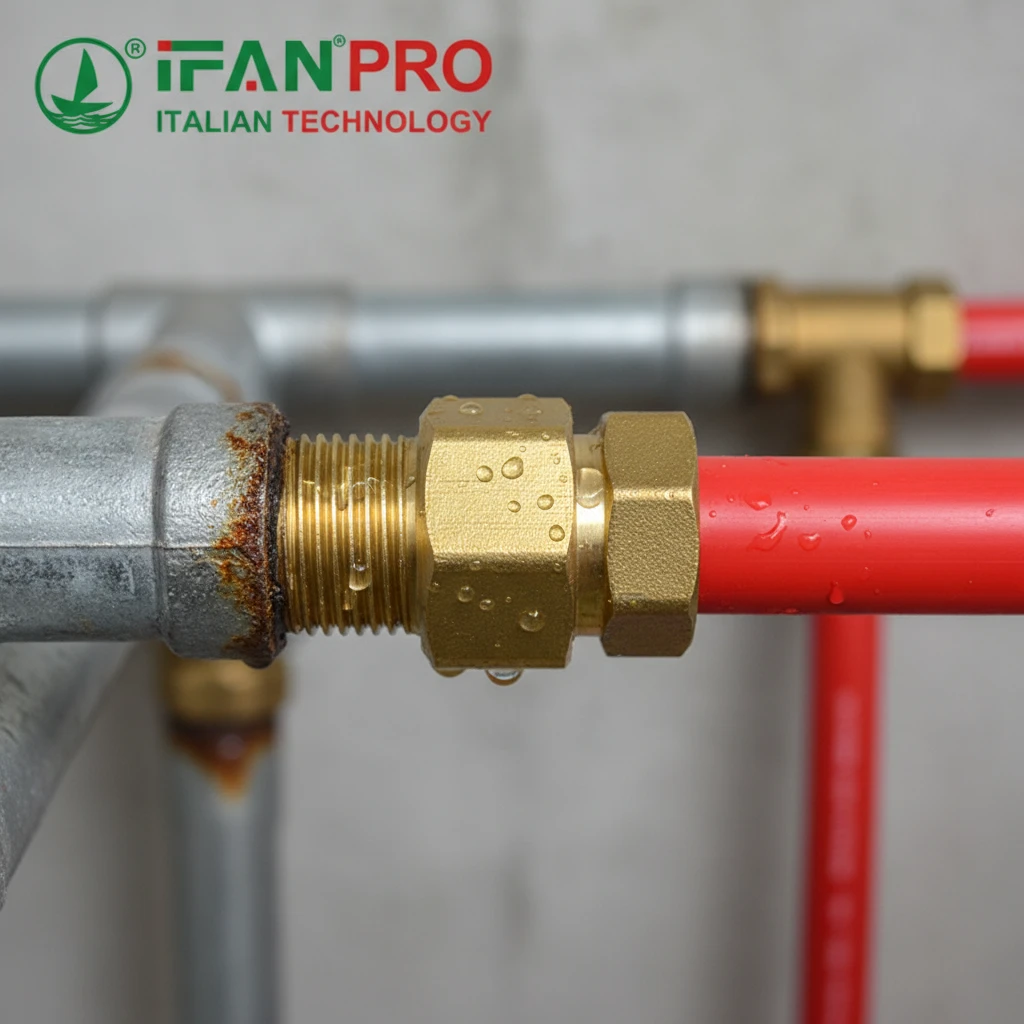
Older homes often have galvanized steel or copper pipes. Modern plumbers prefer to install PEX or CPVC for their cost, ease of use, and longevity. During any upgrade or spot repair, you will face the task of connecting the new material to the old system. You cannot solder PEX to copper, and you cannot thread CPVC into steel.
This is the core function of a brass adapter: to be the universal fitting. Brass is a “noble” metal in plumbing terms. It sits between steel and copper on the galvanic scale. This means when brass connects to steel or copper, the corrosion activity is minimized and directed in a way that does not rapidly destroy the connection. Using a steel fitting on a copper pipe, however, would cause rapid corrosion.
How Adapters Bridge Different Technologies
Let’s look at specific update scenarios:
- Galvanized Steel to PEX: The old steel pipe has threaded ends. You screw a brass adapter with male threads into the steel. On the other end of this adapter is a barbed outlet for PEX. You simply slide the PEX tube over the barb and secure it with a crimp ring. The brass adapter safely separates the two materials.
- Copper to CPVC: You cannot safely solder CPVC to a copper pipe. The solution is to solder a brass adapter with a copper-fitting end onto the copper pipe. The other end of the adapter has CPVC threads. You then use CPVC cement to glue a female threaded CPVC fitting onto it, completing the transition.
- Updating Fixture Valves: Old shut-off valves under sinks often corrode. The pipe coming out of the wall might be copper. To install a new compression-style valve, you use a short brass nipple or adapter to provide a perfect, clean threading point for the new valve.
Material Transition Guide
This table shows how brass adapters enable key upgrades.
| Old System Material | Desired New Material | Recommended Brass Adapter Type |
|---|---|---|
| Galvanized Steel (Threaded) | PEX (Crimp or Clamp) | Adapter with Male IPS Thread x PEX Barb |
| Copper (Sweat/Solder) | CPVC (Glued) | Adapter with Copper Sweat Cup x Female CPVC Thread |
| Copper (Sweat/Solder) | PEX (Expansion) | Adapter with Copper Sweat Cup x PEX Expansion Ring Outlet |
| CPVC (Glued) | PEX (Crimp) | Adapter with Male CPVC Thread x PEX Barb |
Without these adapters, updating a plumbing system would require completely removing all old pipes back to the main line—an enormously expensive and invasive process. Brass adapters make phased, affordable upgrades possible.
How Does a Brass Adapter Simplify Connecting New Appliances to Existing Plumbing?
Installing a new dishwasher, refrigerator, or water filter often means connecting new hoses to old, inconveniently located pipes.
A brass adapter simplifies appliance connection by providing the exact thread conversion or outlet needed to hook up standard appliance supply lines. It turns non-standard or inaccessible plumbing ends into a ready-to-use connection point, allowing for a clean, leak-free hookup in minutes without altering the main plumbing.
The Appliance Hookup Problem
Modern appliances like ice makers, dishwashers, and washing machines come with flexible supply lines that have standard 3/8-inch compression fittings. However, the existing plumbing might not have a readily available 3/8-inch outlet. You might find:
- A 1/2-inch threaded pipe coming out of the wall.
- An old valve with odd-sized threads.
- Only a copper pipe stub with no valve at all.
Trying to force a connection here leads to leaks or damage. The solution is to use a brass adapter to create the perfect port for your appliance hose.
Common Connection Scenarios and Solutions
Here are a few real-world examples:
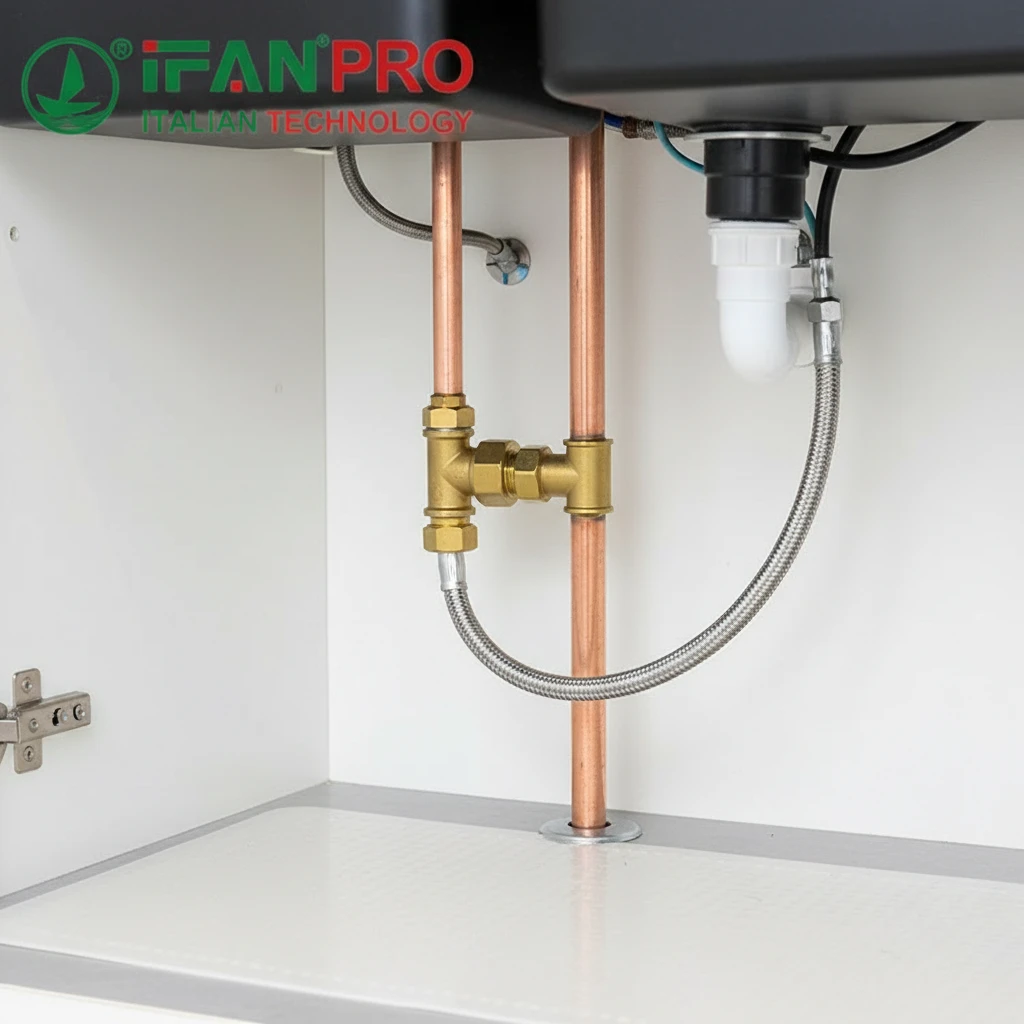
- Adding an Ice Maker Line: The cold water pipe under your sink is copper. You need a small 1/4-inch outlet for the plastic ice maker tube. You install a brass tee adapter onto the copper pipe. One outlet of the tee continues to the sink, the other has a 1/4-inch compression shut-off valve that the ice maker line connects to directly.
- Replacing a Washing Machine Valve: The old valves are corroded and leak. The pipes in the wall are 1/2-inch threaded. Instead of cutting into the wall, you can unscrew the old valves and screw in new brass washing machine outlet boxes. These are essentially blocks with two built-in valves and standard hose threads, all made from brass for durability.
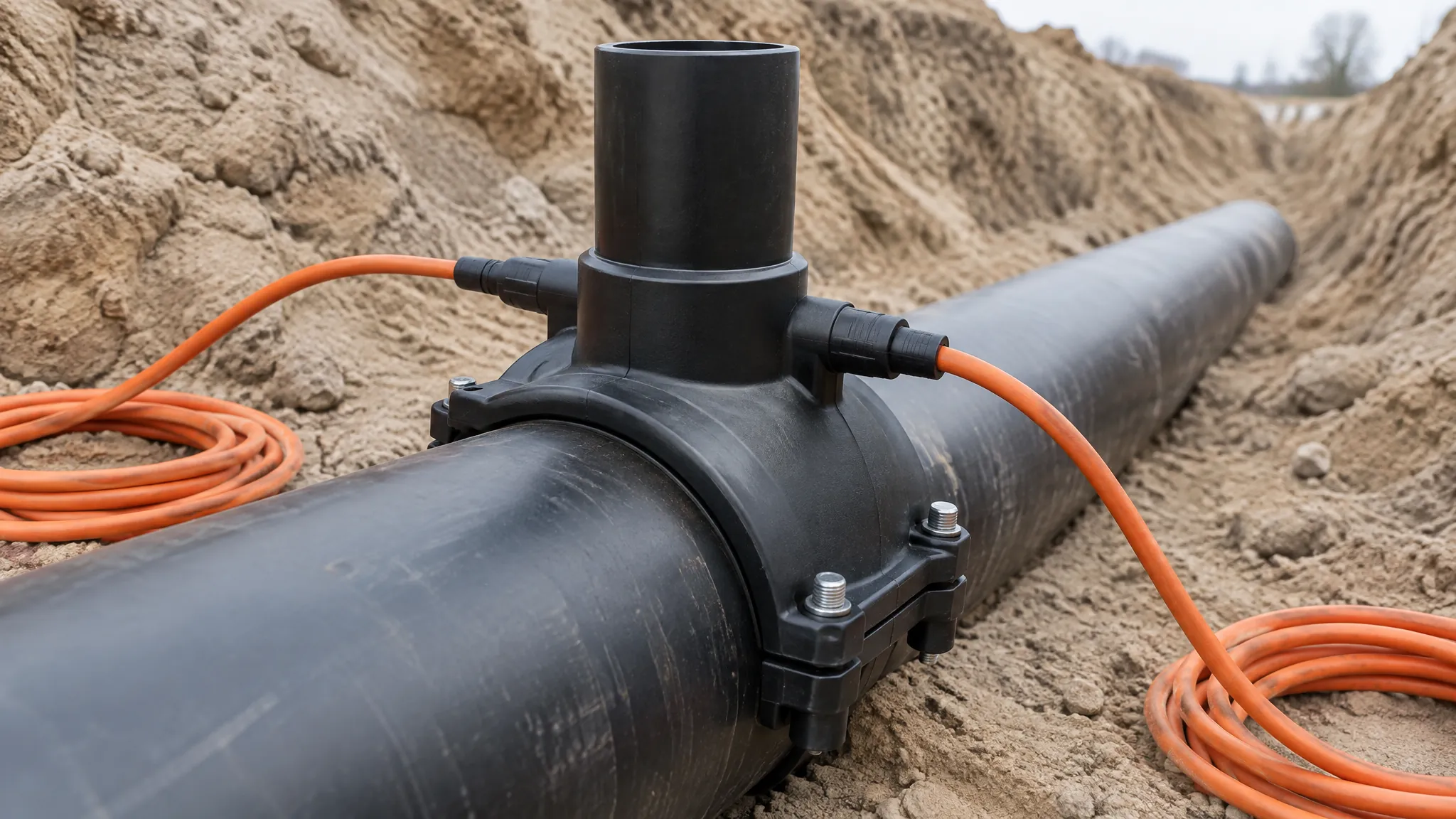
- Installing a Water Filter System: The filter system needs to tap into the cold water line. Using a brass saddle clamp adapter (a specialized type), you can drill a small hole into a copper PEX pipe and clamp the adapter over it, instantly creating a threaded outlet for the filter, all without soldering or cutting the main pipe.
Appliance Connection Adapter Kit
Having a few common brass adapters on hand makes any appliance installation straightforward.
| Appliance Task | Typical Need | Brass Adapter Solution |
|---|---|---|
| Hooking up a Dishwasher | Connect to a hot water line under sink. | Brass Tee Adapter with 3/8-inch compression outlet. |
| Adding Refrigerator Ice Maker | Tap into a cold water line. | Brass Saddle Valve or Brass Tee with 1/4″ outlet. |
| Replacing Washing Machine Hoses | Connect to standard laundry valves. | Brass 3/4″ GH x 3/4″ GH Hose Thread Adapter (if threads are damaged). |
| Installing a Whole-House Filter | Connect to main 3/4-inch water line. | Brass Union Adapters included with filter housing for easy installation/removal. |
The strength and precision machining of brass ensure these connections won’t vibrate loose or crack under pressure. For homeowners and installers, this means appliance setup is no longer a plumbing headache, but a simple, reliable task.
What Makes a Brass Adapter a Versatile Solution for Emergency Repairs?
When a pipe bursts at night or a fitting fails on a weekend, you need a fix that works now, with what you have available.
A brass adapter is a versatile emergency solution because a small assortment of common adapters can create dozens of temporary or permanent fixes for unexpected failures. Its durability handles high pressure and temperature, and its compatibility with various tapes and sealants allows for a reliable seal even in sub-optimal conditions to stop water flow immediately.
The “Plumber’s First Aid Kit” Component
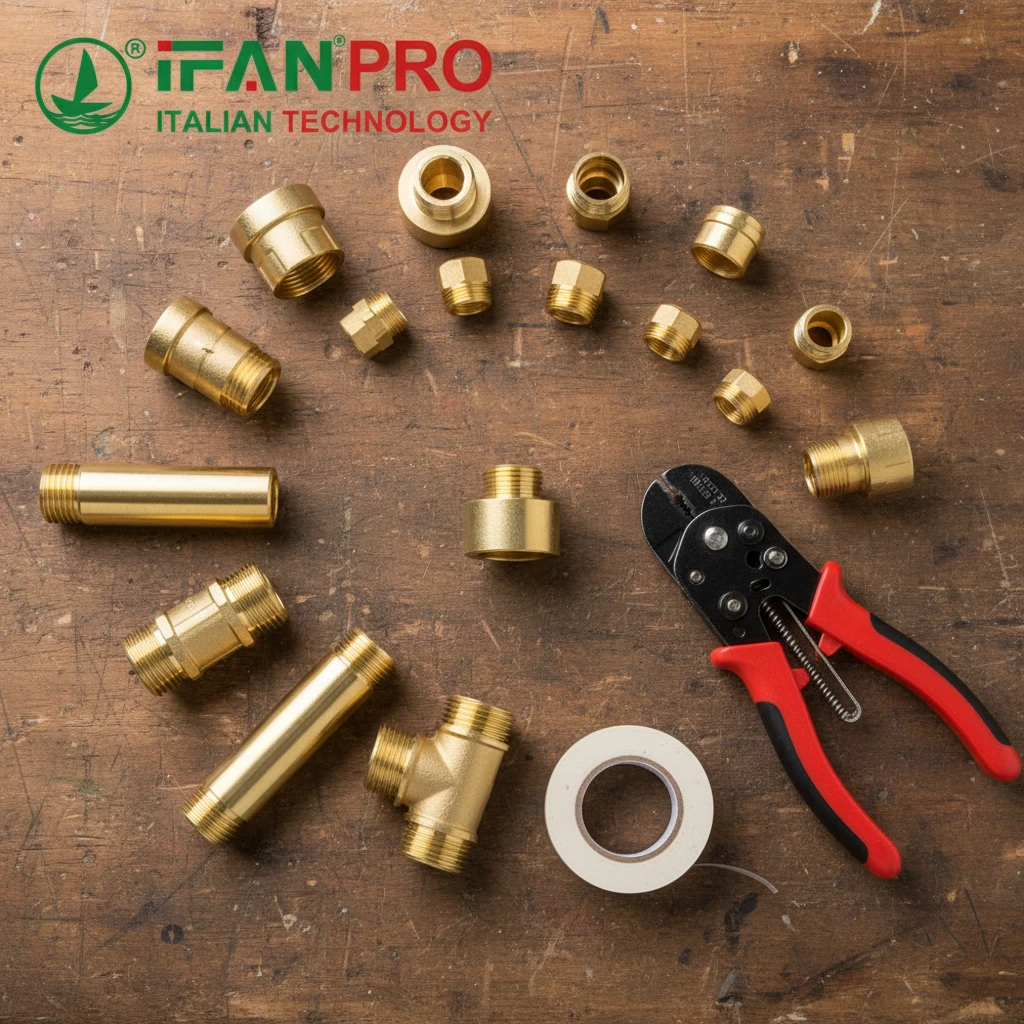
Professional plumbers always carry a variety of brass adapters in their service vans. Why? Because you never know what you’ll find. An emergency repair is about adaptation and containment. The goal is to stop the water, restore function, and do it in a way that is safe until a more refined repair can be made.
Brass adapters are perfect for this. They are stronger than plastic adapters and won’t melt or deform under hot water like some materials. A 1/2-inch to 3/4-inch brass reducing bushing, a couple of male and female threaded adapters, and a few couplings can be combined in different ways to bypass a broken valve, cap off a leaking line, or connect a temporary hose.
Common Emergency Scenarios
- Broken Valve Stem: If the stem on a main shut-off valve breaks and water is spraying, you cannot simply remove the valve because water is behind it. Solution: Screw a brass cap directly onto the threads of the broken valve. This immediately stops the leak. Later, you can replace the valve properly.
- Cracked Pipe Thread: The threaded end of a pipe is cracked. You can’t just put a new fitting on it. Solution: Cut the pipe back past the crack. If you can’t re-thread it, use a brass compression coupling. This fitting slides over the smooth, cut end of the pipe and seals with a ferrule and nut, requiring no threads at all on the pipe.
- Mismatch During Temporary Repair: You need to connect a garden hose to a strange pipe outlet to drain a system. Solution: Combine a brass hose thread adapter with a brass threaded coupling to create the perfect connector.
Essential Emergency Adapters
A minimal emergency kit should include these brass pieces:
| Adapter Type | Emergency Use |
|---|---|
| Brass Cap (Multiple Sizes) | To immediately seal off a leaking threaded pipe end or broken valve. |
| Brass Plug (Multiple Sizes) | To seal the outlet of a fitting that is leaking. |
| Brass Union | To disconnect and bypass a section of pipe quickly. |
| Brass Compression Coupling | To repair a cracked copper or plastic pipe without tools for threading or soldering. |
| Assorted Male/Female Adapters | To change thread types and genders to make other parts fit together. |
The versatility of brass adapters turns a crisis into a manageable situation. They allow for on-the-spot problem solving, preventing massive water damage and buying valuable time. Their reliability also means that an “emergency fix” can often remain in place safely for years.
Conclusion
A brass adapter is the unsung hero of plumbing, enabling fast repairs, easy upgrades, and simple connections. For reliable, precision-machined brass adapters and fittings, trust IFAN to supply the connectors that make every job simpler.










 Français
  English
  Русский
  Español
Commentaires récents