
PVC pipe fittings hold together the drainage, cold-water, irrigation, and conduit systems that run through nearly every building on the planet, yet most buyers order them without knowing why a Schedule 80 elbow costs more than a Schedule 40 one, or why a fitting rated for potable water in one market fails inspection in another. This guide fixes that. It treats PVC as a full system — pipe, fittings, joints, pressure ratings, standards, and sourcing — rather than a list of parts, because a system is what you are actually buying.
Written for importers, wholesalers, contractors, and procurement teams, it takes positions where positions matter: where PVC belongs, where it does not, and what separates a fitting that passes inspection from one that gets a shipment rejected. If you buy or specify polyvinyl chloride pipe, the sections below give you the numbers and the reasoning behind them, and you can match them against our PVC pipe and fittings range. For importers, PVC pipe and fittings typically sit under HS heading 3917 (plastic tubes, pipes, and fittings) — confirm the exact subheading and duty with your customs broker.
Key Takeaways
- Standard rigid PVC (PVC-U) is a cold-water, drainage, irrigation, and conduit material — its service temperature tops out around 140°F (60°C), so it is not a hot-water pipe.
- Schedule sets wall thickness at a fixed outside diameter: Schedule 40 (usually white) and Schedule 80 (usually gray) share the same OD, but Sch 80’s thicker wall carries roughly 30–45% more pressure at the same size.
- PVC sizing uses NPS (nominal pipe size), which is not the actual measurement — 1″ NPS pipe has an OD of about 1.315″.
- Pressure ratings printed on the pipe assume 73°F water; at 110°F the same pipe may hold only about half that pressure.
- The dominant joint is a solvent-welded socket using primer plus cement to ASTM D2564, which chemically fuses pipe and fitting into one piece.
- For potable water, the fitting typically must carry an NSF/ANSI 61 mark — confirm the required certification with the local authority before you order.
- Core standards to specify: ASTM D1784 (compound), D1785 (pipe), and D2466/D2467 (Sch 40/80 socket fittings).
On this page
- What Is PVC Pipe?
- PVC Pipe Schedules: 40, 80 and 120
- PVC Pipe Sizes & Dimensions (NPS/OD)
- Pressure and Temperature Limits
- Types of PVC Fittings
- How PVC Is Joined
- PVC vs CPVC vs ABS vs Other Materials
- Where PVC Pipe Is Used
- Standards & Certifications
- Is PVC Pipe Right for Your Project? (Best For / Not For)
- What We Check Before PVC Ships
- The Complete PVC Cluster: Related Guides
What Is PVC Pipe?
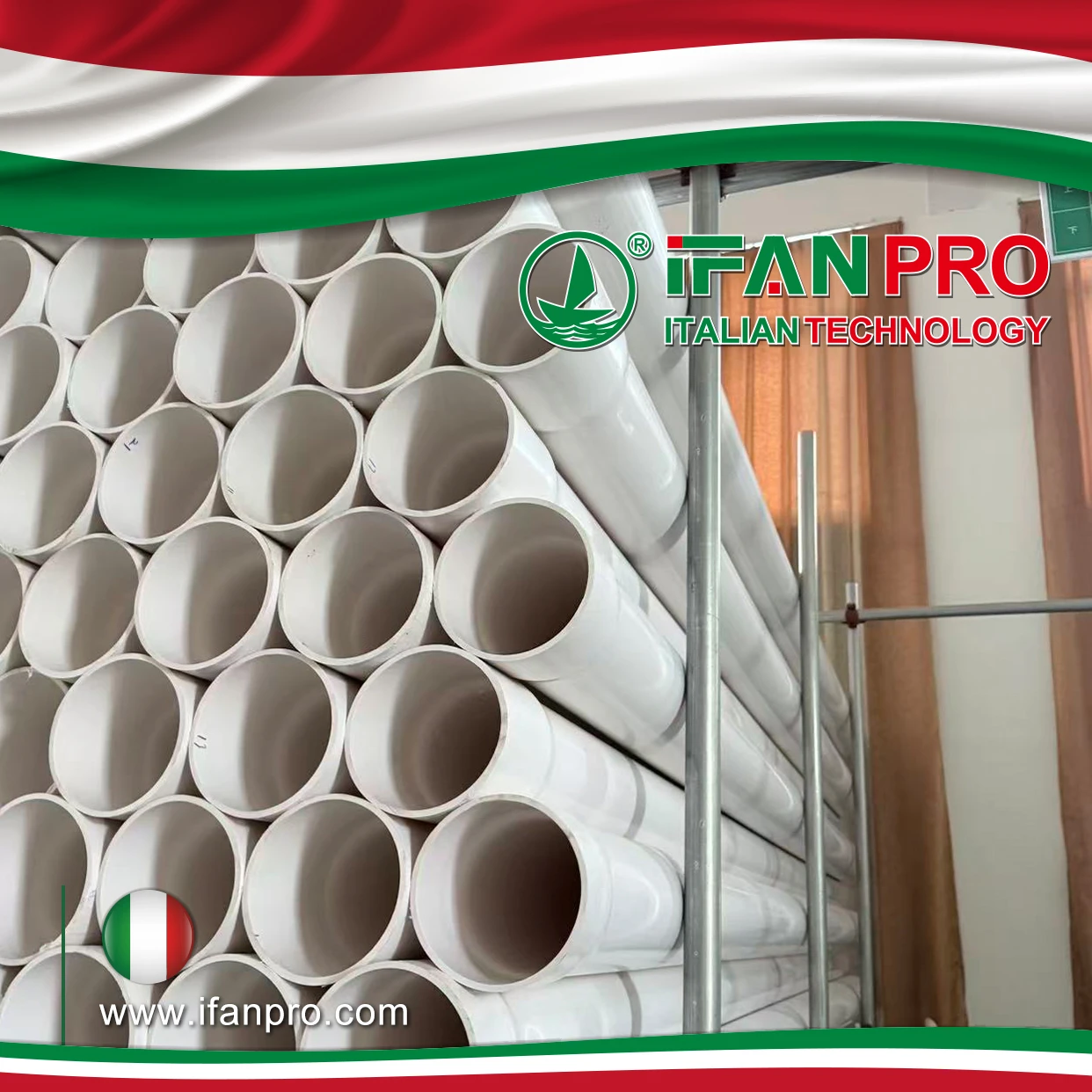
PVC pipe is extruded from polyvinyl chloride, a thermoplastic that becomes stiff, light, and chemically stable once formed. The version used for pressure pipe and drainage is rigid unplasticized PVC, labeled PVC-U or uPVC. “Unplasticized” is the important word: no softeners are added, so the pipe keeps its shape and pressure rating instead of flexing like a garden hose.
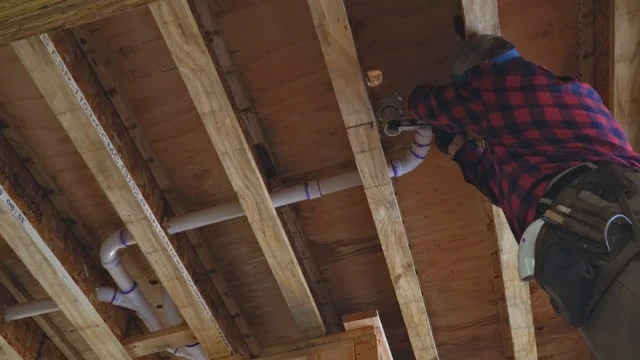
That rigidity is why PVC dominates drain-waste-vent (DWV), cold-water supply, irrigation, and electrical conduit. It does not corrode, it does not scale the way metal does, and a solvent-welded joint effectively turns a run of pipe and fittings into one continuous part. A contractor can assemble a bathroom drain stack in an afternoon with a saw, a can of cement, and no torch.
Two variants confuse buyers. Plasticized PVC (the flexible kind in wire insulation and hoses) is a different product and is not used for structural pipe. CPVC — chlorinated PVC — is a chemically modified cousin that tolerates hot water; standard PVC does not. If a project pushes water above roughly 140°F, PVC is the wrong material, and no schedule upgrade fixes that. Treat PVC as a cold-and-ambient pipe, and it performs for decades.
There is one more field weakness to plan around: ultraviolet light. Left in direct sun for years, unprotected PVC slowly chalks and grows brittle on the surface. It does not fail overnight — plenty of exposed pool and irrigation lines run for years — but a run that will live outdoors permanently should be painted with a light-colored latex or specified with UV-stabilized compound. Buried or indoors, this is a non-issue, which is where most PVC lives anyway.
PVC Pipe Schedules: 40, 80 and 120
“Schedule” describes wall thickness at a given pipe size. Here is the point most buyers miss: at one nominal size, every schedule shares the same outside diameter. A thicker schedule eats into the bore, so the wall grows inward. That is deliberate — it lets the same fittings and tooling work across schedules while the thicker wall carries more pressure.
Schedule 40 is the workhorse for DWV and general cold-water use and is usually white. Schedule 80, usually gray, is the industrial and higher-pressure grade, common in chemical lines, pool equipment pads, and anywhere mechanical abuse is likely. Schedule 120 is a thick-wall specialty used for the highest-pressure PVC applications. Because the wall grows inward, a Sch 80 pipe has a smaller bore than Sch 40 at the same size — something to remember when flow rate matters.
| Schedule | Wall thickness | Relative pressure | Typical color | Typical use |
|---|---|---|---|---|
| Sch 40 | Standard | Baseline | White | DWV, cold water, irrigation, conduit |
| Sch 80 | Thicker (inward) | ~30–45% higher than Sch 40 | Gray | Industrial, chemical, pool, exposed runs |
| Sch 120 | Thickest | Highest | Gray/spec | High-pressure specialty lines |
One insider warning: never mix a Sch 40 fitting with a Sch 80 pressure requirement to save money. The joint is only as strong as its weakest component, and a Sch 40 socket on a high-pressure line is where failures start. For the full breakdown, see our guide on Schedule 40 vs 80 in depth.
PVC Pipe Sizes & Dimensions (NPS/OD)
PVC pipe sizes are stated as NPS — nominal pipe size — and NPS is a label, not a measurement. A “1-inch” pipe is neither 1 inch on the inside nor 1 inch on the outside. The nominal system is inherited from old iron-pipe sizing, so the actual outside diameter is a fixed number that stays constant across schedules while the wall thickness changes.
This trips up first-time importers who measure a pipe with calipers and think they received the wrong goods. The fix is simple: match parts by NPS, and let the OD table below confirm what a given nominal size actually measures. Fittings are sized the same way, which is why a 1″ fitting slips over 1″ pipe regardless of schedule.
The OD stays constant so that fittings, valves, and gaskets remain interchangeable across schedules — a genuine advantage on the job site. What changes with schedule is the inside diameter, and that matters for flow. Step from Sch 40 to Sch 80 at 2″ and the bore drops from roughly 2.07″ to about 1.94″; on a long irrigation run that reduction shows up as measurable pressure loss. Spec by pressure need, but check that the resulting bore still moves the flow you require.
| NPS (nominal) | Actual OD (in) | Sch 40 wall (in) | Sch 80 wall (in) |
|---|---|---|---|
| 1/2″ | 0.840 | 0.109 | 0.147 |
| 3/4″ | 1.050 | 0.113 | 0.154 |
| 1″ | 1.315 | 0.133 | 0.179 |
| 1-1/2″ | 1.900 | 0.145 | 0.200 |
| 2″ | 2.375 | 0.154 | 0.218 |
| 3″ | 3.500 | 0.216 | 0.300 |
| 4″ | 4.500 | 0.237 | 0.337 |
| 6″ | 6.625 | 0.280 | 0.432 |
Values above are typical ASTM D1785 dimensions and should be confirmed against your supplier’s spec sheet and the applicable standard for your market. For every common size and metric equivalents, see the full PVC size chart.
Pressure and Temperature Limits
The pressure rating stamped on PVC pipe is a rating at 73°F (23°C). Heat softens the polymer, so the working pressure falls as temperature climbs — and it falls fast. This single fact explains most PVC failures in the field: someone ran warm water or hot process fluid through a pipe rated at room temperature and the line ballooned or split.
A rough rule from the industry: at about 110°F, PVC typically retains only around half of its 73°F pressure rating, and by roughly 140°F the usable pressure approaches zero. Actual de-rating factors vary by manufacturer and standard — confirm against the printed data sheet and, where relevant, with the local authority.
Consider a real scenario: a 2″ Sch 40 line rated near 280 psi at 73°F may be down to roughly 140 psi once fluid temperature reaches 110°F. Size the system for the hottest fluid it will ever carry, not the label number. The table below shows the shape of that curve using typical industry de-rating multipliers — apply them to whatever the pipe’s stamped 73°F rating is.
| Fluid temperature | Typical de-rating factor | Usable share of 73°F rating |
|---|---|---|
| 73°F (23°C) | 1.00 | 100% |
| 90°F (32°C) | ~0.75 | ~75% |
| 110°F (43°C) | ~0.50 | ~50% |
| 130°F (54°C) | ~0.30 | ~30% |
| 140°F (60°C) | ~0.20 and falling | Service ceiling |
Factors above are representative; the exact numbers come from your manufacturer’s data sheet and the applicable standard. When a job genuinely needs hot water under pressure, the answer is CPVC, PEX, PPR, or metal — not a heavier PVC schedule. Wall thickness raises the ceiling; it does not change the temperature curve. The Plastics Pipe Institute publishes the design methods behind these de-rating factors.
Types of PVC Fittings
A PVC system does five things: it changes direction, splits or merges flow, joins two pipes in line, terminates a run, and transitions to another size or material. Every fitting on the market maps to one of those jobs. Learn the categories and any catalog becomes readable.
| Fitting | Function | Typical use |
|---|---|---|
| Elbow (45°/90°) | Changes direction | Turning a run around a corner |
| Tee / Wye | Splits or merges flow | Branch line off a main |
| Coupling | Joins two pipes in line | Extending or repairing a run |
| Union | Removable in-line joint | Serviceable connections at pumps/valves |
| Reducer / Bushing | Transitions size | Stepping from 2″ down to 1″ |
| Adapter (MPT/FPT) | Transitions to threads | Connecting to valves or metal |
| Cap / Plug | Terminates a run | Closing a line end or cleanout |
Two selection points save money and callbacks. First, a slip (socket) fitting is solvent-welded and permanent, while a threaded fitting can be unscrewed for service — choose slip everywhere you never plan to open the line and threaded only at valves, pumps, and meters. Second, when you transition to threads, put the male thread on the plastic and the female on the metal where possible; a metal male thread wedging into a plastic female socket is a classic split waiting to happen.
A field warning on threaded adapters: PVC threads are tapered and easy to overtighten. Two to three turns past hand-tight with thread sealant is usually plenty — crank harder and you split the female fitting, sometimes days later under pressure. One shape the four function groups miss by name is the cross, or four-way fitting, which splits or joins flow in four directions at once — common in sprinkler grids, structural PVC framing, and manifolds, though it is used far less than tees on plumbing runs. For the full catalog logic, read the full fittings guide.
How PVC Is Joined
Three joining methods cover almost every PVC installation, and the dominant one is solvent welding. Primer softens the mating surfaces, cement to ASTM D2564 chemically fuses them, and within seconds pipe and fitting become a single molecular piece. Done right, the joint is stronger than the pipe wall around it.
Preparation decides the outcome. Cut the pipe square — an angled cut leaves part of the socket unbonded — then deburr the inside and outside edges so the pipe seats fully and cement is not scraped off on entry. Skipping the deburr is the most common cause of a joint that leaks a week later. Dry-fit before cementing: the pipe should bottom against the socket shoulder for a full-depth joint — a pipe that stops short leaves an unbonded gap, while one forced past the stop builds in stress. See cutting and solvent-welding for step-by-step method.
- Solvent weld: permanent, pressure-rated, the default for Sch 40/80 pressure and DWV lines.
- Threaded: for serviceable or metal transitions; lower pressure ceiling and demands care not to overtighten.
- Gasketed / push-fit: rubber-ring joints on large-diameter sewer and irrigation mains that must flex and be installed fast.
Cure time is the detail crews rush and regret. A solvent-welded joint needs set time before it is handled and full cure time before pressure. As a working guide, a 1″ joint in warm weather may be safe to move in a couple of minutes but should not see full pressure for around 15 to 30 minutes; larger diameters, higher pressures, and cold weather stretch that to hours. Pressurize a green joint and it can blow apart or weep at the socket. Always follow the cement manufacturer’s cure chart for the size, pressure, and temperature on your job.
Two field questions come up on almost every PVC job. The purple you see on a plumber’s rag is PVC primer — a solvent that softens the pipe and socket so the cement can fuse them into one piece; the dye is not decorative, it is code-mandated visual proof to an inspector that primer was applied, and many jurisdictions require it on pressure and potable lines. Do you really need it? On a pressurized or buried joint, yes — skipping primer is a common cause of a joint that blows off months later; on a low-pressure drain some cements are rated primer-optional, but only if the label says so. Push-to-connect fittings (SharkBite-style) also exist for PVC and are handy for a fast repair or a dissimilar-material transition, but each carries a rubber O-ring, the mechanical leak point solvent welding removes, so on a pressure or buried run the welded joint stays the default and push-fit is reserved for accessible, serviceable spots.
Field scenario: a crew glues a 4″ Sch 40 drain stack on a cold morning, then runs a full water test 20 minutes later to stay on schedule. Two joints weep because the cement had not cured at that temperature. The fix costs a day of cut-and-redo — cheaper to have waited the chart’s time in the first place.
PVC vs CPVC vs ABS vs Other Materials
No single plastic pipe wins every job. PVC’s strength is cold-water pressure, drainage, and chemical resistance at a low cost. Its hard limit is heat. Choosing correctly means matching the material to the fluid, the temperature, and the code — not defaulting to whatever is cheapest on the shelf.
| Material | Best use | Key limit |
|---|---|---|
| PVC | Cold water, DWV, irrigation, conduit | Not for hot water (~140°F ceiling) |
| CPVC | Hot & cold potable supply | More brittle, higher cost |
| ABS | Drain-waste-vent (one-step cement) | Not a pressure pipe; UV-sensitive |
| PEX | Hot/cold flexible supply lines | Not for exposed UV or DWV |
| PPR | Hot/cold supply, heat-fused | Needs fusion tooling |
| Copper | Durable hot/cold supply | Cost; corrodes in acidic water |
One position worth taking plainly: do not let a distributor talk you into CPVC “to be safe” on a cold-only line. CPVC costs more, is more brittle in cold handling, and buys you nothing when the water never gets hot. The reverse mistake is worse — using PVC on a hot line to save a few percent, then replacing the whole run after it sags or splits. Match the material to the fluid, and the cost takes care of itself.
The practical decision is quick. Cold and under pressure, choose PVC. Hot, choose CPVC or PPR. Drainage only, ABS or PVC-DWV both work — pick by local code. Dig deeper with PVC vs CPVC, PVC vs ABS, and PEX vs copper vs PPR.
Where PVC Pipe Is Used
PVC earns its dominance across a handful of high-volume applications, each playing to the same strengths — corrosion resistance, low weight, and cheap permanent joints.
- Drain-waste-vent (DWV): the sanitary drainage and venting in most homes and light commercial buildings.
- Cold-water supply: service lines and non-potable distribution; for potable use confirm the required NSF certification.
- Irrigation: agricultural and landscape mains that must resist mineral-heavy water for decades.
- Electrical conduit: gray PVC conduit (a different listing from pressure pipe) protecting buried and exposed wiring.
- Industrial / chemical: Schedule 80 lines carrying acids, bases, and process water that would eat metal.
- Pool and spa: circulation plumbing on the equipment pad, typically Sch 40 or Sch 80.
One caution buyers overlook: pressure PVC and electrical conduit PVC are separate products with separate listings. Do not use pressure pipe as conduit or conduit as pressure pipe, even though they look alike — the compound, wall, and certifications differ.
Standards & Certifications
Standards are what separate a real PVC purchase from a gamble. The compound itself is graded by cell classification under ASTM D1784; the pipe is dimensioned and pressure-rated under ASTM D1785; and Schedule 40 and 80 socket fittings fall under ASTM D2466 and D2467 respectively. For potable water, look for the NSF/ANSI 61 mark.
| Standard | Covers | Why it matters |
|---|---|---|
| ASTM D1784 | PVC compound / cell class | Defines the resin quality behind everything else |
| ASTM D1785 | Sch 40/80/120 pipe | Sets dimensions and pressure ratings |
| ASTM D2466 | Sch 40 socket fittings | Socket geometry that fits standard pipe |
| ASTM D2467 | Sch 80 socket fittings | Higher-pressure fitting geometry |
| NSF/ANSI 61 | Potable-water safety | Often required for drinking-water contact |
Which marks you legally need depends on the market and code — WRAS in the UK, NSF/IAPMO in North America, WaterMark in Australia, CE in Europe. Confirm the exact requirement with the local authority before you place an order, because a certificate that does not name your SKU and your market is worth little at customs.
A concrete importing warning: a certificate number on a supplier’s website is not the same as a current, scope-matched certificate for the exact product code you are buying. Certifications expire, get suspended, or cover only certain sizes and compounds within a range. Before a container ships, ask for the certificate document itself, check the expiry date, and confirm the listed product code and size range include what is on your order. A mismatch found at the port is far more expensive than one caught at the quote stage.
Is PVC Pipe Right for Your Project? (Best For / Not For)
Here is the honest split. PVC is the correct, economical choice for a large set of jobs and the wrong choice for a smaller set — and forcing it into the wrong column is how projects fail inspection or leak in service.
| Best for | Not ideal for |
|---|---|
| Cold-water supply and distribution | Hot-water lines above ~140°F |
| DWV drainage and venting | Compressed air / gas (unsafe if it shatters) |
| Irrigation and agricultural mains | Long-term direct UV exposure unless coated |
| Chemical lines (Schedule 80) | High-vibration or impact-prone service |
| Electrical conduit (listed conduit grade) | Potable water without the required NSF mark |
The compressed-air warning deserves emphasis: PVC can fail suddenly and throw sharp fragments under gas pressure, which is why many safety authorities prohibit it for compressed air. When in doubt, match the pipe to the fluid’s phase and temperature first, then optimize on cost.
What We Check Before PVC Ships
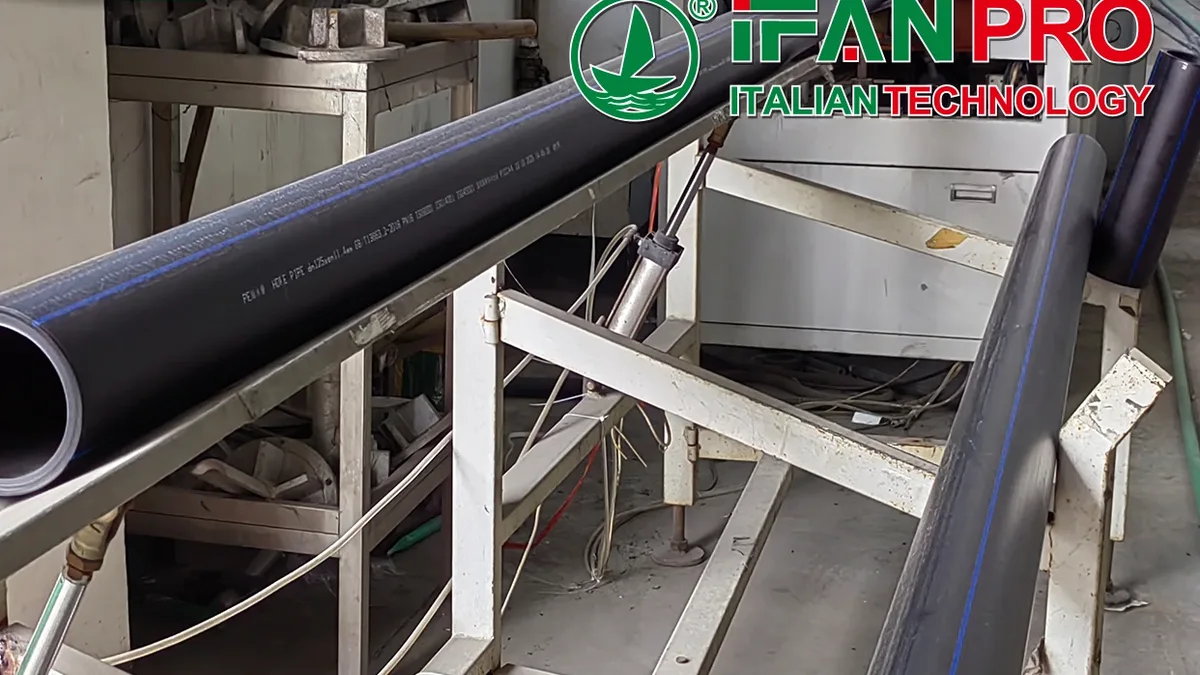
At IFANPRO, we treat PVC as a certified product, not a commodity extrusion, because a rejected container costs a customer far more than the goods. Every batch passes a fixed set of checks before it leaves the 120,000 m² facility, and we keep the records against your purchase order.
- Compound and material verification: we confirm the PVC cell classification against the ordered spec before extrusion runs.
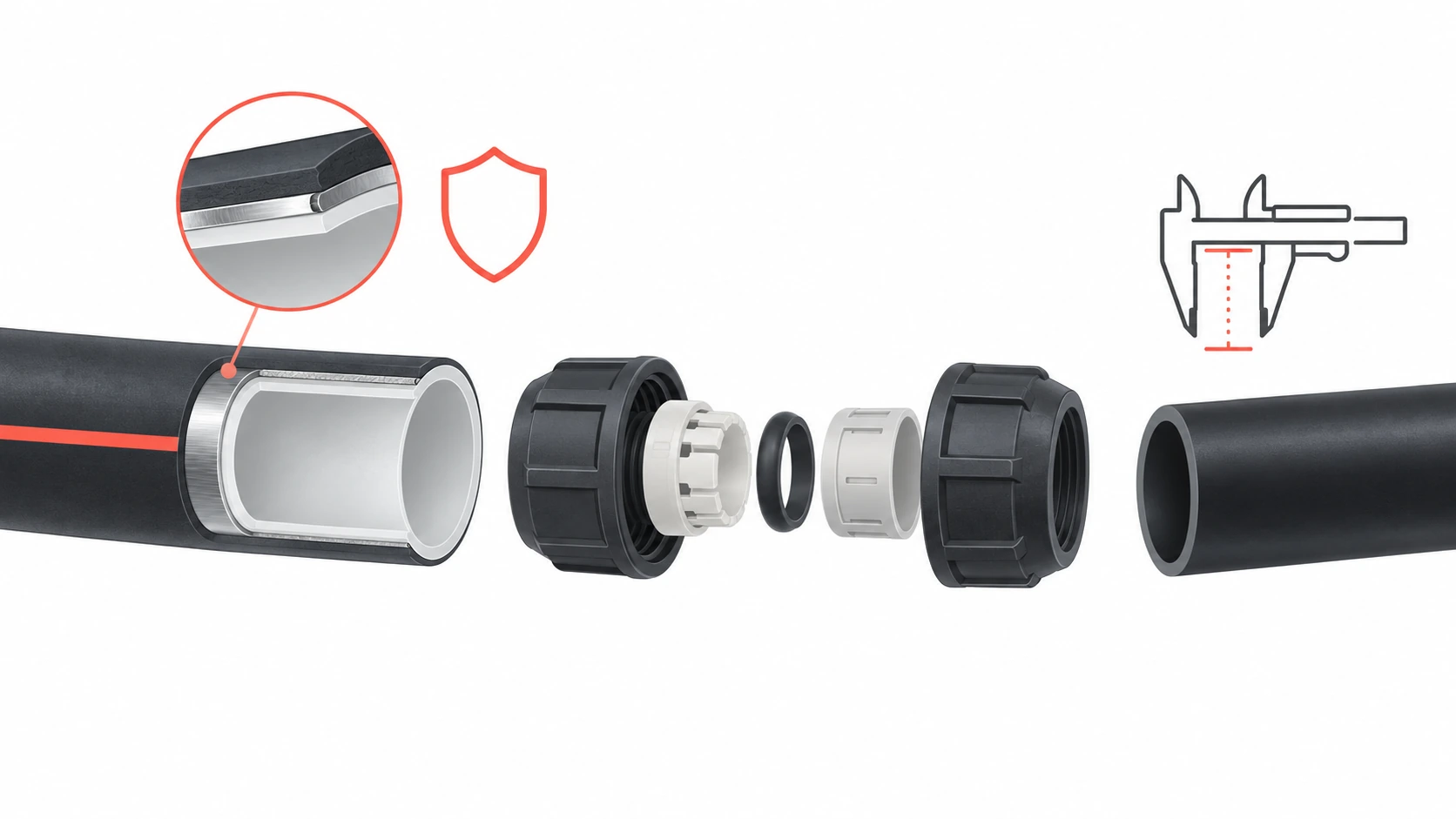
- Wall, OD and ovality by schedule: we caliper wall thickness and outside diameter at multiple points and check ovality against the tolerance for that schedule and size.
- Socket-depth on fittings: we verify socket depth and taper so solvent-welded joints seat fully and reach rated strength.
- Temperature-rated pressure test: we hydro-test samples and read results against the temperature-corrected rating, not just the room-temperature number.
- Certificate-scope-to-SKU match: we confirm that the certification on the paperwork actually names the SKU and the destination market, so it holds up at inspection.
The Complete PVC Cluster: Related Guides
This pillar is the hub. Each guide below drills into one part of the PVC system in full depth.
- Schedule 40 vs 80 PVC — wall, pressure, and cost compared.
- PVC Pipe Sizes — the full NPS-to-OD dimension charts.
- Types of PVC Fittings — every fitting and what it does.
- How to Cut PVC Pipe — square cuts and clean deburring.
- How to Glue PVC Pipe — solvent welding done right.
- PVC vs CPVC — the hot-water decision.
- PVC vs ABS — which drainage pipe your code allows.
Frequently Asked Questions
Can PVC pipe be used for hot water?
No. Standard PVC-U service temperature tops out around 140°F (60°C), and its pressure rating collapses as it heats. For hot water, use CPVC, PEX, PPR, or metal instead.
What is the difference between Schedule 40 and Schedule 80 PVC?
Both share the same outside diameter, but Schedule 80 has a thicker wall (growing inward) and carries roughly 30–45% more pressure. Sch 40 is usually white; Sch 80 is usually gray.
Is PVC pipe safe for drinking water?
PVC can be used for potable water when the pipe and fittings carry the required certification, typically NSF/ANSI 61. Requirements vary by market and code — confirm with the local authority before ordering.
How do you join PVC pipe and fittings?
The standard method is solvent welding: primer plus cement to ASTM D2564 chemically fuses pipe and fitting into one piece. Cut square and deburr first. Threaded and gasketed joints are alternatives.
Why doesn’t 1-inch PVC pipe measure 1 inch?
PVC uses nominal pipe size (NPS), a label inherited from iron-pipe sizing rather than a literal measurement. A 1″ pipe actually has an outside diameter of about 1.315 inches.
Conclusion
PVC pipe and fittings are the right, economical answer for cold-water, drainage, irrigation, and conduit systems, provided you respect the temperature ceiling, match the schedule to the pressure, and specify the standards your market demands. Get those three right and the system lasts decades. Get them wrong and the failure shows up in service, not on the shelf.
Your next step is to pin down the exact schedule, sizes, and certifications your project needs, then confirm your supplier can document all three against your SKUs. Start with the cluster guides above, and reach out when you are ready to spec a batch.









 Français
  English
  Русский
  Español
Commentaires récents