
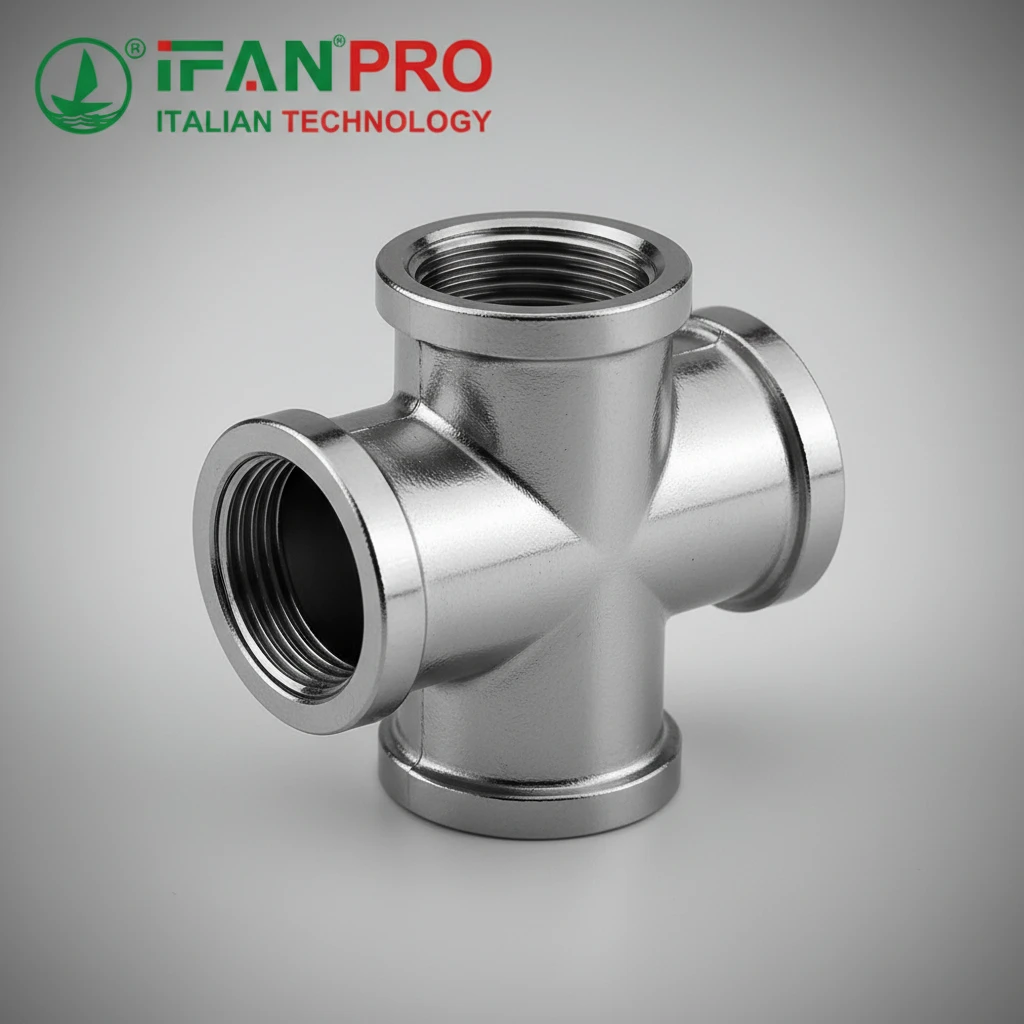
I remember a project in the Middle East where ordinary fittings failed within months due to extreme heat. That failure taught me why stainless steel 4-way fittings have become the global benchmark for reliability.
Stainless steel 4-way fittings are globally preferred because they offer unmatched corrosion resistance, exceptional strength, and long-term durability in diverse climates. Their ability to distribute fluid in four directions from a single point simplifies complex piping layouts while maintaining system integrity. This combination of performance and versatility makes them the top choice for engineers worldwide.
Now, let’s explore what makes these components so essential in modern plumbing systems.
What Drives the Innovation Behind Advanced Piping Technology?
Innovation doesn’t happen by accident. I’ve witnessed how real-world problems push manufacturers to develop better solutions.
The drive for innovation in piping technology stems from the need to solve persistent industry problems: corrosion failures, installation complexity, and system inefficiencies. Engineers and manufacturers continuously refine materials, designs, and manufacturing processes. Their goal is to create fittings that last longer, install faster, and perform more reliably than previous generations.
Learning from Past Failures
The history of plumbing is essentially a history of fixing what broke. Early systems used lead. Then they switched to galvanized steel. Later, copper became popular. Each material solved some problems but created others.
Galvanized steel rusted from the inside out. Copper developed pinhole leaks in certain water conditions. Plastic couldn’t handle high temperatures or pressures in industrial settings.
These failures pushed researchers to find better answers. Consequently, stainless steel emerged as a solution. It combines the strength of metal with natural corrosion resistance. The chromium in stainless steel forms a protective layer on the surface. If scratched, this layer instantly reforms. This self-healing property makes it ideal for long-term applications.
The Role of Manufacturing Precision
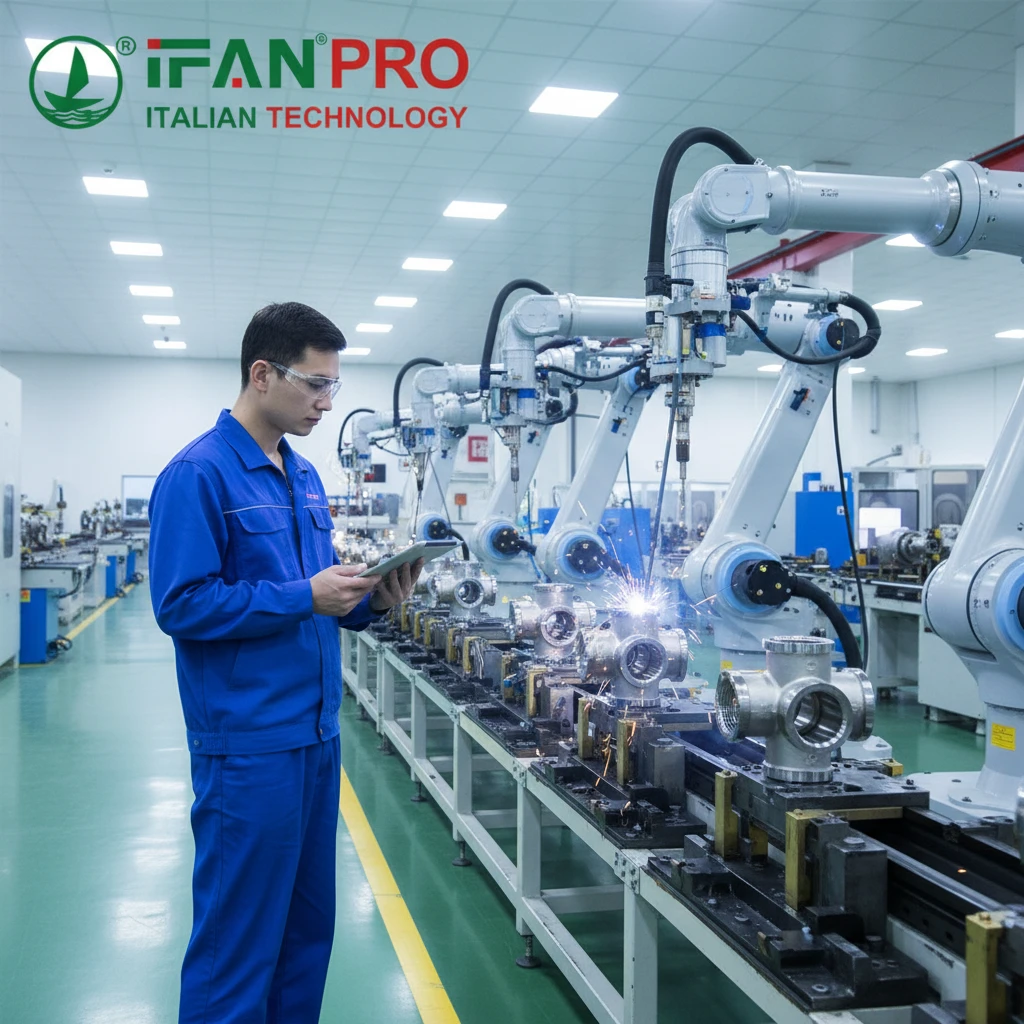
Innovation also happens on the factory floor. Modern stainless steel fittings benefit from several advances:
- Precision casting techniques that create smooth internal surfaces
- Computer-controlled machining that ensures exact dimensions
- Advanced welding methods that create seamless joints
- Strict quality control that catches defects before shipping
These manufacturing advances mean today’s fittings fit together perfectly the first time. As a result, installers no longer struggle with mismatched threads or leaky joints.
Material Science Breakthroughs
Different applications need different grades of stainless steel. For example, a coastal installation requires different material than an indoor factory line. The table below shows common grades and their best uses:
| Stainless Steel Grade | Key Properties | Typical Applications |
|---|---|---|
| 304 | Good corrosion resistance, formability, and weldability | General plumbing, food processing, residential water |
| 316 | Added molybdenum for superior corrosion resistance | Marine environments, chemical plants, coastal areas |
| 316L | Low carbon version of 316, resists sensitization | Welded applications, high-temperature service |
| Duplex | Higher strength than 304 or 316 | High-pressure systems, offshore platforms |
The right grade selection makes the difference between a system that lasts decades and one that fails prematurely. This is where expertise truly matters.
IFAN’s Commitment to Innovation
At IFAN, we don’t just sell fittings. Instead, we study how they perform in real conditions. We work with factories that invest in research and development. Additionally, we test products before they reach customers. This dedication to understanding the technology behind the product ensures our clients get fittings that won’t let them down.
How Do Design Details Ensure Success in the 407 Cross Tee Series?
Small differences in design create big differences in performance. The 407 series shows how attention to detail pays off.
The 407 Cross Tee Series succeeds through specific design features: precision-machined threads for consistent fit, reinforced body sections at stress points, smooth internal flow paths that reduce pressure drop, and consistent wall thickness throughout the fitting. These details, verified through rigorous testing, ensure reliable performance under varying pressure and temperature conditions.
Thread Design Matters
Threads seem simple, but they’re actually complex engineering elements. Poor thread design causes most field failures. The 407 series uses a better approach.
Tapered threads create a mechanical interference fit. As you tighten the fitting, the threads compress against each other. This action forms a metal-to-metal seal. The design distributes stress evenly and prevents the thread roots from becoming weak points.
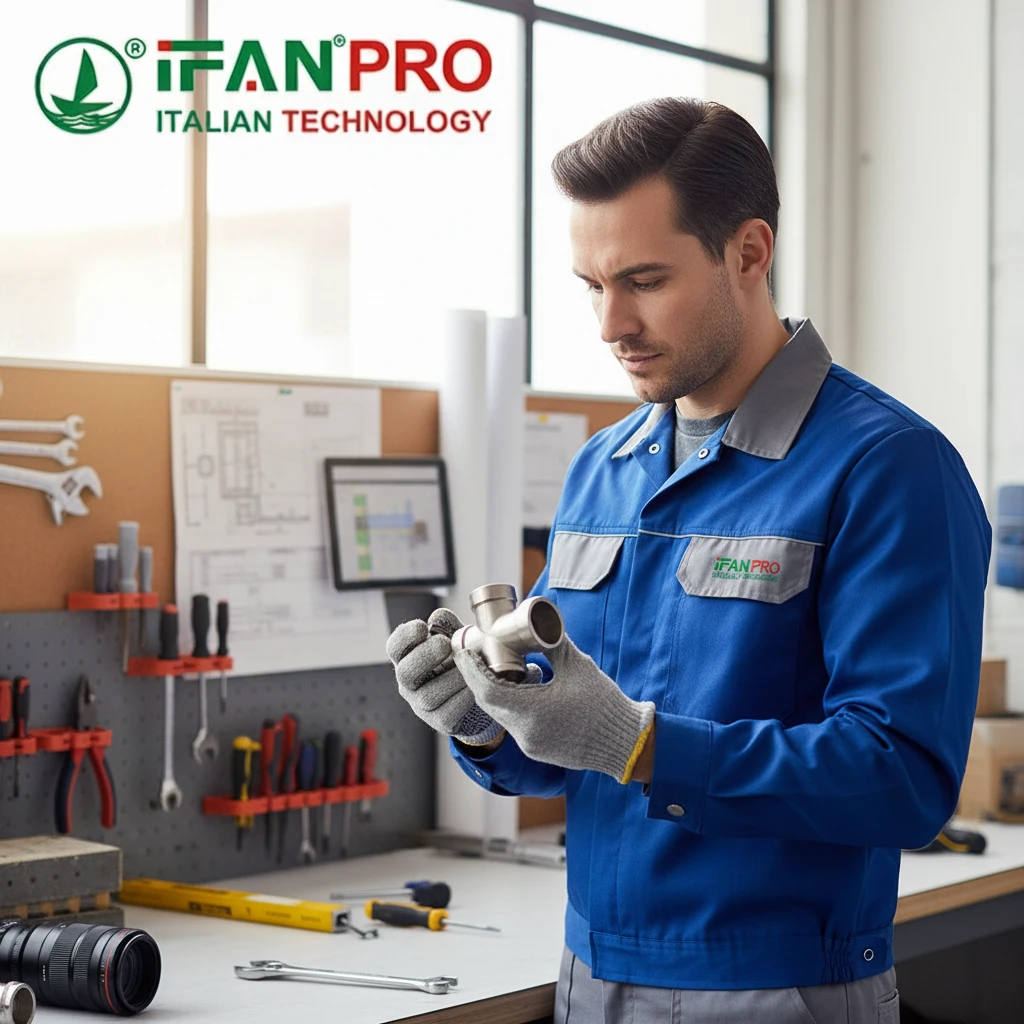
Thread form accuracy ensures each fitting mates correctly with standard pipes. We verify thread dimensions using optical comparators and thread gauges. This verification prevents the “loose thread” problem where fittings feel tight but actually leak under pressure.
Body Geometry and Strength
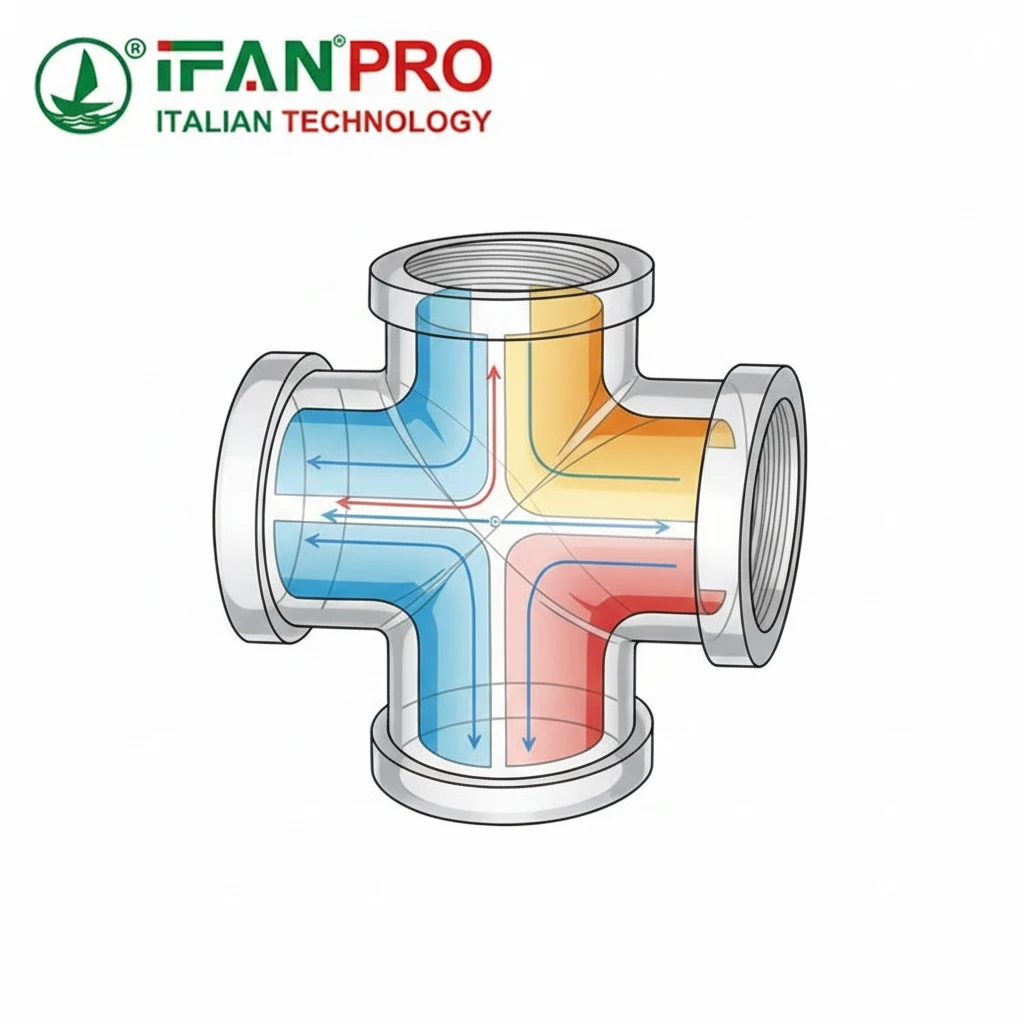
A cross tee handles flow in four directions. This creates complex stress patterns. The 407 series addresses this through thoughtful engineering.
Reinforced corners appear where branches meet the main body. These areas experience the highest stress. Extra material here prevents cracking during installation and under pressure surges.
Consistent wall thickness eliminates thin spots that could fail prematurely. We use ultrasonic testing to verify thickness throughout the fitting.
Optimized flow paths reduce turbulence and pressure loss. Sharp internal corners cause flow separation and energy loss. The 407 series features gradual radius transitions that maintain smooth flow.
Surface Finish Quality
Smooth surfaces matter more than most people realize. Rough surfaces create multiple problems. For instance:
- Corrosion often starts at rough spots.
- Debris and bacteria can get trapped.
- Flow resistance increases significantly.
- Sealing becomes more difficult.
Therefore, the 407 series undergoes additional finishing steps. We achieve a surface roughness of 32 micro-inches or better on sealing surfaces. This attention to finish ensures reliable gasket and O-ring sealing.
Testing Before Delivery
Quality control is non-negotiable. Every 407 series fitting must pass multiple checks:
| Test Type | What It Checks | Acceptance Criteria |
|---|---|---|
| Dimensional Inspection | Thread form, wall thickness, overall dimensions | Within ISO/ANSI tolerances |
| Hydrostatic Pressure | Burst strength, leak resistance | No leakage at 2x rated pressure |
| Material Verification | Chemical composition, mechanical properties | Certified mill test reports |
| Visual Inspection | Surface defects, finish quality | No visible flaws or damage |
These tests catch problems before fittings ship. This proactive approach prevents issues after installation.
What Does Real Customer Feedback Reveal About Performance in Global Climates?
Theory is nice. Real-world results matter more. Customer feedback across different climates tells the true story.
Customer feedback across global climates consistently highlights three strengths of stainless steel 4-way fittings: they resist corrosion in coastal and industrial environments, maintain integrity through temperature extremes, and simplify installation in tight spaces. The only complaints typically involve initial cost, which customers later recoup through reduced maintenance and longer system life.
Coastal and Marine Environments
Consider a hotel project in Miami. They installed stainless steel fittings throughout their seawater cooling system. After five years, inspections showed no significant corrosion.
The maintenance manager reported: “With our old copper fittings, we replaced something every year. These stainless fittings haven’t needed any attention since installation.”
The salt spray in coastal areas destroys most metals within months. However, stainless steel’s chromium oxide layer provides protection that other materials can’t match. Consequently, it’s the default choice within 10 miles of salt water.
Hot and Arid Climates
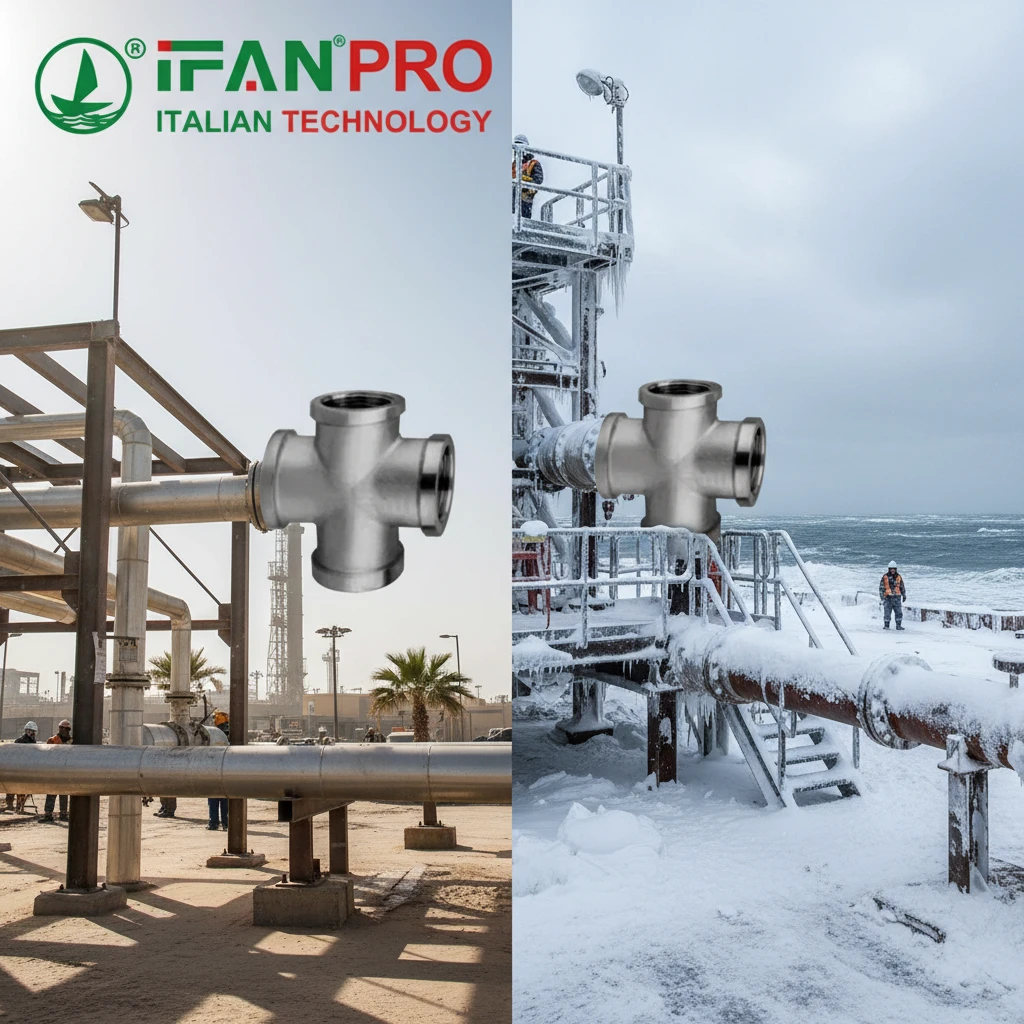
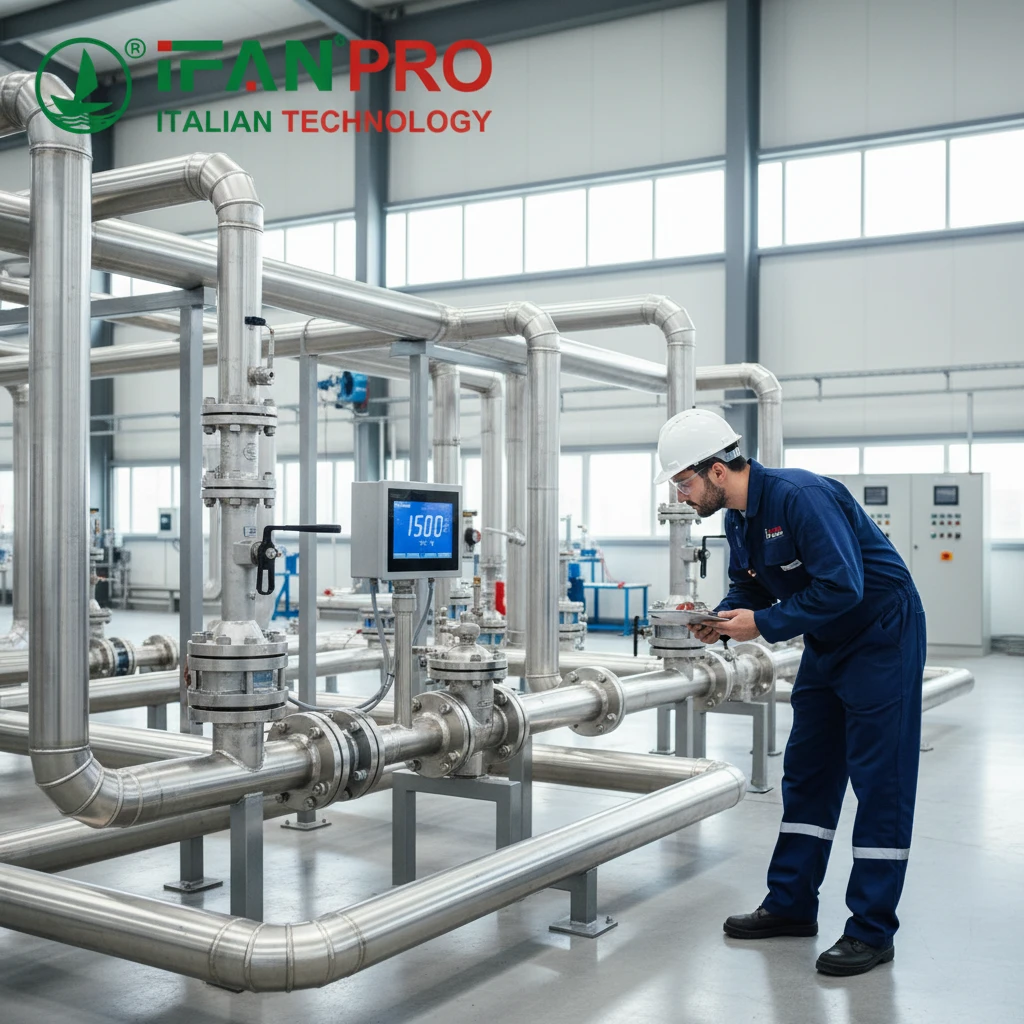
A manufacturing plant in Dubai uses our 407 series fittings in their process cooling system. Summer temperatures exceed 120°F. The system operates at 150 PSI continuously. After three years, they reported zero leaks and no maintenance.
The engineering manager noted: “We worried about thermal expansion with such temperature swings. But the fittings handled it fine. The reinforced body design absorbed the stress without issues.”
Cold Climate Performance
A Canadian contractor installed stainless steel fittings in an outdoor water system. This system freezes solid every winter. Surprisingly, the pipes burst in two places, but the stainless fittings survived intact.
The contractor told us: “I expected to replace everything after the freeze. But only the straight pipe failed. Every fitting, including the crosses, held together.”
Stainless steel maintains its mechanical properties at low temperatures better than many other materials. Unlike some plastics or carbon steel, it doesn’t become brittle.
Industrial and Chemical Applications
A chemical processing plant in Texas uses our fittings for aggressive chemical transfer. Previously, they used special alloy fittings costing three times as much. After switching to 316L stainless, they saw equivalent performance at much lower cost.
Their maintenance supervisor shared: “We test fittings annually for corrosion and wall loss. After two years, the stainless fittings show zero measurable change. We’re now standardizing on them throughout the plant.”
Summary of Global Feedback
The table below compiles feedback from different regions:
| Region | Climate Type | Key Feedback | Common Application |
|---|---|---|---|
| Southeast Asia | Tropical, high humidity | “No corrosion after 3 years in outdoor installation” | Hotel water systems |
| Middle East | Hot, arid, dusty | “Handles extreme heat without problems” | Industrial cooling |
| Northern Europe | Cold, freeze-thaw cycles | “Survived pipe freezing that burst other components” | Outdoor water lines |
| North America | Varied, mixed industrial | “Simplified complex piping layouts significantly” | Chemical processing |
The pattern is clear: stainless steel 4-way fittings perform reliably regardless of climate. The only variable is selecting the right grade for specific chemical exposures.
How Can You Future-Proof Your Pipes with Custom Solutions?
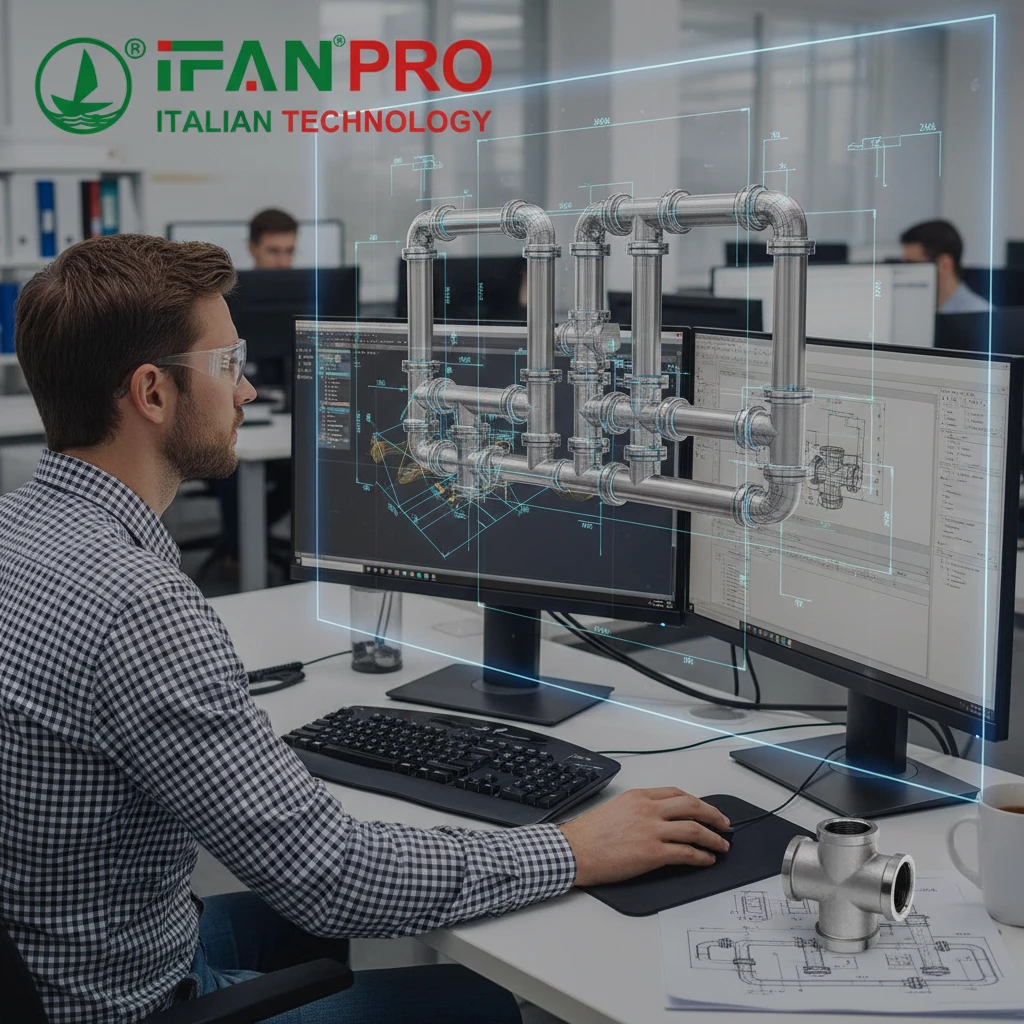
Standard products work for standard situations. However, unique projects need tailored solutions. Future-proofing means planning for what comes next.
You future-proof your piping systems by working with suppliers who offer custom fluid distribution solutions tailored to your specific needs. This includes selecting appropriate material grades for your environment, designing fittings that match your exact space constraints, and incorporating features that simplify future maintenance or expansion. The goal is a system that meets today’s requirements while adapting easily to tomorrow’s changes.
Assessing Your Real Needs
Before ordering custom fittings, understand what you actually need. Start by asking several key questions:
- What fluids will the system carry? Different chemicals require different materials. Water is easy. Acids, caustics, or solvents need specialized grades.
- What temperatures and pressures will the system see? Both continuous and occasional extremes matter. A system that normally runs at 100 PSI might see 200 PSI during pump startups.
- How does the outside environment affect the pipes? Coastal locations need better corrosion resistance. Underground installations need external protection. Food plants need cleanable surfaces.
- How will the system be maintained? Will people need access for cleaning? Will sections need isolation for repair? Will the system expand later?
Custom Design Options
Modern manufacturing allows extensive customization without excessive cost. Consider these options:
Material selection: Choose from 304, 316, 316L, duplex, or specialty alloys based on your specific needs.
Size variations: Standard sizes work for most projects. However, non-standard dimensions are possible when needed.
Connection types: Threaded ends are standard. Alternatively, we can supply fittings for welding, flanging, or compression connections.
Special features: Add drain ports, instrument connections, or mounting brackets as needed.
Surface finishes: Standard mill finish works for most applications. Polished finishes suit food or pharmaceutical use. Special coatings add extra protection.
The Cost-Benefit Analysis
Custom solutions cost more upfront. Therefore, you need to evaluate when they make financial sense. The table below shows when custom wins:
| Situation | Standard Solution | Custom Solution | When Custom Wins |
|---|---|---|---|
| Standard building plumbing | Works fine | Overkill | Never |
| Chemical processing | May fail quickly | Designed for exposure | If standard fails in <5 years |
| Tight mechanical rooms | Difficult to fit | Perfect fit | If space constraints prevent standard |
| Future expansion planned | Hard to modify | Expansion-ready | If expansion occurs within 10 years |
| Extreme environments | Short service life | Long service life | If replacement cost > custom premium |
Working with the Right Partner
Future-proofing requires a supplier who understands both products and applications. At IFAN, we follow a specific approach:
- We ask questions before quoting. Understanding your application helps us recommend the right solution.
- Samples are provided for testing. Never commit to a large order without verifying performance.
- Everything is documented. Material certifications, test reports, and dimensional data should all be available.
- Support continues after installation. Questions don’t stop when products ship. We’re here for the life of your system.
Practical Steps for Your Next Project
Follow these steps to ensure your piping system serves you well for decades:
- Define your requirements clearly. Write down pressures, temperatures, fluids, and environmental conditions.
- Research material options. Understand which stainless steel grades suit your needs.
- Request samples. Test fit and inspect before ordering bulk quantities.
- Verify certifications. Ensure materials meet applicable standards.
- Plan for maintenance. Include isolation valves and access points.
- Document as-built conditions. Record what you installed for future reference.
Conclusión
Stainless steel 4-way fittings deliver reliable performance across all climates and applications. They achieve this through superior design and material quality. For your next project, choose IFAN’s 407 Cross Tee Series and experience the difference that precision engineering makes.










 Español
  English
  Français
  Русский
Comentarios recientes