
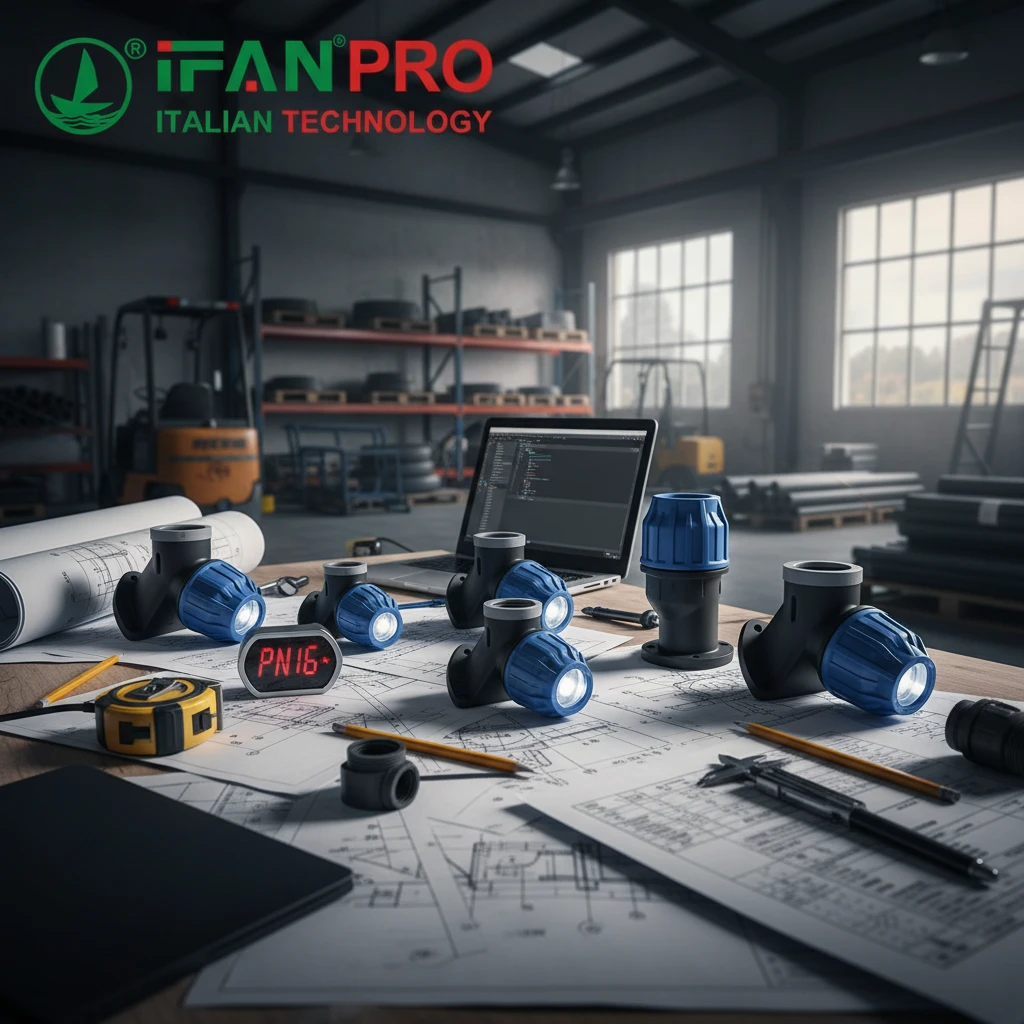
We once had a client whose project failed because their elbows couldn’t handle the system’s surge pressure. This taught us how critical it is to get the pressure rating right from the start.
Custom HDPE elbows are commonly available in standard Pressure Nominal (PN) ratings such as PN6, PN10, PN16, and PN20, with higher ratings like PN25 achievable through specific design and material upgrades. The actual pressure rating of a custom elbow is not fixed; it is determined by a combination of the PE grade, the SDR (Standard Dimension Ratio) which defines wall thickness, and the manufacturing process.
Now, let’s break down the details to help you specify the perfect elbow for your pipeline’s pressure needs.
What Standard PN Pressure Ratings Are Achievable for Custom HDPE Elbows?
Clients often ask if they can just order a “PN16 elbow.” The answer is yes, but understanding what that means is key.
Standard PN ratings like PN6, PN10, PN16, and PN20 are readily achievable for custom HDPE elbows. These ratings correspond to the maximum allowable operating pressure in bars at 20°C (e.g., PN16 = 16 bar). However, the final rating depends on the material grade (e.g., PE100) and the precise wall thickness of the custom elbow.
Understanding the PN Rating System
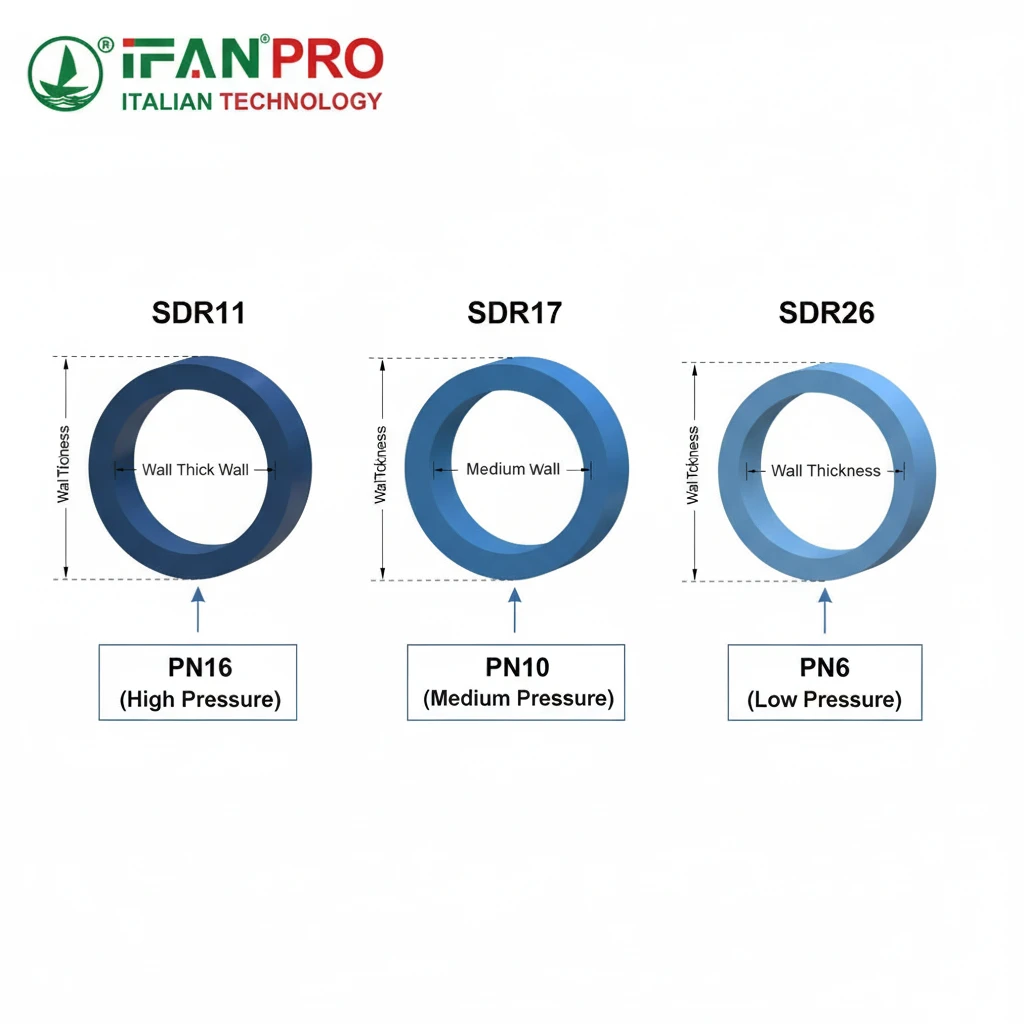
First, you need to know what PN stands for. PN means “Pressure Nominal.” It is a standard number that indicates the pressure capacity of a fitting or pipe. For example, a PN10 fitting is designed for a maximum operating pressure of 10 bar at a water temperature of 20°C.
However, HDPE is unique. Its pressure capacity changes with temperature. A fitting rated for PN16 at 20°C will have a lower maximum pressure in hotter environments. So, PN is a useful benchmark for cold water applications.
Common PN Ratings for HDPE Elbows
The most common PN ratings you will find for HDPE elbows are based on standard dimension ratios (SDR). SDR is the ratio of the pipe’s outside diameter to its wall thickness. A lower SDR number means a thicker wall and a higher pressure rating.
Here is a table showing common SDR classes and their corresponding typical PN ratings for PE100 material:
| SDR Class | Typical Wall Thickness | Standard PN Rating (for PE100 at 20°C) |
|---|---|---|
| SDR 11 | Thicker wall | PN16 |
| SDR 13.6 | Medium wall | PN12.5 (often rounded to PN12) |
| SDR 17 | Standard wall | PN10 |
| SDR 21 | Thinner wall | PN8 (often called PN7.5) |
| SDR 26 | Thinner wall | PN6 |
When you order a custom elbow, you are often choosing an SDR class. For instance, if you need a PN16 elbow, you would specify an elbow designed to match an SDR11 pipe. A good manufacturer like IFAN will ensure the elbow’s wall thickness is designed to meet or exceed the pressure rating of the connecting pipe.
Achieving Higher Pressure Ratings
What if you need more than PN16? Higher ratings like PN20 and PN25 are absolutely possible. These require using the highest quality PE100 or PE100 RC (Resistance to Crack) materials and designing the elbow with a sufficiently low SDR (like SDR9 or even SDR7.4). The manufacturing process must be precise to ensure the wall thickness is perfectly even throughout the bend, which is the weakest point. Always discuss high-pressure applications directly with your supplier to confirm feasibility.
How Does Wall Thickness Customization Affect the Final Pressure Rating of the Elbow?
We see this mistake often: a client orders the right diameter but underestimates the needed wall thickness, leading to pressure failures.
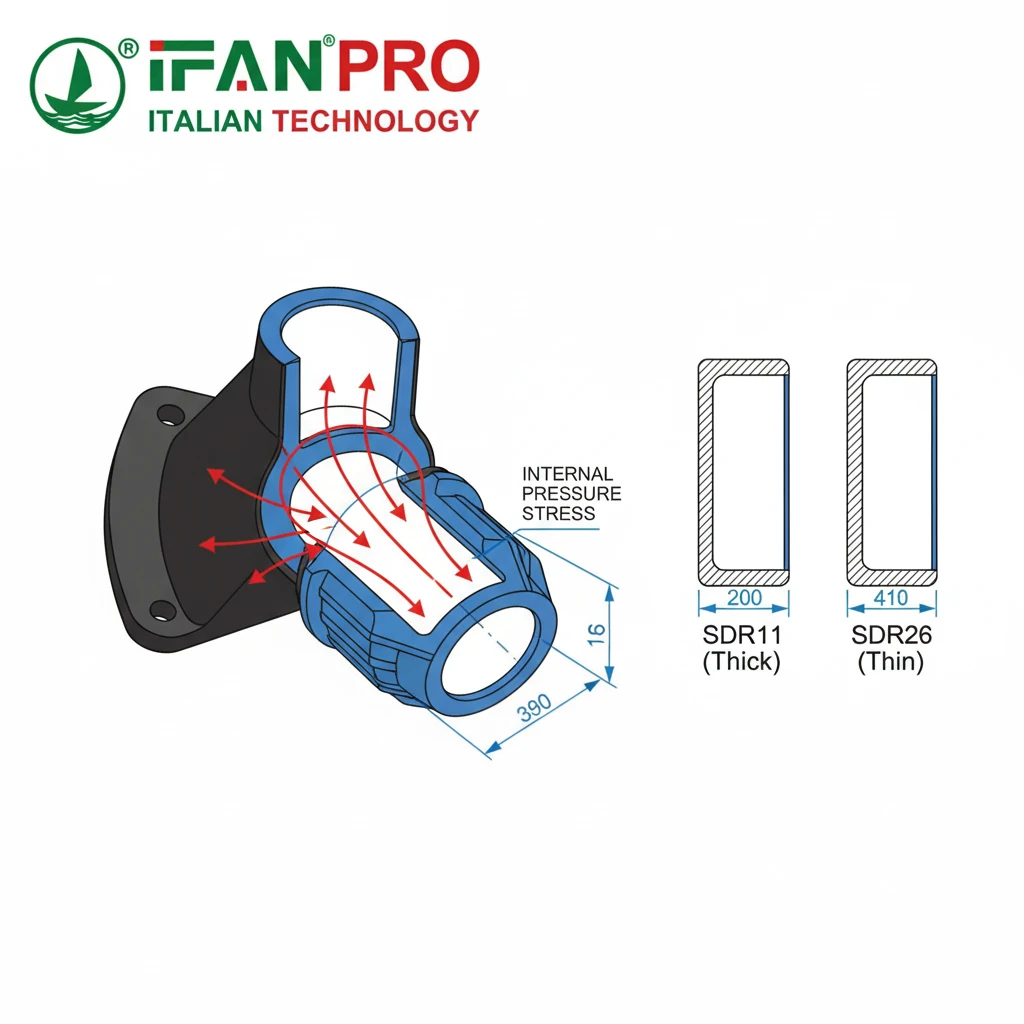
Wall thickness customization directly determines the final pressure rating of a custom HDPE elbow. A thicker wall (lower SDR number) significantly increases the pressure the elbow can withstand by adding more material to resist internal stress. The critical factor is ensuring the thickness is uniform, especially around the bend radius, which is under the most stress.
The Direct Relationship Between Thickness and Strength
Think of the wall of the elbow like a balloon. A thicker balloon is harder to inflate and burst. It’s the same principle with HDPE. The internal pressure of the water or gas pushes outward against the plastic wall. A thicker wall has more material to resist this pushing force, so it can handle higher pressure before deforming or failing.
This relationship is standardized through the SDR (Standard Dimension Ratio) system we mentioned earlier. The formula is SDR = Outside Diameter / Minimum Wall Thickness. For a fixed outside diameter (which is often determined by your pipe size), the only way to get a lower SDR number is to increase the minimum wall thickness. And a lower SDR means a higher pressure rating.
The Challenge of the Bend Area
Customizing wall thickness for a straight pipe is simple. But for an elbow, it’s more complex. When you bend material, the outer curve of the bend stretches and can become thinner, while the inner curve compresses and can become thicker. If not manufactured correctly, the wall on the outer radius can become too thin, creating a weak spot.
Therefore, a reputable manufacturer doesn’t just specify an average wall thickness. They use specialized molding or fabrication processes designed to ensure Minimum Wall Thickness (MWT) is maintained at every point, especially on the outer bend. This often means the nominal wall thickness of the custom elbow will be greater than that of a straight pipe of the same SDR class to compensate for thinning during formation.
How to Specify Wall Thickness for Custom Orders
Don’t just say “make it thick.” You need to provide clear engineering specifications. Here is the best way to communicate your needs:
- Specify the SDR Class: This is the best method. Tell your supplier, “I need a 200mm 90-degree elbow to match SDR11 PE100 pipe.” This gives them the precise pressure rating target.
- Specify the Minimum Wall Thickness (MWT): If your project has unique requirements, you can specify the exact minimum wall thickness you need, in millimeters, at any point on the elbow.
- Provide the Pressure Requirement: Clearly state the maximum operating pressure (in bar or psi) and the fluid temperature. A good supplier will then calculate the required SDR and wall thickness for you.
Impact Table: Wall Thickness vs. Performance
| Wall Thickness Customization | Effect on Pressure Rating | Other Effects to Consider |
|---|---|---|
| Increased Thickness (Lower SDR) | Rating Increases Significantly improves burst pressure and safety margin. | Cost increases (more material), weight increases, flow area slightly decreases. |
| Decreased Thickness (Higher SDR) | Rating Decreases Lowers the maximum allowable operating pressure. | Cost decreases, weight decreases, flow area slightly increases. Risk of failure under pressure surge. |
| Non-Uniform Thickness | Rating is Unreliable The elbow will fail at its thinnest point, regardless of the average thickness. | Guarantees premature failure. Highlights poor manufacturing quality. |
In short, customizing the wall thickness is the most powerful tool for achieving your required pressure rating. Work with a manufacturer like IFAN that has the technology to guarantee consistent wall thickness throughout the custom elbow.
Which International Standards Govern the Pressure Testing of Custom HDPE Fittings?
A client once received fittings with a fake certification stamp. This caused a whole project to fail its safety audit. Knowing the real standards protects you.
The pressure testing of custom HDPE fittings is primarily governed by the ISO 4427 series for water systems and ISO 4437 for gas systems. These standards define the methods for long-term hydrostatic strength testing, such as the Minimum Required Strength (MRS) rating, and set the rules for short-term pressure tests like the hydrostatic proof test that fittings must pass before delivery.
The Purpose of Pressure Testing Standards
Standards exist to ensure safety, reliability, and fairness. They create a common language and a set of rules that everyone—manufacturers, engineers, and buyers—can trust. For pressure testing, standards answer two main questions: 1) How do we predict the fitting’s strength over 50 years? and 2) How do we check that this specific batch of fittings is made correctly?
Key Standards for HDPE Fittings Pressure Testing
Here are the most important international standards you should know about:
- ISO 4427: Plastics piping systems for water supply – Polyethylene (PE): This is the core global standard. It covers everything from materials to joints to testing. Part 2 (PE pipes) and the specifications for fittings define the Minimum Required Strength (MRS). For PE100, the MRS is 10 MPa, meaning it can withstand 10 Megapascals of pressure for 50 years at 20°C. This long-term data is the foundation for all PN and SDR calculations.
- ISO 4437: Plastics piping systems for gas supply – Polyethylene (PE): This standard is even more stringent due to the dangers of gas. It governs fittings used in gas distribution networks.
- ASTM D2513: Standard Specification for Polyethylene (PE) Gas Pressure Pipe, Tubing, and Fittings: This is the key standard in North America for gas applications.
- EN 12201 and EN 1555: These are European standards for water and gas PE systems, respectively, largely harmonized with ISO standards.
The Two Main Types of Pressure Tests
Understanding these tests helps you know what you’re paying for.
1. Long-Term Hydrostatic Strength (LTHS) Testing:
This is not done on every batch. It’s the science behind the material’s rating. Manufacturers test pipes and fittings under constant pressure and elevated temperature for thousands of hours. This data is used to extrapolate the material’s strength over a 50-year lifespan at 20°C. The result is the MRS classification (PE80, PE100).
2. Short-Term Quality Control Tests:
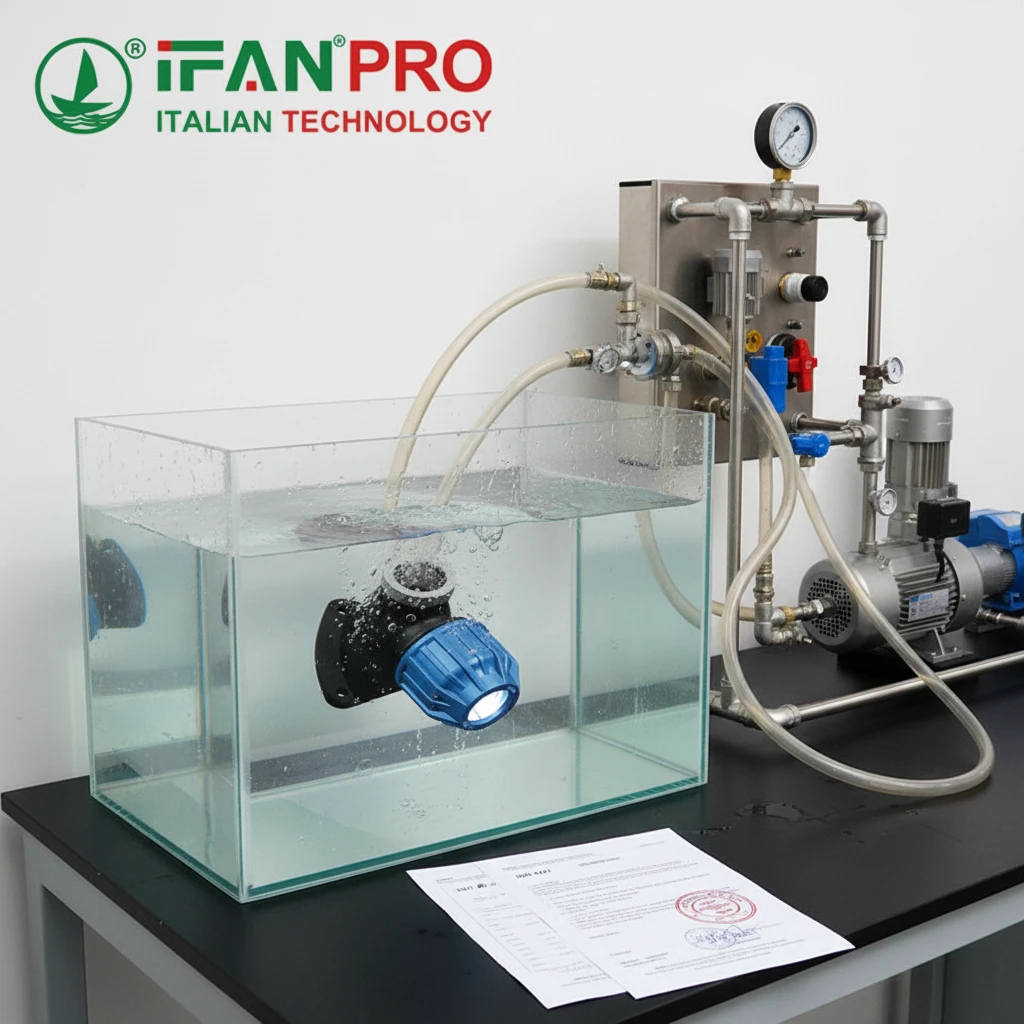
This is done during production. The most common is the hydrostatic proof test. A sample fitting from a production batch is placed in a water tank and subjected to a high pressure (much higher than its PN rating) for a short time (usually 1 hour). It must not leak, rupture, or show visible distortion. This test verifies the immediate integrity of the manufacturing process.
Important Standards Table for Pressure Testing
| Standard Code | Title / Scope | Key Pressure Testing Relevance |
|---|---|---|
| ISO 4427-2 | PE Pipes | Defines MRS (PE100, PE80) and long-term hydrostatic strength basis. |
| ISO 4427-3 | PE Fittings | Specifies the performance requirements and test methods for fittings, including pressure tests. |
| ISO 1167-1 | Resistance to Internal Pressure | The specific test method for determining the long-term hydrostatic strength of thermoplastics pipes and fittings. |
| ASTM F2160 | Standard Practice for Pressure Testing HDPE Geomembranes (method adapted for fittings) | Often referenced for hydrostatic proof testing procedures. |
When you order custom elbows, always ask your supplier which standards they comply with and if they can provide test certificates for the hydrostatic proof tests on production batches. A supplier like IFAN follows these international standards rigorously, providing documentation that ensures your fittings are safe and reliable for the long term.
How Do You Specify the Required Pressure Rating for Your Custom HDPE Elbow Order?
A clear specification sheet prevents costly errors. We helped a client who almost ordered PN6 elbows for a PN16 system because their request was vague.
To specify the pressure rating for your custom HDPE elbow order, you must provide the designer or manufacturer with four key pieces of information: 1) The Maximum Operating Pressure (MOP) in bar or psi, 2) The fluid temperature, 3) The required safety factor or design standard, and 4) Any surge pressure or transient pressure events expected in the system.
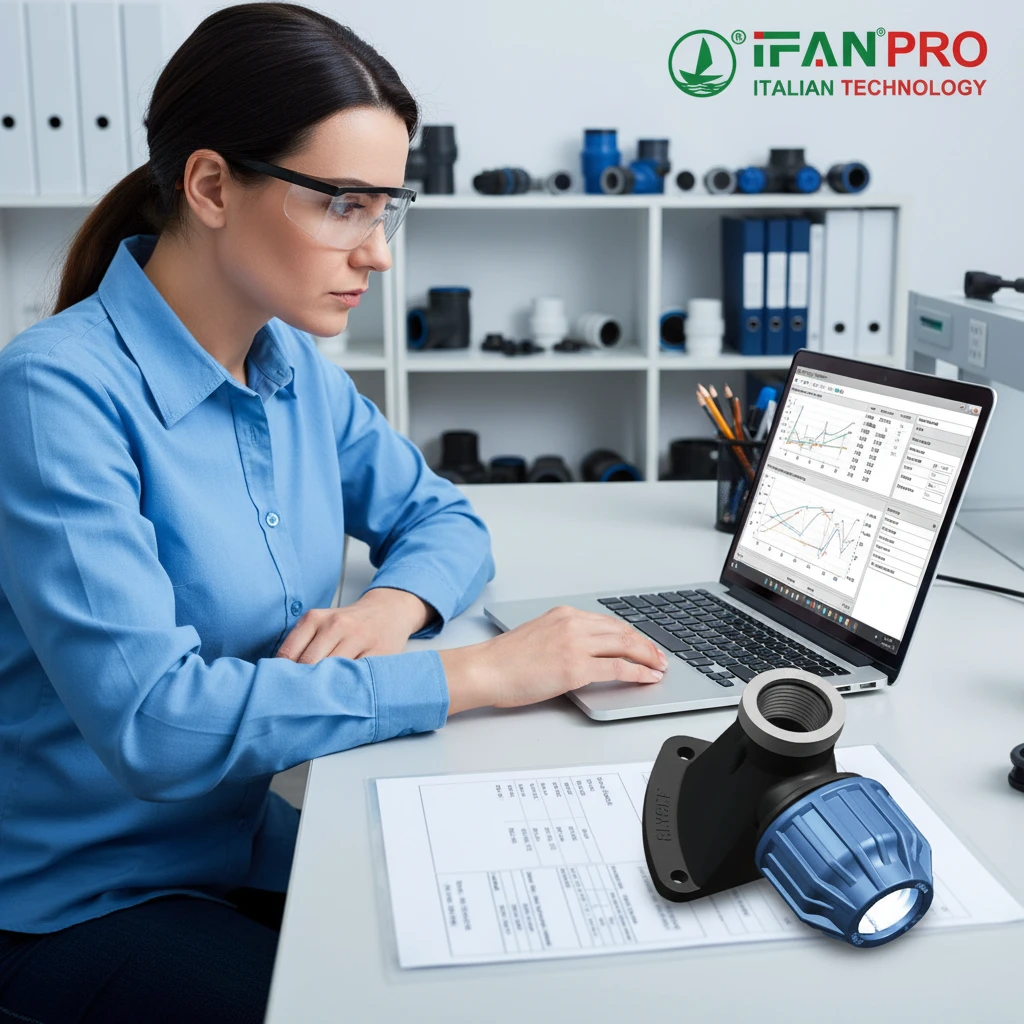
Step-by-Step Specification Guide
Giving your supplier clear information is the best way to get the right product. Follow these steps:
Step 1: Define Your System’s Actual Pressure.
Don’t just guess. You need to know:
- Maximum Operating Pressure (MOP): What is the highest steady pressure your system will see during normal operation?
- Surge Pressure (Water Hammer): What are the short-term pressure spikes? These can be 2-4 times higher than MOP and are a common cause of fitting failure. Tell your supplier the expected surge pressure value.
Step 2: Define the Fluid and Temperature.
- Fluid Type: Is it water, chemicals, slurry, or gas? This affects material choice.
- Maximum Fluid Temperature: HDPE pressure rating drops as temperature rises. A PN16 rating at 20°C is not PN16 at 40°C. Always provide the max continuous operating temperature.
Step 3: Determine the Required Pressure Class.
With the information from Steps 1 and 2, your engineer or supplier will calculate the necessary pressure class. This is where you apply safety factors. Common design standards (like ISO 12162) apply a minimum safety factor (e.g., 1.25 for water at 20°C). This means the fitting’s rated pressure (PN) should be at least 1.25 times your MOP.
For example:
MOP = 12 bar
Safety Factor = 1.25
Minimum Required PN Rating = 12 bar * 1.25 = 15 bar.
Therefore, you must select a PN16 fitting.
Creating Your Order Specification
When you send the inquiry, structure it clearly. Here is a template you can use:
Project Specification for Custom HDPE Elbows
- Item: 90-degree Elbow, Butt Fusion End Type
- Nominal Diameter (DN): 250 mm
- Material Grade: PE100
- Pressure Requirements:
- Maximum Operating Pressure (MOP): 10 bar
- Maximum Surge Pressure: 25 bar
- Fluid: Potable Water
- Maximum Continuous Temperature: 25°C
- Design Standard: ISO 4427
- Required Pressure Class: Please calculate and propose the appropriate SDR/PN rating to safely meet the above conditions.
- Certification: Must comply with ISO 4427-3. Batch test certificate required.
Common Mistakes to Avoid (Client Pain Points)
Based on our experience at IFAN, here are the top mistakes clients make:
| Mistake | Consequence | The Correct Approach |
|---|---|---|
| Only stating “PN10” or “PN16” | The supplier uses a default temperature (20°C). If your fluid is hotter, the fitting will be under-rated and may fail. | Always provide the fluid temperature. |
| Ignoring surge pressure | The fitting holds steady pressure but cracks during pump starts/stops or valve closures. | Calculate and communicate expected surge pressure. |
| Not asking for certification | You receive fittings that have not been properly tested, with no proof of compliance. | Always request a material certificate and a hydrostatic test certificate for the production batch. |
| Mismatching with pipe SDR | Ordering an SDR17 elbow to connect to an SDR11 pipe creates a weak link. The elbow is the lower pressure component. | Specify the SDR class of the pipe you are connecting to. The elbow must be rated for at least the same pressure. |
By providing detailed, clear specifications, you enable a professional supplier to engineer the right solution. At IFAN, our technical team reviews every custom order against these parameters to ensure the elbows we deliver perform reliably in your specific system.
Conclusión
Choosing the correct pressure rating for custom HDPE elbows requires careful consideration of your system’s pressure, temperature, and standards. For engineered solutions you can trust, specify IFAN’s custom HDPE fitting series, where every product is designed to meet precise pressure requirements with full certification.






 Español
  English
  Français
  Русский
Comentarios recientes