
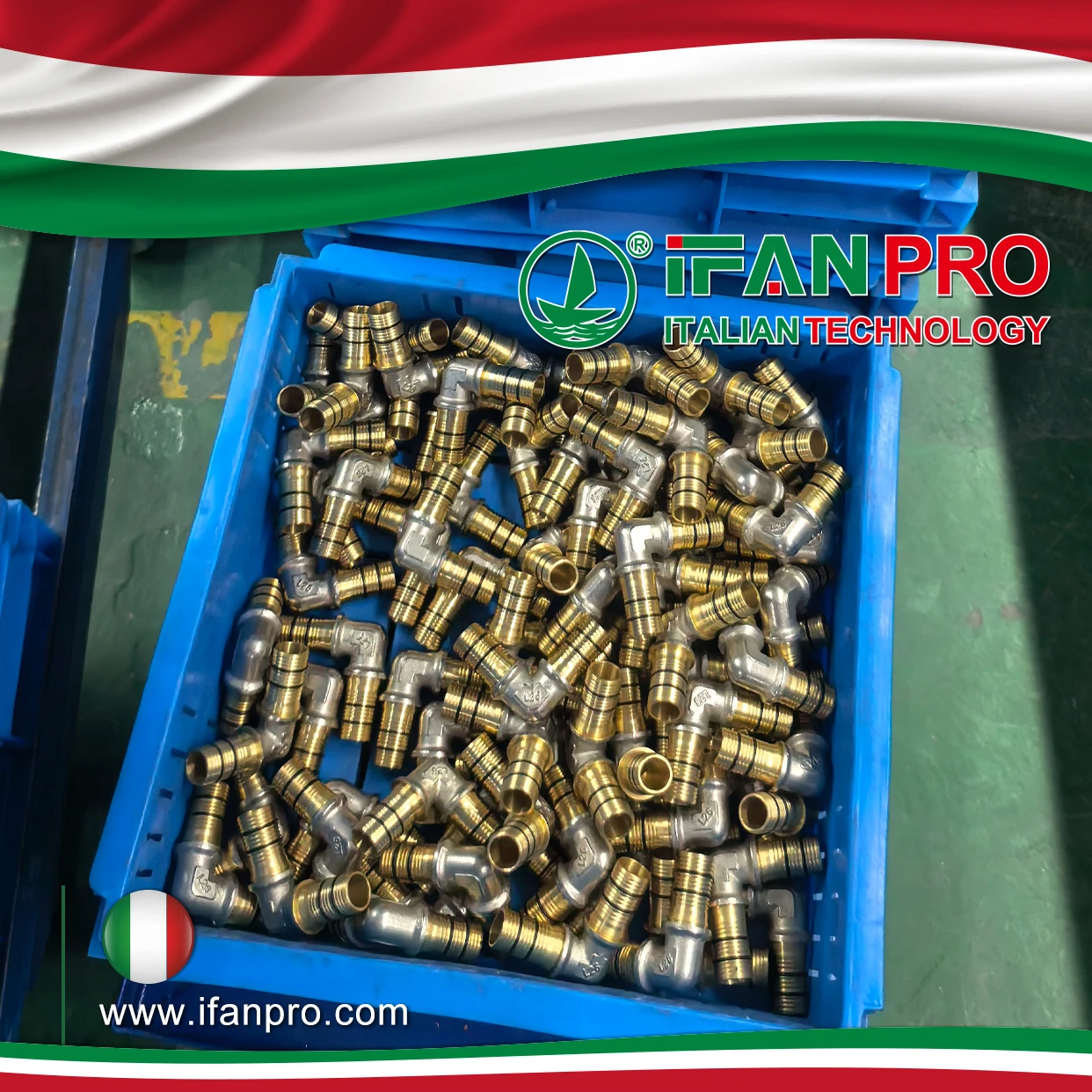
PEX Pipe Fittings Names: The Complete Visual Catalog for Wholesale Buyers
Key Takeaways
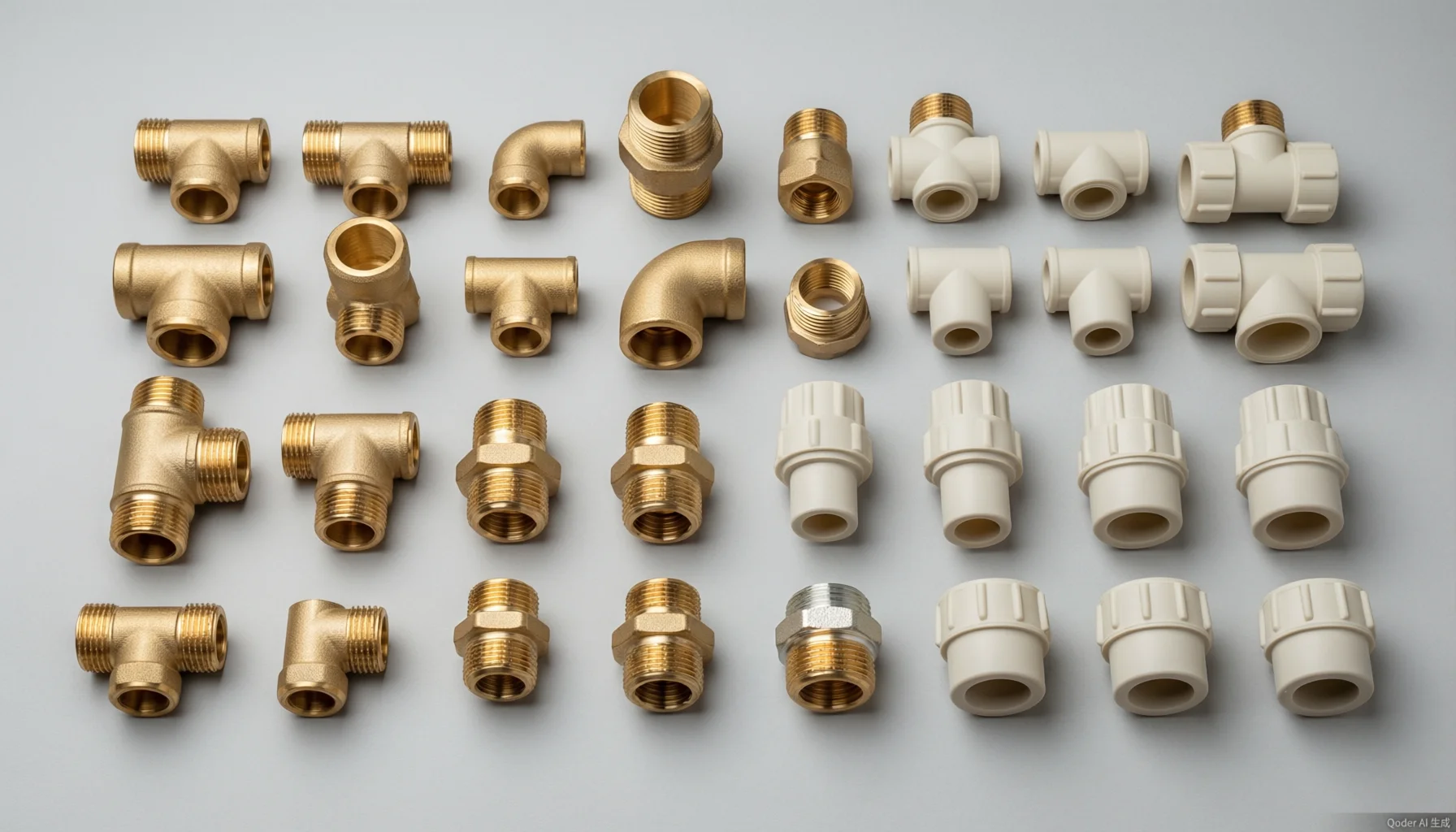
- PEX pipe fittings break down into 9 core families: couplings, elbows, tees, adapters, unions, crosses, caps, plugs, and manifold connections.
- Each fitting type is available in brass (DZR/CW617N) or polymeric (PPSU/bronze) material, sized from 3/8" to 1-1/4" (16–32 mm).
- Four connection systems dominate the market: crimp (ASTM F1807), clamp (ASTM F2098), cold expansion (ASTM F1960), and proprietary push-to-connect systems. Plastic (PPSU) insert fittings that use crimp rings or clamps are covered by ASTM F2159.
- PEX-A, PEX-B, and PEX-C tubing are all compatible with the same fitting bodies, but the connection ring method varies.
- Stocking the right size range (1/2" and 3/4" account for ~70% of residential orders) reduces dead inventory for wholesalers.
If you import or wholesale plumbing supplies, you already know that PEX has replaced copper in the majority of residential and light-commercial projects across North America, Europe, and the Middle East. What separates a profitable plumbing aisle from a returns-heavy one is simple: stocking the right fitting names, sizes, and connection types.
This reference page lists every PEX pipe fitting by name, function, available size, material option, and governing standard. Use it as a checklist when building your next purchase order or when training new sales staff on the PEX category.
1. PEX Couplings
A coupling connects two lengths of PEX pipe in a straight line. It is the most frequently ordered fitting in any PEX system and the first item on every wholesaler’s replenishment list.
Straight couplings join two pipes of the same diameter. A typical straight coupling for 1/2" PEX measures approximately 2" to 2-1/2" overall length (varies by manufacturer) with a barbed or crimp stem on each end. Part number format from most manufacturers follows a pattern like PEX-C-1/2 (coupling, 1/2 inch).
Reducing couplings transition between two different pipe diameters — for example, 3/4" to 1/2". These are common in manifold trunk lines where branch sizes step down. Reducing couplings carry a higher unit price and lower return rate, making them a margin-positive SKU for wholesalers.
| Size | Outlet | Typical Part No. | Material |
|---|---|---|---|
| 1/2" × 1/2" | Straight | PEX-C-050 | DZR Brass / PPSU |
| 3/4" × 3/4" | Straight | PEX-C-075 | DZR Brass / PPSU |
| 3/4" × 1/2" | Reducing | PEX-CR-7550 | DZR Brass |
| 1" × 3/4" | Reducing | PEX-CR-10075 | DZR Brass |
2. PEX Elbows
Elbows change the direction of a PEX run. They come in two standard angles and multiple connection variants.
90° elbows make a right-angle turn. These are used at inside corners, around structural obstructions, and wherever a pipe run must drop vertically. A 90° elbow for 1/2" PEX typically has a center-to-end measurement of approximately 1" to 1-1/2" (varies by manufacturer).
45° elbows provide a gentler directional change. Specifiers prefer them in radiant floor heating loops where sharp bends increase pressure drop.
Male threaded elbows (MPT) combine a 90° bend with a male threaded port, usually NPT, allowing connection to a threaded fixture supply or a metal pipe stub-out. Common sizes: 1/2" crimp × 1/2" MIP.
Female threaded elbows (FPT) mirror the male version but accept a male threaded pipe. Used where a wall-mounted fixture needs a supply connection at an angle.
3. PEX Tees
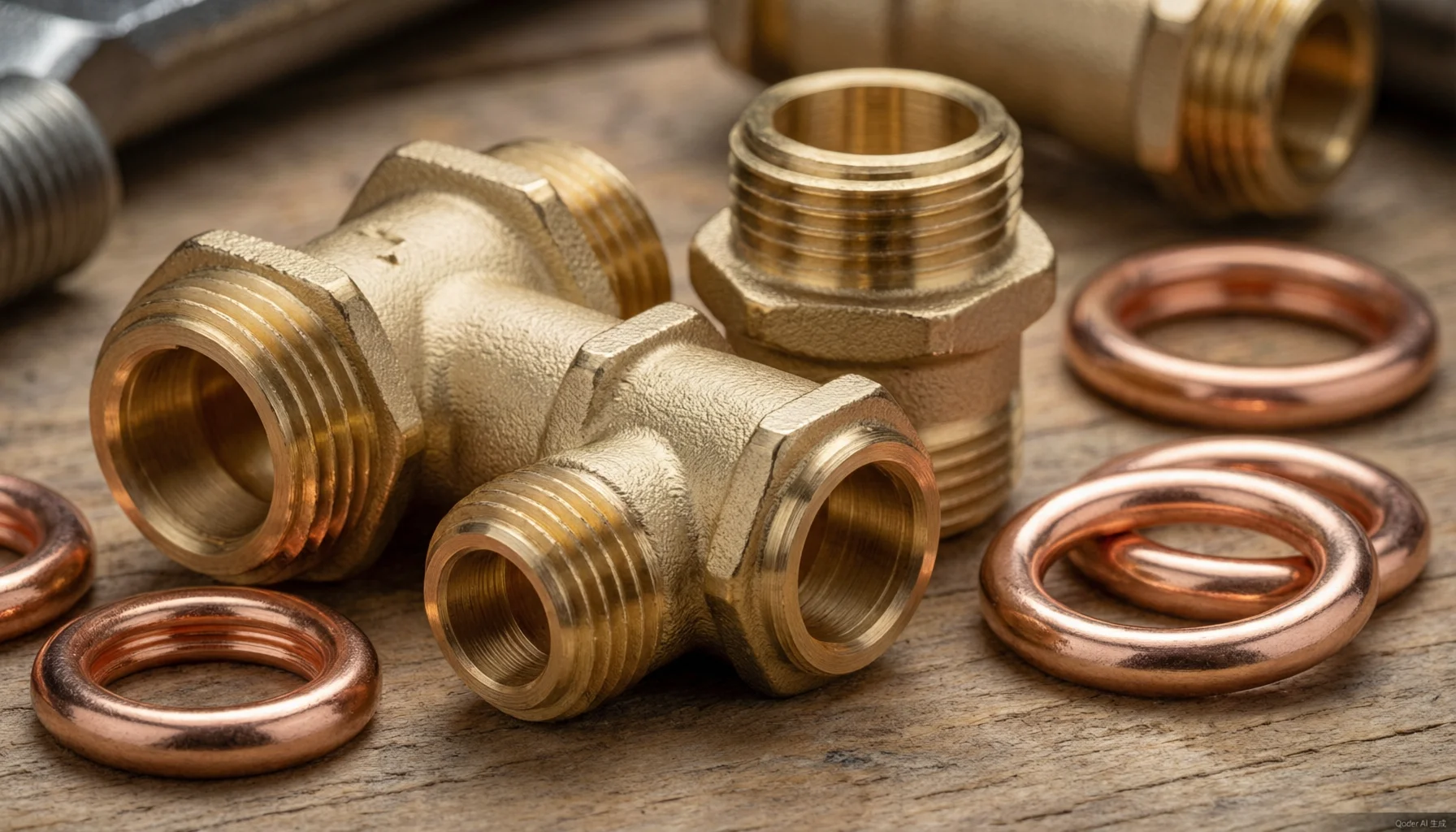
Tees split a single supply line into two branches, forming a “T” shape. They are the second-highest volume SKU after couplings.
Equal tees have all three outlets at the same diameter. A 1/2" equal tee is the single most common tee in residential plumbing.
Reducing tees step one or more branches down in size. Example: 3/4" run × 1/2" branch. These eliminate the need for a separate coupling plus reducer combination.
Male threaded tees feature one or more NPT threaded ports. Typical use: connecting a PEX branch to a threaded valve or appliance supply.
Female threaded tees accept threaded pipe on one or more ports. Often specified when transitioning from a threaded manifold to PEX distribution.
| Type | Run × Branch | Part No. Example | Application |
|---|---|---|---|
| Equal Tee | 1/2" × 1/2" × 1/2" | PEX-T-050 | Branch supply to bathroom groups |
| Equal Tee | 3/4" × 3/4" × 3/4" | PEX-T-075 | Main trunk branch |
| Reducing Tee | 3/4" × 1/2" × 3/4" | PEX-TR-7550 | Stepped branch lines |
| MPT Tee | 1/2" crimp × 1/2" MPT | PEX-TM-050 | Valve or fixture connection |
| FPT Tee | 1/2" crimp × 1/2" FPT | PEX-TF-050 | Manifold to PEX transition |
4. PEX Adapters
Adapters connect PEX to a different material or connection method. They are critical for remodel work and for any job where PEX meets copper, CPVC, or threaded steel.
Male adapters have a PEX connection on one end and male NPT threads on the other. Used to screw into a female-threaded valve, union, or equipment connection.
Female adapters accept male threaded pipe on one end and connect to PEX on the other.
Transition adapters join PEX directly to copper or CPVC without threading. Solder-end transition adapters (PEX × sweat copper) are popular with contractors who want to keep existing copper stub-outs. Slip-fit transition adapters use a stainless-steel grab ring and O-ring seal for a no-solder connection to copper.
For wholesale buyers, transition adapters carry a higher margin than standard couplings. Stocking both 1/2" and 3/4" sweat-transition and threaded-transition variants covers most common field requirements.
5. PEX Unions
A union is a three-piece fitting — a nut, a female end, and a male end — that allows a section of pipe to be disconnected without cutting. Unions are specified at equipment connections (water heaters, boilers, chillers) and at any point where future maintenance access is expected.
PEX unions are available in crimp, clamp, and push-to-connect versions. Brass-body unions with EPDM O-rings are rated for working pressures up to 200 psi at 180°F (ASTM F877). For wholesale stocking, 1/2" and 3/4" unions in DZR brass are the priority SKUs.
6. PEX Cross Fittings
Cross fittings have four outlets arranged in a plus-sign (+) pattern. They distribute flow in four directions from a single junction point.
In residential plumbing, crosses appear at manifold distribution points and in multi-fixture wet walls. In radiant heating, they show up in manifold header assemblies.
Cross fittings are lower-volume than tees but essential for complete system design. Standard sizes: 1/2" and 3/4" equal cross. Reducing crosses (e.g., 3/4" × 1/2") are available from most major manufacturers on indent order.
7. PEX Caps and Plugs
Caps seal the open end of a PEX pipe permanently. Used to close unused branch lines, terminate test lines, or finish a run that may be extended later. Caps are cemented, crimped, or clamp-connected depending on the system type.
Plugs insert into the open end of a fitting or valve port. They are typically threaded (male NPT) and used during pressure testing or to temporarily seal a port before final fixture installation.
Caps and plugs are low-cost, high-margin items. A bag of 25 pcs in 1/2" size is a typical wholesale pack configuration offered by many suppliers. Keep both crimp-end caps and threaded plugs in stock.
8. Manifold Connections
Manifold connections are the fittings that join PEX tubing to a distribution manifold. They include:
- Manifold adapters — FPT or MPT fittings that screw into manifold port openings (typically 3/4" or 1" manifold port × 1/2" or 3/4" PEX crimp).
- Manifold mount brackets — not fittings per se, but often ordered alongside connection fittings.
- Shut-off valve adapters — integrated ball-valve units at each manifold port, combining a shut-off and a PEX connection in one piece.
Manifold hardware is a growing category as home-run (manifold) PEX systems gain share over traditional trunk-and-branch layouts. Wholesalers who bundle manifold adapters with their manifold sales see higher attach rates.
9. Connection Types: Crimp, Clamp, Cold Expansion & Push-to-Connect
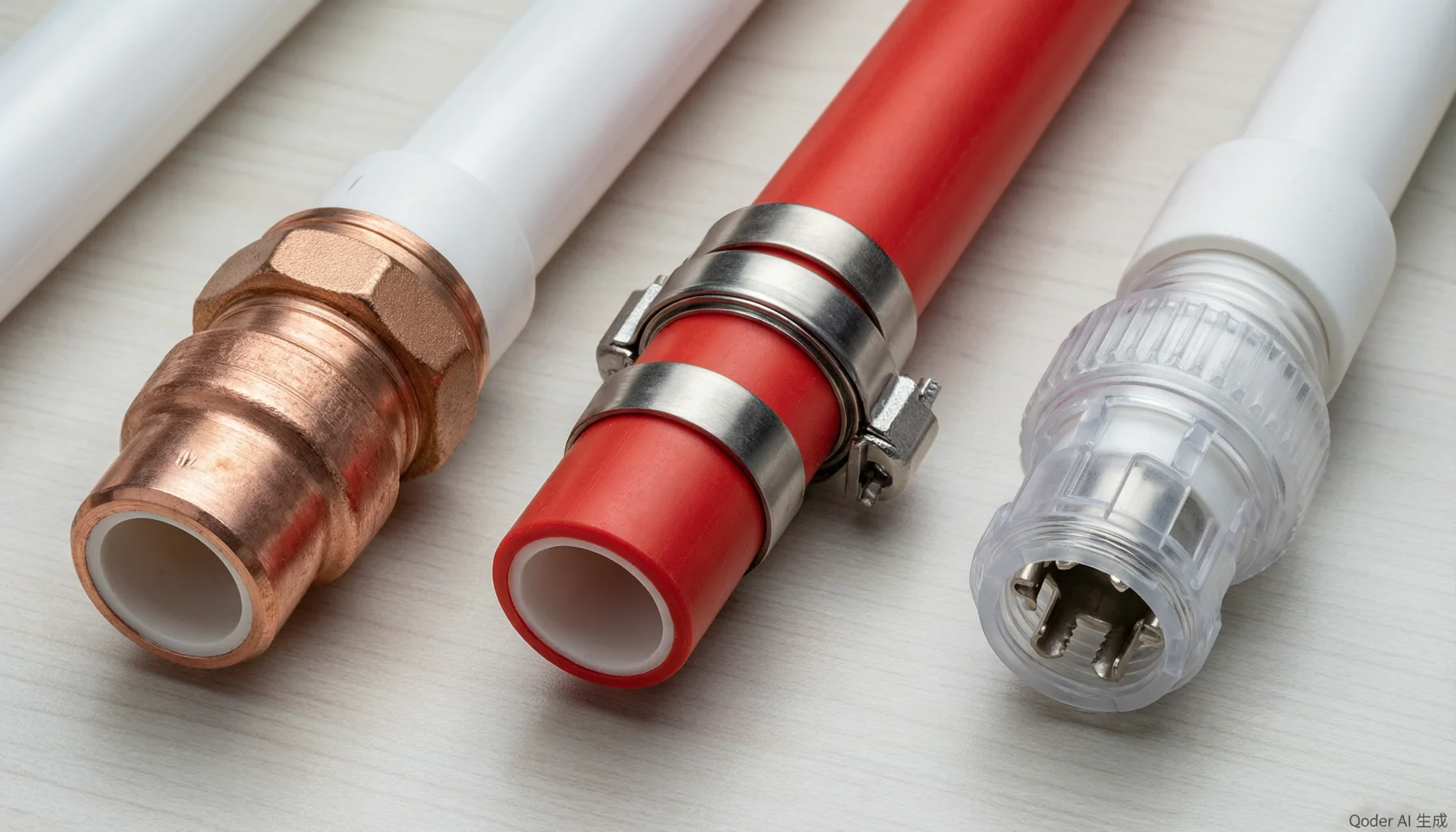
The fitting body is only half the equation. The connection method determines installation speed, tool cost, and code acceptance.
| Connection system | Fitting material | Primary standard | Compatible pipe |
|---|---|---|---|
| Copper crimp ring | Metal (brass/copper/bronze) | ASTM F1807 | PEX-A/B/C |
| Stainless clamp (cinch) | Metal or plastic | ASTM F2098 (clamps); F1807 fittings | PEX-A/B/C |
| Plastic insert + crimp/clamp | PPSU / polysulfone | ASTM F2159 | PEX-A/B/C |
| Cold expansion | PPSU or brass with PEX sleeve | ASTM F1960 | Expandable PEX (mainly PEX-A) |
| Push-to-connect | Metal body, EPDM seal | Manufacturer listing per NSF/ANSI 61 | PEX-A/B/C |
Crimp remains the dominant method in new construction. The copper ring is swaged over the pipe and fitting barb using a crimp tool. A go/no-go gauge verifies the crimp diameter. The connection system is covered by ASTM F1807, which governs metal insert fittings utilized with copper crimp rings or alternate stainless steel clamps for SDR9 PEX tubing, while ASTM F877 covers the fitting body itself.
Clamp (also called cinch) uses a stainless steel ring positioned over the pipe, then compressed with a cinch tool until the ring ear shears at the correct tension. ASTM F2098 covers these stainless steel clamps, which secure F1807-type metal — or F2159 plastic — insert fittings to the pipe. The advantage: many cinch tool models accept a single head that fits sizes from 3/8" to 1-1/4", reducing tool inventory for field crews.
Cold Expansion (ASTM F1960): The PEX-A Method
Cold expansion — the method popularized by the Uponor/Wirsbo system — is the fourth major connection system and the preferred choice for radiant heating and cold-climate work. Instead of compressing a ring onto the pipe, an expansion tool stretches the PEX-A pipe end and a PEX reinforcing sleeve; the fitting is then inserted, and the pipe’s cross-linked memory shrinks it back tightly onto the fitting, forming a strong memory-recovery joint. ASTM F1960 covers these cold expansion fittings with PEX reinforcing rings. Because the joint depends on the tubing’s elastic recovery, the method works primarily with expandable PEX-A — not stiffer PEX-B or PEX-C. Since the pipe end is expanded before insertion, expansion joints also restrict flow less than barbed crimp or clamp fittings, one reason specifiers favor them for manifold and radiant loops.
Push-to-connect fittings require no tools. The pipe is cut, deburred, and pushed into the fitting until it seats. An internal stainless grab ring prevents pull-out; an EPDM O-ring provides the seal. Push-to-connect systems are proprietary, manufacturer-certified designs — qualified through potable-water listings such as NSF/ANSI 61 rather than a single universal insert-fitting standard — and they are gaining ground in markets where labor cost is the primary constraint.
10. PEX-A vs. PEX-B vs. PEX-C: Fitting Compatibility
All three PEX types — PEX-A (Engel method), PEX-B (silane method), and PEX-C (electron beam / radiation method) — use the same fitting bodies. A 1/2" brass crimp elbow works identically on PEX-A, PEX-B, and PEX-C tubing of the same nominal size.
The difference lies in the tubing’s memory and flexibility:
| PEX Type | Cross-Link Method | Flexibilidad | Kink Recovery | Preferred Fitting Method |
|---|---|---|---|---|
| PEX-A | Engel (peroxide) | Highest | Yes — heat restores shape | Cold expansion, ASTM F1960 (Uponor/Wirsbo); also crimp & clamp |
| PEX-B | Silane (moisture cure) | Moderate | No | Crimp & clamp; most common globally |
| PEX-C | Electron beam | Lowest (stiffer) | No | Crimp & clamp; push-to-connect; common in Europe |
For wholesale buyers, PEX-B accounts for the largest global volume and pairs with crimp and clamp fittings. PEX-A dominates the North American market where cold expansion fittings (ASTM F1960, the Uponor/Wirsbo system) are specified. PEX-C is common in European imports and works with crimp, clamp, and push-to-connect methods, benefiting from push-to-connect due to its stiffness.
The key point for your catalog: fitting bodies are cross-compatible. Your crimp elbows, tees, and couplings sell to PEX-A, PEX-B, and PEX-C customers alike. Only the connection ring or expansion tool differs.
11. Sizing Guide: Imperial and Metric
PEX fittings are sized by the outside diameter (OD) of the tubing they connect. The two sizing systems are:
| Imperial (CTS) | Metric (mm) | OD (inches) | OD (mm) | Common Application |
|---|---|---|---|---|
| 3/8" | 16 mm | 0.500" | 16 | Ice maker lines, appliance supply |
| 1/2" | 20 mm | 0.625" | 20 | Branch lines to fixtures (highest volume) |
| 3/4" | 25 mm | 0.875" | 25 | Main trunk lines, manifold feeds |
| 1" | 32 mm | 1.125" | 32 | Service entrance, commercial mains |
| 1-1/4" | 40 mm | 1.375" | 40 | Commercial distribution, manifold headers |
Wholesale stocking priority: 1/2" and 3/4" account for approximately 70% of residential PEX fitting orders. Stock 3/8" and 1" at moderate depth. Carry 1-1/4" as a special-order item unless you serve commercial accounts.
12. Complete Fitting Reference Table
The table below consolidates every PEX fitting type with its available sizes, connection options, material choices, and governing standards. Use this as a single-page reference for purchase orders.
| Fitting Type | Sizes Available | Tipo de conexión | Material | Standard |
|---|---|---|---|---|
| Straight Coupling | 3/8", 1/2", 3/4", 1", 1-1/4" | Crimp, Clamp, Push-to-Connect | DZR Brass (CW617N), PPSU | ASTM F877, F1807 |
| Reducing Coupling | 3/4"×1/2", 1"×3/4", 1"×1/2" | Crimp, Clamp | DZR Brass | ASTM F877, F1807 |
| 90° Elbow | 3/8", 1/2", 3/4", 1" | Crimp, Clamp, Push-to-Connect | DZR Brass, PPSU, Bronze | ASTM F877, F1807 |
| 45° Elbow | 1/2", 3/4", 1" | Crimp, Clamp | DZR Brass, PPSU | ASTM F877, F1807 |
| Male Threaded Elbow | 1/2", 3/4" | Crimp × MPT (NPT) | DZR Brass | ASTM F877 |
| Female Threaded Elbow | 1/2", 3/4" | Crimp × FPT (NPT) | DZR Brass | ASTM F877 |
| Equal Tee | 3/8", 1/2", 3/4", 1" | Crimp, Clamp, Push-to-Connect | DZR Brass, PPSU | ASTM F877, F1807 |
| Reducing Tee | 3/4"×1/2", 1"×3/4" | Crimp, Clamp | DZR Brass | ASTM F877, F1807 |
| Male Threaded Tee | 1/2", 3/4" | Crimp × MPT (NPT) | DZR Brass | ASTM F877 |
| Female Threaded Tee | 1/2", 3/4" | Crimp × FPT (NPT) | DZR Brass | ASTM F877 |
| Male Adapter | 3/8", 1/2", 3/4", 1" | Crimp × MPT (NPT) | DZR Brass | ASTM F877 |
| Female Adapter | 3/8", 1/2", 3/4", 1" | Crimp × FPT (NPT) | DZR Brass | ASTM F877 |
| Transition Adapter (Sweat) | 1/2", 3/4" | Crimp × Sweat (copper) | DZR Brass | ASTM F877 |
| Union | 1/2", 3/4", 1" | Crimp, Clamp | DZR Brass + EPDM O-ring | ASTM F877 |
| Cross Fitting | 1/2", 3/4" | Crimp, Clamp | DZR Brass, PPSU | ASTM F877, F1807 |
| Cap | 3/8", 1/2", 3/4", 1" | Crimp, Clamp | DZR Brass, PPSU | ASTM F877 |
| Plug (Threaded) | 1/2" MPT, 3/4" MPT | NPT threaded | DZR Brass | ASTM F877 |
| Manifold Adapter | 3/4" FPT × 1/2", 3/4" FPT × 3/4" | FPT (NPT) × Crimp/Clamp | DZR Brass | ASTM F877, CSA B137.5 |
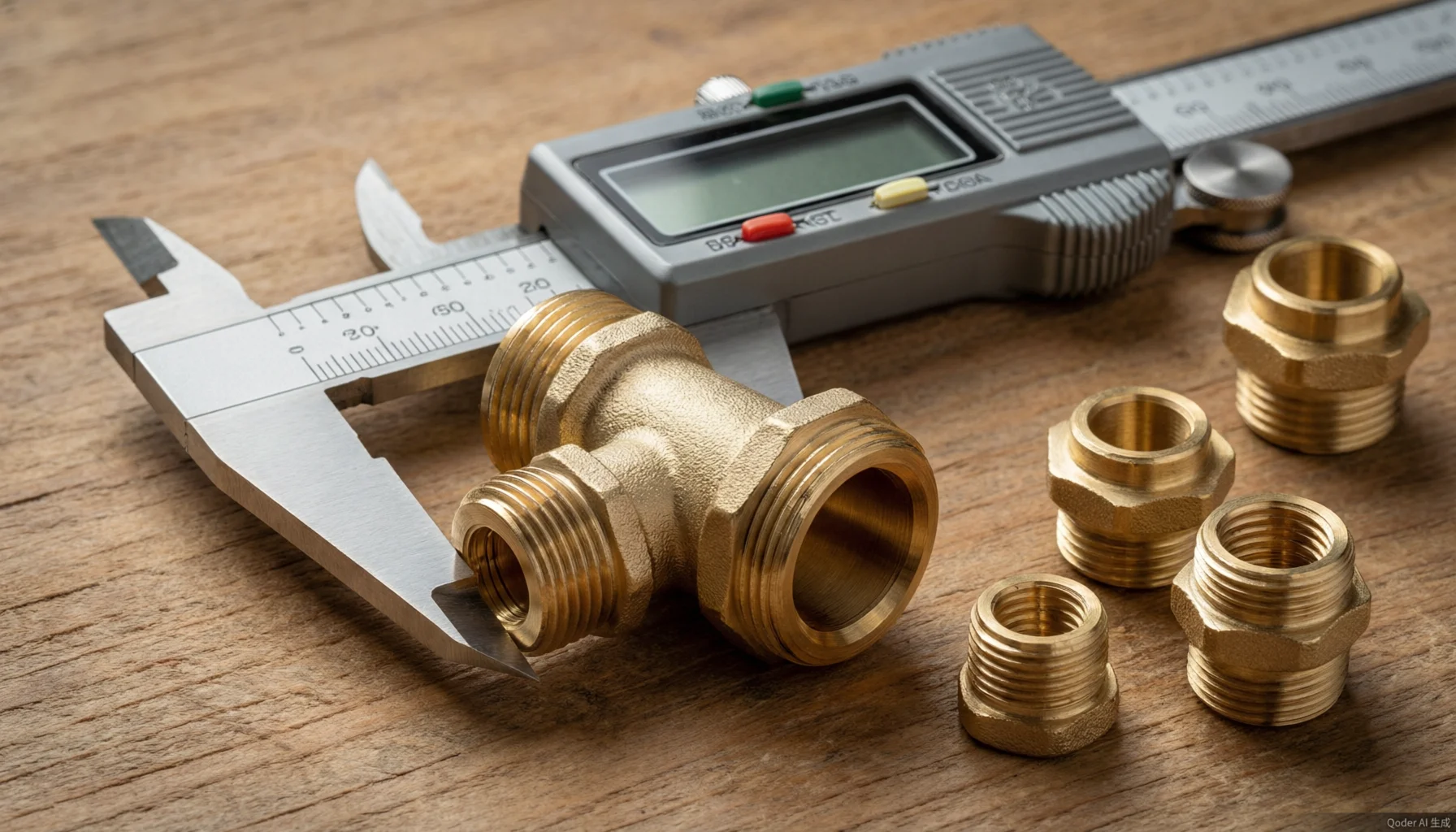
13. Standards and Certifications to Verify
When sourcing PEX fittings for import or wholesale, confirm that the manufacturer holds documentation for these standards:
- ASTM F877 — Standard specification for plastic (PEX) hot- and cold-water distribution fittings (covers the fitting body dimensions, pressure ratings, and material requirements).
- ASTM F1807 — Standard specification for metal insert fittings utilizing copper crimp rings or stainless steel clamps for SDR9 PEX tubing.
- ASTM F2098 — Standard specification for stainless steel clamps for securing F1807-type insert fittings to SDR9 PEX tubing.
- ASTM F2159 — Standard specification for plastic (PPSU/polysulfone) insert fittings utilizing copper crimp rings or stainless steel clamps for SDR9 PEX tubing. Note: this covers crimp/clamp plastic insert fittings — it is not a push-to-connect standard.
- ASTM F1960 — Standard specification for cold expansion fittings with PEX reinforcing rings — the Uponor/Wirsbo-style expansion method, used primarily with PEX-A.
- CSA B137.5 — Canadian standard for PEX tubing and fittings; required for any product sold into the Canadian market.
- NSF/IAPMO 61 & 372 — Potable water safety (NSF 61) and lead-free compliance (NSF 372, ≤0.25% lead on wetted surfaces). Mandatory for any fitting used in drinking water systems in the US and Canada.
- UPC / cUPC listing — IAPMO’s Uniform Plumbing Code listing; required by most North American building inspectors.
IFANPRO’s PEX fittings are manufactured under ISO 9001 quality management, tested per ASTM F877, and carry CE, WRAS, and NSF/IAPMO certifications. Every fitting is produced from lead-free DZR (dezincification-resistant) brass alloy CW617N or high-performance PPSU polymer, meeting both NSF 61 and NSF 372 requirements.
14. Stocking Recommendations for Wholesalers
Based on order data from import and wholesale buyers across North America and Europe, here is a recommended initial stocking mix:
| Category | Priority Sizes | Suggested Depth (per SKU) | Connection Type Priority |
|---|---|---|---|
| Couplings | 1/2", 3/4" | 500–1,000 pcs | Crimp |
| 90° Elbows | 1/2", 3/4" | 300–800 pcs | Crimp |
| Equal Tees | 1/2", 3/4" | 200–500 pcs | Crimp |
| Adapters (M/F) | 1/2", 3/4" | 100–300 pcs | Crimp × NPT |
| Unions | 1/2", 3/4" | 50–150 pcs | Crimp |
| Crosses | 1/2", 3/4" | 50–100 pcs | Crimp |
| Caps | 1/2", 3/4" | 200–500 pcs | Crimp |
| Manifold Adapters | 1/2", 3/4" | 100–200 pcs | FPT × Crimp |
Start with crimp fittings (they cover the widest customer base) and add clamp, expansion, and push-to-connect lines as demand develops. Always stock reducing fittings and threaded variants at 30–50% of the depth of equal-size fittings.
Watch: Step-by-step PEX crimp fitting installation — the most common connection method in new construction.
Frequently Asked Questions
Can I use the same PEX fittings for PEX-A, PEX-B, and PEX-C pipe?
Yes. The fitting body (elbow, tee, coupling, etc.) is the same for all three PEX types when using crimp or clamp connection methods. The difference is in the tubing itself, not the fitting. A 1/2" brass crimp elbow works on PEX-A, PEX-B, and PEX-C tubing of the same nominal size. The only exception is the cold expansion fitting system (ASTM F1960, Uponor/Wirsbo), which uses a larger ID fitting designed specifically for PEX-A expansion connections.
What is the most common PEX fitting size for residential plumbing?
1/2" (20 mm) is the single most common size, used for branch lines to individual fixtures (sinks, toilets, showers). 3/4" (25 mm) is the standard trunk line and manifold feed size. Together, these two sizes account for roughly 70% of all residential PEX fitting purchases. 3/8" is used for appliance supply lines, and 1" is used for service entrance lines.
What is the difference between ASTM F877 and ASTM F1807?
ASTM F877 covers the fitting body itself — dimensions, pressure ratings, material requirements, and performance tests for the plastic or brass fitting. ASTM F1807 covers the connection system: metal insert fittings utilized with copper crimp rings or alternate stainless steel clamps for SDR9 PEX tubing. When ordering, you need fittings that meet F877 and a crimp or clamp connection system that meets F1807. The two standards work together as a system.
Which connection method should I stock for my wholesale market?
Crimp (ASTM F1807) is the safest choice for initial stocking. It has the broadest code acceptance, the largest installer base, and the most competitive pricing. Clamp (cinch, ASTM F2098) is growing fast because the single-size tool reduces field crew costs. Cold expansion (ASTM F1960) is the standard choice where PEX-A radiant or cold-climate systems are specified. Push-to-connect fittings — proprietary push-fit systems qualified to NSF/ANSI 61 listings — are the fastest-growing segment, driven by labor savings, but carry a higher per-unit fitting cost. If you can only stock one type, start with crimp. If your market is labor-cost-sensitive, add push-to-connect as a premium tier.
Request Wholesale Pricing
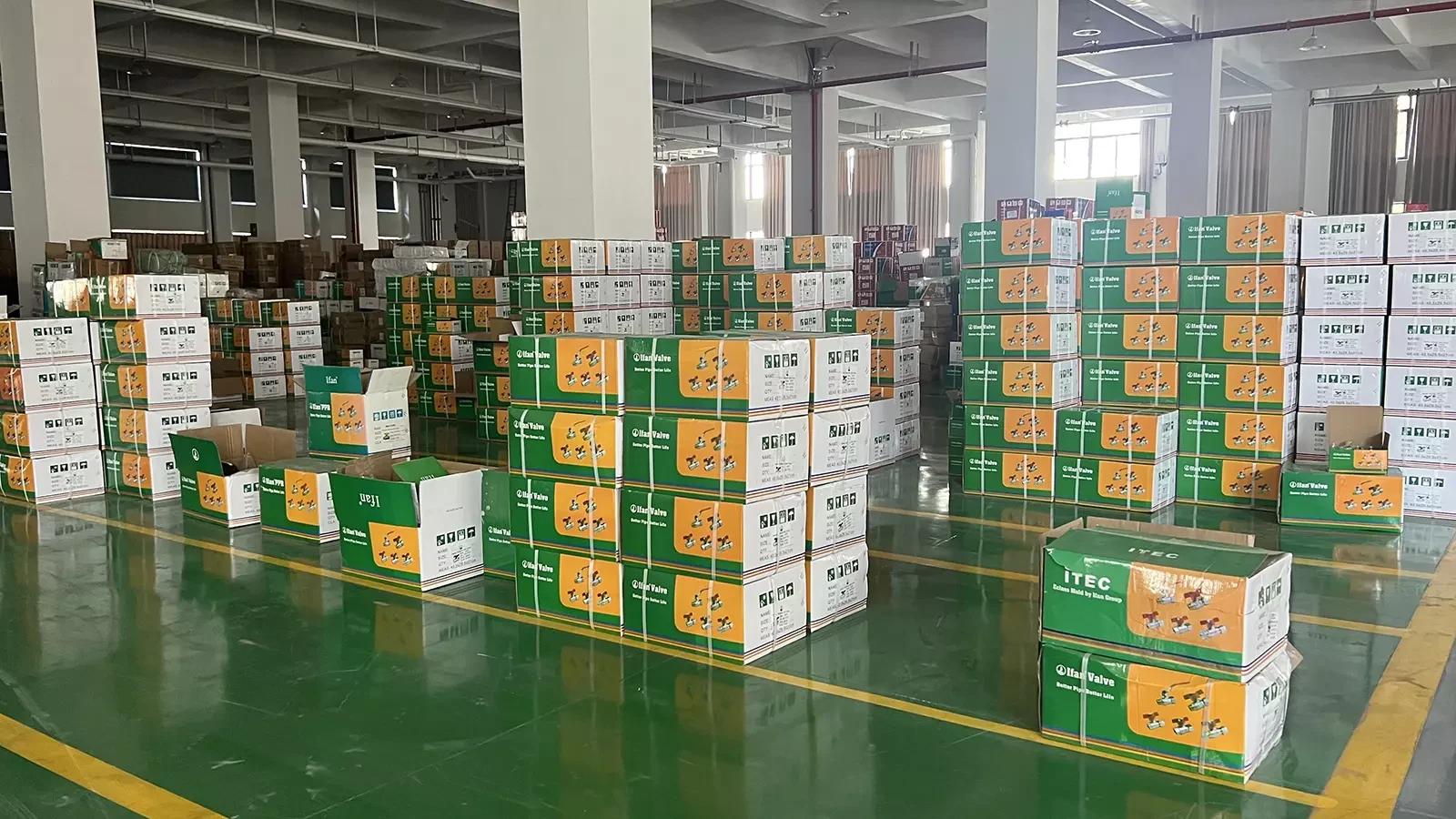
IFANPRO manufactures a complete range of PEX pipe fittings in DZR brass and PPSU, covering every fitting type listed above in sizes from 3/8" to 1-1/4". Our 120,000 m² production facility holds ISO 9001, ISO 14001, CE, WRAS, and NSF/IAPMO certifications, and we supply import and wholesale buyers across 60+ countries.
Download our PEX fittings catalog for full part numbers, dimensional drawings, and pricing tiers. Or contact our export team directly:











 Español
  English
  Français
  Русский
Comentarios recientes