
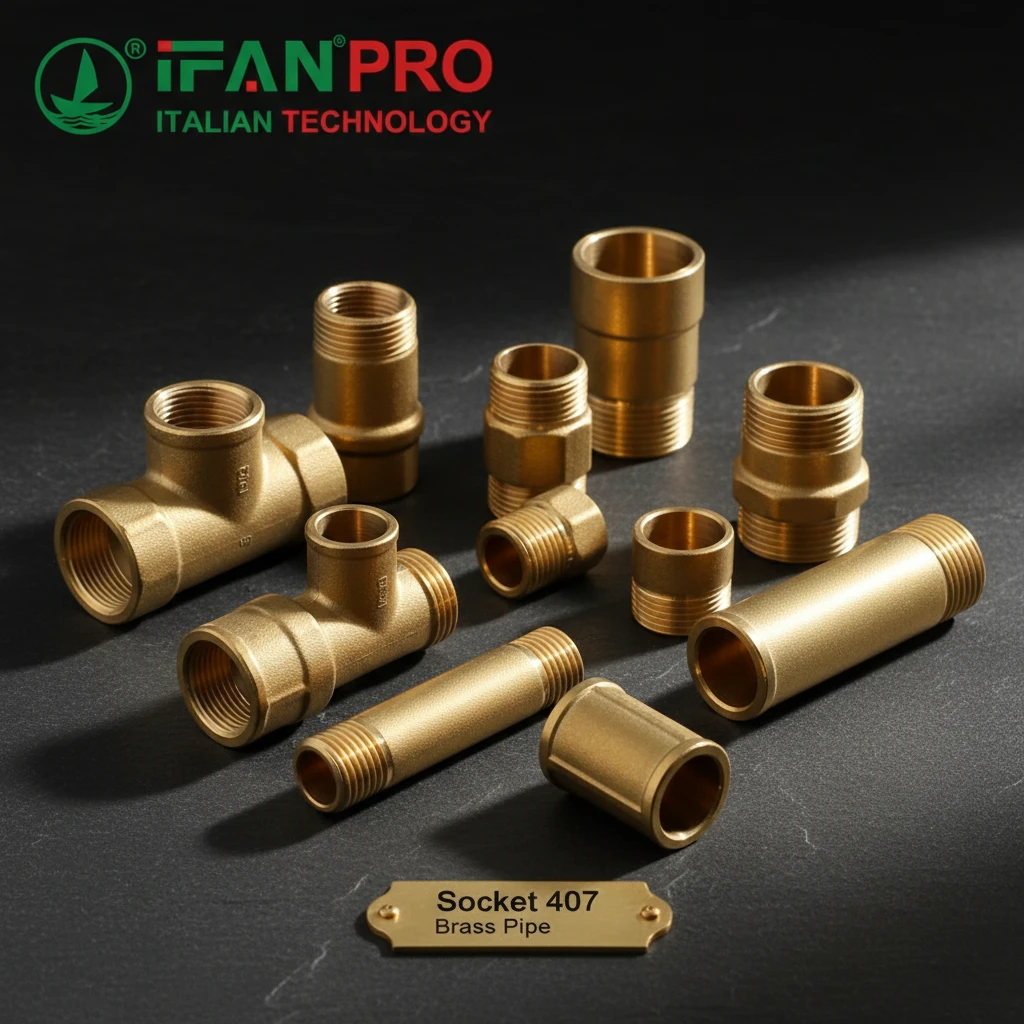
I once had a client receive a shipment of “CCA407” brass pipes that failed pressure tests, causing costly project delays. The pipes looked fine but were made from substandard material. This taught me that knowing how to verify quality is not optional—it’s essential.
You can identify genuine CCA407 brass pipe quality by checking for mandatory material stamps, reviewing authentic mill test certificates, inspecting for visual and tactile signs of good workmanship, and only sourcing from certified, reputable distributors. This multi-step process verifies both the material authenticity and the manufacturing integrity.
Let me guide you through the specific, practical steps we use at IFAN to ensure every brass pipe meets the true CCA407 standard.
What Mandatory Material Markings or Stamps Should Appear on Genuine 407 Pipe?
When you receive a batch of pipes, the first check happens right on the product itself. Missing stamps are the first red flag.
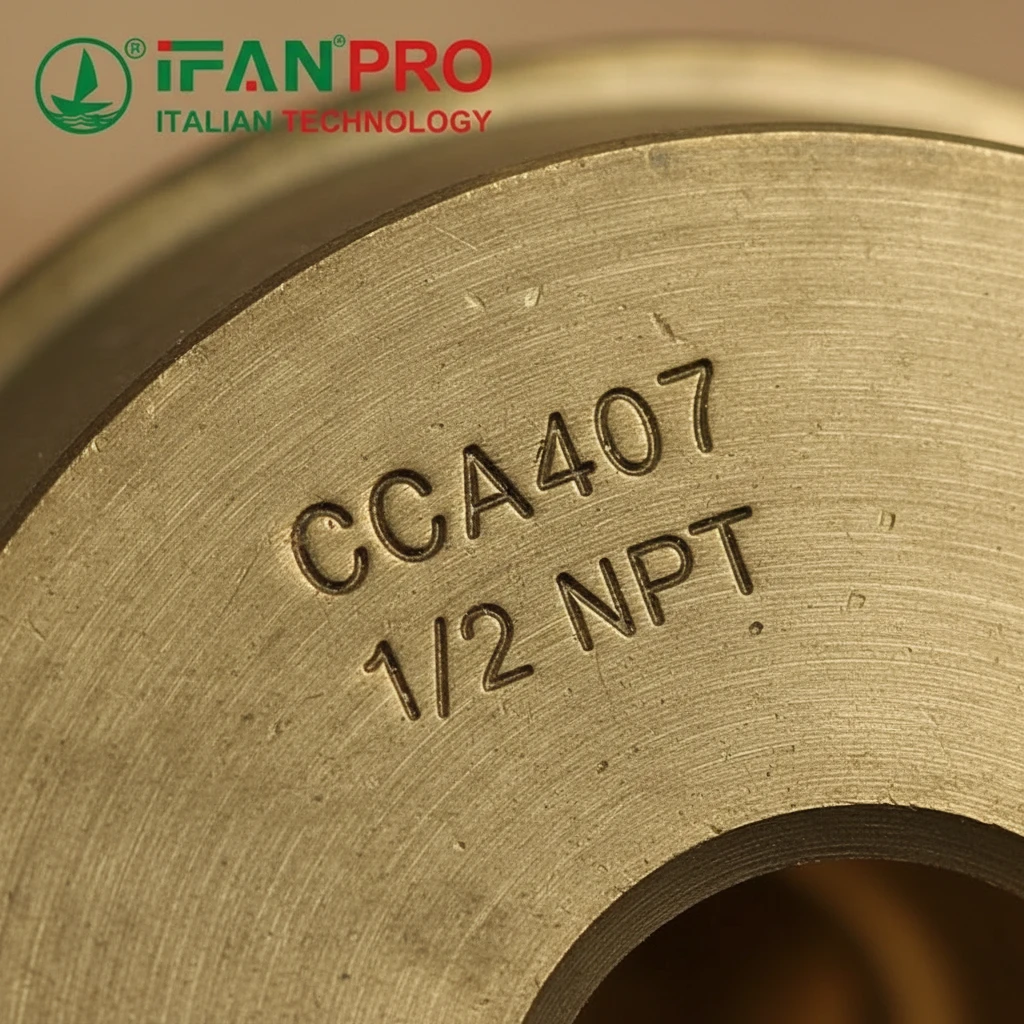
Genuine CCA407 brass pipes must have clear, permanent markings stamped or laser-etched on the pipe. These include the alloy designation “CCA407” or “C85700”, the manufacturer’s name or trademark, the size (e.g., 1/2” NPT), and often the pressure rating. These marks are your first legal and practical proof of material identity.
The Purpose of Material Marking
Think of these stamps as the pipe’s birth certificate. They are not for decoration. They are a traceability and accountability requirement. If a pipe fails, these marks allow you to trace it back to the specific production batch and manufacturer. This is crucial for safety and for making any warranty or liability claims.
What to Look For on the Pipe
You need to check every pipe, or at least a significant sample from a batch. Look for the following information stamped directly onto the pipe body or fitting:
- Alloy Designation: This is the most critical. It must clearly state “CCA407” or its unified numbering system (UNS) code, C85700. Sometimes you might see “C857” or “407 Brass.” Any other marking, or no marking at all, is unacceptable.
- Manufacturer’s Mark: A legitimate manufacturer proudly stamps their name, logo, or unique trademark. This shows they stand behind their product. Be wary of pipes with no manufacturer identification; they are often from unverified sources.
- Size and Pressure Rating: The nominal size (like 1/2”, 3/4”) and sometimes the pressure rating (like WOG 600) should be visible. This ensures you have received the correct specification for your application.
How to Check the Markings
Do not just glance. Inspect the stamps closely.
- Permanence: The markings should be deeply stamped or laser-etched. They should not rub off easily with your finger. Ink-jet or painted marks can be removed and are not reliable.
- Clarity: The characters should be legible and consistent. Faint, uneven, or poorly aligned stamps can indicate a low-quality manufacturing process.
- Location: The marks are usually found on the pipe body or on the hex of a fitting. If you cannot find them, ask your supplier immediately.
Common Client Pitfall & Our Advice
A common problem we see is suppliers claiming stamps were “forgotten” during production or will be on the packaging. This is a major warning sign. Our practical advice is simple: make clear, stamped CCA407/C85700 markings a non-negotiable condition in your purchase order. If the pipes arrive unmarked, reject the shipment. This first step filters out many low-tier producers.
How Can You Verify the Alloy Composition Through Supplier Certifications?
Stamps can be faked. The true, unchangeable proof of quality is in the paperwork. Always demand the right documents.
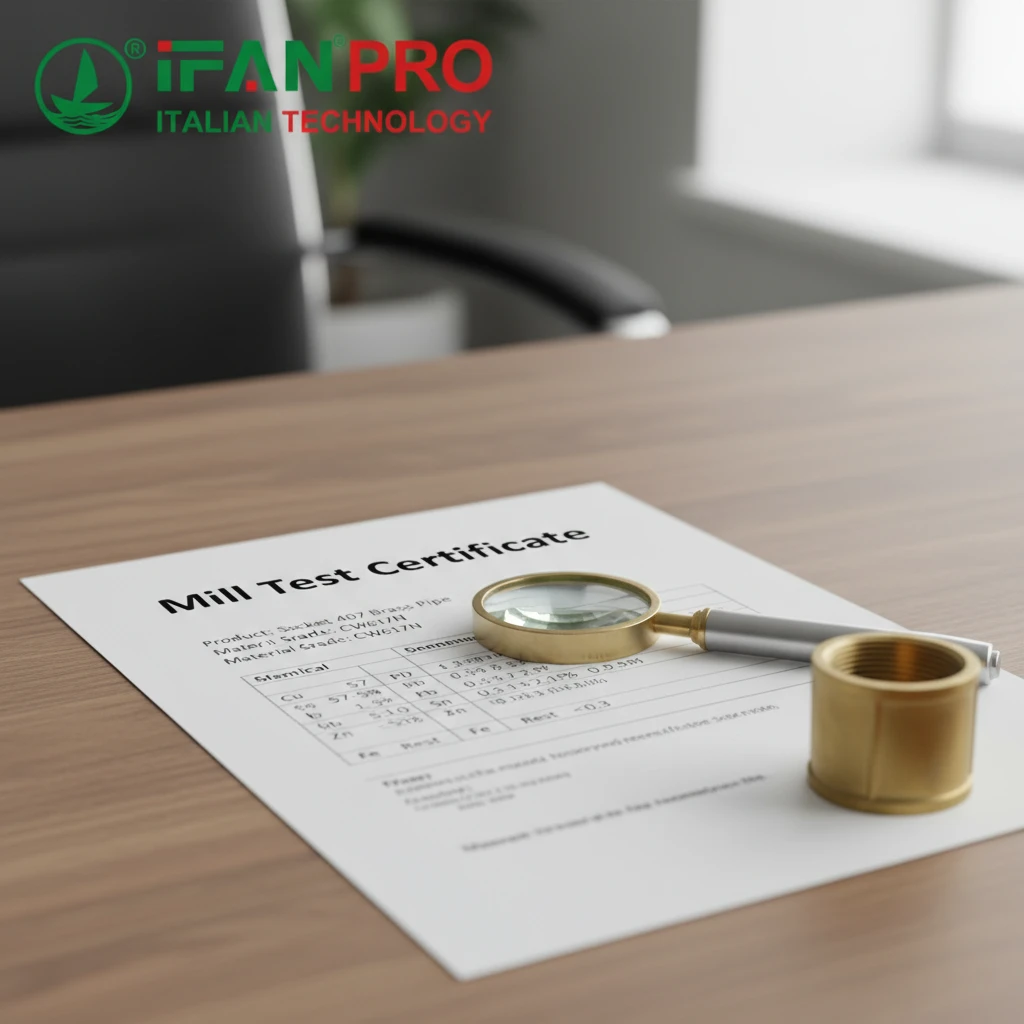
You verify the alloy composition by demanding and cross-checking a genuine Mill Test Certificate (MTC) or Certificate of Analysis (CoA) from the supplier. This document, originating from the brass mill, provides the exact chemical composition (copper, lead, zinc, iron percentages) and physical properties, proving it meets ASTM B62 or ASME SB62 standards for CCA407.
Understanding the Mill Test Certificate (MTC)
The MTC is the most important document for material verification. It is not a simple “quality certificate” from the trading company. It is a detailed report from the mill that produced the brass alloy, showing the results of tests performed on that specific production heat or batch.
What a Real MTC Must Contain
When you receive an MTC, check for these key elements to ensure it is authentic:
- Header Information: It should clearly state “Mill Test Certificate,” “Certificate of Analysis,” or “Material Test Report.” The name and logo of the actual brass mill (e.g., a major metal producer) should be prominent.
- Product Description: It must list the alloy as “CCA407” or “C85700” and the product form (e.g., “Brass Pipe” or “Sand Casting”).
- Chemical Composition Table: This is the core. It will list the percentage of each element (Cu, Pb, Zn, Fe, etc.) and show that they fall within the strict limits of the CCA407 specification.
- Heat Number or Batch Number: This unique number ties the certificate to the specific molten batch of metal. This number should ideally be traceable.
- Reference Standard: The certificate must state the standard it conforms to, such as ASTM B62 or ASME SB62.
- Stamps and Signatures: It should be signed and stamped by an authorized representative of the mill.
How to Spot a Fake Certificate
Unfortunately, fake MTCs exist. Here is how to protect yourself:
- Verify the Source: Contact the mill named on the certificate directly. Use contact information from their official website, not from the document provided by the supplier. Confirm if they issued a certificate with that heat number for that customer.
- Check for Consistency: The chemical numbers should look precise (e.g., 60.5% Cu) and not be perfectly round numbers that just hit the minimum (e.g., 58.0% Cu), which can be a sign of a fabricated document.
- Beware of “Generic” Certs: A certificate that just says “Brass” without the specific CCA407 designation is useless.
A Practical Verification Table
Use this table to check the MTC you receive:
| Item on Certificate | What to Look For | Red Flag |
|---|---|---|
| Issuing Company | Name of a known brass/copper mill. | Name of a trading company only. |
| Alloy Designation | Clearly states “CCA407” or “C85700”. | Says “Brass” or “Copper Alloy” only. |
| Standard | References ASTM B62 / ASME SB62. | References an unclear internal standard. |
| Heat/Batch Number | A unique alphanumeric code is present. | Missing or is a simple number like “001”. |
| Full Chemistry | Lists all elements (Cu, Pb, Zn, Fe, Sn). | Shows only one or two elements. |
Our advice at IFAN is to never accept a shipment without first reviewing and approving the MTC. We provide these for every batch we source, as it is the cornerstone of professional material sourcing.
What Visual and Tactile Cues Indicate Good Manufacturing Quality?
Even with the right paperwork, poor manufacturing can ruin good material. Your own senses are powerful inspection tools.
Good manufacturing quality in CCA407 pipes is indicated by a consistent, smooth surface finish free of major porosity, cracks, or sand inclusions. The threads should be clean, sharp, and evenly cut without burrs. Tactilely, the pipe should have a substantial feel, and threads should engage smoothly without forced cross-threading.

Conducting a Visual Inspection
Before you even measure anything, look closely at a sample from the batch.
- Surface Quality: The surface should be relatively smooth for a sand-cast product. Look for obvious defects:
- Porosity: Small pits or holes on the surface. A few tiny pores might be acceptable, but large or numerous pores weaken the structure and can lead to leaks.
- Cracks: Any visible crack, however small, is a rejection point. Cracks often develop from internal stress or poor casting.
- Sand Inclusions: These look like rough, gritty patches where sand from the mold became embedded in the metal. They create weak spots.
- Cold Shuts: These appear as lines or seams on the surface where molten metal did not fuse properly during casting.
- Finish and Color: The color should be a uniform yellowish-gold typical of brass. Significant discoloration, dark spots, or a reddish tint (indicating high copper or improper processing) can be a concern. A good-quality pipe will often have a clean, machined look on sealing surfaces.
Inspecting Threads (The Critical Connection Point)
The threads are where leaks most often occur. Their quality is paramount.
- Visual Thread Check: Look at the threads. They should be clean and well-defined, not ragged or torn. There should be no chips of metal (burrs) left from the cutting process. Burrs can break off and contaminate the system or prevent a proper seal.
- Tactile Thread Check: Run your finger along the threads carefully. They should feel sharp and even, not flat or worn. Try screwing a matching fitting onto the pipe by hand. It should engage smoothly and easily for the first few turns. If it binds immediately or feels “gritty,” the threads are poorly cut or out of specification.
The “Feel” and Weight Test
Pick up the pipe or fitting.
- Weight: It should feel solid and heavy for its size, indicating proper density and lack of excessive internal porosity. A piece that feels suspiciously light may be defective.
- Sound: Gently tap two pieces together. They should produce a clear, metallic “ping,” not a dull “thud.” A dull sound can indicate internal cracks or poor integrity.
Common Manufacturing Defects Table
Here is a quick guide to common flaws:
| Defect Type | What It Looks/Feels Like | Why It’s a Problem |
|---|---|---|
| Excessive Porosity | Small holes or pits on the surface. | Creates leak paths and reduces pressure strength. |
| Sand Inclusions | Rough, gritty patches in the metal. | Creates a weak point that can fail under pressure. |
| Poor Threads | Threads look torn, flattened, or have burrs. | Prevents a proper seal, leading to leaks. |
| Casting Crack | A visible line or fissure on the surface. | A direct path for catastrophic failure. |
Our practical tip is to always perform this visual and tactile inspection on a random sample upon receipt. Combine this with the paperwork check. If the pipe looks and feels poor, it often is, regardless of what the certificate says.
Why Is Purchasing from Certified Distributors Critical for Ensuring Authenticity?
You can know all the tests, but if your source is not reliable, you are at constant risk. The supply chain itself is a key part of quality.
Purchasing from certified distributors is critical because they have direct, audited relationships with reputable mills. They provide full traceability, guarantee the authenticity of documentation (like MTCs), and have the technical expertise to specify the correct product. They act as your quality firewall, absorbing the risk of dealing with unverified factories.
The Role of a Certified Distributor
A certified distributor is more than just a seller. They are a partner in your supply chain. Manufacturers authorize them to sell their products. This authorization comes after an audit process where the manufacturer verifies the distributor’s technical knowledge, financial stability, and commitment to quality. This link is your indirect guarantee.
How Distributors Mitigate Risk
- Guaranteed Traceability: Certified distributors buy directly from the mill or its major agents. They maintain chain-of-custody paperwork. When they sell you CCA407 pipe, they can trace it back through their purchase orders and MTCs to the original mill batch. A non-certified trader might buy from another trader, and the trail goes cold.
- Documentation Integrity: They provide you with the original, unaltered Mill Test Certificates. They have no reason to forge them because their supply is legitimate. A less scrupulous supplier might forge a certificate because they cannot get a real one from their source factory.
- Technical Expertise: Reputable distributors employ technical sales staff. They can help you select the right alloy and specification for your application (e.g., potable water vs. industrial gas). A pure trader often only cares about price and may sell you an incorrect or substandard material just to make a sale.
- Consistency and Reliability: They maintain inventory and have consistent access to product from their partnered mills. This means you get the same quality in your order this month and your order six months from now.
The High Cost of the “Cheapest Option”
The biggest pain point we see is buyers choosing the lowest-priced quote without verifying the supplier’s credentials. The hidden costs of this choice are enormous:
- Project Delays: Failed materials cause work stoppages.
- Safety Failures: Faulty pressure components can lead to dangerous accidents.
- Reputational Damage: Your end-client blames you for the failure.
- Total Cost Loss: The savings on the cheap pipe are wiped out many times over by these problems.
Choosing the Right Partner: A Checklist
Use this list to evaluate a potential supplier:
| Evaluation Point | Question to Ask | Why It Matters |
|---|---|---|
| Manufacturer Authorization | “Are you an authorized distributor for a specific brass mill? Can you provide proof?” | This is the primary indicator of a legitimate source. |
| Documentation | “Will you provide a copy of the Mill Test Certificate before shipment?” | Tests their willingness to be transparent. |
| Technical Support | “Can you advise on the suitability of CCA407 for my specific pressure and media application?” | Assesses their expertise beyond just selling. |
| Supply History | “Can you provide references from other clients in my industry?” | Proves a track record of reliable supply. |
Our final, strongest advice is to invest in the relationship with a certified, technical distributor like IFAN. We build our business on being that reliable, knowledgeable link between world-class mills and professional buyers like you. The peace of mind and project security are worth far more than a marginal price difference.
Conclusión
Identifying genuine CCA407 requires checking stamps, verifying certificates, inspecting physically, and choosing the right supplier. For guaranteed CCA407 brass pipes and fittings with full traceability, partner with IFAN.




 Español
  English
  Français
  Русский
Comentarios recientes