

I remember the frustration of a project where undersized pipes caused constant pressure drops. Getting the sizing right is the foundation of any efficient fluid system.
Correctly sizing a pipe involves calculating the required internal diameter to achieve a target flow rate while maintaining acceptable pressure loss. Key steps include determining the fluid properties, calculating the allowable pressure drop, and applying formulas like the Darcy-Weisbach or Hazen-Williams equation to find the optimal diameter.
While the core concept seems simple, the devil is in the details. A small miscalculation can lead to major operational headaches. Let’s break down the process step-by-step to ensure your next project flows smoothly from start to finish.
What are the key factors in pipe sizing for flow rate?
Early in my career, I focused only on the flow number. I quickly learned that several silent partners dramatically influence the final pipe size.
The key factors are the fluid’s viscosity and density, the system’s required flow rate (Q), the allowable pressure drop (ΔP), the pipe material’s roughness, and the total length of the pipe run. Ignoring any one of these can lead to an incorrectly sized system.
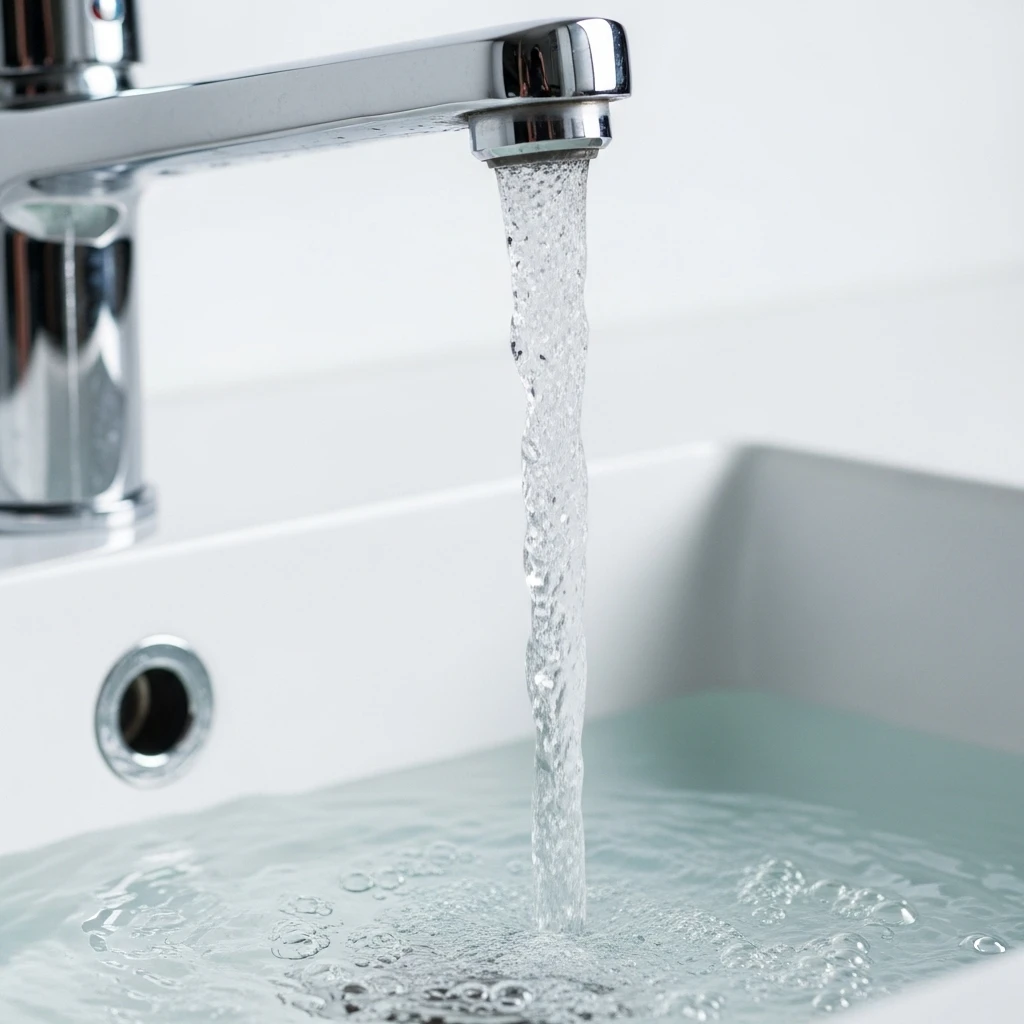
Fluid Properties: It’s Not Just Water
Not all fluids behave the same. Water, oil, and air have vastly different flow characteristics. The two most important properties are viscosity and density. Viscosity is a measure of a fluid’s resistance to flow. Honey has high viscosity, water has low viscosity. Density is its mass per unit volume. A dense fluid requires more energy to move. You must know these values at your operating temperature, as they can change. For example, hot oil is much less viscous than cold oil.
The Flow Rate Target (Q)
This is your primary goal. It is usually given in gallons per minute (GPM), liters per second (L/s), or cubic meters per hour (m³/h). Be absolutely certain of this value. Is it a minimum, average, or maximum flow? Sizing for a peak flow that rarely occurs can lead to oversized, costly pipes. Sizing for an average flow can cause problems during high-demand periods.
Allowable Pressure Drop (ΔP)
This is the heart of the sizing puzzle. Pressure drop is the loss of pressure from friction as the fluid moves through the pipe. Every pump or pressure source has a limit. Your system’s total pressure drop must be less than the available pressure. This drop depends on pipe length, diameter, fittings, and the flow rate itself. A common mistake is to only consider the straight pipe and forget the valves, elbows, and tees, which add significant resistance.
| Factor | Effect on Pipe Size | Example/Note |
|---|---|---|
| Higher Flow Rate (Q) | Requires Larger Diameter | Doubling flow needs a significantly bigger pipe. |
| Higher Viscosity | Requires Larger Diameter | Pumping syrup vs. water. |
| Longer Pipe Length | Requires Larger Diameter | More length = more friction loss. |
| Higher Allowable ΔP | Allows Smaller Diameter | If you can tolerate more pressure loss. |
| Rough Pipe Interior | Requires Larger Diameter | Old corroded pipe vs. new smooth plastic. |
Pipe Material and Roughness
The inside surface of a pipe is never perfectly smooth. This roughness creates friction. A rough material like old cast iron has a high friction factor. A smooth material like PVC or copper has a low friction factor. For the same flow, a rough pipe will have a higher pressure drop, often forcing you to select a larger diameter to compensate. Engineering tables provide standard roughness values for common materials.
Thinking about all these factors together is crucial. They are interconnected. Changing one affects the others. The goal is to find the diameter that balances them all for your specific application.
How does pressure drop affect pipe diameter selection?
I once tried to force a high flow through a small pipe to save money. The pump couldn’t keep up, and the system failed. Pressure drop is the non-negotiable physics that governs this relationship.
Pressure drop is inversely related to pipe diameter. For a given flow rate, a smaller diameter causes a much higher pressure drop due to increased fluid velocity and friction. Selecting a diameter is a balancing act between minimizing material cost (smaller pipe) and minimizing pumping energy/losses (larger pipe).

The Velocity Factor
Pressure drop is not directly about the diameter, but about the fluid velocity inside the pipe. The formula Q = A * v links them. Flow Rate (Q) equals Cross-sectional Area (A) times Velocity (v). For a fixed Q, if you choose a small diameter (small A), the velocity (v) must be very high. High velocity means the fluid rubs against the pipe wall more aggressively, creating dramatic friction and pressure loss. Most systems have recommended velocity limits (e.g., 4-8 ft/s for water) to control this.
Economic Trade-Off: Pipe Cost vs. Energy Cost
This is the engineer’s classic dilemma. A smaller pipe is cheaper to buy and install. However, the high pressure drop requires a more powerful, expensive pump and uses more electricity forever to overcome the friction. A larger pipe has a higher upfront cost but very low pressure drop, allowing for a smaller, cheaper pump and lower lifelong energy bills. The optimal diameter is often found at the intersection of these two cost curves over the system’s lifetime.
| Pipe Diameter (inches) | Fluid Velocity (ft/s) for 100 GPM | Estimated Pressure Drop (psi/100 ft) | Scenario |
|---|---|---|---|
| 2 | ~10.2 | High (~15-20) | High energy cost, risk of erosion/noise. |
| 3 | ~4.5 | Moderate (~2-3) | Common design choice for balance. |
| 4 | ~2.5 | Low (~0.5-1) | Low energy cost, higher pipe cost. |
System Curves and Pump Selection
Your pipe system creates a “system curve” – a graph showing how much pressure drop it generates at different flow rates. A smaller diameter makes this curve steeper. The pump you select must have a “pump curve” that intersects your system curve at your desired operating point (flow rate). If pressure drop is too high, the pump curve might not reach that point, resulting in insufficient flow. You are essentially matching the pump to the pipe’s appetite for pressure.
Ignoring pressure drop leads to underperforming systems. It dictates not just the pipe size, but the entire energy footprint and equipment selection for your project. Always calculate it first.
Which formulas are used to calculate pipe size accurately?
When I first saw the Darcy-Weisbach equation, it looked intimidating. But understanding the purpose of each variable demystified the process. You don’t need to memorize them, just know when to use them.
The two primary formulas are the Darcy-Weisbach equation (most accurate, for all fluids) and the Hazen-Williams equation (simpler, for water at common temperatures). Both relate flow rate, diameter, and pressure drop, allowing you to solve for the unknown diameter.

The Darcy-Weisbach Equation: The Universal Tool
This is the fundamental equation derived from fluid mechanics. It works for any fluid (liquid or gas) and any flow regime (laminar or turbulent). The formula is: ΔP = f * (L/D) * (ρ * v²)/2. Where ΔP is pressure drop, f is the friction factor (from a Moody chart or formula), L is pipe length, D is diameter, ρ is density, and v is velocity. To size a pipe, you rearrange it to solve for D. This usually requires an iterative calculation (“guess and check”) because the friction factor ‘f’ depends on velocity and diameter. Engineers use software or spreadsheets for this.
The Hazen-Williams Equation: The Water Specialist
This is an empirical formula simplified for water flow in pipes. It’s much easier to use: v = k * C * R^0.63 * S^0.54. Here, v is velocity, k is a constant, C is the Hazen-Williams roughness coefficient (e.g., 140 for new steel, 150 for PVC), R is the hydraulic radius (D/4 for full pipes), and S is the slope of the energy line (pressure drop per length). It eliminates the need for the Moody chart and iterative solves, making hand calculations faster for water systems. Its limitation is that it’s not accurate for highly viscous fluids or gases.
| Formula | Best For | Key Inputs Needed | Complexity |
|---|---|---|---|
| Darcy-Weisbach | All fluids, precise work | Viscosity, Density, Roughness | High (often iterative) |
| Hazen-Williams | Water at 40-75°F | Hazen-Williams ‘C’ coefficient | Low (direct calculation) |
Using Friction Factor Charts and Software
The trickiest part of Darcy-Weisbach is finding the friction factor ‘f’. It depends on the Reynolds Number (Re), which tells you if flow is smooth (laminar) or chaotic (turbulent), and the pipe’s relative roughness. The Moody Chart is the classic graphical tool for this. Today, most professionals use online calculators or engineering software (like AFT Fathom or even dedicated spreadsheet templates). These tools do the iterations instantly. You input your flow, fluid, pipe material, and length, and it outputs the required diameter and expected pressure drop.
Start with Hazen-Williams for water systems. For anything else, or for critical designs, use Darcy-Weisbach with the help of a calculator. The formula is your map; the inputs are your coordinates.
What are common mistakes to avoid when sizing pipes?
My mistakes have been my best teachers. From forgetting future expansion to misreading a pump curve, each error taught a lasting lesson. Here are the pitfalls to sidestep.
Common mistakes include ignoring future capacity needs, neglecting minor losses from fittings, using incorrect fluid properties, selecting a diameter based only on velocity rules-of-thumb, and failing to consider the total cost of ownership (not just pipe cost).
Mistake 1: Designing for Today, Not Tomorrow
It’s tempting to size a pipe for the exact current need. But what if production increases in 5 years? Retrofitting a larger pipe is exponentially more expensive than installing it correctly the first time. Always consult with stakeholders about future plans. Consider adding a “growth factor” of 20-50% to your design flow rate, or at least oversizing the main trunk lines to allow for future taps.
Mistake 2: The “Minor” Losses That Aren’t Minor
Elbows, valves, reducers, and tees create “minor losses” (a misnomer). In a system with many fittings, these losses can be greater than the loss from the straight pipe itself. A 90-degree standard elbow can be equivalent to 30 pipe diameters of straight pipe! Use equivalent length tables or K-factor methods to account for every fitting. Simply adding up their equivalent length to your total pipe length (L) in your pressure drop calculation is an effective method.
Mistake 3: Guessing Fluid Properties
Using the viscosity of water at 60°F for a hot chemical process is a recipe for error. Fluid properties change with temperature and concentration. Always obtain accurate data sheets for your specific fluid at your operating conditions. For mixtures, consult an expert. An assumed value can throw off your entire calculation, leading to a pipe that is too small and prone to clogging or too large and inefficient.
| Mistake | Likely Consequence | How to Avoid It |
|---|---|---|
| Ignoring fittings | Pump cannot achieve desired flow. | Use equivalent length method for all valves/elbows. |
| Wrong viscosity | Severe miscalculation of pressure drop. | Get fluid specs at operating temperature. |
| Oversizing with rules-of-thumb | High cost, low velocity, sediment buildup. | Always perform a calculated pressure drop check. |
| Forgetting pump curve | Pump and pipe mismatch, poor performance. | Plot system curve against pump curve. |
Mistake 4: Blindly Following Velocity Rules
Rules like “size for 4-6 ft/s velocity” are helpful starting points, but they are not laws. They prevent erosion and noise. However, they don’t guarantee an acceptable pressure drop for your specific system length. Always complete the pressure drop calculation. A short run might be fine at 8 ft/s, while a long run might need 3 ft/s to keep the pressure drop manageable. The rule-of-thumb is a check, not the calculation.
By being aware of these common errors, you move from simply doing a calculation to executing a robust design. Double-check your inputs, account for all losses, and think long-term.
Conclusión
Correct pipe sizing balances flow needs with pressure limits. Avoid common pitfalls, use the right formulas, and your system will perform reliably for years to come.












 Español
  English
  Français
  Русский
Comentarios recientes