
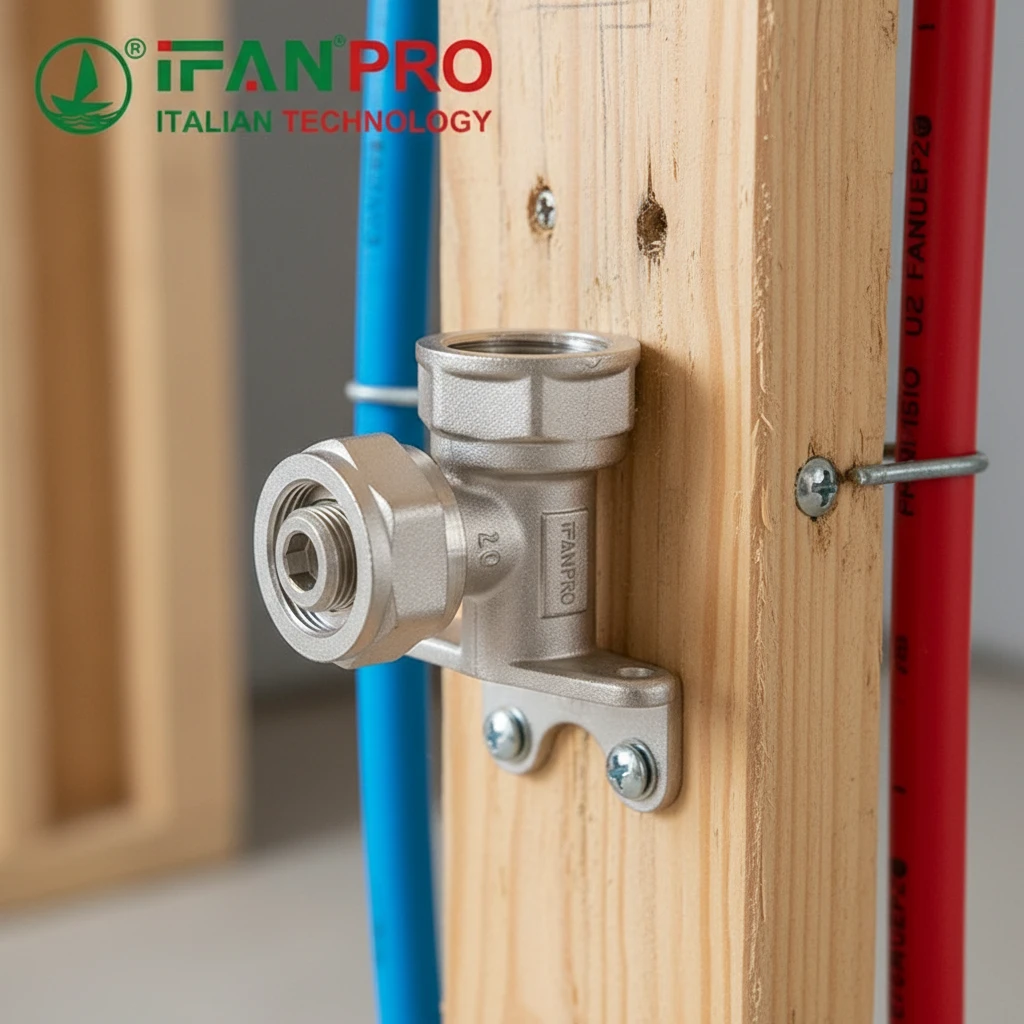
I once inspected a PEX installation where a loose pipe shook violently with every faucet turn. The problem wasn’t the fittings—it was the missing support.
A seat (or mounting bracket) provides extra support by anchoring the PEX pipe firmly to a structural element like a wood stud or wall. This prevents movement, sagging, and stress on the crimp or clamp connections, which directly protects the entire system from leaks and failures caused by mechanical fatigue or water hammer.
Think of the seat as a reliable foundation for your plumbing. Without it, the system bears all stress on its own joints. Let’s explore exactly how this simple component makes a huge difference.
How Does Anchoring the Seat to a Stud or Backing Distribute Load?
When a pipe is full of water and runs across an open space, it wants to sag and move. I’ve seen this cause long-term strain on fittings.
Anchoring the seat to a stud or solid backing distributes the load by transferring the weight of the pipe and water away from the plastic fittings and onto the building’s structure. It turns a long, flexible span into a series of shorter, supported sections, eliminating the lever effect that puts excessive pull or bend stress on connection points.
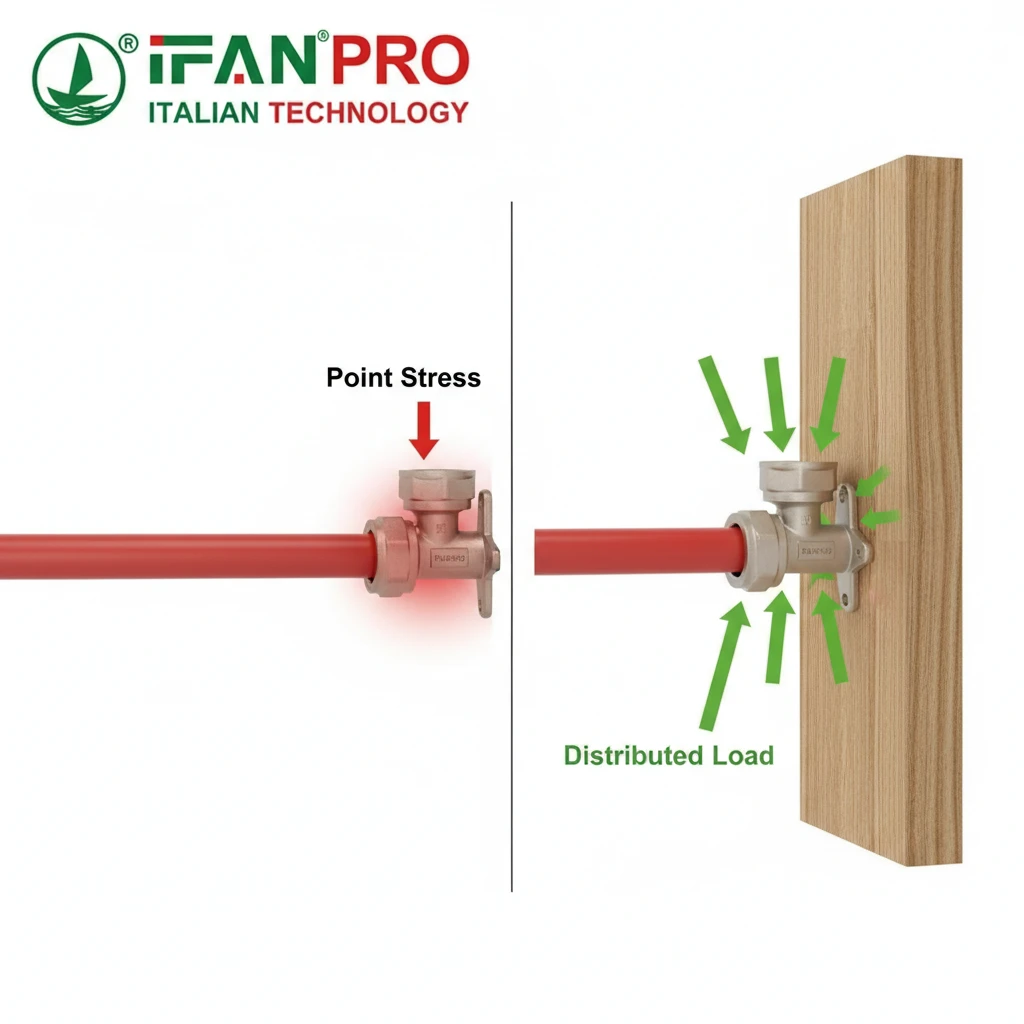
From Point Stress to Distributed Support
A PEX pipe hanging freely between two points acts like a bridge with no piers. All its weight, plus the water inside, concentrates force on the connectors at each end. This is called point stress. When you add a seat and screw it to a stud, you fundamentally change this.
The seat acts as a new, solid anchor point. Now, the load has a direct path into the building’s frame. The weight doesn’t just pull on the end fittings anymore. Instead, the stud carries it. This is the core principle of load distribution: spreading force over a larger, stronger area.
The Physics of Leverage and Shear Force
To understand why this matters, consider two scenarios:
- Without a Seat: A 4-foot horizontal pipe is only connected at its ends. When water flows or pressure changes, the middle of the pipe can bounce or sag. This movement creates a lever effect. The force at the center multiplies as it acts on the end fittings, trying to twist or pull them apart.
- With a Seat: You install a seat at the 2-foot mark. Now, you have two 2-foot sections. Each section is shorter and stiffer. The lever arm is cut in half, dramatically reducing the twisting force on the fittings. The seat also resists vertical movement (sag) and horizontal movement (vibration).
The table below shows how support spacing affects the system:
| Support Type (for 1/2″ PEX) | Maximum Horizontal Spacing | Result Without Proper Support |
|---|---|---|
| No dedicated seats/straps | N/A | High risk of sagging, fitting stress, and “water hammer” noise. |
| Standard Plastic Clips | 32 inches | Prevents sag but may not fully resist vibration in long spans. |
| Anchored Metal Seats/Brackets | 32 inches (or less) | Optimal. Eliminates sag, absorbs vibration, and fully transfers load to structure. |
In short, anchoring doesn’t just “hold” the pipe; it integrates the plumbing into the building’s skeleton, using the structure’s strength to ensure the pipes stay put.
Why Does This Support Protect Crimp or Clamp Connections from Fatigue?
Crimp rings are strong, but they hate constant bending. A loose pipe is their worst enemy.
This support protects crimp/clamp connections from fatigue by preventing the constant small movements, bending, and vibration that slowly work-harden the metal ring or weaken the PEX material at the fitting barbs. By holding the pipe rigid on both sides of the fitting, the seat ensures all forces are absorbed by the structure, not the joint.
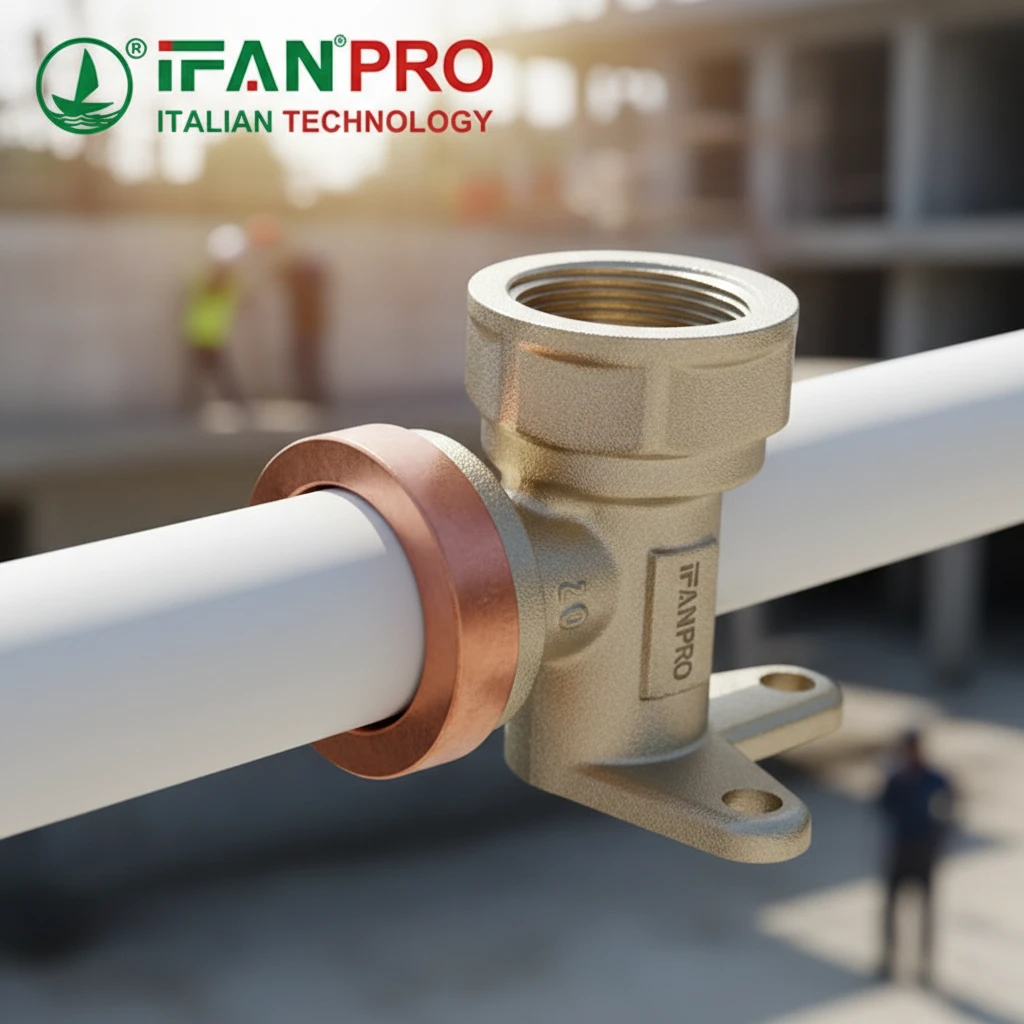
Understanding Mechanical Fatigue
Fatigue isn’t about one big shock; it’s about a thousand tiny bends. Imagine bending a paperclip back and forth. It doesn’t break on the first bend, but after many cycles, it snaps. This is metal fatigue.
For a PEX connection, the crimp ring is a thin band of copper or stainless steel. The PEX itself is a tough plastic. When the pipe is unsupported, everyday events cause micro-movements:
- Turning water on/off (pressure surges).
- A washing machine starting its spin cycle.
- Simply walking near framed walls.
Each event makes the pipe wobble slightly. This wobbling bends the PEX at the fitting and flexes the crimp ring. Over months and years, this cycling can cause the metal to become brittle (work-harden) or the PEX to develop a weak spot.
How a Seat Acts as a Stress Reliever
A properly placed seat stops this cycle. It is typically installed within 6 to 8 inches of the fitting. This short, rigid span on either side of the joint does two critical things:
- Eliminates Bending Moment: It stops the long pipe from acting as a lever that tries to bend the fitting sideways.
- Absorbs Vibration: The seat, especially one with a rubber-lined cradle, dampens vibration energy before it reaches the joint.
Think of the connection as the “weak link” designed for sealing, not for structural strength. The seat’s job is to be the “strong link” for structure, so the weak link never has to fight a battle it can’t win.
How Does It Improve System Longevity in High-Vibration Applications?
Homes have more vibration sources than you think. From HVAC systems to garage doors, constant shaking is a hidden threat.
Securing pipes with seats dramatically improves longevity in high-vibration applications by damping kinetic energy and preventing resonance. The solid attachment to the building structure dissipates vibration energy across a wide area, stopping it from concentrating at the fittings, which prevents loosening, abrasion, and material fatigue.
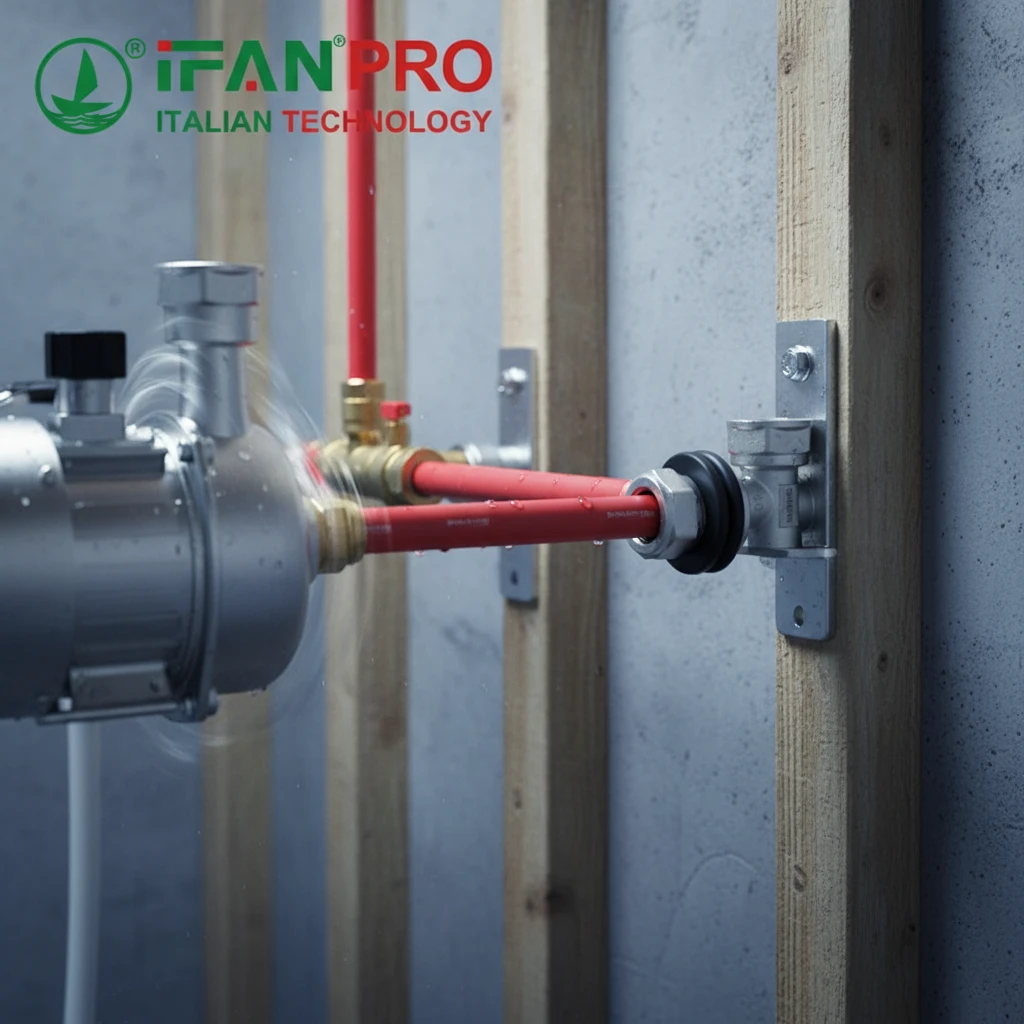
Sources of Vibration in a Home
Vibration is everywhere. Common sources include:
- HVAC Units and Furnaces: Their motors and fans create constant, low-frequency hums.
- Water Pumps (Well or Booster): These create direct hydraulic pulses and motor vibration.
- Appliances: Washing machines, dishwashers, and garbage disposals.
- External Sources: Traffic, trains, or even strong wind against the structure.
When a pipe is loose, these vibrations can make it sway or rub against wooden studs, electrical wires, or sharp metal plates. This leads to two major problems: abrasion wear and resonant frequency.
The Danger of Resonance and the Solution
If vibration frequency matches the pipe’s natural “swing” frequency, it enters resonance. This amplifies the movement dramatically, like a swing being pushed at the right moment. Resonance can violently shake pipes, rapidly destroying fittings.
A firmly mounted seat breaks this cycle. Here’s how:
- Changes the Natural Frequency: By anchoring the pipe, the seat makes the supported section much stiffer. This changes its natural frequency, making resonance with common household vibrations unlikely.
- Provides Damping: The seat itself, particularly if it uses a rubber insulator, acts as a damper. It converts the vibrational energy into a tiny amount of heat, dissipating it.
- Prevents Chafing: By holding the pipe securely in place, the seat stops it from rubbing against other materials, preventing abrasive wear that can thin the pipe wall over time.
For the highest vibration areas (like near a pump), we recommend using seats with integrated rubber or foam cushions. These specialized seats provide an extra layer of isolation, ensuring decades of reliable service.
What Are the Best Practices for Securing the Seat in Different Materials?
Using the wrong screw or technique can make a seat useless. I’ve seen seats pull out of drywall because the installer didn’t hit the stud.
**The best practice is to always anchor the seat into a solid structural material—a wood stud, concrete, or metal framing—using the correct fastener. Never secure a pipe seat only to drywall, plywood sheathing, or thin plastic. The specific fastener type and technique must match the backing material to ensure a permanent,








 Español
  English
  Français
  Русский
Comentarios recientes