
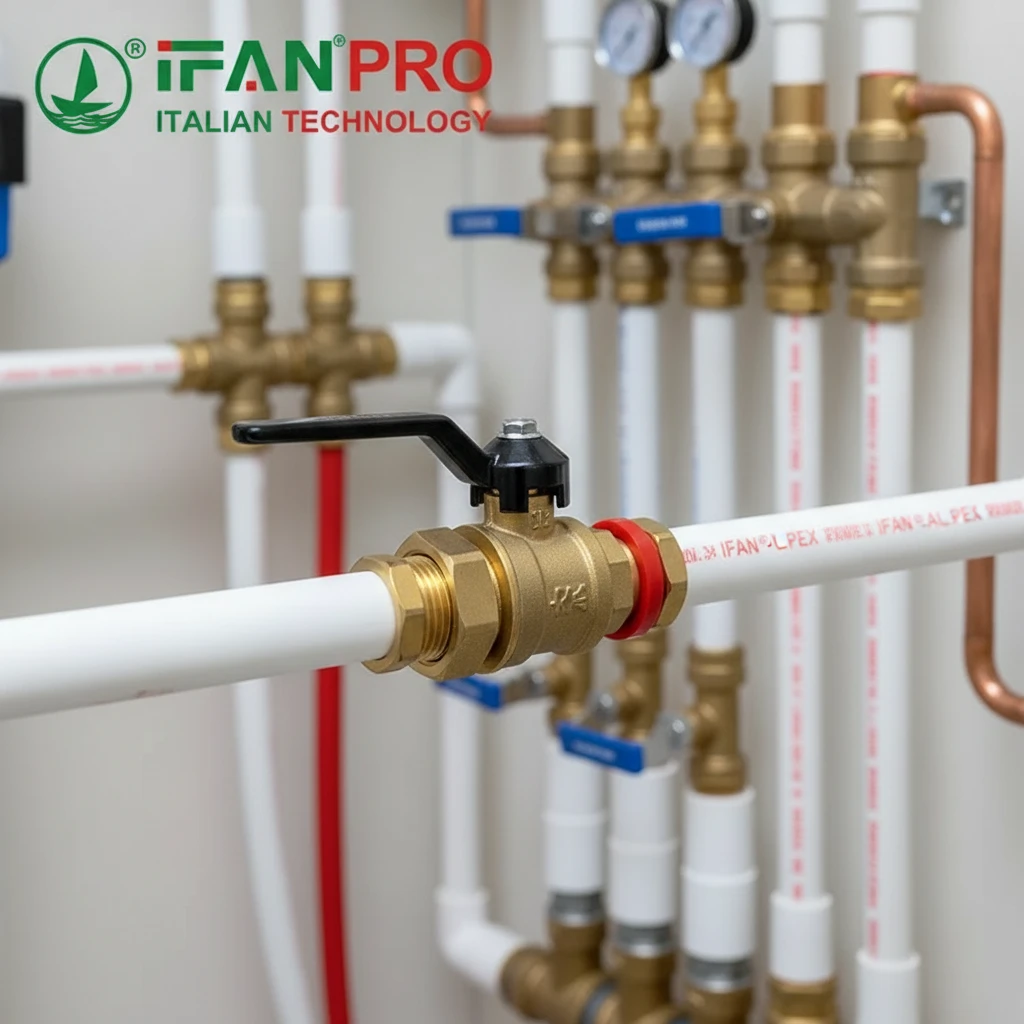
I recall a project where constant hot water cycles caused standard fittings to leak at the connection with composite pipes. This common failure highlights the critical need for valves specifically designed for materials like PEX-AL-PEX.
Yes, a valve designed for PEX-AL-PEX can reliably maintain a seal despite thermal expansion. The key lies in a sealing system that accommodates the pipe’s unique multi-layer movement—where the inner and outer PEX layers expand more than the middle aluminum layer—rather than fighting against it. Proper valves use flexible seals and secure mechanical grips that allow for micro-movement without losing compression.
Understanding this interaction is crucial for a leak-free system. Let’s examine how a compatible valve manages the complex forces at play.
How Does the Aluminum Layer’s Low Expansion Affect the Valve Connection Point?
The aluminum core is the pipe’s backbone, but its different expansion rate creates a unique challenge at connection points.
The aluminum layer’s low thermal expansion creates a stabilizing effect, reducing the pipe’s overall length change compared to pure plastic pipes. However, at the valve connection, this constraint causes the inner and outer PEX layers to expand radially outward and inward against the fitting with more force, placing significant stress on the seal’s sides. The valve must be designed to handle this focused radial pressure.
The Science of Constrained Expansion
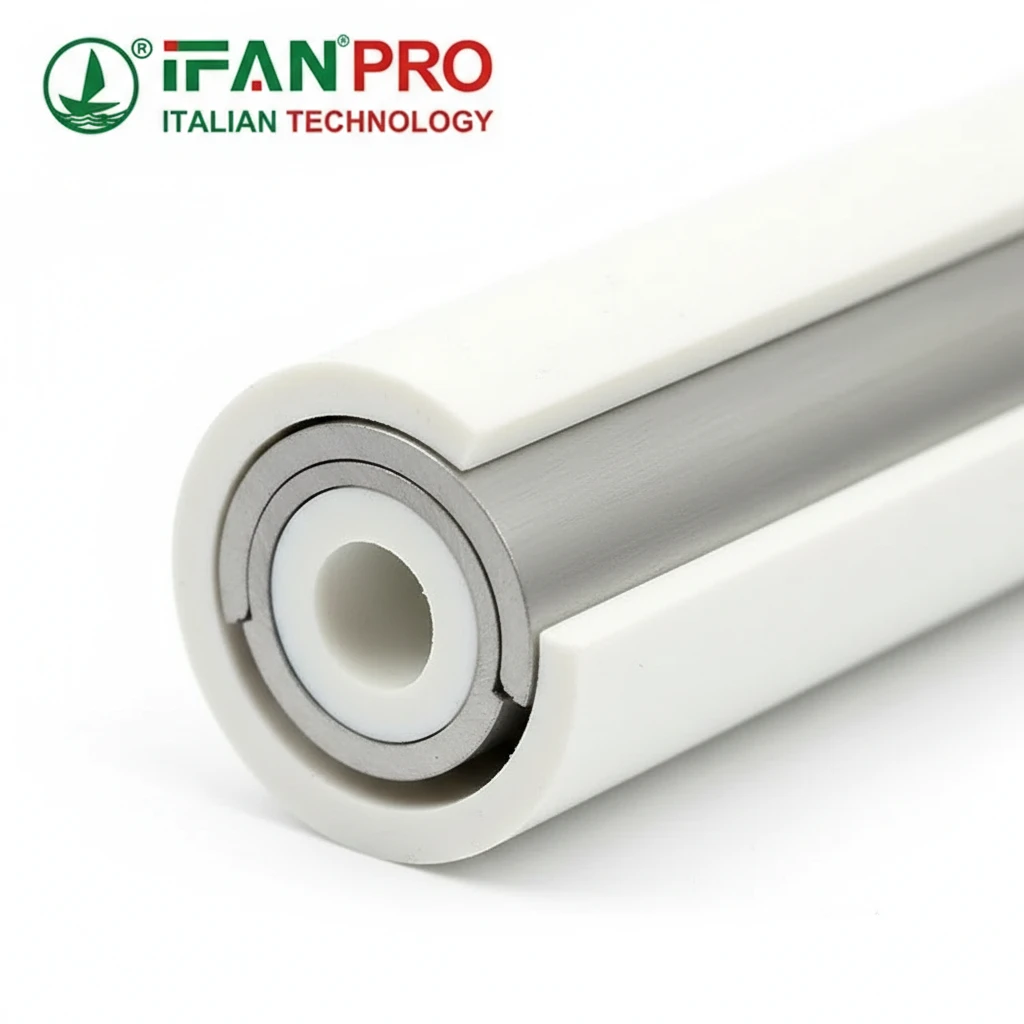
To understand the effect, we must first look at how PEX-AL-PEX reacts to heat. The pipe has three layers: an inner PEX tube, a middle aluminum tube, and an outer PEX jacket. Each material expands at a different rate when heated.
- PEX (Cross-linked Polyethylene): Has a high coefficient of thermal expansion. It wants to expand a lot in all directions.
- Aluminum: Has a low coefficient of thermal expansion. It wants to expand very little.
When bonded together, these layers influence each other. The strong, dimensionally stable aluminum layer in the middle restricts the PEX layers from elongating as much as they would alone. This is good for preventing the pipe from sagging or bowing over long runs.
The Connection Point: A Zone of High Stress
However, at the point where you cut the pipe to connect a valve, the aluminum layer is exposed. Here’s what happens during a heat-up cycle:
- Heating: The hot water flows, heating the entire pipe assembly.
- Differential Push: The inner PEX layer tries to expand inward and outward. The aluminum tube restricts its outward expansion, so the PEX pushes with greater force inward against the valve’s stem or sealing surface.
- Simultaneous Pressure: The outer PEX layer also expands, pushing outward against the inside of the valve’s compression sleeve or clamp.
The result is that the sealing elements inside the valve are subjected to intense, uneven, radial squeezing forces from both sides. A standard fitting designed for a uniform material cannot handle this. It may crack the PEX, deform, or simply lose its grip.
Valve Design Requirements
Therefore, a compatible valve must have two key features at the connection point:
- A forgiving seal (like a thick EPDM O-ring) that can absorb this radial compression without permanently deforming.
- A gripping mechanism (like a stainless steel grab ring) that holds the pipe’s aluminum layer securely, preventing it from pushing out of the fitting under pressure, while allowing the PEX layers to move slightly against the seal.
What Sealing Design Accommodates Differential Expansion Between Pipe and Valve?
A rigid seal will fail. The solution is a design that embraces controlled flexibility.
The sealing design must use a soft, compressible gasket or O-ring made from high-temperature elastomer (like EPDM) combined with a support sleeve. This assembly allows the PEX layers to expand and contract radially, maintaining constant contact and pressure on the seal without over-stressing the plastic or metal components of the valve itself.
The Anatomy of a Compatible Seal
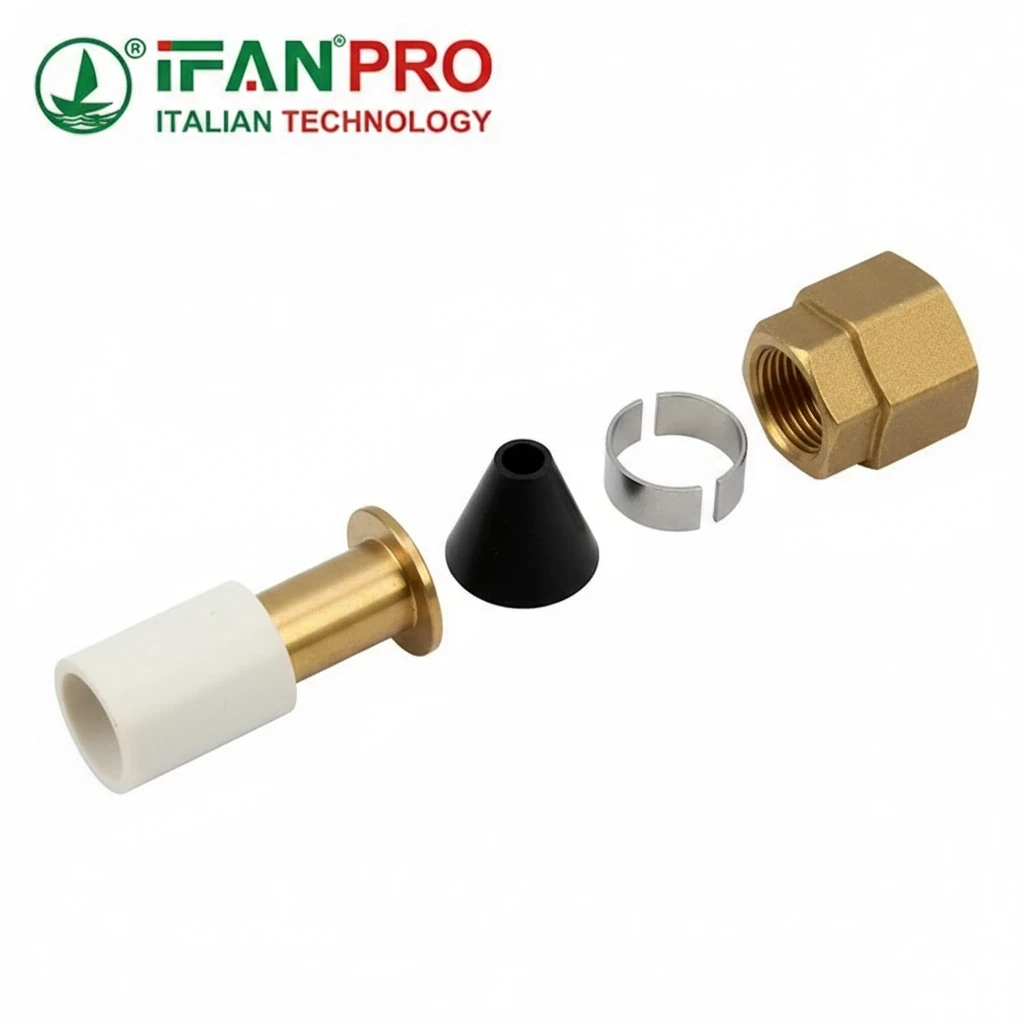
A valve that works with PEX-AL-PEX typically uses a compression-style connection system. This system is fundamentally different from a glue or weld joint because it allows for movement. Let’s break down the components and their roles:
1. The Compressible Seal (The Absorber):
This is usually a cone-shaped EPDM gasket or a round O-ring. Its primary job is not to be perfectly rigid, but to be reliably elastic.
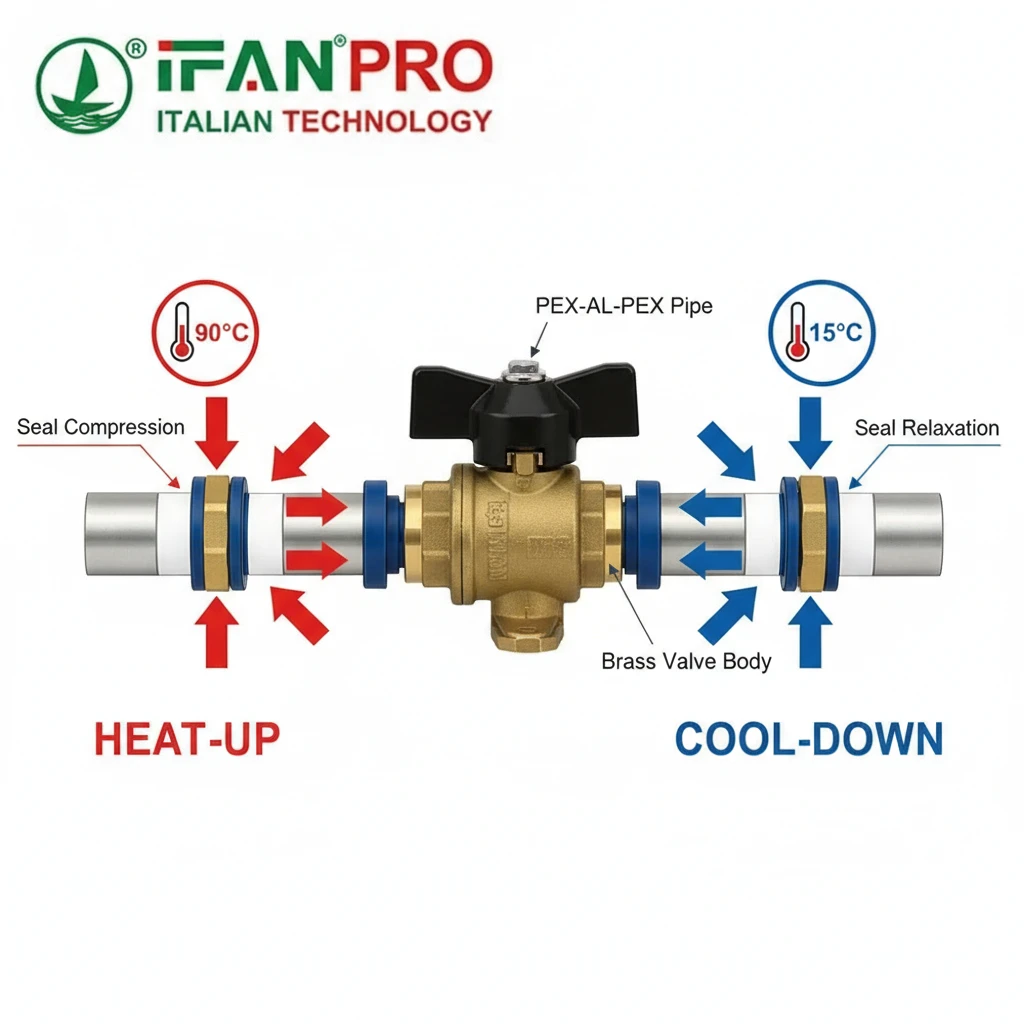
- When the pipe heats up: The expanding PEX layers compress the seal further.
- When the pipe cools down: The seal’s elasticity allows it to maintain contact and pressure as the PEX retracts.
This constant “spring-like” action ensures the seal never develops a gap.
2. The Support Sleeve (The Stabilizer):
Often made of brass or high-grade plastic, this sleeve sits inside the pipe end. It serves two critical functions:
- Prevents Collapse: It stops the soft PEX-AL-PEX from deforming or collapsing when the compression nut is tightened.
- Creates a Uniform Surface: It provides a smooth, firm inner surface for the seal to press against, ensuring even compression around the entire circumference.
3. The Compression Nut and Ferrule (The Controlled Gripper):
These parts apply the initial force. The key is that they are designed to grip the outer PEX jacket and the aluminum layer, not crush them. A properly designed ferrule applies a uniform, circumferential grip that holds the pipe in place axially (so it can’t blow off) but does not prevent the natural radial micro-movement of the material.
Comparison of Seal Performance
The table below contrasts how different sealing approaches handle the stress:
| Sealing Design Type | Response to PEX-AL-PEX Expansion | Resultado |
|---|---|---|
| Rigid/Threaded Seal | Fights the expansion. Creates high shear stress at the pipe/fitting interface. | High risk of pipe fatigue, cracks, or connection failure over cycles. |
| Standard Compression Ring (for plain PEX) | May allow some movement, but not optimized for the aluminum layer’s constraint. | Can work initially but may loosen or leak under continuous thermal cycling. |
| Dedicated PEX-AL-PEX Support Sleeve & Seal | Guides and accommodates the radial expansion of the PEX layers while gripping the AL layer. | Maintains constant seal pressure, allowing movement without loss of integrity. |
In short, the design doesn’t try to stop the expansion; it manages it. The seal is a dynamic component, not a static one.
Are the Valve’s Connection Joints Tested Under Thermal Cycling Conditions?
Confidence comes from validation, not just theory. This is where rigorous testing separates generic fittings from professional-grade components.
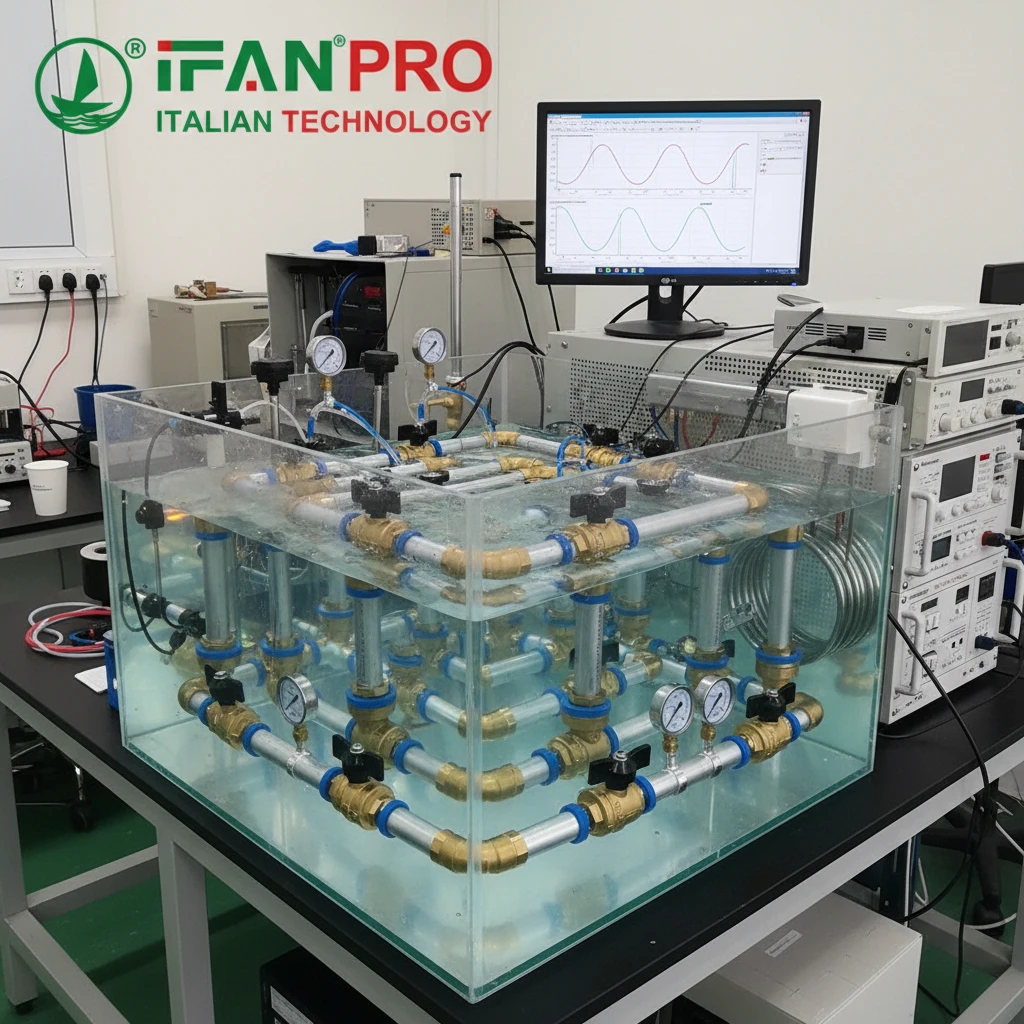
Yes, high-quality valves designed for PEX-AL-PEX undergo rigorous thermal cycling tests. These tests simulate years of real-world use by repeatedly heating the connected assembly to near-maximum service temperature and then cooling it to ambient temperature, often for thousands of cycles, while monitoring for leaks or pressure drops.
What is a Thermal Cycling Test?
This is the most important test for proving long-term reliability in potable water systems. The procedure is standardized (e.g., according to ASTM or EN standards) and is brutally simple in concept:
- Install the valve onto a section of PEX-AL-PEX pipe.
- Pressurize the system with water to a standard test pressure (e.g., 10 bar).
- Cycle the water temperature repeatedly between a low (e.g., 15°C / 59°F) and a high (e.g., 90°C / 194°F) point.
- Perform this cycle continuously for a set number of repetitions—often 5,000 cycles or more.
- The system must maintain pressure with zero leaks throughout the test.
Why This Test is Non-Negotiable
This test is critical because it exposes weaknesses that a simple pressure hold test cannot:
- Material Fatigue: It reveals if the plastic components of the valve or pipe become brittle.
- Seal Creep: It shows if the rubber seal permanently deforms (takes a “set”) and loses its springback.
- Stress Relaxation: It determines if the metal components of the compression fitting (the nut, ferrule) lose their clamping force over time.
- Differential Movement: It directly tests the interface’s ability to handle the expansion/contraction stresses we’ve discussed.
Industry Standards and What to Look For
Reputable manufacturers test to recognized standards and can provide test reports. The most common standard for this in Europe is EN 14801. A valve that passes 5,000 or 10,000 cycles according to such a standard has proven its durability.
When evaluating a valve, you should ask: “Has this specific valve model been thermal cycle tested on PEX-AL-PEX pipe, and for how many cycles?” A positive answer is a strong indicator of quality and reliability.
How Does It Prevent Leaks During Repeated Heat-Up and Cool-Down Cycles?
The ultimate proof is in daily operation. A well-designed system turns a potential problem into a non-issue.
It prevents leaks by combining a elastic sealing element that compensates for material movement with a mechanical grip that remains stable. During heat-up, the seal compresses further; during cool-down, its elasticity maintains contact. The grip on the aluminum core prevents the pipe from being pushed out of the fitting, ensuring the seal always stays in the correct position to function.
The Leak-Prevention Mechanism in Action
Let’s walk through a complete cycle to see how the components work together:
Phase 1: System at Rest (Cold)
The installation technician tightens the compression nut. This action:
- Compresses the EPDM seal against the pipe and support sleeve.
- Engages the stainless steel grab ring onto the aluminum layer.
- Creates the initial, leak-tight seal.
Phase 2: Heat-Up (Hot water flows)
- The pipe heats up. The inner PEX layer expands inward, pushing harder against the seal and support sleeve. The seal accommodates this by compressing slightly more.
- The aluminum core expands minimally, but the grab ring holds it firmly, preventing any backward push that could loosen the connection.
- The outer PEX expands outward, tightening its grip on the surrounding ferrule or valve body.
- Result: The seal experiences higher pressure but remains intact. No gap forms.
Phase 3: Cool-Down (Water stops)
- Everything contracts. The PEX layers shrink back.
- Here, the elastic memory of the EPDM seal is vital. As the PEX pulls away, the seal slowly expands back to its original shape, maintaining firm contact with the receding pipe surface.
- The mechanical grip on the aluminum layer ensures the pipe does not retract axially out of the fitting, which would create a gap.
- Result: The seal follows the material, maintaining constant contact. No gap forms.
The Importance of Correct Installation
Even the best design can fail if installed incorrectly. Two practical tips are crucial:
- Use a Proper Pipe Cutter: Always use a sharp, dedicated plastic pipe cutter. A saw can leave burrs or an uneven end that will damage the O-ring and create a leak path.
- Do Not Over-Tighten: Use a torque wrench if specified. Over-tightening can crush the PEX layers, distort the aluminum, or over-compress the O-ring, destroying its elastic properties. A firm, correct tightness is better than an extremely tight one.
Conclusión
A properly designed valve can reliably seal against PEX-AL-PEX thermal expansion through flexible seals and secure grips. For systems you can trust, specify IFAN’s PEX-AL-PEX compatible brass valves, engineered and tested to handle repeated thermal cycles without failure.







 Español
  English
  Français
  Русский
Comentarios recientes