
I used to think packaging was just a box. Then my shipping bills arrived, and I realized it was a silent budget killer.
Optimized PPR fitting packaging directly lowers shipping costs by reducing package dimensions and weight, which are the primary factors carriers use to calculate freight charges. By minimizing wasted space and using lighter, stronger materials, you can significantly cut dimensional weight fees and material costs, leading to substantial savings.
If you’re shipping PPR fittings internationally, every cubic inch and every ounce matters. The old way of packing is costing you real money. Let’s break down exactly how smart packaging becomes a powerful profit tool for your wholesale business.
What is the connection between PPR fitting packaging and shipping costs?
I once shipped a pallet of fittings and was shocked by the final bill. The connection wasn’t clear until I saw the carrier’s invoice breakdown.
The connection is direct and financial. Carriers charge based on either the actual weight or the dimensional weight (size) of your package, whichever is greater. Bulky, inefficient PPR fitting packaging inflates the dimensional weight, forcing you to pay for empty air, which drastically increases your total shipping cost per unit.
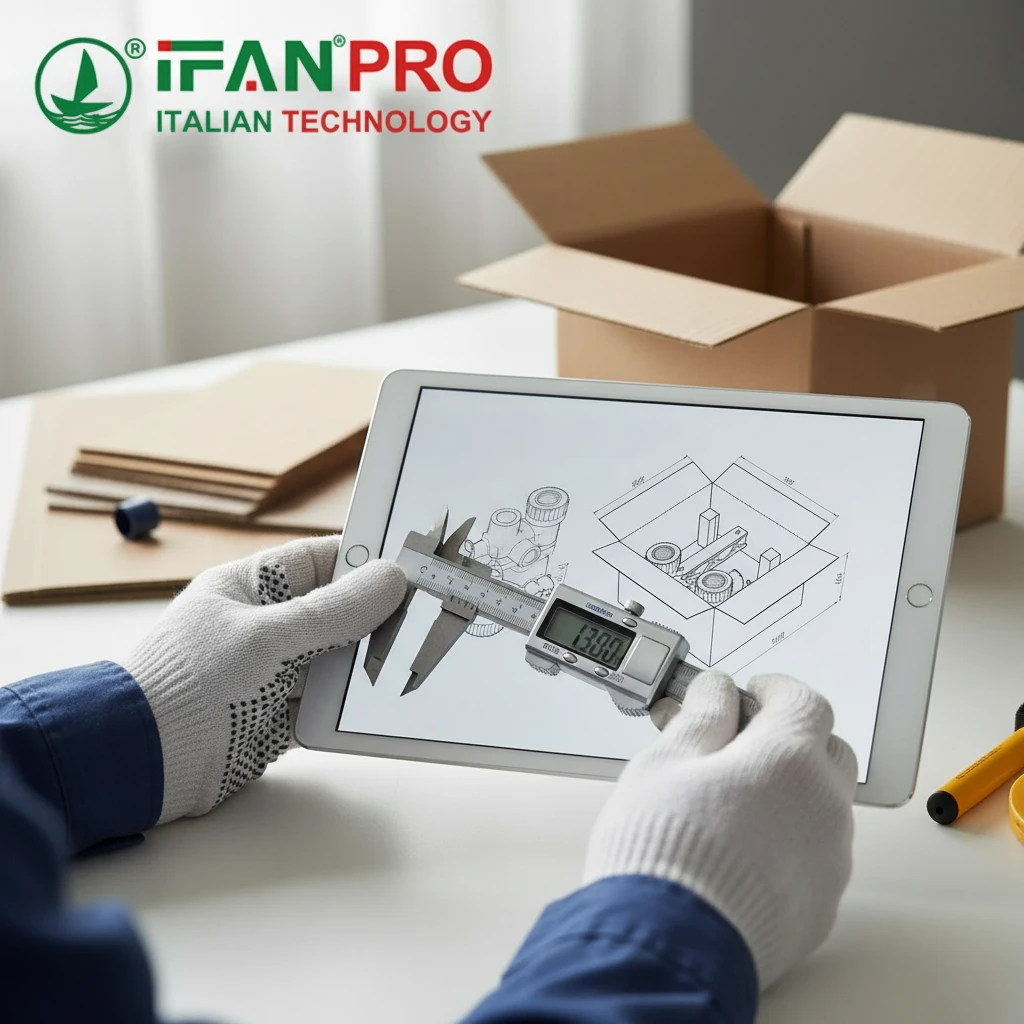
Understanding the Carrier’s Pricing Game: Dimensional Weight
Forget the simple scale. Modern logistics uses a concept called dimensional weight (DIM weight). This is a pricing technique where carriers charge you for the space your package occupies in a truck or plane, not just its physical weight. They calculate it using a formula: (Length x Width x Height) / a DIM Divisor. The divisor varies by carrier and region (e.g., 139 for inches/lbs in the US, 5000 for cm/kg internationally). If the dimensional weight is higher than the actual weight, you pay based on the dimensional weight. PPR fittings, with their irregular shapes, are especially vulnerable to poor DIM weight calculations if packed loosely.
Beyond DIM Weight: The Hidden Cost Multipliers
Inefficient packaging creates a ripple effect of extra expenses. First, oversized boxes are more prone to damage during transit. A bent elbow or a cracked tee fitting means a costly return, replacement, and an unhappy customer. Second, bulkier packages take up more warehouse space, both at your facility and your customer’s, affecting their storage costs. Third, customs duties in many countries are calculated on CIF value (Cost, Insurance, and Freight). Higher freight costs directly increase the dutiable value, meaning you or your customer pays more in taxes.
| Packaging Problem | Direct Shipping Cost Impact | Indirect Business Cost |
|---|---|---|
| Oversized Carton | Higher DIM weight charges | Increased damage risk, more warehouse space needed |
| Excessive Void Fill | Increased package size & weight | Higher material cost, more waste |
| Weak, Single-Wall Box | Potential for collapse, repackaging fees | Product damage, customer dissatisfaction |
| No Stackability | Inefficient palletization, higher per-pallet cost | Unstable loads, potential for in-transit accidents |
The Goal: Achieving the “Sweet Spot”
The ideal PPR fitting package is a tight, protective cocoon. It should have minimal internal movement, use the smallest possible external dimensions, and employ materials strong enough to protect without adding unnecessary weight. This “sweet spot” minimizes DIM weight, reduces material use, and maximizes protection. Achieving this requires moving away from generic boxes and towards packaging designed or selected specifically for the profile of PPR fittings you ship most often.
How can optimized packaging reduce dimensional weight charges?
Seeing a 40% DIM weight surcharge on an invoice was my wake-up call. Reducing it isn’t magic; it’s a matter of smart design.
Optimized packaging reduces dimensional weight charges by eliminating wasted space. Using right-sized boxes, custom inserts that nest fittings together, and minimizing protective filler directly shrinks the package’s (L x W x H) measurement, resulting in a lower DIM weight calculation and immediate freight savings.
Strategy 1: Right-Sizing Your Boxes
The most effective step is to stop using a few standard box sizes for everything. Analyze your top-selling PPR fitting combinations. Can ten 1-inch elbows be packed in a box half the size of your current one? Work with your packaging supplier to create 3-5 custom carton sizes that match your common order profiles. The upfront effort pays back with every shipment. A box that is 2 inches smaller in each dimension can reduce its volumetric size by thousands of cubic inches, dramatically slashing the DIM weight.
Strategy 2: Intelligent Internal Organization
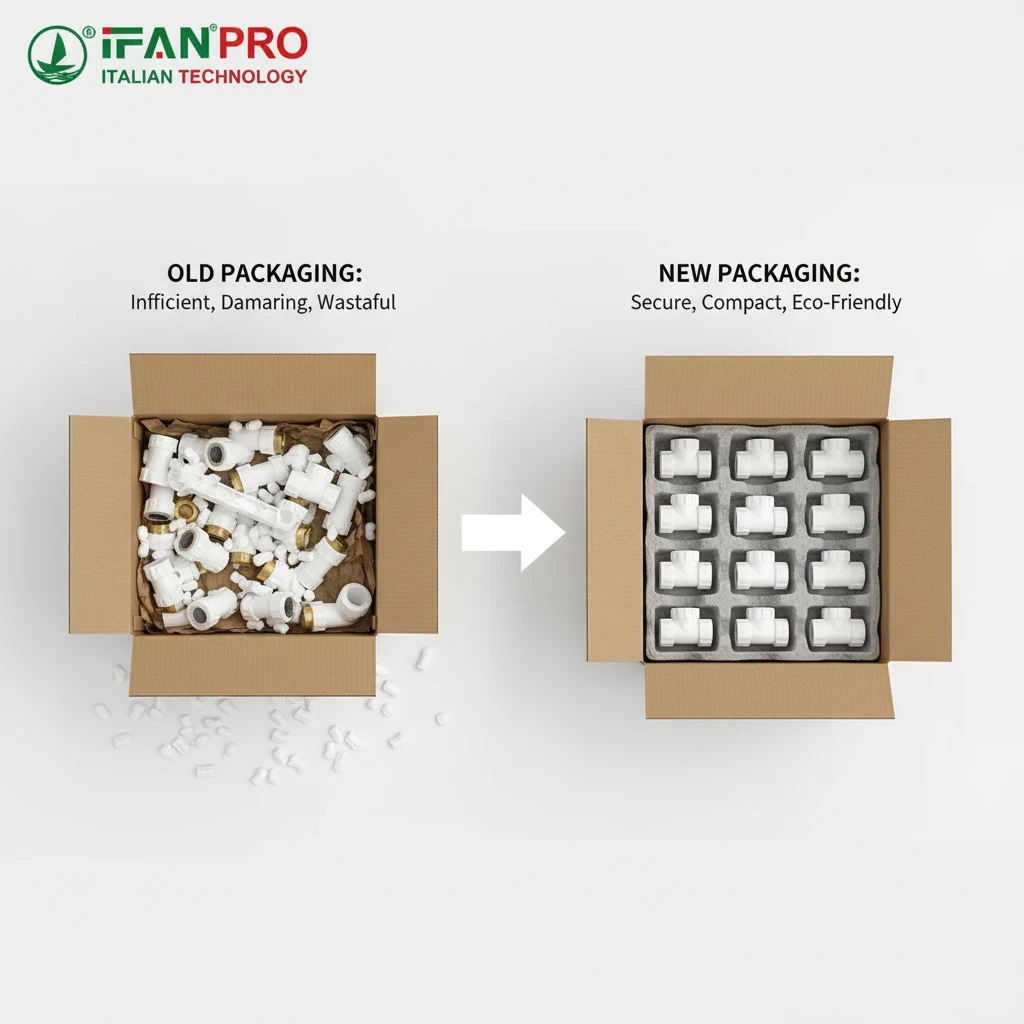
Throwing fittings into a box with packing peanuts is a recipe for high DIM weight and damage. Instead, use organized inserts. Corrugated cardboard partitions, molded pulp trays, or even reusable plastic spacers can hold fittings securely in place. This prevents them from rolling and shifting, which often forces you to use a larger box. For example, a tray that holds elbows in a staggered, nested pattern uses the internal space far more efficiently than loose packing.
| Packing Method for 20x 90° Elbows | Box Size (Inches) | DIM Weight (Lbs)* | Notes |
|---|---|---|---|
| Loose with Void Fill | 18x12x10 | 16 lbs | Fittings move, requiring filler and large box. |
| Cardboard Partitions | 15x10x8 | 9 lbs | Fittings secured, less wasted space. |
| Custom Molded Tray | 14x9x6 | 6 lbs | Maximum space efficiency, best protection. |
*Using a DIM divisor of 139 for illustration. Actual weight of fittings is 8 lbs.
Strategy 3: Rethinking “Protection”
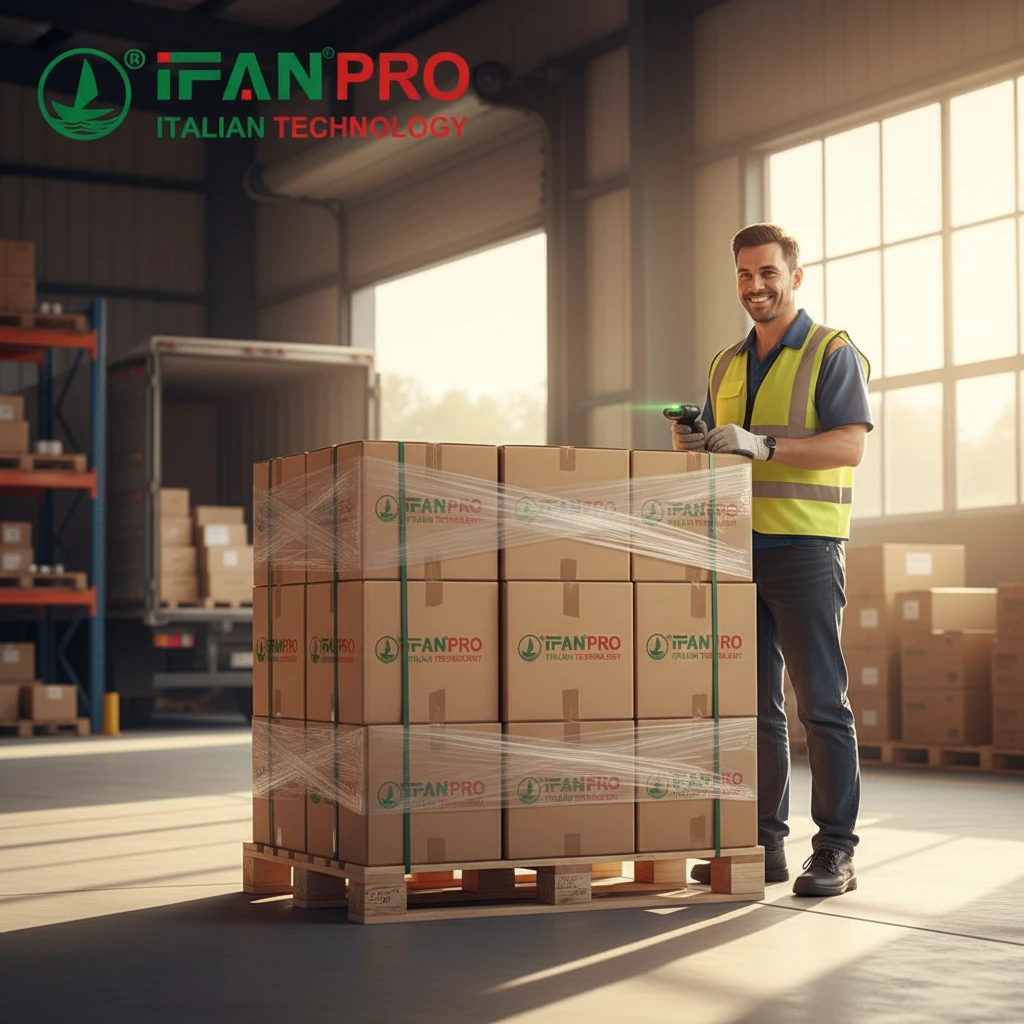
Protection doesn’t always mean more material. Often, it means smarter material. Replace bulky, lightweight void fill (like loose fill peanuts or air pillows) with fitted solutions. A thin, die-cut cardboard insert that cradles each fitting provides superior protection while adding minimal size and weight. For outer protection, consider edge protectors and corner guards instead of wrapping the entire pallet in layers of stretch film, which can add weight.
What are the best materials for durable yet lightweight PPR packaging?
I learned the hard way that a cheap box is the most expensive option. The right materials save money on both shipping and replacements.
The best materials balance strength-to-weight ratio and functionality. High-performance corrugated cardboard (double-wall or edge crush test-rated), molded pulp inserts, and lightweight but strong void fill like paper or cornstarch-based alternatives provide excellent durability without adding significant weight or size to your shipment.
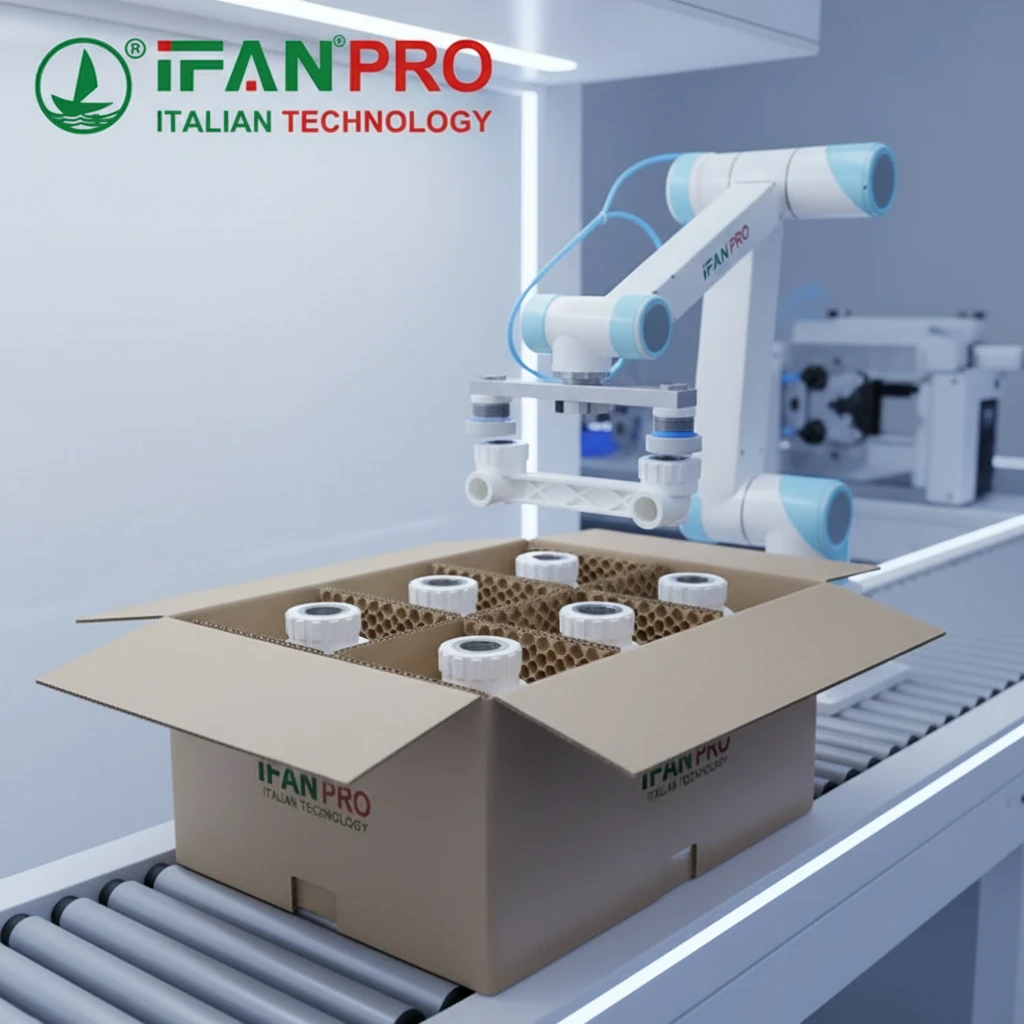
The Cornerstone: Advanced Corrugated Cardboard
Not all cardboard is equal. For PPR fittings, which have concentrated weight and sharp edges, standard single-wall cardboard often fails. Look for:
Double-Wall Corrugated: Offers superior stacking strength and puncture resistance, allowing you to use a smaller, stronger box instead of a larger, weaker one.
High ECT (Edge Crush Test) Board: This rating measures how much weight a box can withstand on its edges. A higher ECT (e.g., 44 ECT vs. 32 ECT) means you can use a thinner, lighter board that performs as well as a thicker, heavier one. Always specify the ECT requirement to your supplier.
Internal Security: Molded Pulp & Partitions
For holding fittings in place, molded pulp (made from recycled paper) is a champion. It is:
Customizable: It can be molded to perfectly nest any fitting shape, eliminating movement.
Lightweight: It adds very little to the overall package weight.
Protective: It cushions fittings from impacts and prevents them from scratching each other.
Sustainable: It is biodegradable and often made from post-consumer waste.
Corrugated cardboard partitions are another excellent, cost-effective option for creating organized compartments within a box.
| Material | Best For | Weight Impact | Cost Consideration |
|---|---|---|---|
| Double-Wall Corrugated (High ECT) | Outer shipping boxes, master cartons | Medium (but allows for smaller box size) | Higher per sheet, but lower total shipping cost |
| Molded Pulp Inserts | Securing individual fittings inside box | Low | Higher upfront tooling, low per-unit cost at volume |
| Corrugated Partitions | Organizing multiple fittings in layers | Very Low | Very cost-effective, easy to implement |
| Paper Void Fill (Kraft) | Filling small remaining gaps | Low | Inexpensive, recyclable |
| Expanded Polystyrene (EPS) Foam | Extreme protection for very heavy fittings | High | High, and not eco-friendly |
Void Fill and Palletization
Avoid traditional plastic bubble wrap or loose-fill polystyrene. They are bulky and add weight. Opt for:
Kraft Paper: Crumpled or honeycomb paper is strong, lightweight, and fully recyclable.
Biodegradable Air Cushions: Made from recycled materials, they offer good cushioning with minimal weight.
For palletizing, use sturdy plastic or composite corner boards and strapping to secure the load. This prevents boxes from shifting and crushing, allowing you to stack them safely without needing excessively strong (and heavy) individual boxes.
How do you calculate the actual ROI from improved packaging strategies?
Investing in better packaging felt like a cost until I ran the numbers. The ROI was clearer than I expected.
Calculate ROI by comparing your total landed cost per shipment before and after optimization. Track the reduction in freight charges (from lower DIM weight), decrease in material costs, and reduction in damage-related expenses. Then, divide the total annual savings by the upfront investment in new packaging design/materials.
Step 1: Gather Your Baseline “Before” Data
You can’t measure improvement without a starting point. For a 3-month period, collect data on:
Average Freight Cost per Shipment: Get detailed invoices that show base rate, DIM weight surcharges, and fuel surcharges.
Packaging Material Cost per Shipment: Cost of boxes, tape, void fill, etc.
Damage Rate & Cost: Number of claims filed, cost of replacements, and cost of return shipping.
Average Package Dimensions & Weight: For your most common shipment type.
Step 2: Pilot and Measure the “After” Scenario
Implement your new packaging strategy (right-sized boxes, new materials) for a sample of shipments, say 50-100 orders. For these orders, meticulously track the same data points:
1. The new freight cost from your carrier.
2. The new packaging material cost.
3. Any damage incidents.
4. The new package dimensions and weight.
This will give you a clear side-by-side comparison of the cost per shipment.
Step 3: Run the ROI Calculation
Let’s put this into a simple formula. The key is to look at the total landed cost savings.
| Cost Factor | Before (Per Shipment) | After (Per Shipment) | Savings (Per Shipment) |
|---|---|---|---|
| Freight Charge | $85.00 | $68.00 | $17.00 |
| Packaging Materials | $4.50 | $5.00 | -$0.50 (increase) |
| Damage/Returns (Averaged) | $3.00 | $0.50 | $2.50 |
| Total Landed Cost | $92.50 | $73.50 | $19.00 |
Annual Savings: $19.00/shipment * 1000 shipments/year = $19,000
Upfront Investment: (New box design fees + mold for inserts) = $5,000
Simple ROI: (Annual Savings – Annual Investment) / Annual Investment
($19,000 – $5,000) / $5,000 = 2.8 or 280% ROI in the first year.
This doesn’t even include softer benefits like improved customer satisfaction, brand reputation for secure delivery, and potential for lower insurance premiums.
Step 4: Presenting the Business Case
With this data, you can build a powerful case. Show the per-shipment savings, the annualized figure, and the high ROI. Emphasize that the investment is not an expense but a cost-reduction project with a rapid payback period, often less than six months. Frame it as a strategic move to improve profitability and competitiveness in the cross-border wholesale market.
Conclusión
Optimizing your PPR fitting packaging is a direct path to higher profits. It turns a routine cost center into a strategic advantage.








 Español
  English
  Français
  Русский
Comentarios recientes