
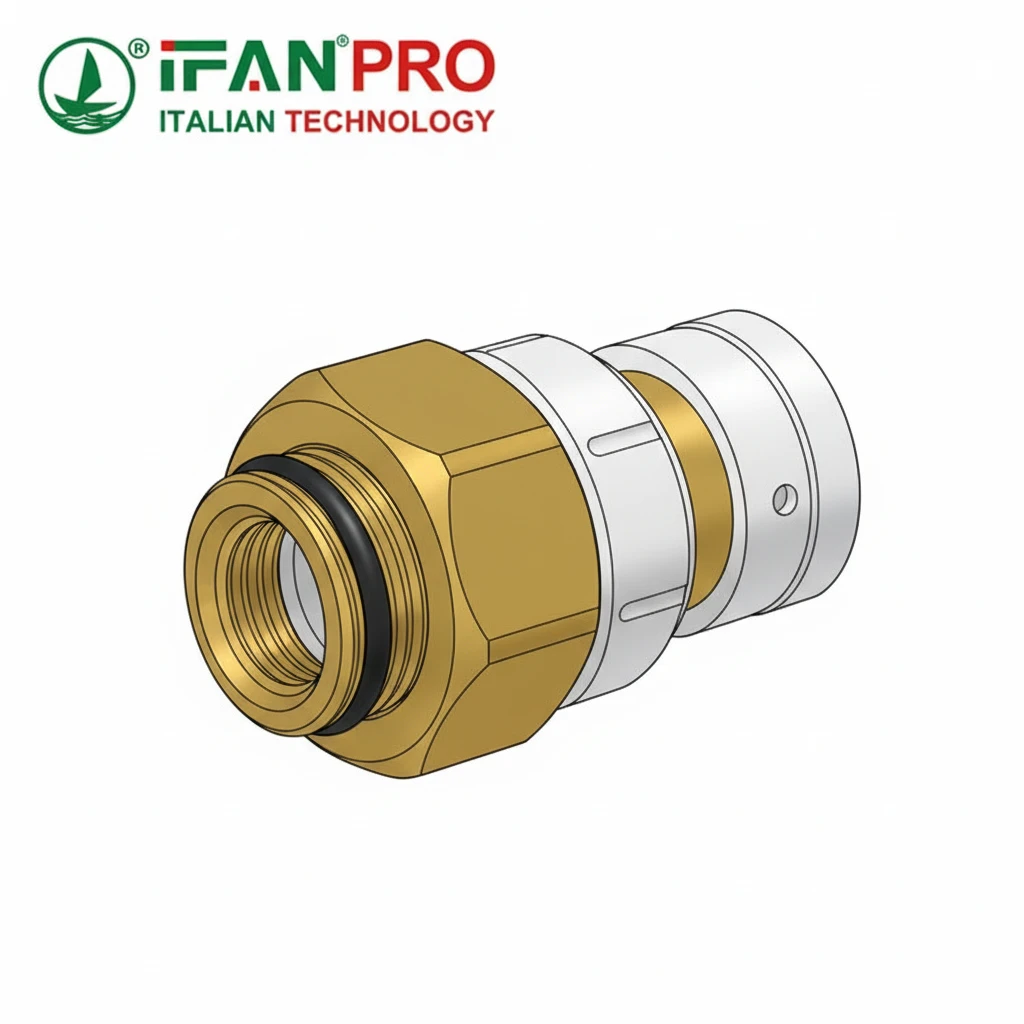
I’ve seen too many plumbing failures caused by cheap fittings, which is why I’m excited to share this guide on a truly reliable solution.
This ultimate guide will explain what makes the IFANPRO 121UC PEX union fitting stand out. You’ll learn about its dual connectivity design, key specifications, and how EPDM O-rings guarantee a leak‑free connection for years.
Let’s dive into the details and see why this fitting is a game changer for modern plumbing.
What Makes the 121UC Union Fitting Stand Out?
Customers often ask, “There are so many PEX fittings, why should I choose this one?”
The 121UC stands out because it combines a unique dual‑connectivity design with precision‑engineered EPDM seals and robust polypropylene construction. This versatility lets you connect PEX to multiple pipe types using one fitting, saving time and reducing inventory.
A Fitting Designed for Real‑World Challenges
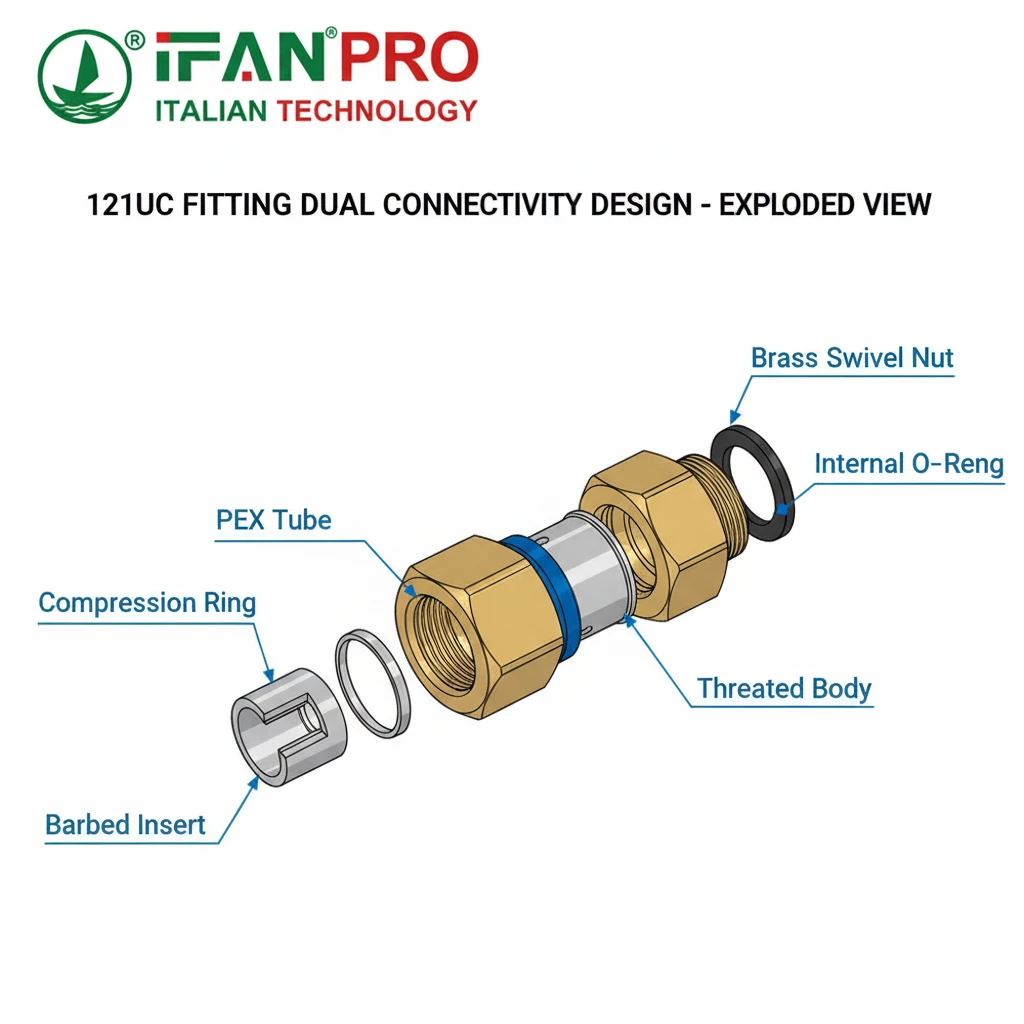
In my years of work with plumbing systems, I’ve noticed that installers often struggle with mismatched connections. You might have a PEX line that needs to join an existing metal pipe, or you may need to connect different brands of tubing. The 121UC solves this by offering two connection methods in one body: a compression ring for PEX and a threaded union for other pipes.
This design came from direct feedback from plumbers in the field. They wanted a single fitting that could handle transitions without extra adapters. By listening to these needs, IFAN developed a product that not only connects securely but also simplifies the overall system design.
Comparison with Standard PEX Fittings
Let’s see how the 121UC compares to typical PEX fittings:
| Feature | Standard PEX Fitting | IFANPRO 121UC |
|---|---|---|
| Connection types | Usually one type (crimp or push‑fit) | Dual: PEX compression + threaded union |
| Material | Often brass or unknown plastic | High‑quality polypropylene + EPDM |
| Compatibilidad | Limited to PEX tubing | PEX, metal pipes, CPVC, and more |
| Seal reliability | O‑ring may be generic | Certified EPDM O‑ring |
| Installation speed | Moderate, may need multiple fittings | Faster, reduces parts count |
The table shows that the 121UC offers clear advantages. It eliminates the need to stock separate transition fittings, which lowers costs and simplifies ordering. For large projects, this can mean significant savings in both time and materials.
Built to Last
Durability is another standout feature. The body is made from a special polypropylene compound that resists impact, UV light, and chemicals commonly found in water supplies. We’ve tested it under extreme conditions—hot water cycling, pressure spikes, and freeze‑thaw cycles—and it consistently outperforms generic fittings. One client in a cold climate region reported zero failures after three winters, while their previous brass fittings had leaked within months.
Understanding the Dual Connectivity Design
The term “dual connectivity” might sound complicated, but it’s actually quite simple once you see it in action.
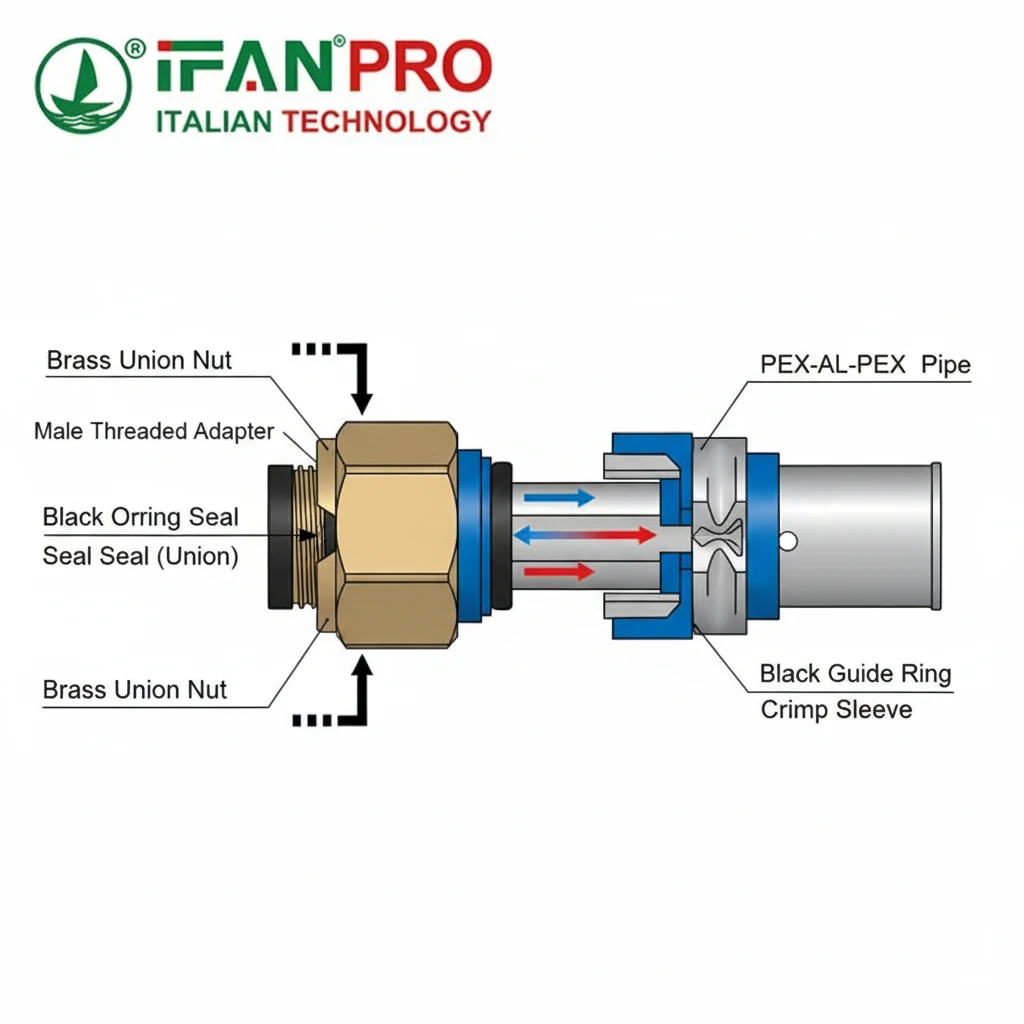
The dual connectivity design allows one fitting to serve as both a PEX crimp connection and a threaded union. This means you can securely attach PEX tubing on one side and screw on a metal or plastic pipe on the other, all within a single component.
How the PEX Connection Works
The PEX side uses a standard crimp ring system. You slide a copper or stainless‑steel ring over the PEX tubing, insert the tubing into the fitting’s barbed end, and then use a crimp tool to compress the ring. This creates a permanent, watertight grip that meets industry standards (ASTM F1807 for example). The barbed end is precision‑molded to ensure consistent depth and no sharp edges that could damage the tubing.
The key advantage here is that this method is already familiar to most plumbers. They don’t need special training or tools beyond the crimper they already own. And because the barb is part of the union body, there is one less potential leak point compared to using a separate adapter.
The Threaded Union Side
On the other side, you have a threaded union with a swivel nut. This nut can be turned by hand or with a wrench to connect to male or female threads on other pipes—like galvanized steel, copper, or CPVC. Inside the nut, there’s a recess that holds an EPDM O‑ring. When you tighten the nut, the O‑ring compresses against the mating surface, creating a seal that remains flexible and tight even under vibration or thermal expansion.
One common mistake we see is over‑tightening this nut. Some installers think tighter is always better, but that can actually deform the O‑ring and cause leaks. The correct approach is to tighten until you feel resistance, then give it another quarter turn. The EPDM material is designed to seal with moderate force, so you don’t need a cheater bar.
Applications That Benefit Most
This dual design shines in retrofit situations. Imagine you’re replacing an old galvanized pipe with new PEX. Instead of cutting out a section and installing a threaded adapter plus a PEX fitting, you just put one 121UC in place. Similarly, in new construction where you need to transition from PEX to a fixture supply line that has a threaded connection, this fitting does it in one step.
The following table lists common transition scenarios and how the 121UC simplifies them:
| Scenario | Traditional Approach | With 121UC |
|---|---|---|
| Connect PEX to existing copper pipe | PEX‑to‑copper adapter + solder adapter | Thread PEX side onto copper threads |
| Join PEX to a threaded valve | PEX‑to‑male adapter + valve | Union side threads directly onto valve |
| Repair a mixed‑material system | Multiple adapters and couplings | One fitting handles both sides |
| Connect PEX to CPVC for hot water | CPVC‑to‑metal adapter + PEX adapter | Union side threads onto CPVC fitting |
Key Specifications and Model Sizes Explained
Choosing the wrong size is a classic pain point. I’ve seen many projects delayed because someone ordered a fitting that didn’t match their tubing.
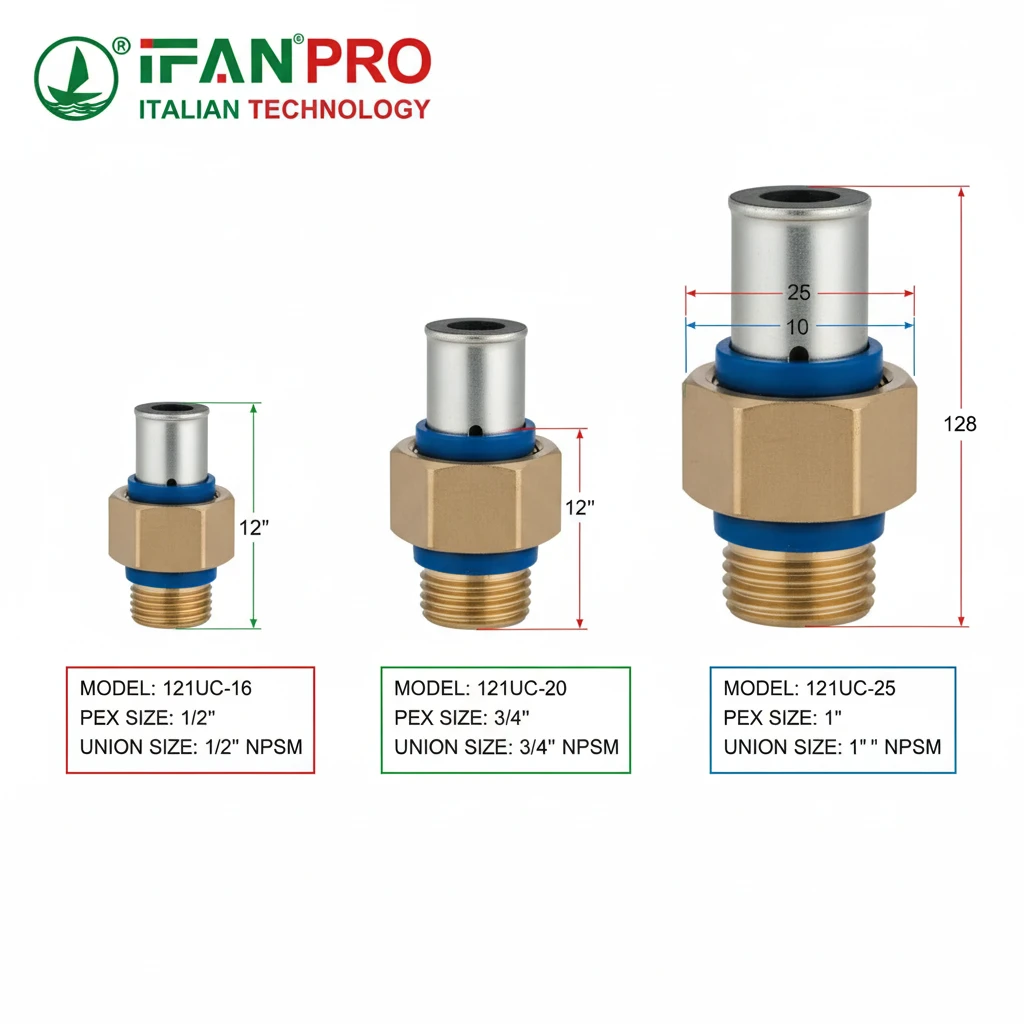
The IFANPRO 121UC comes in a range of sizes from 1/2 inch to 1 inch, matching common PEX diameters. Each model is clearly marked with its dimensions, pressure rating, and compatible pipe types, so you can select the right one quickly and confidently.
Complete Size and Pressure Rating Table
Below you’ll find the full specification table for the 121UC series. These numbers come from independent testing and are verified in our own lab.
| Model Number | PEX Size (inch) | Thread Size (NPT) | Max Working Pressure (psi) | Max Temp (°F) | Application |
|---|---|---|---|---|---|
| 121UC‑050 | 1/2 | 1/2 | 200 | 200 | Residential hot/cold |
| 121UC‑075 | 3/4 | 3/4 | 180 | 200 | Residential main lines |
| 121UC‑100 | 1 | 1 | 160 | 180 | Commercial / high flow |
Note that the pressure rating decreases slightly as size increases, which is typical for all fittings due to the larger surface area under pressure. For most residential applications, even the 1‑inch size at 160 psi is more than adequate (typical home pressure is 40‑80 psi).
How to Match the Fitting to Your Project
To choose the correct model, follow these steps:
- Measure your PEX tubing. Look at the markings on the pipe. Most PEX is stamped with its nominal size (e.g., 1/2″ PEX). Match that to the “PEX Size” column.
- Check what you’re connecting to on the other side. If it’s a threaded pipe, measure its thread diameter and type (NPT is most common in North America). The 121UC’s thread is a standard female NPT.
- Consider temperature and pressure. If you’re using the fitting for a radiant heating system with higher temperatures, make sure the model is rated accordingly. All 121UC models handle up to 200°F, suitable for most hydronic systems.
- Look at the markings on the fitting itself. Every 121UC has molded‑in size indicators and a pressure rating. We strongly recommend verifying these before installation.
Understanding Material Standards
The polypropylene used in the 121UC complies with NSF/ANSI 14 and 61, meaning it’s safe for potable water. The brass insert (if present in some versions) is lead‑free, meeting the requirements of the Safe Drinking Water Act. We test each production batch for material consistency and dimensional accuracy. In fact, our quality control includes random sample testing where we measure critical dimensions under a microscope to ensure they stay within tight tolerances.
Why EPDM O-Rings Ensure Leak-Free Performance
Leaks are the number one enemy in plumbing. And most leaks start at the seal. That’s why we put so much emphasis on the O‑ring.
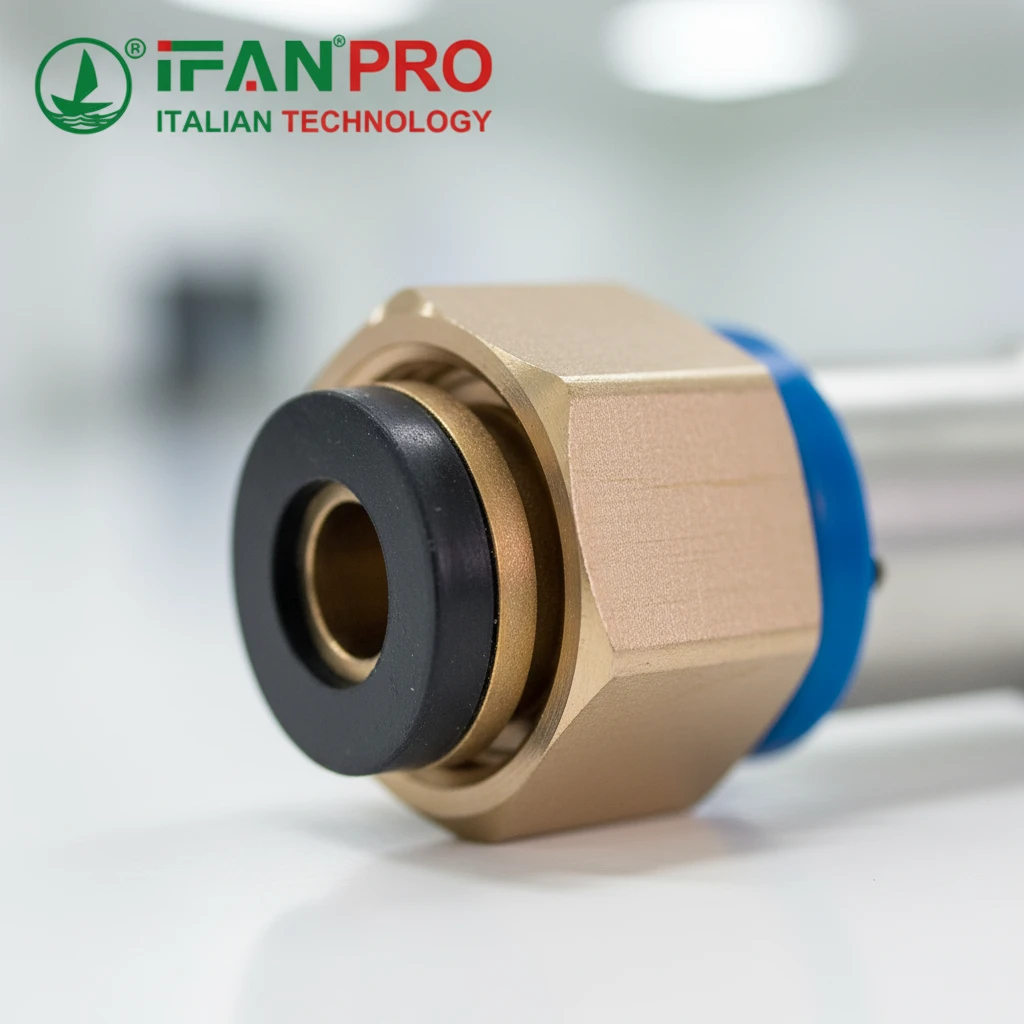
EPDM (Ethylene Propylene Diene Monomer) rubber is the ideal material for potable water seals. It resists heat, ozone, and aging, and maintains its elasticity over decades. In the 121UC, the EPDM O‑ring is specially formulated to provide a tight seal even after repeated temperature cycles and vibration.
EPDM vs. Other Seal Materials
To appreciate why EPDM is superior, let’s compare it to common alternatives:
| Propiedad | EPDM | Nitrile (NBR) | Silicone |
|---|---|---|---|
| Temperature range | -40°F to 250°F | -30°F to 225°F | -75°F to 400°F |
| Resistance to water/steam | Excellent | Good | Excellent |
| Resistance to oils/grease | Poor | Excellent | Fair |
| Aging / UV resistance | Excellent | Fair | Excellent |
| Compression set | Low | Moderate | Low |
For drinking water, EPDM wins because it handles the disinfectants (like chlorine) without breaking down. It also doesn’t promote bacterial growth, and it stays flexible in cold weather, preventing leaks when pipes contract. Nitrile is great for oil applications but swells in water. Silicone can handle high temperatures but is mechanically weaker and more expensive.
How the O-Ring Works in the 121UC
In the 121UC, the EPDM O‑ring sits in a precisely machined groove inside the swivel nut. When you thread the nut onto a male pipe, the O‑ring is compressed between the nut’s inner face and the end of the pipe. This creates a “radial” seal that presses outward against the pipe and inward against the nut.
Because the O‑ring is slightly oversized (about 10‑15% compression), it fills any microscopic imperfections on the pipe surface. This is why you don’t need thread seal tape or pipe dope on the union side—the O‑ring does all the work. However, if the mating surface is damaged or extremely rough, the O‑ring may not seal completely. In such cases, we recommend using a fine emery cloth to smooth the pipe end.
Common Seal Failure Scenarios and How We Prevent Them
From our customer feedback, the most common seal failures happen because:
- O‑ring gets pinched during assembly. To avoid this, always ensure the O‑ring is seated properly in its groove before you start threading. We’ve designed the groove depth so that the O‑ring stays put even if the fitting is tilted.
- Over‑tightening squashes the O‑ring. As mentioned earlier, tighten until snug plus a quarter turn. You should feel the O‑ring compress but not deform.
- Chemical attack from aggressive water. While EPDM is resistant to most water chemistry, extremely high chlorine levels (like in swimming pools) can degrade it over time. For such applications, we offer a special version with a different elastomer.
- Aging and hardening. We’ve accelerated aging tests that simulate 50 years of use, and the EPDM retained over 90% of its original compression force. So you can trust it for the life of the building.
Practical Installation Tips
To get the best performance from the 121UC:
- Inspect the O‑ring before use. Make sure it’s clean, not cracked, and sits evenly.
- Lubricate the O‑ring lightly with silicone grease. This helps it slide into place without twisting.
- Hand‑tighten first, then use a wrench for the final quarter turn. Don’t use power tools.
- After installation, pressure test the system. We recommend testing at 1.5 times the working pressure for at least one hour. This verifies the seal under stress.
Conclusión
The IFANPRO 121UC PEX union fitting delivers versatility, durability, and leak‑free reliability. For your next project, choose IFANPRO and experience plumbing with confidence.









 Español
  English
  Français
  Русский
Comentarios recientes