
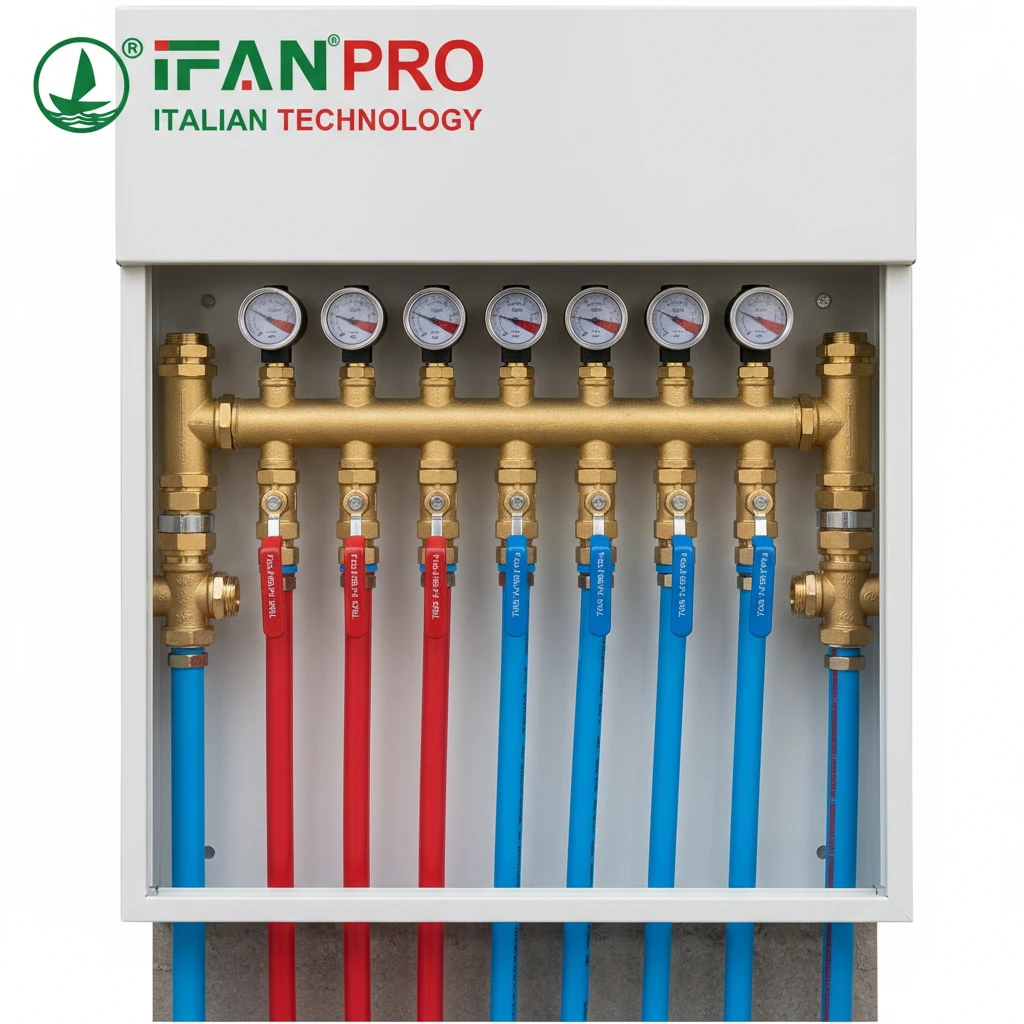
I once watched a large commercial project fail because the installer chose the wrong valve. That costly mistake taught me that valve selection is not an afterthought—it’s the backbone of system performance.
The IFANPRO 121UC is the best valve choice for underfloor heating and HVAC systems because it combines high-precision flow control, durable brass construction for extreme temperatures, a space-saving U-mold design, and the ability to maintain pressure up to 16 bar. This makes it suitable for both residential underfloor heating and large-scale commercial HVAC projects.
Now, let’s examine why these specific features matter for your next project.
Why HVAC Systems Require High-Precision Flow Control Valves
HVAC systems are complex. I’ve seen imbalances cause cold spots and tenant complaints that could have been avoided with better flow control.
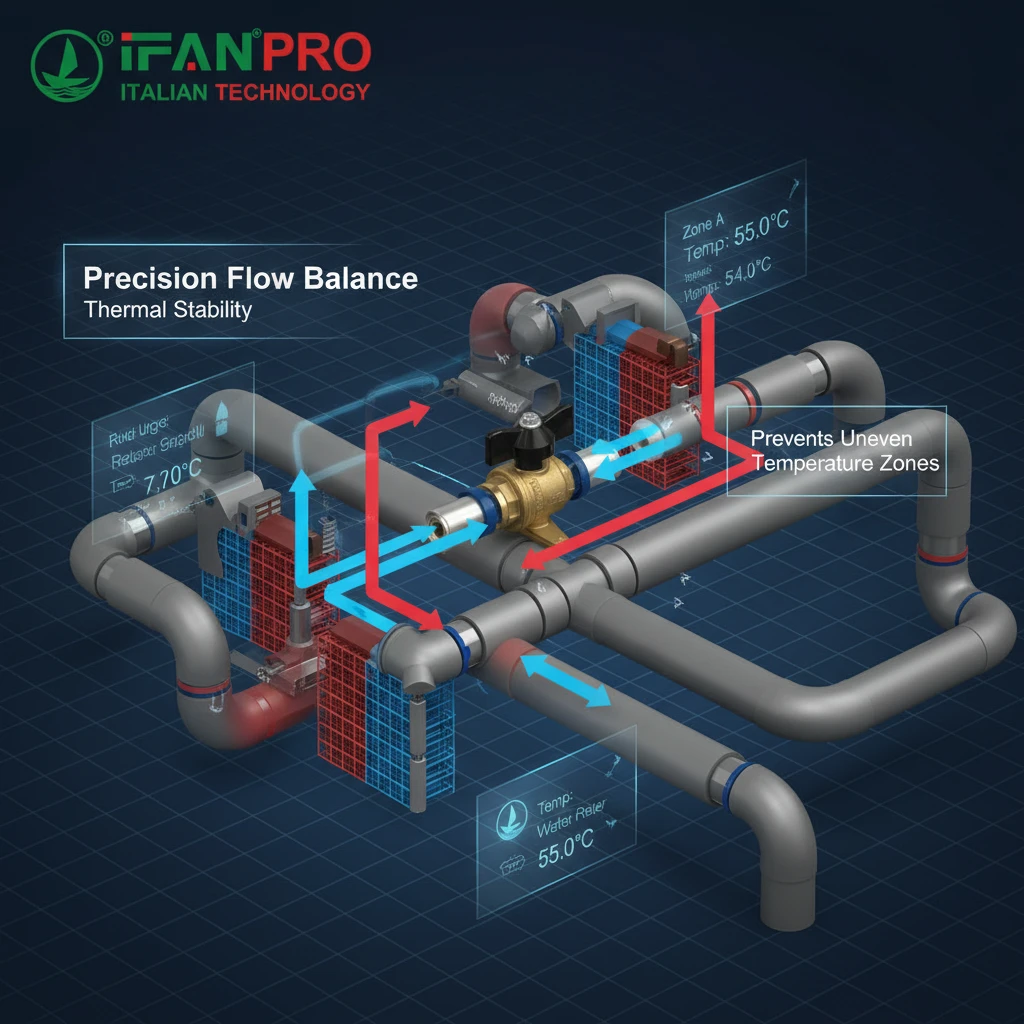
HVAC systems require high-precision flow control valves to maintain consistent temperature throughout a building. Without precise control, some areas receive too much hot water while others receive too little. This leads to uneven heating, wasted energy, and discomfort for occupants. Precision valves allow for fine-tuning of flow rates to match exact design requirements.
The Physics of Flow and Temperature
Water flowing through pipes carries heat. The amount of heat a room receives depends directly on how much water flows through its circuit. If the flow rate is too high, the room overheats. If it’s too low, the room stays cold. This sounds simple, but in a real system with multiple loops and zones, balancing these flows becomes a complex challenge.
Think of a typical underfloor heating manifold. It might have 8 to 12 separate loops, each feeding a different room. Each loop has different length and therefore different natural resistance to flow. Without precise control valves on each loop, water takes the path of least resistance. Consequently, short loops get too much flow, and long loops get starved.
What Happens Without Precision Control
The problems from poor flow control extend beyond simple discomfort.
| Problem | Cause | Consequence |
|---|---|---|
| Uneven Temperatures | Incorrect flow distribution to different zones | Occupant complaints; need for auxiliary heating/cooling |
| System Noise | Water flowing too fast through undersized or partially open valves | Whistling, banging pipes; disturbance to building occupants |
| Energy Waste | Overheated spaces cause occupants to open windows | Higher utility bills; carbon footprint increases |
| Short Cycling | Boiler or chiller turns on and off frequently due to poor load matching | Reduced equipment lifespan; higher maintenance costs |
How Precision Valves Solve These Problems
A high-precision valve like the IFANPRO 121UC addresses these issues through several design features.
First, it offers multiple preset positions. You can set the valve to a specific flow rate during commissioning, then lock it. This prevents future adjustments from accidentally changing the balance.
Second, it provides visual indicators. A clear scale shows the current setting, making system balancing faster and more accurate. Technicians can see at a glance what flow rate each circuit receives.
Third, it allows for fine adjustments. Unlike simple on/off valves, precision valves can open incrementally. You can dial in exactly the right flow, not just “more” or “less.”
For HVAC designers and installers, this precision means you can trust the system to perform as designed. You don’t have to oversize equipment to compensate for poor control. You save money on installation and operating costs.
Brass Valve Solutions for Extreme Temperatures (-20°C to 110°C)
Pipes expand and contract with temperature. I’ve seen plastic valves crack in freezing conditions and cheap alloys fail under high heat. Brass handles both extremes.
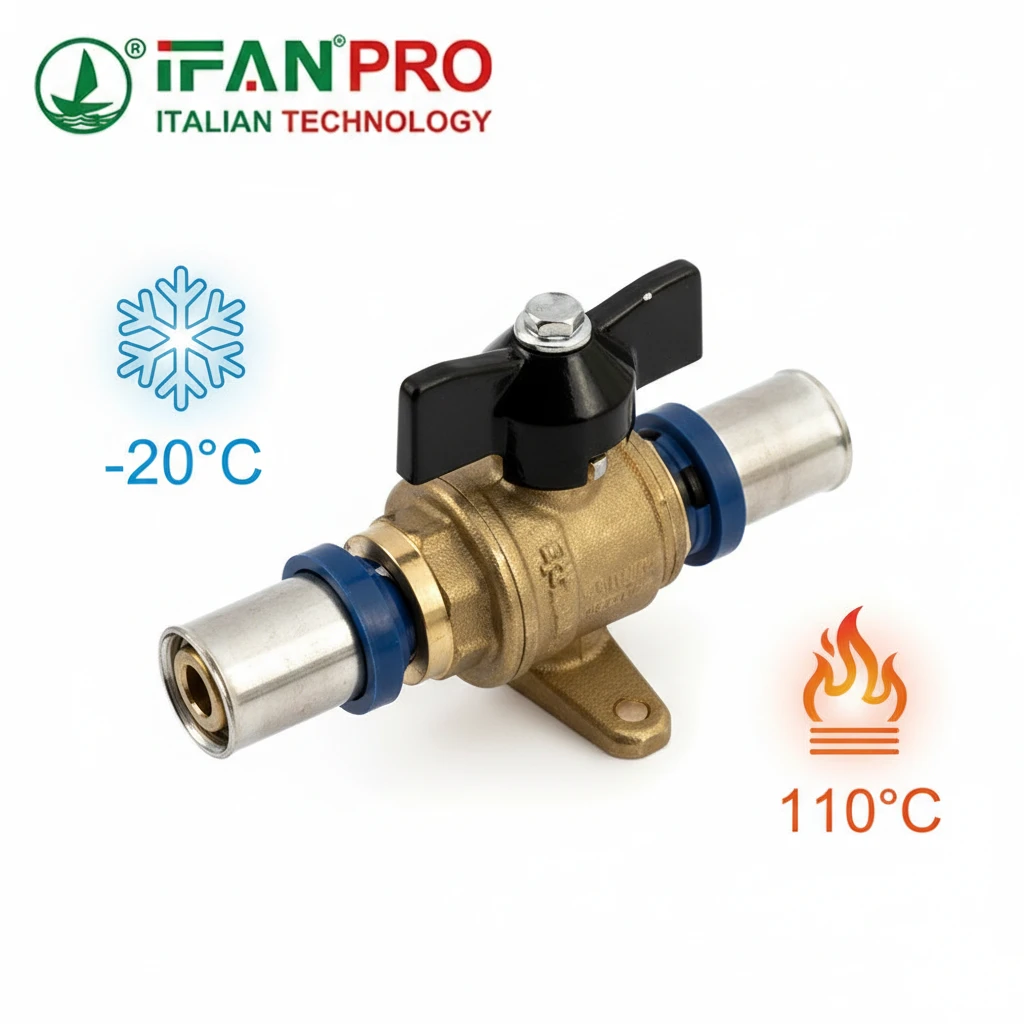
Brass valves are ideal for extreme temperature ranges because the material maintains its structural integrity from -20°C to 110°C. Unlike some plastics that become brittle in cold or soften in heat, brass provides consistent mechanical strength. It also resists corrosion from the water and glycol mixtures commonly used in HVAC systems.
Material Science: Why Brass Works
Brass is an alloy of copper and zinc. This combination gives it unique properties that make it perfect for HVAC applications.
Thermal Expansion Compatibility: In an HVAC system, pipes, fittings, and valves all move as temperature changes. Brass expands and contracts at a rate similar to copper pipes and many fitting materials. Therefore, joints remain tight and stress-free across the temperature range. If you use a material with different expansion rates, joints can loosen over time, leading to leaks.
Strength Retention: Some materials lose strength as temperature rises. Plastics, for example, can soften and deform under pressure at high temperatures. Brass maintains its strength up to 110°C. Similarly, at low temperatures, some materials become brittle. Brass remains tough and ductile down to -20°C, resisting cracking from freezing or thermal shock.
Corrosion Resistance: HVAC systems often use treated water with corrosion inhibitors or glycol mixtures for freeze protection. Brass naturally resists corrosion from these chemicals. It forms a protective oxide layer that prevents further degradation. This means a brass valve can last for decades without failing from rust or pitting.
Comparing Valve Materials for Temperature Performance
| Material | Low Temp Limit | High Temp Limit | Key Weakness |
|---|---|---|---|
| Brass (IFANPRO 121UC) | -20°C | 110°C+ | Can dezincify in specific water conditions (prevented with lead-free alloys) |
| Standard Plastics (PP, PVC) | -10°C | 60-80°C | Becomes brittle in cold; softens in hot water |
| Stainless Steel | -50°C | 200°C+ | Expensive; harder to machine; galvanic corrosion with copper pipes |
| Cast Iron | -30°C | 150°C+ | Heavy; prone to rust; not suitable for potable water |
Real-World Applications of Temperature Range
Why does this wide temperature range matter in practice?
Consider a system in northern Europe or Canada. In winter, an unheated attic or crawl space might drop below freezing. A valve made from poor material could crack, causing a flood when the system starts. Brass handles this cold without issue.
Consider a commercial boiler system. Water temperatures often reach 80°C to 90°C. Near the boiler, temperatures can spike higher. A brass valve handles this continuously without deforming.
Consider systems that use thermal shock for cleaning or maintenance. Sometimes installers flush systems with very hot water to remove biofilm. Brass valves survive these occasional high-temperature events without damage.
The IFANPRO 121UC uses high-quality brass specifically formulated for HVAC applications. It resists dezincification, a form of corrosion that affects some brass alloys. Consequently, it provides reliable service across the entire operating range for decades.
The Advantages of Installing U-Mold Valves in Tight Spaces
Space is always at a premium in mechanical rooms. I’ve watched installers struggle to fit standard valves into cramped manifolds and equipment cabinets.
U-mold valves offer significant advantages in tight spaces because their compact, integrated design combines multiple functions into a single unit. Instead of installing separate shut-off valves, drain valves, and flow meters, a U-mold valve houses everything in one body. This reduces the space required, simplifies installation, and creates a cleaner, more serviceable layout.
Understanding the U-Mold Design
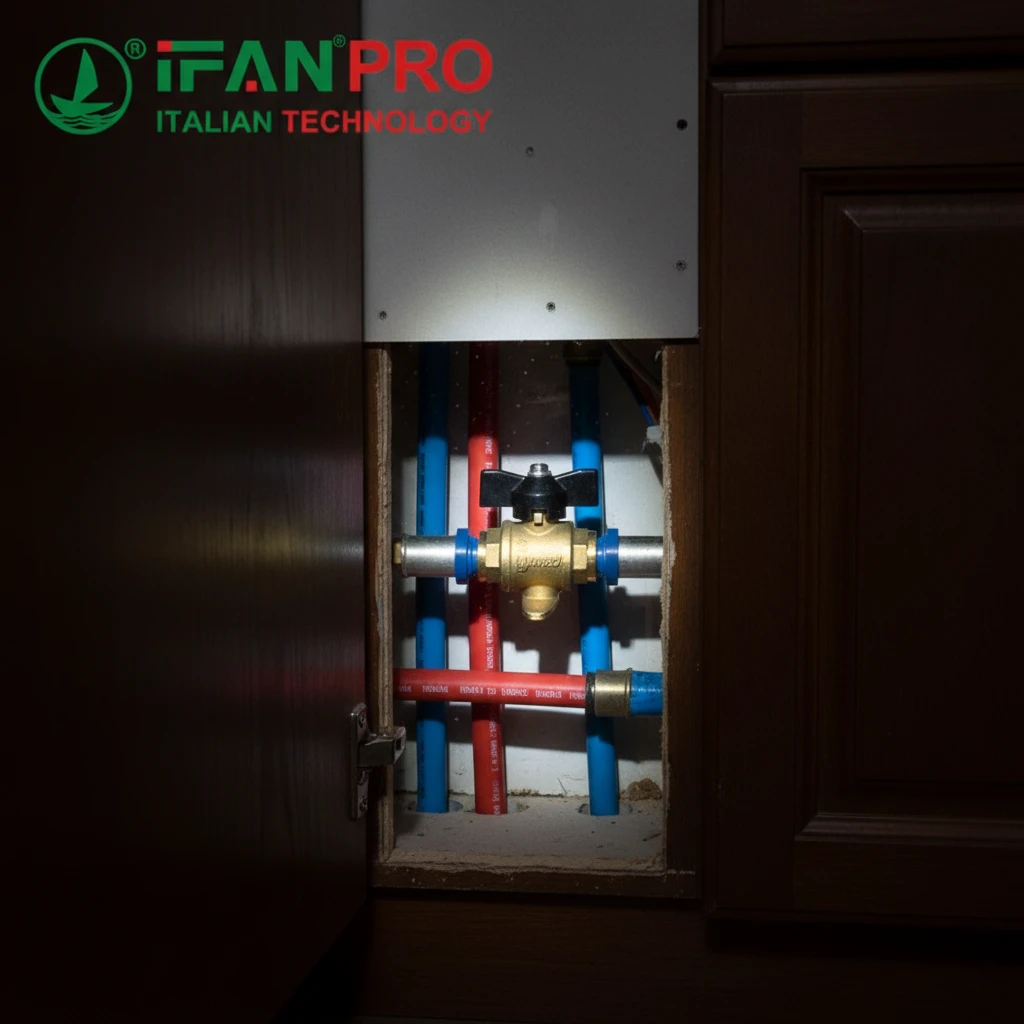
The term “U-mold” refers to the shape of the valve body. It looks like the letter U, with inlet and outlet connections on the same side of the valve. Water flows down one leg, across the bottom, and up the other leg. This design packs a lot of functionality into a small footprint.
In a traditional setup, you might need:
- A shut-off valve on the supply line
- A balancing valve to set flow rate
- A drain valve for maintenance
- A temperature sensor port
- A flow meter for commissioning
Each of these components takes space. They also require multiple connections, each a potential leak point.
A U-mold valve like the IFANPRO 121UC integrates all these functions. The valve body contains the shut-off mechanism, the flow control element, and built-in ports for sensors and drains. The result is a single compact unit that does the work of five separate components.
Space Savings in Real Applications
The table below shows typical space requirements for different manifold configurations:
| Configuration | Components Required | Total Length | Connections | Leak Points |
|---|---|---|---|---|
| Traditional Setup | Ball valve + Balancing valve + Drain valve + Flow meter + Adapters | 400-500mm | 8-10 | 8-10 |
| U-Mold Valve (IFANPRO 121UC) | Single integrated valve | 150-200mm | 2 | 2 |
For a manifold with 8 circuits, the space savings become dramatic. Traditional components might require a 4-meter long manifold assembly. With U-mold valves, the same manifold fits in under 2 meters. This matters when you install equipment in tight mechanical rooms, under stairs, or in ceiling voids.
Additional Benefits Beyond Size
The U-mold design offers advantages beyond just saving space.
Simplified Installation: Fewer components means fewer connections to make. Installers spend less time assembling and more time completing the job. This reduces labor costs and the chance of installation errors.
Better Service Access: When valves are packed tightly together, reaching a specific valve for maintenance becomes difficult. The compact but organized layout of U-mold valves ensures each valve remains accessible. You can shut off, drain, or adjust one circuit without disturbing others.
Improved Aesthetics: Mechanical rooms with neatly organized manifolds look professional. Clients appreciate clean installations. It signals quality workmanship and makes future maintenance easier for other technicians.
Reduced Inventory: For a contractor, stocking one U-mold valve model is simpler than stocking multiple separate components. This reduces inventory costs and the risk of missing parts on site.
In residential underfloor heating, the space savings allow for more discreet installations. In commercial projects, they allow more circuits in the same footprint. The IFANPRO 121UC’s U-mold design delivers all these advantages while maintaining full functionality.
Maintaining Pressure (Up to 16 Bar) in Large-Scale Commercial HVAC Projects
High-rise buildings create immense pressure. I’ve seen standard residential valves fail catastrophically under the weight of a 50-meter water column.
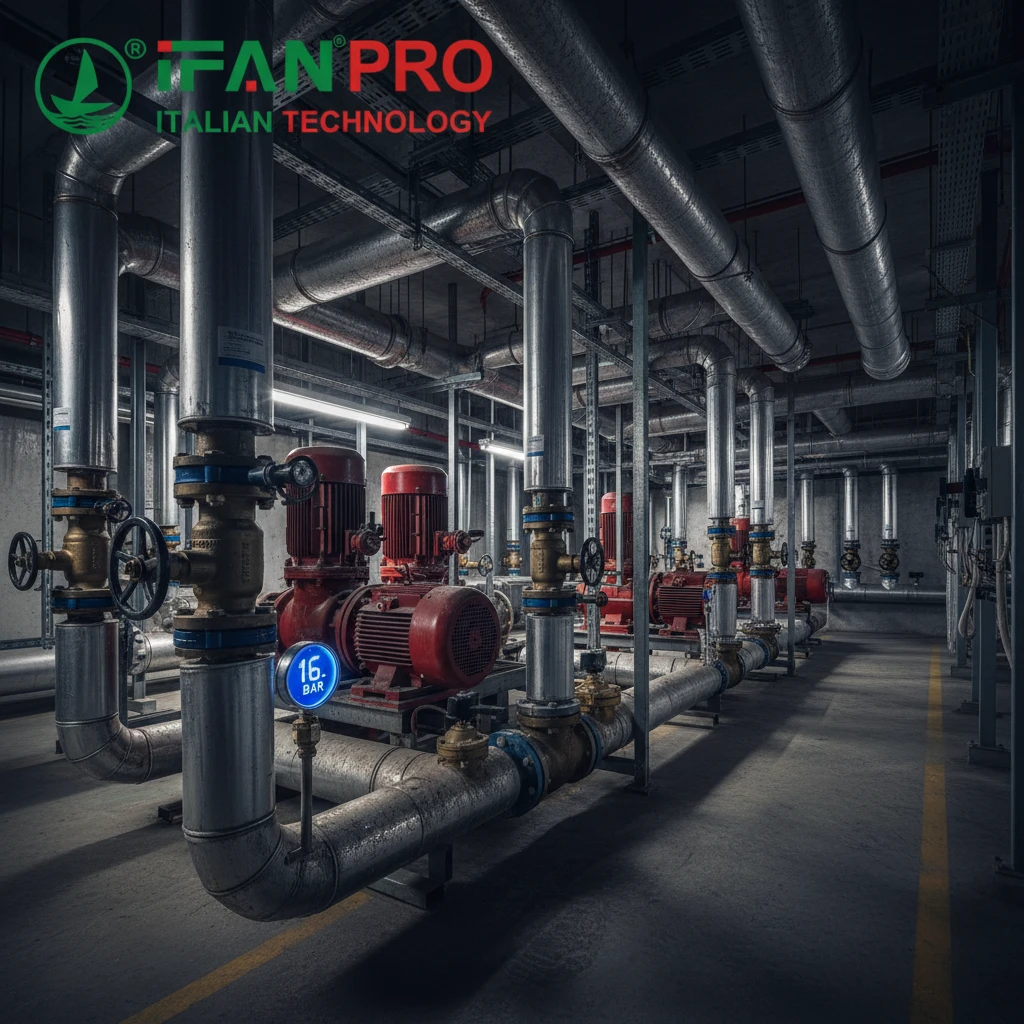
Maintaining pressure up to 16 bar in commercial HVAC projects requires valves designed for high-strength applications. The IFANPRO 121UC achieves this through its robust brass construction, precision-machined sealing surfaces, and reinforced stem design. It handles the pressure demands of tall buildings, district heating systems, and industrial applications without leaking or failing.
Understanding Pressure in Tall Buildings
Water pressure increases with height. For every 10 meters of vertical rise, static pressure increases by approximately 1 bar. In a 50-meter building, the pressure at the bottom of the system reaches 5 bar just from the water’s weight. When pumps operate, dynamic pressures add to this static load.
Therefore, a valve in a high-rise basement must withstand significantly more pressure than a valve in a single-family home. If a valve fails under this pressure, the consequences are severe. High-pressure water can flood equipment rooms, damage finishes, and require building evacuation.
The 16-bar rating of the IFANPRO 121UC means it handles static pressures equivalent to a 160-meter water column. This covers most commercial buildings and many industrial applications.
Components That Enable High-Pressure Performance
Several design features allow the IFANPRO 121UC to maintain integrity under high pressure.
Thick Wall Sections: The valve body has reinforced wall thickness at stress points. This prevents body rupture even at maximum pressure.
Robust Stem Design: The valve stem connects the external handle to the internal mechanism. Under high pressure, the stem experiences significant force trying to push it out of the body. The IFANPRO 121UC uses a blow-out-proof stem design with multiple O-rings to contain this force.
Precision Seats: The sealing surfaces maintain contact pressure regardless of system pressure. Higher system pressure actually helps the seal by pressing the sealing element more firmly against its seat. This self-energizing effect is a key feature of well-designed high-pressure valves.
Quality Threads: Connections to pipes must withstand both pressure and installation torque. The IFANPRO 121UC uses precision-cut threads that engage fully without galling or stripping.
Pressure Testing Protocol
Every IFANPRO 121UC valve undergoes rigorous testing before shipping. The table below shows the test standards:
| Test Type | Test Pressure | Duration | Acceptance Criteria |
|---|---|---|---|
| Body Strength Test | 24 bar (1.5x rated) | 60 seconds | No visible leakage or deformation |
| Seat Leakage Test | 16 bar | 30 seconds | Zero visible leakage through closed valve |
| Stem Seal Test | 16 bar | 30 seconds with stem rotated | No leakage past stem seals |
| Cycle Test | 16 bar | 10,000 cycles | Maintains seal integrity after cycling |
Practical Implications for System Design
For HVAC designers, the 16-bar rating provides flexibility. You don’t need pressure-reducing stations at intermediate floors. You can design simpler systems with fewer components. This reduces initial cost and ongoing maintenance.
For installers, the rating means you can use the same valve throughout a building. You don’t need to switch to specialized high-pressure valves for lower floors. This simplifies procurement and reduces the chance of installing the wrong valve.
For building owners, the rating means reliability. Valves that withstand pressure without failing protect the investment in the building. They prevent emergency repairs and business interruption.
The IFANPRO 121UC delivers this pressure capability in the same compact U-mold package suitable for underfloor heating. One valve covers both residential and commercial applications, simplifying specification and inventory.
Conclusión
The IFANPRO 121UC combines precision flow control, brass durability, space-saving U-mold design, and 16-bar pressure capability. For reliable HVAC and underfloor heating performance, choose IFAN’s IFANPRO 121UC for your next project.









 Español
  English
  Français
  Русский
Comentarios recientes