
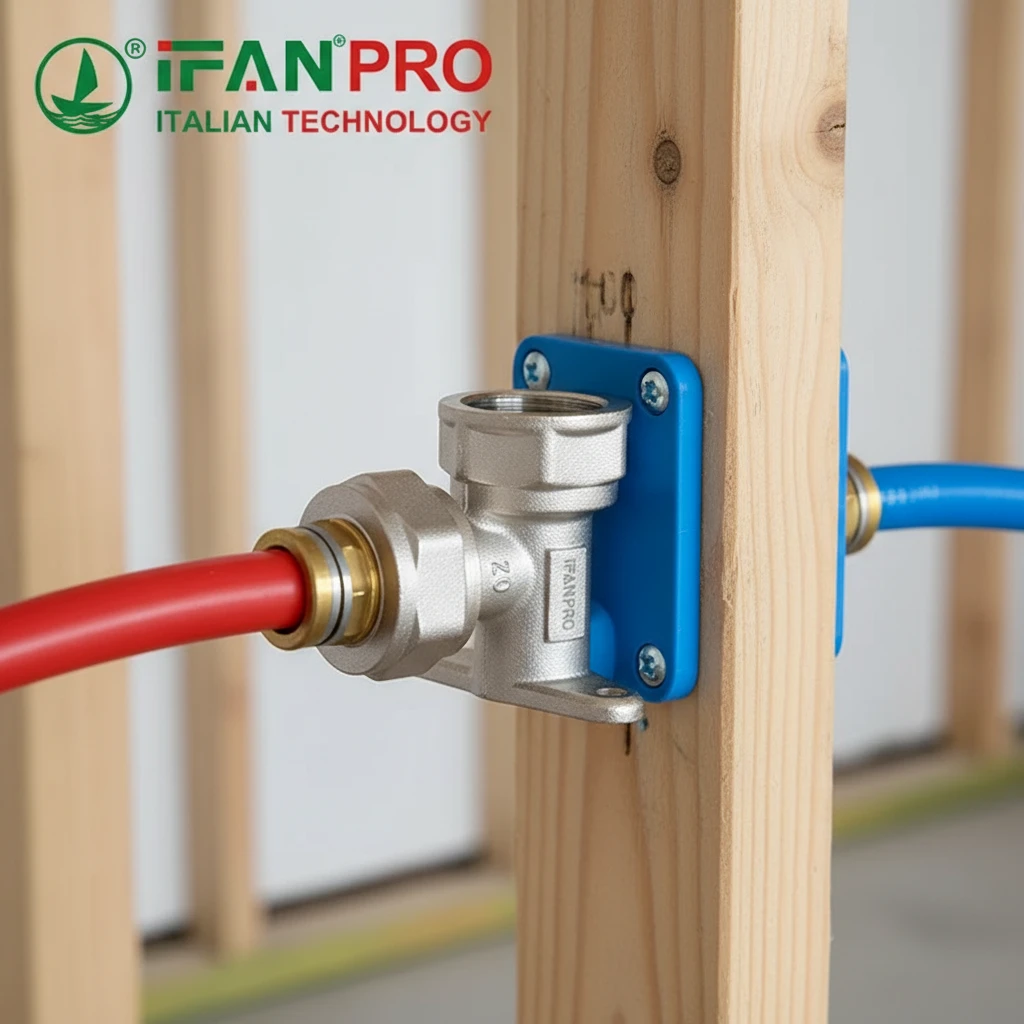
I’ve seen too many failed PEX connections where the pipe tore right at the thread. This common failure led us to champion a smarter solution: the seated design.
Yes, a seated (or supportive) elbow design effectively prevents stress on PEX female threaded joints. It features an integrated support seat that cradles the PEX pipe, absorbing vibration and preventing bending torque from reaching the fragile threaded connection. This directly protects the joint from the forces that cause most long-term leaks.
Simply put, it adds a backbone to a critical weak point. Let’s explore how this simple design solves a major plumbing headache.
How Does the Seat Absorb Vibration and Prevent Torque on the PEX Pipe?
A loose PEX pipe can shake like a loose tooth. Without support, every vibration travels straight to the thread.
The seat absorbs vibration and prevents torque by providing a rigid, curved cradle that fully supports the PEX pipe’s diameter. This cradle restricts lateral movement and stops the pipe from bending right at the fitting’s neck. Instead of the thread absorbing the energy, the seat’s broad surface area disperses it into the mounting surface (like a stud or board).
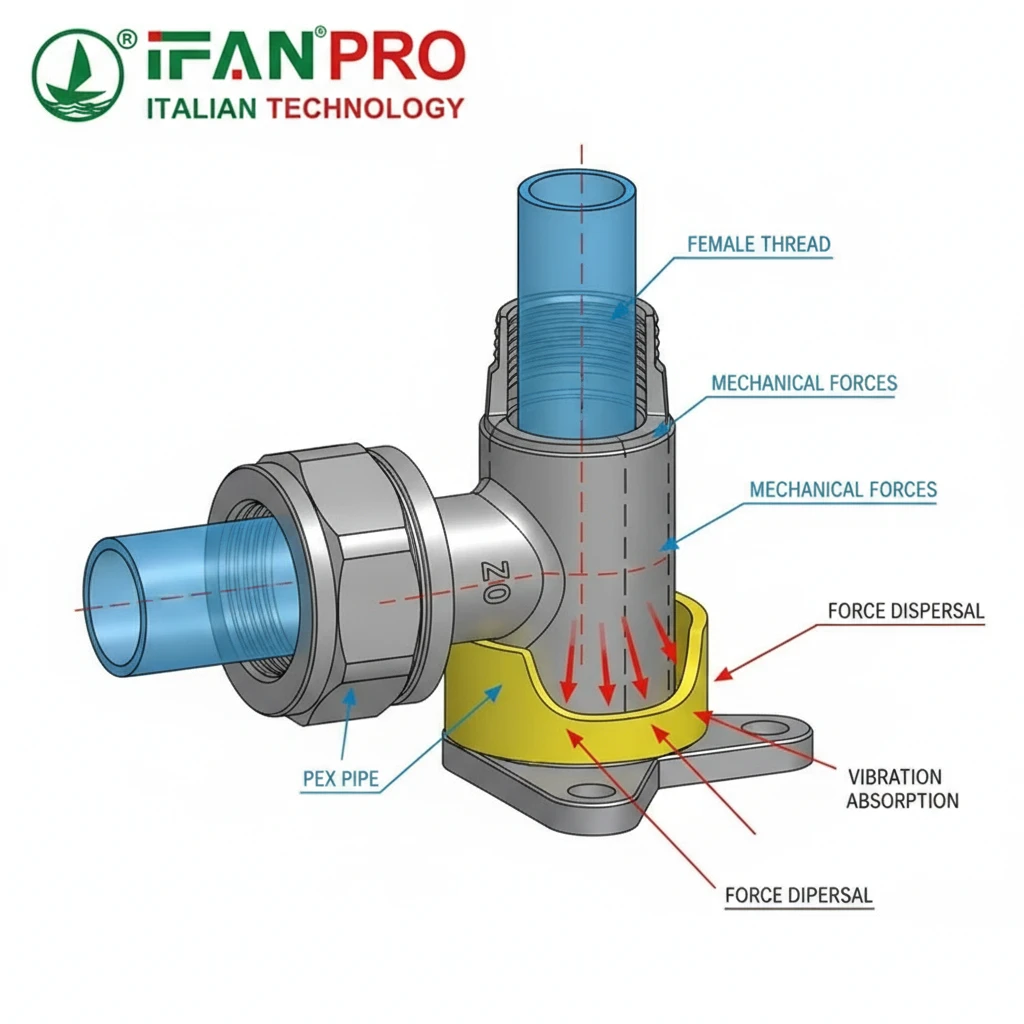
The Core Principle: Transfer and Disperse
Think of the seated design as a shock absorber for your plumbing. Its job is to catch unwanted movement before it hits the weakest link.
PEX pipe is flexible, which is both a strength and a weakness. When water pressure changes or a pump turns on/off, it creates pulses that make pipes vibrate. In an unsupported setup, the flexible pipe acts like a lever, and the threaded joint becomes the fulcrum. All the shaking and bending force concentrates on a tiny area where the plastic meets the metal threads.
The seated design breaks this lever. The pipe snaps into a rigid plastic seat that is itself screwed firmly to a wooden stud or manifold. Now, when vibration occurs, the pipe tries to move, but the seat immediately holds it back. The energy transfers from the pipe, into the seat, and then into the solid wood, where it safely dissipates.
Design Features That Make It Work
Not all supports are equal. A good seated design has specific features:
- Full Circular Cradle: It doesn’t just clip on one side. It wraps around most of the pipe’s circumference, providing 180-270 degrees of contact. This enveloping grip is key to preventing any wobble.
- Close Proximity to Fitting: The seat is positioned as close as physically possible to the fitting’s body. This minimizes the unsupported length of pipe, giving force no room to build up.
- Secure Fastening Point: The seat has a large, integrated ear with a screw hole. This allows for a strong fastener to anchor the entire assembly directly to a solid framing member.
Material and Action Comparison
The following table compares how different scenarios handle force:
| Scenario | How it Handles Vibration/Torque | Result on Threaded Joint |
|---|---|---|
| Unsupported PEX Elbow | Pipe bends at the thread. All force focuses on a 2-3mm ring of plastic. | High stress. Leads to material fatigue and cracking. |
| Generic Plastic Clip | May limit large movements but allows micro-wobble. Force is partially transferred. | Reduced, but ongoing stress remains. |
| Seated (Supported) Elbow | Seat arrests movement instantly. Force transfers to the seat and into the structure. | Effectively isolated. The joint experiences minimal operational stress. |
By absorbing energy and redirecting force, the seat ensures the threaded connection only has to do one job: maintain a static seal.
Why Is It Crucial to Isolate Mechanical Stress from the Threaded Connection?
The thread is the most vulnerable point in the system. I tell clients: protect the thread, protect the entire installation.
It is crucial to isolate stress because the female threaded connection in a PEX fitting is a composite weak point. The PEX plastic is softer than the metal male thread it connects to, and the threading process inherently thins the plastic wall. Concentrated stress here leads to cracks, leaks, and catastrophic joint failure.
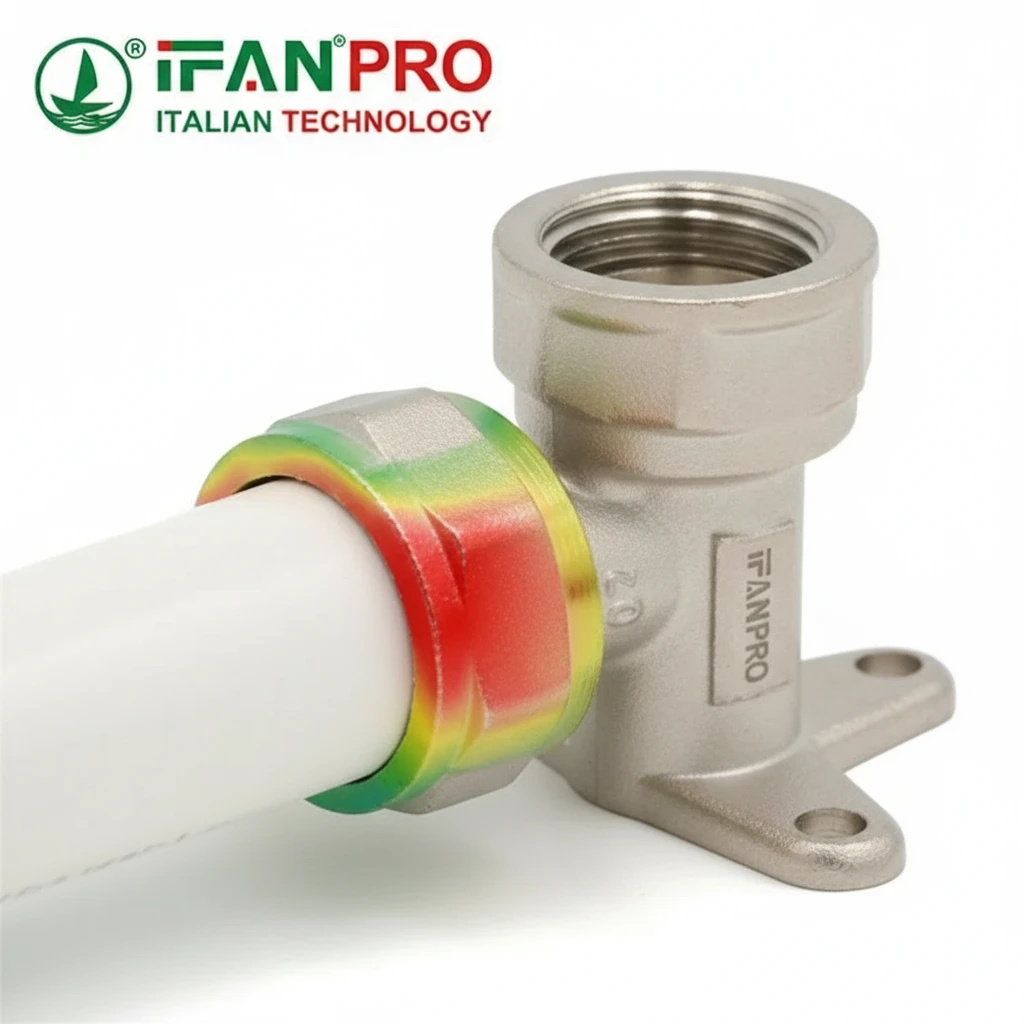
Understanding the Weak Point
A PEX female threaded adapter is a precision component, but it has inherent vulnerabilities.
First, consider the material science. The fitting is typically made from brass or a high-grade polymer. The PEX pipe is cross-linked polyethylene. When you screw a metal pipe into the plastic fitting, the harder metal can act like a tool, wanting to distort the softer plastic if any leverage is applied.
Second, look at the geometry. To create threads, the manufacturer must cut or mold grooves into the fitting’s wall. This process reduces the material thickness at the very point that needs to withstand pressure and force. It’s a natural stress concentrator.
Consequences of Unmanaged Stress
When you allow bending or vibration to hit this precise spot, several failure modes occur:
- Stress Cracking: Constant flexing causes microscopic cracks to form in the plastic at the root of the threads. Over months or years, these cracks grow until they create a leak.
- Thread Deformation: Excessive torque can literally strip the plastic threads, causing the connection to become loose and leak immediately.
- Fatigue Failure: The plastic loses its resilience from repeated stress cycles, becoming brittle and suddenly failing.
The seated design acts as a guardian. It places a strong, stress-bearing structure between the source of movement (the pipe) and the vulnerability (the threads). The seat takes the mechanical beating so the threads don’t have to.
The Analogy: Electrical Plug vs. Power Strip
Think of an unsupported PEX connection like a heavy appliance plug dangling from a wall outlet. The weight and movement strain the plug’s prongs and the outlet’s sockets, eventually breaking them.
A seated design is like securing that appliance’s power cord to the wall and plugging it into a secured, heavy-duty power strip. The wall anchor (the seat) takes the strain, and the actual electrical connection (the thread) remains undisturbed and safe. This isolation is not a luxury; it’s fundamental to a reliable, long-lasting piping system.
Can This Prevent Leaks Caused by Pipe Movement Over Time?
Absolutely. Most “mystery” leaks aren’t mysterious—they’re the result of years of unseen movement.
Yes, the seated design directly prevents the most common leaks caused by long-term pipe movement. By eliminating constant flexing and micro-vibration at the joint, it stops the cycle of material fatigue that leads to stress cracks in the plastic fitting. This addresses the root cause of slow, seasonal, or vibration-induced leaks that plague unsupported systems.
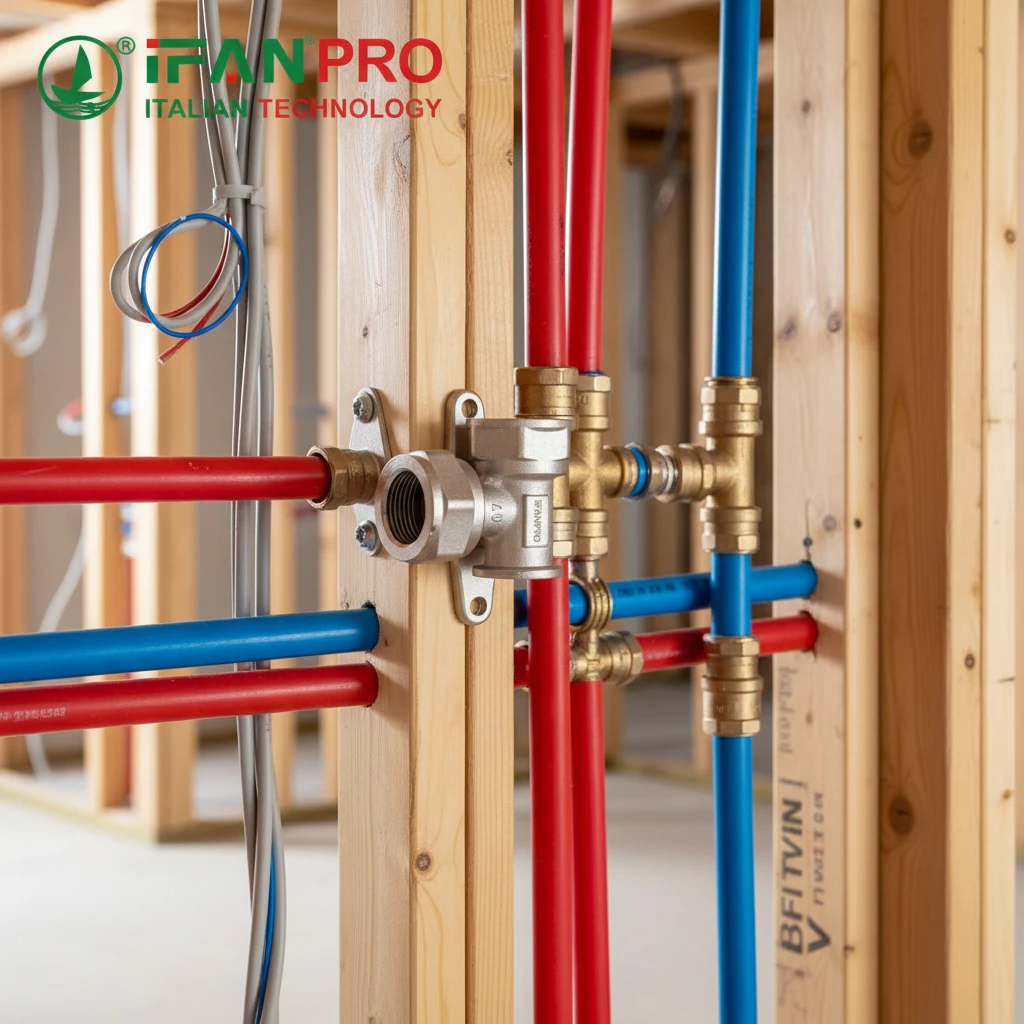
The Silent Leak: Fatigue Failure
Leaks don’t always start with a gush. Many begin as a tiny seep that worsens with time. This is often fatigue failure.
Every time a pipe vibrates or is bent slightly, the plastic in the fitting undergoes a tiny amount of strain. Do this thousands of times a day—every time a toilet flushes, a washing machine cycles, or a pump kicks on—and the plastic material gets tired. This “fatigue” weakens its molecular structure. Eventually, a crack forms, usually at the stress concentration point: the threads.
A seated design stops this cycle at the source. If the pipe cannot bend or vibrate freely at the joint, then the fatigue cycle never begins. The plastic fitting lives a calm, stress-free life, maintaining its integrity for decades.
Solving Specific Movement-Related Leaks
Let’s look at common scenarios the seated design fixes:
- Thermal Expansion/Contraction: PEX expands when hot and contracts when cold. In a long run, this creates push/pull forces on end fittings. An unsupported fitting absorbs this force directly. A seated fitting transfers this linear force along the pipe and into the secured seat.
- Water Hammer: The sudden shock of closing a valve sends a pressure wave. This can cause a pipe to jerk. An unsupported joint takes the full jerk. A seated joint minimizes the pipe’s ability to jerk locally.
- Structural Settling: Houses move slightly over seasons. An unsupported pipe connection can be stressed by this shift. A seated connection, if properly anchored, moves with the structure as a single unit, preventing differential stress on the threads.
The Verdict from the Field
In our experience at IFAN, service calls for leaks at supported threaded joints are extremely rare compared to unsupported ones. The data is clear: isolating movement prevents the degradation that causes leaks. It turns a potential failure point into one of the most reliable parts of the system. The initial investment in a seated elbow is minor compared to the cost of diagnosing and repairing a slow leak inside a finished wall.
How Does It Compare to an Unsupported Elbow in Stress Tests?
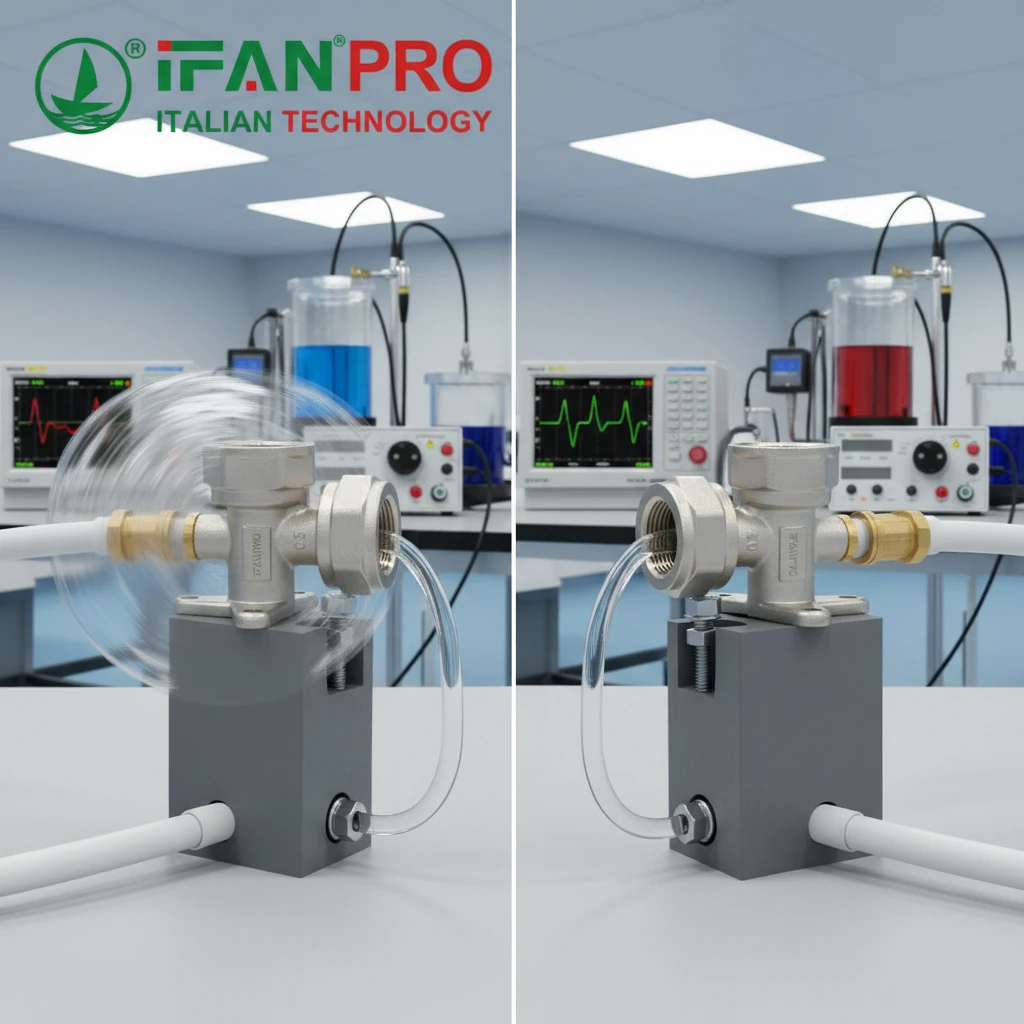
Lab tests tell the true story. The difference between supported and unsupported isn’t subtle; it’s dramatic.
In standardized stress tests, a seated elbow outperforms an unsupported elbow by a massive margin. Tests measuring cycles to failure under vibration, pressure surge, and bend stress show that seated designs can extend the joint’s lifespan by several hundred percent, often surviving for tens of thousands of cycles where unsupported fittings fail in the hundreds or thousands.
Understanding the Test Parameters
Independent labs and manufacturers run tests that simulate years of abuse in a short time. Key tests include:
- Vibration Fatigue Test: The fitting and pipe are subjected to constant, calibrated vibration while under water pressure. The machine counts how many cycles (vibrations) the joint survives before leaking.
- Pressure Pulse Test: The system pressure is rapidly cycled between high and low values (e.g., from 50 PSI to 150 PSI and back), simulating extreme water hammer events.
- Bend Moment Test: A controlled force is applied to the pipe to bend it at the fitting, measuring the torque required to cause failure or leakage.
Typical Test Results Data
The numbers reveal the stark contrast. Consider this synthesized data based on common industry test profiles:
| Test Type | Unsupported 90° Elbow | Seated/Supported 90° Elbow | Improvement Factor |
|---|---|---|---|
| Vibration Fatigue | Fails at ~5,000 – 10,000 cycles | Survives beyond 50,000 cycles | 5x to 10x longer life |
| Pressure Pulse (to failure) | Fails at ~25,000 – 50,000 pulses | Survives beyond 100,000 pulses | 2x to 4x longer life |
| Maximum Bend Moment | Fails at a low torque (e.g., 5 in-lbs) | Withstands significantly higher torque (e.g., 20+ in-lbs) | 4x+ greater strength |
Interpreting the Data:
The “cycles to failure” in vibration tests are particularly telling. An unsupported fitting might fail after simulating a few years of service in a busy household. The seated fitting, in the same test, often exceeds the machine’s test limits, indicating a potential lifespan longer than the useful life of the building itself.
Why This Matters for Your Project
These tests translate directly to real-world performance:
- Reliability: A seated elbow is far less likely to be the source of a leak.
- Warranty: Manufacturers confidently offer longer warranties on seated systems because test data supports their durability.
- Total Cost: While the fitting costs slightly more upfront, it eliminates the high future cost of leak repairs, water damage, and system downtime.
Choosing a seated design isn’t just buying a fitting; it’s buying proven, test-validated insurance for your plumbing system.
Conclusión
A seated elbow design is essential for preventing stress and leaks in PEX threaded joints. For guaranteed long-term reliability, specify IFAN’s supported PEX fittings with integrated, anchor-ready seats.









 Español
  English
  Français
  Русский
Comentarios recientes