
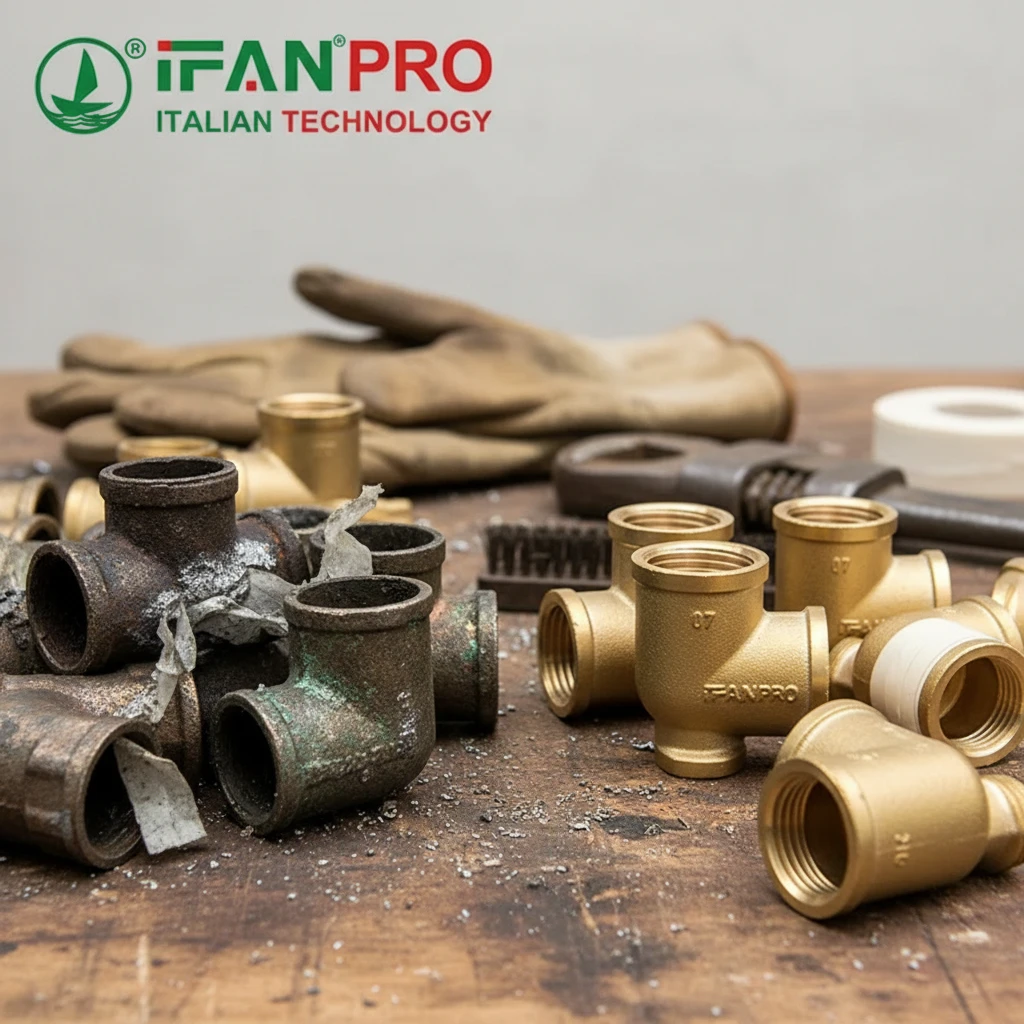
After a recent bathroom renovation, my client wanted to salvage the old brass fittings. I had to explain why reusing them could be a gamble.
Yes, a brass elbow can sometimes be reused, but its reliability depends entirely on how it was removed, the condition of its threads or soldered surfaces, and a thorough inspection for damage. Improper removal or hidden flaws often make replacement the safer, more cost-effective choice in the long run.
While reusing fittings can seem economical, it requires careful steps. Let’s explore the proper process to assess if a brass elbow is truly reusable.
How Do You Safely Remove a Soldered or Threaded Brass Elbow?
Forcing a fitting out usually ruins it. I’ve seen many good elbows destroyed by hasty removal.
Safely remove a soldered brass elbow by carefully heating the joint with a torch to melt the old solder, then gently pulling the fitting off with pliers. For a threaded elbow, use two wrenches—one to hold the adjacent pipe steady and the other to turn the fitting—to prevent twisting and damaging the entire pipe run.
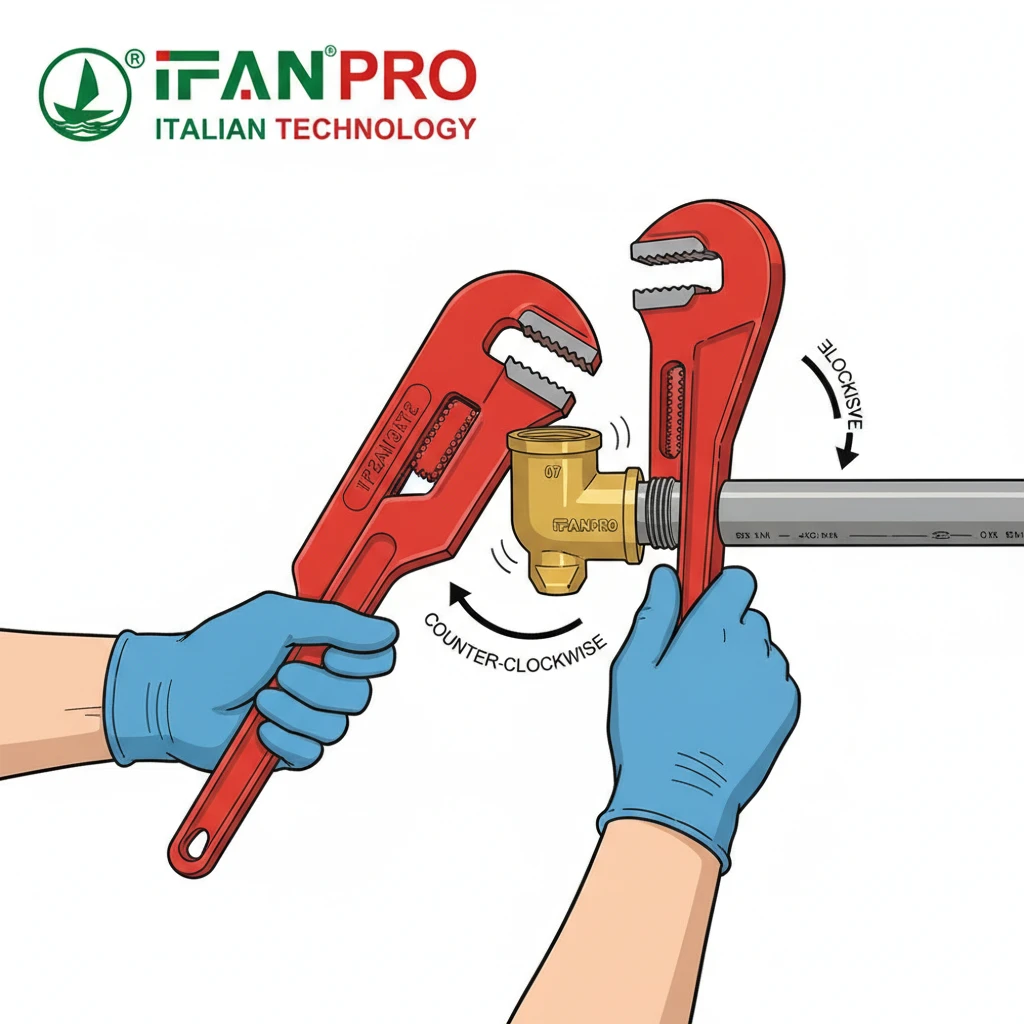
Safe Removal of a Soldered Brass Elbow
The goal is to remove the fitting without warping the brass or damaging the pipe ends. Brass softens at high temperatures, so you must work quickly and carefully.
First, drain all water from the pipes. Then, apply heat from a propane torch evenly around the soldered joint. Do not hold the flame on one spot, as this can overheat and weaken the brass. As the old solder melts (it will shimmer), use channel-lock pliers to gently twist and pull the elbow off. Be prepared for hot solder to drip. Always wear heat-resistant gloves and safety glasses.
Important: If the elbow is close to other fittings or flammable materials, use a heat shield. The key is patience; rushing can lead to burned fittings or damaged pipes that remain in the wall.
Safe Removal of a Threaded Brass Elbow
Threaded removal is about counter-force. The biggest mistake is using only one wrench, which twists the entire pipe and can cause leaks elsewhere in the system.
Use two pipe wrenches of the correct size. Position one wrench on the pipe behind the elbow to hold it perfectly still. Place the second wrench on the elbow itself. Apply steady pressure in opposite directions to break the joint’s seal. If the fitting is stubborn, apply a penetrating lubricant like WD-40 to the threads and let it sit for 15 minutes before trying again. Never use excessive force, as this can round off the fitting’s flats or crack it.
What Cleaning and Inspection Are Required Before Reusing the Fitting?
A fitting that looks okay might still be faulty. Proper cleaning reveals the truth.
Before reuse, you must completely clean out all old solder from soldered joints or thread sealant (like Teflon tape or pipe dope) from threaded joints. Then, inspect the fitting meticulously for cracks, warping, deep scratches, worn threads, or corrosion pits that could cause leaks.
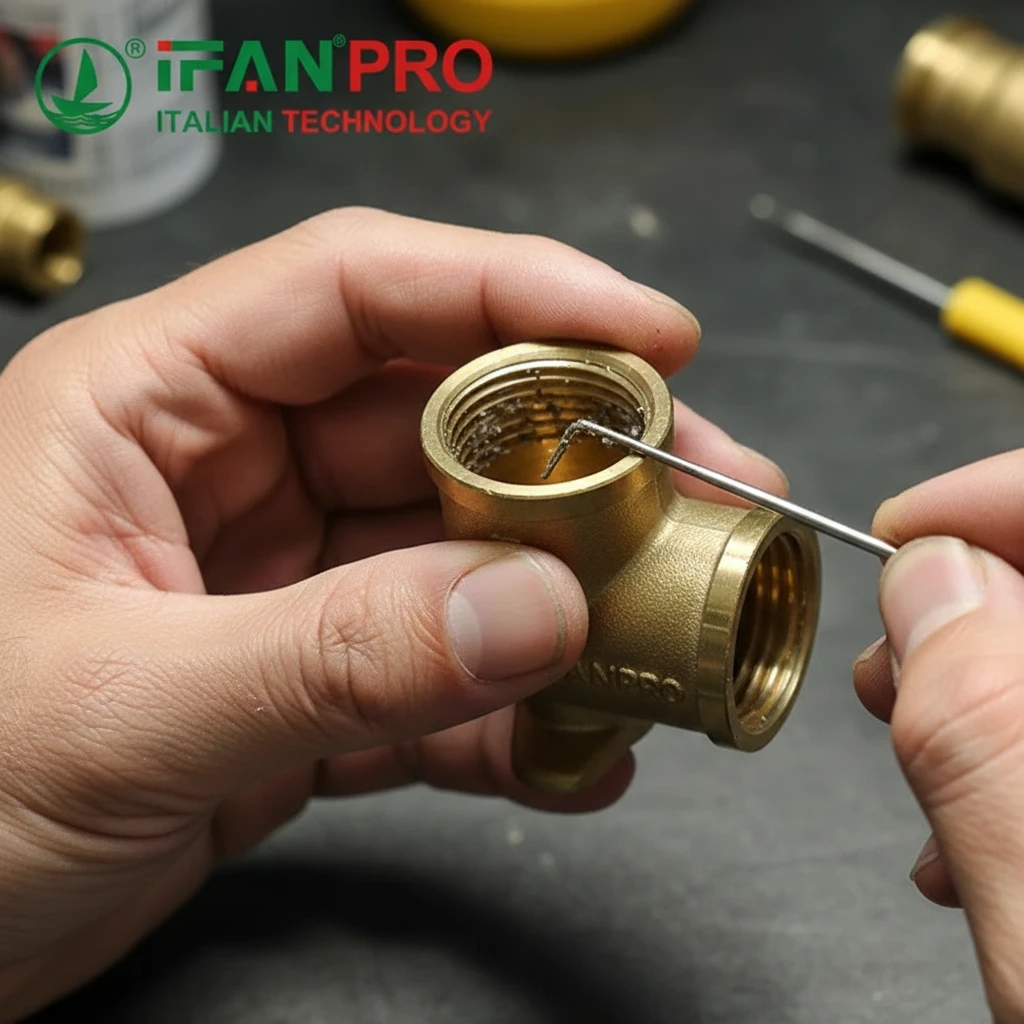
Step-by-Step Cleaning Process
Thorough cleaning is non-negotiable. Residual material prevents a new, perfect seal.
For a previously soldered elbow:
- Use a wire brush or emery cloth to scrub away all visible solder and flux residue from the inside of the fitting sockets.
- Check the small shoulder inside the socket (the “stop”). Old solder often hides here. A small, pointed tool or a dedicated solder-sucking braid can remove it.
- Finally, clean the outside of the fitting to see its condition clearly.
For a previously threaded elbow:
- Use a stiff wire brush and a pick tool to remove every bit of old white Teflon tape or hardened pipe dope from the threads.
- Ensure the threads are clean, sharp, and free of debris. Dirty threads are a primary cause of leaks in reused fittings.
Critical Inspection Points
After cleaning, inspect the elbow under good light. Look for these specific problems:
- Cracks: Especially around the corners (the “heel”) of the elbow. Hold it up to a light and look for thin, dark lines.
- Warping: Compare the fitting opening to a new one. Has heat from removal caused it to become oval-shaped?
- Thread Damage: Are the threads nicked, flattened, or worn smooth? Run your finger over them; they should feel sharp and even.
- Corrosion (Dezincification): This is a major issue with lower-quality brass. Look for areas that have turned a dull, reddish, or crumbly white color. This brass has lost its zinc and is weak.
- Deep Scratches or Grooves: On sealing surfaces, these can create a path for water to leak.
Are Threads or Sealing Surfaces Often Damaged During Disassembly?
Damage during removal is very common, and it’s the main reason reuse fails.
Yes, threads and sealing surfaces are frequently damaged during disassembly. Threads can be stripped, crossed, or dented by wrenches. The sealing surfaces inside soldered fittings can be gouged by aggressive cleaning or distorted by excessive heat during removal, preventing a proper seal with new solder.
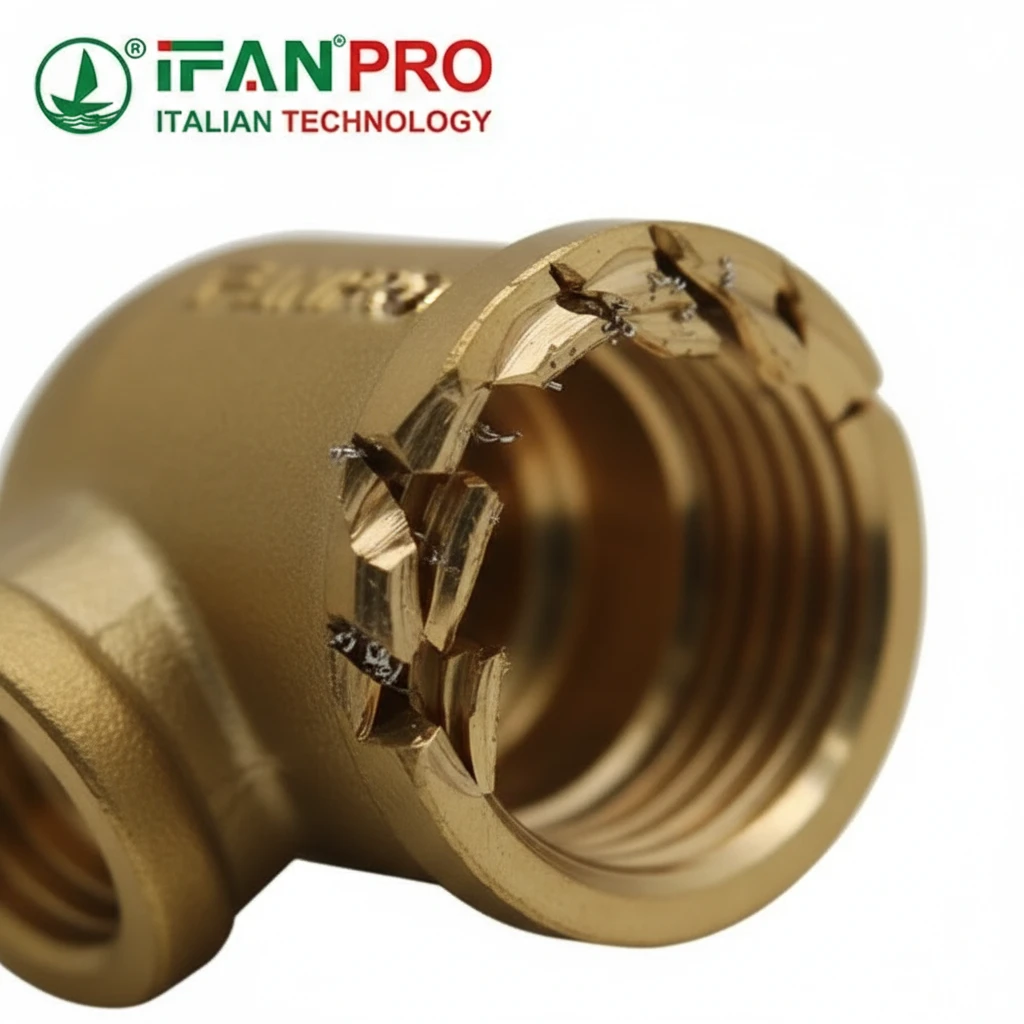
How Thread Damage Occurs
Threads are surprisingly delicate. Damage often happens in several ways:
- Cross-threading During Removal: If the elbow is forced off at an angle, it can cross-thread, mangling the first few threads. These damaged threads will not guide or seal the new connection properly.
- Wrench Slips: A slipping pipe wrench can chew into the soft brass, creating flat spots or burrs on the fitting’s hexagonal flats, making future tightening difficult.
- Corrosion Welding: In old systems, minerals can fuse the threads together. Forcing the joint apart can tear and weaken the brass threads.
How Sealing Surfaces Are Compromised
For soldered (or “sweat”) fittings, the sealing surface is the smooth inner wall of the socket. It needs to be pristine for new solder to flow in and create a seal via capillary action.
- Heat Damage: During removal, excessive or uneven heating can warp this inner surface. A warped socket will not make even contact with the new pipe, leading to a weak joint.
- Gouging: Using a screwdriver or a drill bit to scrape out old solder can score deep grooves into the brass. Solder cannot bridge these gaps effectively.
- Pitting: Corrosion from old water can etch tiny pits into the surface, which may hold moisture and contaminate the new solder joint.
Likelihood of Damage by Removal Method
This table estimates the risk:
| Removal Method | Risk of Thread Damage | Risk of Sealing Surface Damage | Notes |
|---|---|---|---|
| Careful Threaded Disassembly | Moderate | Low | Depends on condition, lubrication, and tool use. |
| Forced Threaded Disassembly | Very High | N/A | Often results in stripped threads or cracked fittings. |
| Proper Soldered Disassembly | N/A | Low-Moderate | Risk comes from overheating or aggressive cleaning. |
| Improper Soldered Disassembly | N/A | Very High | Prying or cutting the fitting always damages it. |
When Is It More Reliable to Replace an Elbow Rather Than Reuse It?
Knowing when to give up on an old fitting saves time, money, and future headaches.
It is always more reliable to replace a brass elbow rather than reuse it if the fitting shows any visible cracks, significant corrosion (dezincification), warping, or deeply damaged threads. For critical systems, high-pressure applications, or hard-to-reach locations, installing a new fitting is the only safe choice.
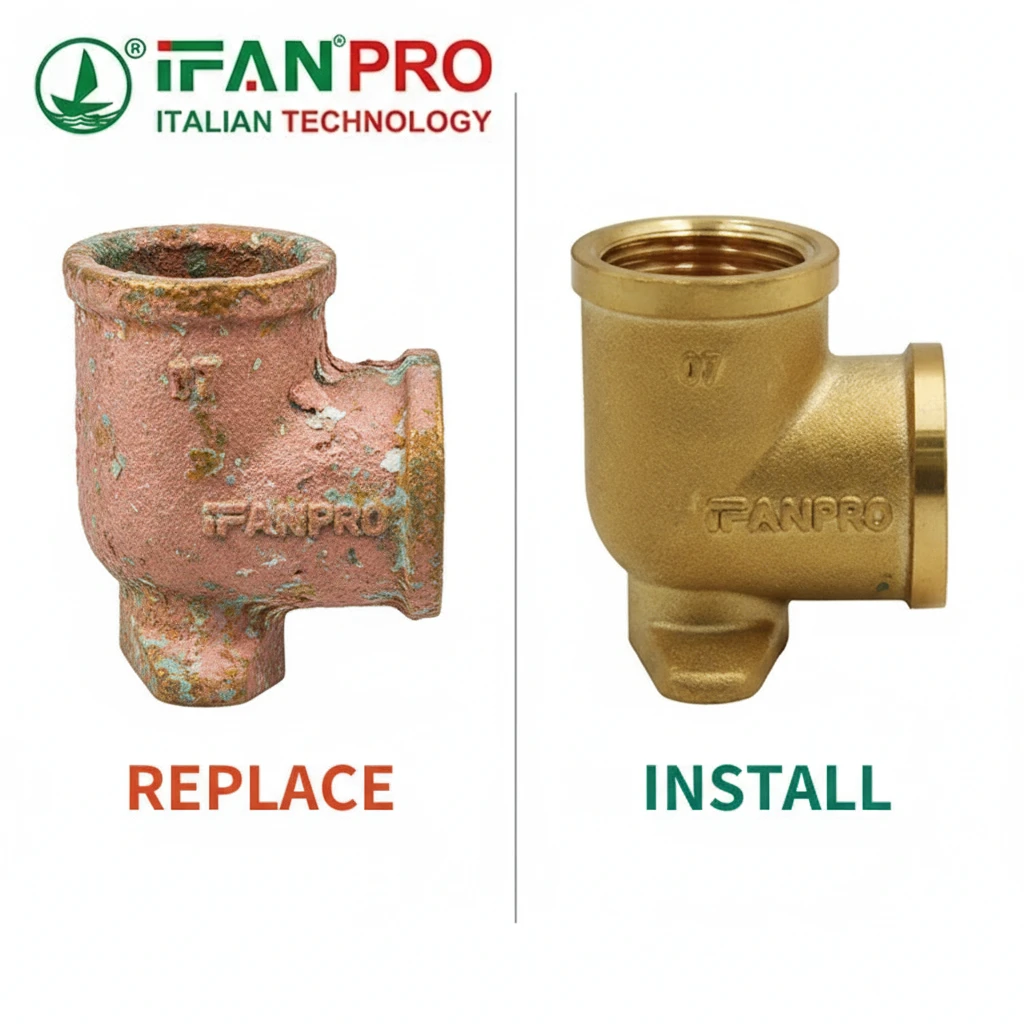
Clear Signs That Demand Replacement
Do not attempt to reuse a fitting if you find any of the following:
- Any Crack or Fracture: Even a hairline crack will expand under pressure and cause a leak.
- Advanced Corrosion: If the brass has a reddish or chalky white color and feels crumbly, it has undergone dezincification and has lost its structural strength. It could fail under pressure.
- Distorted Shape: If the elbow is visibly bent or the openings are oval, it will not seal correctly.
- Stripped or Mangled Threads: If more than 20-30% of the threads are damaged, the fitting will not hold reliably.
- Use in a Critical/Closed Location: If the elbow will be buried in a wall, under a floor, or connected to an expensive appliance, the small cost of a new fitting is insignificant compared to the potential cost of a leak repair later.
The Cost-Benefit Analysis of Reuse
Consider these factors before deciding:
| Scenario | Recommendation | Reason |
|---|---|---|
| Fitting is >15 years old | Replace | Metal fatigue and cumulative corrosion weaken the brass. |
| For a temporary/low-pressure test line | Can Reuse (if intact) | The consequence of failure is low. |
| For the main supply line to a building | Replace | The risk and potential water damage from failure are too high. |
| Fitting was difficult to remove | Replace | The struggle likely caused hidden stress or damage. |
| You cannot perfectly clean the old threads/sockets | Replace | Contamination guarantees a poor seal. |
The Practical Verdict
As a rule of thumb, the labor and risk involved in properly cleaning, inspecting, and prepping an old brass elbow often outweigh the minor savings. For a few dollars, a new elbow from a trusted supplier like IFAN provides a guaranteed seal, full pressure rating, and peace of mind. This is especially true when you factor in the potential cost of a callback to fix a leak from a reused fitting.
Conclusión
While reusing a brass elbow is sometimes possible, replacement is often the wiser choice for a guaranteed, leak-free system. For reliable connections, always choose new, high-quality IFAN brass fittings for your next project.







 Español
  English
  Français
  Русский
Comentarios recientes