
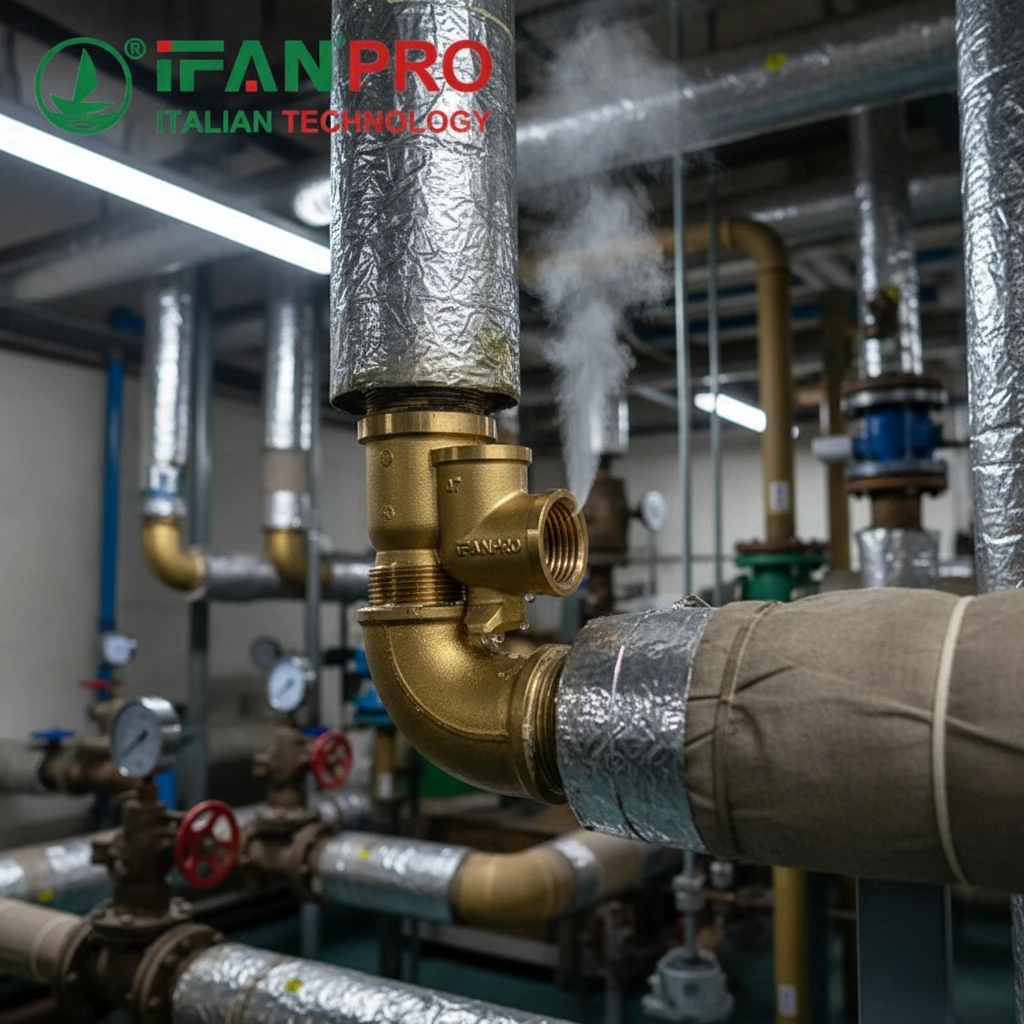
I once saw a brass fitting fail on a low-pressure steam line. The leak was small but the risk was huge. This made me research exactly where brass belongs—and where it doesn’t—in steam systems.
No, standard threaded brass elbows are generally not suitable for high-temperature steam lines. While brass can handle moderate heat, high-pressure steam systems require materials with far greater temperature tolerance, strength, and resistance to creep and corrosion. Using brass in such applications poses a significant safety and failure risk.
This is a critical question for system safety. Let’s examine the specific limits and risks of brass to make an informed material choice.
What is the Maximum Temperature Rating for Standard Brass Alloy Fittings?
Many assume “metal equals strong,” but with heat, the details matter. I often have to correct this assumption for clients planning steam projects.
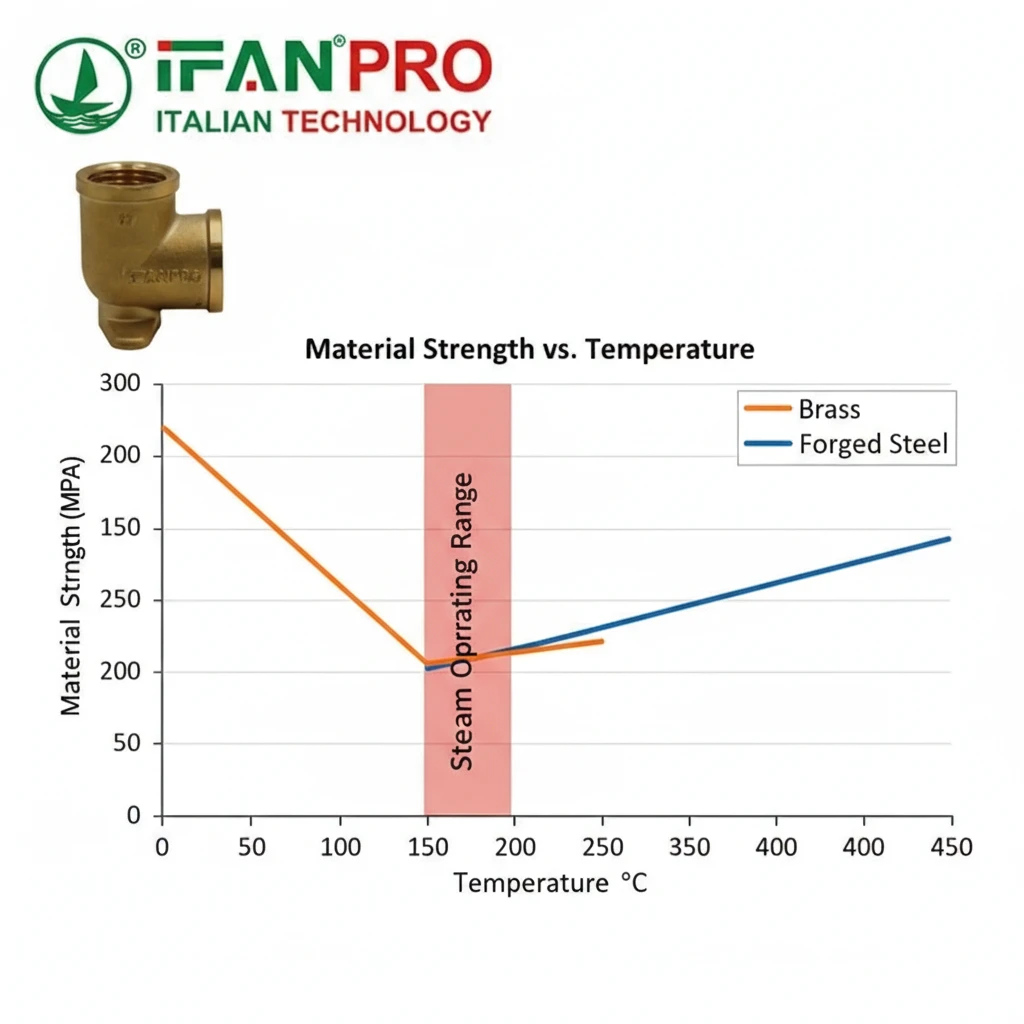
The maximum safe continuous service temperature for standard brass (C36000 or similar leaded alloys) is typically between 150°C to 200°C (300°F to 400°F). This rating falls dangerously close to, or below, the temperature of many pressurized steam systems, leaving no safety margin and risking material failure.
Understanding the “Safe” Temperature Limit
The temperature rating isn’t just about melting. Brass melts at much higher temperatures. The rated limit is about performance under stress. As temperature increases, brass loses strength rapidly—a property called “thermal softening.”
Think of it like a plastic ruler. At room temperature, it’s stiff. If you warm it up with a hairdryer, it becomes flexible and weak. Brass behaves similarly. At steam temperatures, the brass becomes too soft to reliably hold the pressure. The threads can deform, a process called “creep,” and the fitting can literally stretch and fail.
Key Factors That Lower the Real-World Rating
The nameplate rating assumes ideal conditions. Real steam systems introduce factors that make the effective safe temperature even lower.
- Pressure: The rating is for temperature alone. Steam lines combine high heat and high pressure. This combination stresses the material much more. A fitting at 200°C and 100 PSI is under far greater strain than at 200°C and atmospheric pressure.
- Alloy Variations: “Brass” is a family of alloys. Common plumbing brass (C36000) contains lead for machinability, which can further reduce its high-temperature stability compared to more specialized, lead-free alloys.
- Manufacturing Imperfections: Tiny pores or inclusions in the casting of a cheap fitting become failure points under thermal stress.
Temperature Comparison Table
This table shows why brass is often the wrong choice for steam.
| Material | Typical Max Continuous Service Temp | Saturation Steam Temp at 100 PSI | Safety Margin at 100 PSI Steam |
|---|---|---|---|
| Standard Brass (C36000) | 150°C – 200°C (300°F – 400°F) | 170°C (338°F) | None to Very Low |
| Forged Carbon Steel (A105) | ~425°C (800°F) | 170°C (338°F) | Very High |
| Stainless Steel (316) | ~870°C (1600°F) | 170°C (338°F) | Very High |
As you can see, standard brass operates at its very limit in a typical steam system. There is no room for error, temperature spikes, or increased pressure.
How Does Brass Perform Under Continuous Thermal Cycling in Steam Applications?
Steam systems don’t just get hot and stay hot. They cycle on and off, which is a special kind of torture for materials.
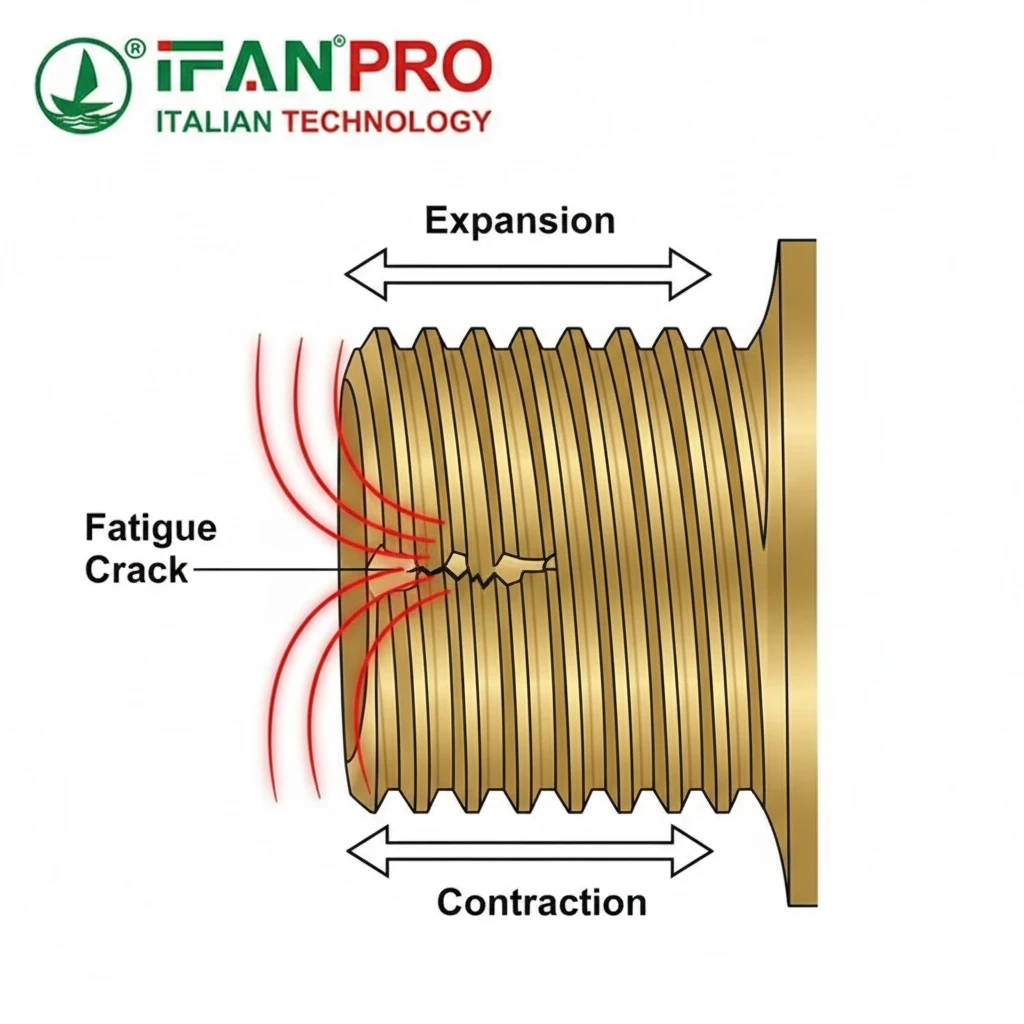
Brass performs poorly under continuous thermal cycling in steam applications. The repeated expansion and contraction cause “thermal fatigue,” leading to work-hardening of the metal, cracking at stress points (like thread roots), and eventual failure of the fitting or connection leaks.
The Mechanics of Thermal Fatigue
Every time the steam turns on, the brass fitting heats up and expands. When it shuts off, it cools and contracts. This cycle repeats daily, even hourly. Unlike more ductile metals, brass is susceptible to becoming brittle under this repeated stress.
Imagine bending a paperclip back and forth. It doesn’t stretch; it becomes hard and then snaps. This is work-hardening. In a brass elbow, the thinnest sections—the threads—are the most vulnerable. Microscopic cracks start to form at the sharp “V” of the threads. With each heat cycle, these cracks grow a tiny bit until they connect, causing a crack through the entire fitting wall.
Common Failure Modes from Cycling
You will see specific types of failures in brass fittings used in steam:
- Thread Leaks: The most common issue. The threads themselves deform or crack, breaking the seal. The leak often starts small and worsens with each cycle.
- Body Cracks: Cracks can appear in the body of the elbow, especially at the thinnest section behind the threads or at the corner of the bend where stress concentrates.
- Joint Failure: The entire fitting can fail at the welded or brazed seam if it’s not a single forged piece.
Why Other Materials Handle Cycling Better
Forged steel and stainless steel have different crystal structures that better absorb the strain of expansion and contraction. They are more ductile and less prone to becoming brittle from cycling. They are designed for the demanding environment of industrial thermal processes, where cycling is normal.
Using brass in a cycling steam system is a gamble on how many cycles it will last. It might hold for months, but eventual failure is highly likely, creating an unplanned and potentially dangerous downtime.
Are High-Temperature Seals and Thread Compounds Needed for Steam Service?
Using the right fitting is only half the battle. The sealing method is equally critical, and standard pastes are not enough.
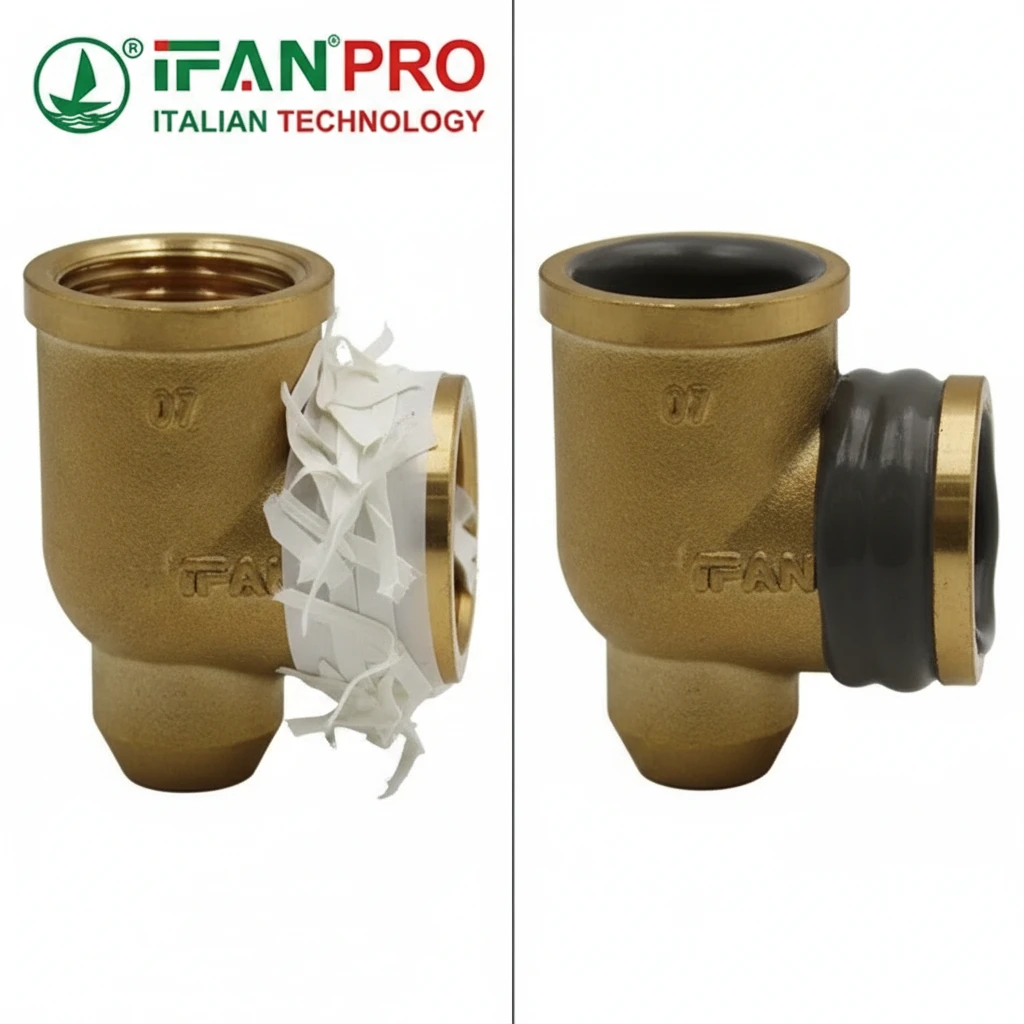
Yes, specialized high-temperature seals and thread compounds are absolutely essential for steam service. Standard Teflon tape or pipe dope will degrade, carbonize, or wash away under high heat, causing immediate leaks. You must use compounds specifically rated for the temperature and pressure of the steam system.
The Failure of Standard Sealing Methods
In water or air lines, PTFE tape or generic pipe dope works well. Steam is a different beast.
- PTFE Tape: Standard white tape begins to soften and decompose well below common steam temperatures. It can melt and be blown out of the threads, leaving a gap.
- Generic Pipe Dopes: Many oil-based compounds dry out, crack, and turn to powder when heated. Others simply wash away as superheated steam condenses and flows through the threads.
When these standard seals fail, the leak is not just through the threads—it’s often along the threads, following the spiral path right out of the fitting.
Required Sealing Solutions for Steam
For threaded connections in steam service, you need one of these two solutions:
- High-Temperature Thread Sealant/Paste: These are specially formulated with fillers like graphite or ceramic and high-temperature carriers. They remain pliable and seal effectively at temperatures exceeding 500°C (900°F). They lubricate threads during assembly and fill microscopic imperfections.
- Thread Sealant with PTFE (Rated for Steam): Some advanced sealants contain PTFE but are formulated to withstand the heat. They will be clearly labeled for “steam service” or “high-temperature.” Do not assume all PTFE products are suitable.
A Critical Assembly Note
The correct compound is useless without proper application. For steam lines, the best practice is to apply the sealant to the male threads only, covering all threads from the second thread back. This prevents excess sealant from being pushed into the steam line, where it can break off and damage valves or instruments.
Never use a sealant as a lubricant to achieve more turns. Threads should be hand-tight plus the specified number of turns (usually 2-3) with a wrench. Over-tightening, especially on brass, can cause the threads to gall or the fitting to crack under future thermal stress.
When Should You Consider Alternative Materials Like Forged Steel for Steam?
Knowing when to switch materials saves money and prevents disasters. Here is a simple rule of thumb based on our field experience.
You should consider alternative materials like forged steel for steam in almost all pressurized steam system applications. Specifically, switch to forged steel (ASTM A105) or stainless steel for any system where the steam pressure exceeds 15 PSI or the temperature exceeds 150°C (300°F), or where the system undergoes frequent thermal cycling.
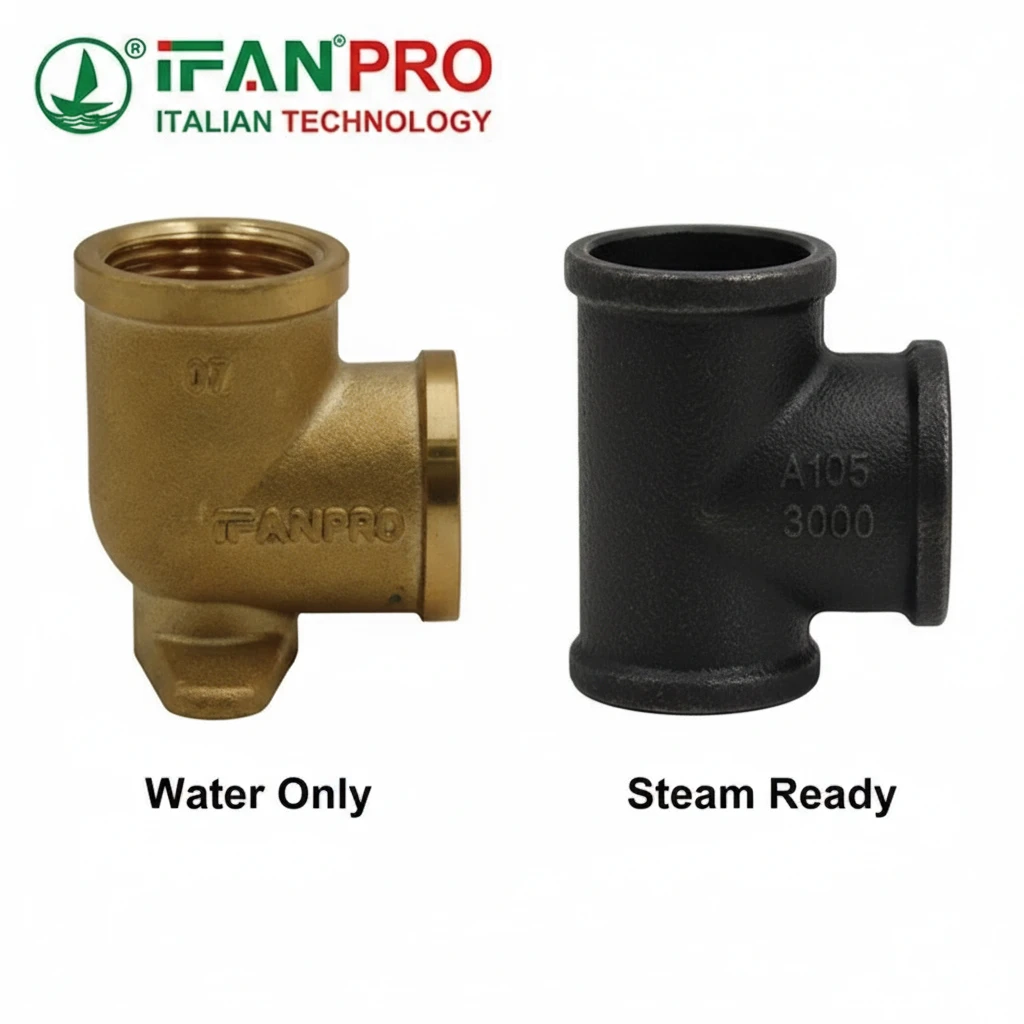
Making the Material Choice Clear
Let’s make the decision process straightforward. Use this guide to choose.
Stick with Brass ONLY for:
- Low-pressure, low-temperature steam lines (e.g., some humidification lines).
- Non-critical applications where failure poses no safety risk and causes minimal downtime.
- Where system specs explicitly allow it and operating conditions are constantly mild.
You MUST Upgrade to Forged Steel or Stainless Steel for:
- Any process steam in manufacturing, hospitals, or food processing.
- Plant heating systems with pressurized steam.
- Autoclaves, sterilizers, or any equipment where safety is paramount.
- Systems with frequent on/off cycles.
Direct Comparison: Brass vs. Forged Steel for Steam
This final table summarizes the key decision factors.
| Factor | Threaded Brass Fitting | Forged Steel (A105) Fitting | Winner for Steam |
|---|---|---|---|
| Temperature Strength | Loses strength above 200°C | Maintains strength to over 400°C | Forged Steel |
| Presión nominal | Low to Moderate | Very High | Forged Steel |
| Thermal Cycling | Poor (prone to fatigue cracking) | Good (ductile, handles stress) | Forged Steel |
| Creep Resistance | Poor (can deform under load) | Excellent | Forged Steel |
| Corrosion Resistance | Good for water, poor for some condensates | Moderate; may need coating | Brass (contextual) |
| Cost | Lower | Higher | Brass (but false economy) |
The “corrosion resistance” point is important. While brass resists water corrosion well, the acidic condensate (carbonic acid) formed in steam systems can aggressively attack brass, leading to dezincification. Forged steel, while it can rust, is often a more predictable and manageable material in this environment, especially when properly maintained.
The Bottom Line Advice
View brass fittings as a solution for hot water, not for steam. For any steam application with pressure and reliability requirements, the initial higher cost of forged steel fittings is the cheapest choice in the long run. It prevents catastrophic failure, ensures safety, and avoids costly production shutdowns.
Conclusión
Brass fittings are a risky choice for pressurized steam. For safe, reliable steam systems, always specify materials like forged steel. For your robust steam line solutions, explore IFAN’s range of galvanized and carbon steel fittings.






 Español
  English
  Français
  Русский
Comentarios recientes