
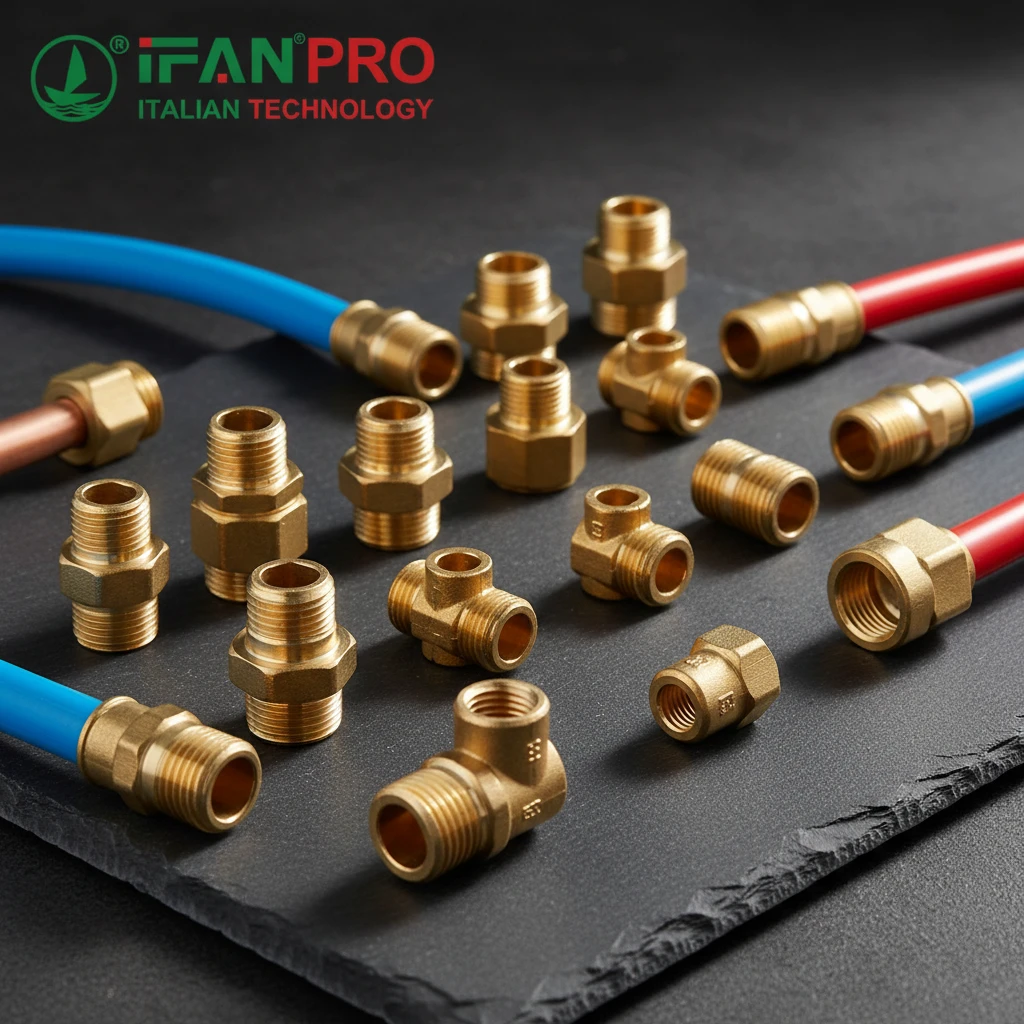
I once saw a project delayed for weeks because a contractor used the wrong fitting to connect a PEX line to an old copper system. The leak caused massive water damage. Choosing the correct conversion fitting is not a minor detail; it’s critical for system integrity.
You choose the right brass conversion fitting by first accurately identifying the materials and sizes of the pipes you need to connect, then selecting the correct end types, and finally ensuring the fitting’s pressure rating and certifications are suitable for your specific application environment, like potable water or heating systems.
This process might seem complex, but by following a logical step-by-step approach, you can make a confident selection. Let’s break down each crucial factor.
How Do You Identify the Materials and Sizes You Need to Connect?
Mismatched materials or wrong sizes are the top causes of installation failure and leaks. Accurate identification saves time, money, and frustration.
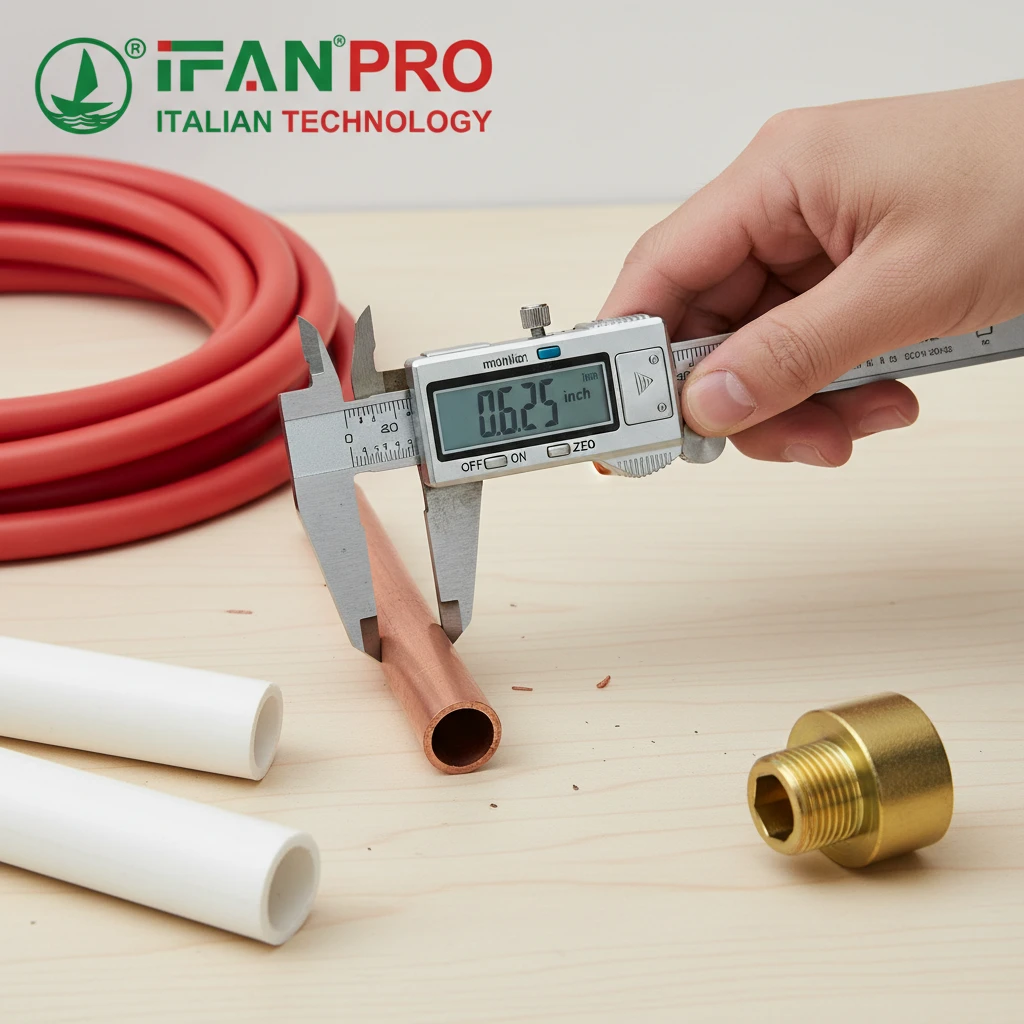
You identify the necessary materials and sizes by physically inspecting the existing pipes for markings, measuring their outer diameter (OD) or inner diameter (ID) with a caliper, and determining the pipe material (like PEX, copper, CPVC, or galvanized steel). Always measure twice and confirm the thread type (NPT or BSP) if connecting to threaded ports.
Step 1: Determine the Pipe Material
The material of your existing pipes dictates the type of connection needed. Using a fitting designed for the wrong material will not seal properly. Here are the most common types:
- PEX (Cross-linked Polyethylene): A flexible, color-coded plastic tube (often red for hot, blue for cold). It requires fittings with barbed ends and crimp rings or push-to-connect ends.
- Copper: Rigid, metallic pipe that can be smooth (for soldered/sweat fittings) or have threaded ends.
- CPVC (Chlorinated Polyvinyl Chloride): A rigid, yellowish plastic pipe used for hot and cold water. It uses solvent-weld (glued) fittings or threaded connections.
- PVC (Polyvinyl Chloride): A rigid, white or grey plastic pipe typically used for cold water and drainage. It uses solvent-weld or threaded fittings.
- Galvanized Steel: A heavy, threaded metal pipe, usually silver-gray and magnetic.
Step 2: Measure the Pipe Size Accurately
This is where most mistakes happen. “Nominal” size (like 1/2 inch) does not always match the physical dimensions.
- For copper, CPVC, and PVC, measure the outer diameter (OD) with a caliper.
- For PEX and some other tubing, the nominal size usually refers to the inner diameter (ID). Check the printing on the pipe itself.
- For threaded pipes (steel, PVC, or copper), you must identify the thread standard. In North America, it’s usually NPT (National Pipe Taper). In many other regions, it’s BSP (British Standard Pipe). They are not interchangeable.
Common Pipe Size Reference Table
| Nominal Size | Copper Tube OD (inches) | PEX Tubing OD (inches) | CPVC Schedule 80 OD (inches) |
|---|---|---|---|
| 1/2 inch | 5/8″ (0.625) | 5/8″ (0.625) | 0.840″ |
| 3/4 inch | 7/8″ (0.875) | 7/8″ (0.875) | 1.050″ |
| 1 inch | 1-1/8″ (1.125) | 1-1/8″ (1.125) | 1.315″ |
My Advice: When in doubt, take a sample of the pipe and the old fitting to your supplier. A picture is not enough for precise sizing.
What Are the Main Types of Ends Available on Conversion Fittings?
Choosing the right end type is about selecting the correct “handshake” between your fitting and the pipe. A mismatched end will not connect or seal.
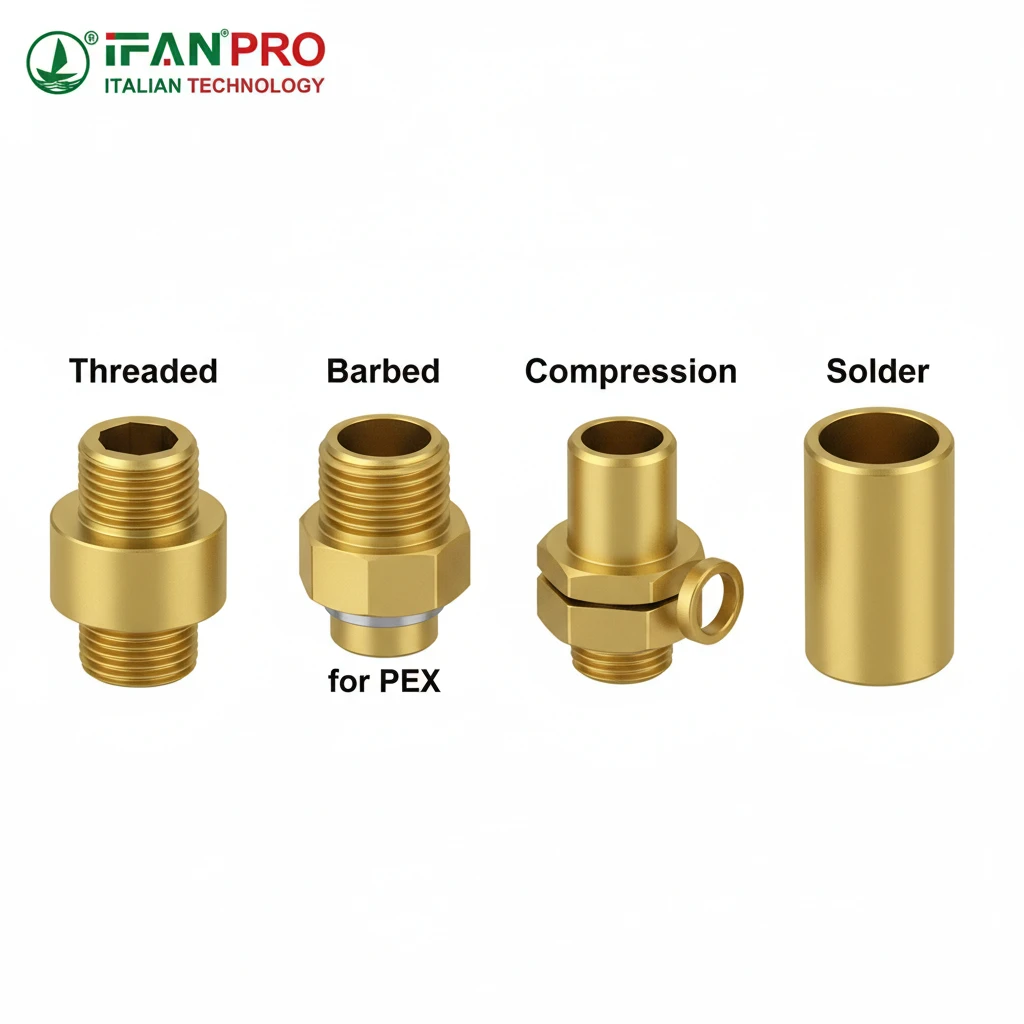
The main types of ends on brass conversion fittings are threaded (NPT or BSP), barbed (for PEX with a crimp clamp), compression (for copper or plastic without soldering), sweat/solder (for permanent copper connections), and push-to-connect (for quick installation on PEX, copper, or CPVC). Each type suits a specific pipe material and installation method.
Understanding Each End Type’s Purpose
Each connection method has its strengths and ideal applications. Using the wrong one can lead to leaks or system failure under pressure.
Threaded Ends (Male or Female)
These are the most universal. They screw onto corresponding threaded pipes or valves.
- Best for: Connecting to existing threaded iron pipe, valves, or appliances. Also used for connecting different sections of pipe where disassembly might be needed.
- Key Point: Always use thread seal tape or pipe dope on male threads to ensure a watertight seal. Remember the NPT vs. BSP distinction.
Barbed Ends
These have ridged “barbs” that grip the inside of flexible tubing. A metal crimp ring is compressed over the tubing and barbs to create a permanent hold.
- Best for: Creating secure, permanent connections with PEX tubing. This is the standard for modern PEX plumbing systems.
- Key Point: You must use the correct crimping tool matched to the brand and size of the crimp ring.
Compression Ends
These use a nut and a ferrule (a small brass or copper ring) that compresses onto the pipe as the nut is tightened, forming a seal.
- Best for: Conexión copper or plastic tubing without soldering or gluing. Useful for repairs or in tight spaces. Allows for some disassembly.
- Key Point: Do not over-tighten, as this can crush the ferrule or pipe and cause a leak.
Comparison of Common Connection Methods
| End Type | Pipe Material | Tools Needed | Permanent or Removable? |
|---|---|---|---|
| Sweat/Solder | Copper | Torch, solder, flux | Permanent |
| Roscado | Steel, Copper, PVC | Wrench, thread sealant | Removable |
| Barbed (Crimp) | PEX | PEX crimp tool, go/no-go gauge | Permanent |
| Compression | Copper, Plastic | Two wrenches | Semi-Removable |
| Push-to-Connect | PEX, Copper, CPVC | Pipe cutter, deburring tool | Removable (with tool) |
Push-to-Connect Ends
These are the easiest to use. You simply cut the pipe cleanly, deburr it, and push it directly into the fitting. An internal O-ring seals and a grab ring holds the pipe.
- Best for: Fast installations, DIY projects, or locations where using a torch or crimper is difficult.
- Key Point: Ensure the pipe is cut perfectly straight and clean. The fitting is removable with a special disconnect clip.
Should You Consider Pressure Rating and Application Environment?
Ignoring pressure rating and environment is like buying a car without checking if it can handle your local roads. It might work at first, but it will fail under stress.
Yes, you must always consider pressure rating and application environment. The fitting must have a pressure rating (PSI/WPA) that exceeds your system’s maximum operating pressure. The environment—such as exposure to potable water, high heat, chemicals, or outdoor weather—determines the required brass alloy and internal coatings to prevent corrosion and contamination.
Why Pressure Rating is Non-Negotiable
Every plumbing and hydraulic system operates under pressure. A fitting’s pressure rating tells you the maximum sustained pressure it can safely handle.
- Residential Water Pressure: Typically ranges from 40 to 80 PSI. Your fittings should be rated well above this, often 150 PSI or more for cold water, and higher for hot.
- Hydronic Heating Systems: These closed-loop systems can have different pressure requirements. Always follow the boiler or system manufacturer’s specifications.
- Safety Factor: Always choose a fitting whose rated working pressure is at least 1.5 times your system’s normal operating pressure. This accounts for pressure spikes (water hammer).
How Environment Affects Material Choice
Brass is an alloy of copper and zinc, but different proportions and additional elements change its properties. The environment dictates the best alloy.
Potable Water (Drinking Water) Applications
This is the most critical environment. Fittings must be made from a lead-free brass alloy (such as CW510L or similar, often called “Eco-Brass”).
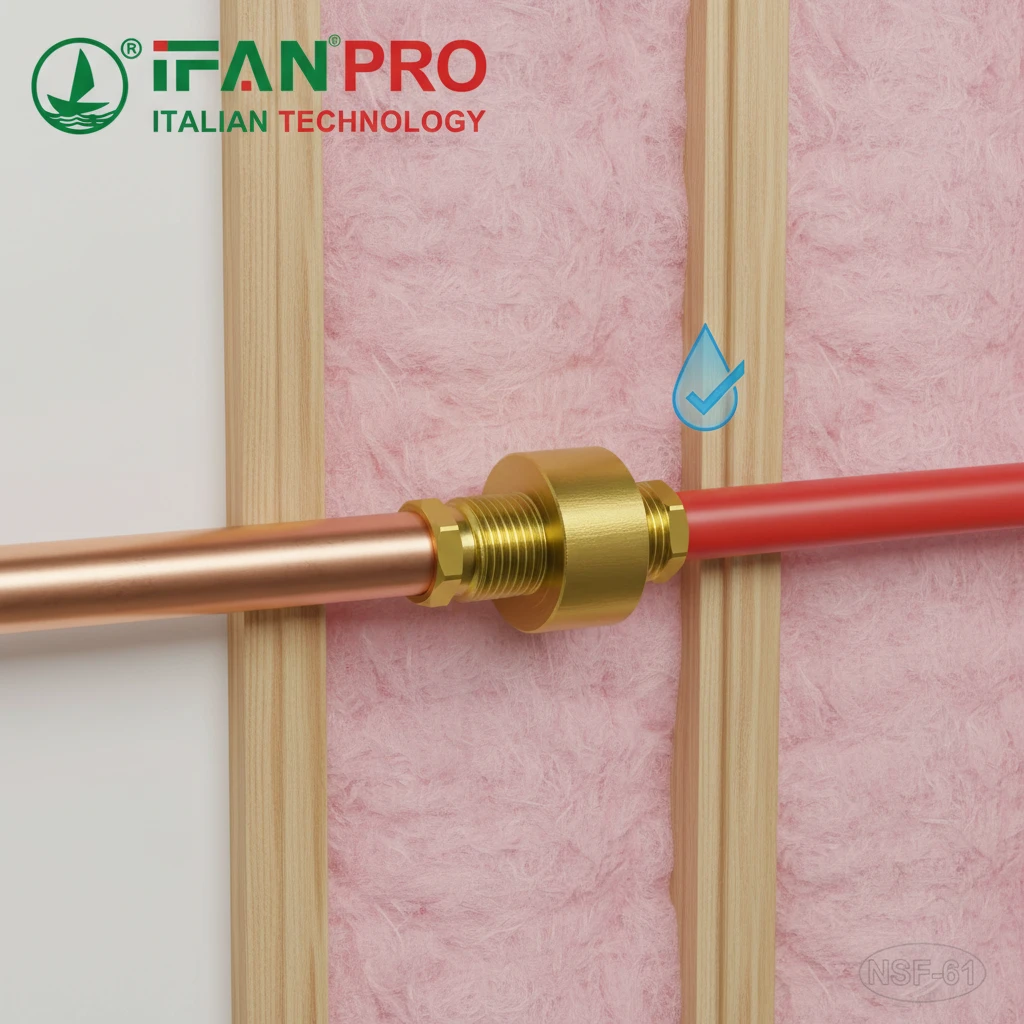
- Requirement: They must comply with safe drinking water standards like NSF/ANSI 61 in the US or WRAS in the UK. This certifies that harmful levels of lead and other contaminants do not leach into the water.
High-Temperature Environments (Heating Systems)
Standard fittings may degrade. You need fittings designed for higher continuous temperatures.
- Requirement: Look for fittings rated for the specific temperature of your system (e.g., 250°F/120°C). The internal components, like O-rings in push-fit fittings, must also be high-temperature rated.
Fitting Selection Guide by Environment
| Application Environment | Critical Factors to Check | Recommended Standard/Certification |
|---|---|---|
| Residential Drinking Water | Lead-free material, corrosion-resistant | NSF/ANSI 61, ASTM B62 (Low-Lead Brass) |
| Hydronic / Radiant Heating | High temperature rating, durability | Rated for >200°F operating temperature |
| Industrial / Chemical | Chemical resistance of alloy | Check manufacturer’s chemical compatibility charts |
| Outdoor / Underground | Corrosion resistance, thick plating | DZR (Dezincification Resistant) brass, heavy nickel plating |
Corrosive Environments
In areas with aggressive water (low pH, high chlorides) or for outdoor use, standard brass can suffer from dezincification, where zinc leaches out, leaving a weak, porous copper structure.
- Solution: Use DZR (Dezincification Resistant) brass or heavily plated fittings. These are specifically engineered to resist this type of corrosion.
Where Can You Find Reliable Specifications and Compliance Markings?
Relying on a supplier’s verbal promise is risky. Trusted manufacturers stamp vital information directly on their fittings, providing a permanent record of their capabilities.
You can find reliable specifications and compliance markings stamped or engraved directly on the body of the fitting itself. Look for the pressure rating (e.g., “300 PSI”), the size (e.g., “1/2 x 3/4”), the material standard (e.g., “ASTM B62”), and certification marks from independent bodies like NSF, UL, or WRAS. Always cross-reference this with the manufacturer’s official catalog or website.
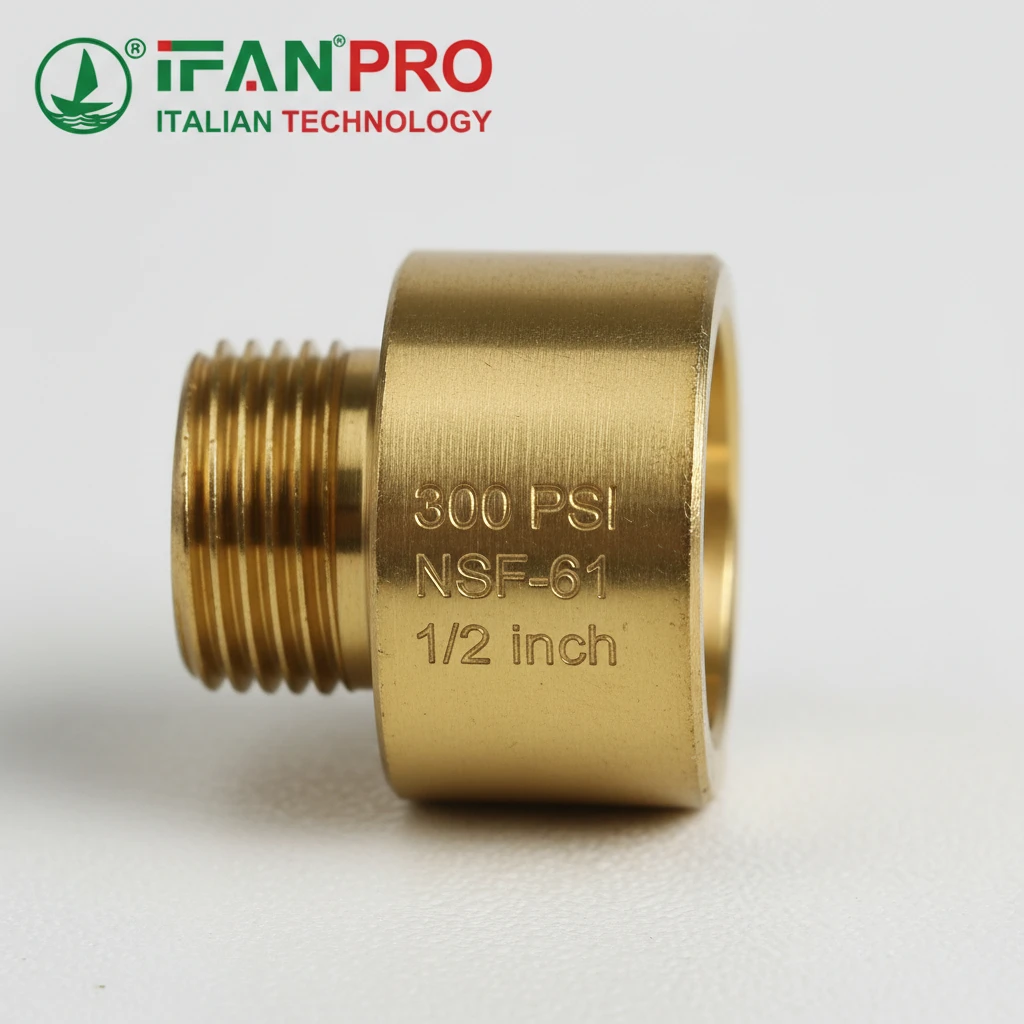
Decoding the Markings on a Fitting
A quality brass fitting is like a book; its markings tell its story. Here’s how to read them:
- Size Marking: This is usually the most prominent. It will look something like
1/2 x 3/4. This means one end is for a 1/2-inch pipe, and the other is for a 3/4-inch pipe. Sometimes it includes the thread type, like1/2" MIP x 3/4" Compression. - Pressure Rating: Often shown as
PSI(Pounds per Square Inch) orBAR. For example,300 PSI WOG. WOG is an important acronym: Water, Oil, Gas. It means the rating applies to cold water, oil, and gas services. The rating for steam or hot water will be lower and should be listed separately. - Material Standard: This indicates the alloy specification. Common marks include:
- ASTM B62: Standard for composition of cast brass fittings. A reliable baseline.
- ASTM B16: Standard that covers dimensions, tolerances, and markings.
- EN 1254 / EN 1982: Common European standards for copper alloy fittings.
- Manufacturer’s Logo or Name: This is crucial for traceability. A reputable brand stands behind its markings.
Understanding Compliance Marks
These logos are awarded by independent testing organizations. They are your guarantee of safety and performance for specific uses.
- NSF/ANSI 61: The gold standard for potable water safety in North America. The “NSF-pw” mark means it’s certified for potable water.
- UL Listed: Underwriters Laboratories listing indicates the product has been tested for safety.
- WRAS (UK): The Water Regulations Advisory Scheme mark is required for products in contact with drinking water in the UK.
- ACS (France): Attestation de Conformité Sanitaire is the French standard for sanitary conformity.
- KIWA (Netherlands/EU): A leading European certification for building and water technology products.
Where to Look for Official Data
- On the Product: The physical markings are your first source of truth.
- Product Packaging: Quality packaging will list key specs and certifications.
- Manufacturer’s Website & Catalog: Search for the exact part number. A professional manufacturer like IFAN provides detailed PDF datasheets with full specifications, test reports, and compliance certificates.
- Supplier Documentation: Your B2B supplier should be able to provide all relevant certification documents upon request before you purchase.
My Practical Advice: Never accept fittings without clear, stamped markings. Unmarked fittings are of unknown origin and quality, posing a significant risk to your project’s safety and longevity.
Conclusión
Choosing the right brass fitting involves checking materials, sizes, ends, pressure, and certifications. For reliable, clearly-marked fittings that meet global standards, explore the IFAN range for your next conversion project.








 Español
  English
  Français
  Русский
Comentarios recientes