
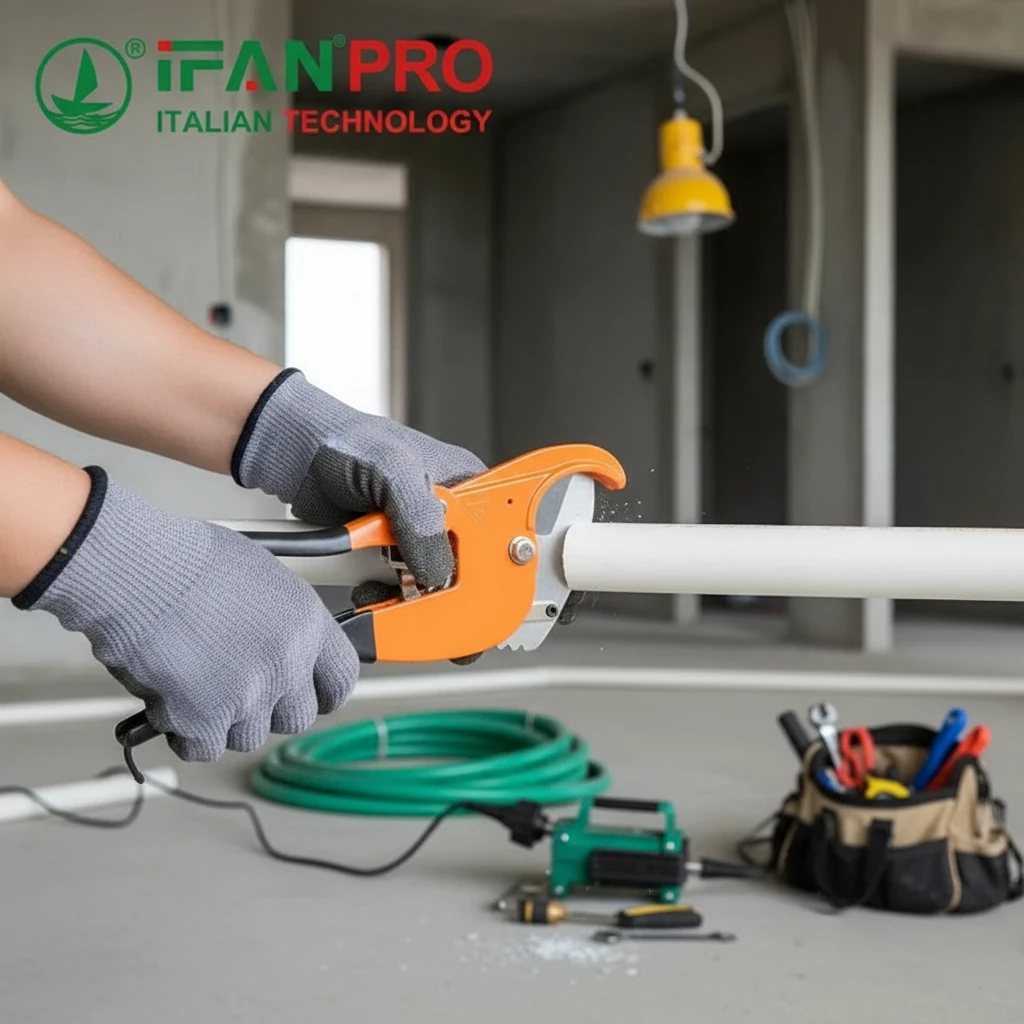
I once watched an installer struggle with a hacksaw, creating uneven PPR pipe ends that caused alignment issues and leaks later. That moment proved to me that the right tool doesn’t just help—it fundamentally changes the job.
Yes, a precision pipe cutter significantly speeds up installation. It creates perfectly square, burr-free cuts in seconds, eliminating the need for rework or extensive end preparation. This ensures reliable, leak-proof fusion welds on the first attempt, dramatically reducing the time spent on measuring, cutting, and fitting pipes throughout the entire project.
The difference between a clean cut and a bad one is the difference between a smooth installation and a frustrating, error-prone process. Let’s look at how a precision cutter makes this possible.
How Does a Precision Pipe Cutter Improve Pipe Cutting Efficiency?
A twisted pipe end from a poor cut wastes time immediately. I’ve seen installers lose 10 minutes fixing a single bad cut.
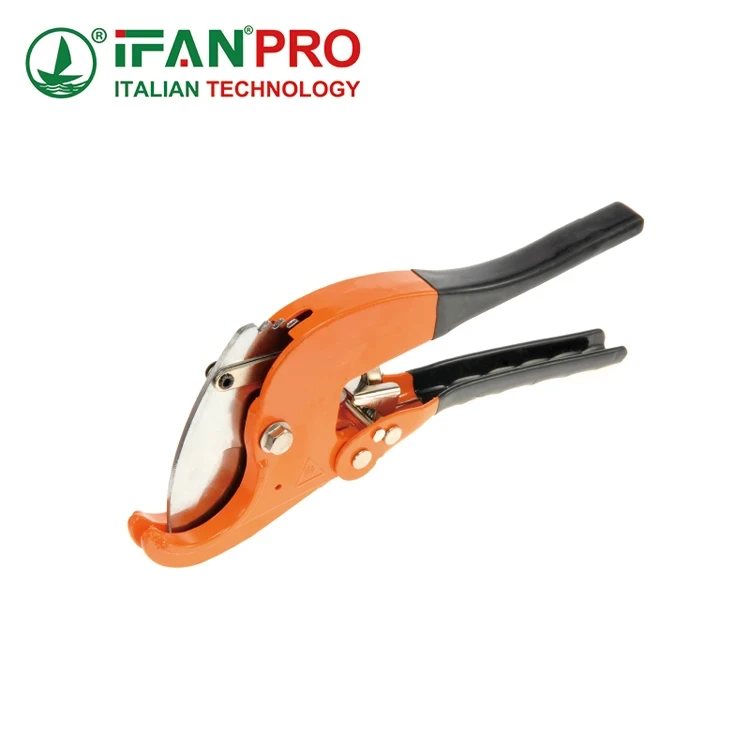
A precision pipe cutter improves efficiency by delivering a perfectly square and smooth cut with one quick action. It removes the multiple, time-consuming steps of measuring inaccuracies, re-cutting, and deburring that are common with saws or ordinary cutters, allowing the installer to move directly to the crucial welding phase.
The Direct Impact on Workflow
When we talk about cutting efficiency, we mean the total time and effort from marking the pipe to having it ready for welding. A precision cutter optimizes every part of this sequence.
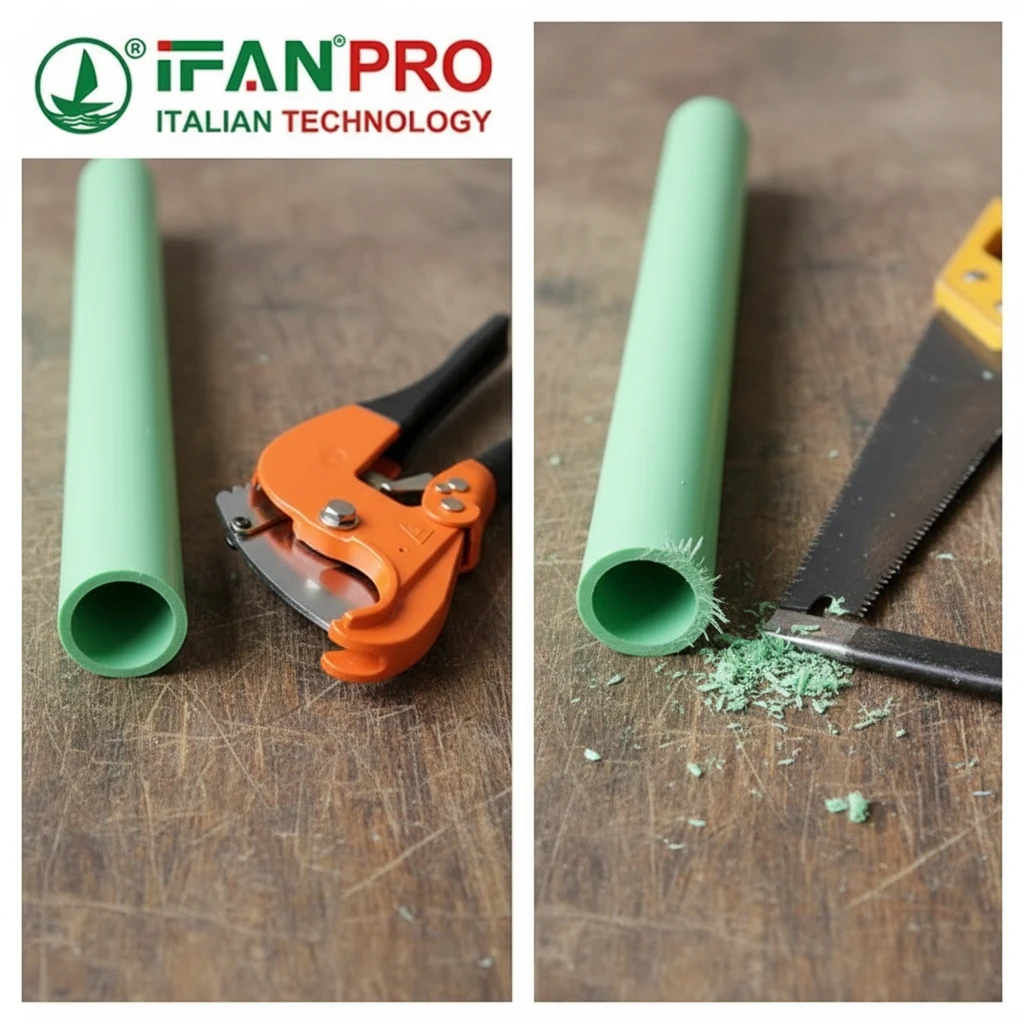
First, it ensures accuracy. A built-in guide or a sharp, constrained blade guarantees a straight cut exactly where you marked it. With a saw, the blade can wander, leading to an angled cut. An angled end won’t seat properly in the welding tool or fitting, causing gaps that lead to weak joints. This mistake forces the installer to stop, re-measure, and cut again—a complete waste of time and material.
Second, it produces a ready-to-weld finish. The best PPR pipe cutters are designed to shear the plastic cleanly, leaving no rough edges or plastic burrs. A saw, however, leaves behind a ragged edge full of plastic shavings. These must be carefully removed with a deburring tool or knife. If any burr remains inside the pipe, it can break off during use and clog valves or fixtures. A precision cutter integrates this cleaning step into the cut itself.
Comparing Cutting Methods
Here is a breakdown of the steps involved with different tools:
| Step in the Process | Precision Pipe Cutter | Using a Hacksaw |
|---|---|---|
| 1. Secure the Pipe | Yes, in the cutter itself. | Yes, in a vise or by hand. |
| 2. Make the Cut | One smooth rotation/compression. | Multiple back-and-forth strokes. |
| 3. Check Cut Angle | Automatically square. | Must visually check and often correct. |
| 4. Remove Burrs | Not needed; cut is clean. | Required, using a separate tool. |
| 5. Ready to Weld? | Immediately. | Only after steps 3 & 4 are verified. |
Finally, it reduces physical fatigue. Making dozens of cuts with a saw is tiring for the hands and arms. A ratcheting pipe cutter does the work with controlled, mechanical effort. This means the installer stays less fatigued, maintains consistency throughout the day, and keeps the overall project pace high.
What Makes Precision Pipe Cutters Essential for PPR Installation Work?
In PPR work, the quality of the cut directly decides the quality of the weld. There is no separation between these two steps.
Precision pipe cutters are essential for PPR work because the heat fusion process requires absolutely square, clean pipe ends to create a perfect molecular bond. Any gap, angle, or contamination from a poor cut creates a weak point that can lead to joint failure, making the cutter the most critical tool for ensuring the long-term reliability of the entire plumbing system.
The Science of a Perfect Fusion Joint
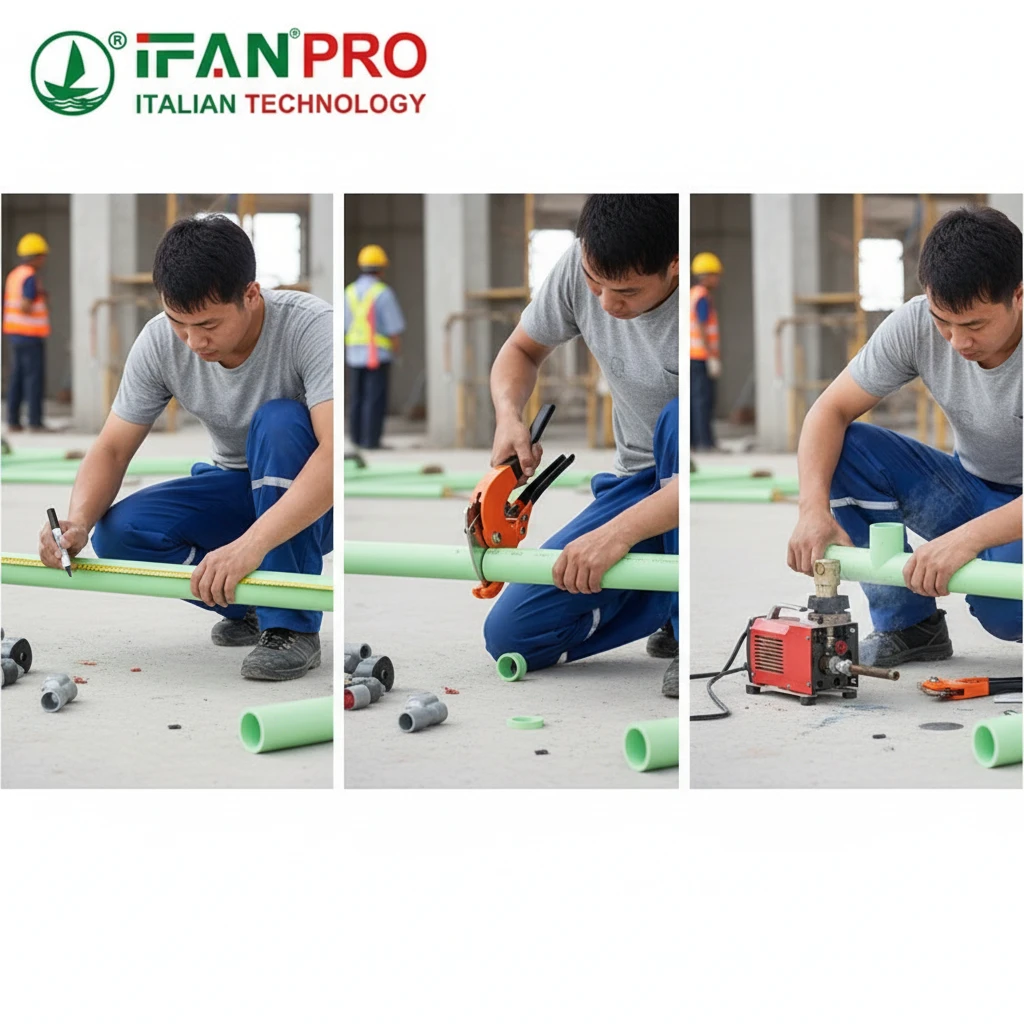
PPR systems are not held together by glue or force; they are welded. The pipe and fitting are melted and fused to become one single piece of plastic. For this fusion to be uniform and strong, the mating surfaces must meet perfectly.
Think of it like sealing two pieces of hot, melted glass together. If the edges are uneven, the seal will be uneven and weak. The same principle applies to PPR. An angled cut means one side of the pipe wall is deeper in the fitting than the other. This creates a thin, weak section in the welded joint that is prone to cracking under stress or thermal expansion.
Consequences of an Imperfect Cut
Using an improper cutting tool introduces several specific risks:
- Air Pockets: A ragged or concave cut can trap tiny air bubbles in the molten plastic during welding. These bubbles become voids in the joint structure, severely reducing its pressure-bearing strength.
- Incomplete Fusion: If the pipe end is not flat, it will not make full contact with the heating plate of the welding tool. This leads to some areas not melting fully, causing a partial bond that can fail later.
- Contamination: Plastic dust and shavings from sawing can stick to the hot pipe end. When fused, this debris gets trapped inside the joint wall, creating a point of potential failure.
Tool Requirement Table for Professional PPR Installation
| Tool | Purpose | Why Precision is Non-Negotiable |
|---|---|---|
| Precision Pipe Cutter | Creating the pipe end. | The foundation of the weld. A bad end cannot be fixed by a good welder. |
| Fusion Welding Machine | Melting pipe and fitting. | Requires a perfect pipe end to function correctly. |
| Deburring Tool | (Often made redundant by a good cutter) | If needed, it must clean without altering the squareness of the cut. |
Therefore, investing in a precision cutter is not about saving a few seconds per cut; it is about guaranteeing the integrity of every single joint in a hidden, pressurized system. It is the first and most important quality control step.
Can Using a Pipe Cutter Reduce Overall Plumbing Installation Time?
Time savings on a job site don’t just come from one fast action; they accumulate from eliminating all the small delays and mistakes.
Yes, using a dedicated pipe cutter directly reduces overall installation time. It minimizes measurement errors, eliminates the need for re-cuts and deburring, and accelerates the fitting and welding process. This compounding efficiency speeds up every phase of the installation, from initial layout to final pressure testing.
Accumulated Time Savings Across a Project
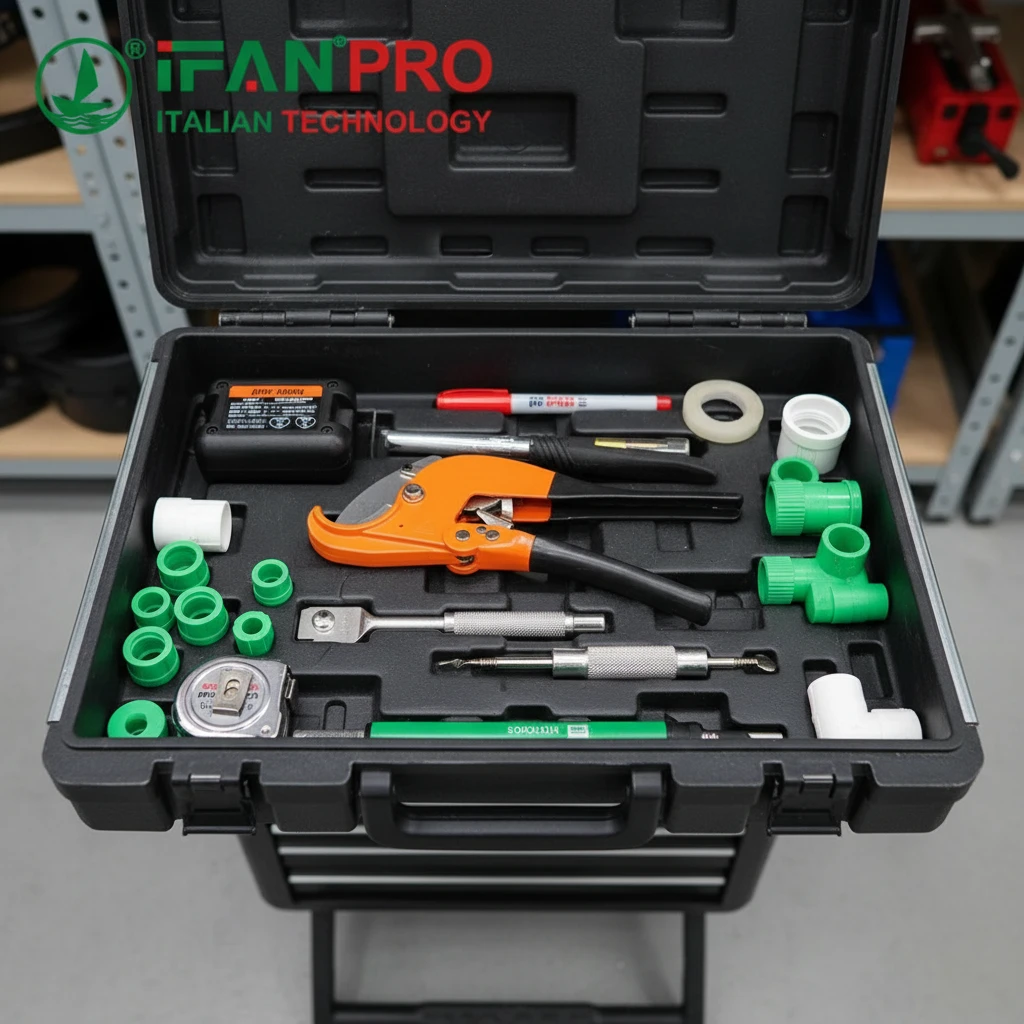
Let’s break down how the time savings add up during a standard residential plumbing installation.
First, consider the planning and layout phase. When an installer is confident that each cut will be perfect the first time, they can measure and mark multiple pipes in sequence without hesitation. There’s no need to add “allowance for error” in their measurements. This confidence speeds up the initial planning.
Next, the cutting and preparation phase is where the most obvious savings occur. As the table in the first section showed, a single cut becomes a one-step process. Multiply that by 50 or 100 cuts in a house installation, and the saved minutes become hours.
The Ripple Effect of Reliability
However, the most significant time savings are often hidden in the assembly and welding phase. This is the ripple effect of precision:
- A square pipe fits into the welding tool holder smoothly and seats fully against the heating plate.
- Because it fits well, it heats evenly.
- An even melt allows for a quick, smooth connection to the fitting.
- A good joint is made on the first try, with no need to reheat, adjust, or (worst-case) cut out and replace a section.
When using a saw, problems can surface at any of these stages. A misaligned joint might only be discovered during the final pressure test, forcing the installer to open walls, find the leak, cut out the section, and redo the work. This kind of rework can destroy the profit margin and timeline of an entire project.
Estimated Time Comparison for a Standard Task
| Task: Install 20 PPR joints | With Precision Cutter & Welder | With Hacksaw & Basic Welder |
|---|---|---|
| Measuring & Marking | 30 minutes | 45 minutes (extra care for error) |
| Cutting & End Prep | 20 minutes | 60+ minutes |
| Welding & Assembly | 90 minutes | 120+ minutes (adjustments, re-dos) |
| Potential Rework | Very Low | Moderate to High Risk |
| Total Estimated Time | ~2 hours 20 min | ~3 hours 45 min + risk |
The conclusion is clear: the speed of the cutter itself is just the beginning. Its true value is in creating a predictable, error-free workflow that prevents costly delays at every subsequent step.
Why Should Every Installer Consider Investing in Precision Cutting Tools?
An installer’s tools are an extension of their skill. The right tool doesn’t replace expertise—it allows that expertise to shine consistently.
Every installer should invest in precision cutting tools because they are a direct investment in their own reputation, profitability, and physical well-being. These tools guarantee consistent, professional results, reduce job-site stress and material waste, and minimize the physical strain that leads to long-term fatigue and injury.
An Investment in Professional Results
For a professional, their name is on every job. Leaks or callbacks damage reputation. A precision cutter is fundamental insurance against the most common cause of joint failure: a poor cut. It ensures that the installer’s skill in welding is supported by a perfect starting point. This consistency turns a good installer into a reliable one, leading to more referrals and repeat business from contractors and homeowners.
An Investment in Financial Health
Let’s talk frankly about cost. A quality precision cutter has a price, but it must be viewed as a business asset, not just an expense.
- Reduced Material Waste: Every bad cut means a piece of pipe goes in the trash. Over a year, wasted material from re-cuts can easily exceed the cost of a good cutter.
- Faster Job Completion: As we calculated, time savings of 30% or more on installation labor are achievable. This means you can complete more jobs in the same time or free up time for other work.
- Avoidance of Rework: The financial and reputational cost of fixing a single leak behind a finished wall is enormous. Preventing that single leak pays for the tool many times over.
Tool Value vs. Cost Analysis
| Factor | Cheap, Non-Precision Tool | Professional Precision Cutter |
|---|---|---|
| Upfront Cost | Low | Higher initial investment |
| Cut Quality | Inconsistent, often requires rework | Consistently perfect, ready-to-weld |
| Impact on Speed | Slows down the entire process | Speeds up every phase of installation |
| Material Waste | Higher due to errors | Minimized |
| Professional Image | Appears amateurish | Signals expertise and quality |
| Return on Investment | None—it is a recurring cost. | High, through time savings and fewer errors. |
An Investment in Personal Health
Installation work is physically demanding. The repetitive motion of sawing, especially in awkward positions, strains wrists, elbows, and shoulders. A ratcheting cutter requires less forceful, more controlled motion. Reducing daily physical strain means less fatigue, lower risk of repetitive stress injury, and a longer, healthier career.
For any serious installer, the question isn’t “Can I afford this tool?” but “Can I afford not to have it?”
Conclusión
A precision pipe cutter is the cornerstone of a fast, reliable, and professional PPR installation. For installers seeking that critical advantage, IFAN’s professional-grade PPR pipe cutters are engineered to deliver the perfect cut every time, ensuring your work is built to last.






 Español
  English
  Français
  Русский
Comentarios recientes