
I once watched a seemingly perfect stainless steel pipe connection fail, not from a major impact, but from a tiny, hidden gap I had overlooked.
Crevice corrosion is a localized form of corrosion that attacks stainless steel and other passive metals within tight gaps or shielded areas. It occurs when oxygen is depleted in a crevice, causing the protected passive layer to break down and allowing rapid, concentrated metal loss. This can severely weaken fittings, leading to leaks and catastrophic failures.
This silent threat is a major headache for engineers and maintenance teams. Understanding it isn’t just academic; it’s the key to preventing expensive downtime and dangerous accidents. Let’s break down exactly what it is, why stainless steel is vulnerable, and most importantly, how to stop it.
What exactly is crevice corrosion, and where does it occur?
Imagine a tiny, invisible enemy eating away at metal from the inside out. That’s the unsettling reality of crevice corrosion I’ve learned to respect.
Crevice corrosion is a localized electrochemical attack that happens in narrow gaps, typically less than 0.1 mm wide, where stagnant solution gets trapped. It’s not about the metal’s overall quality, but about the local chemical environment inside the crevice becoming aggressive and corrosive.
The Electrochemical Process Inside a Crevice
To understand crevice corrosion, you need to picture a battery forming in that tiny space. Stainless steel relies on a thin, protective oxide layer (mostly chromium oxide) for its corrosion resistance. This layer needs oxygen to form and repair itself. In an open area, oxygen is plentiful. But inside a tight crevice, oxygen gets used up quickly and can’t be replenished. This creates a difference between the oxygen-rich area outside (the cathode) and the oxygen-starved area inside (the anode). This difference in oxygen concentration is the driving force, known as differential aeration.
Inside the oxygen-depleted crevice, the protective passive film starts to break down. The metal beneath (like iron) begins to dissolve as metal ions. To balance the electrical charge, chloride ions (common in many environments like seawater or salt-laden air) migrate into the crevice. These chlorides combine with the metal ions to form highly corrosive, concentrated metal chlorides. This acidic, chloride-rich environment accelerates the attack in a vicious cycle, rapidly eating away at the metal from within the crevice, often with little visible warning on the outside surface.
Common Crevice Locations in Fittings and Piping Systems
This isn’t a rare phenomenon. In any industrial or marine setting, crevices are everywhere. As a rule of thumb, if you can trap a liquid, you can start crevice corrosion. Here are the most frequent trouble spots I’ve encountered:
- Gaskets and Flanges: The interface between a gasket and the flange face is a classic crevice. Poor surface finish, compressed non-metallic gaskets, or misalignment can create perfect traps.
- Threaded Connections: The helical path of threads, especially in NPT (tapered) threads, creates a long, narrow crevice. Thread sealants can sometimes worsen the problem if they absorb moisture.
- Under Deposits or Biofilm: Scale, sand, dirt, or even microbial slime (biofilm) sitting on a metal surface creates a shielded area. This is a major issue in cooling water systems.
- Lap Joints and Welds: Incomplete penetration welds, tack welds, or overlapping metal plates create ideal crevices. Even a poorly finished weld bead can create pockets.
- Under Insulation: This is a notorious hidden danger. If insulation gets wet (from rain or condensation), it creates a constantly moist, occluded environment against the pipe or fitting surface.
- Contact with Non-Metallic Materials: Washers, spacers, or supporting structures made of wood, plastic, or rubber can form crevices if they trap moisture against the metal.
| Location | Description of Crevice | Typical Environments at Risk |
|---|---|---|
| Flange/Gasket Interface | Micro-gap between metal flange face and gasket material. | Chemical processing, offshore platforms, seawater pipelines. |
| Threaded Connections | Spiral crevice along the thread roots and between engaged threads. | Instrumentation lines, valve connections, field-assembled structures. |
| Under Wet Insulation | Large area of trapped moisture between metal and insulation cladding. | Steam lines, chilled water pipes, outdoor process piping. |
| Lap Joints | Linear gap where two metal sheets overlap, often sealed poorly. | Tanks, ductwork, structural supports in marine atmospheres. |
Why are stainless steel fittings particularly vulnerable to crevice corrosion?
It feels counterintuitive, doesn’t it? We choose ‘stainless’ steel for its toughness, yet it has this specific Achilles’ heel.
Stainless steel fittings are vulnerable because their excellent general corrosion resistance relies entirely on a thin, stable passive film. Crevice conditions directly attack this film’s ability to regenerate by starving it of oxygen, and the alloying elements like chromium and molybdenum that form the film can be locally depleted, leaving the base metal unprotected.
The Paradox of Passivity
Stainless steel’s “stainlessness” is not an inherent property like gold’s inertness. It’s an active, dynamic state called passivity. The chromium in the alloy (minimum 10.5%) reacts with oxygen to form an invisible, ultra-thin oxide layer only a few atoms thick. This layer is highly stable and acts as a barrier, isolating the reactive iron in the alloy from the environment. However, this layer is not indestructible. It’s in a constant state of mild damage and repair, as long as oxygen is available for repair. A crevice cuts off the oxygen supply. Once the film breaks down locally inside the crevice, the repair mechanism fails. The unprotected metal dissolves rapidly, and the corrosion products themselves can further acidify the crevice, accelerating the process.
Grade Matters: The Critical Role of Molybdenum (Mo)
Not all stainless steels are equally susceptible. The key alloying element for fighting crevice corrosion is molybdenum. Molybdenum strengthens the passive film, making it more resistant to breakdown in chloride-containing environments. This is why grades are ranked by their “Pitting Resistance Equivalent Number” (PREN), often calculated as %Cr + 3.3 x %Mo + 16 x %N. A higher PREN generally indicates better resistance to localized corrosion like pitting and crevice corrosion.
For example, common 304 stainless steel (containing 18% Cr, 8% Ni, 0% Mo) has poor crevice corrosion resistance in many chloride environments. The slightly better 316 stainless steel (18% Cr, 10% Ni, 2% Mo) offers improved but still limited resistance. For harsh environments like seawater, super duplex steels (e.g., 2507) or high-molybdenum austenitics (e.g., 6% Mo alloys like 254 SMO) are specified specifically for their superior crevice corrosion resistance.
| Stainless Steel Grade | Key Composition (Cr, Ni, Mo) | Approx. PREN | Relative Crevice Corrosion Resistance in Chlorides |
|---|---|---|---|
| 304 / 304L | 18-20 Cr, 8-12 Ni, 0 Mo | 18-20 | Poor – Not recommended for chloride service. |
| 316 / 316L | 16-18 Cr, 10-14 Ni, 2-3 Mo | 24-26 | Fair – Limited use in mild chloride environments. |
| Duplex 2205 | 22 Cr, 5 Ni, 3 Mo, N | 34-36 | Good – Standard for many seawater applications. |
| Super Duplex 2507 | 25 Cr, 7 Ni, 4 Mo, N | 42-44 | Very Good – For aggressive chloride/acid services. |
| 6% Mo Austenitic (e.g., 254 SMO) | 20 Cr, 18 Ni, 6 Mo, N | 43-45 | Excellent – High-performance chemical & marine. |
Environmental Factors That Amplify the Risk
The vulnerability of stainless steel is magnified by specific service conditions. Temperature is a huge factor; crevice corrosion initiation time decreases dramatically as temperature increases. Chloride ion concentration is the other primary driver. Even potable water can contain enough chlorides to cause problems over time at elevated temperatures. Stagnation is the third leg of the stool. Flowing water replenishes oxygen and dilutes corrosives, while stagnant water allows the aggressive chemistry inside a crevice to develop fully. A fitting in warm, stagnant seawater is in one of the worst possible scenarios for crevice corrosion.
How can you identify the early signs of crevice corrosion in fittings?
Finding crevice corrosion early feels like detective work. The clues are subtle, and the damage is often hidden from plain view.
Early signs of crevice corrosion are often visual stains, deposits, or minor leaks originating from a crevice location. Since the attack is localized inside the gap, external signs may be minimal until significant metal loss has occurred, making proactive inspection at known crevice sites critical.
Visual Inspection Clues
You won’t see a large, uniform rust patch. Look for telltale, localized indicators. The most common is rust staining or weeping. Brownish-red ferric oxide stains (rust) emanating from under a gasket flange, from the edge of a lap joint, or from a threaded connection are a major red flag. This “weeping” is the corrosion product being pumped out of the crevice by capillary action. Sometimes, you might see white or green deposits (chlorides or other salts) around the crevice opening. Another sign is localized pitting or etching immediately adjacent to the crevice, as the area just outside becomes cathodic. In severe cases, you may see component distortion or leakage itself, but this indicates advanced damage.
Non-Destructive Testing (NDT) Methods
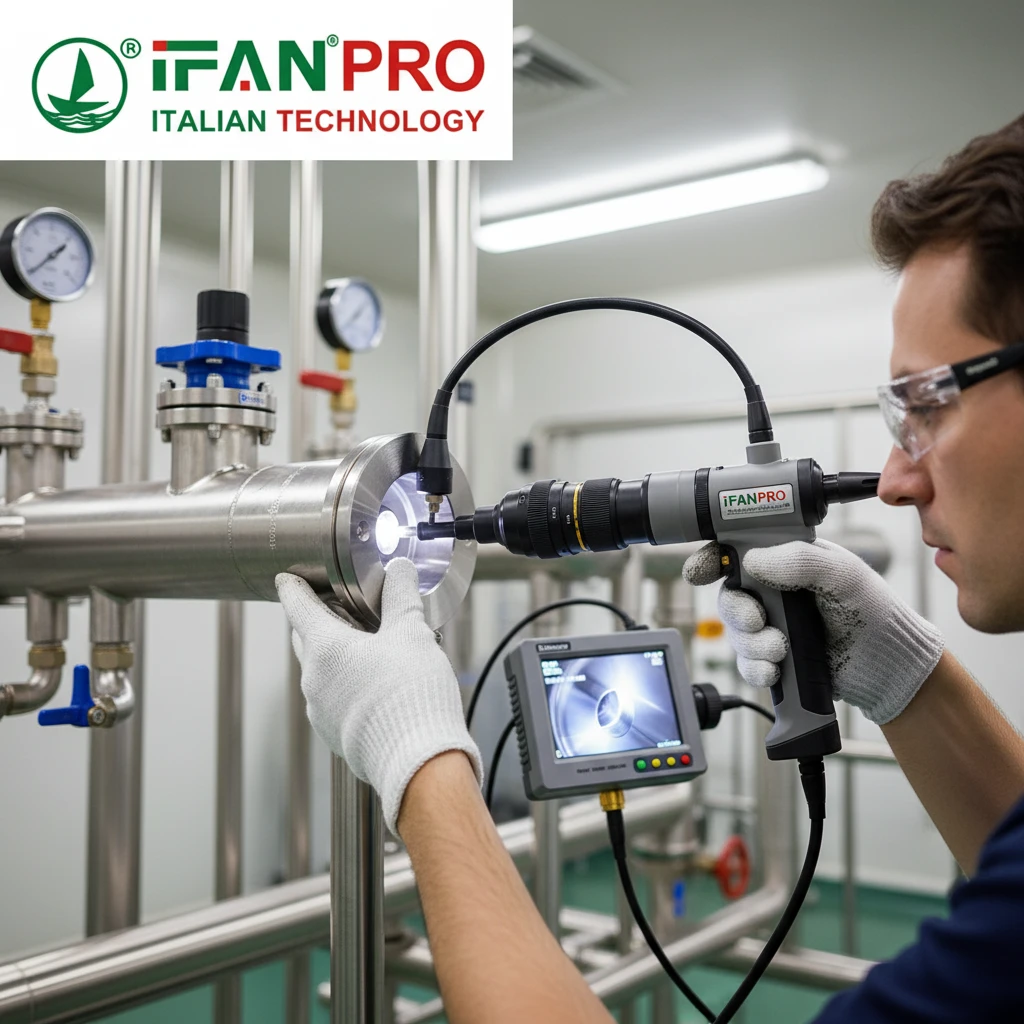
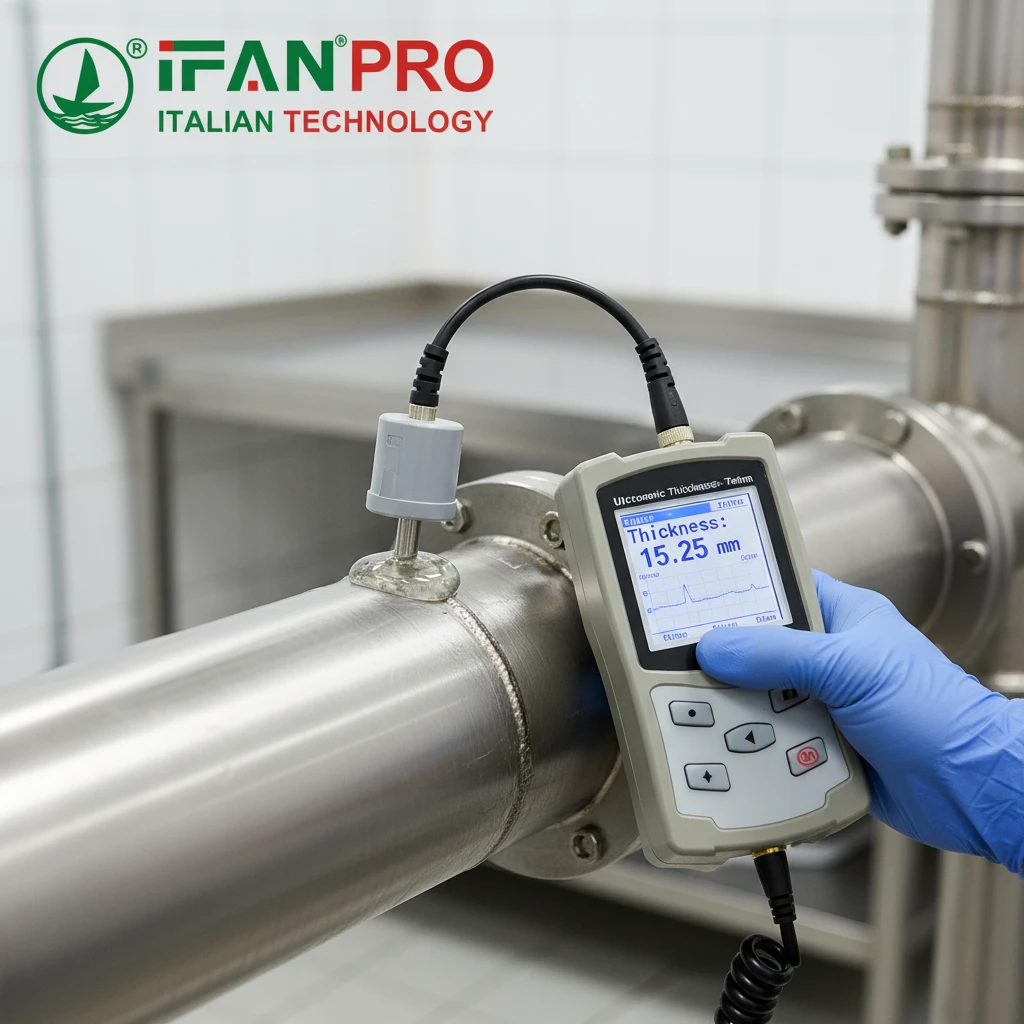
For critical systems or hidden crevices (like under insulation), visual inspection isn’t enough. This is where NDT techniques become essential. Borescopes or videoscopes are invaluable for looking inside small openings, pipes, or behind components. Ultrasonic Testing (UT) is excellent for measuring remaining wall thickness. An inspector will scan the area around a suspected crevice (e.g., near a weld or under a support clamp) to find localized thinning. Dye Penetrant Testing (PT) can reveal surface-breaking cracks or pits that have initiated from crevice corrosion. For insulated pipes, insulation removal at sample points is a direct, though disruptive, method to check for corrosion under insulation (CUI).
Establishing a Risk-Based Inspection Plan
Waiting for signs to appear is a reactive strategy. A proactive approach involves mapping all potential crevice sites in your system and inspecting them on a schedule based on risk. High-risk locations include: all flanged connections in chloride service, threaded connections below a certain size, pipe supports, and areas where insulation is likely to get wet. Documenting these sites with photos and thickness readings over time allows you to track the rate of attack and plan maintenance before failure.
| Inspection Method | What It Detects | Best For | Limitations |
|---|---|---|---|
| Visual Inspection (VT) | Staining, weeping, deposits, gross leaks. | Routine walkdowns, accessible fittings. | Cannot detect sub-surface or hidden damage. |
| Ultrasonic Thickness (UT) | Localized wall thinning. | Quantifying metal loss at specific points (e.g., near crevices). | Requires direct access to clean metal surface. |
| Borescope/Videoscope | Internal pitting, cracking, deposits. | Inspecting inside pipes, vessels, or confined spaces. | Limited to line-of-sight; requires an access point. |
| Dye Penetrant (PT) | Surface-breaking defects. | Finding small cracks or pits emanating from crevices. | Only finds surface flaws; requires very clean surface. |
What are the most effective methods to prevent crevice corrosion?
Prevention is always cheaper than repair or replacement. Over the years, I’ve learned that fighting crevice corrosion is a battle fought on three fronts: design, material selection, and maintenance.
The most effective prevention methods involve eliminating crevices through design, selecting the correct stainless steel grade (with sufficient molybdenum) for the environment, and implementing maintenance practices that keep crevice areas clean, dry, and protected with inhibitors or cathodic protection where possible.

Designing Out the Crevice
The best crevice is one that never exists. During the design and fabrication stage, prioritize butt-welded joints over flanged or threaded connections wherever practical. A full-penetration butt weld, properly ground flush, presents a smooth, continuous surface with no inherent crevice. If flanges are necessary, specify raised-face flanges with a controlled surface finish and use non-absorbent, chemically compatible gaskets (like PTFE-enveloped or solid metal gaskets) that fill the gap completely. Avoid lap joints; use butt-welded connections. Ensure good drainage in vessel designs so water doesn’t pool. For threaded fittings, consider seal-welding the threads after assembly in critical services, or use thread compounds that are non-absorbent and inhibit corrosion.
Material Upgrade and Environmental Control
When crevices can’t be avoided, upgrade the material. Don’t use standard 304/316 in an environment that demands a higher grade. Use the PREN as a guide and consult corrosion charts for your specific temperature, chloride, and pH conditions. Sometimes, switching to a non-metallic material like FRP or CPVC for the entire component eliminates the metallic corrosion problem altogether. Environmental control is also powerful. Reduce chloride concentration in process streams or cooling water if possible. Maintain flow to avoid stagnation. Control temperature within safe limits for the chosen material.
Protective Measures and Maintenance
For existing systems, protective coatings and maintenance are key. Apply high-performance coatings or cathodic protection (like sacrificial anodes or impressed current systems) to protect vulnerable areas. This is common for submerged or buried structures. Regular cleaning to remove deposits, scale, and biofilm is crucial, as these deposits create crevices. For insulated systems, ensure the insulation jacket is watertight and consider using water-repellent insulation or installing weather barriers. Implement a corrosion inhibitor program in closed-loop systems like cooling water, ensuring the inhibitor is of a type that can penetrate and protect within crevices.
Conclusión
Crevice corrosion is a stealthy but manageable threat. By understanding its causes, recognizing its signs, and implementing smart design and maintenance, you can ensure your stainless steel fittings deliver their promised long life and reliability.









 Español
  English
  Français
  Русский
Comentarios recientes