
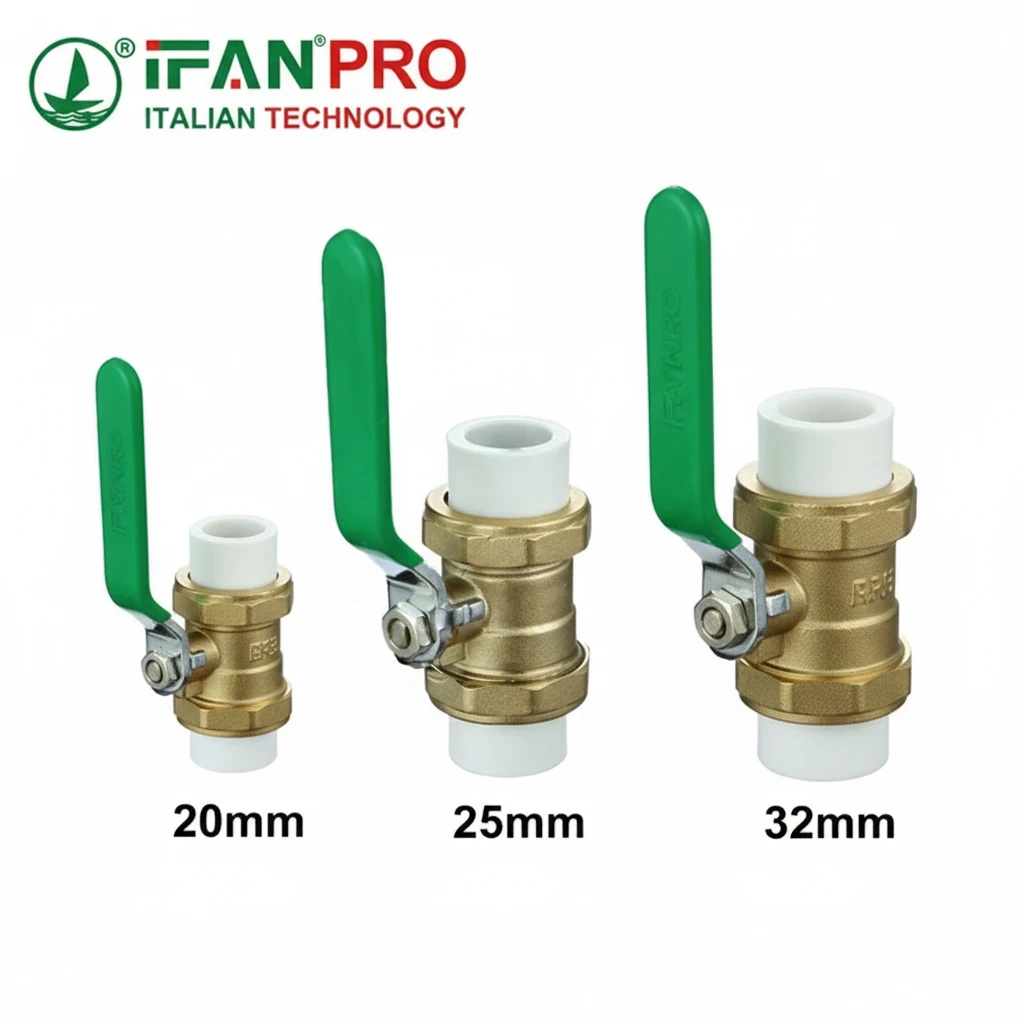
A customer once called me frustrated because his newly installed system had terrible water pressure. After troubleshooting, we discovered he had installed 20mm valves on a 32mm main line. That expensive mistake taught me how critical proper valve sizing really is.
Choosing between 20mm, 25mm, or 32mm PPR brass ball valves depends primarily on your pipe’s outer diameter and your system’s flow requirements. The valve size should match the pipe size for a proper fusion connection. For residential branches, 20mm usually works. For main lines or higher flow needs, choose 25mm or 32mm.
Let’s walk through the decision process so you can avoid costly sizing mistakes.
How Does Pipe Diameter Determine the Correct Valve Size for Your System?
I often see buyers order valves based on guesswork. This leads to returns, delays, and frustrated installation crews.
Pipe diameter determines valve size because PPR valves connect directly to the pipe ends through fusion welding. The valve’s socket or spigot must match the pipe’s outer diameter exactly. A 20mm valve fits 20mm pipe, 25mm fits 25mm pipe, and so on. There is no universal adapter—size matching is mandatory.
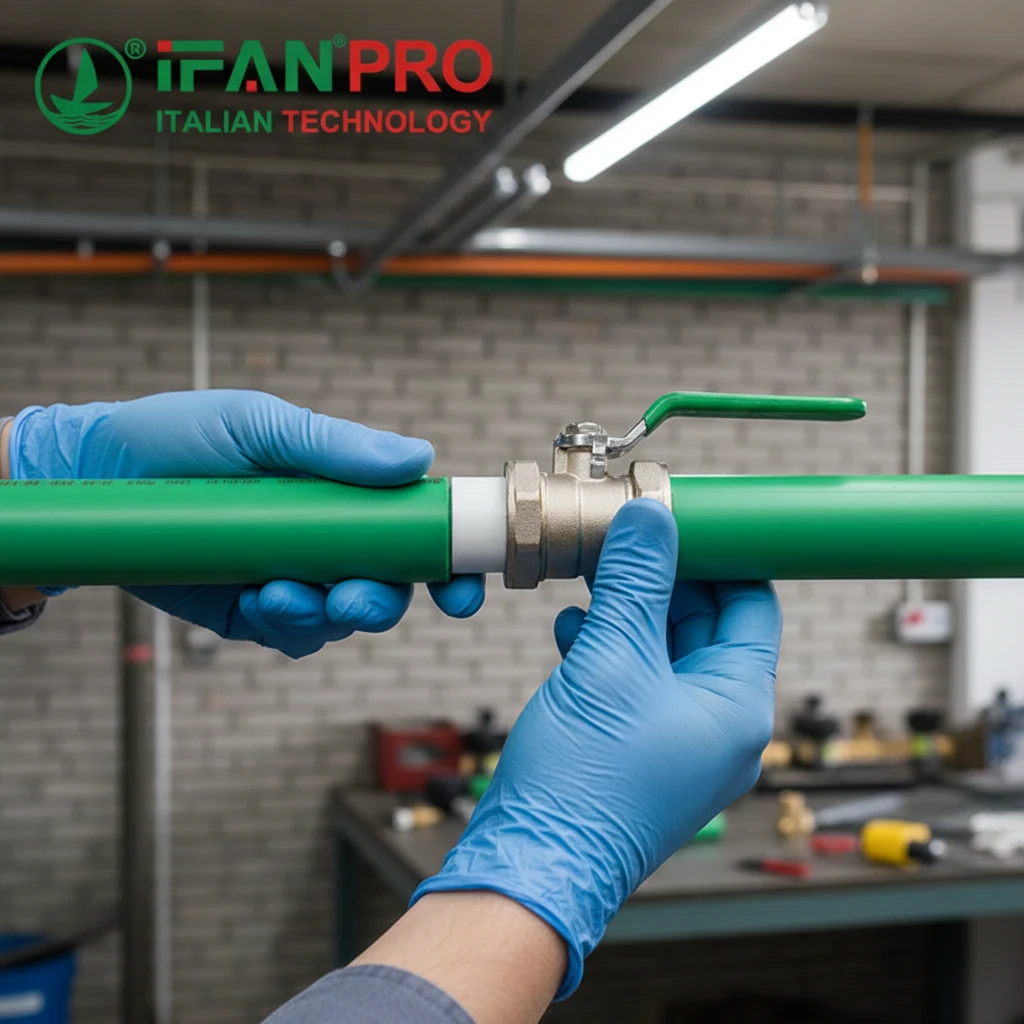
The Direct Relationship Between Pipe and Valve
PPR systems use a simple sizing logic. The number you see—20mm, 25mm, 32mm—refers to the pipe’s outer diameter. This is not the inner diameter where water flows. It is the physical measurement from the outside edge of the pipe.
When you buy a PPR brass ball valve, the connection ends come in two common styles:
| Connection Type | Description | How It Matches Pipe Size |
|---|---|---|
| Socket (Female) | A recessed opening where the pipe inserts into the valve. | The socket’s inner diameter equals the pipe’s outer diameter. |
| Spigot (Male) | A protruding end that inserts into a fitting or another pipe. | The spigot’s outer diameter equals the pipe’s outer diameter. |
Therefore, you cannot connect a 20mm pipe to a 25mm valve socket. The 25mm socket is too large, and fusion will fail. Similarly, a 32mm spigot will not fit into a 20mm fitting.
Why Matching Matters Beyond Physical Fit
Some buyers think, “I’ll just use an adapter.” While reducers exist, placing a valve at a size change point creates unnecessary joints. Every joint is a potential leak point. The cleanest design uses a valve that matches the pipe size at that specific location.
For example, if you run a 32mm main line and branch off with 20mm lines, place the 32mm valve on the main. Place 20mm valves on each branch. This maintains consistent sizing and simplifies your parts inventory.
Practical Tip for Verification
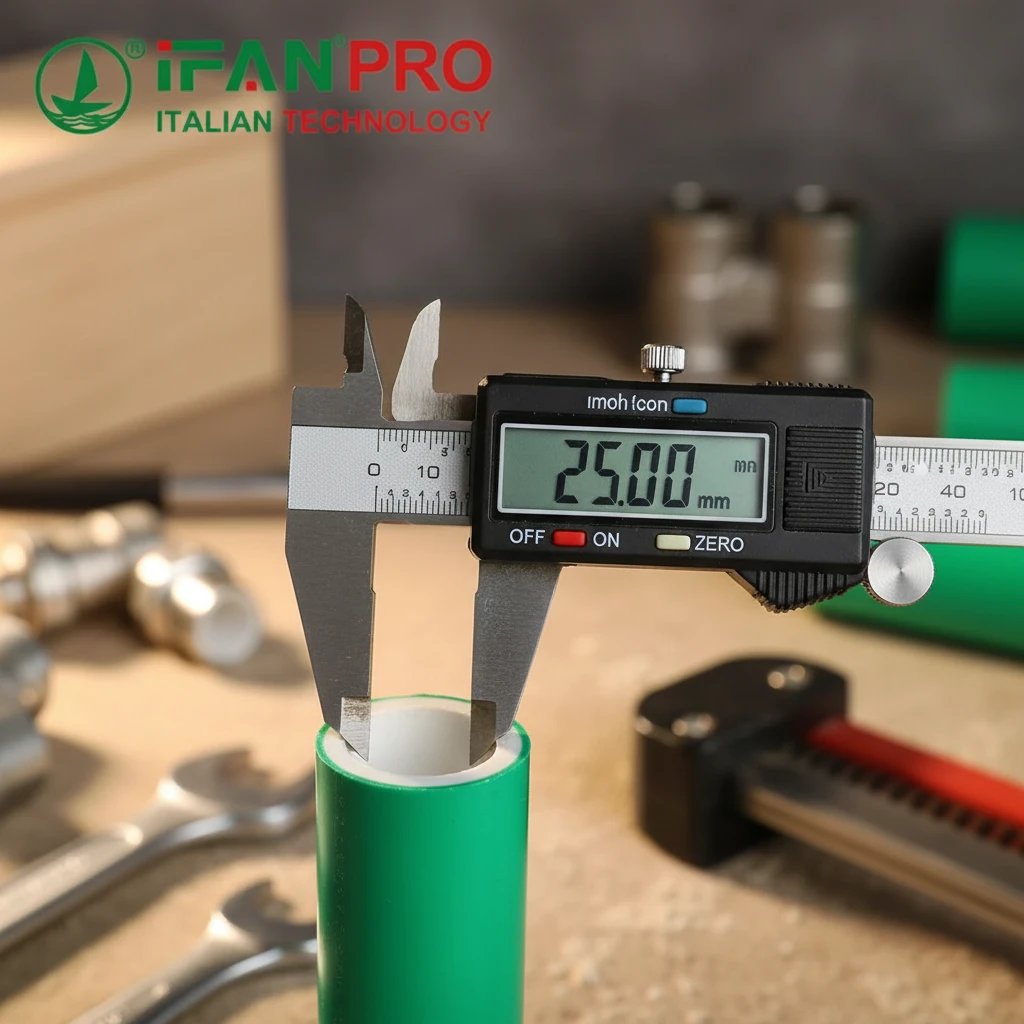
Always verify the pipe size before ordering valves. Use a caliper to measure the pipe’s outer diameter. Do not rely on memory or assumption. In my experience, misidentification causes 80% of sizing errors.
What Flow Rate Considerations Influence the Choice Between Different Sizes?
Flow rate matters because nobody enjoys a weak shower. The valve size directly impacts how much water reaches the tap.
Flow rate influences size choice because larger valves allow more water to pass through with less restriction. A 20mm valve suits fixtures like single sinks or toilets. A 25mm or 32mm valve handles higher demand applications such as main lines, multiple bathrooms, or commercial kitchens where multiple outlets run simultaneously.
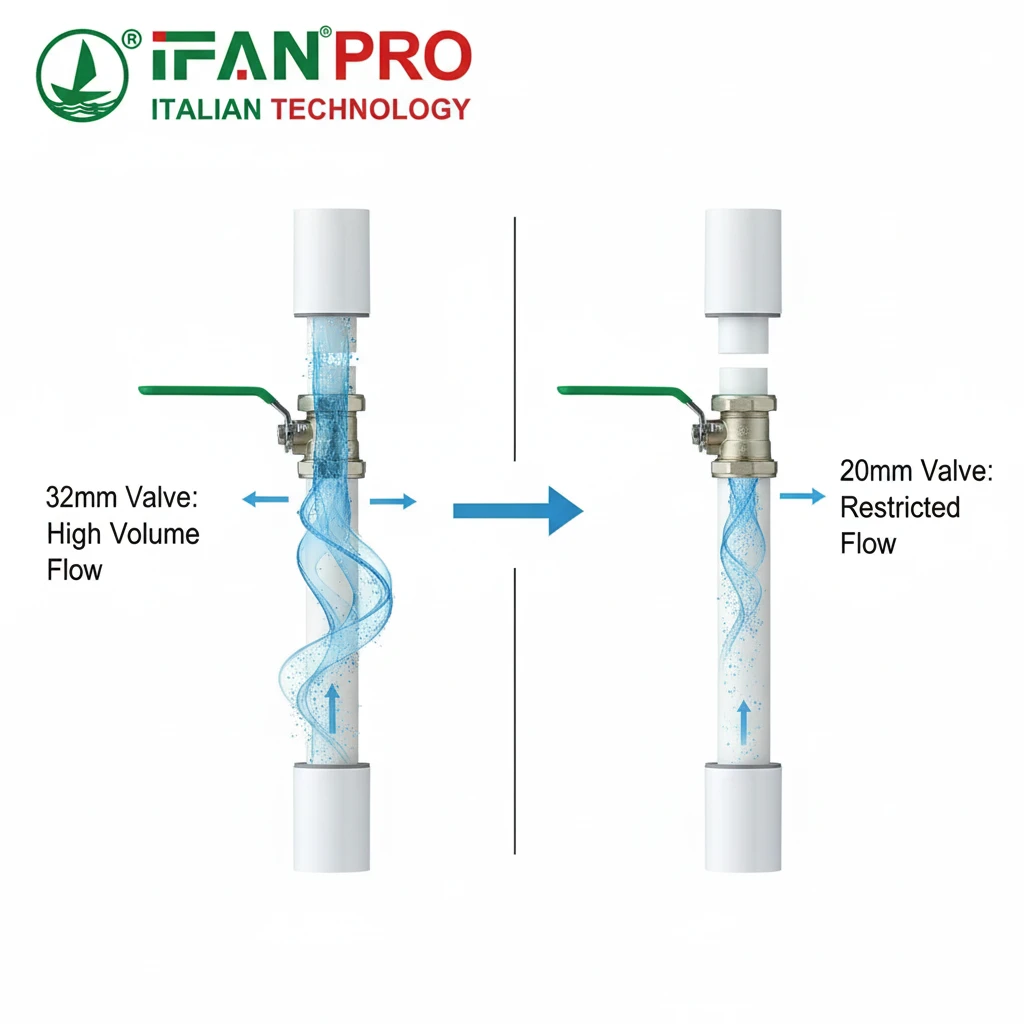
Matching Valve Size to Demand
Think of your plumbing system like a highway. The pipe is the road, and the valve is a toll booth. A 20mm valve is a single-lane booth. It works fine for one car (one faucet). But if ten cars (multiple fixtures) try to pass simultaneously, traffic slows down.
The same principle applies to water flow. Each valve size has a practical flow capacity range. The table below shows general guidelines based on typical residential use:
| Valve Size | Typical Flow Capacity | Best Applications |
|---|---|---|
| 20mm | Up to 30-40 liters/minute | Single faucets, toilets, individual appliances, small branch lines. |
| 25mm | 40-60 liters/minute | Multiple fixtures, bathroom groups, kitchen supply lines, small main lines. |
| 32mm | 60+ liters/minute | Main house supply lines, commercial applications, systems with high simultaneous demand. |
Calculating Your Actual Needs
To choose correctly, calculate your peak demand. List all fixtures that might run at the same time. For a home, this might be:
- Kitchen faucet: 10 L/min
- Shower: 12 L/min
- Bathroom sink: 8 L/min
- Washing machine: 10 L/min
Total peak demand: 40 L/min.
In this case, a 20mm valve on the main line would restrict flow. You would notice pressure drops when the washing machine runs during a shower. A 25mm or 32mm main valve would handle this load comfortably.
The Safety Margin
I always recommend a slight oversize for main line valves. Choose a valve that handles about 20% more than your calculated peak demand. This provides a buffer for future additions and accounts for pressure losses in long pipe runs.
Does Using an Incorrectly Sized Valve Affect Pressure and System Efficiency?
Pressure problems often trace back to one wrong component. The valve size plays a bigger role than many realize.
Yes, an incorrectly sized valve significantly affects pressure and efficiency. An undersized valve creates a bottleneck, restricting flow and causing pressure drops during high demand. An oversized valve, while less common, can lead to turbulent flow, noise, and difficulty in achieving fine flow control. Both scenarios waste energy and reduce system performance.
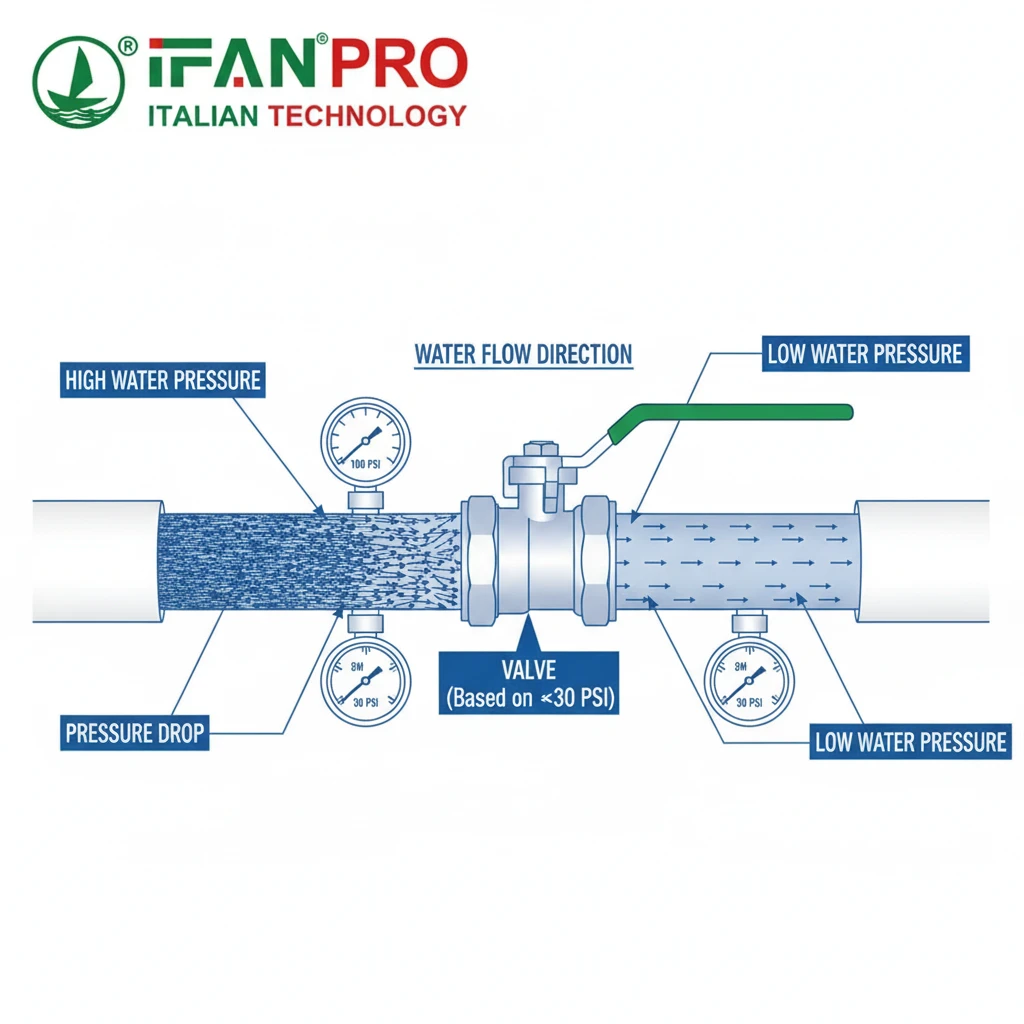
The Undersized Valve Problem
An undersized valve is the most frequent mistake. It acts like a kink in a garden hose. Water flows fine at low volume, but when you open multiple outlets, the restriction becomes obvious.
Symptoms of an undersized valve include:
- Pressure drop: Shower pressure weakens when someone flushes a toilet.
- Long fill times: Toilets, washing machines, or bathtubs take longer to fill.
- Strange noises: You may hear whistling or rushing sounds at the valve.
These issues happen because the valve’s internal diameter is smaller than the pipe’s. Water accelerates through the narrow passage, losing energy to friction. This energy loss translates directly into lower pressure downstream.
The Oversized Valve Issue
Oversizing is less common but still problematic. A valve much larger than the pipe creates turbulence at the entry and exit points. Water must slow down entering the large chamber, then speed up leaving it. This turbulence causes:
- Flow noise: A rushing or churning sound during operation.
- Poor control: The valve becomes sensitive. A small turn changes flow dramatically, making fine adjustments difficult.
- Sediment accumulation: Low velocity in the large body allows particles to settle.
Quantifying the Impact
Engineers use a value called “flow coefficient” or Kv to measure a valve’s resistance. Without getting too technical, remember this: each valve size has a maximum flow rate before pressure loss becomes significant.
The table below shows approximate pressure loss across different valve sizes at typical flow rates:
| Valve Size | Flow Rate | Approximate Pressure Loss | Impact Level |
|---|---|---|---|
| 20mm | 30 L/min | Low (0.2-0.5 bar) | Acceptable |
| 20mm | 50 L/min | High (1.0+ bar) | Significant drop |
| 25mm | 50 L/min | Low (0.2-0.4 bar) | Acceptable |
| 32mm | 80 L/min | Low (0.2-0.3 bar) | Acceptable |
The pattern is clear: push a small valve beyond its comfort zone, and you pay in pressure.
How Do You Match Valve Size to Existing PPR Pipe Dimensions Accurately?
Accuracy prevents returns. I have seen too many projects delayed because someone ordered the wrong size based on a guess.
You match valve size to existing PPR pipe dimensions by measuring the pipe’s outer diameter with a caliper or sizing gauge. Then, verify the pipe’s pressure rating (PN rating) printed on the pipe wall. Select a valve with the same nominal size (20mm, 25mm, 32mm) and a compatible pressure rating (usually PN16 or PN25 for residential systems).
Step-by-Step Measurement Guide
Follow these steps to ensure a perfect match:
Step 1: Clean the Pipe Surface
Wipe away dirt, labels, or debris. Accurate measurement requires a clean surface.
Step 2: Measure Outer Diameter
Use a digital caliper for best results. Place the caliper jaws around the pipe and record the measurement in millimeters. Do not measure across threads or damaged areas.
Standard PPR pipe sizes and their actual outer diameters:
| Nominal Size | Actual Outer Diameter | Common Wall Thickness |
|---|---|---|
| 20mm | 20.0 – 20.3 mm | 2.8 mm (PN20) or 3.4 mm (PN25) |
| 25mm | 25.0 – 25.3 mm | 3.5 mm (PN20) or 4.2 mm (PN25) |
| 32mm | 32.0 – 32.3 mm | 4.4 mm (PN20) or 5.4 mm (PN25) |
Step 3: Check the PN Rating
Look at the printing on the pipe. You will see something like “PN20” or “PN25.” This indicates the pressure rating. Your valve must match or exceed this rating. A PN16 valve on PN25 pipe creates a weak point.
Step 4: Match Valve Connection Type
Decide whether you need socket (female) or spigot (male) connections based on your installation layout. Order the same nominal size as your pipe.
Common Mistakes to Avoid
- Measuring inner diameter: Some people measure the hole and assume that is the size. This leads to ordering valves two sizes too small.
- Ignoring PN rating: A physically fitting valve may still fail under pressure if its rating is lower than the system’s.
- Assuming metric equivalence: PPR uses metric sizing. Do not convert to inches unless you verify compatibility.
IFAN’s Sizing Support
At IFAN, we help customers avoid sizing errors. Our product listings clearly state the compatible pipe size and PN rating. We also provide technical datasheets with dimensional drawings. When in doubt, send us a photo of your pipe with a ruler next to it. Our team can identify the correct size for you.
Заключение
Choosing between 20mm, 25mm, or 32mm PPR brass ball valves requires matching pipe diameter and flow needs. For professional-grade valves with clear sizing and reliable performance, explore IFAN’s complete range of PPR brass ball valves designed for exact compatibility.










 Русский
  English
  Français
  Español
Последние комментарии