
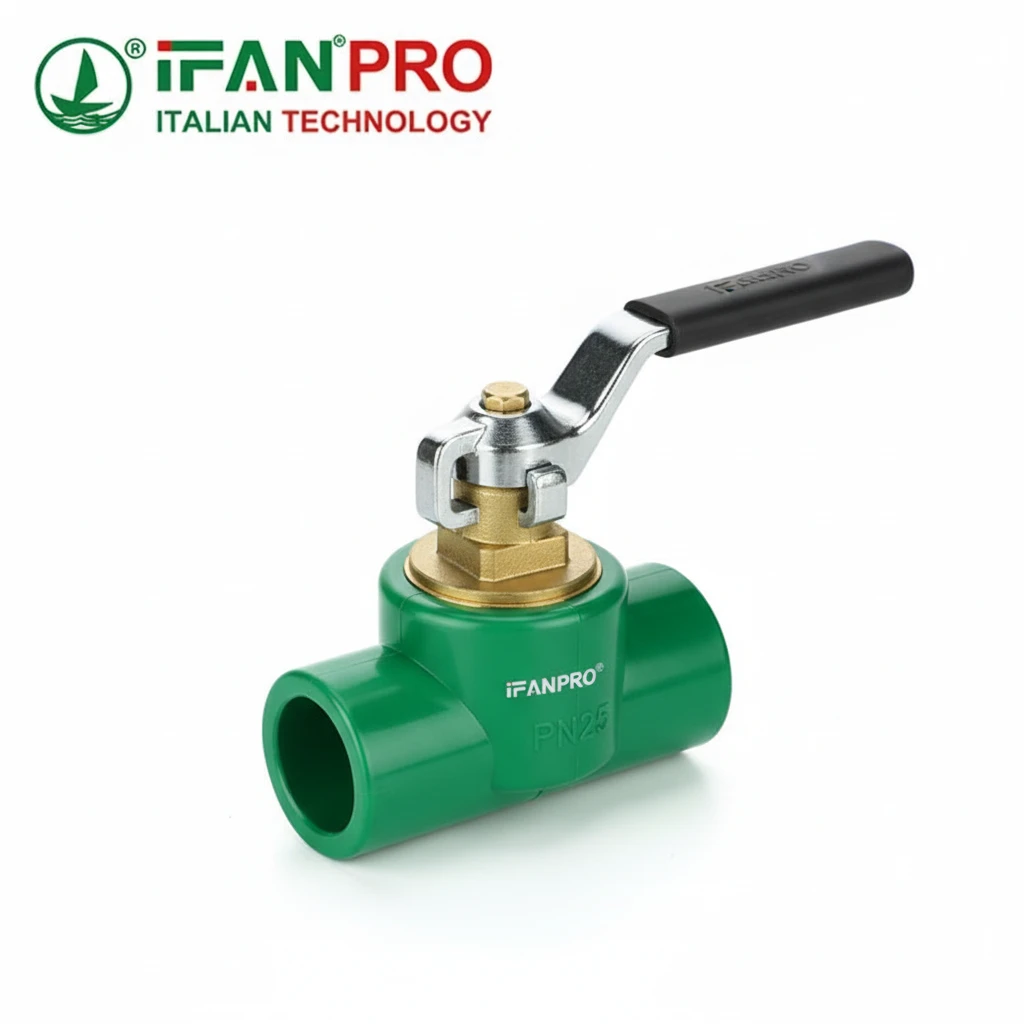
I once watched a rusty metal valve fail in a client’s basement, flooding their storage room. That moment convinced me we needed a better solution.
IFANPRO high-performance PPR valves achieve 50 years of maintenance‑free service through a corrosion‑proof polypropylene body, advanced multi‑seal technology, and materials engineered to resist water chemistry and temperature extremes. These valves are rigorously tested under accelerated conditions to confirm their longevity.
But how exactly do these components work together to deliver such a long, trouble‑free life? Let’s explore the engineering behind the promise.
How Does the Corrosion-Proof PPR Body Eliminate Rust Issues Seen in Metal Valves?
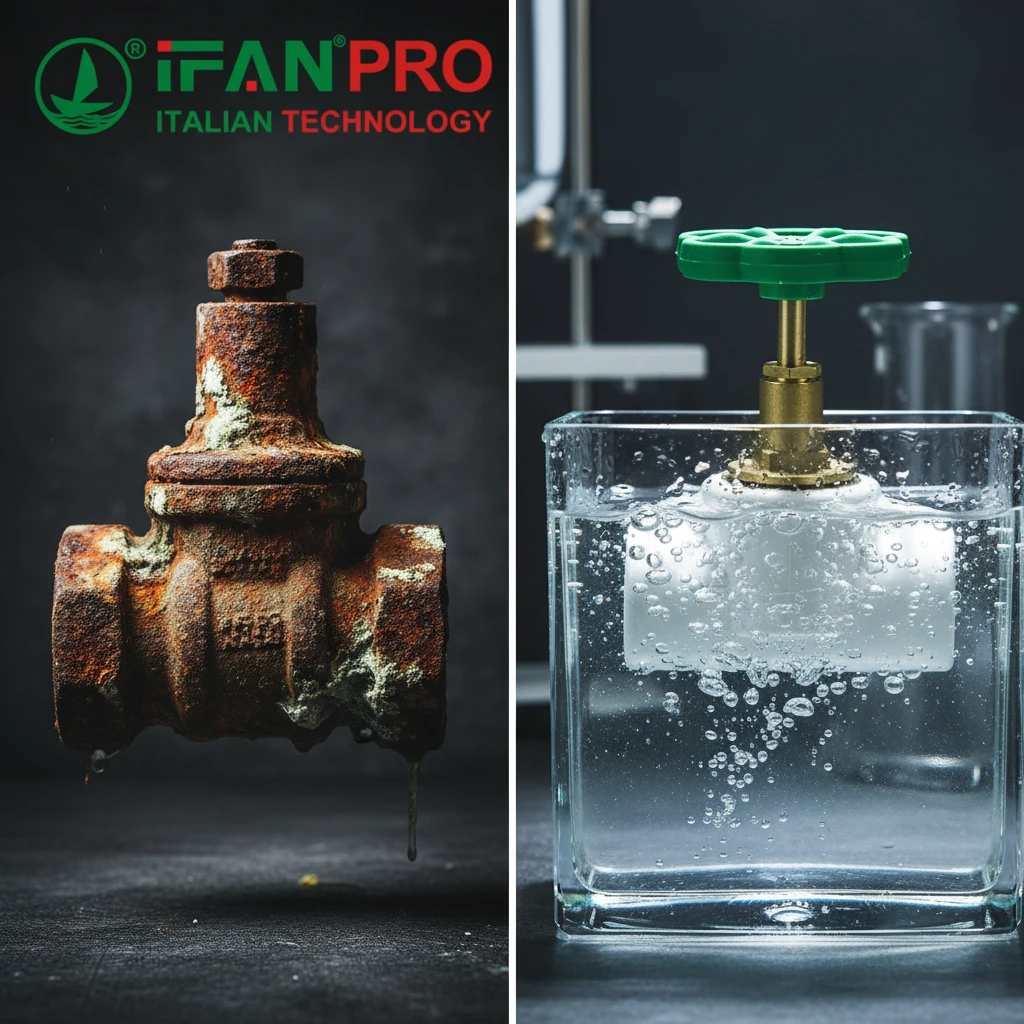
Metal valves rust—it’s a fact of life. I’ve replaced countless gate valves that seized up from corrosion, leaving homeowners without water control.
The PPR body eliminates rust because polypropylene is inherently immune to electrochemical corrosion. Unlike brass, iron, or steel, PPR does not react with oxygen or minerals in water. This means the valve body will never develop rust scale, pitting, or weakening that leads to failure.
The Chemistry of Corrosion and Why PPR Wins
Corrosion in metal valves is an electrochemical process. When metal comes into contact with water and oxygen, it forms oxides (rust). Impurities in water, such as chlorine or dissolved salts, accelerate this reaction. Over time, rust builds up, restricting flow and eventually eating through the valve wall.
Polypropylene random copolymer (PPR) is a stable organic polymer. Its molecular structure contains no free electrons to participate in oxidation reactions. Therefore, it simply cannot rust. This property alone eliminates the primary failure mode of traditional valves.
Additional Benefits of the PPR Body
The corrosion-proof nature of PPR brings other advantages:
- No contamination: Rust particles won’t enter the water stream, preserving water quality.
- Smooth internal surface: Scale and deposits have a harder time adhering, maintaining full bore diameter.
- Lightweight: PPR valves are much lighter than metal, simplifying handling and installation.
Comparing Valve Body Materials
The table below highlights key differences:
| Материал | Устойчивость к коррозии | Weight | Typical Lifespan in Water |
|---|---|---|---|
| PPR | Excellent (immune) | Light | 50+ years |
| Brass | Good, but dezincification possible | Medium | 20-40 years |
| Cast Iron | Poor, rusts rapidly | Heavy | 10-25 years (with coatings) |
| Stainless Steel | Good in most waters, but can pit | Heavy | 30-50 years (depends on grade) |
Choosing a PPR valve means you never have to worry about body corrosion again.
What Sealing Technologies Ensure Zero Leakage Over Decades of Operation?
A valve is only as good as its seal. I’ve seen metal valves with worn packing that dripped constantly, wasting water and annoying homeowners.
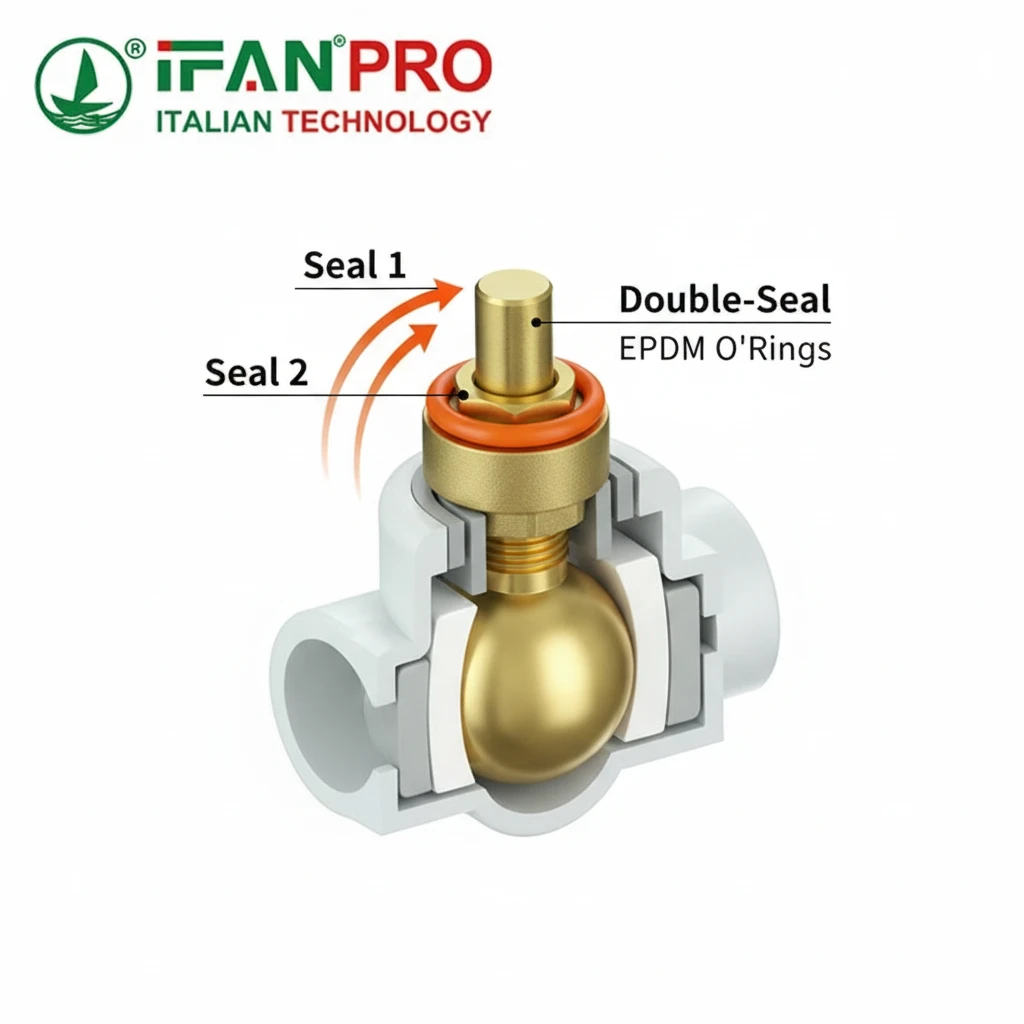
IFANPRO valves use a combination of high‑grade EPDM O‑rings, precision‑machined sealing surfaces, and a double‑seal stem design. These components are engineered to maintain elasticity and compression for decades, preventing leaks even after thousands of operation cycles.
The Heart of the Seal: EPDM O‑Rings
EPDM (ethylene propylene diene monomer) rubber is the industry standard for potable water seals. It offers:
- Excellent resistance to hot water: Maintains flexibility up to 95°C (203°F).
- Chemical inertness: Resists chlorine, ozone, and common water treatment chemicals.
- Low compression set: Stays compressed without permanent deformation.
IFANPRO sources O‑rings from certified suppliers who use virgin EPDM compounds. This ensures the rubber does not harden or crack over time.
Double‑Seal Stem Design
The valve stem is the moving part that opens and closes the flow. Leaks often occur around the stem. IFANPRO addresses this with a double‑seal system:
- Primary O‑ring: Seals the stem inside the valve body.
- Secondary lip seal: Provides an extra barrier and keeps debris out.
Both seals are lubricated with food‑grade silicone during assembly, reducing friction and wear.
Precision‑Machined Seating Surfaces
Where the ball or gate meets the seat, absolute flatness is critical. IFANPRO uses computer‑controlled machining to achieve surface finishes better than Ra 0.8 µm. This smoothness allows the seals to mate perfectly, eliminating microscopic leak paths.
The table below summarizes the sealing components and their roles:
| Component | Материал | Function | Why It Lasts |
|---|---|---|---|
| Main O‑ring | EPDM (70 Shore A) | Seals between body and ball | Resists heat & chemicals; low compression set |
| Stem O‑ring | EPDM | Seals around rotating stem | Double‑seal redundancy; lubricated |
| Ball seat | Reinforced PTFE | Provides low‑friction sealing surface | Self‑lubricating; wear‑resistant |
| Body seals | EPDM gaskets | Seal end connections | Compressed uniformly; no over‑tightening needed |
Together, these technologies create a leak‑free barrier that remains effective for half a century.
How Do Material Choices Resist Degradation from Water Chemistry and Temperature?
Water is not pure H₂O; it contains minerals, chlorine, and sometimes aggressive chemicals. Temperature fluctuations add stress. I’ve seen ordinary plastics turn brittle after years of hot water exposure.
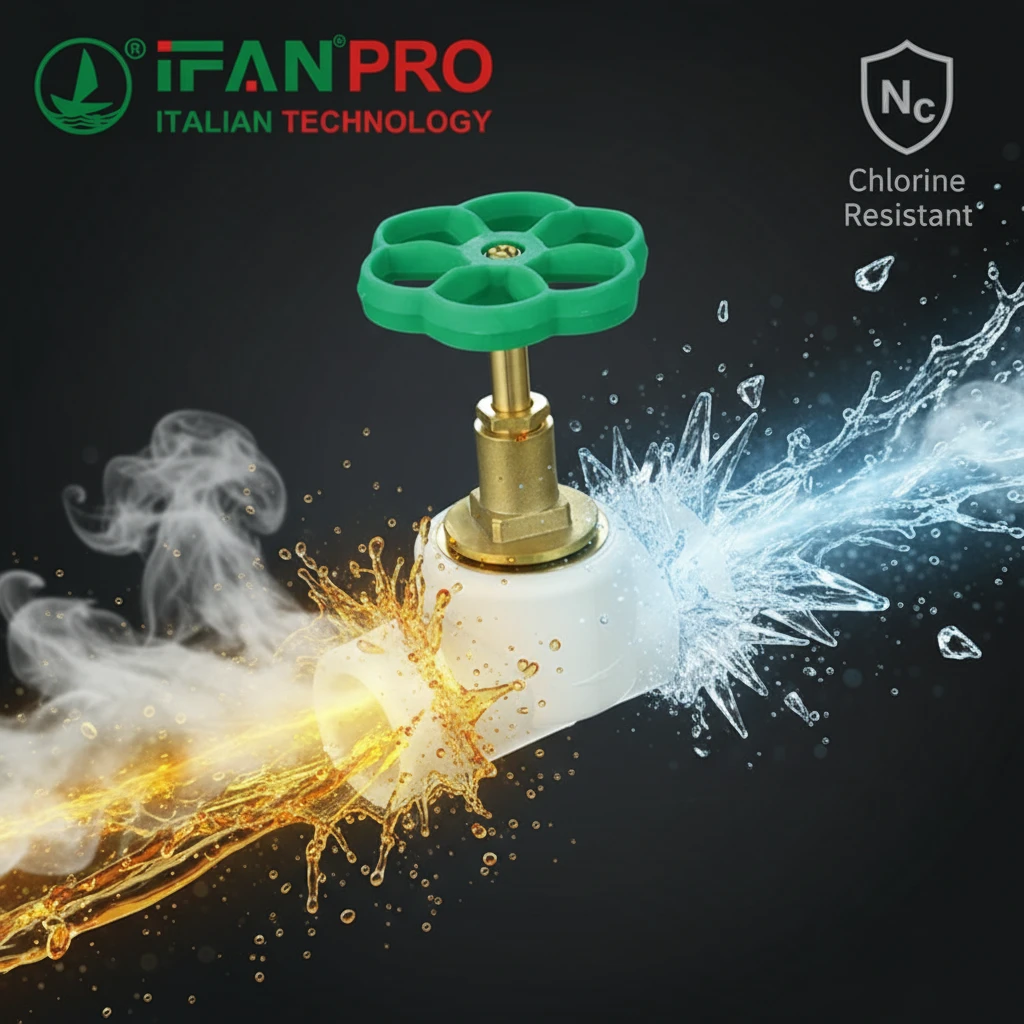
IFANPRO valves use specially formulated PPR (Polypropylene Random Copolymer) that resists chlorine degradation and maintains mechanical strength up to 95°C. The material also has a high safety factor against pressure surges, ensuring it withstands thermal expansion and water hammer without cracking.
Chlorine Resistance: The Hidden Enemy
Municipal water supplies often contain chlorine or chloramine to kill bacteria. These disinfectants can attack some polymers, making them brittle. PPR is inherently resistant to chlorine because its carbon‑carbon backbone does not react with oxidizing agents.
IFANPRO valves meet the stringent requirements of NSF/ANSI 61 and 14, which include chlorine resistance testing. In accelerated tests, the material shows no significant loss of mechanical properties after exposure to high chlorine levels equivalent to 50 years of service.
Copolymer Design for Temperature Stability
PPR is a random copolymer, meaning the ethylene units are randomly distributed in the polypropylene chain. This random structure:
- Improves flexibility at low temperatures (down to -10°C).
- Maintains stiffness at high temperatures (up to 95°C continuously).
- Resists creep (slow deformation under constant stress).
Pressure Rating and Safety Factors
IFANPRO valves are rated for PN20 or PN25 (20 or 25 bar) at 20°C, with derated pressures at higher temperatures. The design includes a safety factor of at least 1.5, meaning the burst pressure is 1.5 times the rated pressure. This margin accounts for unexpected surges.
The following table shows typical pressure ratings at various temperatures:
| Temperature | Maximum Working Pressure (PN20 valve) |
|---|---|
| 20°C (68°F) | 20 bar (290 psi) |
| 60°C (140°F) | 12 bar (174 psi) |
| 80°C (176°F) | 8 bar (116 psi) |
| 95°C (203°F) | 6 bar (87 psi) |
These ratings ensure the valve operates safely under all normal residential and commercial conditions.
What Accelerated Testing Validates the 50-Year Service Life Claim?
A 50‑year claim needs proof. We can’t wait half a century to see if it’s true. Instead, we use accelerated testing methods.
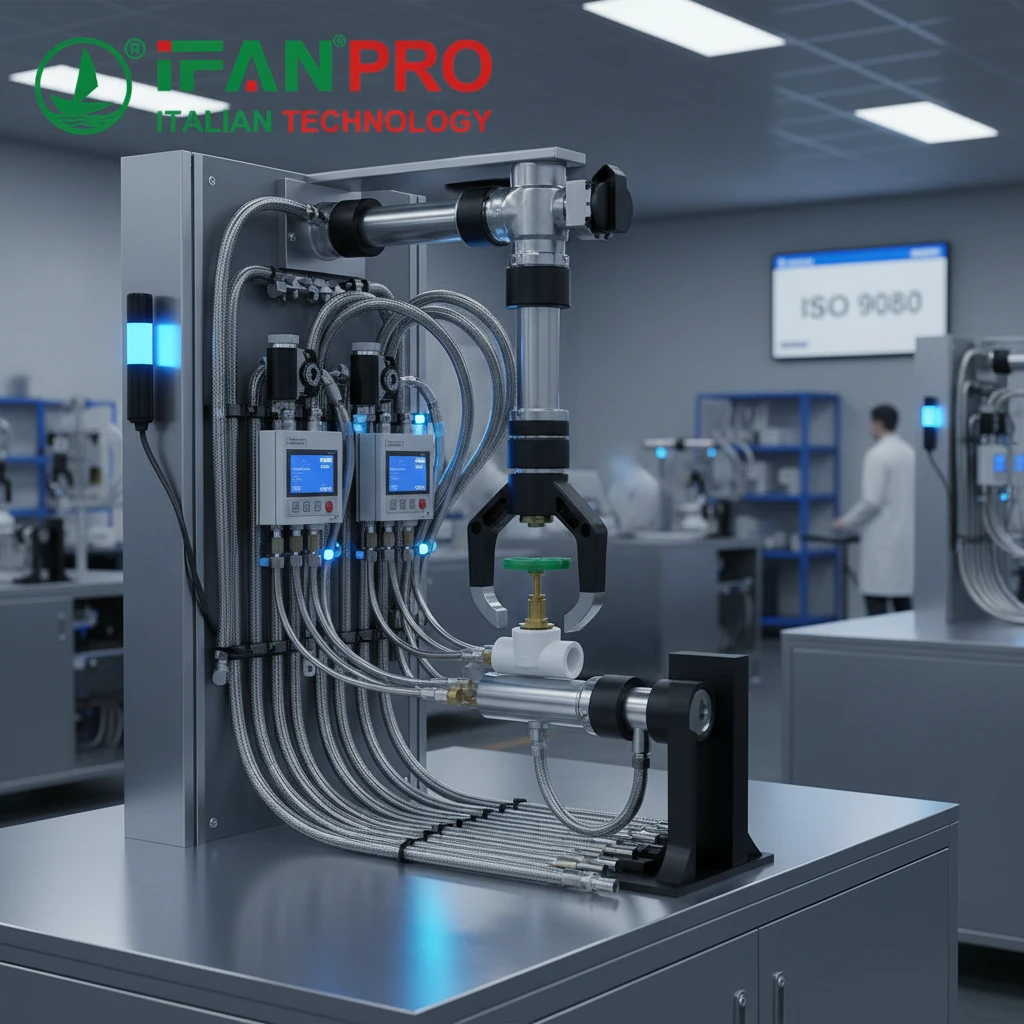
IFANPRO valves undergo rigorous accelerated life tests, including high‑temperature pressure cycling (ISO 19893), long‑term hydrostatic strength tests (ISO 9080), and thousands of mechanical operation cycles. These tests simulate decades of use in months, confirming the design’s durability.
ISO 9080: Long‑Term Hydrostatic Strength
This standard tests pipe and fitting materials by subjecting them to constant internal pressure at elevated temperatures. By testing at 80°C, 95°C, and 110°C, we extrapolate the material’s expected life at 20°C. The regression curve shows that IFANPRO PPR maintains integrity for at least 50 years at 20°C and 10 bar.
ISO 19893: Thermal Cycling with Pressure
Valves in real systems experience temperature changes. ISO 19893 cycles the valve between 20°C and 95°C while maintaining pressure (10 bar). One cycle takes about an hour. IFANPRO valves pass 5,000 cycles without leakage, equivalent to decades of daily temperature swings.
Mechanical Endurance Testing
We also test the valve’s moving parts. An automated actuator opens and closes the valve 10,000 times under full pressure. After the test, we measure operating torque and leak tightness. IFANPRO valves show minimal wear and no leakage.
Summary of Key Tests
| Test Standard | What It Simulates | Duration | Acceptance Criterion |
|---|---|---|---|
| ISO 9080 | Long‑term pressure at temperature | 10,000 hours extrapolated | No failure; extrapolated life >50 years |
| ISO 19893 | Daily temperature cycling | 5,000 cycles | No leakage during or after test |
| EN 12266‑1 | Valve seat leakage | Short‑term | Zero visible leakage at 1.1× rated pressure |
| Mechanical cycles | Repeated operation | 10,000 cycles | Torque increase <30%; no leakage |
These tests give us confidence—and you can have confidence too—that IFANPRO valves will deliver on their 50‑year promise.
Заключение
IFANPRO PPR valves combine a corrosion‑proof body, advanced seals, durable materials, and proven testing to offer true 50‑year maintenance‑free service. For your next project, trust IFANPRO valves to end rust and leaks forever.








 Русский
  English
  Français
  Español
Последние комментарии