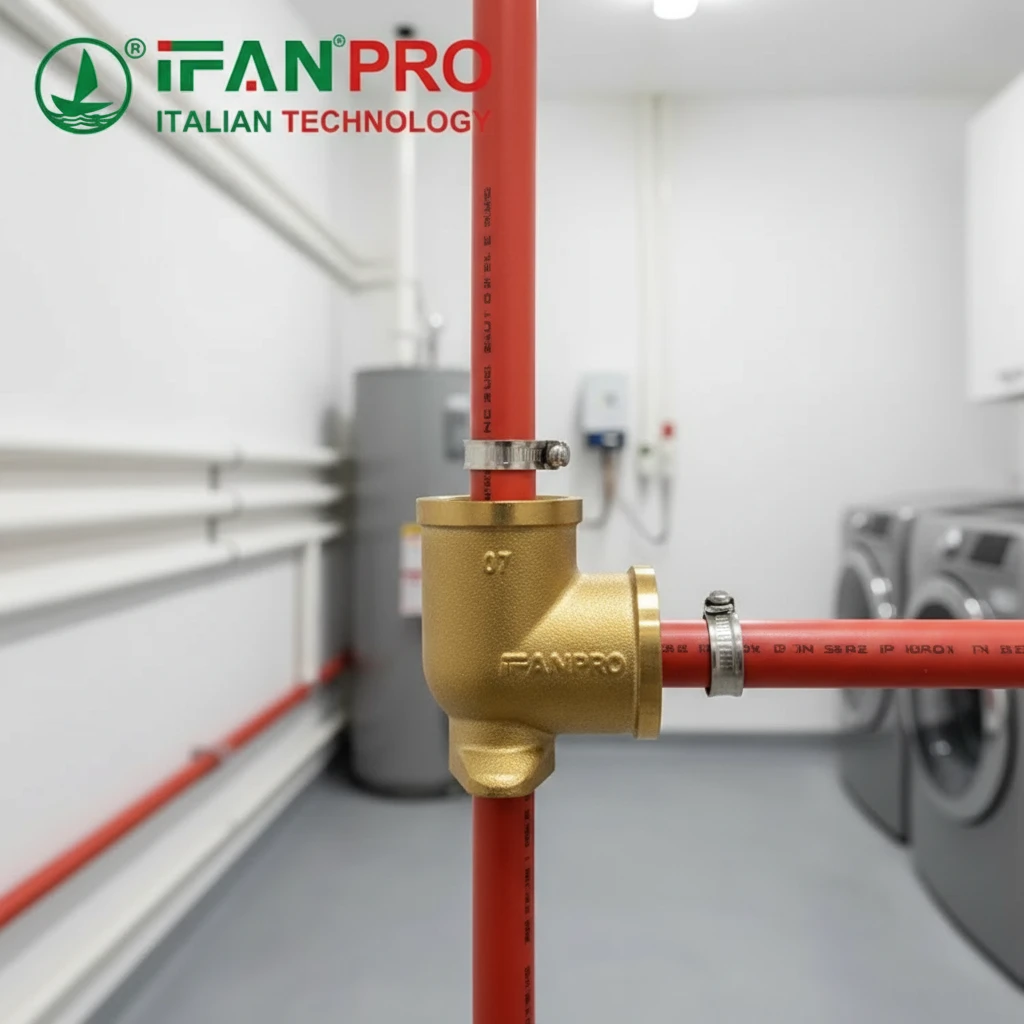
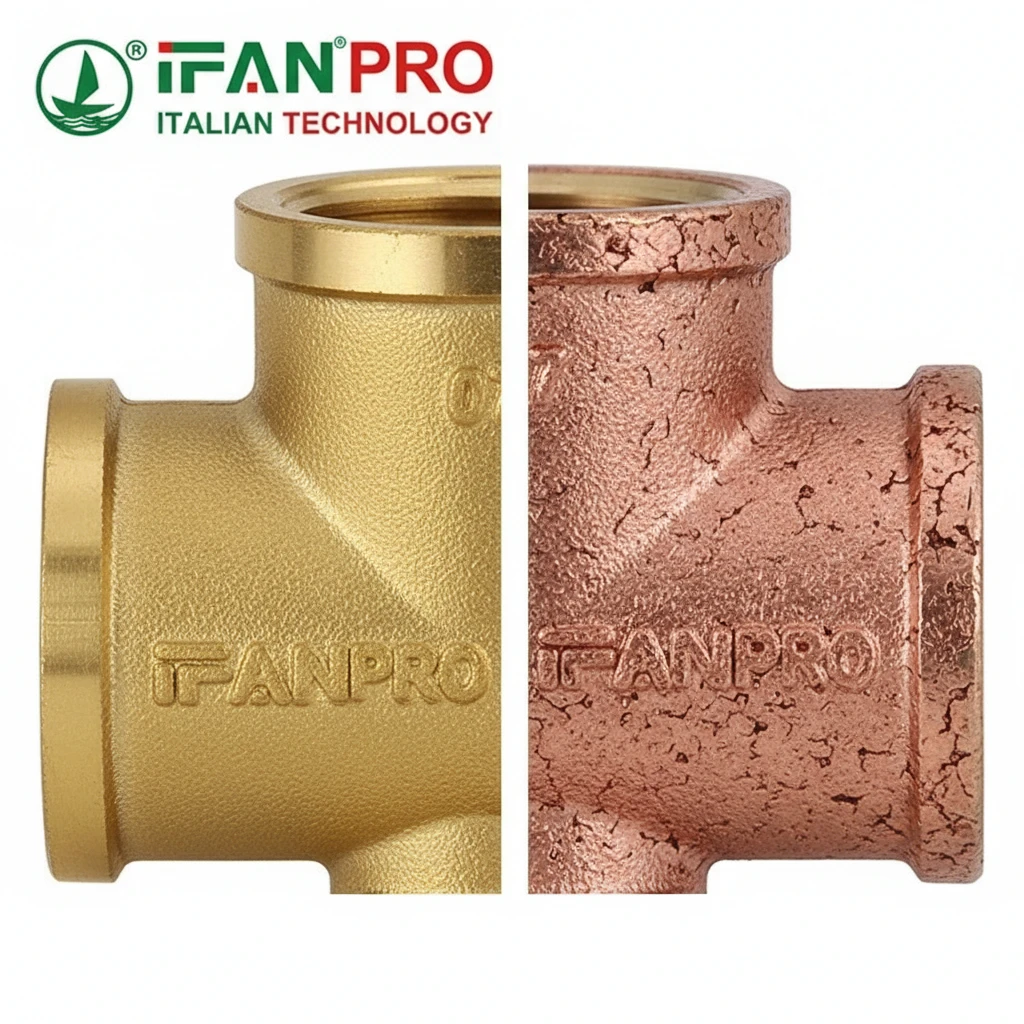
A client once sent us photos of a crumbly, pinkish brass fitting that had failed after just a few years. The culprit? Dezincification. This experience taught us that not all “brass” is safe for water.
Yes, a brass elbow can resist dezincification, but only if it is made from a specific dezincification-resistant (DZR) alloy, such as one that meets the CW511L or C69400 standard. These special alloys contain additives like arsenic, antimony, or phosphorus that form a protective barrier, preventing the selective leaching of zinc from the brass when exposed to certain types of water.
While brass is a popular choice for its strength and machinability, its behavior in water systems is not universal. Let’s dive into the science behind this corrosion and how to ensure your fittings last a lifetime.
What is Dezincification and Why is It a Risk for Some Brass Alloys?
Finding a failed, weakened fitting inside a wall is a plumber’s nightmare. We’ve seen this damage firsthand, and it always traces back to using the wrong brass for the job.
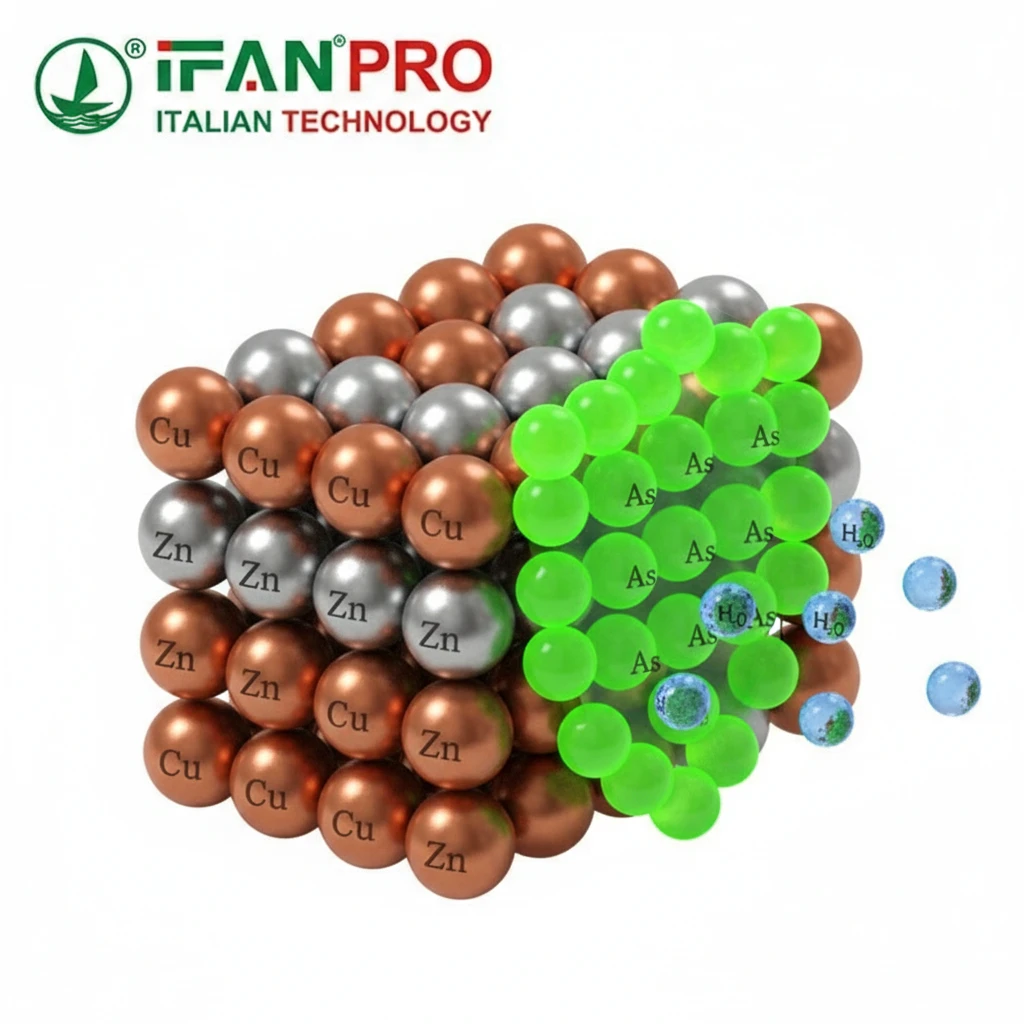
Dezincification is a selective corrosion process where zinc is selectively leached out of the brass alloy by water, leaving behind a porous, weak, and copper-rich structure that is often pinkish or reddish in color. It is a major risk for standard brass alloys (like CW614N/ CDA 360) in soft, acidic, or chloride-containing water because these conditions aggressively attack the zinc within the metal’s structure.
The Chemistry of the Problem
To understand the risk, you first need to understand what brass is. Brass is not a single metal; it is an alloy, primarily made of copper and zinc. Standard “free-machining” brass might contain around 35-40% zinc because this makes it easy and cheap to manufacture into complex shapes like elbows and valves.
The problem starts when this alloy meets certain types of water. Soft water (low in minerals), acidic water (low pH), or water high in chlorides (like in some municipal supplies or areas near the coast) can trigger an electrochemical reaction. In this reaction, the zinc in the brass dissolves into the water, leaving microscopic holes behind. What remains is a spongy, brittle framework of nearly pure copper that has almost no mechanical strength.
Visual and Functional Failure
The process often happens in two forms:
- Layer-type Dezincification: The entire surface layer of the fitting corrodes uniformly, gradually thinning the wall.
- Plug-type Dezincification: Localized, penetrating corrosion that creates holes or deep pits through the wall of the fitting.
In both cases, the result is the same:
- Structural Failure: The fitting can crack or crumble under normal water pressure, causing catastrophic leaks.
- Contamination: The leached zinc and corrosion byproducts can enter the water stream.
- Blockages: Loose, corroded material can break off and clog valves or faucets.
The table below shows why water chemistry is the critical trigger:
| Water Condition | Effect on Standard Brass | Reason |
|---|---|---|
| Soft, Low Mineral Content | High Risk | Lacks protective scale (like calcium carbonate) that can coat metal. Water is more “aggressive.” |
| Acidic (pH below 7.0) | High Risk | High concentration of H+ ions accelerates the electrochemical reaction that removes zinc. |
| High Chloride Content | High Risk | Chloride ions are very corrosive and break down the protective surface films on the metal. |
| Stagnant, Warm Water | High Risk | Heat speeds up chemical reactions. Stagnation allows corrosive elements to concentrate at the fitting. |
Using standard brass in these conditions is a gamble with a high probability of failure, often within 5-10 years.
How Do Dezincification-Resistant Brass Alloys Prevent This Selective Corrosion?
After that early failure, we insisted on using only certified DZR brass. The difference in long-term performance is undeniable.
Dezincification-resistant brass alloys prevent corrosion by adding small, precise amounts of “inhibitor” elements—typically arsenic (As), antimony (Sb), or phosphorus (P)—to the copper-zinc mix. These elements promote the formation of a stable, protective layer on the brass surface during corrosion, which dramatically slows down or completely stops the zinc from leaching out into the water.
The Role of the “Inhibitor” Element
Think of standard brass like a brick wall where some bricks (zinc) are less durable than others (copper). Aggressive water can wash away the weak bricks, causing the wall to collapse. DZR brass is like adding a special, super-strong mortar that locks all the bricks firmly in place, even under attack.
The key is what happens at the microscopic level when corrosion begins. In standard brass, the zinc atoms dissolve easily, leaving holes. In DZR brass, when the inhibitor element (like arsenic) is present, it reacts at the metal surface. Instead of zinc leaching away, a very thin, stable, and adherent layer of a complex copper-arsenic compound forms. This layer acts as a shield. It passivates the surface, protecting the underlying zinc from further contact with the water.
Common DZR Alloy Standards
Not all DZR brass is the same, but they all follow this principle. The most common and internationally recognized standards are:
- CW511L (European Standard EN 12165): Also known as “Brass CZ132.” This is a lead-free, arsenic-inhibited brass (CuZn36Pb1As). It is the most widely specified DZR brass for potable water fittings in Europe and many other regions.
- C69400 (UNS Number): This is a silicon-containing, high-strength DZR brass often used in the United States. It offers excellent corrosion resistance without using arsenic.
These alloys are more expensive to produce than standard brass because of the careful control needed in adding the inhibitor element. However, this cost is insignificant compared to the expense of repairing a leak caused by a failed fitting.
Performance Comparison in Aggressive Water
The effectiveness of this protection is measurable. Standardized laboratory tests, like the ISO 6509 “Dezincification Test,” immerse samples of brass in a harsh chemical solution. After a set period, technicians examine cross-sections under a microscope to measure the depth of corrosion.
| Alloy Type | Typical Dezincification Depth after Test | Result for Potable Water |
|---|---|---|
| Standard Brass (e.g., CW614N) | Significant, often exceeding 100 μm | FAIL – Not Safe |
| DZR Brass (e.g., CW511L) | Minimal, typically less than 100 μm | PASS – Safe |
| High-Performance DZR (e.g., C69300) | Virtually none | PASS – Excellent Safety |
For a plumbing system, specifying an alloy that passes this test is the best way to ensure decades of trouble-free service.
What Certifications Indicate a Brass Elbow is Safe for Drinking Water?
Clients should never have to guess about safety. Certifications provide the clear, third-party proof that a fitting is truly suitable for drinking water.
The key certifications that indicate safety are NSF/ANSI 61 (for North America and global markets) and WRAS (for the UK). These certifications confirm the fitting is made from an approved DZR alloy like CW511L and that it does not leach harmful levels of metals (like lead or zinc) into drinking water, ensuring long-term performance and health safety.
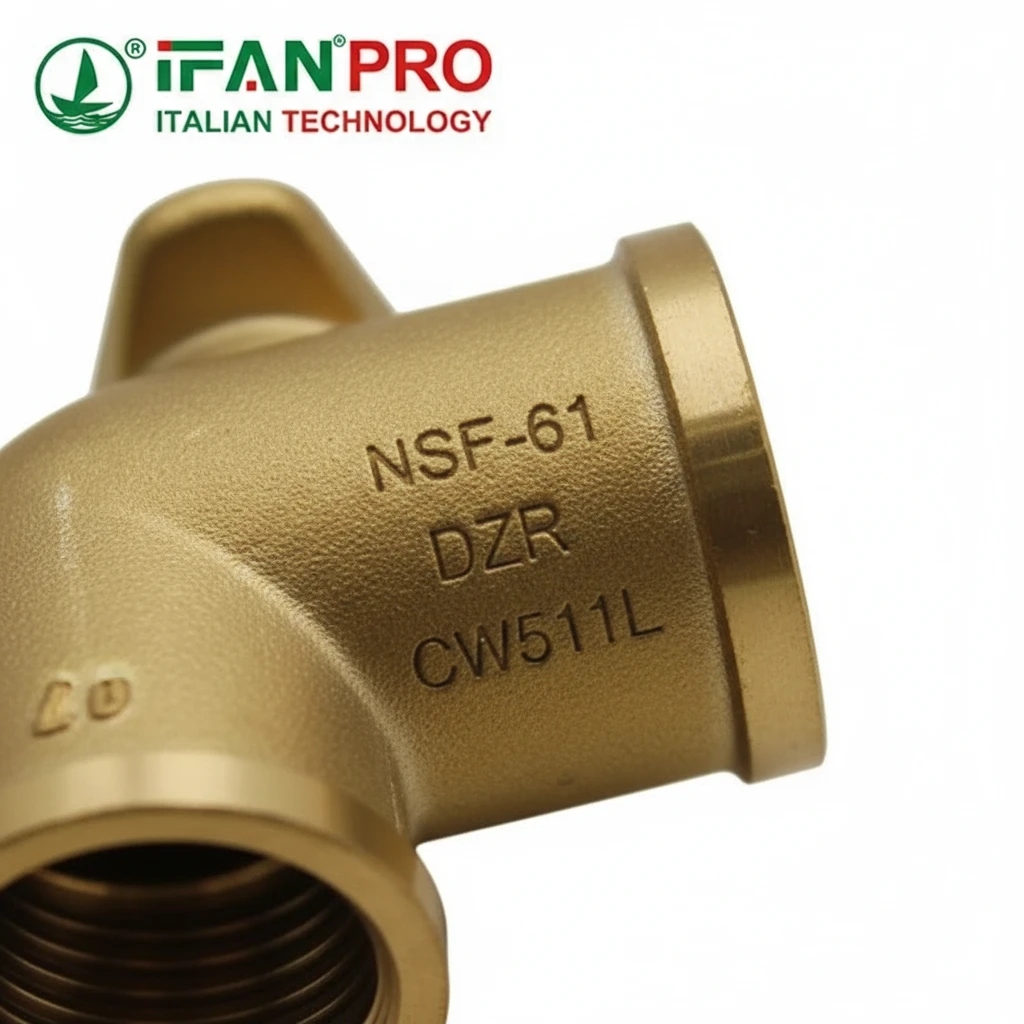
Understanding NSF/ANSI 61: The Health Effects Standard
NSF/ANSI 61 is the most important certification for drinking water system components in North America and is recognized worldwide. It doesn’t just check for dezincification resistance; it evaluates the entire product for its impact on water quality.
To earn this certification, a brass elbow must pass rigorous tests:
- Material Composition: The manufacturer must declare the exact alloy, which is verified. The use of a certified DZR brass is essential.
- Leaching Test: Fittings are immersed in test waters of varying pH for extended periods. The water is then analyzed to ensure levels of contaminants like lead, copper, zinc, and arsenic are far below strict safety limits.
- Physical Performance: The product must also meet relevant mechanical standards.
When you see the NSF 61 mark, you know an independent organization has verified the product’s safety.
Understanding WRAS Approval in the UK
In the United Kingdom, the Water Regulations Advisory Scheme (WRAS) approval is a legal requirement for products touching public drinking water. The WRAS evaluation is similarly thorough, with a strong focus on material suitability (mandating DZR brass for critical applications) and contamination prevention.
A Checklist for Safe Procurement
You should always look for more than just the word “brass” on a spec sheet. Here is a checklist to follow:
| What to Look For | Why It Matters | Where to Find It |
|---|---|---|
| Alloy Designation | Confirms DZR grade. | Product specification sheet, often listed as “Material: CW511L” or “C69400”. |
| NSF/ANSI 61 Mark | Verifies low leaching and health safety. | Stamped on the fitting, on packaging, or in manufacturer’s compliance certificates. |
| WRAS Approval Number | Legal compliance for UK installations. | Listed on the WRAS website and in manufacturer’s documentation. |
| Lead-Free Compliance | Ensures the alloy meets local lead-content laws (e.g., <0.25% weighted average). | Often stated as “LF” or “Lead-Free” alongside certifications. |
If a supplier cannot provide clear documentation for these points, you should consider it a major red flag. At IFAN, all our potable water brass fittings carry full NSF 61 certification and are manufactured from certified CW511L alloy, providing our clients with undeniable proof of safety.
How Does Water Chemistry Affect the Long-Term Resistance to Dezincification?
Even the best DZR brass is not magical. Understanding your local water is the final, critical step in guaranteeing a system’s longevity.
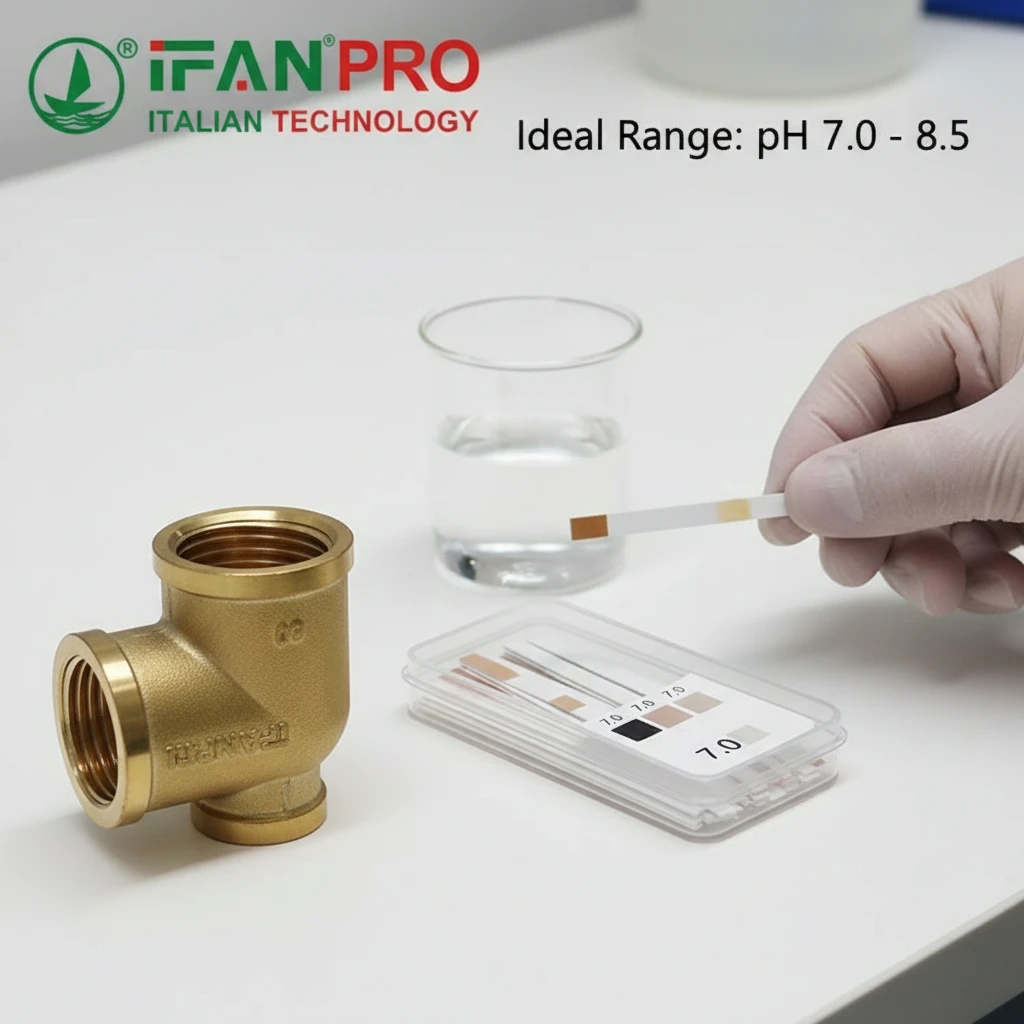
Water chemistry directly controls the rate of corrosion. Three main factors determine long-term resistance: pH (acidity), hardness (mineral content), and chloride level. DZR brass performs best in neutral to slightly alkaline water (pH 7-8.5), with moderate hardness that forms a protective scale, and low chloride concentrations. Extreme values in any of these parameters will challenge even resistant alloys over many decades.
The Three Key Water Factors
You can think of DZR brass as a high-performance raincoat. It works brilliantly in normal rain, but in a prolonged hurricane or acid rain, its limits will be tested. Water chemistry is the “weather” for your pipes.
1. pH – The Acidity Factor:
Water with a low pH (below 7.0) is acidic and corrosive to most metals. It increases the driving force for dezincification. DZR brass is formulated to withstand mild acidity, but highly acidic water (pH < 6.5) will accelerate wear over 30-50 years. Ideally, water should be neutral (pH 7.0) or slightly alkaline.
2. Water Hardness – The Protective Factor:
Hard water contains dissolved calcium and magnesium carbonates. These minerals can precipitate out and form a thin, protective layer of scale (limescale) on the inside of pipes. This scale acts as a physical barrier, shielding the brass from direct contact with water. Soft water lacks this ability, leaving the metal surface more exposed.
3. Chloride Content – The Aggressive Ion Factor:
Chlorides, found in salt, are highly corrosive ions. They can penetrate protective layers and promote pitting corrosion. Coastal areas or municipalities with specific water treatment can have higher chloride levels. High chlorides are one of the most aggressive conditions for any brass alloy.
Practical Guide for Assessing Risk
Before specifying brass fittings for a major project, it is wise to understand the local water. Here is a simple guide:
| Water Parameter | Low Risk Condition | High Risk Condition | Action to Take |
|---|---|---|---|
| pH Level | 7.0 – 8.5 | Below 6.5 or above 9.0 | For low pH, consider installing a neutralizing filter. Always use DZR brass. |
| Water Hardness | Moderately Hard | Very Soft | In soft water areas, DZR brass is essential. Hard water provides extra protection. |
| Chloride Level | Low (< 50 mg/L) | High (> 100 mg/L) | In high-chloride environments, confirm your DZR alloy has a proven track record. |
The Role of System Design
Chemistry isn’t just about the water source; it’s also about what happens inside the pipes.
- Stagnation: Water sitting idle in a pipe for long periods allows corrosion reactions to proceed locally. Good system design avoids dead legs.
- Temperature: Hot water accelerates all chemical reactions. Always ensure hot water lines use fittings rated for high temperatures.
The takeaway is clear: DZR brass provides a robust defense, but it is part of a system. Knowing your water chemistry allows you to make the most informed choice and plan for a system that will last for generations.
Заключение
Yes, brass elbows can reliably resist dezincification if you specify certified DZR alloys like CW511L. For safe, long-lasting performance, choose certified products like IFAN’s NSF 61-approved DZR brass fittings for your potable water systems.




 Русский
  English
  Français
  Español
Последние комментарии