

I once visited a factory where their entire production line stopped because a single junction point couldn’t handle the flow demand. That day, I learned the true value of proper fitting selection.
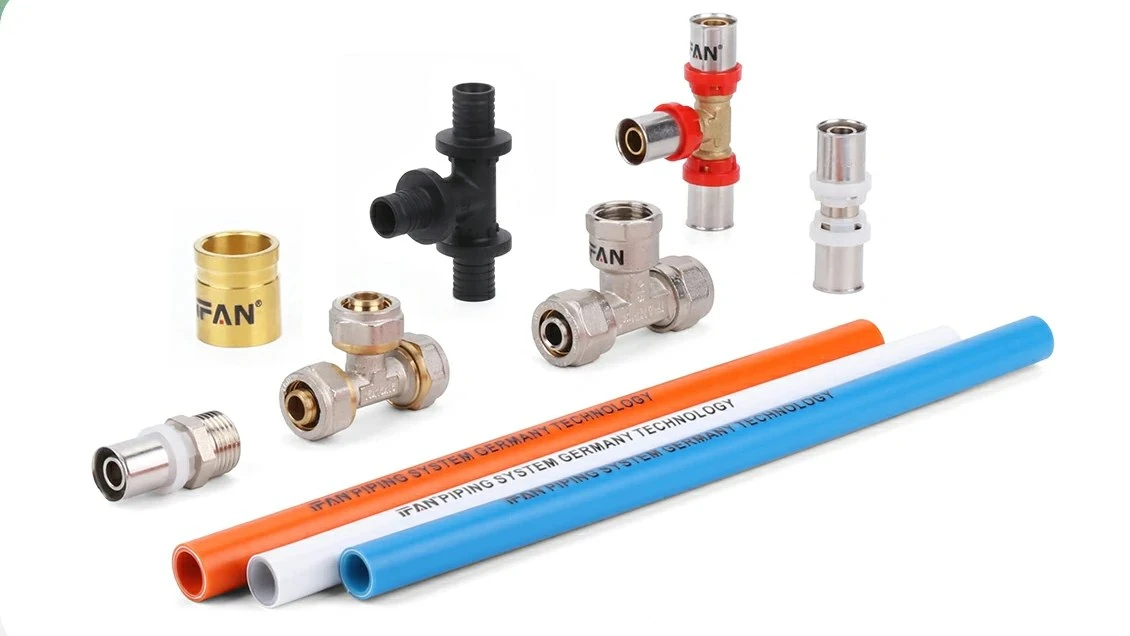
407 cross tees optimize industrial fluid distribution by creating a single, efficient junction point that splits one inlet flow into three separate outlets with minimal pressure loss. This four-way connection reduces the need for multiple fittings, decreases potential leak points, and maintains consistent flow rates across all branches, making them ideal for complex industrial networks.
Let’s examine how these specialized fittings solve real engineering challenges across various industries.
How Do 407 Cross Tees Address Fluid Dynamics Challenges in Complex Pipe Networks?
Complex networks create complex flow problems. I’ve seen engineers struggle with pressure drops and turbulence at every turn.
407 cross tees address fluid dynamics challenges by maintaining laminar flow through a carefully designed internal geometry. Unlike standard tees that create turbulence at branch points, quality cross tees feature smooth internal transitions and optimized bore sizes that minimize flow resistance. This design ensures consistent pressure distribution to all three outlet branches simultaneously.
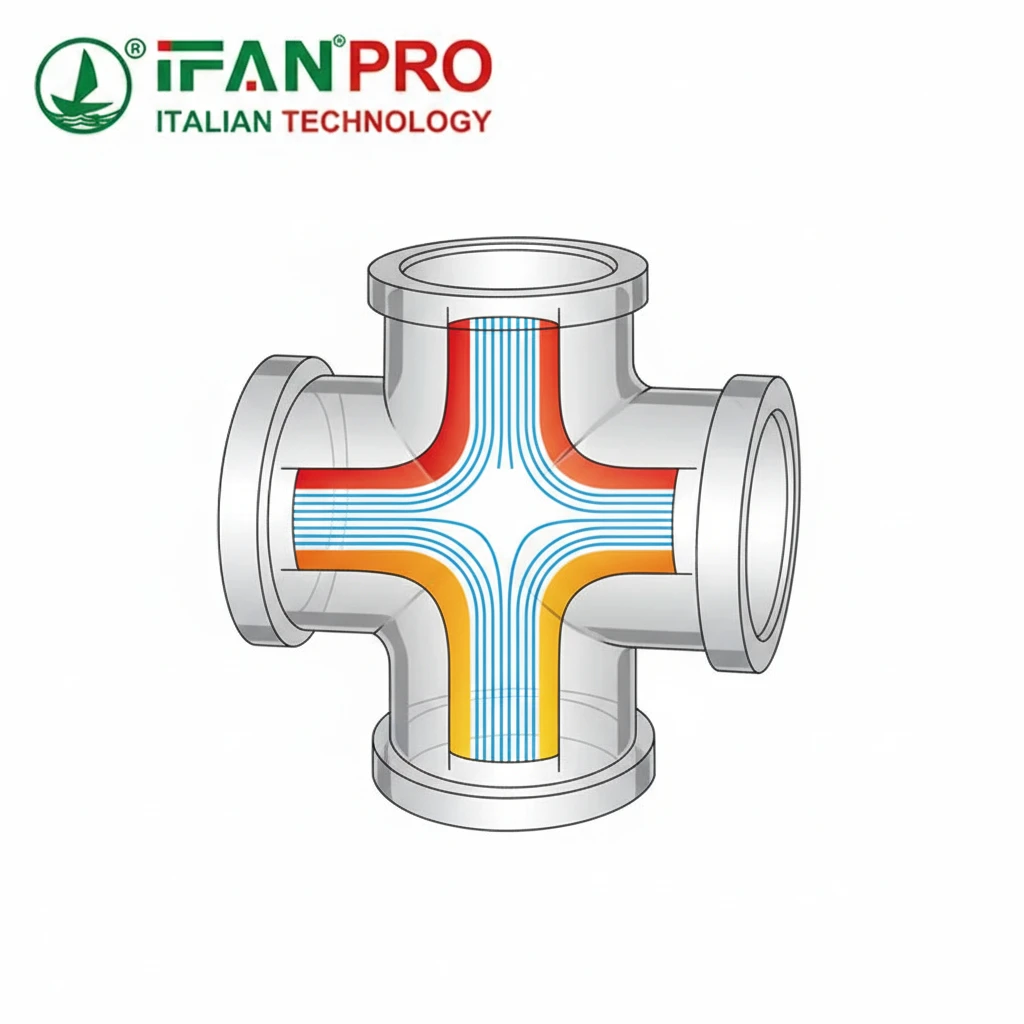
Understanding Flow Behavior at Junction Points
When fluid moves through a pipe network, every fitting disrupts its path. The key question is how much disruption occurs. Standard fittings often create turbulence, which wastes energy and reduces pressure.
At a basic tee junction, fluid hits a wall and must change direction. This impact creates eddies and vortices. These flow disturbances convert kinetic energy into heat, effectively wasting pumping power. Additionally, turbulence can cause erosion in pipes over time, especially with abrasive fluids.
However, a well-designed 407 cross tee minimizes these problems through smart engineering.
Internal Radius Design: Quality cross tees feature curved internal radii at all junction points. These curves guide fluid smoothly into branch lines rather than forcing it to slam into flat walls. As a result, this design preserves momentum and reduces energy loss.
Consistent Cross-Sectional Area: The total flow area through all branches should match or slightly exceed the inlet area. If branches are too small, velocity increases and pressure drops. Conversely, if they are too large, flow can stagnate. Therefore, proper engineering balances these factors.
The table below shows how different junction designs affect flow:
| Junction Type | Pressure Drop Coefficient | Flow Pattern | Best Application |
|---|---|---|---|
| Standard Tee (90° branch) | High | Turbulent with significant eddies | Simple splits, low flow requirements |
| Reducing Tee | Very High | Severe turbulence at transition | When branch sizes must differ |
| 407 Cross Tee (Quality) | Low | Mostly laminar with minimal disturbance | Balanced multi-branch distribution |
| Manifold Assembly | Medium | Depends on spacing and design | When branches need valves or controls |
Material Selection and Surface Finish
Fluid dynamics also depends on pipe wall smoothness. Rough surfaces create friction, which slows flow and reduces pressure. High-quality 407 cross tees feature mirror-smooth interior surfaces. This smoothness comes from precision molding processes and high-grade materials.
For water systems, smooth interiors also prevent scale buildup. For gas systems, they reduce friction losses. For chemical applications, they eliminate places where corrosive materials might pool and attack the pipe wall.
How Do Cross Fittings Enable High-Efficiency Operations in Water, Gas, and Mild Chemical Transport?
Efficiency drives every industrial decision. I’ve watched companies switch to cross fittings and immediately see improvements in their system performance.
Cross fittings enable high-efficiency operations by consolidating multiple connection points into a single fitting. This consolidation reduces installation time by up to 40%, eliminates three potential leak points compared to using multiple tees, and creates a more streamlined flow path. For water, gas, and mild chemical transport, this means lower pumping costs and fewer maintenance interruptions.
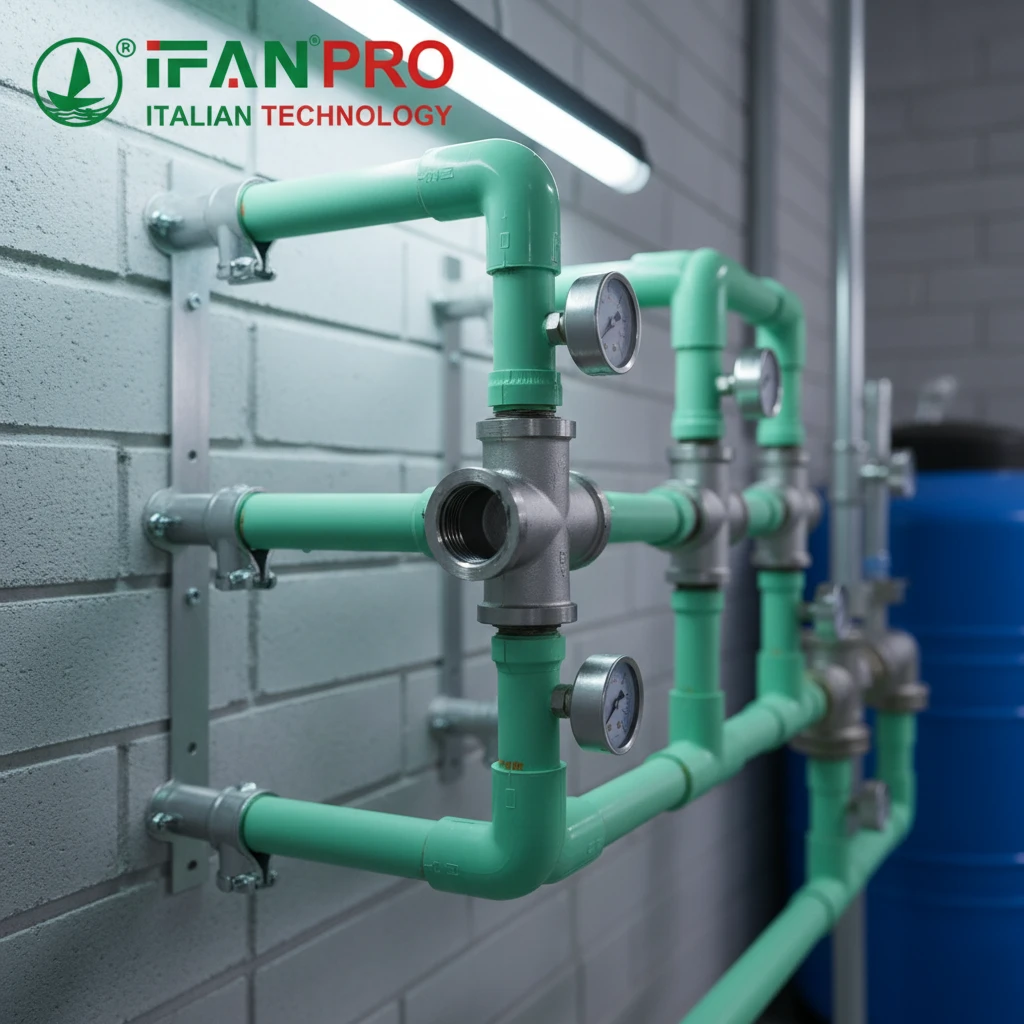
Efficiency Gains in Water Distribution Systems
Water distribution networks often require splitting flow to multiple destinations. Traditional methods use a series of tees connected by short pipe sections. Unfortunately, this approach creates several problems:
Pressure Drop Accumulation: Each tee adds its own pressure drop. When you connect multiple tees in series, these drops add up. By the time water reaches the farthest branch, pressure may be significantly reduced.
Leak Potential: Every joint is a potential leak. A traditional manifold using three tees requires at least six fusion joints. In contrast, a single 407 cross tee requires only four joints (one inlet, three outlets). This reduction of two joints cuts leak risk by 33%.
Space Requirements: Multiple tees take up significant space. In crowded equipment rooms or industrial skids, this space comes at a premium. Consequently, a single cross fitting fits in a much smaller footprint.
The efficiency gains become even clearer when we examine specific applications:
| Application | Traditional Approach | 407 Cross Tee Approach | Efficiency Improvement |
|---|---|---|---|
| Cooling Water Distribution | 3 tees + connectors; 6-8 joints | 1 cross tee; 4 joints | 40% faster installation; 33% fewer leak points |
| Gas Manifold System | Threaded connections; high leak risk | Fusion-welded cross; monolithic joints | Near-zero leak potential; safer operation |
| Chemical Dosing Station | Multiple fittings; dead zones for chemical buildup | Smooth internal transitions; self-draining design | Reduced chemical trapping; easier cleaning |
Gas Transport Considerations
Gas systems present unique challenges. Unlike liquids, gases are compressible and can leak through tiny openings that might seal themselves with water. Therefore, joint integrity becomes even more critical.
A single 407 cross tee with properly fused connections creates a monolithic plastic structure. There are no threaded connections to loosen over time from vibration. Moreover, there are no gaskets that can dry out and crack. The fusion-welded joints become part of the pipe itself.
For natural gas distribution within industrial facilities, this reliability is essential. For compressed air systems, it means maintaining pressure without constant compressor cycling. For inert gas blanketing systems, it ensures consistent coverage without gas waste.
Mild Chemical Transport Safety
When handling chemicals, every fitting becomes a potential failure point. Engineers design chemical systems with safety margins, but these margins only protect against expected conditions. Unexpected failures happen at weak points.
A 407 cross tee reduces the total number of potential failure points. Fewer fittings mean fewer places where things can go wrong. Additionally, high-quality cross tees use materials specifically rated for chemical resistance. Polypropylene (PP) and polyvinylidene fluoride (PVDF) options exist for different chemical exposures.
The smooth internal geometry also prevents chemical accumulation. Some chemicals can stagnate in dead zones, potentially crystallizing or concentrating over time. Fortunately, a well-designed cross tee has no dead zones, so fluids keep moving through the system.
How Do 407 Cross Tees Perform in High-Flow Scenarios for Industrial Machinery and Agricultural Irrigation?
High flow pushes fittings to their limits. I’ve tested fittings that failed dramatically under high-flow conditions.
In high-flow scenarios, 407 cross tees maintain performance through their balanced port design and robust material construction. For industrial machinery cooling circuits, they deliver equal flow to multiple heat exchangers without starving any branch. For agricultural irrigation, they distribute water evenly across field sections, ensuring consistent crop watering even at peak demand periods.
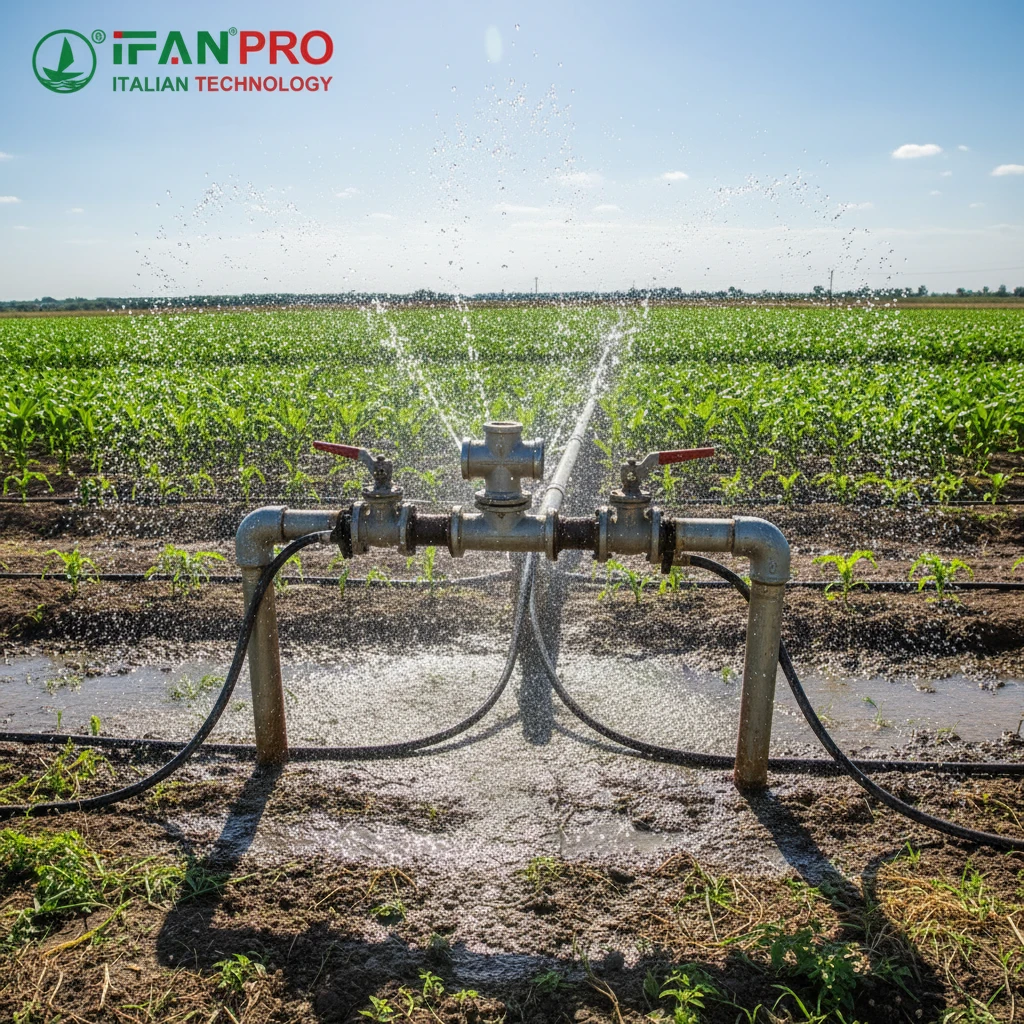
Industrial Machinery Cooling Applications
Industrial machines generate tremendous heat. CNC machining centers, injection molding machines, and hydraulic power units all require consistent cooling to maintain precision and prevent damage.
Cooling circuits typically split flow to multiple heat exchangers or cooling jackets. If one branch receives less flow, that machine component overheats. Conversely, if another receives too much flow, the pump may cavitate or energy wastes.
A 407 cross tee with balanced port sizes ensures each branch receives approximately equal flow. This balance comes from the internal geometry we discussed earlier. Specifically, the curved transitions direct flow evenly rather than favoring a straight-through path.
For applications requiring unequal flow distribution, engineers can specify cross tees with different branch sizes. For example, a 2-inch inlet might feed two 1-inch branches and one 1.5-inch branch. This customization allows precise flow control without extra valves or fittings.
Agricultural Irrigation System Design
Modern irrigation systems cover vast areas. Center pivots, drip irrigation networks, and solid-set sprinkler systems all require water distribution across large distances.
Pressure variation is the enemy of uniform irrigation. If pressure drops at the end of a line, sprinklers there apply less water. As a result, crops suffer from under-watering while areas near the pump receive too much.
Cross tees help solve this problem in several ways:
Loop Systems: Many irrigation designs use looped mains where water can flow in two directions to reach any point. Cross tees allow water to enter and exit the loop at multiple points, thus balancing pressure throughout.
Section Control: Large fields divide into sections. A main line runs along the field edge, and cross tees at regular intervals feed lateral lines into each section. Consequently, this arrangement provides consistent pressure to all laterals.
Fertilizer Injection: Some systems inject fertilizer into irrigation water. Cross tees can position injection points to ensure even mixing before water splits to multiple laterals.
The table below summarizes performance characteristics for different high-flow applications:
| Application | Flow Rate Range | Key Requirement | How 407 Cross Tee Helps |
|---|---|---|---|
| Machine Tool Cooling | 50-200 GPM | Equal branch flow | Balanced internal geometry |
| Hydraulic Oil Cooling | 20-100 GPM | Low pressure drop | Smooth transitions minimize losses |
| Center Pivot Irrigation | 500-2000 GPM | Pressure maintenance | Minimal flow restriction at high rates |
| Drip Irrigation Manifold | 10-50 GPM | Even distribution | Consistent flow to all laterals |
Pressure Management Strategies
High-flow systems require careful pressure management. Water hammer, cavitation, and surge pressures can damage fittings and pipes.
Quality 407 cross tees from IFAN include reinforced hub designs that withstand pressure spikes. The material thickness at branch junctions exceeds minimum requirements, thus providing safety margins for unexpected conditions.
For systems with frequent starts and stops, or rapid valve closures, consider installing pressure relief devices upstream of cross fittings. This approach protects the entire system, including the fittings, from damaging pressure waves.
How Does Precision Manufacturing Combine with Durable Materials in 407 Cross Tees?
Manufacturing quality determines real-world performance. I’ve seen cheap fittings fail while quality ones lasted decades.
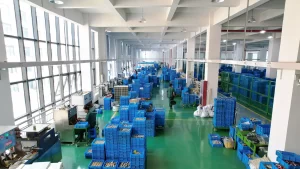
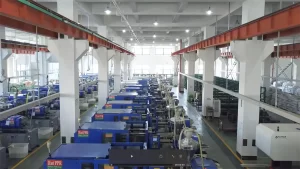
Precision manufacturing in 407 cross tees involves computer-controlled injection molding that maintains tight dimensional tolerances across all four ports. When combined with durable materials like virgin PP-R or PVDF, this precision ensures consistent wall thickness, perfect sealing surfaces, and long-term resistance to pressure, temperature, and chemical attack. The result is a fitting that performs reliably for 50+ years.
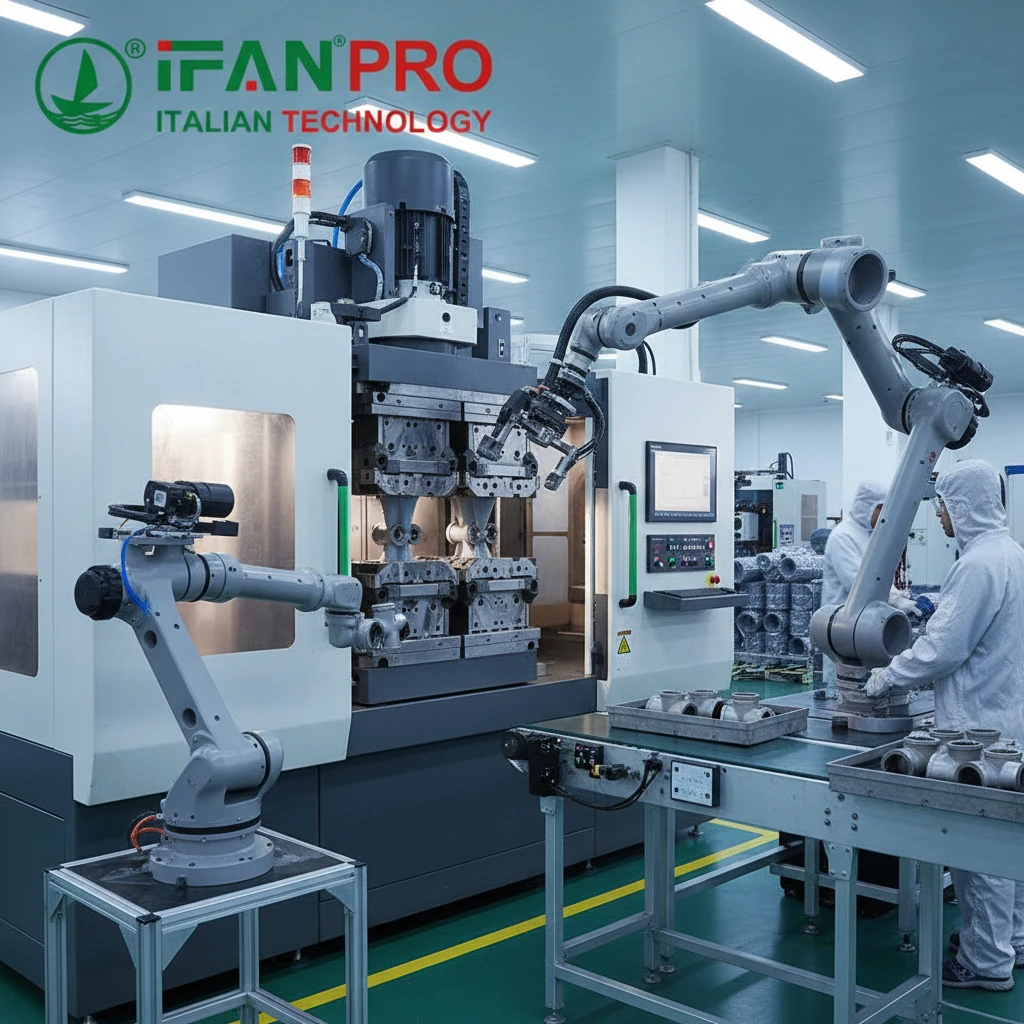
Material Science Behind Durable Fittings
Not all plastics perform equally. The material choice dramatically affects fitting performance and lifespan.
PP-R (Polypropylene Random Copolymer): This material dominates residential and commercial plumbing. It offers excellent resistance to hot and cold water, good chemical resistance, and long-term stability. Specifically, PP-R maintains its properties at temperatures up to 180°F (80°C) continuously, with short-term tolerance to higher temperatures.
PVDF (Polyvinylidene Fluoride): For aggressive chemicals or high-purity applications, PVDF provides superior performance. It resists a wider range of chemicals, handles higher temperatures, and maintains purity for pharmaceutical or food applications.
Material Quality Matters: Virgin materials outperform recycled materials significantly. Recycled plastics may contain contaminants or degraded polymers that reduce strength and chemical resistance. Therefore, high-quality fittings use 100% virgin material with documented traceability.
The table below compares common materials used in cross tee manufacturing:
| Материал | Maximum Temperature | Химическая стойкость | Typical Applications |
|---|---|---|---|
| PP-R (Virgin) | 180°F (80°C) | Good for water, mild chemicals | Plumbing, heating, cooling |
| PP-R with Glass Fiber | 200°F (93°C) | Good, improved strength | Higher pressure systems |
| PVDF | 280°F (140°C) | Excellent, broad chemical resistance | Chemical processing, pharmaceuticals |
| PVC | 140°F (60°C) | Good for acids/bases | Lower temperature industrial use |
Manufacturing Precision and Quality Control
Precision manufacturing ensures every fitting meets specifications. IFAN’s manufacturing process includes several critical steps:
Injection Molding Control: Temperature, pressure, and cooling time are precisely controlled. This control ensures consistent material properties and dimensional accuracy across every fitting.
Dimensional Verification: Each production batch undergoes dimensional inspection. Critical measurements include port diameters, center-to-center distances, and wall thickness. These measurements must fall within tight tolerances.
Pressure Testing: Representative samples from each batch undergo pressure testing at elevated levels. This testing verifies that fittings meet or exceed rated pressure capacities.
Visual Inspection: Every fitting receives visual inspection for surface defects, contamination, or molding flaws. Consequently, any fitting with visible defects gets rejected.
The Impact of Quality on Long-Term Performance
A cheap fitting might save money initially, but the long-term costs tell a different story. Consider these factors:
Installation Reliability: Precise dimensions ensure consistent fusion welds. If a fitting’s socket is slightly oversized, the weld may be weak. Conversely, if undersized, the pipe may not insert fully. Precision eliminates these variables.
Stress Distribution: Uniform wall thickness distributes stress evenly. Thin spots become failure points under pressure or temperature cycling. Precision molding ensures consistent thickness throughout.
Seal Performance: For fittings with O-rings or gaskets, precise groove dimensions are essential. If the groove is too deep, the O-ring won’t compress enough. If too shallow, the O-ring may extrude or tear. Thus, precision ensures proper seal function.
IFAN’s commitment to precision manufacturing means every 407 cross tee meets the same high standards. Whether you install one fitting or one thousand, you can expect consistent, reliable performance.
Заключение
407 cross tees solve complex fluid distribution challenges through smart design, quality materials, and precision manufacturing. For industrial systems requiring reliable multi-branch flow, choose IFAN’s 407 cross tees with certified materials and guaranteed dimensional accuracy.







 Русский
  English
  Français
  Español
Последние комментарии