
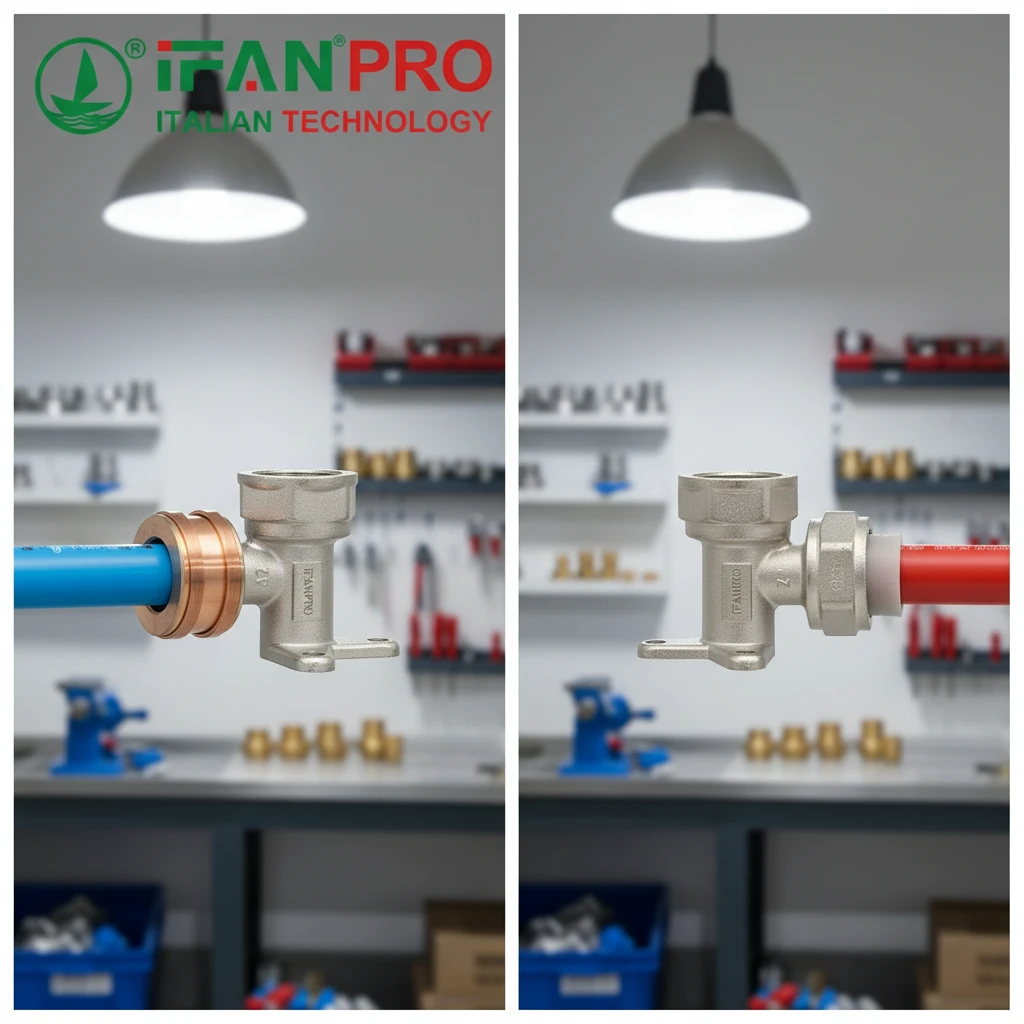
I once saw an installer struggle for an hour because a fitting wouldn’t work with his tool. That moment proved that true compatibility is everything in plumbing.
Yes, a well-designed seated (or push-to-connect) elbow is broadly compatible with crimp, clamp, and expansion PEX systems. Its universal design relies on a standardized O-ring seal and a stainless-steel grab ring that secures the pipe, functioning independently of the external connection method used on its threaded or barbed stems.
But “broadly compatible” does not mean “automatically correct.” You must understand the details to avoid leaks and frustration. Let’s explore what makes these fittings work and how to choose the right one.
Can It Be Used with Crimp, Clamp, and Expansion PEX Systems?
A plumber should not carry three different elbows for three PEX types. True versatility saves time and inventory.
A single seated elbow body can be used with crimp, clamp, and expansion PEX systems because the critical sealing and gripping action happens inside the fitting, separate from the external connection on its ports. The compatibility depends entirely on choosing the correct stem type (barbed for crimp/clamp or plain for expansion) and using the proper ring or sleeve for that method.
How the Universal Seated Design Works
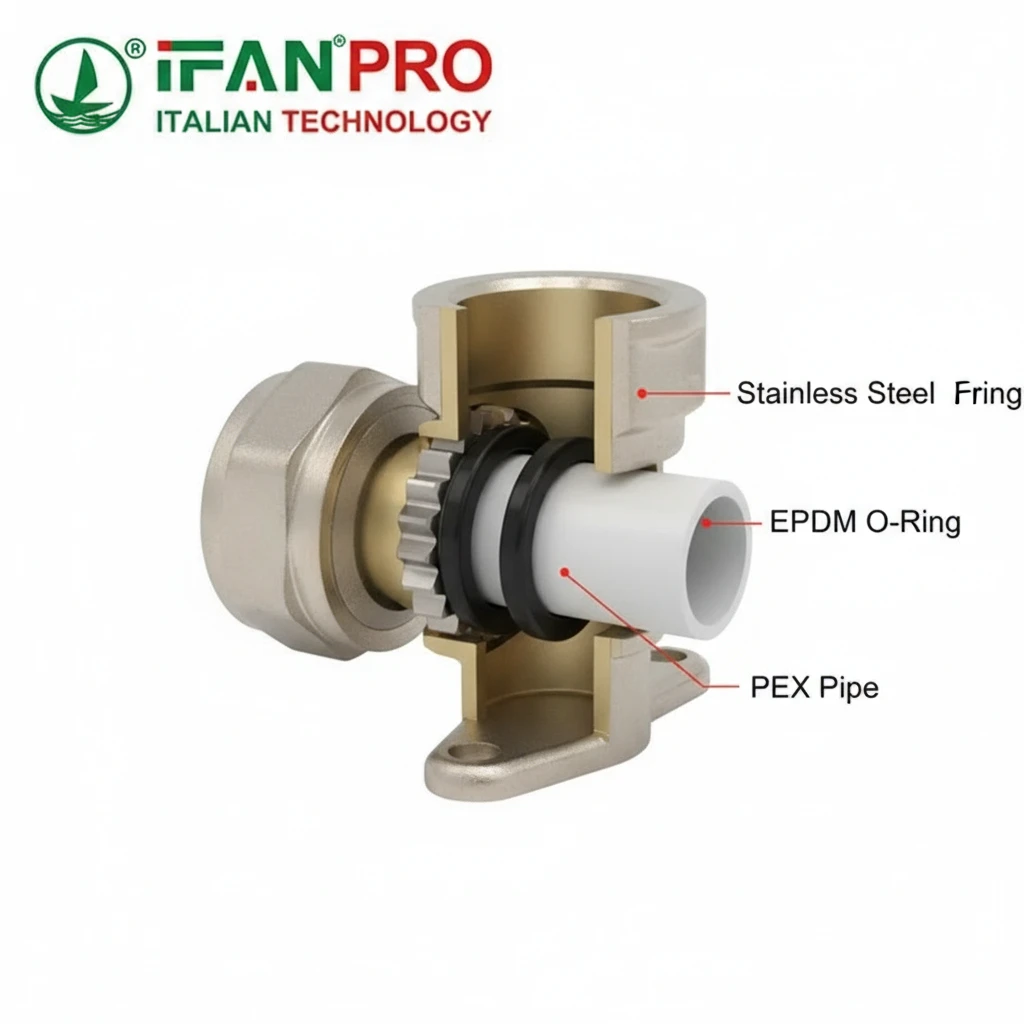
The magic of a push-to-connect fitting is in its internal mechanism. When you push a PEX pipe into the fitting, two things happen:
- The pipe passes a stainless-steel grab ring (sometimes called a teeth ring). This ring bites into the PEX pipe and holds it tightly, preventing it from pulling out.
- The pipe end then seats against a rubber O-ring. This O-ring creates the actual watertight seal.
This internal process is the same whether you plan to use a crimp ring, a clamp ring, or an expansion tool on the other side of the fitting. The seated part doesn’t care about the external method.
The Key is the Stem Type
While the elbow body is universal, the stems (the pipe connections) are not. This is the crucial detail for compatibility. There are two main stem designs:
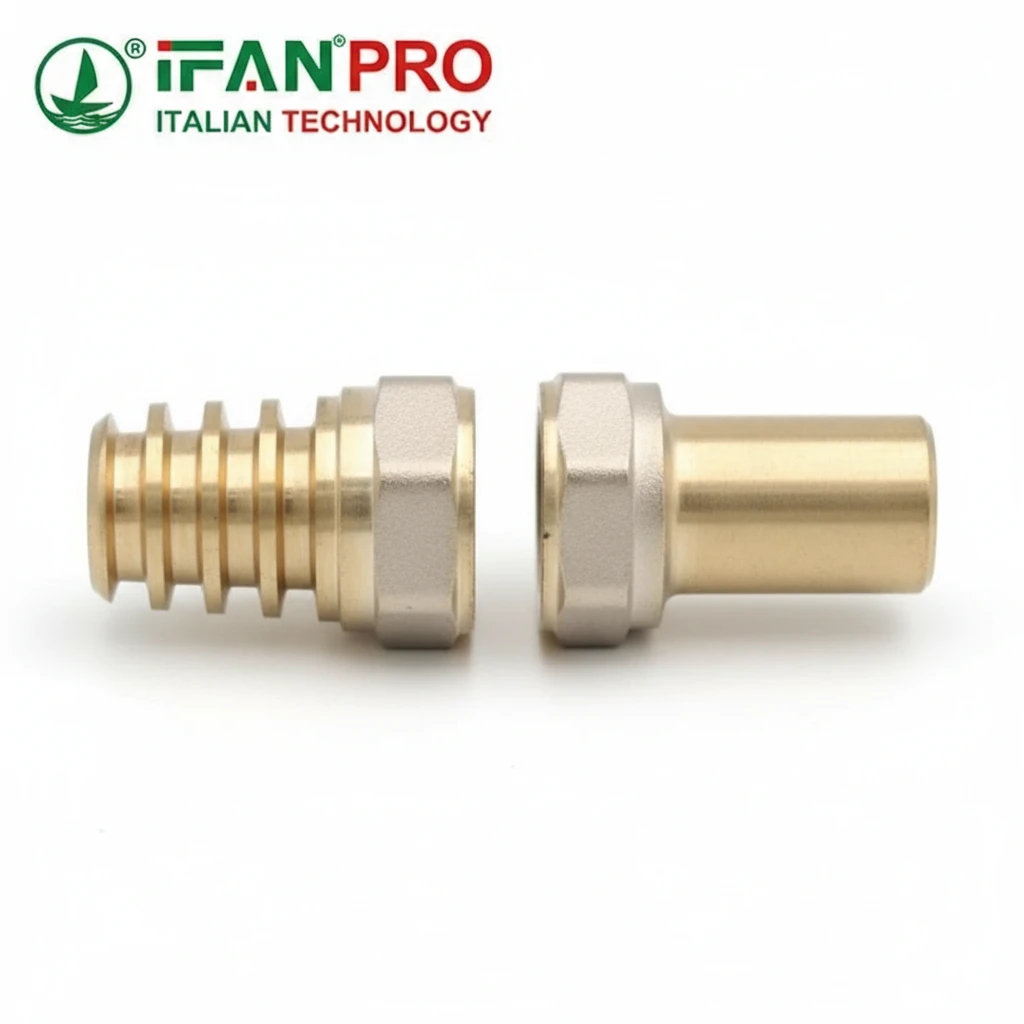
- Barbed Stems: These have small ridges. You slide a PEX pipe over the barb and then secure it from the outside with either a copper crimp ring or a stainless-steel clamp ring. The barb helps hold the pipe in place before you crimp or clamp it.
- Plain (Smooth) Stems: These are used for expansion PEX (PEX-A) systems. You expand both the PEX pipe and the fitting’s stem using a special tool. Then, you insert the expanded pipe over the smooth stem. As the pipe and fitting shrink back to their original size, they create a fused, incredibly strong joint. A barb would interfere with this expansion and contraction.
The table below shows how to match the stem to your PEX system:
| Your PEX System & Tool | Required Fitting Stem Type | Required External Component |
|---|---|---|
| Crimp (PEX-B/C) with Crimp Tool | Barbed Stem | Copper Crimp Ring |
| Clamp (PEX-B/C) with Clamp Tool | Barbed Stem | Stainless-Steel Clamp Ring |
| Expansion (PEX-A) with Expansion Tool | Plain (Smooth) Stem | Expansion Sleeve (if required) |
So, the answer is yes—but you must order the seated elbow with the correct stems for your specific installation method.
Does the Seat Design Interfere with the Tool Access Needed for Connections?
A fitting you can’t properly tighten is useless. Good design always considers the installer’s tools.
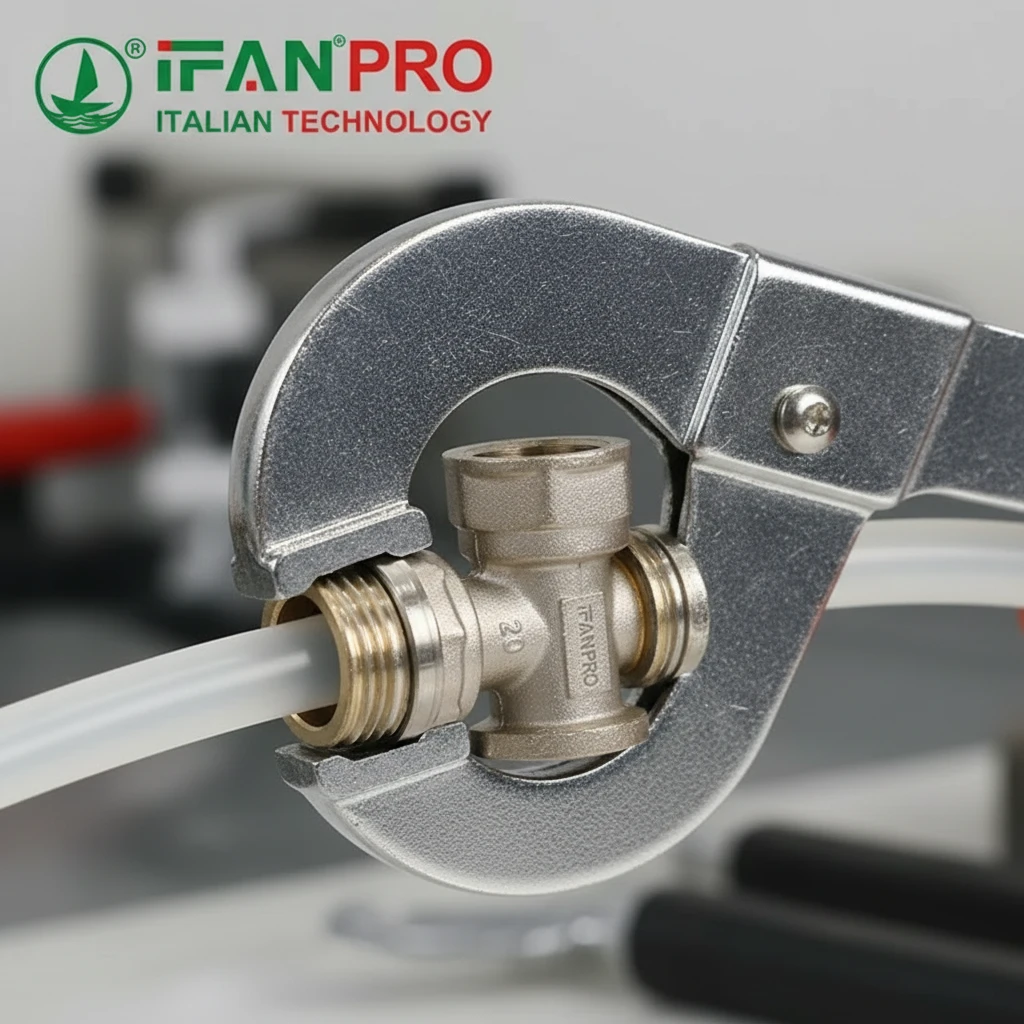
A properly designed seated elbow does not interfere with tool access. Manufacturers design these fittings with a compact, low-profile seat that sits close to the connection port. This design leaves ample clearance for the jaws of crimping, clamping, or expansion tools to engage the ring or sleeve on the pipe without hitting the elbow body.
The Importance of Clearance Geometry
When you use a crimp or clamp tool, the tool’s jaws need to encircle the PEX pipe and ring completely. If the elbow’s body or its integrated “seat” is too large or poorly shaped, it can block the tool from closing fully or sitting straight. This leads to a bad connection and a guaranteed leak.
Quality seated elbows, like those from IFAN, are engineered with this in mind. The transition from the threaded or soldered port to the main body is smooth. The seat itself is often recessed or tapered. This thoughtful shaping creates the necessary space for common professional tools to operate freely.
A Common Problem with Cheap Fittings
A frequent complaint from installers is about “fat” or bulky fittings. Inexpensive seated elbows might use more material to cut costs, resulting in a larger, boxier shape. This poor geometry can:
- Prevent the crimp tool from fitting into tight spaces.
- Cause the clamp tool’s jaws to sit at an angle, creating an uneven compression.
- Make it impossible to use a go/no-go gauge properly to check the crimp.
Always test a sample fitting with your specific tools before buying in bulk for a large project. This simple step can prevent major on-site headaches.
Are the Barbed Stems Specific to One Type of PEX Connection?
Choosing the wrong barb is a fast track to a failed system. The details matter.
Barbed stems are primarily designed for use with crimp and clamp systems (PEX-B/C). While the basic barb design is similar, the exact shape, diameter, and length of the barbs are carefully engineered to match the specific requirements of the PEX tubing and the compression of the external ring, ensuring a secure, leak-free hold.
Why Barbs are Not Universal
You cannot use a barbed stem with an expansion PEX system. The expansion process requires the pipe to stretch and then shrink onto a smooth surface. A barb would create stress points and prevent a proper seal.
For crimp and clamp systems, the barb plays a critical role:
- Initial Grip: It holds the PEX pipe in place before you apply the ring and tool. This is especially helpful when working vertically or in awkward positions.
- Sealing Surface: The ridges increase the surface area where the PEX contacts the fitting. When you compress the ring, the PEX material flows into the spaces between the barbs, creating multiple seal points and a strong mechanical lock.
- Pressure Resistance: This interlocking design helps the joint withstand the internal water pressure and any external pulling forces.
The Risk of Using the Wrong Barb
Not all barbs are equal. A stem designed for soft copper crimp rings might have slightly different dimensions than one optimized for stainless-steel clamps. Using a mismatched combination can lead to:
- Under-compression: The ring cannot compress the pipe enough to fill the barb channels, leaving a leak path.
- Over-compression: The ring squeezes too tightly, overly thinning the PEX wall at the barbs and creating a weak spot.
- Poor Flow: An excessively long or aggressive barb design can restrict water flow inside the fitting.
The safest practice is to use fittings and rings from the same manufacturer or a system certified to work together. This ensures all components are designed as a matched set.
How Do You Select the Correct Seated Elbow for Your PEX Type?
Mistakes at the supply stage cause failures at the installation stage. Follow a clear selection process.
You select the correct seated elbow by following four steps: 1) Identify your PEX tube type (A, B, or C), 2) Choose your installation method (Expansion, Crimp, or Clamp), 3) Select an elbow with the matching stem type (Plain for Expansion, Barbed for Crimp/Clamp), and 4) Verify the fitting’s certifications (like NSF/ANSI 61) are suitable for potable water.
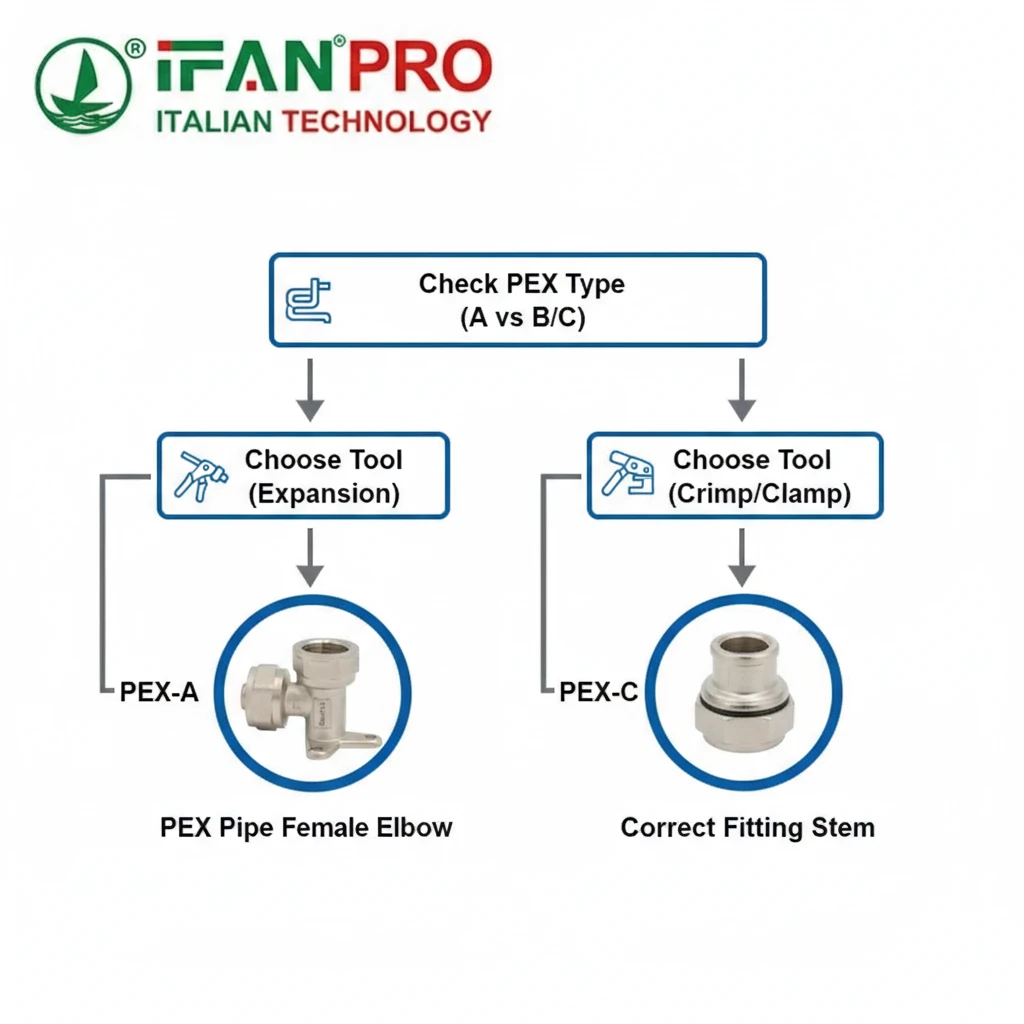
Your Step-by-Step Selection Guide
Let’s turn this into a simple, foolproof process you can use on any project.
Step 1: Identify Your PEX Tubing.
Look at the printing on the side of the PEX coil or straight length. It will say PEX-A, PEX-B, or PEX-C. This is the most important starting point.
- PEX-A: Most flexible, uses the expansion method.
- PEX-B & PEX-C: Use the crimp or clamp method.
Step 2: Choose Your Connection Method.
This is determined by your tooling and preference.
- Expansion Tool: Use with PEX-A only.
- Crimp Tool: Use with PEX-B or PEX-C.
- Clamp Tool: Use with PEX-B or PEX-C.
Step 3: Match the Fitting Stem.
Now, match your method from Step 2 to the fitting:
- If you chose Expansion, you need a seated elbow with Plain (Smooth) Stems.
- If you chose Crimp or Clamp, you need a seated elbow with Barbed Stems.
Step 4: Check Certifications and Quality.
Finally, don’t just buy the cheapest option. Ensure the fitting has:
- NSF/ANSI 61 Certification: For safety with drinking water.
- Consistent Material Quality: The body should be free of flash or rough edges.
- Quality O-ring and Grab Ring: The O-ring should be soft and pliable, and the stainless-steel grab ring should be securely seated.
Quick-Reference Selection Table
Use this table to double-check your choices before you order:
| Your Situation | PEX Tubing Type | Installation Method | Correct Seated Elbow Stem |
|---|---|---|---|
| New install, have expansion tool | PEX-A | Expansion | Plain / Smooth |
| Repair job, using common crimp tools | PEX-B or PEX-C | Crimp | Barbed |
| Prefer stainless clamp rings | PEX-B or PEX-C | Clamp | Barbed |
| Unsure of tubing type | Check pipe printing! | – | – |
By following this guide, you ensure system compatibility, which is the foundation of a reliable, leak-free plumbing installation.
Заключение
Seated elbows offer excellent compatibility across PEX systems when selected correctly. For guaranteed performance with any method, rely on IFAN’s full range of seated PEX fittings, designed for precise, leak-free connections.












 Русский
  English
  Français
  Español
Последние комментарии