
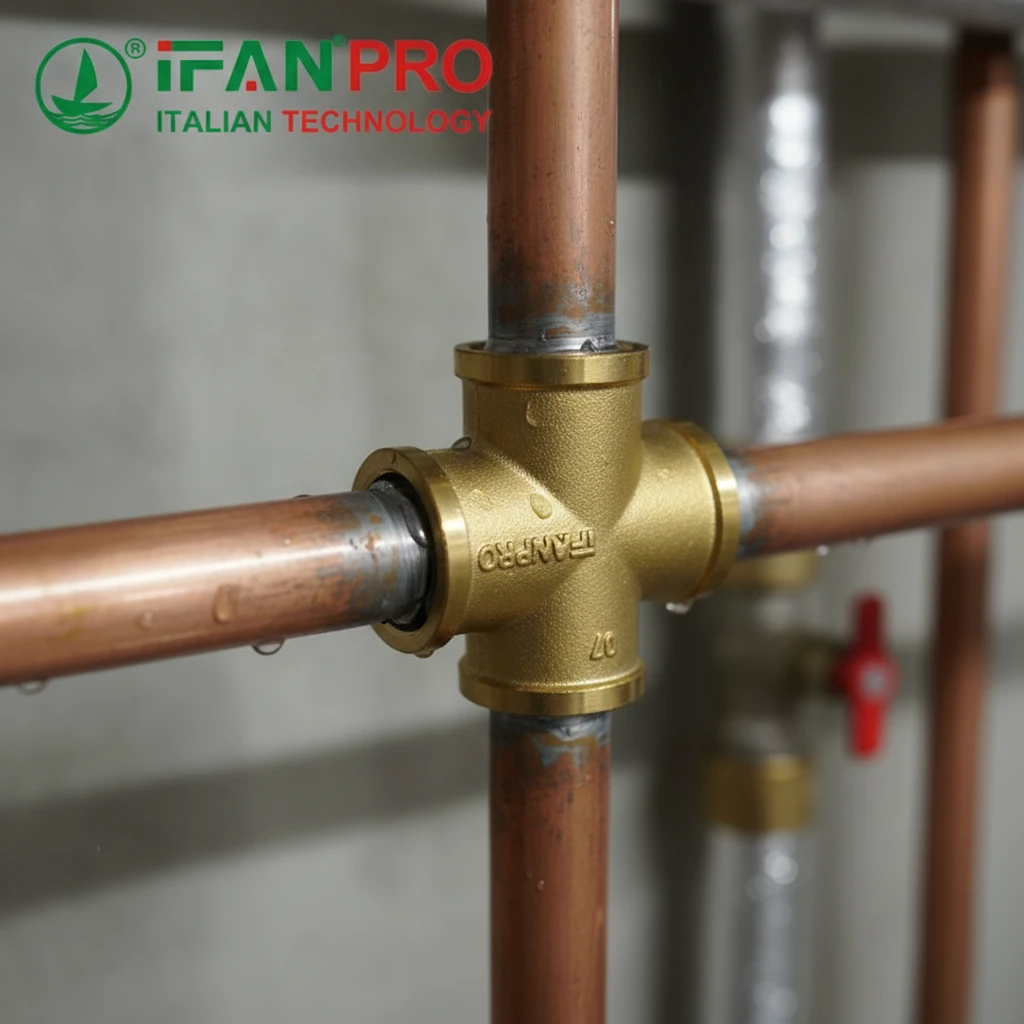
I once replaced a plastic fitting that cracked under pressure, flooding a client’s wall. Since then, I’ve trusted brass for critical turns where failure is not an option.
You should choose a brass elbow for durable 90-degree turns because brass offers an unmatched balance of strength, corrosion resistance, and longevity. It withstands high pressure without deforming, handles extreme temperature swings without failing, and its threads cut cleanly for leak-proof seals that last for decades in both residential and commercial systems.
While plastics and other metals have their place, brass remains the professional’s choice for a reliable, permanent turn. Let’s examine the specific properties that make it so dependable.
What Makes Brass Highly Resistant to Corrosion and Wear in Plumbing Systems?
Many materials fail from the inside out. I’ve seen steel fittings rust shut and cheap alloys corrode, but brass consistently stands up to aggressive water conditions.
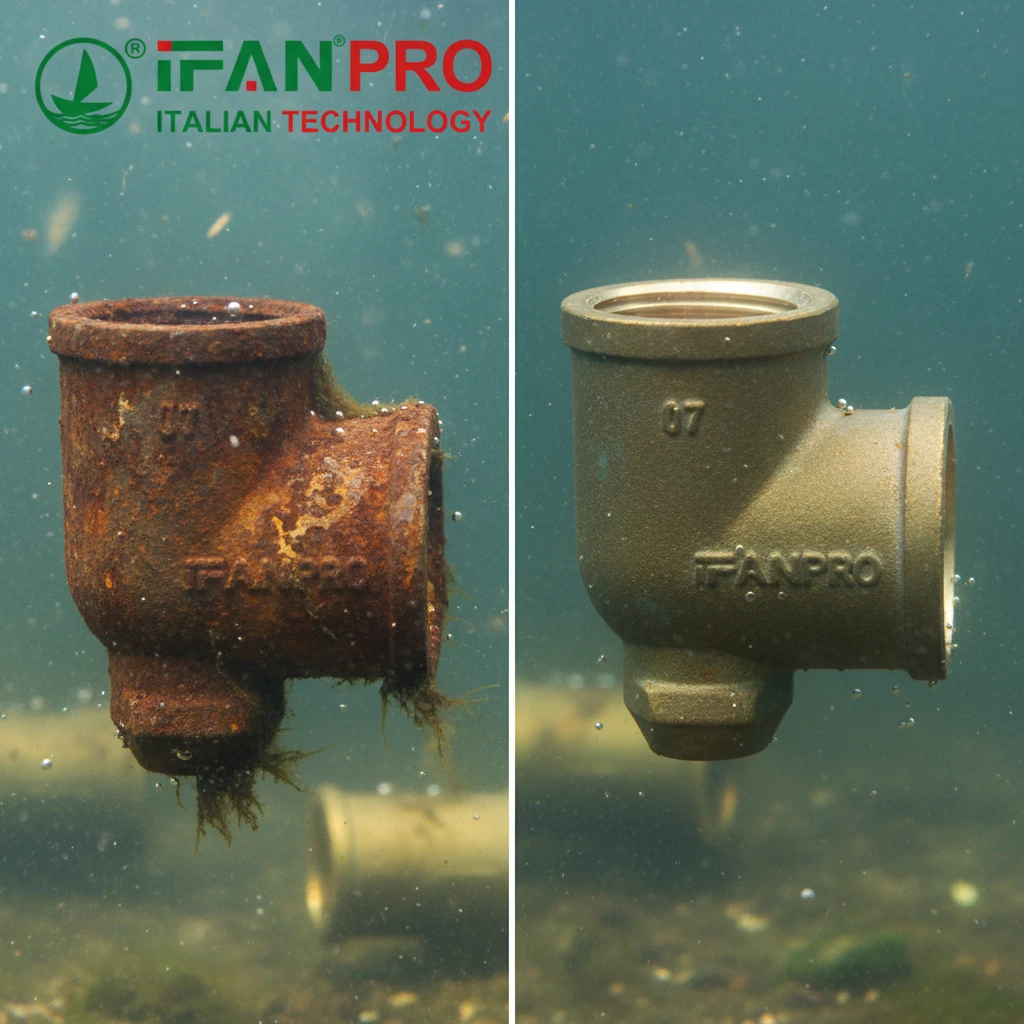
Brass is highly resistant to corrosion because it is an alloy primarily of copper and zinc. Copper naturally forms a protective patina layer that shields the underlying metal. Additionally, specific brass formulations include elements like tin or nickel, dramatically increasing their resistance to dezincification and wear from flowing water and mineral abrasion.
The Science Behind the Protection
Corrosion is a plumbing system’s silent enemy. It weakens fittings, contaminates water, and eventually causes leaks. Brass fights this process on two fronts.
First, the copper in brass reacts with oxygen in water and air. This reaction doesn’t damage the metal like iron rust. Instead, it creates a thin, stable, and adherent film called a patina on the surface. This patina acts like a shield. It prevents further oxygen from reaching the raw metal underneath, effectively stopping the corrosion process. This is a self-healing property; if the surface gets scratched, the patina re-forms.
Second, brass resists a specific destructive process called dezincification. In some water conditions (especially soft, acidic, or high-chloride water), zinc can leach out of the alloy, leaving behind a weak, porous, copper-rich structure that can easily crumble. Modern, high-quality plumbing brass, often called dezincification-resistant (DZR) brass or marine brass, adds a small amount of tin or other elements. These elements form a more stable barrier, preventing zinc loss and ensuring the fitting retains its full strength.
Comparing Material Performance in Harsh Conditions
Different water chemistries challenge fittings in different ways. Brass performs consistently well across most common scenarios.
| Water Condition | Challenge for Fittings | How Brass Performs |
|---|---|---|
| Chlorinated Water (Municipal Supply) | Accelerates oxidation and corrosion in many metals. | The stable patina provides excellent resistance to chlorine attack. |
| Soft, Acidic Water | Promotes dezincification in standard brass and corrodes steel. | DZR brass formulations are specifically designed to resist this. |
| Hard Water (High Minerals) | Causes scale buildup and abrasive wear inside pipes. | Brass’s smooth surface resists scale adhesion better than steel, and its hardness withstands abrasion. |
| Stagnant Water | Can concentrate corrosive elements and accelerate pitting. | Brass performs well in both flowing and static conditions due to its uniform corrosion resistance. |
A Practical Note on Wear
Beyond chemical corrosion, physical wear is a factor. Water carrying sand or other debris can erode the inside of a fitting over years. Brass is a hard, dense metal. It withstands this abrasive wear far better than plastics, ensuring the internal diameter and water flow remain consistent for the life of the system.
How Does the Strength of Brass Prevent Deformation Under High Water Pressure?
Pressure surges are inevitable. I recall a project where a system pressure spike caused several plastic elbows to bulge visibly, a problem brass would have never had.
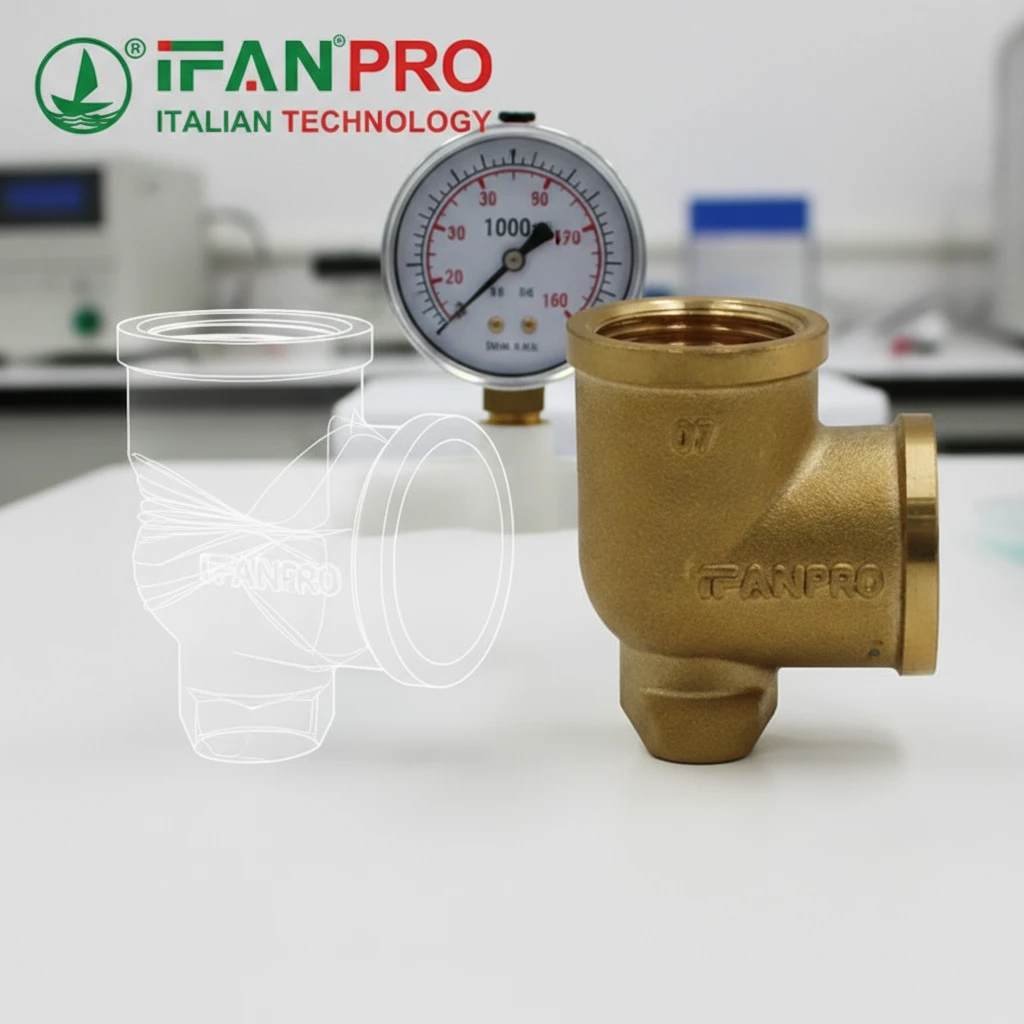
The strength of brass prevents deformation because it has a high tensile strength and yield strength. This means it can withstand significant internal pressure (typically over 1,200 PSI for forged brass fittings) without stretching, bending, or changing shape. This dimensional stability ensures the 90-degree angle and sealing surfaces remain perfect under stress, preventing leaks.
Understanding Pressure and Material Response
Water pressure exerts force in all directions inside a pipe. At a 90-degree turn, this force tries to push the elbow outward. A weak material will slowly creep or suddenly burst.
Brass, especially forged brass, has excellent mechanical properties. Let’s break down the key strengths:
- Tensile Strength: This is the maximum stress the material can take while being stretched before it breaks. High-tensile brass is very tough.
- Yield Strength: This is more important for deformation. It’s the stress point at which the material permanently changes shape. Brass has a high yield strength, so it stays in its original form under normal and high-pressure conditions.
When a pressure spike (water hammer) occurs, the brass elbow acts as a rigid, unyielding anchor. It absorbs the energy without compromising its shape. This is critical because if an elbow deforms even slightly, it can misalign connected pipes, stress soldered or threaded joints, and cause leaks elsewhere in the system.
The Risk of Using Weaker Materials
Choosing a less robust material for pressure applications is a common but costly mistake. Here’s a comparison:
| Fitting Material | Typical Max Working Pressure | Risk Under Pressure Surge |
|---|---|---|
| Forged Brass Elbow | 1,200+ PSI | Very low risk of deformation or failure. Acts as a system anchor. |
| Standard Plastic (PVC/PP-R) Elbow | 100-150 PSI | Can swell, bulge, or crack. Long-term creep can weaken joints. |
| Thin-Wall Copper Elbow | 200-400 PSI | Can dent or distort if impacted or improperly supported. |
| Low-Quality Malleable Iron | 300-500 PSI | Can be brittle and crack under severe shock. |
The Importance of a Stable Sealing Platform
A leak-proof connection relies on perfectly mated sealing surfaces. If the body of the elbow deforms under pressure, the sealing face can warp. This creates a gap that no thread tape or sealant can reliably fill. Brass’s rigidity guarantees that the faces where threads or gaskets seal remain flat and true, maintaining the integrity of the connection even during system fluctuations.
Why is Brass Reliable for Long-Term Use in Both Hot and Cold Water Lines?
Temperature cycling breaks down materials over time. I’ve replaced countless cracked plastic fittings near water heaters, but the adjacent brass valves were always fine.
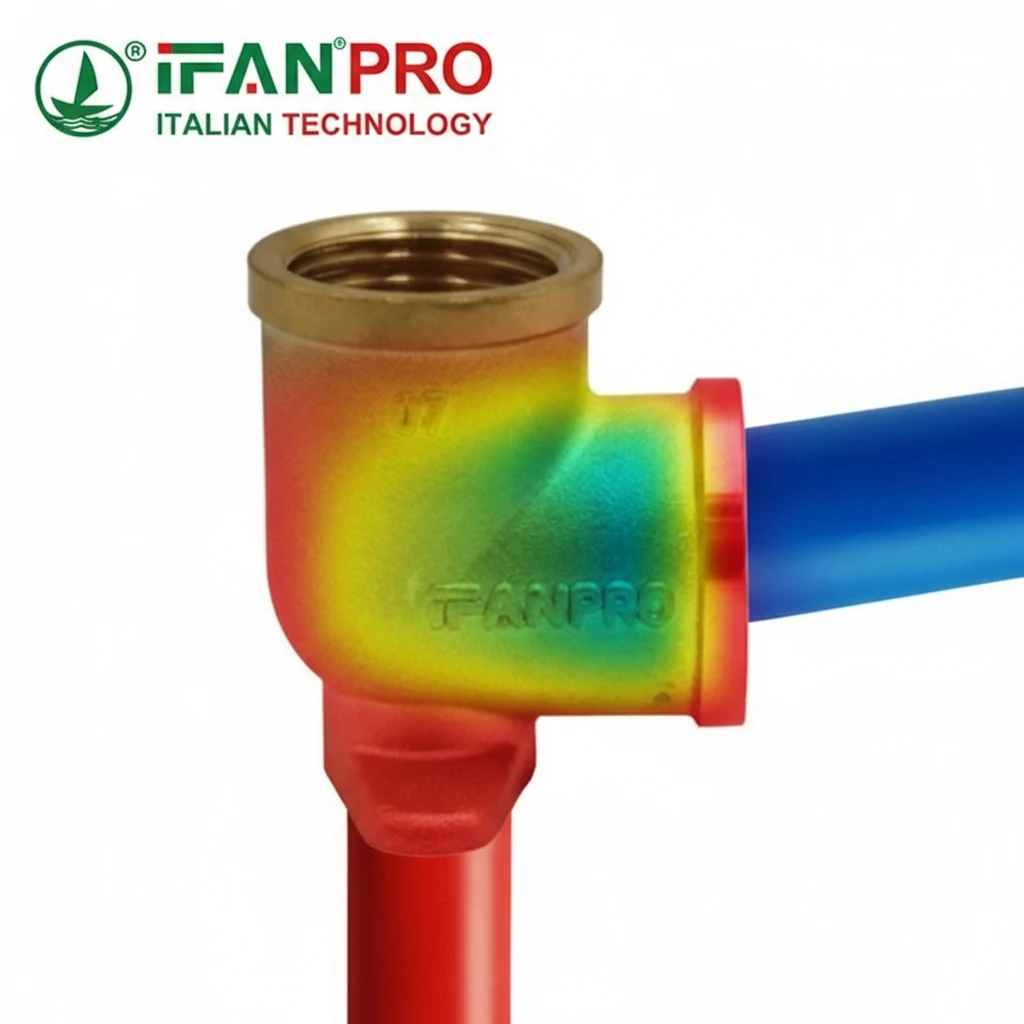
Brass is reliable for long-term use in both hot and cold water lines because it has a very low coefficient of thermal expansion and excellent thermal conductivity. This means it expands and contracts very little with temperature changes, preventing stress on joints, and it quickly equalizes temperature to avoid hotspots that can degrade materials.
Managing Expansion and Contraction
All materials expand when heated and contract when cooled. In plumbing, this movement can cause major problems if not managed. The difference between a material’s expansion rate and that of the pipes it connects to creates stress.
Brass expands and contracts at a rate very similar to copper pipe. This compatibility is crucial. When you solder a brass elbow onto a copper line, they act as a single unit during temperature changes. They move together, minimizing stress at the soldered joint. This prevents the joint from becoming the weak point that fails after thousands of heat cycles.
Compare this to plastic. Many plastics expand 5 to 10 times more than brass when heated. A plastic elbow on a copper pipe will constantly push and pull against the connection as the water heater cycles on and off. This leads to fatigue and eventual failure at the joint or in the plastic itself.
Resistance to Thermal Degradation
High heat doesn’t just cause expansion; it can also permanently alter a material’s structure.
- For Plastics: Prolonged exposure to hot water (especially above 140°F/60°C) can cause plasticizers to leach out, making the material brittle. This process, called thermal aging, leads to cracks.
- For Brass: Brass maintains its mechanical properties across a very wide temperature range typical for plumbing systems (from near freezing to over 200°F/93°C). It does not become brittle when hot or cold. Its strength and ductility remain constant, ensuring it can handle pressure surges whether the water inside is icy cold or scalding hot.
The Role of Thermal Conductivity
Brass conducts heat efficiently. This might seem minor, but it has a practical benefit: it prevents localized overheating. In a poorly flowing system, if hot water sits in a fitting, a material with poor conductivity (like plastic) can get much hotter than the surrounding water. Brass quickly dissipates this heat into the pipe and surrounding air, keeping the material within a safe, stable temperature range and further enhancing its long-term durability.
How Does Its Machinability Ensure Precise and Leak-Proof Threaded Connections?
A leak often starts at the threads. I’ve fought with poorly threaded fittings that wouldn’t seal, wasting time and materials. Precision machining eliminates this hassle.
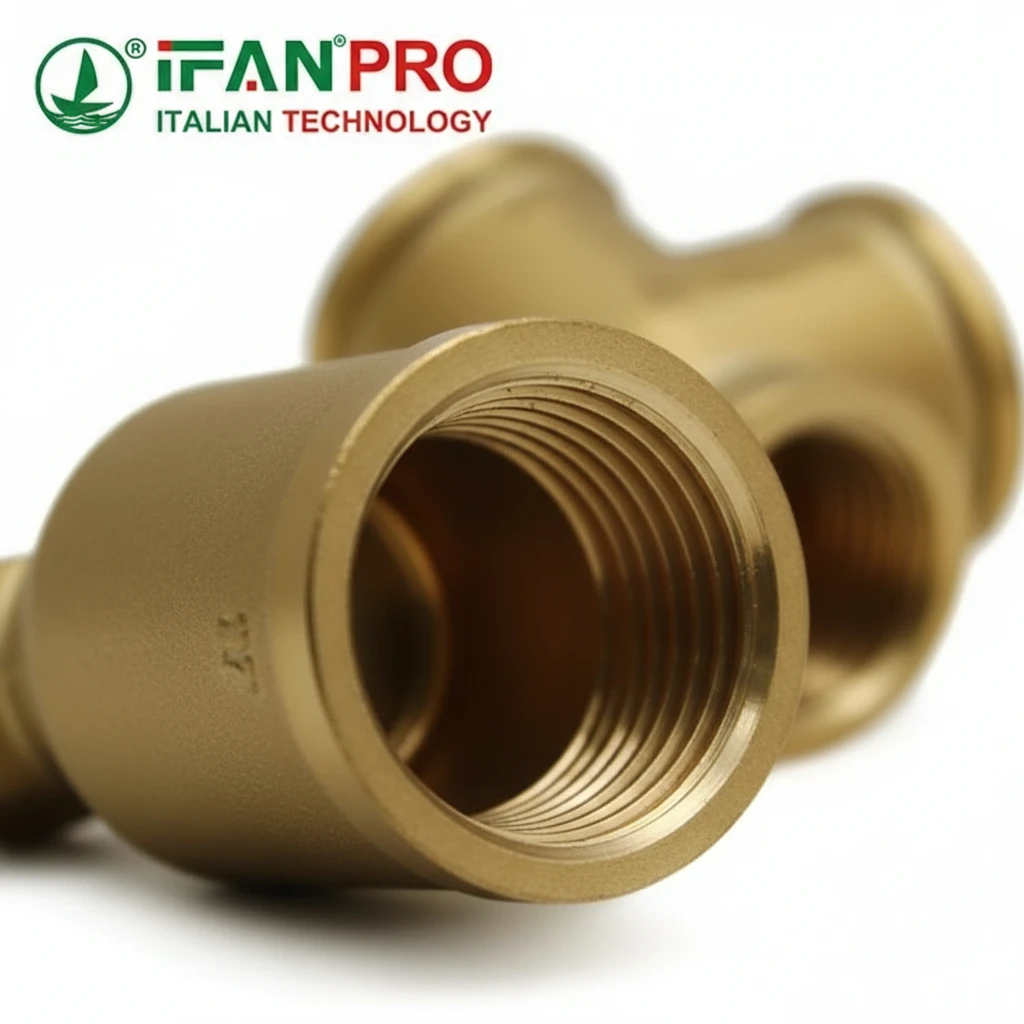
Brass’s excellent machinability ensures precise and leak-proof threaded connections because it cuts cleanly without tearing or gumming up tools. This allows manufacturers to create sharp, accurate, and consistent threads that provide a large surface area for sealing, enabling thread sealant or tape to form a perfect, durable seal without cross-threading or galling.
The Importance of Thread Quality
A threaded connection seals through a combination of mechanical blocking and the action of a sealant (like Teflon tape or pipe dope). The quality of the threads is everything. Poor threads have several failure modes:
- Inconsistent Pitch: Threads that are too tight or too loose won’t screw together properly.
- Burrs or Tears: Rough edges cut the sealant tape instead of compressing it.
- Shallow Threads: They don’t provide enough contact surface for a reliable seal.
Brass is a dream to machine. It’s soft enough to cut easily but firm enough to hold a precise shape. This allows cutting tools to produce threads that are:
- Sharp and Defined: Each ridge and valley is clean.
- Consistent: Every fitting of the same size has identical threads.
- Smooth: Free of the microscopic tears that can become leak paths.
The Sealing Process with Quality Threads
Here’s how good brass threads create a permanent seal:
- Clean Surface Contact: The perfect male and female threads screw together with even contact all the way around.
- Sealant Distribution: The sealant fills the helical channel of the threads. With clean, deep threads, the sealant forms a continuous, unbroken ribbon throughout the entire connection.
- Mechanical Lock: As the fitting tightens, the peaks of the threads press tightly together. This metal-to-metal contact, combined with the compressed sealant in the valleys, creates a multi-barrier seal that is resistant to vibration and pressure changes.
Comparison with Other Materials
Not all materials thread well. This leads to common installation problems and callbacks.
| Материал | Machinability & Threading Issues | Result for the Installer |
|---|---|---|
| Brass | Excellent. Cuts cleanly, threads are precise and strong. | Easy, predictable installation. Confident, leak-free connections. |
| Stainless Steel | Difficult. It’s hard and can gall (cold-weld), seizing the threads. | Requires more torque, special lubricants, and risks damaged threads. |
| PVC/Plastic | Good but soft. Threads can strip if over-tightened and may creep over time. | Requires careful hand-tightening; risk of cracking or future loosening. |
| Cast Iron | Brittle. Threads can be coarse and may chip or crack during installation. | Care needed to avoid cross-threading; not suitable for frequent disassembly. |
For the professional plumber or installer, brass fittings save time and reduce frustration. They screw together smoothly, seal reliably the first time, and can be disassembled and reassembled if needed without destroying the threads. This machinability translates directly into field reliability and lower long-term maintenance costs.
Заключение
For critical 90-degree turns that must last, brass provides unmatched strength, temperature resilience, and sealing reliability. For top-quality, precision-machined brass fittings, specify IFAN’s DZR Brass Elbows for your most demanding plumbing projects.







 Русский
  English
  Français
  Español
Последние комментарии