
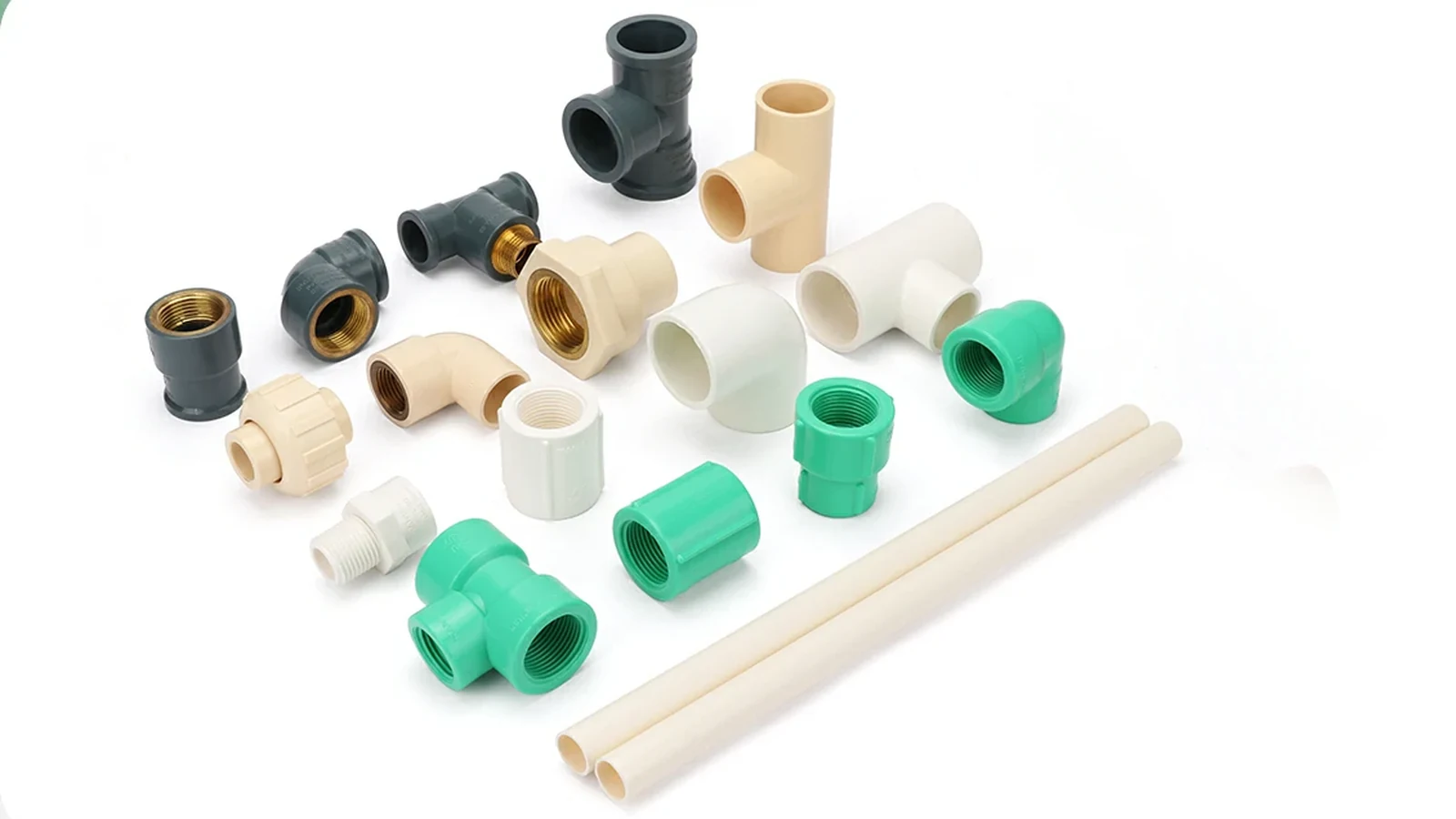
Three plastics compete for the same chemical and industrial lines, and most buying decisions turn on one number that cannot decide anything by itself. The short version: specify PVC-U where the fluid is cold and the pressure is modest. Specify Schedule 80 CPVC where the line runs hot or carries hypochlorite, chromic acid or another oxidiser. Specify PP-H where the service is caustic, dilute organic acid, or anything that would attack a solvent-cemented joint. Temperature sets the shortlist, the fluid picks the winner, and the joining method decides who is allowed to install it.
That order matters, because the assumption behind most PVC-versus-CPVC pages breaks as soon as a real fluid is named. PPI TR-19 rates CPVC N, not resistant, against 25% acetic acid and against 10% ammonium hydroxide. PP-H is rated to 180°F and 212°F on those same two rows. Treating CPVC as a hotter, better PVC replaces a pipeline rather than a fitting.
- Ceilings. PVC-U Schedule 80 stops at 140°F (60°C), Schedule 80 CPVC at 200°F (93°C), PP-H at 80°C (176°F).
- The ceiling is not the design point. At 140°F a Schedule 80 PVC line holds 0.22 of its 73°F pressure rating; CPVC still holds 0.50.
- CPVC is not a superset of PVC. PPI TR-19 rates it N against 25% acetic acid and 10% ammonium hydroxide, where PP-H is rated to 180°F and 212°F.
- Oxidisers reverse the order. Chromic acid at 40% is CPVC to 180°F against PP-H at 73°F.
- PP-H cannot be glued. It is fused by socket, infrared or butt welding to DVS 2207; no solvent cement exists for polypropylene.
- Check which CPVC you were quoted. ASTM D2846 CTS tube is rated to 180°F (82°C); Schedule 80 industrial CPVC is the 200°F material.
If you want the PVC-versus-CPVC half of this decision explained out loud before reading the industrial case, this MEP training walk-through covers it. It is a plumbing-side treatment, so the Schedule 80 de-rating curve and the PP-H comparison below are the parts it does not reach.

PVC vs CPVC vs PPH: The Service Envelope at a Glance
The three materials answer to different standards, and the standard is what a purchase order can reference. PVC-U and PVC-C sit inside EN ISO 15493, which covers above-ground industrial piping. Polypropylene sits inside EN ISO 15494, whose named applications run from chemical plants and mining to water treatment, geothermal and semiconductor manufacturing. On the North American side the compound itself is classified by ASTM D1784: PVC pressure pipe is normally cell class 12454, industrial CPVC is 23447. Those five digits, not the trade name, tell you which resin arrived.
| Материал | Governing standard | Max service temperature (°F / °C) | Joining method | Best for |
|---|---|---|---|---|
| PVC-U | EN ISO 15493:2003; ASTM D1784 cell 12454 | 140 °F / 60 °C | Solvent cement | Cold acid, brine and effluent lines on a budget |
| CPVC, Schedule 80 | EN ISO 15493:2003; ASTM D1784 cell 23447 | 200 °F / 93 °C | Solvent cement to ASTM F493 | Hot lines, hypochlorite and oxidiser dosing |
| CPVC, CTS tube | ASTM D2846/D2846M-24 | 180 °F / 82 °C | Solvent cement to ASTM F493 | Hot and cold potable water distribution |
| PP-H | EN ISO 15494:2015; DIN 8077/8078 | 176 °F / 80 °C | Socket, infrared or butt fusion (DVS 2207) | Caustic, dilute organic acid, abrasive slurry |
Temperature Is the First Filter, and the Pressure You Lose Getting There
A maximum service temperature is a limit, not a design point. Both vinyl materials publish a de-rating factor that multiplies the 73°F pressure rating, and the two curves separate quickly. At 100°F a Schedule 80 PVC line already holds 0.62 of its rating while CPVC holds 0.82. At 140°F, PVC’s last legal temperature, PVC is down to 0.22 and CPVC still carries 0.50. A 150 psi PVC line running at 130°F is a 46 psi line.
PP-H is rated on a different basis. GF Piping Systems specifies its PP-H system from 0°C to 80°C, with a heat distortion temperature of 95°C at 0.45 MPa under EN ISO 75-2, an MRS of 10 MPa, and a 25-year design life on water at 20°C. So the honest comparison is between a de-rating factor and a stated design lifetime, not between two ceiling temperatures. If you already know your design temperature, our PVC pressure class and SDR guide shows how the same arithmetic runs on the metric side.
| Fluid temperature (°F) | PVC Sch 80 (× 73 °F rating) | CPVC Sch 80 (× 73 °F rating) |
|---|---|---|
| 73 | 1.0 | 1.0 |
| 80 | 0.88 | 1.0 |
| 90 | 0.75 | 0.91 |
| 100 | 0.62 | 0.82 |
| 110 | 0.51 | 0.72 |
| 120 | 0.4 | 0.65 |
| 130 | 0.31 | 0.57 |
| 140 | 0.22 | 0.5 |
| 150 | — | 0.42 |
| 160 | — | 0.4 |
| 170 | — | 0.29 |
| 180 | — | 0.25 |
| 200 | — | 0.2 |
Chemical Resistance: Where the Three Materials Actually Disagree
Chemical service is where the three stop being versions of each other. PPI TR-19, updated in April 2023, publishes a rating per fluid and per concentration: R to a stated temperature, L for limited resistance at that temperature, N for not resistant. PPI notes that its ratings are “neither authoritative nor exhaustive”, so read the table as a shortlist rather than a warranty.
Two families of fluid carry most of the decision. Dilute organic acid and alkali favour PP-H heavily: 25% acetic acid is N for CPVC and R to 180°F for PP-H, and 10% ammonium hydroxide is N for CPVC and R to 212°F for PP-H. Oxidisers run the other way. Chromic acid at 40% is R to 180°F for CPVC and R to only 73°F for PP-H. Charlotte Pipe describes the same split in words: CPVC is “particularly effective with oxidizers and sodium hypochlorite solutions”, while polypropylene “can degrade with long-term exposure to oxidizing chemicals such as hydrogen peroxide or sodium hypochlorite”.
| Fluid and concentration | PVC | CPVC | PP | Which to specify |
|---|---|---|---|---|
| Acetic acid 25% | R to 140 °F | N | R to 180 °F | PP-H |
| Acetic acid, glacial | R to 73 °F | N | R to 120 °F | PP-H |
| Ammonium hydroxide 10% | R to 140 °F | N | R to 212 °F | PP-H |
| Hydrochloric acid 30% | R to 140 °F | R to 180 °F | R to 140 °F | CPVC if hot |
| Calcium hypochlorite 30% | R to 140 °F | R to 180 °F | R to 140 °F | CPVC if hot |
| Chromic acid 40% | R to 140 °F | R to 180 °F | R to 73 °F | CPVC |
| Hydrogen peroxide 50% | R to 140 °F | R to 120 °F | R to 73 °F | PVC-U if cold |
| Chlorine gas, 0-20 ppm moisture | L to 73 °F | L to 73 °F | N | None of the three |
Joining Decides the Crew, the Schedule and the Repair
Joining picks the installer before the material does. PVC and CPVC are solvent-cemented, and the two cements are separate ASTM specifications: a CPVC joint is made with cement to ASTM F493, whose active edition is F493-22. A tin of PVC cement used on a CPVC socket is a defect that passes visual inspection and shows up later under pressure at temperature.
PP-H has no solvent cement at all. GF Piping Systems approves exactly three joining methods for its PP-H range:
- socket fusion to DVS 2207-11, 16 to 110 mm;
- infrared fusion to DVS 2207-6, 20 to 225 mm;
- butt fusion to DVS 2207-11, 20 to 500 mm.
Each of those needs a machine, a power supply and a trained operator on site. That is a real cost on a remote plant and a real advantage in a plant that already fuses HDPE, because the same discipline and often the same crew carry over. Our HDPE and PVC water main comparison covers the same fusion-versus-cement trade in a buried-pipe setting.
The CPVC Trap: ASTM D2846 Is Not Schedule 80 CPVC
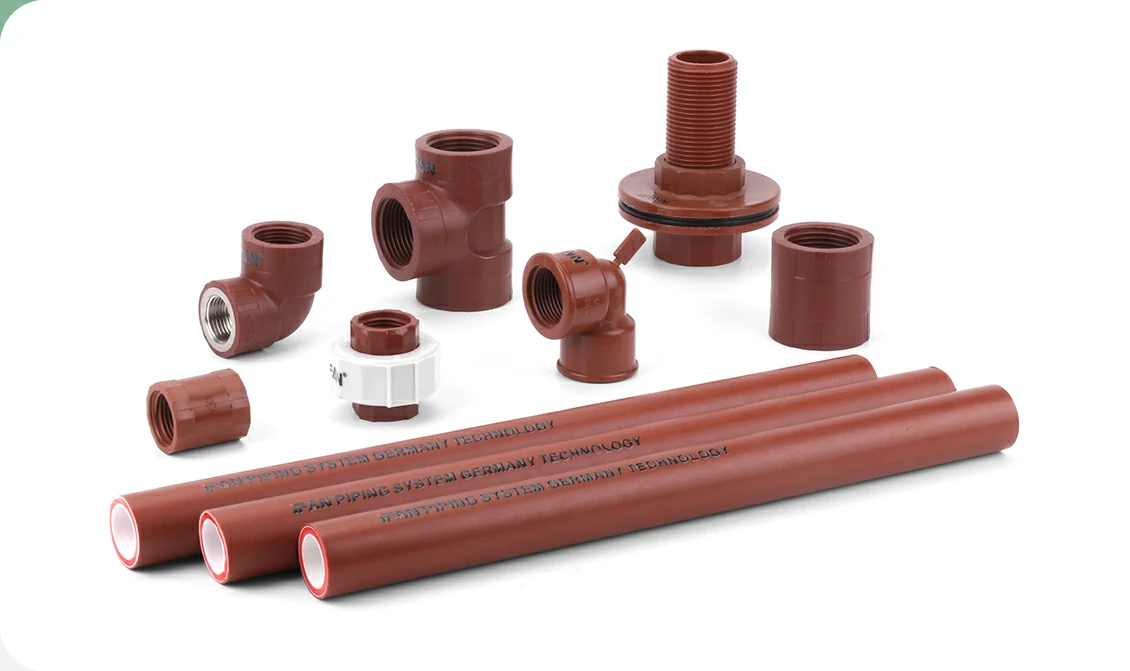
The most expensive mistake on this shortlist is buying the wrong CPVC. ASTM D2846/D2846M-24 covers CPVC hot- and cold-water distribution systems in copper tube size, “intended for water service up to and including 180°F (82°C)”. Schedule 80 industrial CPVC is a different product, built on cell class 23447 compounds and rated to 200°F. Both are honestly called CPVC on a quotation.
The gap costs twice. Twenty degrees is the whole margin on a hot process line, and CTS tube sizes do not interchange with iron pipe size fittings, so a mixed delivery cannot be assembled at all. Write the standard, the schedule and the cell class into the line item: “CPVC pipe, ASTM D1784 cell class 23447, Schedule 80” leaves nothing to interpret. A line that reads only “CPVC pipe, 1 inch” invites the cheaper of the two. The same discipline applies within PVC itself, which our Schedule 40 versus Schedule 80 PVC guide works through size by size.
Best For / Not For: Matching the Material to the Duty
Material-first comparisons make a reader translate their own problem twice. A duty-first table does not. The five duties below cover most of what reaches a quotation desk for chemical and industrial lines, and each names the material to specify and the one to keep out of the enquiry.
Two duties belong on nobody’s list here. Dry chlorine gas is rated L to 73°F for both vinyls and N for PP-H, which makes it a PVDF job. Anything running above 200°F is outside all three, whatever a catalogue photograph suggests. Saying so costs a supplier one line item and saves a buyer a shutdown.
| Duty | Укажите | Keep out | Reason |
|---|---|---|---|
| Cold acid dosing, brine, effluent below 100 °F | PVC-U Schedule 80 | Nothing ruled out | Lowest cost, and the full pressure rating is available cold |
| Hot process water, hypochlorite, chromic acid | CPVC Schedule 80 | PP-H | CPVC holds 0.50 of rating at 140 °F and leads on oxidisers |
| Caustic, dilute organic acid, ammonia solution | PP-H | CPVC | TR-19 rates CPVC N on 25% acetic acid and 10% ammonium hydroxide |
| Abrasive slurry, plants already fusing HDPE | PP-H | PVC-U | Fusion joints and PP toughness survive what cemented joints do not |
| Dry chlorine gas, or service above 200 °F | None of the three | All three | TR-19 rates all three L or N; specify PVDF instead |
Three commercial facts are deliberately absent from this page, because no single number holds across three materials. MOQ is set per project against your size mix, not per SKU. Lead time is quoted against that same mix and the production slot. Price structure follows the resin index and freight before it follows the fitting, so it is quoted ex-works or FOB against a stated duty. Send the duty and all three come back together.
What We Check Before PVC, CPVC or PPH Ships
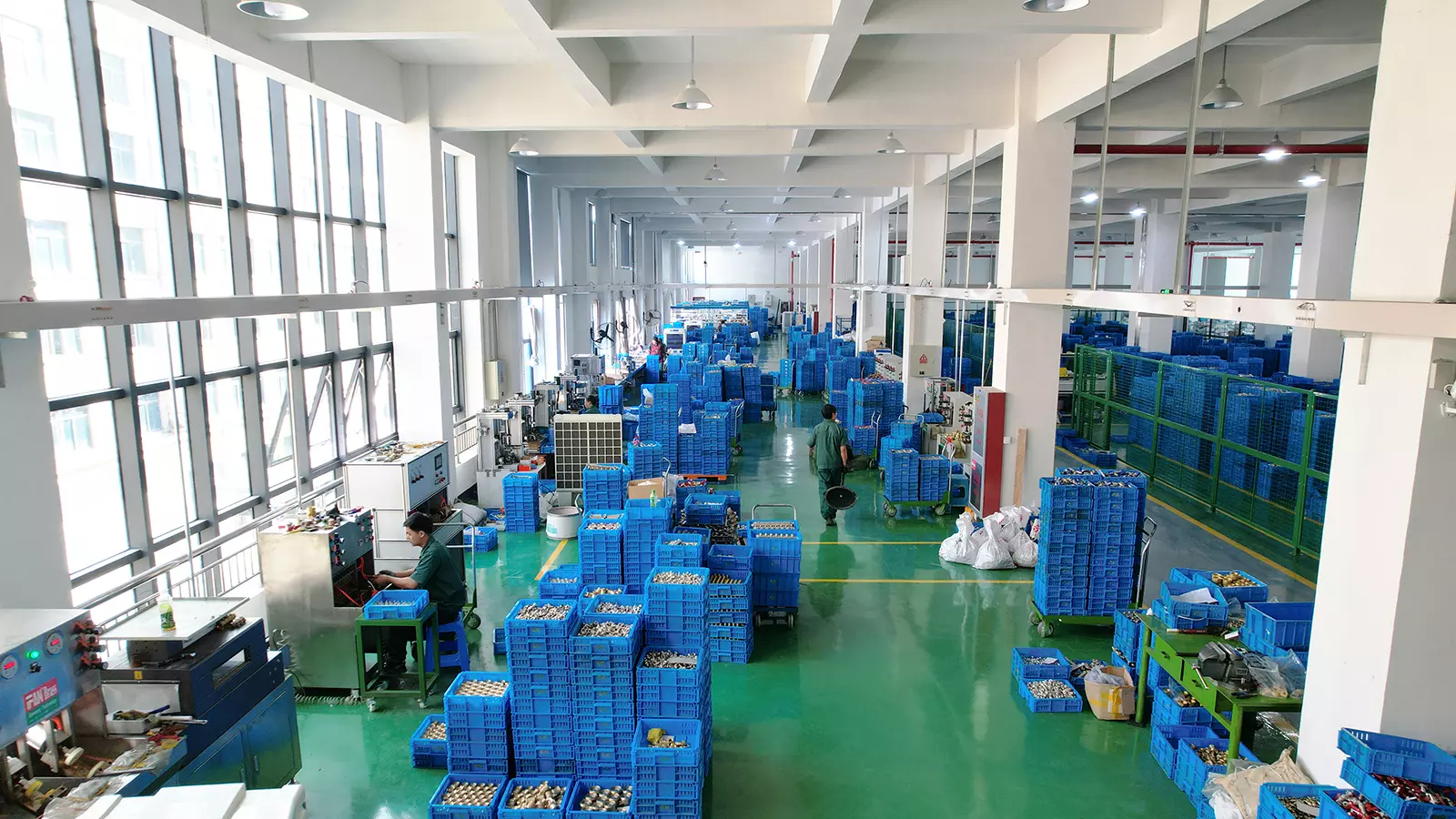
IFANPRO has been making pipe and fittings since 1993 and runs PVC, CPVC and PPH lines out of one 120,000 m² plant in Zhuji, Zhejiang, with more than 600 staff including over 50 R&D and technical people. That is also why the answer here is never automatically our own catalogue.
Three checks decide whether what ships matches what was specified. First, the marking: our PPH fittings carry EN ISO 15494 or DIN 8077/8078 on the SKU and our CPVC fittings carry ASTM D2846, which is what a receiving inspector reads. Second, the compound: a cell classification on the documentation is the only way to separate a 12454 PVC from a lower-spec extrusion once the pipe is on a pallet.
Third, the honest scope of the range. Our PPH fittings range is threaded and socket fittings from 1/2 inch to 2 inch, not a 500 mm butt-fusion system, and a duty specified above the 80 °C PP-H ceiling is one we will send elsewhere. Saying that before a quotation is cheaper than saying it after. The lines carry ISO 9001, ISO 14001, CE, WRAS, NSF/IAPMO and Intertek approvals.
Заключение
The trade-off holds across every line: PVC-U buys cost and gives up temperature, CPVC buys temperature and oxidiser resistance and gives up alkali and organic acid, PP-H buys chemical breadth and fusion reliability and gives up the easy joint and the 200°F ceiling. Nobody wins the general case, which is why the fluid and the design temperature belong in the enquiry before the material name does.
Write the duty down and the shortlist writes itself out of Tables 1 and 3.
Frequently Asked Questions
It is still specified, and widely. Where it loses ground is chemical breadth rather than temperature: PPI TR-19 rates CPVC N against 25% acetic acid and 10% ammonium hydroxide, two duties PP-H handles to 180°F and 212°F.
No. Both are polypropylene under EN ISO 15494, but PP-H is the homopolymer. GF Piping Systems lists its heat distortion temperature at 95°C against 75°C for PP-R, which is why PP-H takes the industrial duties.
It depends on the fluid. On 25% acetic acid PP is rated to 180°F and PVC to 140°F. On 50% hydrogen peroxide PVC is rated to 140°F and PP only to 73°F.
No. GF Piping Systems approves only socket fusion, infrared fusion and butt fusion to DVS 2207 for PP-H. There is no solvent cement specification for polypropylene the way ASTM F493 exists for CPVC.
Read the print line rather than the colour. PVC pressure pipe normally carries ASTM D1784 cell class 12454, industrial CPVC carries 23447, and CTS CPVC tube carries ASTM D2846.







 Русский
  English
  Français
  Español
Последние комментарии