
A distributor who imports generic coils competes on one thing: price. A private label pex pipe program changes that math, because the brand printed down the length of the tube belongs to you, not to the factory or the three other importers buying from the same line. That single change is the difference between reselling someone else’s product and owning a shelf position your customers ask for by name.
This article walks through how OEM PEX actually works for a distributor: what you can brand, which specs sit behind the label, how certifications get listed, and what MOQ and lead times to expect. If you are still deciding between grades and standards before you commit to a brand, start with our complete guide to PEX pipe, then come back here to build the commercial side.
Key Takeaways
- Private label means your brand goes on the product; OEM means the factory manufactures to your spec; ODM means you also shape the design. Most distributor programs are private label built on the factory’s proven ODM design.
- The print line down the pipe carries your brand name, size, standard, production date, and running meter marks. Changing the print carries the lowest MOQ of any customization.
- Custom pipe color sits in the middle on MOQ; custom fitting tooling or dies sits at the top, because a new mold is a real capital cost.
- Certification names (WRAS, NSF, IAPMO, WaterMark) are held by a specific legal entity for a defined scope. Whose name a listing carries depends on the scheme and your role, so confirm the arrangement directly with the certification body.
- A credible OEM PEX partner proofs your artwork, sends a printed sample before you pay the balance, and matches the certificate scope to the market you sell into.
- Territory and price protection in the supply agreement stop your own supplier from arming a competitor next door.
OEM vs ODM vs Private Label for PEX
These three terms get used as if they were interchangeable, and they are not. Getting them straight tells you exactly what you control and what stays with the factory.
The three models, plainly
OEM (original equipment manufacturer) means the factory builds a product to your specification. You bring the requirements; the manufacturer brings the line, the resin, and the process. ODM (original design manufacturer) goes one step earlier: the factory has already designed and validated the product, and you buy that design, sometimes with tweaks. Private label is the commercial layer that sits on top of either one, where the finished goods carry your brand instead of the manufacturer’s.
For PEX specifically, most distributor programs are private label wrapped around an ODM base. You are not asking a factory to invent a new pipe. You are choosing a proven grade and standard, then putting your name on it. That distinction matters because it sets your risk. Inventing a product is slow and expensive; branding a validated one is fast and cheap by comparison.
| Model | Who designs it | Whose brand shows | What you control |
|---|---|---|---|
| OEM | You specify, factory builds | Usually yours | Spec, tolerances, print |
| ODM | Factory’s existing design | Yours or theirs | Choice of design, minor tweaks |
| Private label | Either of the above | Yours | Brand, print, packaging |
Where does private label start and stop? It starts at the ink and the box. It stops at the molecule. You control what a customer reads and sees; you do not control whether the resin cross-links correctly. That is why the spec conversation, covered further down, matters as much as the artwork.
What You Can Actually Brand on PEX
A pipe is a hard surface, so the branding surface area is smaller than it is for, say, a consumer package. Knowing exactly what carries your identity keeps your expectations grounded and your first order sensible.
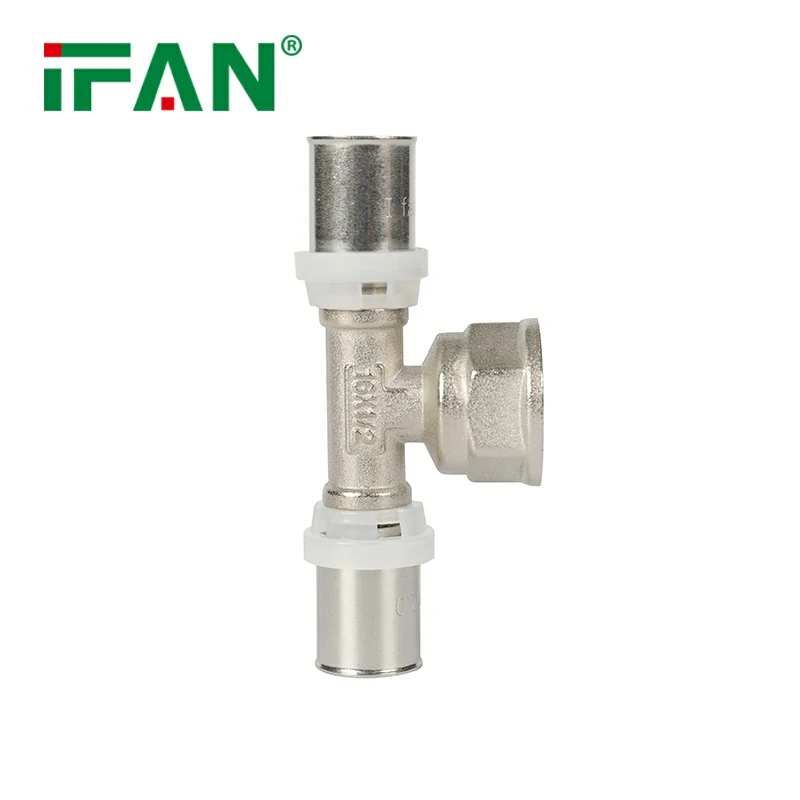
The print line down the pipe
The single most valuable brand surface is the print line, the repeating text that runs along the tube. It typically carries your brand name, the nominal size, the standard the pipe is made to, a production date or batch code, and running meter marks so an installer knows how much is left on a coil. Change the wording, the font, and the color of that line, and every meter of pipe on a job site now advertises you. This is where a private label pex pipe program earns its keep, because the marking is permanent and travels with the product.
Everything wrapped around the pipe
Beyond the print line, you can brand the coil wrap or shrink film, the master cartons, insert cards or spec leaflets tucked into the box, and in many cases the pipe color itself. Color is a stronger signal than most distributors expect. A distinctive jacket color lets a contractor recognize your product across a warehouse.
- Print line — lowest barrier; changing text and ink is routine on the print head.
- Coil wrap and cartons — low barrier; artwork plus a modest print run for the packaging.
- Insert cards and spec sheets — low barrier; a print job separate from the pipe line.
- Pipe color — medium barrier; a color change means a masterbatch change and a purge of the line.
- Custom fitting tooling or a new die — highest barrier; a new mold is a capital investment amortized over volume.
The pattern is simple. Ink is cheap to change, molds are not. Order your customizations from the print line outward, and your first launch stays affordable while still looking unmistakably yours. Distributors sourcing their first program often benefit from reading our practical notes on how to wholesale PEX pipe from China before locking a purchase order.
Choosing the Spec Behind Your Brand
Your brand is only as good as the pipe under it. A pretty print line on a pipe that fails a chlorine soak test destroys the brand you spent money building. So the spec decision comes first, and it is where you should spend real attention.
Grade: PEX-a, PEX-b, or PEX-c
The three PEX grades differ by how the polyethylene is cross-linked, and the method affects flexibility, kink recovery, and price. PEX-a is the most flexible and recovers from a kink under heat; PEX-b holds strong chlorine and pressure numbers at a lower cost; PEX-c is a middle path. None is universally “best” for a brand, because the right pick depends on your market’s plumbing habits and price point. Work through the trade-offs in our breakdown of PEX-a vs PEX-b vs PEX-c before you commit a grade to your label, since switching grades after launch confuses buyers.
Chlorine resistance and the standard on the print
For potable water, chlorine resistance is the number that quietly decides whether pipe survives a decade of hot chlorinated water. Many plumbing markets reference ASTM standards such as ASTM F876 for PEX tubing dimensions and performance. The Plastics Pipe Institute publishes background on how these materials behave; their resources are worth a read before you finalize a spec. The standard you print on the pipe is a promise, so print only what the pipe actually meets, and confirm the safety picture in our note on whether certifications to verify line up with your market.
Certifications Under a Private Label
This is the section where distributors get burned, so read it carefully and treat the specifics as things to verify, not assume. A certification listing is held by a named legal entity for a defined product scope, and the way your brand relates to that listing varies by scheme and by your role in the supply chain.
Whose name is on the listing
A WRAS approval, an NSF certification, an IAPMO mark, or a WaterMark listing each names the entity responsible for the certified product. Sometimes that is the manufacturer; sometimes a distributor can hold or be added to a listing; sometimes a private-label brand appears under the manufacturer’s certificate through a documented arrangement. Which of these applies to you depends entirely on the scheme’s rules and the role you play. Do not assume your printed brand is automatically covered by the factory’s certificate.
Before you print any certification mark or number on your branded pipe, confirm in writing with the certification body how your brand relates to the listing, what the scope covers, and who is responsible for maintaining it. The arrangement varies by scheme and by your role, and a printed mark you are not entitled to use is a serious liability.
Scope and maintenance
A certificate covers specific products, sizes, and sometimes specific production sites. It also has to be maintained through periodic audits and renewals, and someone pays for and manages that upkeep. Clarify who maintains the listing behind your brand and what happens to your right to sell certified product if that relationship ends. These are commercial questions with regulatory consequences, and the safe answer is always to confirm the arrangement directly with the certification body rather than relying on a verbal assurance.
MOQ, Tooling, and Lead Times for OEM PEX
The single biggest planning mistake is treating all customization as one cost. It is not. Changing ink is close to free; cutting a new die is a project. The table below sorts the common OEM PEX customizations by what they demand, framed as typical ranges that vary by factory, size, and season.
| Настройка | Typical MOQ | Typical lead time | Main cost driver |
|---|---|---|---|
| Custom print line (brand text) | Low | Shortest | Artwork setup, ink |
| Custom packaging and cartons | Low to medium | Short | Packaging print run |
| Custom pipe color | Medium | Medium | Masterbatch, line purge |
| Custom fitting die or tooling | High | Longest | Mold tooling cost |
Read this table as a sequencing tool. A sensible first program brands the print line and the packaging, keeps the pipe in a standard color, and skips custom tooling entirely. That combination gives you a fully branded product at the lowest MOQ and the fastest lead time, which lets you test the market before you sink money into a mold. Reserve custom color and tooling for when your volume justifies the setup cost. Treat every number here as an opening position to confirm with your supplier, not a fixed quote.
Building the Brand Around the Pipe
The pipe is the product; the brand is everything a buyer touches before and after the sale. A print line alone does not build recognition. The packaging, the paperwork, and the commercial terms do the rest of the work.
Packaging and spec sheets
Contractors trust products that come with clean documentation. A branded spec sheet, a catalog that lists sizes and standards, and a consistent carton design signal that you are a supplier, not a one-off importer. These materials cost little to produce and pay back every time a buyer compares you against an unbranded coil.
Territory and price protection
Here is the hard commercial edge that distributors forget to negotiate. If your supplier sells the same branded or near-identical product to your neighbor, your brand advantage evaporates overnight. Write territory exclusivity and price protection into the supply agreement so the factory cannot undercut you through a competitor. This is a negotiation, not a favor, and a serious manufacturer will discuss it when your volume supports it.
- Define the exclusive territory in writing, by country or region.
- Agree on minimum annual volumes that keep the exclusivity active.
- Set price-protection terms so mid-contract cost moves do not surprise you.
- Clarify what happens to your brand tooling and artwork if the relationship ends.
A Private-Label Launch, Start to Finish
This scenario is illustrative, with no real named client, but it mirrors how a first program usually runs. Follow the sequence and you avoid the two classic failures: printing a claim the pipe cannot back, and paying for tooling before you have proven demand.
- Grade choice. A distributor selling into a hot-water-heavy market picks PEX-b for its chlorine and pressure numbers at a workable price.
- Certification. They confirm with the relevant certification body how their brand relates to the listing and which standard they may print.
- Print artwork. They send brand text, size format, and the approved standard; the factory proofs the print line and returns a mock-up.
- Sample approval. A short printed run comes back for sign-off before any balance is paid, so the ink, color, and marking are checked on real pipe.
- First container. With the sample approved, the first container ships branded, packaged, and documented, keeping to a standard color and no custom tooling on this first pass.
Notice what this order protects. The spec and the certificate are settled before a single meter is printed, and a physical sample is approved before the money is committed. That is the whole discipline of a clean launch.
What We Handle for OEM Partners
At IFANPRO we have manufactured PEX, PPR, HDPE, and PVC pipe and brass fittings since 1993, and we run private-label programs the way this article describes. Here is what we handle so a distributor’s launch stays on the rails.
- Print-line setup. We configure your brand text, size, standard, date code, and meter marks on the print head.
- Artwork proof. You approve a print mock-up before production, so there are no surprises on the first coil.
- Sample before deposit balance. We send a printed sample for sign-off before you commit the balance payment.
- Certificate-scope match. We help match the certificate scope to your target market and advise you to confirm the listing arrangement with the certification body.
- Virgin resin. We run virgin resin, because a brand printed on recycled-blend pipe fails the customer the day it cracks.
Our factory runs across 120,000 square meters with 600-plus staff, and we hold quality and product certifications including ISO 9001 and 14001, CE, WRAS, NSF/IAPMO, and WaterMark, with the scope and holder of each varying by scheme. We ship to over 200 countries, and we would rather help you launch a brand you keep than sell you a container you forget.
Заключение
Private label turns you from an interchangeable importer into a brand a contractor asks for, and it starts with the print line and a spec you can stand behind. Sequence your customizations from ink outward, settle the certificate scope before you print, and protect your territory in the contract. When you are ready to price a first program, bring your target market and standard to the table and we will build the sample around them.
Frequently Asked Questions
What is the minimum order to get a private label pex pipe program started?
Branding the print line and packaging carries the lowest minimum, because it only involves artwork setup and ink. Custom pipe color raises the minimum, and custom fitting tooling raises it further because a new mold is a capital cost. Ask your supplier for the specific MOQ tied to the exact customizations you want, since ranges vary by size and season.
Does my brand automatically inherit the factory’s WRAS or NSF certification?
Not automatically. A certification listing is held by a named entity for a defined scope, and whether your brand is covered depends on the scheme’s rules and your role. Confirm the arrangement directly with the certification body before printing any mark, and do not rely on a verbal assurance.
What is the difference between OEM and private label for PEX?
OEM means the factory manufactures a product to your specification. Private label is the commercial layer where the finished goods carry your brand. Most PEX distributor programs combine both: the factory’s proven design, built to spec, sold under your name.
Which PEX grade should I put on my label?
It depends on your market. PEX-a offers the most flexibility and kink recovery, PEX-b delivers strong chlorine and pressure numbers at a lower cost, and PEX-c sits in between. Choose the grade that fits your customers’ plumbing habits and price point, then keep it consistent so buyers know what your brand means.
How do I stop my supplier from undercutting my brand?
Negotiate territory exclusivity and price protection into the supply agreement. Define the territory in writing, tie it to minimum volumes, and clarify what happens to your artwork and tooling if the relationship ends. A serious manufacturer will discuss these terms when your volume supports them.
IFANPRO has manufactured PEX, PPR, HDPE, and PVC pipe and brass fittings since 1993, running a 120,000 m² factory with 600-plus staff and shipping OEM and private-label programs to over 200 countries. Our team writes to help distributors and installers make sound sourcing decisions.











 Русский
  English
  Français
  Español
Последние комментарии