
If you are speccing pex underfloor heating for a hydronic system, here is the direct answer: PEX is the standard tubing for radiant floors, but any closed loop tied to a boiler must use oxygen-barrier PEX. Non-barrier PEX lets dissolved oxygen migrate through the pipe wall, and that oxygen attacks the steel and cast-iron parts of the loop until the pump and heat exchanger fail. Barrier PEX carries an EVOH layer built to DIN 4726 that shuts the oxygen out. Non-barrier PEX belongs only on open-water or potable runs, never on a sealed heating circuit.
The choice between barrier and non-barrier is not a preference or a cost-saving trade. It decides whether the boiler survives more than a few seasons. This piece walks a contractor through why the barrier matters, how barrier PEX, non-barrier PEX, and PEX-AL-PEX differ, and how to size, manifold, and install the loops correctly. For the wider material picture, see our complete guide to PEX pipe, which frames where radiant tubing sits in the PEX family.
Key Takeaways
- Closed hydronic loops require oxygen-barrier PEX; the EVOH layer to DIN 4726 caps oxygen ingress at roughly 0.1 mg per liter per day at 40 C.
- Non-barrier PEX in a sealed boiler loop corrodes cast-iron pumps and steel heat exchangers, producing black magnetite sludge and dead circulators within two to four seasons.
- PEX-AL-PEX has an aluminum core that acts as a total oxygen barrier and holds bends without memory, at higher cost than barrier PEX.
- 1/2 in tubing is the common size; keep each loop under about 300 ft, space tubes 8 to 12 in apart, and match loop lengths within 5 percent.
- A manifold splits and balances flow; unbalanced loops leave cold stripes across the floor even when the boiler is sized correctly.
- In-slab installs need rigid foam under the pour and about 1.5 to 2 in of concrete cover over the tubing for even heat spread.
Why PEX Is the Standard for Radiant Floor Heating
PEX won the radiant floor market for one reason above all others: you can run a single continuous loop from the manifold, through the slab, and back with no buried joints. A copper radiant floor would need dozens of soldered elbows locked under concrete, and every one of them is a future leak you can never reach. A PEX loop of 250 ft has exactly two connection points, both at the manifold, both accessible for the life of the building. That single fact removes the most common failure mode of in-slab heating.
The flexibility is the second reason. PEX bends to a radius of roughly six to eight times its outside diameter, so a 1/2 in tube turns a 3 to 4 in radius without kinking, letting you snake tight serpentine or spiral patterns around a room. It also tolerates freezing better than rigid pipe. When water freezes inside PEX, the tube expands and usually relaxes back rather than splitting, which matters for a slab in an unheated shell during construction or a seasonal cabin.
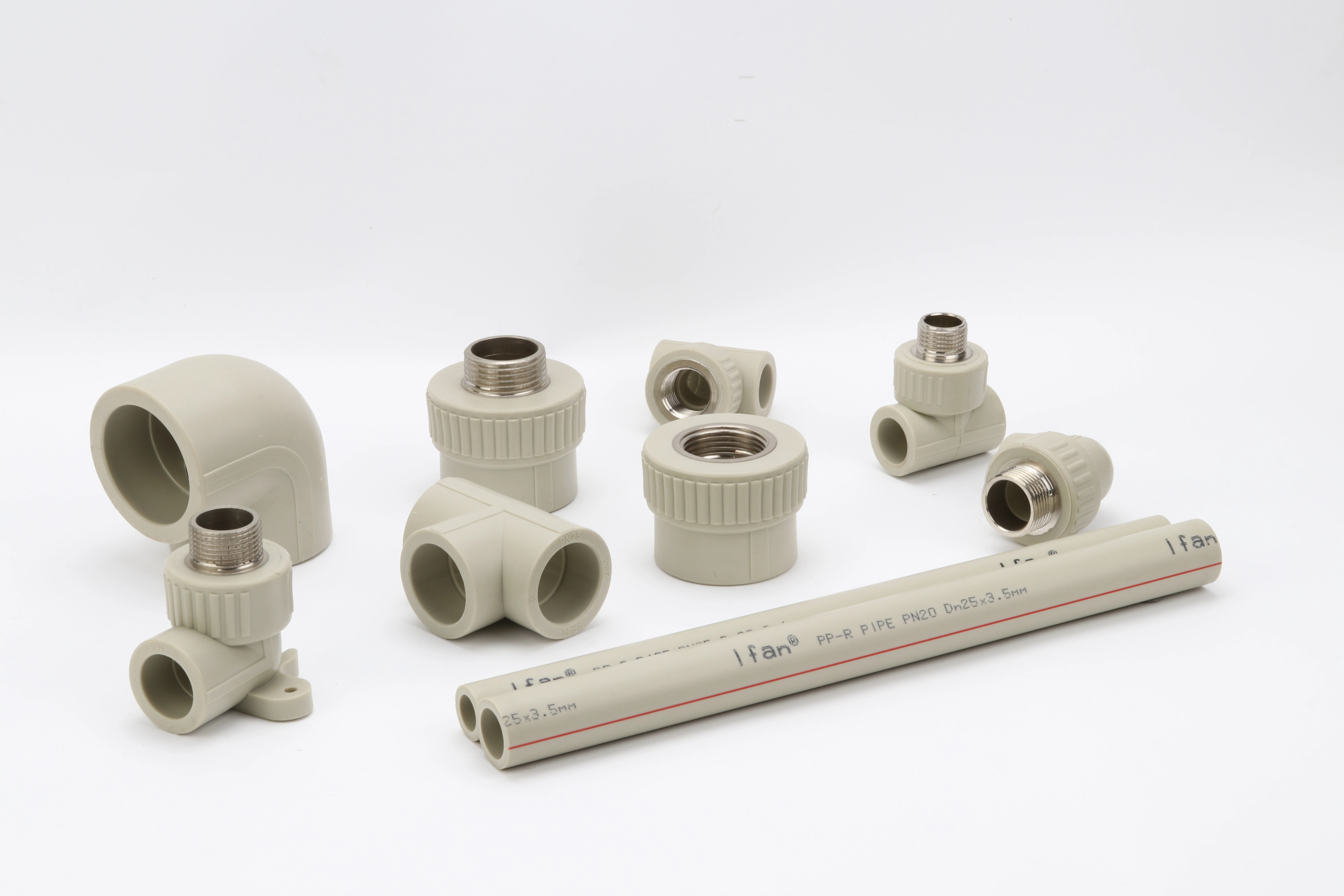
Position: for radiant floors, cross-linked polyethylene beats copper and steel on every practical axis except one, and that exception is the whole story of this article. PEX does not stop oxygen the way metal does. Understand that limit and you understand why the barrier grade exists.
The Oxygen Barrier: Why It Is Not Optional
Plain PEX is slightly permeable to oxygen. The polymer wall is not a perfect gas seal, so oxygen from the surrounding air diffuses slowly through it and dissolves into the water inside. On a potable line that vents to atmosphere, nobody cares. On a sealed heating loop it is a slow chemical attack that never stops, because the same water circulates past the same steel and iron parts thousands of times a day.
Here is the consequence in the field. Oxygen entering a closed loop corrodes the boiler heat exchanger, the cast-iron body of the circulator pump, and any steel or iron manifolds in the circuit. The corrosion product is magnetite, a fine black sludge that settles in the pump volute, clogs the heat exchanger passages, and jams valves. A system plumbed with non-barrier PEX on a cast-iron boiler can foul a circulator in two to four heating seasons. The installer gets the callback, replaces the pump, and watches it fail again because the oxygen source was never removed.
Insider warning: the failure is silent for the first year. Oxygen corrosion is cumulative, so a floor plumbed with the wrong PEX heats perfectly through its first winter and passes handover. The sludge and the dead pump arrive in year two or three, long after the crew has left the site and the warranty conversation has turned hostile.
The fix is an oxygen barrier co-extruded into the pipe wall. Most barrier PEX uses a thin layer of EVOH, an ethylene vinyl alcohol copolymer, sandwiched between polyethylene layers. The relevant benchmark is DIN 4726, which limits oxygen permeation to roughly 0.1 mg per liter per day at 40 C. That is low enough that the boiler’s own corrosion inhibitor and the small charge of dissolved oxygen at fill-up are the only oxygen the metal ever sees. Radiant hydronics guidance from bodies such as the Plastics Pipe Institute treats the oxygen barrier as standard practice for closed-loop heating; treat any local code requirements as the final word for your market.
Barrier PEX vs Non-Barrier vs PEX-AL-PEX
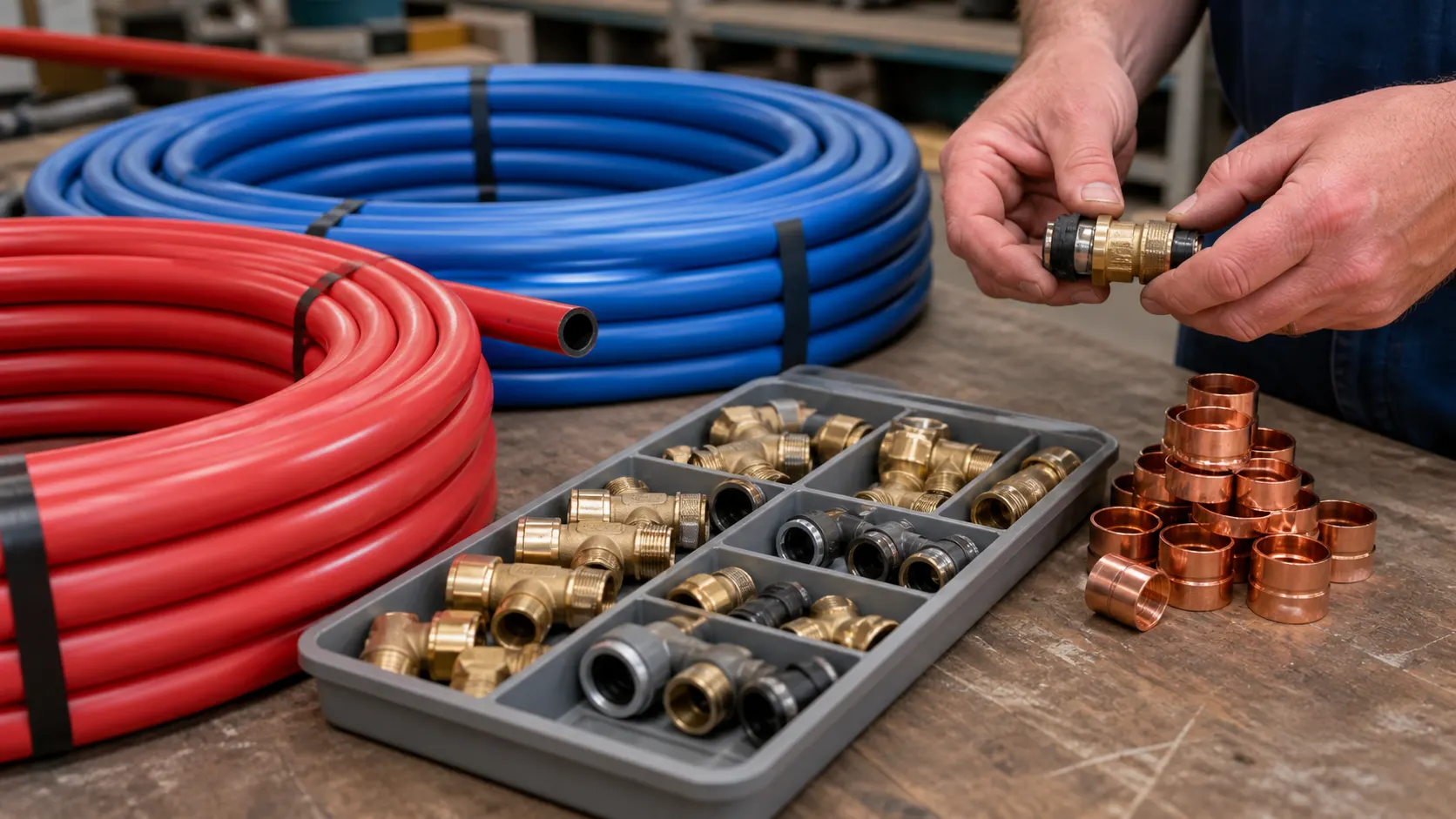
Three tubing types show up on radiant jobs, and they are not interchangeable. Match the pipe to the circuit, not to the invoice. The table below sorts them by the only question that matters at the manifold: does the pipe stop oxygen.
| Type | Oxygen barrier | Best use | Note |
|---|---|---|---|
| Barrier PEX (EVOH) | Yes, EVOH to DIN 4726 | Closed hydronic radiant loops | Default choice for boiler-fed floors |
| Non-barrier PEX | No | Potable and open-loop only | Corrodes iron parts in sealed loops |
| PEX-AL-PEX | Yes, aluminum core is total barrier | Radiant loops needing shape retention | Holds bends, higher cost, needs sized fittings |
PEX-AL-PEX deserves a closer look because its aluminum core does two jobs at once. The metal layer is completely gas-tight, so oxygen permeation is effectively zero, not merely capped. The same aluminum gives the tube a lower expansion rate and lets it hold a bend without springing back, which speeds layout on large slabs. The trade is price and fitting discipline: the aluminum core must be reamed and calibrated before a fitting goes on, and a sloppy joint is the classic failure point. If you run PEX-AL-PEX, read our field guide on how to permanently solve leaks in PEX-AL-PEX connections before your crew makes up a single fitting. For the broader trade-off against other pipe materials, our material comparison lays out where each option earns its place.
One more distinction sits underneath all three: the manufacturing method. PEX-a, PEX-b, and PEX-c differ in flexibility and kink recovery, and the choice interacts with how tight your loops need to bend. Our breakdown of PEX-a vs PEX-b vs PEX-c covers which grade suits radiant work.
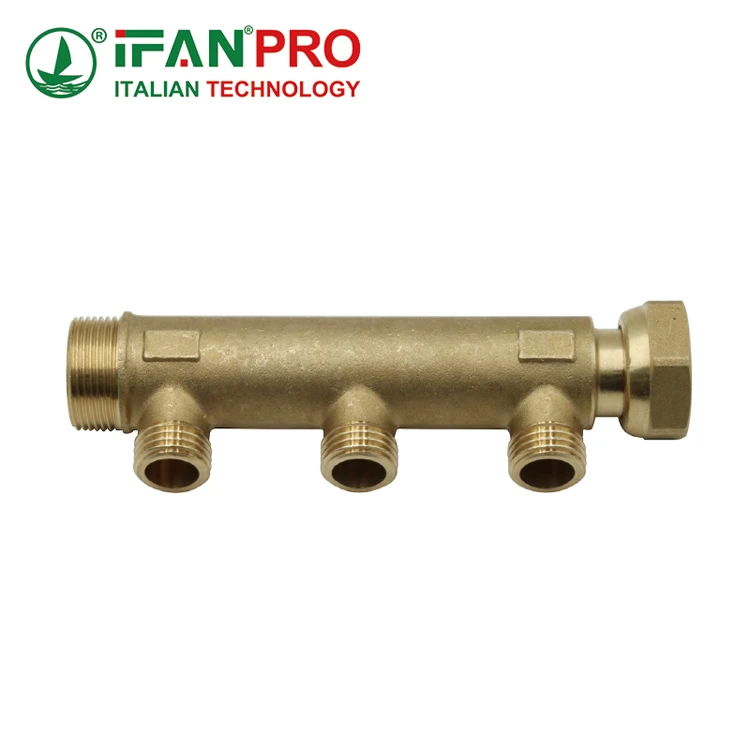
Sizing, Loop Length, and Spacing
1/2 in tubing is the workhorse size for residential radiant floors, and the reasons are flow and head loss. A loop that runs too long forces the circulator to fight excessive friction, so the far end of the tube runs cool no matter how hot the supply water is. The practical ceiling for 1/2 in PEX is roughly 250 to 300 ft per loop. Push past 300 ft and you either accept a cold zone or upsize the pump into diminishing returns. Larger rooms get split into multiple loops rather than one heroic run.
Tube spacing sets how even the floor feels underfoot. Standard spacing runs 8 to 12 in on center. Tighter 6 in spacing goes near exterior walls and glass where heat loss is highest, and wider 12 in spacing suits interior zones. Space the tubes too far apart and you get warm stripes over the pipe with cool gaps between them, a striping effect a barefoot occupant will notice on a tile floor.
Balance the loop lengths against each other. Each loop off a single manifold should fall within about 5 percent of the others in length, because a manifold delivers similar flow to equal-resistance loops. When one loop is 280 ft and its neighbor is 180 ft, the short loop hogs the flow and the long loop starves. Plan the layout so every loop lands in the same length band, and balancing at the manifold becomes a fine-tune rather than a rescue job.
Manifolds and Balancing the Loops
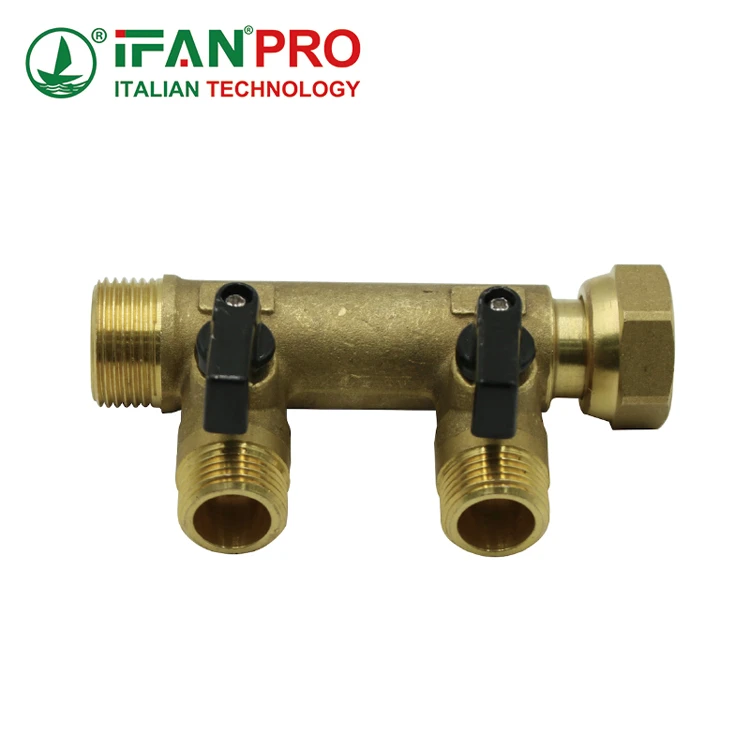
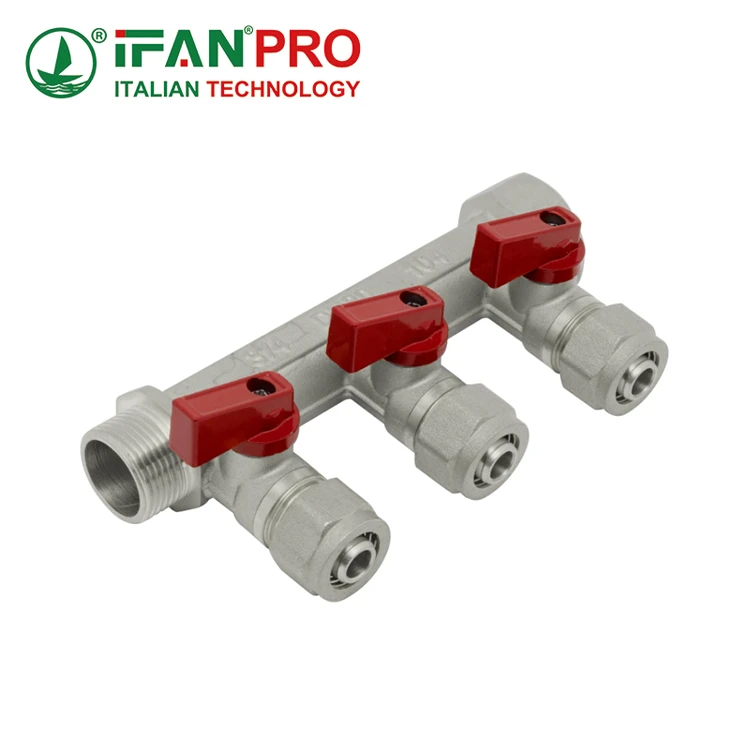
The manifold is where the whole system is tuned. It splits supply water into the individual loops and gathers the returns, and its flow meters or balancing valves let you set how much water each loop receives. Get this wrong and the symptom is unmistakable: one room or one stretch of floor stays cold while the rest of the house is comfortable, even though the boiler and pump are sized correctly. The heat is there; it is simply going to the wrong loops.
Material choice at the manifold matters more than most installers expect, and it ties straight back to the oxygen question. A brass manifold shrugs off the small residual oxygen in a well-sealed loop and lasts the life of the building. Polymer manifolds cost less and resist corrosion entirely, but they flex under temperature swings and can be fussy at the fitting ports. Position: for a boiler-fed system carrying barrier PEX, a quality brass manifold with per-loop flow meters is the safe default, because it gives you visible, repeatable balancing and no galvanic surprises.
Insider warning: never mix a cast-iron manifold or cast-iron pump body with non-barrier PEX. That pairing is the single fastest route to magnetite sludge, because the iron mass gives the permeating oxygen a large surface to attack. If a legacy system already has that combination, add a boiler-side corrosion inhibitor and plan the pipe swap, do not just replace the dead pump.
Installation: In-Slab vs Staple-Up vs Panel
Three installation methods cover almost every radiant floor, and each changes how the heat reaches the room. The in-slab method embeds the PEX in a concrete pour and gives the best thermal mass and the most even heat, which is why it dominates new-build ground floors. Lay rigid foam insulation under the slab first so the heat drives up into the room instead of down into the earth, tie or staple the tubing to the reinforcing mesh, then pour about 1.5 to 2 in of concrete cover over the pipe. Too little cover and you feel hot lines; too much and the floor is slow to respond.
Staple-up suits retrofits over a wood-framed floor. The PEX is stapled to the underside of the subfloor between the joists, usually with aluminum heat-transfer plates that spread the warmth into the floor above. It avoids tearing out the existing floor, but it runs at higher supply temperatures because the heat has to cross an air gap and the subfloor before it reaches the room. Insulate below the tubing here too, or the heat radiates into the crawl space.
Thin-slab and grooved panel systems split the difference. Preformed panels with channels hold the tubing at a fixed spacing and add only a small buildup to the floor height, so they work in retrofits where a full concrete pour would raise the floor too far. They install fast because the tube spacing is designed in, and they respond quicker than a thick slab because there is less mass to heat. The trade is lower thermal storage, so the floor cools faster once the boiler cycles off.
What We Check Before Barrier PEX Ships
At IFANPRO we treat the oxygen barrier as the part of the pipe that fails quietly, so we verify it before a coil leaves the plant rather than trusting the extrusion line. Every batch of barrier PEX goes through a set of checks aimed at the exact failure a contractor would only discover two seasons into the job.
- EVOH barrier integrity and permeation: we confirm the EVOH layer is continuous around the full circumference and test oxygen permeation against the DIN 4726 limit, so the barrier you are paying for actually performs in a closed loop.
- Pressure test: coils are pressure-tested to catch pinholes, weak welds, and extrusion voids before they ever reach a slab where a leak means jackhammering concrete.
- Wall thickness and ovality: we measure wall thickness and roundness along the run, because an oval or thin-walled tube fails at fittings and struggles to hold a clean bend during layout.
- Certification-scope match: we confirm the certification on the coil matches the destination market, since a WRAS, NSF, or WaterMark scope written for one region does not automatically clear another.
That last check catches the problem installers hit at inspection. A pipe can be genuinely certified and still be the wrong certification for the job in front of you. We match the cert scope to your market up front so the barrier PEX that arrives passes the inspector, not just the factory.
Заключение
PEX is the right tubing for radiant floors, but a closed boiler loop lives or dies on the oxygen barrier: barrier PEX or PEX-AL-PEX protects the pump and heat exchanger, while non-barrier PEX belongs only on open or potable runs. Size loops under about 300 ft, space tubes 8 to 12 in apart, balance the lengths at a brass manifold, and match the installation method to the build. Get the barrier specification confirmed before you order, and the system you hand over will still be running long after the callback window closes.
Frequently Asked Questions
Do I always need oxygen-barrier PEX for underfloor heating?
For any closed loop tied to a boiler with steel or iron parts, yes. The barrier stops oxygen from permeating the pipe wall and corroding the pump and heat exchanger. Non-barrier PEX is acceptable only on open-loop or potable systems where the water is not recirculating past ferrous metal. Confirm any local code requirements for your market.
What happens if I use non-barrier PEX in a boiler loop by mistake?
Oxygen diffuses through the pipe and corrodes the cast-iron pump body and steel heat exchanger, forming black magnetite sludge. The system usually works fine the first season, then fouls valves and kills circulators in year two or three. A boiler-side corrosion inhibitor slows it, but the real fix is replacing the tubing with a barrier grade.
How long can a single PEX loop be?
Keep 1/2 in loops under roughly 250 to 300 ft. Beyond that, head loss makes the far end run cool no matter how strong the pump is. Split large rooms into several loops and keep every loop off a manifold within about 5 percent of the same length so the flow balances.
Is PEX-AL-PEX better than barrier PEX for radiant floors?
PEX-AL-PEX has an aluminum core that is a total oxygen barrier and holds its shape without springing back, which speeds layout on big slabs. It costs more and needs its core reamed and calibrated before fitting. Barrier EVOH PEX is the simpler, cheaper default; PEX-AL-PEX earns its place where shape retention or zero permeation is the priority.
What tube spacing should I use for underfloor heating?
Space tubes 8 to 12 in on center for most floors. Tighten to about 6 in along exterior walls and under large windows where heat loss is highest, and widen toward 12 in in interior zones. Too much spacing leaves warm stripes over the pipe and cool gaps between, which is noticeable on tile.
Further reading and standards: underfloor heating and DIN 4726 background, radiant hydronics overview, and the ASTM F876 PEX tubing standard.











 Русский
  English
  Français
  Español
Последние комментарии