
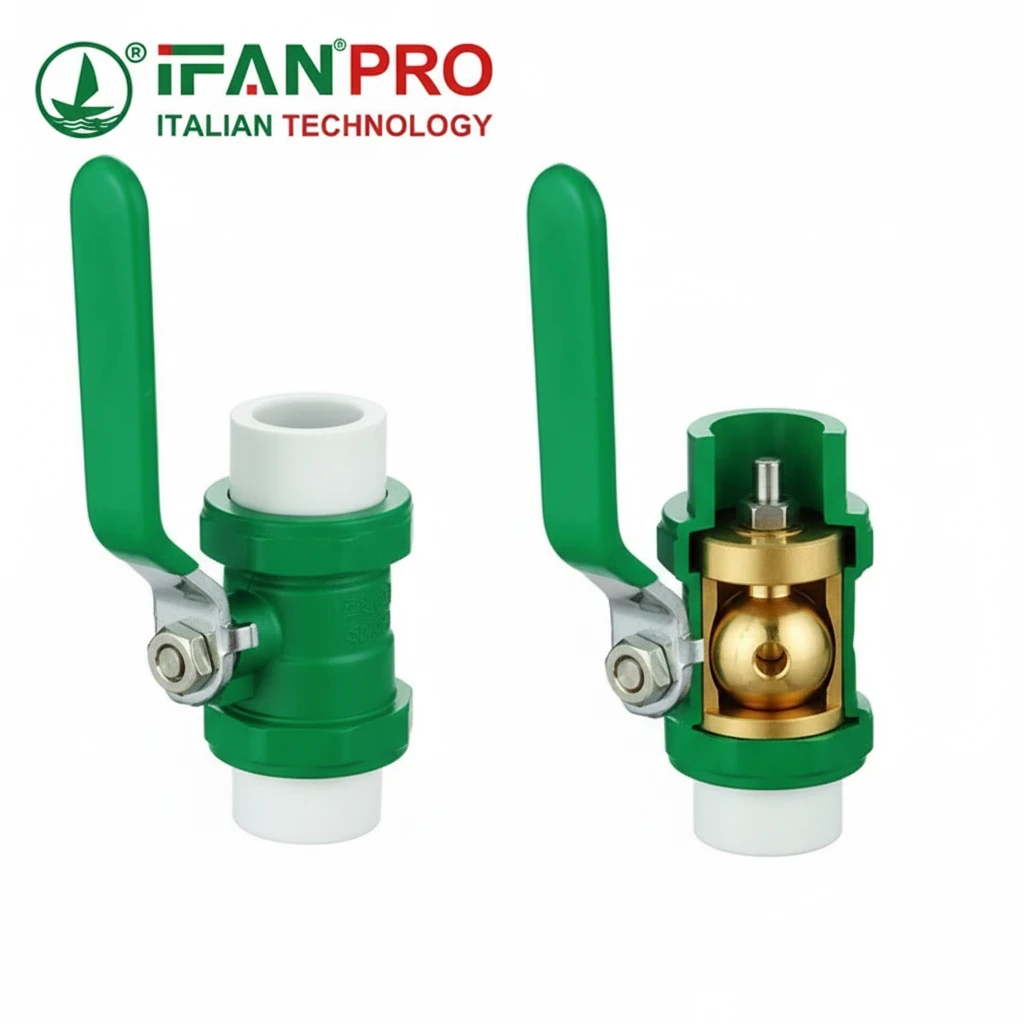
I once replaced an entire all-plastic valve that had warped and seized after just two years in a hot water line. That costly lesson taught me why material choice matters for system longevity.
Solid brass core valves are better for hot water systems because brass handles thermal expansion much better than standard PPR plastic. The brass insert maintains its shape and sealing properties under high temperatures, while all-plastic valves can deform, leak, or seize up over time. This makes brass core valves more reliable for the demands of residential hot water applications.
Let’s examine the key differences between these two valve types and why the choice matters for your plumbing system.
How Does a Brass Core Resist Thermal Expansion Better Than Standard PPR?
Hot water systems face constant temperature changes. I’ve seen plastic valves expand so much they become impossible to turn.
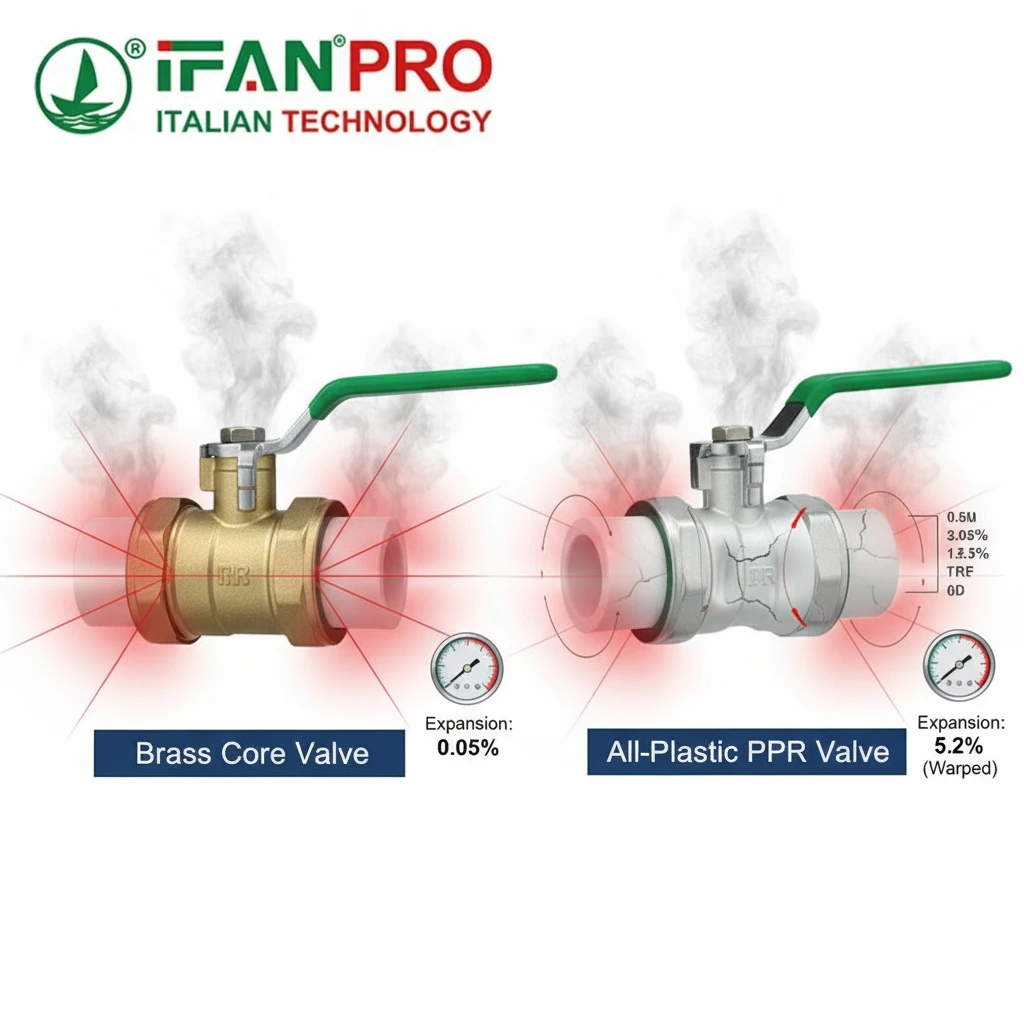
A brass core resists thermal expansion better than standard PPR because metal has a much lower coefficient of thermal expansion than plastic. Brass expands and contracts at a predictable, minimal rate when heated, while PPR expands significantly more. This means a brass core maintains its dimensional stability and tight tolerances, keeping the valve mechanism functional even after years of hot water exposure.
Understanding the Science of Thermal Expansion
Every material expands when heated. The key difference lies in how much they expand. This property is called the coefficient of thermal expansion.
Let’s look at the numbers:
- Brass: Has a coefficient of approximately 19 x 10⁻⁶ /°C
- PPR Plastic: Has a coefficient of approximately 150 x 10⁻⁶ /°C
This means PPR expands nearly eight times more than brass for the same temperature increase. In practical terms, a PPR valve body can grow significantly when hot water flows through it. When it cools down, it contracts again.
The Real-World Impact on Valve Function
This constant expansion and contraction creates several problems for all-plastic valves:
1. Dimensional Changes in the Sealing Area
The internal dimensions of a valve where the ball or gate seals against the seat are precision-engineered. When the plastic expands, these critical clearances change. The seal may become too loose (causing leaks) or too tight (making the valve hard to operate).
2. Stress on the Valve Stem
The stem connects the handle to the internal ball. In an all-plastic valve, the stem and body are the same material. As the body expands, it can pinch the stem or change the alignment, making the valve stiff or impossible to turn.
3. Cumulative Damage Over Time
Plastic doesn’t just expand and return to its exact original shape forever. Each heating and cooling cycle causes microscopic stress. Over many cycles, this leads to permanent deformation called “creep.” The valve slowly loses its original shape and tight tolerances.
How Brass Solves This Problem
A brass core valve uses metal only where it matters most—inside the water path. The brass insert handles the hot water directly. Because brass expands very little, the critical sealing surfaces and stem alignment stay consistent.
The outer body can still be PPR for easy connection to your PPR pipes, but the working parts remain stable. This hybrid approach gives you the best of both worlds: easy installation with PPR piping and reliable hot water performance from the brass core.
The table below illustrates the practical differences:
| Материал | Coefficient of Expansion | Dimensional Stability in Hot Water | Impact on Valve Operation |
|---|---|---|---|
| Brass Core | Low (19) | Excellent – maintains precise tolerances | Smooth operation, reliable sealing |
| Standard PPR | High (150) | Poor – expands and contracts significantly | Can bind, leak, or become stiff |
What Are the Failure Risks of All-Plastic Valves in Hot Water Applications?
I’ve pulled apart failed all-plastic valves and seen exactly why they stopped working. The failure modes are predictable and preventable.
All-plastic valves in hot water systems face several specific failure risks: 1) Thermal deformation where the valve body warps and loses its shape, 2) Stem seizure where the handle becomes impossible to turn, 3) Seal compression loss leading to leaks around the ball, and 4) Cracking from thermal fatigue after repeated heating and cooling cycles.
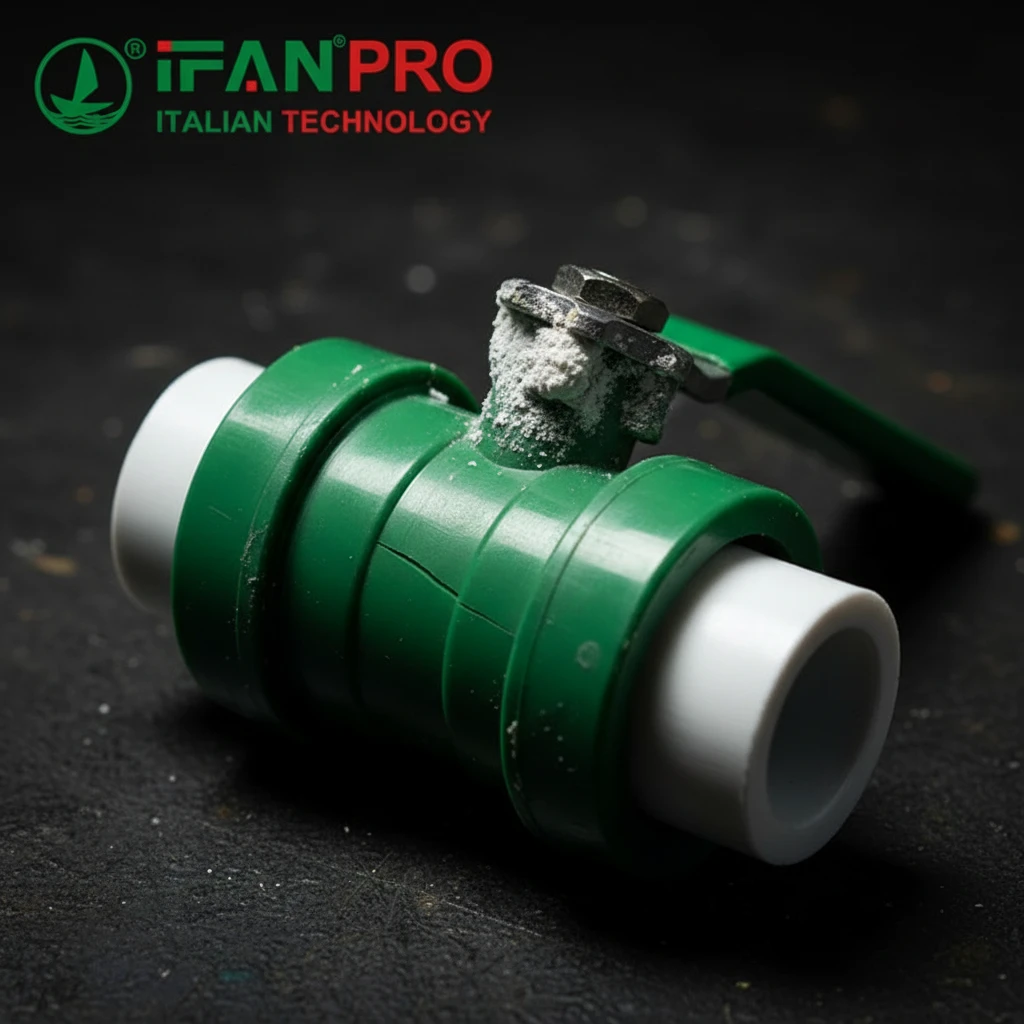
Common Failure Mode 1: Thermal Deformation
When plastic gets hot, it softens. Under constant pressure from water and the stress of the internal components, the valve body can slowly deform. This is especially common in cheaper valves made from recycled or low-grade materials.
The deformation typically happens in two areas:
- The valve seat: The circular groove that holds the seat seal can become oval-shaped. This creates a gap where water can slip past.
- The stem hole: The opening where the stem passes through can become misaligned, causing the stem to bind against the body.
Common Failure Mode 2: Stem Seizure
This is perhaps the most frustrating failure for homeowners. One day you need to shut off the valve for a repair, and the handle simply won’t move.
Why does this happen?
- The plastic body expands around the stem when hot.
- When the system cools, the body contracts but may not return to its exact original position.
- Over many cycles, the stem becomes increasingly tight.
- Eventually, the friction exceeds what the handle can overcome, and the valve seizes.
The stem can also warp slightly from the heat, adding to the problem. In some cases, turning a seized valve with too much force can snap the stem completely, requiring a full valve replacement.
Common Failure Mode 3: Loss of Seal Compression
An all-plastic valve relies on compression to seal. The ball is pressed between two seats, usually made of PTFE or a similar material. This compression comes from the valve body holding everything together.
When the plastic body expands and contracts repeatedly, it can lose some of its original clamping force. The seats may no longer press tightly against the ball. The result is a slow leak through the valve even when it’s fully closed.
Common Failure Mode 4: Cracking from Thermal Fatigue
Plastic becomes more brittle over time, especially when exposed to temperature cycles. Think of bending a paper clip back and forth until it snaps. The same principle applies to plastic under thermal stress.
Micro-cracks can form inside the valve body, particularly at stress points like sharp corners or mold lines. These cracks grow slowly with each heating and cooling cycle. Eventually, they can become full leaks or even cause the valve body to split open.
Material Quality Matters Significantly
The table below shows how material quality affects failure risk:
| Valve Type | Thermal Deformation Risk | Stem Seizure Risk | Seal Loss Risk | Cracking Risk |
|---|---|---|---|---|
| Cheap All-Plastic | High | High | High | High |
| Premium All-Plastic | Moderate | Moderate | Moderate | Moderate |
| Brass Core | Low | Low | Low | Low |
Even premium all-plastic valves face these risks because they are fundamental to the material properties of plastic. Brass simply doesn’t have these problems.
Does the Brass Core Improve the Valve’s Ability to Handle Repeated Cycling?
Hot water valves open and close many times over their lifespan. I’ve seen cheap valves fail after just a few hundred cycles.
Yes, a brass core significantly improves a valve’s ability to handle repeated cycling. The metal insert maintains its dimensional stability and smooth surface finish through thousands of open-close operations. Plastic valves, in contrast, can wear unevenly, develop rough spots, and lose sealing effectiveness much faster because plastic is softer and more prone to abrasion and deformation.
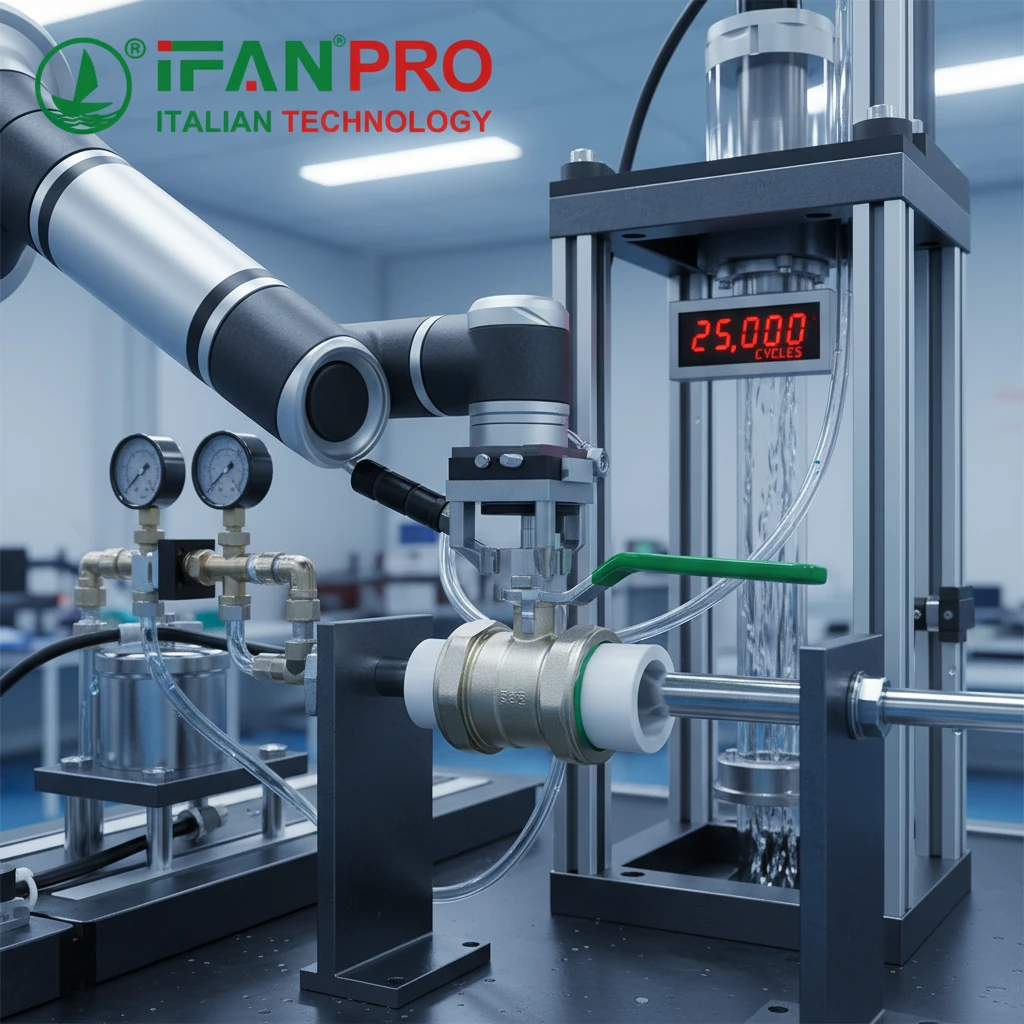
What Happens During Valve Cycling
Every time you open or close a ball valve, several things happen:
- The ball rotates against the seats
- The stem turns within its bore
- Seals compress and release slightly
In a well-designed valve, these movements happen smoothly with minimal wear. In a poorly designed valve, each cycle causes tiny amounts of damage that accumulate over time.
The Wear Mechanisms in Plastic vs. Brass
In All-Plastic Valves:
The ball in an all-plastic valve is typically made of plastic as well. When you turn the handle, a plastic ball rubs against plastic seats. Both surfaces are relatively soft. Over time, this friction creates:
- Abrasive wear: Small particles wear away from the surfaces
- Burnishing: The surfaces can become polished but also deformed
- Grooving: The seats can develop grooves where the ball edges contact them
Additionally, the stem rubbing against the plastic body creates wear. This is compounded by any thermal expansion issues that change the fit between these parts.
In Brass Core Valves:
A brass core valve typically has:
- A brass or chrome-plated brass ball
- A brass stem
- The same PTFE or similar seat materials
The key difference is that the metal ball and stem are much harder than plastic. They resist abrasion far better. The PTFE seats are designed to wear sacrificially, providing a good seal while allowing the hard ball to rotate smoothly.
Testing Data and Real-World Performance
Industry standards for valve cycling tests typically require valves to withstand thousands of operation cycles. Here’s how the two types generally perform:
| Valve Type | Typical Cycles to Failure | Failure Mode |
|---|---|---|
| Basic All-Plastic | 1,000 – 3,000 | Seat wear, leakage past ball |
| Premium All-Plastic | 3,000 – 8,000 | Stem wear, increasing torque |
| Brass Core | 10,000 – 25,000+ | Minimal wear, gradual seat compression loss |
The brass core valve typically outlasts even the best all-plastic valves by a significant margin. In residential applications where a valve might be operated a few times per year, this translates to decades of reliable service.
The Smoothness Factor
Another advantage of brass is surface finish. Brass can be machined to a very smooth, consistent surface. This smoothness reduces friction with the seals. A plastic ball, even from a good mold, will have a slightly rougher surface texture. This roughness increases wear on the seats with each cycle.
Over thousands of cycles, the difference in smoothness compounds. The brass ball continues to glide smoothly, while the plastic ball slowly abrades its seats until sealing is compromised.
Which Option Provides Better Long-Term Value for Residential Hot Water Lines?
Homeowners often focus on upfront cost. But I always advise them to consider the total cost over the system’s life.
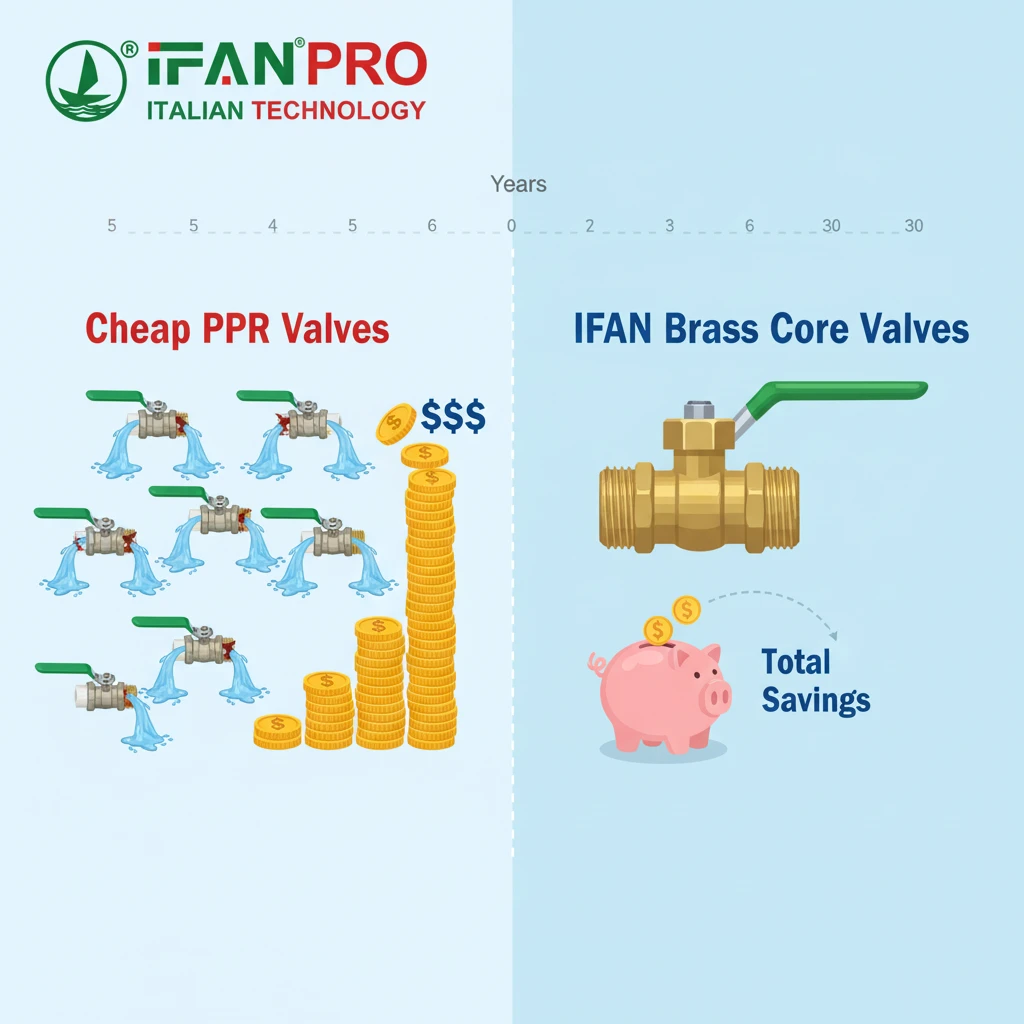
Brass core valves provide better long-term value for residential hot water lines despite their higher initial cost. They last significantly longer, require no maintenance or replacement, prevent water damage from leaks, and maintain easy operability for decades. The small price premium upfront eliminates the hassle and expense of replacing failed all-plastic valves down the road.
Calculating True Cost of Ownership
Let’s break down the real costs associated with each valve type over a 30-year period—a typical lifespan for a residential plumbing system.
Upfront Cost:
- Standard all-plastic valve: $5 – $15 each
- Quality brass core valve: $15 – $30 each
The brass core costs about 2-3 times more initially. For a typical home with 10-15 valves, the difference might be $150-$200 total. This is a modest amount in the context of a whole house plumbing system.
Replacement Costs:
If an all-plastic valve fails, you face:
- Cost of the new valve: Another $5-$15
- Plumber labor: $150-$300 for a service call, plus time to drain and replace
- Potential water damage: If the valve leaked before failure, repair costs can be thousands
- Inconvenience: Loss of water service during repair
If just 3 all-plastic valves fail over 30 years, you’ve already spent more than the brass core upgrade would have cost. And you still have the hassle of dealing with failures.
The Value of Reliability
Beyond pure dollars, reliability has value:
- Peace of mind: You don’t worry about hidden leaks behind walls
- Convenience: Valves work when you need them, especially in emergencies
- Property protection: No water damage from unexpected valve failures
- Ease of use: Brass core valves typically operate more smoothly for longer
Resale and Inspection Considerations
When selling a home, plumbing inspections often reveal valve quality. A home with quality brass core valves throughout signals a well-built system to potential buyers. This can be a small but meaningful factor in home value and buyer confidence.
Cost Comparison Table
Here’s a simplified comparison for a typical home over 30 years:
| Cost Factor | All-Plastic Valves | Brass Core Valves |
|---|---|---|
| Initial Cost (15 valves) | $150 | $350 |
| Expected Replacements | 3-5 valves | 0 valves |
| Replacement Labor Cost | $600 – $1,500 | $0 |
| Potential Water Damage Risk | Moderate | Very Low |
| Total 30-Year Cost | $750 – $1,650+ | $350 |
| Operational Reliability | Declines over time | Remains consistent |
When All-Plastic Might Make Sense
To be fair, there are situations where all-plastic valves are adequate:
- Cold water only lines: Less thermal stress means longer life
- Temporary installations: If the system will be replaced in 5-10 years
- Very low-budget projects: Where upfront cost is the only consideration
But for residential hot water lines, which face the toughest conditions, brass core valves are the smarter investment.
Заключение
Brass core valves outperform standard all-plastic valves in hot water systems through better thermal stability, fewer failure modes, superior cycling durability, and lower long-term costs. For reliable hot water control, choose IFAN’s brass core valves, engineered for decades of smooth operation.








 Русский
  English
  Français
  Español
Последние комментарии