
Gardner’s saved September 2022 clause specifies minimum wire break loads of 450 lb for open cut and 1,150 lb for horizontal directional drilling, although both rows name 12 AWG copper-clad steel. Gauge alone is not enough. An HDPE pipe quote that includes tracer wire still needs the conductor and accessories matched to the utility owner’s requirements for the installation method, responsibility for the completed system identified, and the specified acceptance records obtained.
A continuity result does not replace a required post-construction route locate. For the buyer, that leaves three separate questions: does the offered wire match the specified material, does the installed system have the required connections and access, and has the required acceptance work been recorded? A satisfactory answer to one should not silently close the other two.
Key Takeaways
- Conventional metallic-pipe locating methods need a separate detectable provision alongside buried HDPE.
- A wire specification must identify more than gauge when the owner also specifies material, jacket and strength.
- Different installation methods can require different wires within one utility’s specification.
- Stations, branches, connectors and terminations are part of the locating-system scope.
- Material compliance, continuity and a demonstrated route locate need their own evidence.
- A pipe-only supplier does not automatically supply, install, test or obtain acceptance of the locating system.
The locating signal follows a conductor, not the HDPE wall
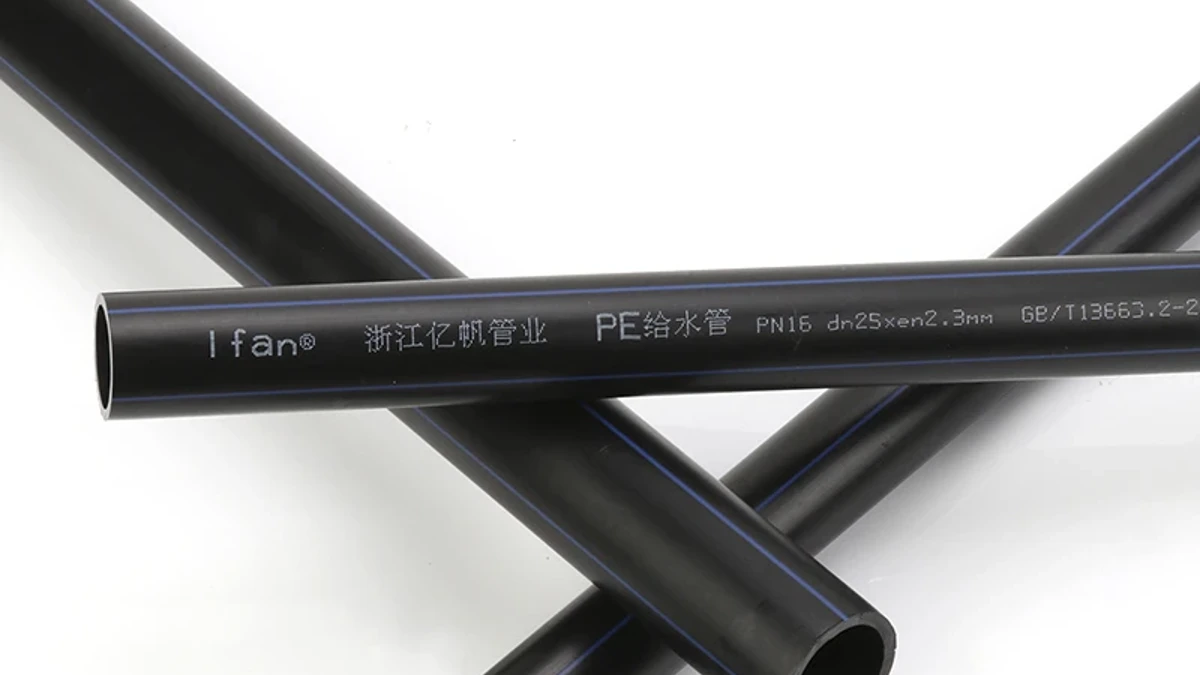
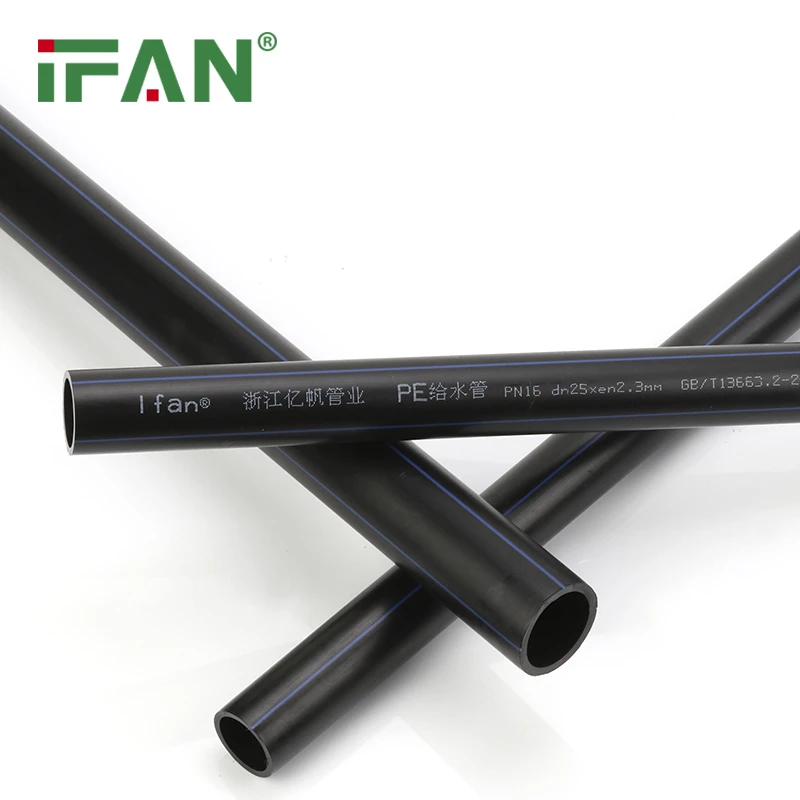
The Plastics Pipe Institute’s pipe-locating guidance explains that PE is not directly locatable using the detection systems common to metallic pipe. It identifies tracer wire or plastic-coated metallic tape as provisions installed with the pipe. Their conductive element supplies what the plastic wall does not.
Keep three related products distinct. Warning tape identifies a buried asset when the tape is encountered. Detectable tape incorporates a locating element. Tracer wire provides a conductor intended for locating. The project must establish which provision is required and what complete arrangement makes it usable.
This distinction is especially useful when a quotation includes “marking” without identifying the product. The presence of a printed warning does not establish a conductive locating aid. Equally, buying a conductor does not establish its accessible termination, route or completed test result. The scope should name the intended function before comparing product descriptions.
Pipe identification and buried-asset locating also operate at different moments. A stripe may identify a visible pipe. It does not let a conventional metallic-pipe locator follow the buried HDPE wall. An as-built record stores route information; it does not, by itself, demonstrate that the installed locating provision works.
Real utility clauses require different wires
The material requirement begins with the actual utility owner, applicable document revision and installation method. A general gauge recommendation is insufficient when those documents specify additional fields. The following public examples show the difference; they are dated owner clauses, not universal requirements for HDPE.
| Document and application | Conductor | Other stated requirements | Verdict for an offer |
|---|---|---|---|
| Gardner §5005, revised September 2022: open cut | 12 AWG copper-clad steel | 30 mil HDPE jacket; minimum break load 450 lb | Match all fields, not gauge alone |
| Gardner, same section: horizontal directional drilling | 12 AWG copper-clad steel | 45 mil blue HDPE jacket; minimum break load 1,150 lb | An open-cut wire description leaves different HDD requirements unresolved |
| Gardner, same section: pipe bursting | 3/16-inch stainless steel | 45 mil HDPE jacket; minimum break load 3,700 lb | The other rows cannot be assumed interchangeable |
| Fairfax Water, HDPE Tracer Wire section, revised 20 January 2022 | 6-ga. single-conductor coated copper | Read the remaining section with the owner’s applicable project requirements | A different utility’s gauge is not a substitute specification |
Sources: Gardner Technical Specifications, §5005, TS/50-2; Fairfax Water approved-products list, HDPE Tracer Wire, printed page 50. Fairfax’s section footer states “Revised: 1/20/2022”; the downloadable file URL carries 2025-12. Those are different provenance fields. Public documents read 18 October 2026; verify the revision governing the actual project.
Gardner’s first two rows make a useful purchasing test. Both name the same gauge and conductor type, yet the jacket and minimum break load differ. An offer that repeats only the shared fields has not demonstrated the applicable HDD requirement. The missing evidence is the offered product’s jacket and breaking-load data against that row.
Fairfax provides a different comparison: an owner-specific requirement need not match another utility’s convention. Choosing whichever conductor looks larger does not answer whether the complete system meets the project’s accepted specification. Nor can the wire’s breaking load be used as the allowable pulling load of the HDPE pipe. Those are different components and different requirements.
The comparison should therefore identify each offered product against the selected clause. Do not assemble a new specification by choosing a gauge from one authority, an installation arrangement from another and a test requirement from a third. The examples reveal what to ask; the project decides what governs.
A wire line item is not a locating system
A usable system needs an arrangement around the conductor. The buyer should be able to identify the accepted drawing or specification covering accessible connections, stations, branches, connectors and terminations. “Wire included” is too narrow if responsibility for those items remains unassigned.
Gardner §5005 addresses test-station and meter-pit access, interconnection at tees and crosses, approved connectors and restrictions on splices for certain installation methods. It also specifies grounding at particular dead ends. These are requirements of that owner document, not optional details inferred from a generic wire size.
The WSSC horizontal-directional-drilling specification dated July 2011 likewise includes detection-wire and locator-station methods in its planning requirements. The saved document is a historical owner example. Its presence online does not establish that the edition applies to a current contract.
This is a scope-review task rather than a field wiring procedure. The accepted design and authorized specialists should determine the installation and electrical arrangements. A purchasing brief should reference those arrangements, identify the responsible parties and show which requirements the offer actually covers.
For example, a pipe supplier may quote pipe and fittings while a contractor supplies the locating system. That division can be workable when the contract clearly assigns the remaining components, installation, tests and records. It becomes an incomplete package when everyone assumes the other party included them.
Continuity and a post-construction locate answer different questions
A continuity record concerns the tested conductive path. A route-locate record concerns a demonstration of the installed locating provision over its required scope. The results are related, but they should be named separately in the acceptance package.
WSSC’s saved clause requires continuity testing after backfill and correction when that test is negative. Gardner’s saved clause requires a post-construction locate before its completion certificate is issued. Comparing those words makes the gap in “tracer tested” visible: the reviewer still needs to know what test occurred, when it occurred and which asset section it covered.
| Record | What it establishes | What remains separate |
|---|---|---|
| Product documentation | The offered material fields against the selected clause | Installation and required field-test results |
| Continuity result | The specified conductive-path test over the recorded section | A route locate when the owner requires it |
| Post-construction locate result | The required locating demonstration over its recorded scope | Other owner acceptance requirements and missing product evidence |
| As-built and handover records | Which asset, access points and completed tests the package describes | A missing physical demonstration or correction |
If continuity passes but a required locate record is absent, name the absent demonstration. Do not describe the whole package as accepted, and do not call the continuity test a failure when it passed. Precise reporting preserves what is known while directing attention to the remaining requirement.
This guide supplies no universal resistance threshold, locator frequency or transmitter setup. Those depend on the accepted system and test procedure. An apparently precise number without that basis would make the handover easier to fill in and harder to trust.
Two offers, one incomplete acceptance package
Consider two illustrative reviews against Gardner’s saved HDD material and acceptance requirements. They are not IFANPRO offers or completed projects.
Offer A matches the applicable HDD material row but leaves the wire ends inaccessible. For this teaching example, assume its conductor, jacket and breaking-load evidence matches Gardner’s saved HDD requirement. That resolves the stated material comparison; it does not resolve the locating system. The offer provides no accessible terminations or test stations through which the required connection and checks can be made. Gardner’s separate access requirements remain unmet in this hypothetical package, so system acceptance stays open. Request a project-compliant access and termination arrangement from the responsible designer or installer rather than approving the system from the wire datasheet.
Offer B matches the applicable material fields and includes a satisfactory continuity result. Its handover package has no record of the required post-construction locate. The material and continuity findings can be recorded as resolved while the locating demonstration remains outstanding. That distinction prevents one successful result from obscuring a missing one.
Change the governing owner, and both reviews must be reconsidered against that owner’s applicable requirements. The point is to match product and evidence to the same project basis, rather than to transfer Gardner’s clauses to every HDPE main.
The locating-system brief to include with the pipe order
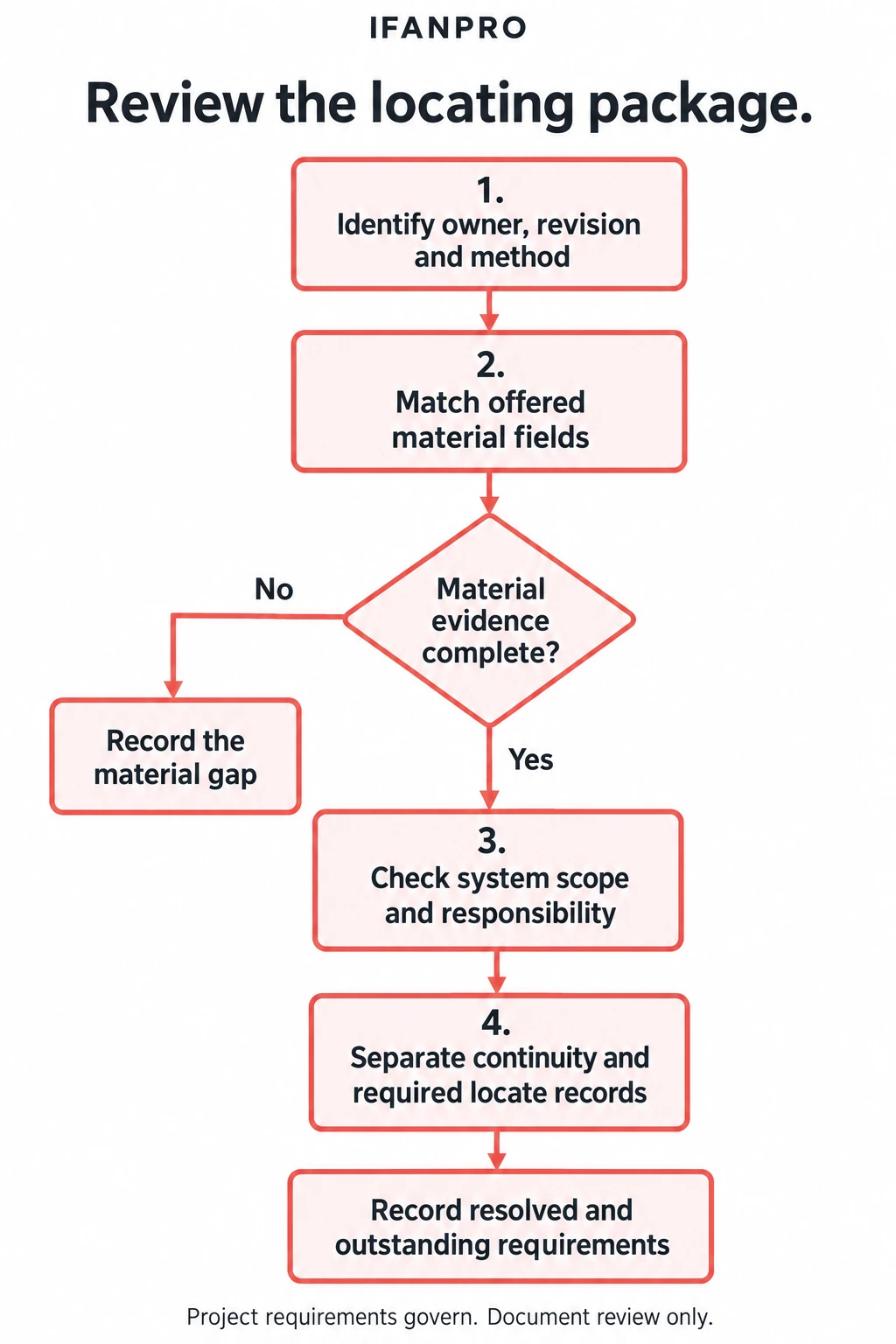
- Identify owner, revision and method.
- Match offered material fields. If evidence is incomplete, record the material gap.
- Check system scope and responsibility.
- Separate continuity and required locate records.
Record resolved and outstanding requirements against the project basis.
- Project basis: owner, asset, installation method, applicable revision and exact locating clause.
- Offered materials: conductor size and type, jacket and required strength or other product fields, with evidence references.
- Installed arrangement: accepted station, branch, connector and termination drawing references.
- Acceptance: required tests, timing, section coverage, results and outstanding corrections.
- Responsibility: named supplier, installer, tester, record recipient and acceptance authority for the locating system.
- Pipe scope: the pipe and fitting requirements, separately identified from wire and testing services.
The responsibility field closes an important purchasing gap. The party selling the wire may not install it. The installer may not perform the required locating demonstration. The person receiving test paperwork may not be the authority that accepts the completed asset. Make those relationships explicit rather than treating a supplier’s product description as system signoff.
The IFANPRO HDPE pipe and fittings range is a starting point for a pipe enquiry against an established specification. Tracer-wire, locating-equipment, installation and testing services are not established offerings in this guide. Exact pipe availability, approvals, stock and commercial terms also require confirmation.
Check the HDPE pipe range against the approved specification
Conclusion
A material match can resolve the product comparison while the installed arrangement or a required locating demonstration remains open. Record that distinction. Match each item to the same owner and installation basis, assign responsibility for the complete scope, and preserve a satisfactory continuity finding without allowing it to close a missing route-locate requirement.
Frequently Asked Questions
Is there one tracer-wire gauge for every HDPE installation?
No. The owner and installation method can change the conductor, jacket, strength and system requirements. Use the applicable project clause.
Does continuity replace a required route locate?
No. They are different acceptance evidence. Record the required locating demonstration separately when the owner specifies it.
Does the Fairfax file name date the conductor clause?
No. The saved file URL carries 2025-12, while the HDPE Tracer Wire section footer gives a revision date of 20 January 2022.
Can a pipe pressure test close the locating-system requirement?
No. Pressure containment and locatability are different functions, with their own specified acceptance evidence.
IFANPRO editorial team, 18 October 2026. Public-source specification comparison; offer reviews are explicitly illustrative. This is not an installation, electrical-work or excavation procedure. Project acceptance and product availability remain separate confirmations.










 Français
  English
  Русский
  Español
Commentaires récents