
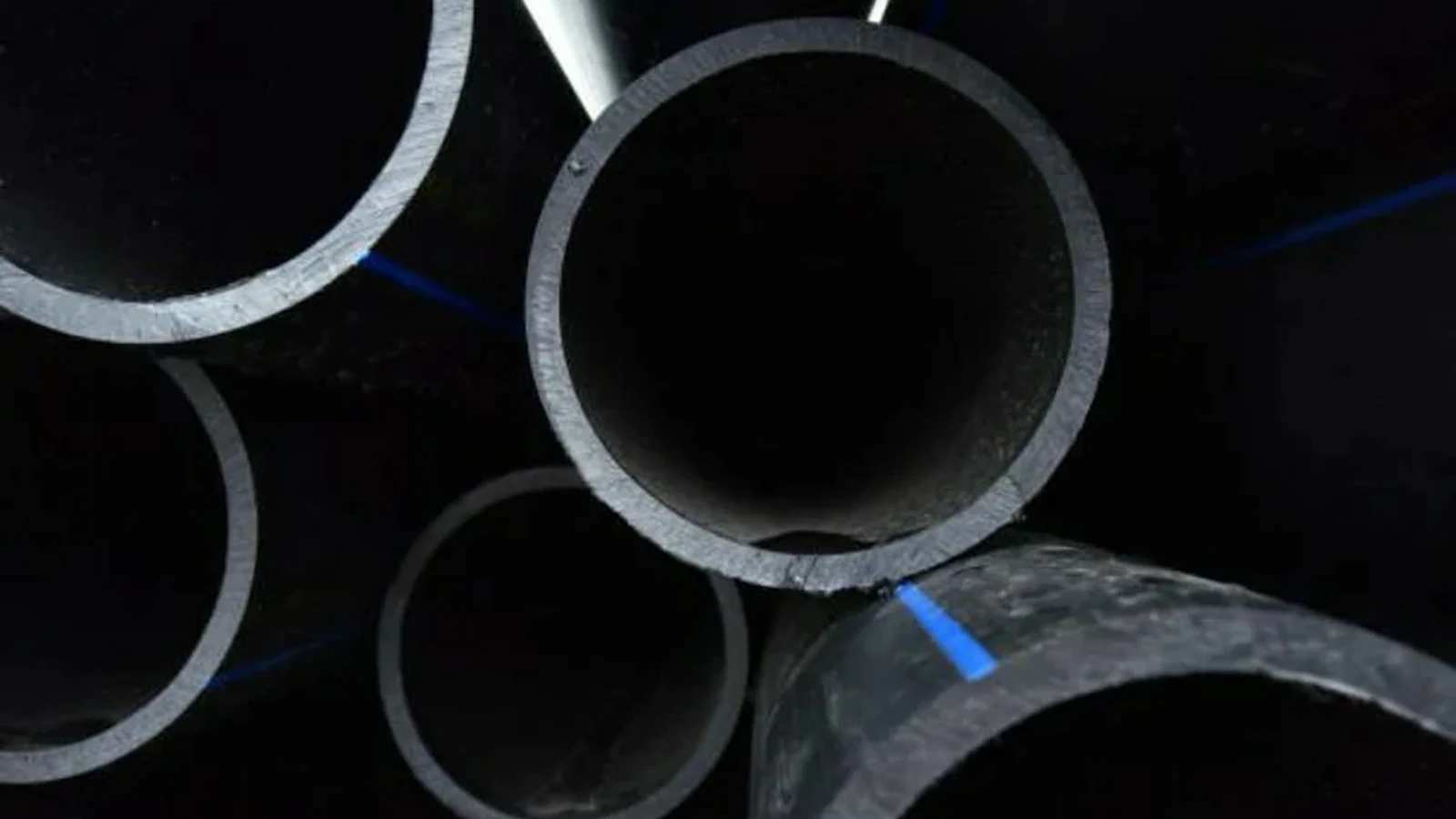
A PN rating does not establish that an HDPE borehole rising main can suspend a pump. Screen pressure duty separately from the complete load path through the pipe, every joint, the pump connection and the wellhead support. Accept the assembly for project review only when the exact pump instructions and sustained-load limits cover the proposed configuration.
The offer may say “PE100, PN16” and still leave the most important mechanical question unanswered: what carries the pump, and where does that load reach a suitable support? Raising the pressure class does not fill that gap. This guide helps a project specifier review the evidence and return a precise disposition. It does not calculate an allowable setting depth or authorize pump installation.
Key Takeaways
- Keep pressure adequacy and suspension adequacy as separate statuses.
- Trace the actual assembly from pump connection through each joint to the wellhead support.
- Use actual inside diameter for water inventory; nominal size alone is insufficient.
- Identify whether a cable is primary suspension, handling equipment or unloaded backup.
- A short-term tensile result or a reinforced hose rating does not automatically rate a solid-wall PE assembly.
- Hold a missing or conflicting link. Complete documentation makes an offer ready for project review, not automatically approved.
Neutral assembly overview by AK-DIY (Russian). Observe the separate pump, pipe and wellhead connections; this video does not establish a load rating or replace the applicable installation instructions.
 Play: Installing a Submersible Well Pump (translated title)
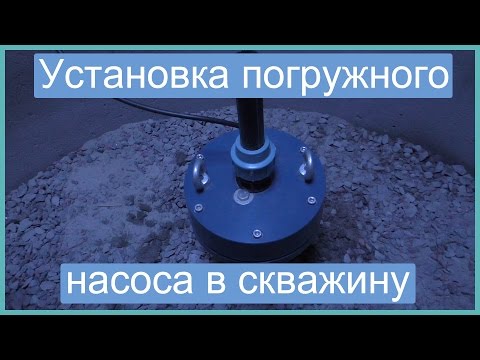
AK-DIY · Open original video on YouTube
Start with the load path, not a larger PN number
Picture a pump connected to a vertical PE pipe, with the pipe secured at the top of the borehole. If the design relies on that assembly to suspend the pump, each connection in the intended path must transfer the applicable load. A sound pressure seal does not, by itself, document that ability. The pipe body, a transition adapter and the head support are different parts with different responsibilities.
Vinidex’s PE pressure explanation describes a hydrostatic design basis using hoop stress, wall thickness, diameter and material conditions. That is the relevant category of evidence for pressure classification. It does not turn the PN label into a suspended-load limit for a pump assembly.
Use three questions. Does the pressure assessment cover the hydraulic duty? Does the documented suspension arrangement cover its mechanical duty? Do the pump, pipe and connection instructions permit the proposed combination and handling method? An answer to one should never overwrite an unanswered second question.
This separation also makes supplier clarification useful. “Please confirm suitable for a borehole” invites another broad assurance. “Please identify the sustained working-load basis of the specified pump adapter and head support in this assembly” points to a concrete omission. A reply can then be checked against the proposed drawing instead of accepted as general confidence.
Keep setting depth, water level and delivery head separate
The distance from the wellhead to the pump tells you where the pump is installed. It is not a complete hydraulic duty. Water levels, discharge conditions and losses belong in the pump-system assessment; the column length and physical assembly belong in the suspension assessment. Recording one field simply called “depth” loses that distinction before the offer is even compared.
| Input | What it describes | What it cannot establish alone |
|---|---|---|
| Pump setting / suspended length | Where the assembly hangs and the length to be supported | Pump duty or allowable axial load |
| Static and pumping water levels | Water conditions before and during abstraction | A pipe or joint suspension rating |
| Delivery elevation, pressure and flow | The required hydraulic operating condition | Suitability of the head clamp |
| Actual component identities | Pipe dimensions, pump, adapter, joints and support | Approval without the applicable ratings and instructions |
Changing the water level can change operating conditions without changing the installed pipe length. Changing the pump setting changes the physical column without necessarily reproducing the same change in delivery duty. The engineering reviewer needs both sets of inputs. A pressure-class table indexed only by total hole depth cannot answer all those questions.
For example, an offer describing a pump setting but omitting the operating water level cannot establish the pump duty from that setting alone. Keep hydraulic status unresolved until the actual duty is supplied. Conversely, receiving a complete pump duty does not release an unidentified top support. Missing inputs have specific consequences; they are not interchangeable reasons to ask for “more data.”
Trace every load-bearing connection to the wellhead
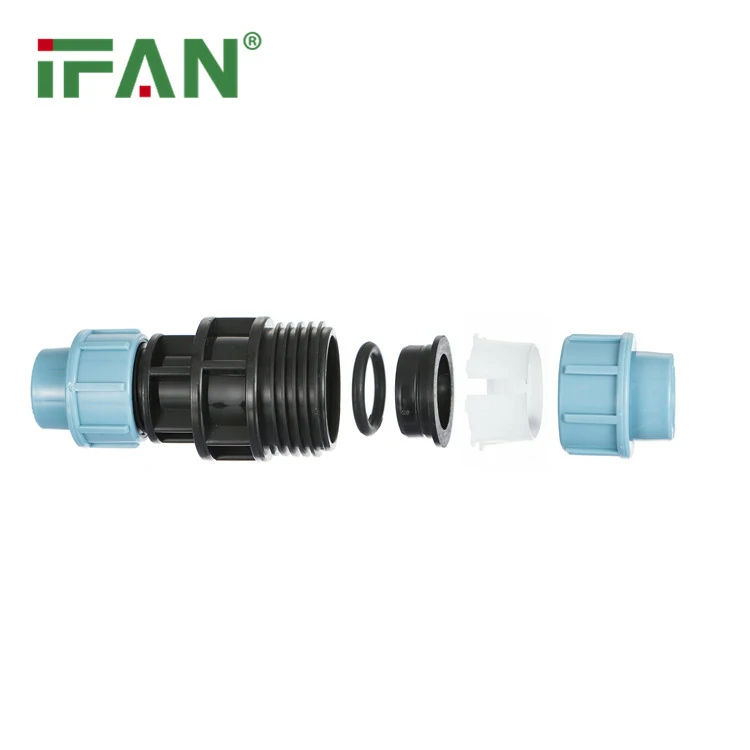
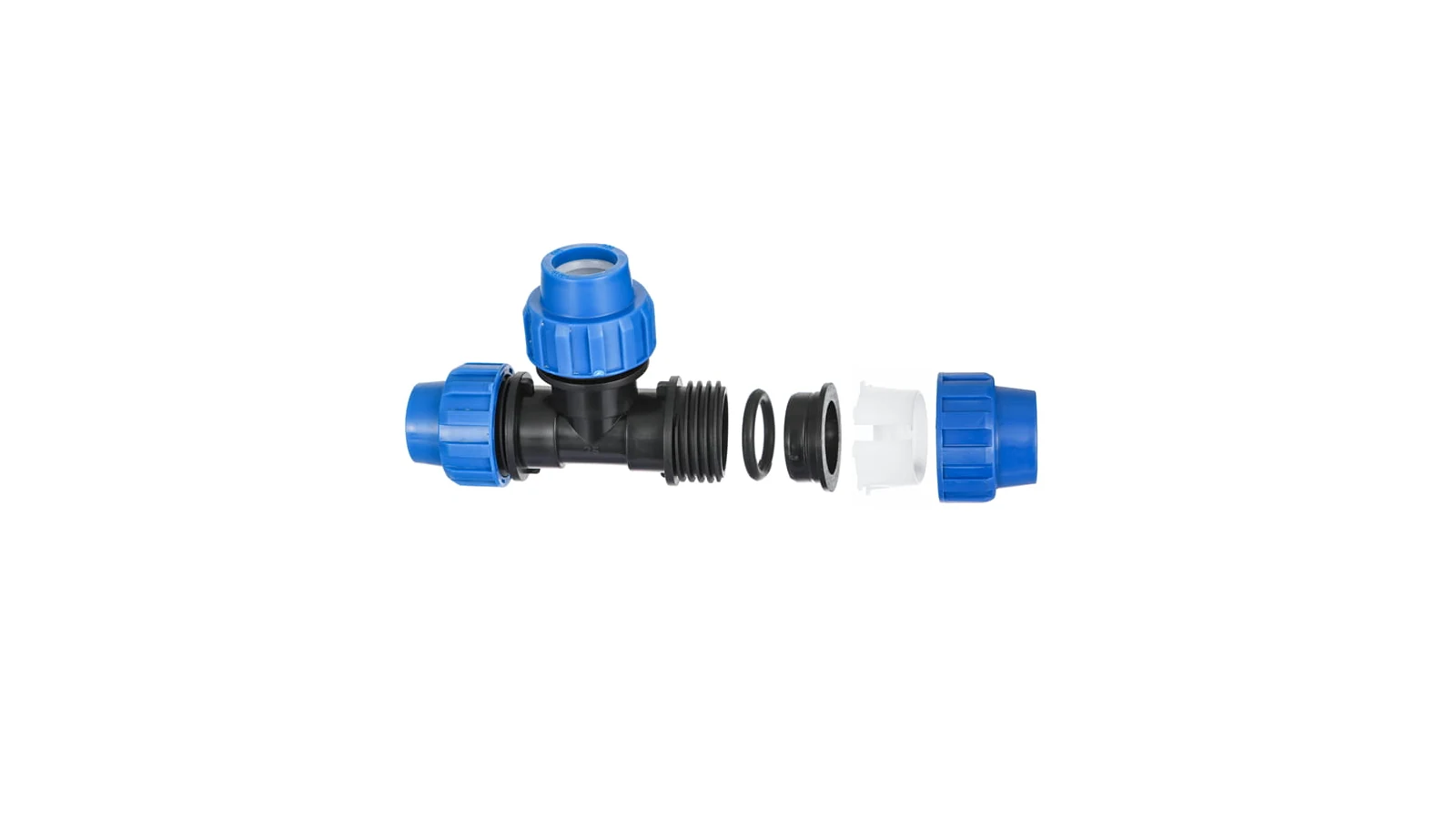
Start at the pump’s actual discharge connection and follow the assembly upward. Identify the adapter, the first pipe section, all intermediate joints and the termination at the support. Then identify the structure receiving that support load. A connection drawn only as “fitting” is an unresolved item if its particular model determines the suspension capability.
Do not stop the trace at the last pressure-containing part. A fitting might seal the water path while the separate clamp or head carries the intended hanging load. Another installation might assign that role differently. The drawing must show which component performs each function. Otherwise two suppliers can quote the same pipe and deliver two different mechanical arrangements.
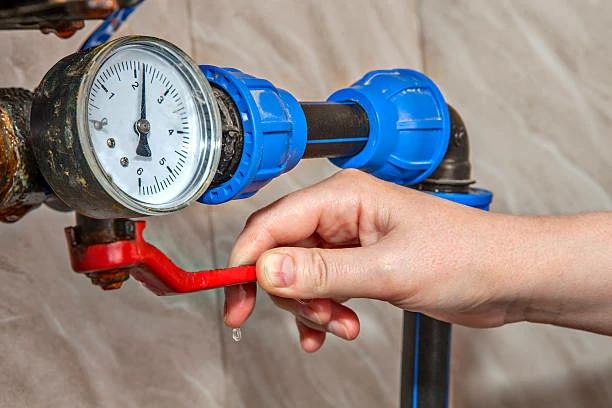
The Grundfos SP/SPE instructions, section 6.6, illustrate why the applicable pump manual matters. They give specific connection and plastic-riser conditions rather than blanket permission for all pumps. An unloaded straining wire has a different role from a designed primary suspension. Its presence does not establish an unrated pipe joint’s capacity.
Mark the role of every cable or wire on the drawing: electrical supply, handling, primary suspension or backup restraint. Do not infer the role from appearance or from a forum description. If a pump instruction calls for an unloaded restraint, changing it into the assumed primary support changes the arrangement being assessed. If the project instead uses a separate rated suspension system, its instructions and attachment points need their own review.
The decisive question is whether the intended path is continuous and documented. A better pipe does not repair an unverified adapter. A stronger adapter does not approve the head support. The result is a list of actual links, not a claim that one joining technology is always suitable or always unsuitable.
A larger bore changes more than friction
A larger inside diameter can alter the hydraulic assessment and also increases the water contained in a given pipe length. These effects should be considered together. Choosing the smallest bore merely to reduce inventory is no more complete than choosing the largest bore solely to reduce friction. The proposed pipe still has to work as part of the approved hydraulic and mechanical system.
The inventory arithmetic is simple: volume = π × inside diameter² × filled length ÷ 4. Use consistent units. In the teaching example below, both columns are assumed full and 50 metres long; inside diameters of 26 and 33 millimetres are illustrative inputs, not dimensions assigned to any nominal size or IFANPRO product. An assumed density of 1 kilogram per litre is used only to express approximate contained-water mass.
| Assumed inside diameter | Volume calculation | Contained water |
|---|---|---|
| 26 mm | π/4 × 0.026² × 50 | 0.02655 m³ ≈ 26.5 L ≈ 26.5 kg |
| 33 mm | π/4 × 0.033² × 50 | 0.04276 m³ ≈ 42.8 L ≈ 42.8 kg |
The second bore contains about 16.2 litres more water for the same assumed length. That result is enough to show why a diameter change should return to the mechanical review. It is not enough to calculate the actual installed tensile force, choose a safety factor or certify a support.
The installation assessment also needs the real component masses and the relevant operating, handling and pressure conditions. Buoyancy and the way loads are transferred depend on the actual configuration. Treating the contained-water mass as a complete top-joint design load would conceal those conditions. The useful result here is a quantified change in inventory, followed by the correct boundary: compare the complete design case against documented applicable working limits.
Read pressure and tensile evidence on their own terms
A rating needs an object and a condition. Is it for the pipe wall, a complete connection or a complete proprietary riser? Is it a working limit for the proposed service or a short-term test result? A tensile number without that context cannot be compared meaningfully with an assembly load case.
Keep “ultimate tensile strength” separate from an allowable sustained working load. An initial failure test does not, without an applicable design basis, become a service limit for a continuously suspended assembly. Ask the responsible designer and manufacturer which duration, temperature and combination of duties their stated limit covers. Do not select a universal divisor from an unrelated product brochure.
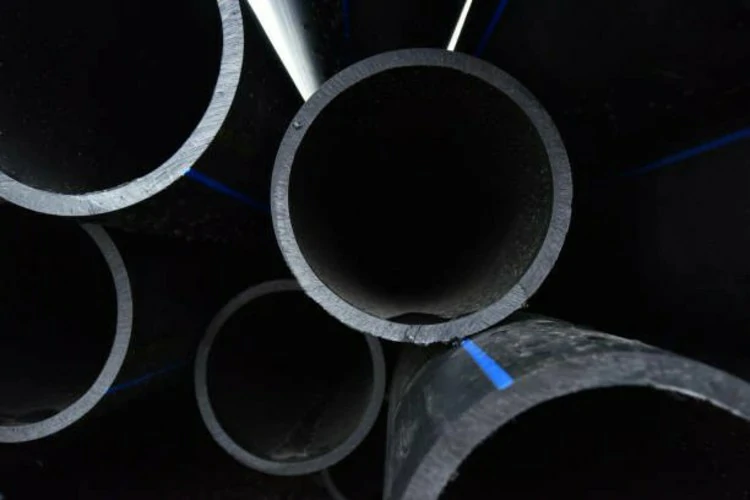
Construction matters too. Mandals describes Wellman as a reinforced riser whose continuous woven yarn supplies tensile strength and whose lining and cover are HDPE. A document for that construction is not a tensile approval for an ordinary solid-wall PE pressure pipe merely because both descriptions contain “HDPE.” Compare the actual construction and assembly, not the shared polymer word.
Read pressure and tension figures as separate checks unless the supplied design basis explicitly addresses their interaction. A declaration that a pipe meets a pressure specification cannot supply a missing connection working-load value. Equally, a suspension rating cannot establish potable-water approval, pressure suitability or connection compatibility. Each claim needs evidence for the actual offered item and project requirement.
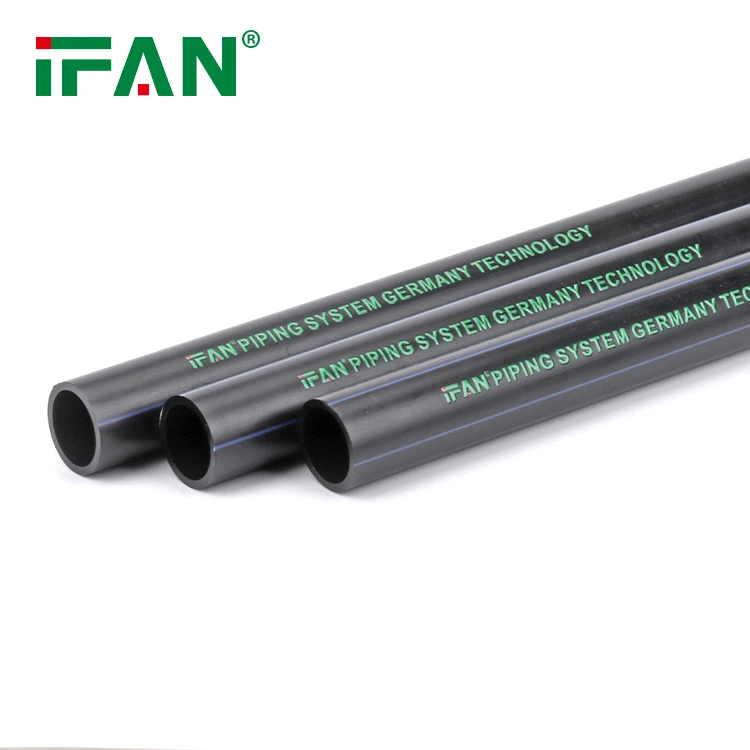
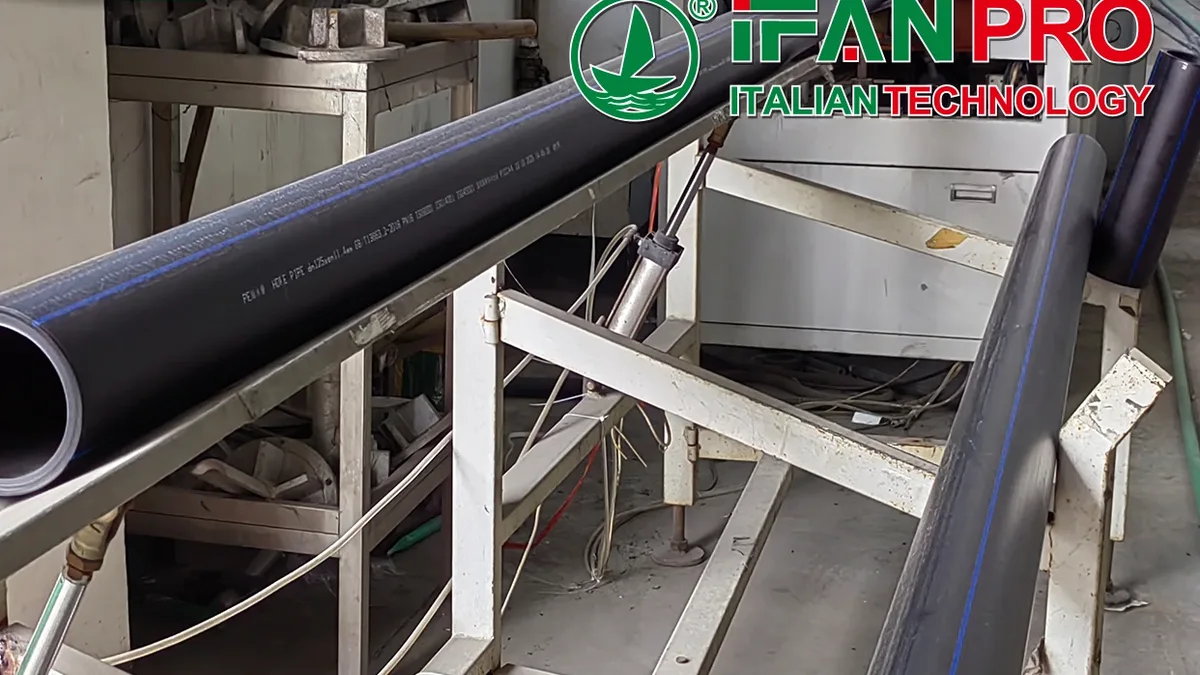
The IFANPRO HDPE pipe and fittings category can help identify a product family for an enquiry. It does not establish that a listed item is a borehole-suspension-rated component. Keep the approved project requirements in the enquiry, and confirm the exact offered model before comparing documents.
Turn an incomplete offer into a clear disposition
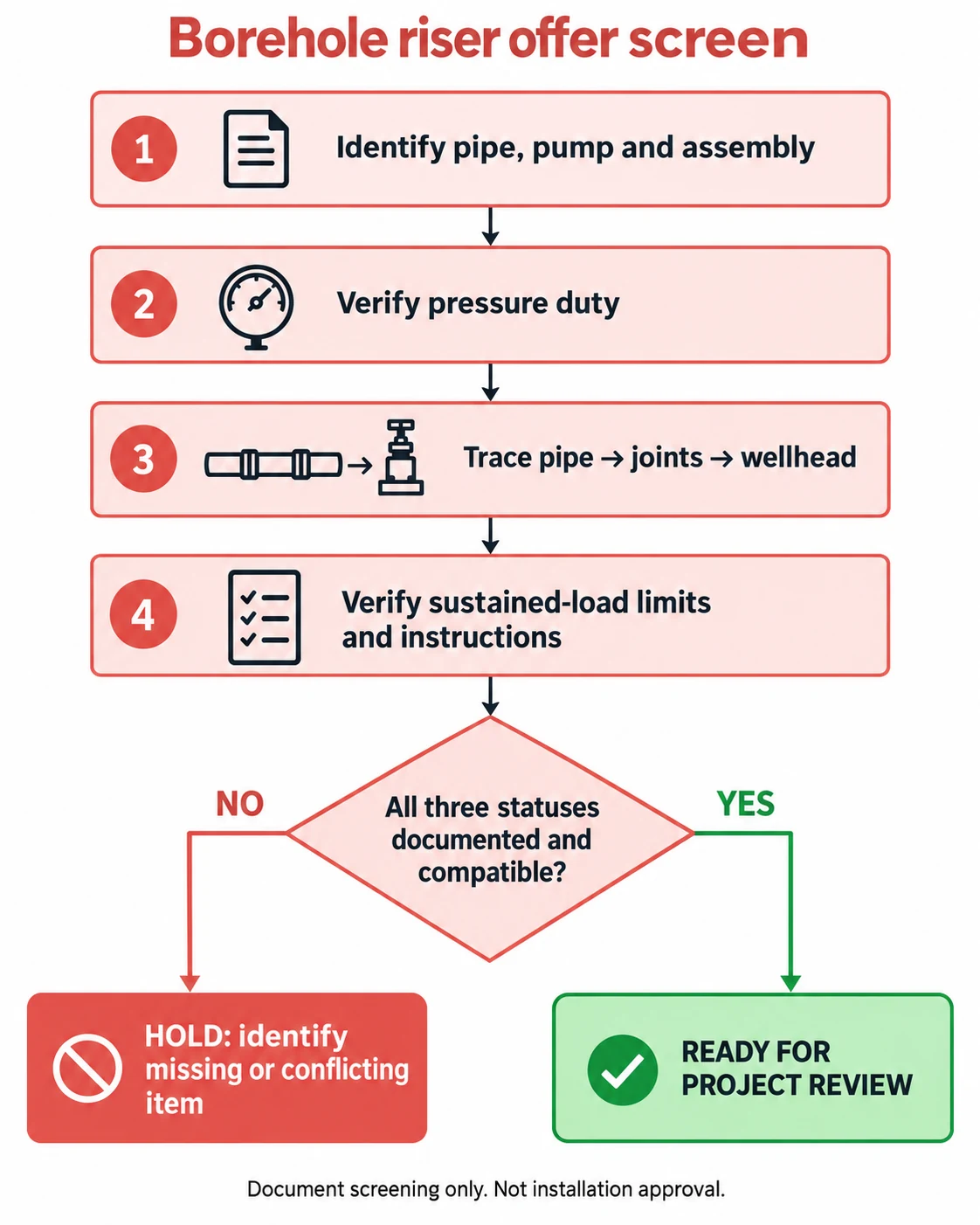
Give the reviewer a short record with three independent statuses: pressure, suspension and assembly compatibility. For each, name the document, actual item, applicable condition and unresolved point. “Pending” is useful only when the record explains what must change before it can close.
- Identify pipe, pump and assembly. Record actual pipe dimensions and construction, pump model, every connection and head support. Hold an unidentified item that affects the assessment.
- Verify pressure duty. Compare the project’s assessed pressure conditions with the applicable product rating and conditions. Hold missing duty or a rating conflict.
- Trace pipe → joints → wellhead. Show the intended suspension route and distinguish primary support, handling provisions and backup restraint. Hold a break or unclear role.
- Verify sustained-load limits and instructions. Match the actual design case to documented applicable limits and the exact component/pump instructions. Hold absent evidence or incompatible conditions.
- Record the disposition. Any unresolved or conflicting status remains HOLD. Complete, compatible documentation makes the offer READY FOR PROJECT REVIEW; it is not installation approval.
Consider a teaching offer marked PN16 with the pump and pipe identified but no documented sustained-load limit for the adapter or wellhead. Even if its hydraulic pressure assessment is satisfactory, suspension remains on hold at those two links. The next required inputs are their exact model-specific limits and the support arrangement, not another generic pipe certificate.
Now change only the offered pipe to PN20. The disposition does not change: neither missing link was resolved. If applicable documentation subsequently covers the actual assembly and its design conditions, those links can be assessed against the project load case. A satisfactory comparison, with compatible instructions and pressure evidence, advances the package to project review. An inadequate limit requires a revised component or arrangement; a conflicting instruction requires an approved resolution. Neither is solved by filing the document.
Ready to identify a supply option? After the project specification is approved, send the country, actual pipe OD/SDR and construction, pump setting, required component references and quantities. A specific borehole suspension-rated IFANPRO model has not been established in this guide.
Conclusion
Finish the screen with a decision that another person can audit. Pressure duty covered? Intended load path continuous? Sustained-load limits and instructions applicable to every relevant component? If any answer is missing or conflicts, name that exact item and keep the offer on hold. If the evidence is complete and compatible, send the documented package for project review. The PN label remains one input, not the verdict.
Frequently Asked Questions
Does PN16 mean the pipe can hang at a particular depth?
No. A pressure class is not a suspended-load or universal setting-depth rating. The actual pipe, pump, joints, support arrangement and applicable working limits must be assessed together.
Can a safety wire replace missing joint-load evidence?
Not automatically. Establish whether the applicable design uses it as primary suspension, handling provision or unloaded backup. A wire’s presence does not validate an undocumented pipe assembly.
Is butt fusion enough to approve the whole rising main?
No. The proposed pipe and joint still need applicable evidence, and the pump adapter and wellhead support remain separate links. A joining-method name cannot approve the full assembly.
Can a reinforced HDPE-lined hose rating be used for solid-wall HDPE?
No. The reinforcement and complete assembly determine that product’s load capability. A shared lining material does not make its rating transferable to a different construction.









 Français
  English
  Русский
  Español
Commentaires récents