
If a tender names both IPS and DIPS for the same HDPE line, hold the affected purchase release and obtain a project-specific clarification. The same nominal size and DR do not make the series interchangeable. A supplier’s available stock cannot decide which conflicting project requirement governs. Resolve the document conflict first, then check the pipe, fittings and equipment against that answer.
IPS means iron pipe size; DIPS means ductile iron pipe size. Both describe outside-diameter series. DR, the dimension ratio, relates outside diameter to minimum wall thickness. It does not choose the diameter series. This guide is for the bidder or procurement coordinator facing an inconsistent callout, rather than someone looking for a full dimensional chart.
Key Takeaways
- Record both conflicting callouts, their revision dates and the exact affected line.
- A DR value cannot resolve an IPS/DIPS contradiction.
- Obtain the authorized project answer through the tender’s clarification route.
- A correction to a drawing note and permission for an alternative are different outcomes.
- Carry the accepted series into fittings, adapters, joint equipment and revised delivery planning.
- Historical owner answers illustrate the process; they do not select the series for your project.
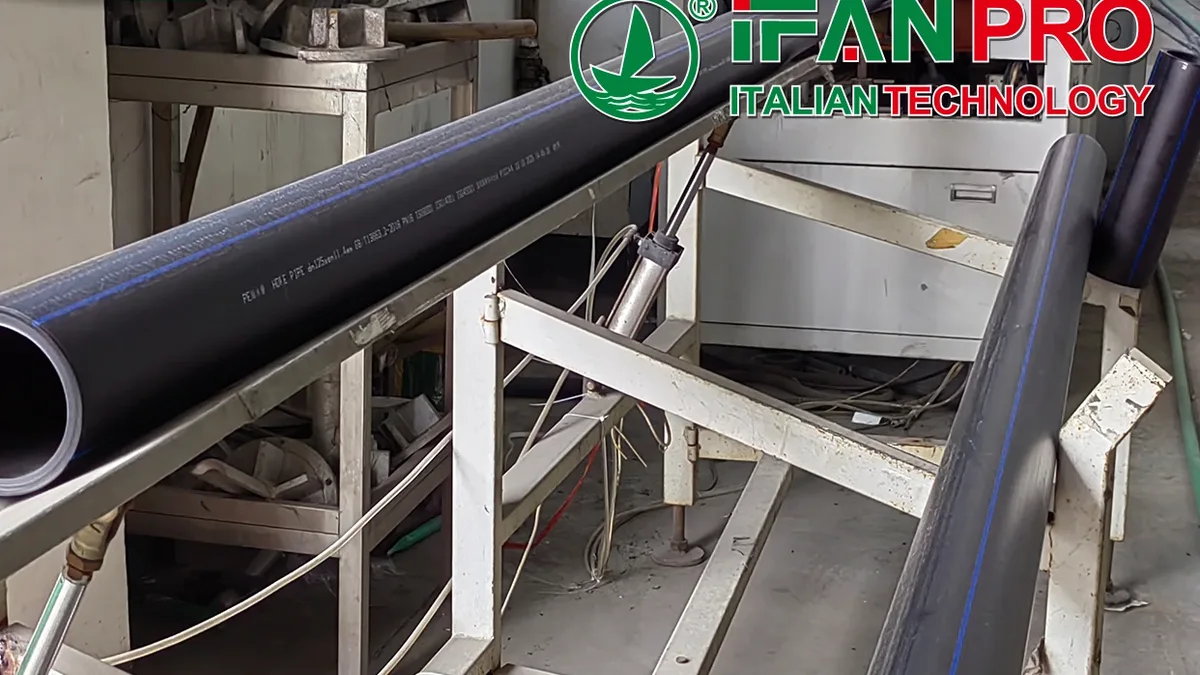
Related video: HDPE Pipe And Fittings — IFANPPR

IFAN category background for pipe and fitting coordination. It does not resolve IPS/DIPS tender conflicts or confirm the historical projects’ exact products. Open on YouTube
A real tender can name both series
In the Lake Alvin Recreation Area spillway project, a bidder asked whether the specified 18-inch DR 17 HDPE should be DIPS rather than IPS. The bidder pointed to one drawing detail as the place that appeared to settle the question. South Dakota’s 9 February 2024 Addendum No. 1 answered IPS and corrected the drawing note. The label that looked decisive was the label the owner changed.
Grover Beach published a similar problem in its July 2023 sewer-system bidder log. A pipe supplier identified IPS on specification page 99 and DIPS on page 100. The owner’s response specified nominal IPS outside diameter. This was a real purchasing ambiguity, not a hypothetical glossary question.
Neither example establishes that IPS is the better pipe or the default answer to every conflict. It shows why the bidder must identify the exact contradiction and obtain the project’s answer. Another owner can retain DIPS, reject an alternate, or permit a specifically defined substitute. The disposition depends on the project requirements and the authority responsible for changing them.
Keep a conflict distinct from an omission. If one current approved document names the series and another simply says “HDPE,” the second may be abbreviated rather than contradictory. If two applicable documents explicitly name different series for the same segment, guessing is much harder to defend. Read the contract’s document-priority and clarification provisions; this article does not supply a universal hierarchy between drawings and specifications.
DR 17 does not resolve the outside diameter
The physical distinction remains even if the material grade, nominal size and wall ratio agree. PPI’s MAB-6 inspection guide, Appendix F, Table F-1 lists the following average outside diameters and tolerances. DIOD is the ductile-iron outside-diameter series also identified as DIPS in that table.
| Nominal size (in) | Series | Average OD (in) | Tolerance ± (in) | Verdict |
|---|---|---|---|---|
| 18 | IPS | 18.000 | 0.081 | Not the DIPS diameter |
| 18 | DIOD / DIPS | 19.500 | 0.088 | Not the IPS diameter |
The average ODs differ by 1.500 inches: 19.500 minus 18.000. Even the upper IPS tolerance value, 18.081 inches, remains below the lower DIPS value, 19.412 inches. These are two series, not two readings within one tolerance band. This arithmetic illustrates the published geometry; it is not a measurement of the Lake Alvin delivered pipe.
DR 17 describes a wall proportion relative to the selected outside diameter. Keeping that ratio does not bring the outside surfaces into alignment. A drawing that changes from DIPS to IPS can change the required fitting interface and the bore available for the same nominal label. Pressure duty and hydraulic capacity still need the designer’s approval; an equal ratio alone does not prove a substitution meets the original design.
Do not extend the table into a blanket ban on all cross-series connections. A purpose-designed transition may connect different pipe interfaces. Its approval must cover the actual sides, sizes, wall conditions and service. What is unsupported is treating two plain pipe ends as identical because their nominal labels match, or ordering an ordinary fitting for one series and assuming it suits the other.
Turn the contradiction into a decision the engineer can answer
A useful clarification request states the two current requirements, where they occur and why they affect the same item. Include the drawing sheet and detail, specification section, revision or addendum reference, nominal size, DR and the segment or connection concerned. Avoid an open-ended request to “confirm the pipe spec.” The reader should be able to locate the discrepancy without reconstructing your bid.
Frame the requested outcome precisely: identify the required OD series for that line and state whether any connected fitting or detail also changes. If the conflict involves a transition to an existing main or valve, identify both sides of that interface. The answer needs to address the intended assembly, rather than rename the pipe while leaving a different-series adapter in the quantity takeoff.
Follow the project’s stated submission route and deadline. An estimator’s assumption, a verbal conversation or a supplier’s quotation is not equivalent to the authorized tender disposition. Keep the written answer with the scope it resolves. In the Lake Alvin example, the issued addendum explicitly became part of the plans and specifications and required bidder acknowledgment. Those are that project’s stated instructions, not a rule this guide imposes on every tender.
| Reply received | What it settles | Release decision |
|---|---|---|
| No authorized answer | Series conflict remains | Hold affected release; use permitted bid clarification process |
| Named series; wrong note corrected | Required pipe series for stated scope | Update dependent components and required approvals |
| Defined alternate permitted | A qualified substitution branch | Retain every stated condition; compare complete assembly |
| Answer refers to another response | Linked scope, not a standalone choice | Read referenced answer before releasing |
If the deadline arrives without a resolution, do not conceal the assumption in an unqualified compliant offer. Whether an allowance, qualification or alternative bid is permitted belongs to the tender instructions. An affected purchase hold protects against a wrong irreversible order; it does not grant permission to submit a noncompliant bid or miss an acknowledgment requirement.
An approved substitute is a separate branch
A correction says which requirement the project intended. A substitution allows a defined alternative to the requirement. The second requires a different comparison, because the candidate can change geometry, hydraulics, connections or installation work rather than merely correct a mistaken label.
The City of Ferndale’s 9 June 2025 Addendum No. 5 illustrates that difference. It permitted 16-inch IPS HDPE at DR 9, with a stated average OD of 16 inches and average ID of 12.231 inches, as an alternative to the DIPS pipe specified in the preceding addendum. It also defined how the substitute would be measured and paid: under the named 14-inch watermain bid item. The pay-item name did not become a pipe-dimensional specification.
The same addendum defined a separate 22-inch IPS DR 11 casing alternative, with its own stated average ID and pay item. It added bead-removal requirements: external butt-fusion beads on the DR 9 carrier and internal beads on the DR 11 casing. Retain those conditions when interpreting the permitted alternatives. Dropping the installation condition while keeping the pipe permission changes the offer.
This example is not an invitation to use a larger IPS nominal size wherever DIPS appears. The owner approved particular alternatives on a particular project. For another tender, submit the actual proposed size, DR, interfaces and design effects through that project’s substitution process. If the responsible authority has not accepted them, the dimensional table and a cheaper quote cannot supply that missing authorization.
- Record both conflicting callouts and their affected scope.
- Obtain the authorized project answer; hold the affected release if it is unresolved.
- Distinguish a correction from a defined substitute and retain all approval conditions.
- Coordinate the accepted pipe and its interfaces, then release only the complete accepted scope; hold or resolve gaps otherwise.
Release the pipe and its interfaces as one coordinated revision
After the reply, update the affected pipe schedule and component list together. A corrected pipe series can leave a stale coupling, saddle, flange adapter or joint-equipment assumption behind. The order is only coordinated when each dependent item references the resolved geometry and applicable connection requirements.
PPI MAB-6’s mechanical-fitting inspection form records diameter sizing independently from pressure class and fitting type. It treats an IPS fitting supplied where DIPS was specified as a wrong-sizing defect. The same form checks gasket material, stiffener sizing, bolts and missing components separately. A matching diameter label does not complete the assembly check.
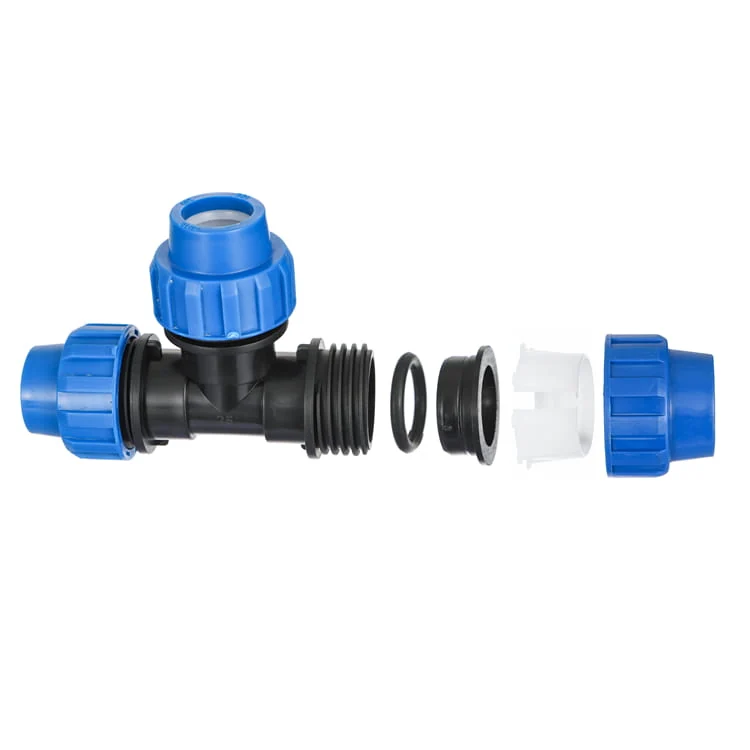
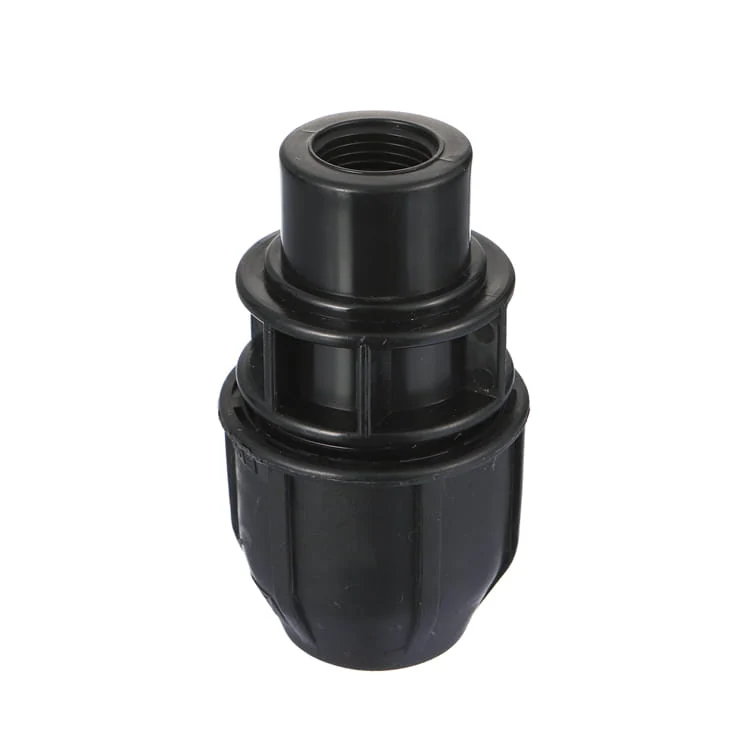
Use the accepted pipe’s OD and DR to review the selected mechanical connection and any required internal support. For a flange route, check the full adapter and mating-flange definition, not the word “flanged” alone. For fusion work, the selected equipment and procedure must suit the actual pipe and fitting. This is a review of the proposed package, not authorization to improvise a joint across mismatched plain ends.
Only compare prices after both offers state the same accepted scope, or after the project has expressly permitted different alternatives. Include the affected fittings and installation obligations in that comparison. A pipe-only saving can disappear when an alternative needs different interfaces or site equipment; no generic percentage is needed to explain that dependency.
Delivery dates also need that resolved scope. Ask for the dispatch commitment on the accepted size-series and complete component list, and distinguish pipe availability from adapter availability. Current IFANPRO availability, MOQ, price and lead time for an 18-inch IPS or DIPS package are not established here. This article does not claim that the category range supplies either historical tender’s exact system.
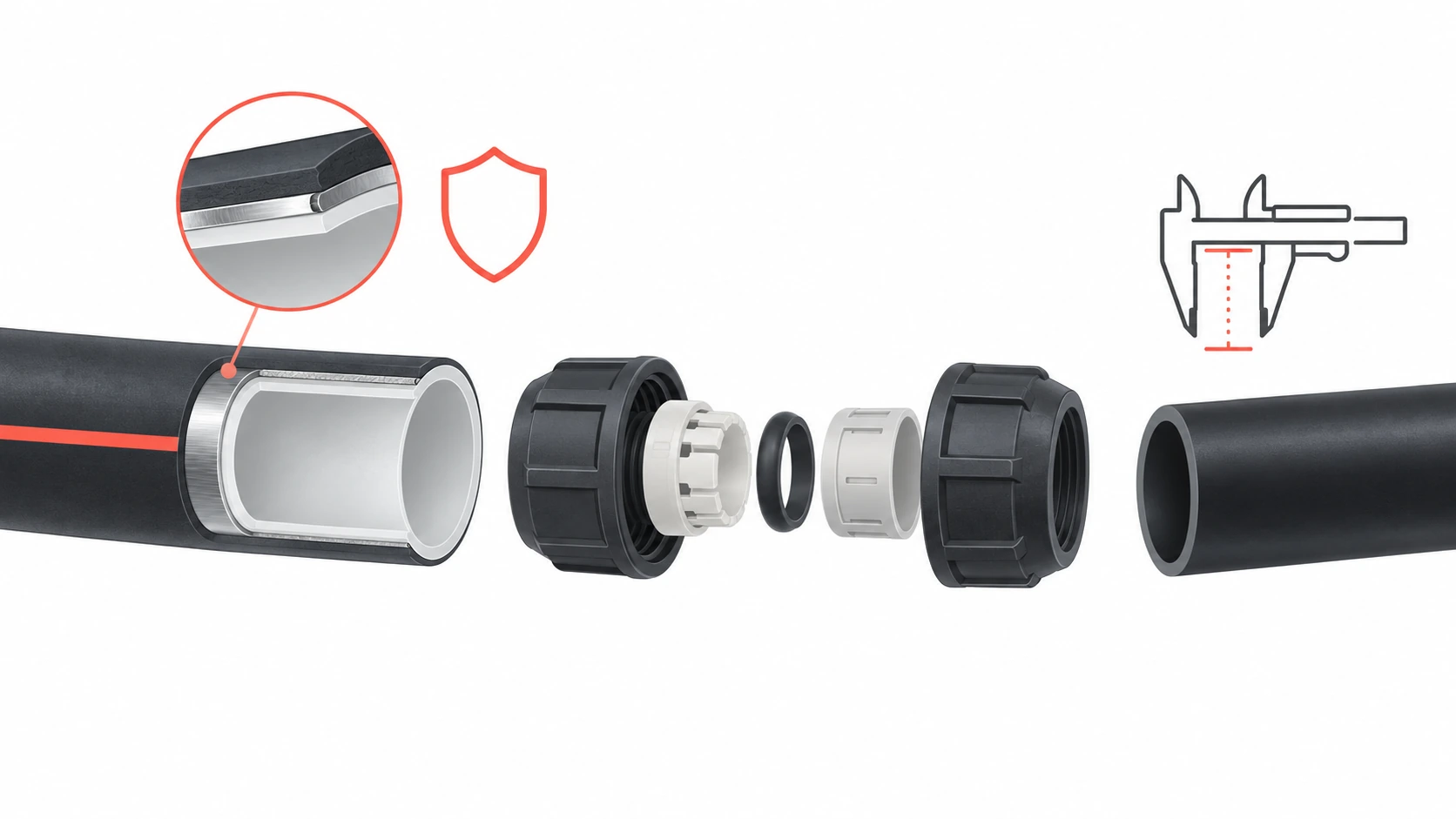
The IFANPRO HDPE pipe and fittings category is a starting point for identifying candidate products against a clarified requirement. Establish the actual offered product identity and supporting documentation before treating it as a match. The project’s acceptance remains a separate decision.
Work from the clarified requirement. Discuss the accepted OD series, size, DR and connection scope with IFANPRO to establish what products and documentation are actually available.
Conclusion
An unresolved IPS/DIPS contradiction belongs on the purchase hold list. Obtain the authorized project answer, distinguish a corrected note from a permitted alternate, and carry every condition into the pipe and interface schedule. Release against that coordinated scope. Ordering from whichever callout is easier to source leaves the bidder carrying a mismatch that the nominal size and DR cannot resolve.
Frequently Asked Questions
Can both IPS and DIPS appear legitimately on one project?
Yes, when they apply to different identified sections or an approved transition. The problem is inconsistent requirements for the same item without an authorized resolution.
Does a higher pressure class settle the series conflict?
No. Pressure suitability and outside-diameter compatibility are separate checks. A higher-rated pipe can still have the wrong interface or fail the specified project scope.
Can a standard dimensional table override the drawing?
No. The table explains the geometry. The project’s authorized clarification or change process determines which requirement applies to that drawing and procurement scope.
Is the name on a bid pay item the delivered pipe size?
Not necessarily. Ferndale’s approved alternate retained a differently named pay item. Read the actual pipe requirement and its payment instruction together.








 English
  Français
  Русский
  Español
Recent Comments