
On 31 December 2026, four EU legal instruments that have been sitting on the statute book since April 2024 start to apply at the same moment. From that date, the only starting substances, compositions and constituents authorised for use in a pipe, fitting or valve that touches drinking water anywhere in the European Union are the ones on the European positive lists. That date is now four months away.
Most of the English-language coverage of this change was written in 2024, around adoption, and reads as though the deadline were still distant. It is not. And almost none of it answers the question a procurement buyer actually has, which is not “what is the directive” but “which assessment route does my product take, and what document does my supplier need to hand me”. That answer exists, and it is mechanical: your pipe’s internal diameter determines a conversion factor, the conversion factor determines a risk group, and the risk group determines which conformity assessment modules apply and whether a notified body will be walking your supplier’s production floor once a year.
This article works through that chain using the primary legal texts — Directive (EU) 2020/2184 itself, Implementing Decisions (EU) 2024/365, 2024/367 and 2024/368, and Delegated Regulation (EU) 2024/370 — rather than secondary summaries of them. Where a date or an article number is load-bearing, it was read out of the Official Journal document.
Key takeaways
- 31 December 2026 is the single date to plan around. The positive lists, the testing methodologies, the final-material test procedures and the conformity assessment rules all apply from that day.
- National systems run until then. UBA, ACS, KIWA and the other national schemes are not being switched off early — Decision (EU) 2024/367 states plainly that the national systems are to apply until 31 December 2026.
- Your diameter decides your route. Pipe with an internal diameter under 80 mm carries a conversion factor of 20 d/dm, which puts it in risk group 1 — the most heavily tested category there is.
- Risk group 1 and 2 products need Module B + Module D, which includes an annual notified-body inspection of the production site. Risk group 3 and 4 products need Module B + Module C, with no annual site visit.
- The certificate is valid for 5 years, so a certificate issued at the deadline expires at the end of 2031.
- There are two different transitional routes to 31 December 2032, in two different instruments, and they are not interchangeable.
- Watch the lead value. The headline parametric value of 5 µg/l does not have to be met in water until 12 January 2036 — but for materials purposes under Article 11, 5 µg/l at the tap applies now.
On this page
- What Directive (EU) 2020/2184 actually requires of pipe materials
- The dates that matter: in force today vs 31 December 2026
- The European positive lists: what they authorise
- Find your product’s risk group: the conversion factor table
- What the testing involves, and the pass/fail criteria
- Conformity assessment: which module applies
- The two transitional routes to 31 December 2032
- What replaces UBA, ACS, KIWA and 4MS
- The lead value trap: 10 µg/l vs 5 µg/l
- What to ask any supplier before 31 December 2026
- Watch: the regulators on the transition
- Where this leaves a buyer with four months to go
- Frequently asked questions
What Directive (EU) 2020/2184 actually requires of pipe materials
The four-part test in Article 11(1)
Article 11(1) of Directive (EU) 2020/2184 is short and it is worth reading in its own words rather than in paraphrase. Member States must ensure that materials intended for use in new installations — or, in the case of repair works or reconstruction, in existing installations — for the abstraction, treatment, storage or distribution of water intended for human consumption, and that come into contact with such water, do not do four things.
They must not directly or indirectly compromise the protection of human health. They must not adversely affect the colour, odour or taste of the water. They must not enhance microbial growth. And they must not leach contaminants into the water at levels higher than necessary in view of the intended purpose of the material.
What is in scope, and what is not
Two things in that wording are routinely missed. The first is the scope: this bites on new installations and on repair or reconstruction work. A distributor supplying replacement fittings into an existing European building is inside the regime, not outside it. The second is the fourth limb — “higher than necessary in view of the intended purpose” — which is what turns an abstract duty into the migration testing described further down this page.
It is also worth knowing what Article 11 does not cover, because this is where people waste money. Recital 1 of Implementing Decision (EU) 2024/367 states that sacrificial anodes, membranes and ion exchange resins are water treatment chemicals and/or filter media covered by Article 12 of the directive, and are therefore excluded from the scope of Article 11. If you supply those, this positive-list regime is not your regime.
One more structural point. Article 11(7) says Member States must consider that products approved in accordance with the minimum hygiene requirements satisfy paragraph 1, and must ensure only such products can be placed on the market. That is the harmonisation. But the same paragraph preserves the right of a Member State, particularly where specific local raw water quality requires it, to adopt more stringent protective measures in specific or duly justified circumstances under Article 193 TFEU — notified to the Commission. Harmonised does not mean uniform.
The dates that matter: what is in force today and what starts on 31 December 2026
The confusing part of this regime is that the deadlines run on two separate clocks. The directive itself has been live for years; the materials machinery has not.
Two clocks, running separately
Member States had to transpose Articles 1 to 18, Article 23 and Annexes I to V by 12 January 2023, and the old Drinking Water Directive 98/83/EC was repealed with effect from 13 January 2023. So the water-quality half of the directive has been national law across the Union for over three years. The materials half — Article 11 — has been waiting on implementing acts that were adopted on 23 January 2024, published on 23 April 2024, and deferred in their application to the end of this year.
| Date | What happens | Source |
|---|---|---|
| 12 July 2021 | Member States had to notify ECHA of existing national positive lists and assessment documents | Directive Art. 11(3) |
| 12 January 2023 | Transposition deadline for Articles 1–18, Article 23 and Annexes I–V | Directive Art. 24(1) |
| 13 January 2023 | Directive 98/83/EC repealed | Directive Art. 26(1) |
| 23 January 2024 | Decisions 2024/365, 2024/367, 2024/368 and Delegated Regulation 2024/370 adopted | All four instruments |
| 31 December 2026 | All four instruments start to apply. National systems stop being the route. | 2024/367 Art. 4; 2024/365 Art. 5; 2024/368 Art. 3; 2024/370 Art. 11 |
| 31 December 2032 | Both transitional routes close (see below — they are not the same route) | 2024/367 Art. 3; 2024/370 Art. 11 |
| 12 January 2032 | Commission must review how the Article 11 system is functioning and report to Parliament and Council | Directive Art. 11(12) |
Note the small oddity in that table: the review of the system falls due on 12 January 2032, which is before the transitional provisions close on 31 December 2032. The Commission is required to report on a regime whose transition has not finished running. If you are planning a product portfolio out to the early 2030s, that is worth knowing — the rules may be under active review while your transitional cover is still in effect.
Article 11(4) of the directive is blunt about the legal effect: the European positive lists “shall contain the only starting substances, compositions or constituents that are authorised for use”. This is a permissive regime, not a restrictive one. A substance is not banned by being listed as hazardous; it is unusable by being absent.
Decision (EU) 2024/367 establishes four lists, each in its own annex:
- Annex I, Tables 1 and 2 — starting substances, and groups of starting substances, for organic materials. This is the annex that matters for PPR, PE, PEX, PVC and every other polymer pipe.
- Annex II, Tables 1 and 2 — compositions, and groups of compositions, of metallic materials. This is where brass and other copper alloys sit.
- Annex III, Tables 2 and 3 — organic constituents of cementitious materials.
- Annex IV, Table 1 — compositions of enamels, ceramic and other inorganic materials.
How large the first lists actually are
The scale is worth stating because it is rarely stated. In the Official Journal document, Annex I begins on page 5 and Annex II does not start until page 305 — the organic starting-substance list alone occupies roughly 300 pages of a 375-page instrument. Entries are numbered from EUPL 0001 and each carries its own columns for EC number, CAS number, technical function, the drinking-water contact materials it is approved for, maximum tolerable concentration at the tap, conditions of use, and an expiry date.
Those expiry dates are the part that catches people out. This is not a list you check once. Early Annex I entries — EUPL 0001 (albumin) and EUPL 0004 among them — carry an expiry date of 31 December 2028, two years after the lists start to apply. Under Article 11(4) the expiry dates are set on the recommendation of ECHA, and the first review of the first European positive list must be completed within 15 years of its adoption. Renewal is not automatic: recital 8 of the decision notes that an entry may be renewed provided a notification of intention and then an application are submitted to ECHA within a set deadline.
If a substance you rely on is not on a list, the route is through ECHA. Article 11(5) says economic operators or relevant authorities submit applications to ECHA for inclusion in or removal from the lists, and Article 11(6) puts the opinion in the hands of ECHA’s Committee for Risk Assessment. That is a chemicals-dossier process, not a product-certification process, and it runs on its own timescale.
Find your product’s risk group: the conversion factor table
Here is the part that no summary of this directive seems to publish, and it is the part that decides your cost.
Annex I of Implementing Decision (EU) 2024/368 assigns every product or component a conversion factor (CF), measured in d/dm, from a product-group table. The conversion factor is a surface-to-volume proxy: it expresses how much material surface the water is exposed to relative to how much water there is. A narrow pipe is mostly wall. A large-bore main is mostly water. The CF then maps onto a risk group, and the risk group sets the testing.
| Product group | ID < 80 mm (domestic, buildings) | 80 ≤ ID < 300 mm (service piping) | ID ≥ 300 mm (mains piping) |
|---|---|---|---|
| A — Pipes and pipe linings | 20 d/dm | 10 d/dm | 5 d/dm |
| B — Fittings, ancillaries | 2 d/dm | 1 d/dm | 0,5 d/dm |
| C — Components of fittings | 0,2 d/dm | 0,1 d/dm | 0,05 d/dm |
| D — Small components of fittings | 0,02 d/dm | 0,01 d/dm | 0,005 d/dm |
The three diameter bands are worth holding in mind when you look at any supplier’s range, because they cut across product families rather than along them. A single HDPE pipe and fittings catalogue will typically span all three: small-bore pipe at 20 d/dm, service piping at 10, and mains piping at 5 — three different testing burdens inside one product line, and fittings in the same range sitting two risk groups lower than the pipe they connect.
Storage systems have their own bands in the same table — 4 d/dm for a domestic reservoir under 10 litres, 2 d/dm at 10 litres or more, and 1 d/dm in water supply, with components and small components stepping down by the same factors of ten.
From conversion factor to risk group
Now apply Table 1 of the same annex, which sets the risk-group boundaries: RG1 is CF ≥ 4 d/dm. RG2 is CF ≥ 0,4 and < 4. RG3 is CF ≥ 0,04 and < 0,4. RG4 is CF < 0,04.
Run the arithmetic and the consequences fall out immediately. Every pipe in every diameter band lands in risk group 1 — 20, 10 and 5 d/dm are all at or above the RG1 threshold of 4. There is no such thing as a low-risk drinking water pipe under this scheme. Fittings under 80 mm at 2 d/dm fall into RG2; fittings at 300 mm and above, at 0,5 d/dm, are still RG2 by a small margin. Components of fittings drop to RG3, and small components of large-bore fittings, at 0,005 d/dm, are the only entries in this table that reach RG4.
There is a further sting for small-bore pipe specifically. Table 1’s RG1 row requires enhancement of microbial growth testing to be performed on the product itself, rather than on a test piece of the formulation, for pipes with CF greater than 10 d/dm. Only one entry in the whole product-group table exceeds 10: pipes with an internal diameter below 80 mm, at 20 d/dm. Domestic plumbing pipe is the single most heavily tested category in the regime.
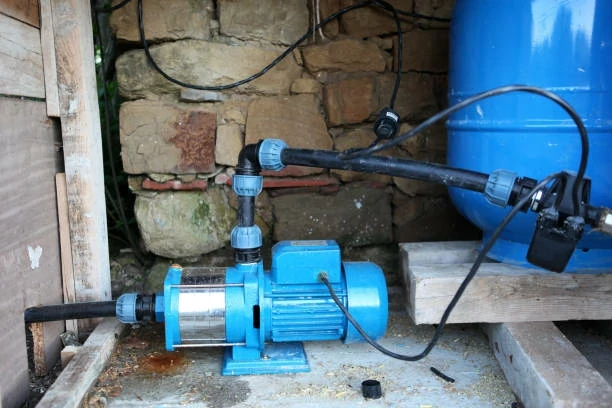
One rule stops buyers gaming this. Under Article 2(3) of Delegated Regulation (EU) 2024/370, where the product is an assembled product, the applicable conformity assessment procedure is determined by the individual component with the highest risk group categorisation — RG1 being the highest and RG4 the lowest. You cannot decompose a valve into small components and claim RG4 for the assembly. Article 2(4) then adds the reverse: the procedure for manufacturing an individual component is determined by the risk group of that component, so a component maker is assessed on its own footing.
What the testing actually involves, and the pass/fail criteria
Decision (EU) 2024/368 sets out a three-step procedure for final organic materials: identify the relevant substances and parameters, perform the tests, then compare against pass/fail criteria.
The test families are migration testing for total organic carbon, for relevant substances and for unexpected substances; modelling of migration for relevant substances; testing for odour and flavour (expressed as threshold odour number and threshold flavour number) and for colour and turbidity; testing for enhancement of microbial growth; and testing of residual content of substances. A formulation review sits ahead of all of it, and it is demanding — it requires a list of every starting substance used to produce the material, including monomers, additives, polymerisation aids, pigments, colorants and fillers, together with each one’s percentage by mass, adding up to 100%.
That last requirement deserves a moment of thought if you are buying private-label product. A full formulation disclosure to a notified body is a level of transparency about a compound recipe that some suppliers have never had to provide to anyone. It is a reasonable thing to ask a prospective supplier whether they have done it.
The pass/fail criteria, and the trend rule
The pass/fail criteria are specific enough to plan a testing programme around. For the cold water migration test, the concentration at the tap must be at or below the maximum tolerable concentration at the tap by the 3rd migration period — the 10th day of testing — or, where extended testing is needed, by the 9th migration period, the 31st day. For the warm and hot water migration test, the equivalent points are the 7th migration period at day 10, or the 22nd migration period at day 31.
In both cases a second condition applies that is easy to overlook: there must be no increasing trend of concentration at the tap over time. A material can sit below the limit at every measurement and still fail, if the numbers are climbing. The decision does provide relief here — if the concentration in the relevant migration period is below one tenth of the maximum tolerable concentration, no trend analysis is required at all. Comfortably clearing the limit removes a whole category of test risk, which is a genuine argument for over-engineering the material rather than designing to the threshold.
Conformity assessment: which module applies and what certificate results
This is the section a procurement reader should bookmark, because it is where the regime stops being a chemistry exercise and becomes a document your supplier either holds or does not.
Delegated Regulation (EU) 2024/370 sets the routes by reference to the standard modules in Annex II to Decision No 768/2008/EC. The directive told the Commission where to start: Article 11(8) required it to take System 1+ of assessment and verification of constancy of performance under Annex V to Regulation (EU) No 305/2011 as the starting point, or a broadly equivalent procedure, except where that would be disproportionate. That is why third-party involvement is the baseline here and self-declaration is not on the menu.
| If your product is… | Modules | Who takes the test pieces | Annual site inspection |
|---|---|---|---|
| Risk group 1 or 2 (all pipes; most fittings) | Module B (EU type examination) + Module D (quality assurance of the production process) | Withdrawn by the notified body when it inspects the production site | Yes — initial inspection plus an annual inspection |
| Risk group 3 or 4 (components, small components) | Module B (EU type examination) + Module C (internal production control) | Supplied by the manufacturer to the notified body | No |
What the two routes mean on the factory floor
The practical distance between those two rows is larger than it looks on paper. Under the RG1/RG2 route, the notified body assesses the quality system, conducts an initial inspection of the production site, returns annually, and takes its own test pieces off the line while it is there. Annual reduced testing may be performed by the notified body or on its behalf, and some tests may be carried out by the manufacturer as part of the quality system — but the sampling is not in the manufacturer’s control. Under the RG3/RG4 route, the manufacturer supplies test pieces to the notified body and thereafter operates internal production control.
For metallic products the entry point differs slightly: instead of risk groups the regulation refers to product groups A to D in Table 2 of Annex II to Implementing Decision (EU) 2024/365, with groups A and B taking the Module B + D route and groups C and D taking Module B + C.
In both routes the certificate has a validity of 5 years. That is the number to write into a supplier file. A certificate issued in the first week of the regime expires at the end of 2031, and renewal will require the type examination to be re-established. When a supplier tells you they are certified, the follow-up question is the issue date, not the fact.
The document you actually receive
The output the buyer sees is the EU declaration of conformity. Under Article 2(5), where conformity has been demonstrated, the manufacturer or its authorised representative draws it up, and in doing so assumes responsibility for the product’s compliance. It must follow the model structure set out in the Annex to the regulation, be continuously updated, and be translated into the language or languages required by the Member State where the product is placed on the market. “Continuously updated” is the phrase worth noting — a declaration is a live document, not a one-time certificate scan.
One point this article will not assert either way: Article 11(11) of the directive requires the Commission to adopt delegated acts establishing harmonised specifications for a conspicuous, clearly legible and indelible marking to indicate conformity. As at the date of writing, no adopted marking specification was located in the research for this article. That is a statement about what was found, not a claim that none exists — if you are designing product tooling that needs to carry a mark, verify the current position directly with EUR-Lex or your notified body rather than relying on any secondary source, including this one.

For importers and distributors mapping a range against the 2026 deadline: the HDPE listing is 37 compression fittings, valves and saddle clamps — Φ16 to Φ110, no pipe, and no positive-list assessment completed on any of them yet. Check the sizes against your own risk-group split before you write to anyone, including us.
The two transitional routes to 31 December 2032 — and why they are not the same
Almost every secondary article on this subject compresses the transition into one sentence: “there is a transition period until 2032”. There are in fact two transitional provisions, in two different instruments, and they protect different things. Getting them mixed up is how a distributor ends up with stock it cannot sell.
Route one: based on the substances you use
The substance-based route. Article 3 of Implementing Decision (EU) 2024/367 provides that starting substances, compositions and constituents approved by a Member State competent authority during the period from 13 July 2021 to 31 December 2026, in accordance with national provisions, may be used in the manufacture of materials or products that come into contact with drinking water until 31 December 2032 — provided they comply with the parametric value of 5 µg/l Pb (lead) at the tap set out in Part B of Annex I to the directive.
Three conditions are packed into that sentence. The approval must have been granted by a competent authority. It must have been granted inside a specific window that opened on 13 July 2021 — a substance approved under a national scheme in 2019 is not covered by this wording. And the lead condition attaches to the substance’s continued use, not merely to its original approval.
Route two: based on your national certificate
The certificate-based route. Article 11 of Delegated Regulation (EU) 2024/370 works differently. The regulation applies from 31 December 2026, but for products assessed as conforming to national hygiene requirements, and for which the national conformity certificate is still valid on 31 December 2026, it applies from 31 December 2032 instead.
The hinge there is the validity of your national certificate on one specific day. If a national approval expires in, say, mid-2026 and is not renewed before the end of the year, the product does not carry the certificate-based transitional cover into 2027 — regardless of how long the underlying substances remain acceptable under the other route. Conversely, a product whose national certificate runs to 2029 gets covered through to the end of 2032.
These interact in a way worth spelling out for anyone holding stock. The substance route governs what you may manufacture with; the certificate route governs whether the conformity assessment regime applies to your product yet. A manufacturer can be inside one and outside the other. The practical consequence for a buyer is that “we have transitional cover until 2032” is not an answer — the useful question is which of the two provisions is being relied on, and for the certificate route, what the expiry date on the national certificate actually says.
What replaces UBA, ACS, KIWA and the 4MS approach — and what stays national
For years, selling potable-water plastics into Europe meant navigating national schemes: the German UBA lists, the French ACS, the Dutch KIWA scheme, and the joint work of the 4MS group — originally Germany, France, the Netherlands and the United Kingdom — whose technical lists fed into the harmonisation effort.
The legal mechanism by which those become the European regime is set out in Article 11(3) of the directive. The first European positive lists were to be based, among other things, on existing national positive lists, other existing national provisions, and the risk assessments that led to those national lists — which is why Member States had to notify ECHA of everything they held by 12 July 2021. The national work is not being discarded; it is the raw material for the European lists.
National approvals obtained in 2026 are not wasted
On timing, recital 9 of Decision (EU) 2024/367 is explicit and reassuring for anyone mid-way through a national approval right now: in order to allow national authorities sufficient time to prepare, the application of the act starts from 31 December 2026, and the national systems are to apply until 31 December 2026. A national approval obtained in 2026 is not wasted paper — it is the thing that may buy you transitional cover under one or both of the routes above.
What does not happen on 31 December 2026 is the complete disappearance of national divergence. As noted earlier, Article 11(7) preserves the ability of a Member State to adopt more stringent protective measures for the use of final materials in specific or duly justified circumstances, particularly where local raw water quality requires it, subject to notification to the Commission. Plan for a harmonised baseline with the possibility of local additions, not for a single European rulebook that ends all national enquiry.
The UK is a separate regime entirely
The United Kingdom sits outside this entirely. It is not bound by Directive (EU) 2020/2184, and its own arrangements — Regulation 31 of the Water Supply (Water Quality) Regulations 2016 for products used by water undertakers, and the separate WRAS water fittings approval route for products used within premises — continue as national requirements. A WRAS approval is not, and will not become, evidence of conformity with the European positive lists. They are different regimes answering to different regulators, and a supplier who offers one when you asked about the other has answered a different question.
Market surveillance is worth a final note here. Article 11(7) states that Regulation (EU) 2019/1020 applies to products covered by Article 11 — which brings these products into the EU’s general market surveillance framework, with the enforcement powers that implies for national authorities.
The lead value trap: 10 µg/l, 5 µg/l, and which one applies to your material
This is the single most commonly garbled number in the coverage of this directive, and it matters for anyone supplying brass.
Annex I, Part B of Directive (EU) 2020/2184 sets a parametric value for lead of 5 µg/l. Read the note attached to it, though, and there is a staged timetable: the parametric value of 5 µg/l “shall be met, at the latest, by 12 January 2036”. Until that date, the parametric value for lead is 10 µg/l. After 12 January 2036, the 5 µg/l value must be met at least at the point of supply to the domestic distribution system.
So far, so much like a slow phase-in — and that is where secondary coverage usually stops, leaving readers with the impression that 10 µg/l is the operative number for the next decade. The same note continues: for the purposes of Article 11(2)(b) — that is, for the European positive lists and the materials regime — the parametric value of 5 µg/l at the tap shall apply.
Why the two numbers coexist
The two numbers are answering different questions. Ten micrograms per litre is what water in the network must currently achieve. Five micrograms per litre at the tap is the value against which materials are assessed for positive-list purposes, and it is the value written into the transitional provision in Article 3 of Decision (EU) 2024/367. A supplier who tells you their alloy is fine because the limit is 10 µg/l until 2036 has read the right annex and drawn the wrong conclusion.

What to ask any supplier before 31 December 2026
These questions apply to any manufacturer anywhere, including this one. None of them can be answered with a certificate logo, and the quality of the answers will separate suppliers who have done the work from suppliers who have read a newsletter about it.
- “Which risk group does this specific item fall into, and what is the conversion factor you used?” A supplier who has engaged with the regime can answer this in a sentence, because it follows from the product group and the internal diameter. A supplier who has not will answer about the company rather than the item.
- “Which route are you taking — European conformity assessment, or transitional cover?” Both are legitimate. Only one of them survives past 31 December 2032.
- “If it is transitional cover, which of the two provisions?” Substance-based under Decision 2024/367 Article 3, or certificate-based under Regulation 2024/370 Article 11. If it is the certificate route, ask for the expiry date on the national certificate — that date, not the 2032 backstop, is what governs.
- “Who is the notified body, and what is the issue date on the certificate?” Five-year validity means the issue date tells you when the file reopens. Ask for the certificate itself, which must carry the manufacturer’s name and address, the conclusions of the conformity assessment, any conditions, and the data identifying the approved type.
- “Can you produce the EU declaration of conformity in the language of the destination Member State?” The translation duty sits on the manufacturer or authorised representative under Article 2(5). A supplier who has never seen the model structure in the Annex has not started.
- “Have you completed a formulation review, and are you willing to disclose the full formulation to a notified body?” For organic materials this means every starting substance with percentages summing to 100%. This is where some supply relationships quietly stall.
- “For an assembled item, which component sets the risk group?” The highest-risk component governs the whole assembly. A supplier who answers with the lowest-risk component has either misread Article 2(3) or is hoping you have.
On commercial terms — minimum order quantities, price structure, lead times and sampling arrangements — these are set per project against your size mix and destination market, and this article deliberately does not put numbers on them, because a number invented for an article is worse than no number at all. The same discipline applies to the cost and duration of a notified-body assessment: those depend on the product, the material and the body, and no defensible general figure was available for this article. Ask your candidate notified body directly.
Two of those gaps are worth naming precisely, because they change what you should be asking for.
On specification range, the regime tells you where the boundaries fall even though it says nothing about any individual supplier’s catalogue. The diameter bands break at 80 mm and 300 mm internal diameter, and that is where the testing burden steps. So the useful request is not “send me your range” but “tell me which of your items sit below 80 mm internal diameter” — those are the ones carrying the 20 d/dm conversion factor and the product-level microbial growth testing that comes with it.
On lead time, the number that matters is not production lead time at all. It is how long a type examination — and, for risk groups 1 and 2, an initial production-site inspection — takes to schedule and complete. That is set by the notified body’s queue rather than by the factory, which is why a supplier who has not started by now may be unable to offer the European route by the deadline regardless of how willing they are.
Where we stop: the seven questions turned on our own catalogue
Rather than close with a certification list, here are the seven questions turned on our own published range — answers a buyer can check without asking us.
Range and size. The category is called HDPE Pipe And Fittings and lists 37 items, of which none is pipe: all 37 are compression fittings, threaded valves and saddle clamps. Thirty-two publish a size table, and every one tops out at Φ110 mm outside diameter or below — 28 of them at Φ90 mm, the smallest at Φ16 mm. Note the trap in reading that across: catalogue figures are outside diameters and the regime’s 80 mm and 300 mm boundaries are internal. Any supplier, us included, who answers a risk-group question by quoting a catalogue OD has answered a different question from the one the regulation asks.
Material and certification — where our own catalogue stops. Ask what resin these are moulded from and the descriptions say “high-quality, durable plastic”: no grade, no compound designation. Across the whole HDPE listing the strings “drinking”, “WRAS”, “NSF”, “PE100”, “SDR” and “certificate” appear zero times. The one hard number published is a pressure rating — the saddle clamp is PN10, ten bar, across Φ25 to Φ110.
IFANPRO holds ISO 9001, ISO 14001, CE, WRAS, NSF/IAPMO, Intertek, EAC, Watermark and SAI Global certifications, but none is an EU positive-list assessment under Delegated Regulation (EU) 2024/370, and WRAS and NSF do not convert into one. No item has completed one, and we hold no certificate number or dated scope document that would evidence otherwise — because a formulation review under this regime starts exactly where our product pages currently stop.
What matters more than any of these numbers, at this point in the calendar, is knowing which questions produce a specific answer and which produce a brochure. Four months is enough time to establish where a supplier stands. It is not enough time to complete a type examination from a standing start.
Watch: the regulators discussing the transition
The European Chemicals Agency has published recordings of its Drinking Water Directive stakeholder workshops, in which the people implementing the positive lists explain the mechanics and take questions. It is a useful sanity check against any secondary summary, including this one.
Two things make the workshop recordings worth the time for a sourcing team rather than only for a regulatory affairs department. The first is that the questions come from industry, so the recordings surface practical ambiguities a published legal text does not address — how group entries will be replaced by individual substances, or what happens to a dossier submitted close to the deadline.
Recital 7 of Decision (EU) 2024/367 acknowledges that first point directly. The first lists include group entries covering multiple substances, because it was not possible to identify them individually at adoption. Those group entries are to be progressively replaced — and an economic operator may rely on one only if it can demonstrate the safety of its own substance. If your material sits under a group entry rather than an individual one, that is a question worth putting to your supplier now.
The second is provenance. If you are building an internal compliance position that other people in your business will rely on, sourcing it from the agency running the scheme is defensible in a way that sourcing it from a supplier’s marketing page — including this page — is not. Use this article to know which questions to ask, and use the primary texts and the regulator’s own material to settle anything that will cost money.
Where this leaves a buyer with four months to go
The trade-off in this regime is not between compliant and non-compliant. It is between two ways of being compliant, each with a different cost profile and a different expiry.
Going the European route now means a type examination, and for any pipe — every diameter band is RG1 — a notified body assessing the quality system, inspecting the production site initially and then annually, and pulling its own samples off the line. That is expensive and slow, and it produces a certificate good for five years and a product that is unambiguously sellable across the Union.
The cheaper route, and what it costs later
Leaning on transitional cover is cheaper and faster right now, and it is a legitimate reading of the law. It also has a hard stop on 31 December 2032, conditions attached that are easy to fail on a technicality, and — in the certificate-based version — a dependency on a national certificate being valid on one particular day four months from now.
The mistake to avoid is treating those as equivalent because both are lawful today. They diverge sharply in 2032, and the decisions that determine which side of that divergence a product lands on are being made now, in supplier files and purchase orders, by people who mostly have not read Article 3 of Decision 2024/367.
If you are specifying or importing pipe for European projects, the highest-value hour you can spend before the end of this year is working out the risk group for your top ten SKUs and asking each supplier the seven questions above. The arithmetic takes minutes. The answers take longer to obtain, which is exactly why it is worth starting now. For a related but distinct certification question, our explainer on NSF 61 certification covers the North American regime that buyers frequently confuse with this one.
When those answers come back and you move from understanding the regime to choosing who to buy from, the compliance questions above fold into a wider supplier assessment — audit arrangements, certification claims, documentation discipline. Our guide to selecting a pipe fittings supplier in China covers that next step, and the pipe fitting quality inspection checklist covers what to verify on the goods themselves once an order is placed.
Frequently asked questions
When do the EU positive lists actually start to apply?
31 December 2026. That date appears in Article 4 of Decision (EU) 2024/367, Article 5 of 2024/365, Article 3 of 2024/368 and Article 11 of Delegated Regulation 2024/370 — all four instruments switch on together.
Which risk group does a 25 mm plumbing pipe fall into?
Risk group 1. Pipes with an internal diameter under 80 mm carry a conversion factor of 20 d/dm, and RG1 covers everything at 4 d/dm and above. At over 10 d/dm it also triggers microbial growth testing on the product itself.
How long is an EU conformity certificate valid?
Five years, under both Article 2(1) and Article 2(2) of Delegated Regulation (EU) 2024/370. Ask suppliers for the issue date, since that is what tells you when the assessment has to be re-established.
Does my German UBA or French ACS approval still count after 2026?
Not as a European approval, but it may buy transitional cover to 31 December 2032 under either the substance route (Decision 2024/367 Article 3) or the certificate route (Regulation 2024/370 Article 11). Which one applies depends on your certificate’s validity.
Is WRAS approval accepted under the EU Drinking Water Directive?
No. The UK is not bound by Directive (EU) 2020/2184 and keeps its own Regulation 31 and WRAS routes. A WRAS approval is not evidence of European positive-list conformity — they are separate regimes with separate regulators.
Which lead limit applies to my brass fittings?
For materials assessed under Article 11(2)(b), 5 µg/l at the tap applies now. The 10 µg/l figure is the water parametric value that runs until 12 January 2036, and it is not the number your material is judged against.
How is an assembled product like a valve assessed?
By its highest-risk component. Article 2(3) of Delegated Regulation (EU) 2024/370 states the procedure is determined by the individual component with the highest risk group categorisation, RG1 being highest and RG4 lowest.











 English
  Français
  Русский
  Español
Recent Comments