
Ask ten plumbers about PEX pipe lifespan and you’ll hear numbers from 25 to 100 years. The honest answer sits in a narrower band: quality PEX is engineered for a 40-to-50-year design life, and most reputable makers back it with a 25-year warranty. That rating holds on one condition. Four enemies have to be kept off the pipe: aggressive chlorine or chloramine, ultraviolet light, mechanical fitting stress, and physical damage. Keep those away, and PEX outlives most of the buildings it sits in. Let one of them in, and the same pipe can fail in under a decade.
This matters more to you than to the end user, because a wholesaler who ships pipe that cracks at year seven inherits the callbacks, the returns, and the reputation hit. Below we break down every PEX failure mode by cause, warning sign, and prevention, then show how to screen a supplier before the container ships. For the wider material picture, see our complete guide to PEX pipe, which covers grades, sizing, and standards in depth.
Key Takeaways
- Quality PEX carries a 40-to-50-year design life; 25-year warranties are standard across major brands.
- Chlorine and chloramine are the number-one cause of premature PEX failure, not fittings or freeze events.
- Hot water above 60 C, high pressure, and high chlorine together can drop service life below 10 years.
- UV exposure is measured in weeks, not years: makers cap unprotected sunlight exposure at roughly 30 days to 6 months.
- Most reported “PEX failures” are installation or fitting failures, not pipe-wall failures.
- Chlorine-resistance rating under ASTM F2023 is the single most useful spec to demand from a supplier.
- Pipe made from regrind or with a thin stabilizer package can look identical yet fail years early.
How Long Does PEX Actually Last?
The published pex pipe lifespan figure most engineers cite is 40 to 50 years. That number comes from accelerated life testing, where pipe is held under elevated temperature and pressure and the results are extrapolated along a stress-regression curve to project decades of service in weeks of lab time. The Plastics Pipe Institute and standards bodies rely on this method to set long-term hydrostatic ratings, and it is the same math behind the familiar 25-year manufacturer warranty.
Read that warranty carefully, though. It is a promise about the material under stated conditions, not a guarantee for any installation. A 25-year figure assumes clean water chemistry, temperatures within rating, correct fittings, and protection from sunlight. Change the conditions and the curve changes with them. This is why lifespan is better understood as a range that shifts with the environment than as a single stamped number.
The practical takeaway for a buyer: a longer warranty on paper means little if the pipe was not built to survive the local water and temperature. A 25-year warranty on chlorine-vulnerable pipe installed on a hot recirculating line is a warranty you will end up honoring. What decides the real outcome is how well the four enemies below are held off.
Chlorine and Chloramine: The Number-One Failure Mode
If you only screen a supplier for one thing, screen for this. Chlorine and chloramine, the disinfectants that keep municipal water safe to drink, are oxidizers. They attack the inner wall of polyethylene pipe over time. Manufacturers fight back by loading the resin with antioxidant stabilizers, which act as a sacrificial shield. The disinfectant consumes those antioxidants first. Once the package is depleted, oxidation reaches the polymer itself and the degradation curve steepens fast.
Three factors accelerate the attack, and they compound. Higher water temperature speeds the reaction. Higher operating pressure adds stress to an already weakening wall. Higher disinfectant concentration burns through the stabilizers faster. Stack all three, a hot recirculating line running above 60 C on a high-chlorine municipal supply, and a pipe rated for decades can develop cracks in under ten years. This is the classic early pex failure pattern, and it is entirely a function of resin quality plus conditions.
The relevant benchmark is ASTM F2023, the chlorine-resistance test that cycles pipe through hot chlorinated water and projects service life. Pipe that passes at the top end is validated for aggressive chlorinated hot-water service; pipe with no such rating is a gamble on any hot line. Ask for the actual F2023 result, not a vague claim of “chlorine resistant.”
Visible signs of chlorine attack
Oxidative degradation leaves a signature you can learn to spot in returned samples:
- Fine micro-cracks running along the length of the pipe, usually starting on the inner wall where chlorine contact is highest.
- Print-line permeation, where the surface ink line becomes a stress-concentration point and cracking initiates there.
- “Popcorning” or yellow pockmarks on the inner surface, patches of brittle, oxidized, discolored material.
- A wall that has lost flexibility and snaps rather than bends, a sign the polymer has embrittled.
Because disinfectant chemistry drives potability decisions, treat any water-safety claim as jurisdiction-dependent and verify against local rules. Our overview of whether PEX is safe for drinking water walks through the certification side in more detail.
UV Degradation
PEX and sunlight do not coexist. Ultraviolet radiation breaks the polymer chains directly, and the pipe loses strength as its UV stabilizers are consumed. This is not a slow, decades-long process like chlorine attack. It is measured in weeks and months. Most manufacturers cap unprotected outdoor exposure at somewhere between 30 days and 6 months, depending on the specific stabilizer formulation, and that limit is cumulative across the pipe’s whole life before installation.
The exposure clock starts in the yard, not the wall. Pipe left in sunlight on a job site or stored uncovered in a distributor’s lot can burn through its UV budget before it is ever installed. Even prolonged indoor fluorescent lighting contributes, which is why long-term warehouse storage should keep coils boxed or sleeved. PEX is fundamentally an indoor and buried pipe; any run exposed to daylight needs opaque sleeving or a UV-rated jacket.
For a buyer, the lesson is about storage and handling as much as the product itself. Confirm the maker’s stated UV-exposure limit, keep inventory covered, and rotate stock so coils are not sitting under skylights for a year. A short exposure window respected is a non-issue; ignored, it quietly shortens the life of pipe that will not show damage until it is already in a wall.
Fitting Stress and Installation Failures
Here is the uncomfortable truth behind most warranty claims: the pipe is usually fine. The joint failed. When a system leaks in the first few years, the cause is far more often a fitting or installation error than a defect in the pipe wall. Understanding this protects you, because it means many “bad batch” complaints are really field-technique problems, and you can sell the difference to your customers.
The common installation failures are consistent across markets:
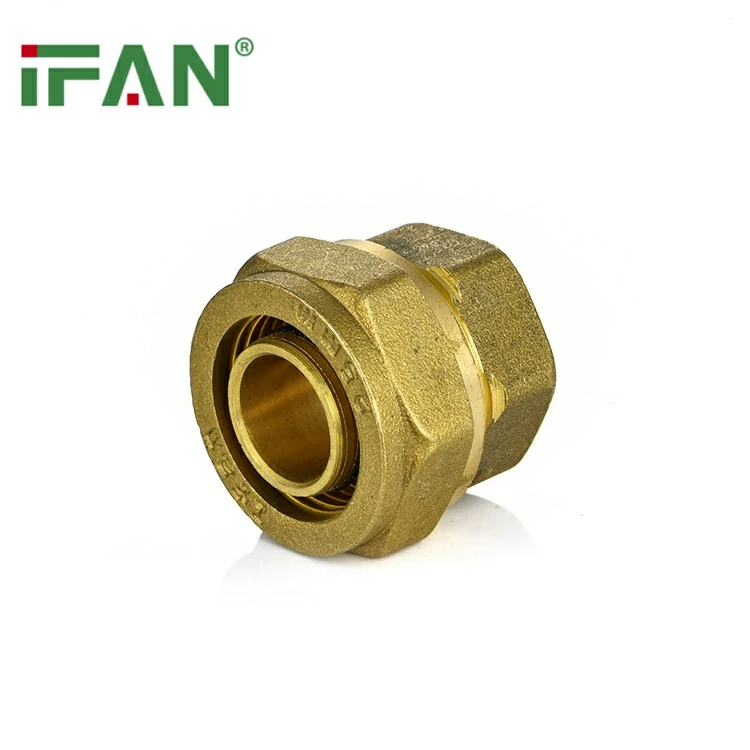
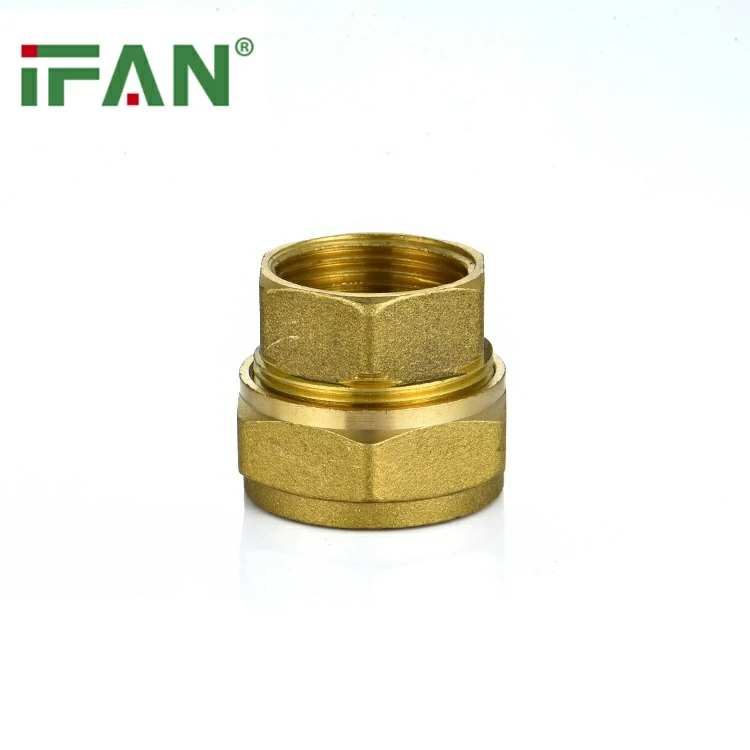
- Over-crimped rings that bite too hard, deforming the pipe wall and creating a stress riser that cracks later.
- Under-expanded joints on expansion-style systems, where the pipe never fully grips the fitting and weeps under pressure cycling.
- Wrong ring or fitting for the PEX grade, since a fitting matched to one system does not always seal on another.
- Unsupported spans that sag and put constant bending load on the fittings at each end.
- Sharp bends past the minimum radius, which kink the wall and concentrate stress.
Grade choice affects how forgiving the pipe is at the joint. PEX-A expands and recovers, which makes its fittings tolerant; PEX-B and PEX-C behave differently. Our breakdown of PEX-A vs PEX-B vs PEX-C covers how each grade handles installation stress. The point for a wholesaler: pair pipe with the right fittings and rings, and make sure your customers know which tool and setting the system demands.
Rodents and Physical Damage
Softer than copper, PEX can be chewed. Rodents gnaw plastic pipe to wear down their teeth, and a mouse or rat with access to a wall cavity or crawlspace can perforate a run and cause a slow leak that goes unnoticed for weeks. This is a real, documented risk in barns, rural builds, older housing stock, and anywhere pest control is weak.
Physical damage is broader than rodents. PEX can be nicked by a drywall screw, crushed under stored weight, or scored during a rough pull through framing. None of these are pipe defects, but all of them shorten service life and end in a callback. In rodent-prone or high-traffic builds, protective conduit or metal sleeving over vulnerable runs is cheap insurance against an expensive failure.
For a distributor, the value here is advisory. When you know a customer is building in a rodent-heavy environment, recommending sleeving positions you as a partner rather than a box-shifter, and it heads off the exact kind of field failure that gets blamed on the pipe.
Failure Modes Compared
The table below puts the four enemies side by side. Read it as a field diagnostic: match the warning sign in a returned sample to its likely cause, and you’ll know whether you’re looking at a resin problem, an installer problem, or an environment problem.
| Failure mode | Cause | Warning sign | Prevention |
|---|---|---|---|
| Chlorine oxidation | Disinfectant depletes antioxidant package; hot, high-pressure water accelerates it | Inner-wall micro-cracks, yellow “popcorn” pockmarks, embrittlement | Demand top ASTM F2023 chlorine rating and a documented stabilizer package |
| UV degradation | Sunlight or fluorescent light breaks polymer chains and consumes UV stabilizers | Surface chalking, discoloration, loss of flexibility before install | Respect the 30-day-to-6-month exposure cap; store covered; sleeve exposed runs |
| Fitting stress | Over-crimping, under-expansion, mismatched fittings, unsupported spans | Weeping or leaks at joints within the first few years | Match fittings to grade; train installers; support spans and bends correctly |
| Physical / rodent damage | Chewing, screws, crushing, or scoring during handling | Localized perforations, nicks, or slow hidden leaks | Sleeve runs in rodent-prone builds; protect during rough-in |
How Importers Screen for Durability Before Buying
Two PEX coils can look identical, print the same standard on the wall, and quote at very different prices, yet one lasts 50 years and the other cracks at year eight. The difference is invisible until it fails. These are the checks that separate the two before you commit to a container.
- Chlorine-resistance certification. Ask for the actual ASTM F2023 result and the rated condition, not a marketing line. Top-tier chlorine rating is the closest thing to a durability guarantee on hot lines.
- Documented antioxidant / stabilizer package. The stabilizer chemistry is what buys the pipe its years. A maker who can name and document the package is a maker who invested in it.
- Virgin resin, not regrind. This is the hidden one. Cheap pipe is sometimes cut with reground or recycled polymer, which carries unknown thermal history and depleted stabilizers. It can meet a dimensional spec on day one and still fail early. Insist on certified virgin resin.
- Wall-thickness and ovality check. Measure it yourself on samples. Thin or out-of-round walls signal cost-cutting that shows up as pressure and fitting failures later.
- Third-party marks. Recognized certification bodies test to standards like ASTM F876; a genuine mark is harder to fake than a printed claim.
The regrind trap deserves a plain warning. Regrind pipe is the single most common reason a cheap quote turns into a warranty nightmare, because the damage is baked into the raw material and no installation care can undo it. If a price looks too good against the market, ask directly what percentage of the compound is virgin resin, and get it in writing. Buyers weighing materials altogether may also want our comparison of PEX vs copper vs PPR.
What We Check So PEX Reaches Its Rated Life
This is the one section where we speak in our own voice, because it describes what actually happens on our floor. At IFANPRO we’ve made pipe and brass fittings since 1993, and the checks below are the reason our PEX is built to reach the life its rating promises rather than just meet a dimension on paper.
- Stabilizer package, documented. We compound from virgin resin with a defined antioxidant and UV stabilizer package, and we keep the documentation so a buyer can see what protects the pipe.
- Chlorine-resistance testing. We validate chlorine performance so hot-water lines on chlorinated supplies hold up, aligned with the F2023 approach.
- Pressure and burst testing. We hydrostatic-test to confirm the wall meets its rated pressure with margin, not just at the threshold.
- Wall thickness and ovality control. We monitor dimensions in production so fittings seat correctly and the wall carries its rated load evenly.
None of this is exotic. It is the discipline of using the right raw material and testing the output, backed by ISO 9001 and 14001 systems and third-party certifications including WRAS and NSF/IAPMO where applicable. Certification scope and potable approvals vary by market, so we confirm the exact marks for your destination before shipment.
Conclusion
PEX earns its 40-to-50-year design life only when chlorine, UV, fitting stress, and physical damage are all kept in check, and the biggest of those by far is water chemistry. The pipe that protects your reputation is made from virgin resin with a documented stabilizer package and a real chlorine-resistance rating, not the cheapest coil that clears customs. Screen for those specs before you buy, and the warranty on paper becomes a warranty you rarely have to honor.
If you want to pressure-test a supplier on these points, start with the chlorine and virgin-resin questions above, then ask to see the documentation. We’re happy to walk through ours.
Frequently Asked Questions
How long does PEX pipe last?
Quality PEX has a 40-to-50-year design life and typically carries a 25-year manufacturer warranty. That figure assumes clean water chemistry, temperatures within rating, correct fittings, and no sunlight exposure. Aggressive chlorine on hot, high-pressure lines can shorten it to under 10 years.
What is the most common cause of PEX failure?
Two answers, depending on how you count. Chlorine and chloramine oxidation is the number-one cause of premature pipe-wall failure. When leaks are counted overall, most are actually fitting and installation errors, not defects in the pipe itself.
Can PEX be installed outdoors or in sunlight?
Not exposed. UV light degrades PEX in weeks to months, and makers cap unprotected exposure at roughly 30 days to 6 months. PEX is an indoor or buried pipe; any run in daylight needs opaque sleeving or a UV-rated jacket.
How can I tell if PEX pipe is made from cheap or recycled material?
You often cannot tell by eye, which is the risk. Ask for certified virgin resin, an ASTM F2023 chlorine-resistance result, and a documented stabilizer package, then verify wall thickness and third-party certification marks on physical samples before ordering.
Does chlorine affect all types of PEX the same way?
No. Chlorine resistance depends on the stabilizer package and manufacturing quality more than on the PEX grade label alone. That is why the ASTM F2023 rating, which tests the finished pipe, is a better durability signal than the A, B, or C designation by itself.
Sources and further reading: Plastics Pipe Institute, ASTM F876 standard specification, cross-linked polyethylene (PEX) overview, and the EPA drinking water standards and regulations.
About IFANPRO
IFANPRO is a China-based manufacturer of PEX, PPR, HDPE, and PVC pipe and brass fittings, in production since 1993. From a 120,000 m² factory with 600+ staff, we supply OEM and ODM plumbing products to importers and wholesalers in 200+ countries, backed by ISO 9001/14001, CE, WRAS, NSF/IAPMO, and WaterMark certifications. This article is educational and not a substitute for local code or a licensed engineer.









 English
  Français
  Русский
  Español
Recent Comments