
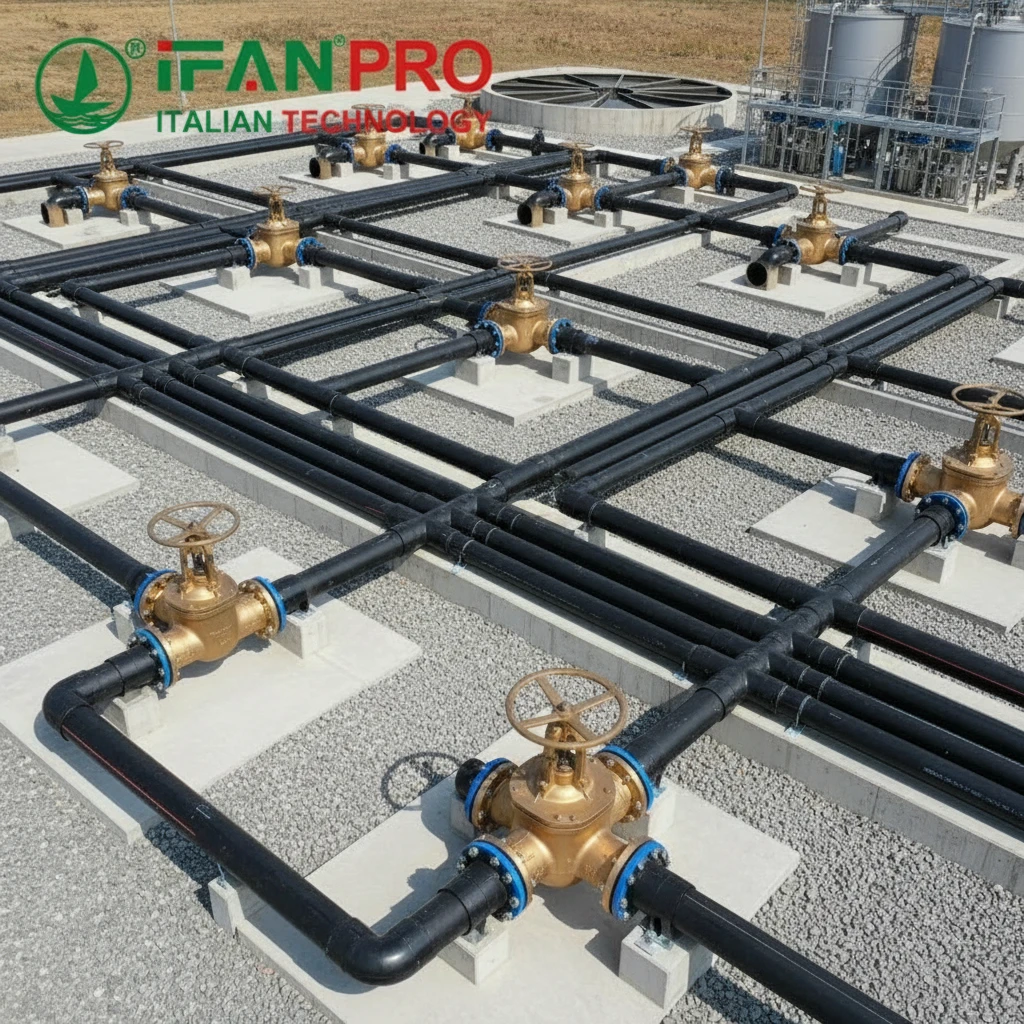
I once saw a maintenance team struggle for hours to disconnect a faulty valve in a tight space. This frustrating experience perfectly highlights why choosing the right connection type is crucial.
A female threaded valve is an excellent choice for HDPE systems because it provides a simple, adaptable, and cost-effective connection point. It allows for easy installation and future maintenance by connecting directly to male-threaded HDPE fittings or transition adapters, offering great flexibility without requiring specialized fusion equipment for the valve itself.
Let’s look at the specific reasons why this valve design makes so much sense for HDPE piping networks.
What Installation Advantages Does a Female Threaded Valve Offer for HDPE Systems?
Installation speed and simplicity are important on every job site. Female threaded valves help teams work faster and with fewer tools.
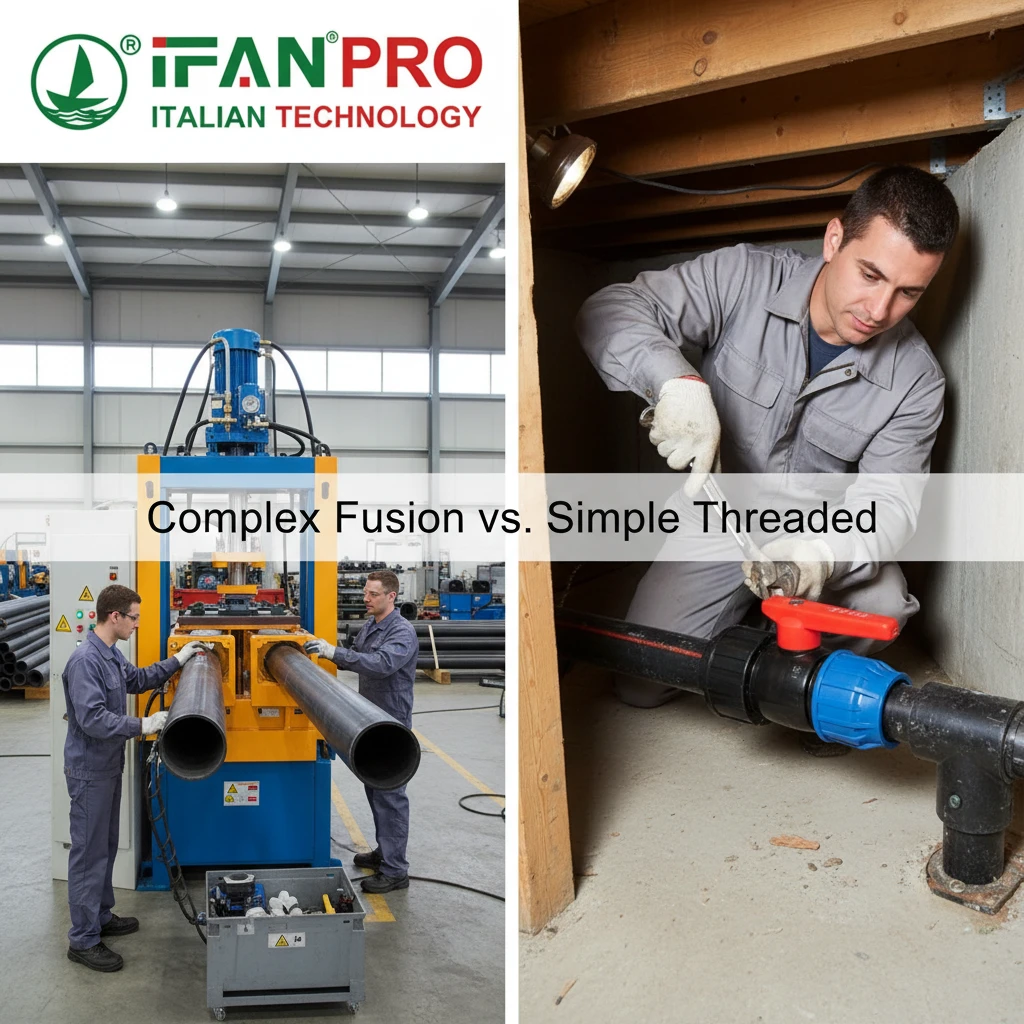
A female threaded valve offers faster and simpler installation because it screws directly onto a pre-prepared male-threaded HDPE fitting or adapter. This allows for quick connections in tight spaces without needing to heat-fuse the valve itself, which saves time and reduces the risk of installation errors common with more complex methods.
Simplifying the Connection Process
The main advantage during installation is simplicity. In an HDPE system, pipes are usually joined by heat fusion, creating a permanent, leak-free seal. However, valves need to be replaceable. A female threaded valve solves this by using a mechanical connection.
Here is how it works: a male-threaded outlet is first prepared on the HDPE line. This can be done in two main ways. First, you can fuse a male-threaded HDPE adapter directly to the pipe. Second, you can use a flange adapter. Then, you simply screw the female threaded valve onto these male threads. This process is much faster than trying to fusion-weld a valve directly into the line, which requires precise alignment and specific equipment.
Benefits in Challenging Locations
This method is especially useful in tight or awkward spaces. Imagine a valve needs to be installed close to a wall or in a crowded pipe rack. Performing a proper heat fusion in such a spot is difficult. You need room to maneuver the fusion machine. With a threaded connection, you only need enough space to turn the valve. This makes installation much more flexible.
Also, installation is less dependent on highly specialized skills. While HDPE fusion requires certified training, making a threaded connection is a more common mechanical skill. This means more crew members can complete the task, and there is less chance of a critical error that could cause a leak.
Installation Method Comparison
| Connection Method | Tools Needed | Skill Level Required | Relative Speed | Risk of Error |
|---|---|---|---|---|
| Female Threaded Valve | Wrenches, Sealant | Basic Mechanical | Fast | Low |
| Butt Fusion of Valve | Fusion Machine, Trimmer | High (Certified) | Slow | Medium-High |
| Electrofusion Valve | Electrofusion Controller | High (Certified) | Medium | Medium |
As the table shows, the threaded option is the fastest and least risky in terms of proper installation. You don’t need to worry about heating temperature, alignment pressure, or cool-down time. You just screw it on properly with the right sealant. This speed directly translates to lower labor costs on a project.
How Does a Female Valve Design Enhance Maintenance Flexibility in HDPE Networks?
Systems need to be maintained. A design that traps you makes future work expensive and frustrating.
A female threaded valve design greatly enhances maintenance flexibility because it allows for easy removal and replacement. When a valve fails or needs servicing, it can be unscrewed without cutting the main HDPE pipe. This lets you install a new valve quickly, minimizing system downtime and avoiding the need for more extensive, costly pipe repairs.
Enabling Easy Removal and Replacement
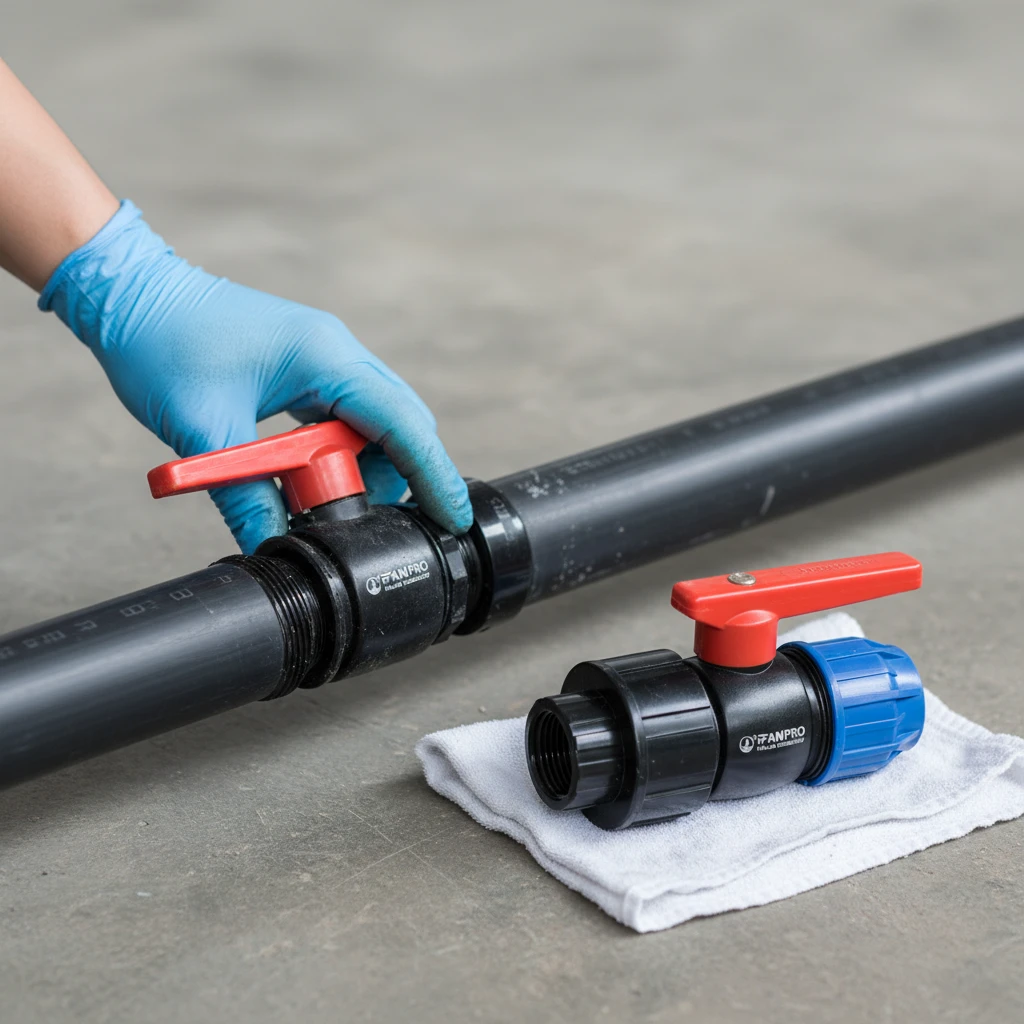
The biggest maintenance benefit is replaceability. HDPE pipes are meant to last for decades. Valves, however, have moving parts and seals that can wear out over time. If a valve was permanently fused into the pipeline, replacing it would require cutting out the old valve and fusion-welding a new one in place. This is a time-consuming process that requires fusion equipment and creates two new fusion joints, which are potential failure points.
With a female threaded design, maintenance is straightforward. To replace a faulty valve, you simply close the system, drain the section, and unscrew the old valve from the male adapter. Then, you screw on a new valve. The integrity of the main HDPE pipeline remains completely untouched. This process can often be completed in a fraction of the time.
Facilitating System Modifications and Upgrades
This flexibility also helps with system modifications. Maybe you need to add a sampling port, connect a new branch line, or upgrade to a valve with better flow control. A female threaded connection point provides a ready-made, standardized interface for these changes. You can remove the existing valve and install a different fitting or a more advanced valve model without altering the primary pipe network.
This is crucial for industrial or municipal systems that must operate continuously. Minimizing downtime is a top priority. The ability to perform a “hot swap” (after isolating and draining the section) keeps the overall system offline for a very short period. This design turns a potential major repair job into a simple routine replacement.
Maintenance Scenario Comparison
| Scenario | With Fused Valve | With Female Threaded Valve |
|---|---|---|
| Seal Failure | Cut out valve, fuse in new one (4-6 hours). | Unscrew old valve, screw on new one (1-2 hours). |
| Need to Change Valve Type | Major pipe modification required. | Simple valve swap at the adapter. |
| Damage to Valve Body | Requires cutting and fusion repair. | Simple valve replacement. |
| Tools Required | Saw, Fusion Machine, Power Source. | Wrenches, maybe a pipe cutter for old sealant. |
The table clearly shows how a threaded interface simplifies every maintenance task. It turns complex fusion procedures into basic mechanical work. This saves money on labor and equipment rental, and it gets your system back online faster.
Why Are Female Threaded Valves a Cost-Effective Choice for HDPE Piping Projects?
Every project manager looks for ways to control costs without sacrificing quality. Female threaded valves help save money from start to finish.
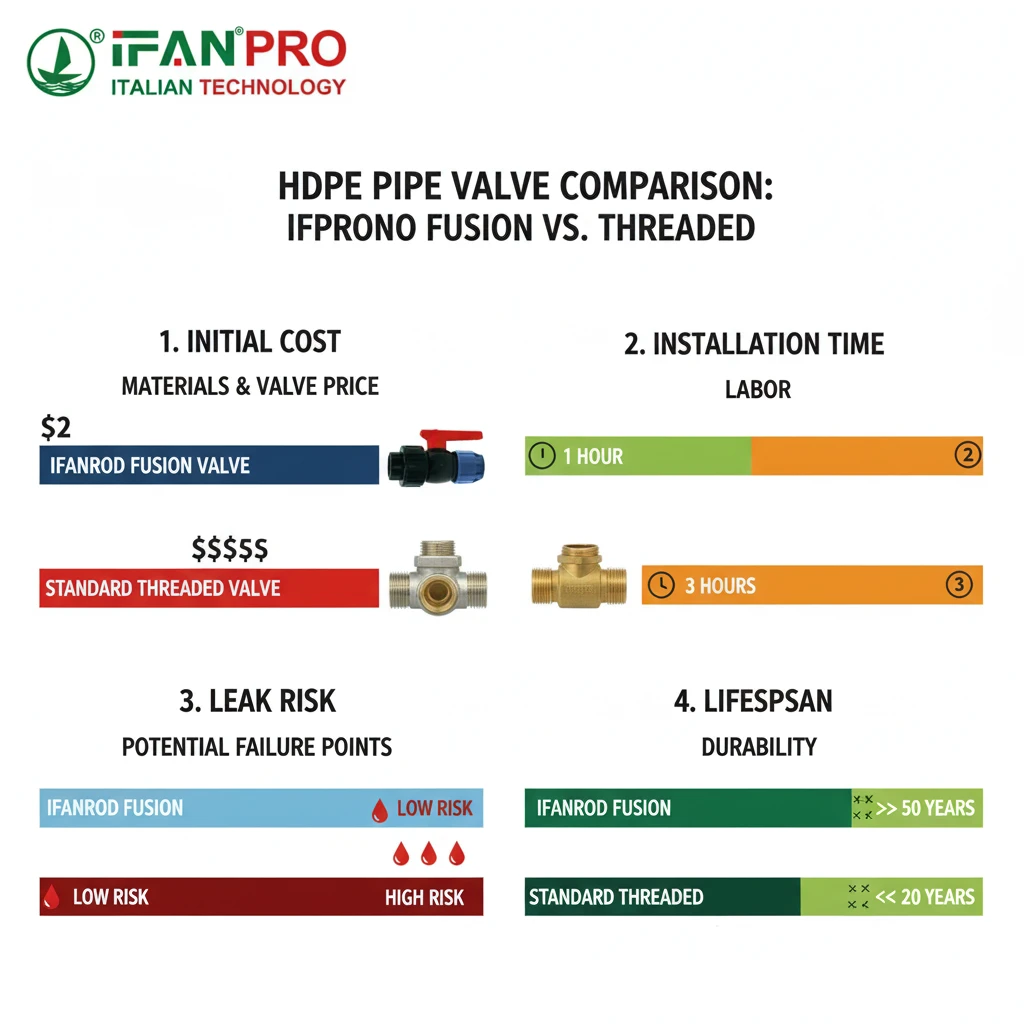
Female threaded valves are a cost-effective choice because they typically have a lower initial purchase price than fusion valves, and their installation requires less expensive equipment and labor. Furthermore, their easy replaceability drastically reduces long-term maintenance and downtime costs over the life of the piping system.
Analyzing Initial Project Costs
Let’s break down the cost savings, starting with the initial project budget. First, the valves themselves are often less expensive. Valves designed for butt fusion or electrofusion have to be made with specific HDPE material and precise molding to ensure a good fusion. Female threaded valves can often be made from different, sometimes more cost-effective materials like ductile iron or brass with appropriate corrosion protection, as they are not being fused.
Second, and more importantly, you save on installation costs. As discussed, installing a threaded valve does not require a fusion machine. These machines are expensive to rent or buy and require a trained, certified operator. The labor time is also shorter. A crew with standard mechanical tools can install multiple threaded valves in the time it might take to properly fuse one or two valves.
Understanding Long-Term Operational Savings
The real financial advantage appears during the operational life of the system—often called the “total cost of ownership.” The biggest cost in running a pipeline is not the initial build; it’s maintenance and unexpected downtime.
When a fused valve fails, the repair is a big event. It involves specialized crews, equipment mobilization, and prolonged system shutdown. This is very expensive. A threaded valve failure is a minor event. Your regular maintenance crew can handle it with common tools, and the system is back online quickly. This difference in repair cost and speed is huge over 20 or 30 years.
Also, inventory management is easier and cheaper. You don’t need to stock a special fused valve for every possible pipe size. Instead, you can stock standard female threaded valves and a variety of male-threaded adapters. This reduces the capital you have tied up in spare parts inventory.
Total Cost Comparison Over 20 Years
| Cost Category | Female Threaded Valve System | Fully Fused Valve System |
|---|---|---|
| Initial Valve Cost | $ | $$ |
| Installation Labor & Equipment | $ | $$$ |
| One Major Repair (Labor, Downtime) | $ | $$$$ |
| Spare Parts Inventory Cost | $ | $$ |
| Estimated Total 20-Year Cost | $$$ | $$$$$ |
As you can see, the threaded system saves money at the beginning and continues to save money every time you need to touch the system. This makes it an extremely smart financial decision for project planners and asset managers.
What Makes Female Valves Compatible with Various HDPE System Configurations?
No two piping systems are identical. You need components that can adapt to different designs and future changes.
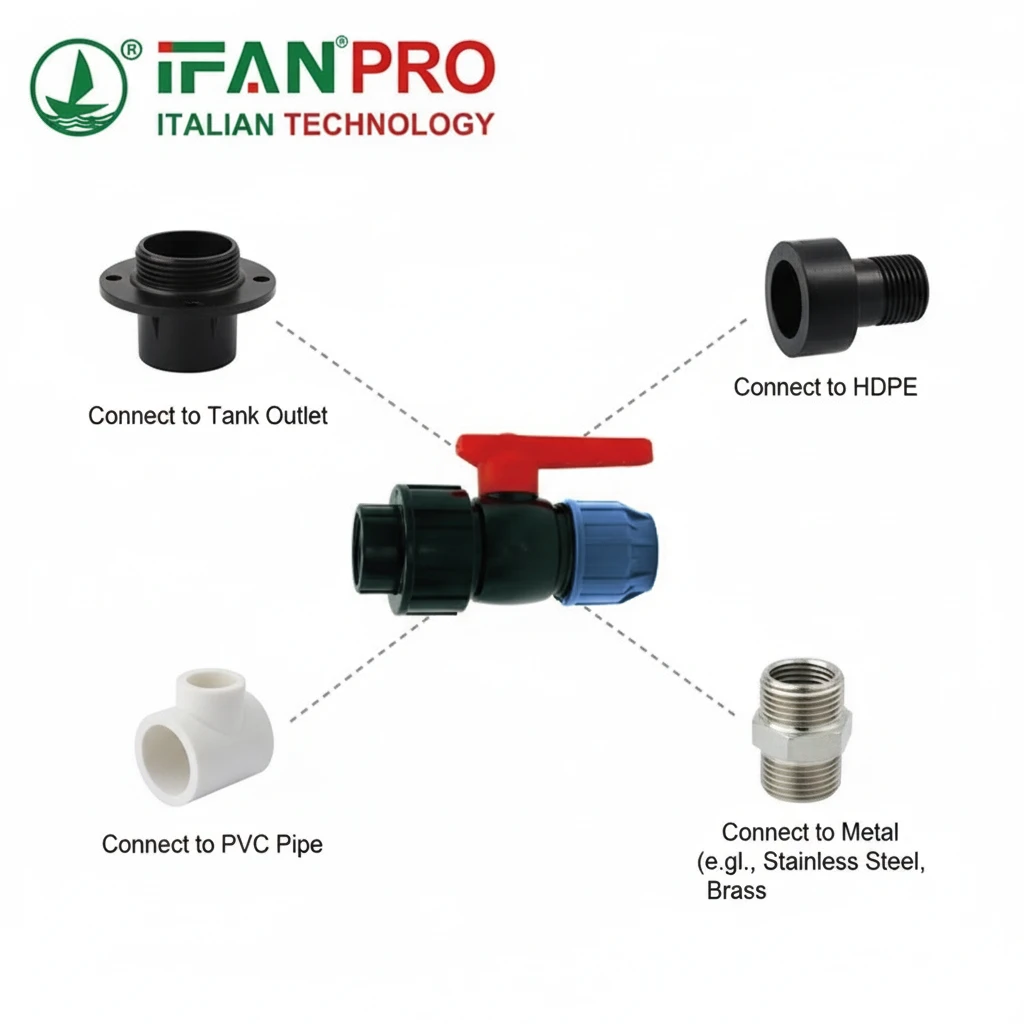
Female threaded valves are highly compatible because they act as a universal adapter interface. They can connect HDPE to a wide range of other materials (like metal, PVC, or CPVC) via the appropriate male-threaded adapter. This allows for easy integration into existing systems, hybrid material networks, and provides flexibility for future system expansions or reconfigurations.
Bridging Different Materials
One of the strongest compatibility features is the ability to connect different pipe materials. Pure HDPE systems are common, but many projects are hybrids. You might have an HDPE main line that needs to connect to a stainless steel pump, a concrete tank outlet, or an existing PVC section.
The female threaded valve is the perfect bridge. On the HDPE side, you use a male-threaded HDPE adapter. On the other material side, you use a compatible male-threaded adapter (e.g., stainless steel, PVC). The female valve simply screws onto both, creating a secure transition point. This makes system design much more flexible, as you are not locked into using only one material.
Supporting System Layouts and Sizes
This design also supports various system configurations. Whether your layout is linear, has many branches, or is a complex loop, threaded connections provide the needed flexibility. Valves can be easily installed at T-junctions, elbows, or at the end of lines. If the design needs to change, the valves can be relocated by reusing the adapters.
Furthermore, compatibility across sizes is straightforward. If you need to connect a large HDPE pipe to a smaller valve for flow control, you simply use a reducing adapter with male threads. The female valve connects to it without issue. This standardization simplifies the sourcing of parts.
Common Compatibility Scenarios and Solutions
| System Configuration Challenge | How a Female Threaded Valve Helps |
|---|---|
| Connecting HDPE to an existing metal pipe. | Use a metal male-threaded adapter on the metal pipe; screw female valve onto it. |
| Adding a branch line from a main HDPE header. | Fuse a male-threaded HDPE outlet to the header; install valve. |
| Integrating with equipment (pumps, tanks). | Use equipment’s standard male threaded port; connect directly to female valve. |
| Future expansion needs. | Install blank male-threaded adapters at planned future points; add valves later. |
The table shows how the female threaded valve acts as a standard, reusable connector in almost any situation. It future-proofs your investment. As your facility grows or processes change, the piping system can be adapted without replacing entire sections. You just change the valves or the components attached to them. This adaptability is a major reason why engineers specify this connection type for versatile and growing HDPE networks.
Conclusion
Female threaded valves offer unmatched installation ease, maintenance flexibility, cost savings, and system compatibility for HDPE projects. For reliable, high-quality female threaded valves designed for HDPE systems, choose IFAN’s comprehensive valve series.







 English
  Français
  Русский
  Español
Recent Comments