
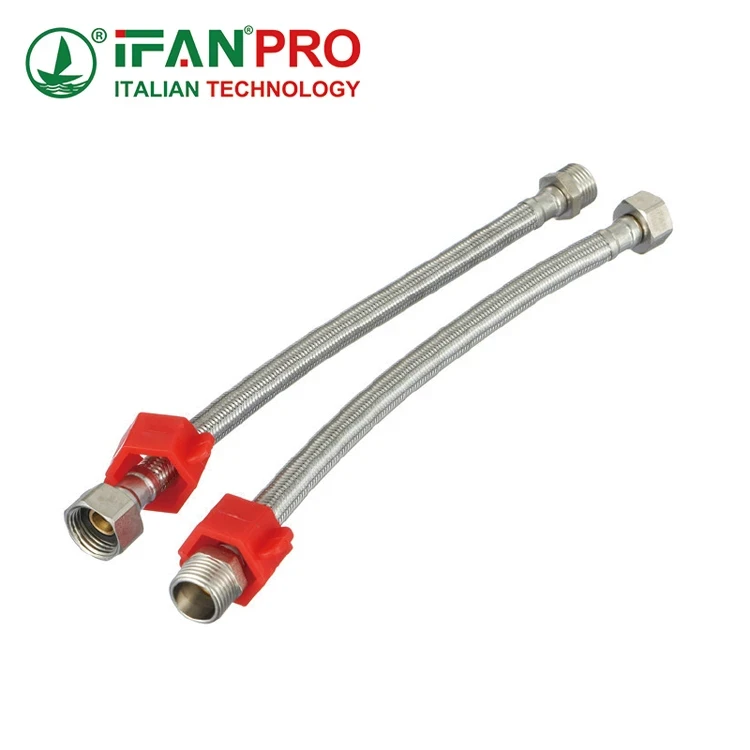
A client once faced costly downtime because a standard pipe cracked from vibration. That moment highlighted why specialized hoses are essential for tough jobs.
Convoluted, flexible, and braided metal core hoses are engineered components designed to handle extreme conditions that rigid pipes cannot. They combine a corrugated metal inner core for flexibility with an external braid for strength, solving problems like vibration, thermal expansion, and high pressure in critical industrial systems.
Let’s break down what these hoses are, where they are used, and how to choose and install the right one for your application.
What Are the Key Design Features of a Convoluted, Flexible Metal Hose?
A failed connection in a high-heat line showed me the cost of using the wrong hose. The right design features prevent such failures.
The key design features are a corrugated (convoluted) metal inner core that provides flexibility and movement, and one or more layers of braided metal wire mesh over it that adds pressure resistance and protects the core. This combination allows the hose to bend, compress, and stretch while containing fluids or gases under high pressure and temperature.
Understanding the Core and Its Function
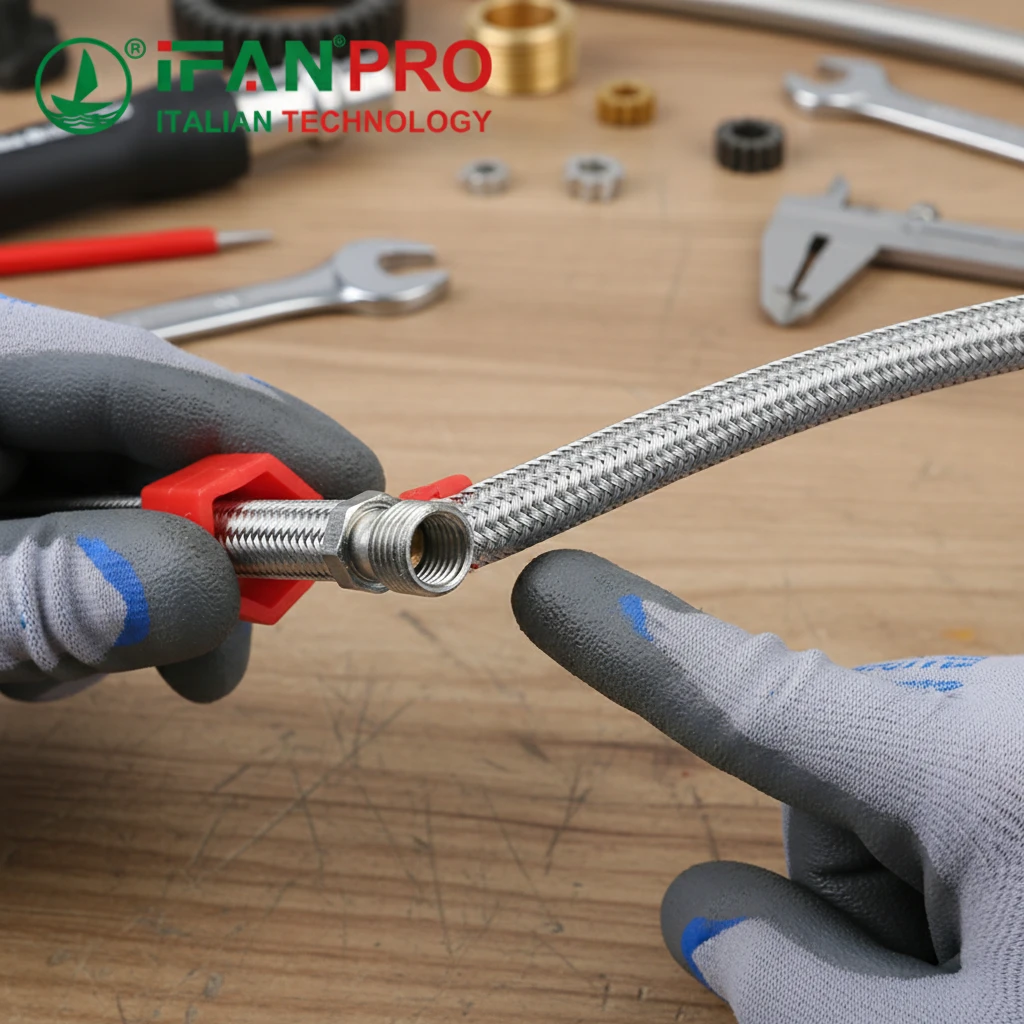
The heart of this hose is the convoluted inner core. Imagine a slender, flexible metal tube shaped like a spring or with consistent ridges and valleys. This corrugated shape is the secret to its flexibility. Unlike a smooth tube that bends only with force, the convolutions allow the hose to flex, twist, and absorb movement easily. This core is typically made from stainless steel (like AISI 304 or 316) for corrosion resistance, but can also be made from other alloys for specific chemicals or temperatures.
The primary job of this core is to create a sealed pathway. It must be leak-tight even while constantly moving. The materials and the precision of the corrugation welding are critical here. A well-made core can handle everything from steam and chemicals to hot oils and gases.
The Role of the Braided Sheath
However, the flexible core alone cannot withstand high pressure. The pressure would cause the convolutions to stretch and burst. This is where the braided sheath comes in. This sheath is a woven mesh of stainless steel wires wrapped tightly around the core.
Think of it like the reinforced steel belts in a car tire. The braid acts as a restraining cage. When pressure builds inside the hose, it pushes outwards against the core. The braid contains this force, preventing the core from over-expanding and failing. More layers of braid mean higher pressure ratings. The braid also provides mechanical protection against abrasion and crushing from external forces.
Key Design Feature Summary Table
| Feature | Description | Primary Benefit |
|---|---|---|
| Convoluted Core | A corrugated metal tube (usually stainless steel). | Provides ultimate flexibility and movement absorption. |
| Metal Braiding | One or more layers of woven steel wire mesh over the core. | Adds tensile strength and pressure capacity; protects the core. |
| End Fittings | Attached to each end (e.g., threaded, flanged, welded). | Ensures a secure, leak-free connection to the system. |
| Materials | SS304, SS316, Inconel, etc., chosen for the application. | Provides resistance to corrosion, temperature, and chemicals. |
How the Design Solves Real Problems
This two-part design solves multiple industrial headaches. First, it absorbs vibration from pumps and compressors, preventing fatigue cracks in piping. Second, it accommodates thermal expansion—when pipes heat up and lengthen, the hose can compress or extend to handle the shift without stress. Third, it allows for misalignment between connected pipe ends, making installation easier and more forgiving. The flexibility, therefore, is not a weakness but a calculated engineering solution to movement and stress.
What Industrial Applications Require a Braided Metal Core Flexible Hose?
We supplied hoses to a chemical plant replacing rigid lines that kept cracking. The switch to braided metal hoses ended their maintenance nightmare.
Braided metal core flexible hoses are required in applications involving significant movement, high temperature, high pressure, or corrosive media. Key industries include chemical and petrochemical processing (for transferring aggressive fluids), power generation (for steam and turbine lines), aerospace (for fuel and hydraulic lines), and heavy machinery (for hydraulic systems and exhaust connections).
Demanding Process Industries
In chemical, pharmaceutical, and petrochemical plants, the need is clear. These facilities transfer aggressive solvents, acids, alkalis, and high-purity gases. Rigid pipes cannot handle the vibration from pumps or the thermal cycling of processes. A braided metal hose, made from a compatible alloy like SS316L, safely contains these dangerous media while flexing with the equipment. They are also used for loading and unloading arms where a hose must move to connect a ship to a storage tank.
Power and Energy Systems
Power plants, both traditional and nuclear, rely heavily on these hoses. They are used in steam lines where temperatures can exceed 400°C and pressure is extreme. The hose absorbs the expansion of superheated steam lines. They are also critical in gas turbine exhaust systems, where they must handle intense heat and the movement of the turbine during start-up and shutdown. In these settings, failure is not an option, as it can lead to catastrophic downtime.
Mobility and Transportation Applications
The aerospace industry is a major user. In aircraft, weight and reliability are everything. Braided metal hoses are used in fuel lines, hydraulic systems, and engine bleed air ducts. They must be incredibly lightweight yet withstand constant vibration, pressure surges, and extreme temperature fluctuations from -50°C to over 200°C. Similarly, in automotive and heavy machinery, they are used in high-performance engine test beds, hydraulic systems for excavators, and high-temperature exhaust couplings for industrial vehicles.
Common Application and Requirement Table
| Industry / Application | Primary Reason for Use | Typical Requirements |
|---|---|---|
| Chemical Transfer | To handle corrosive fluids and absorb pump vibration. | Corrosion-resistant alloy (SS316), chemical compatibility. |
| Steam Lines | To absorb thermal expansion in high-temperature pipes. | High-temperature grades, high pressure rating. |
| Aerospace Hydraulics | To provide flexible, reliable connections in vibrating frames. | Lightweight, high-pressure, fatigue-resistant. |
| Hydraulic Machinery | To connect moving parts on excavators or presses. | High pulse pressure rating, abrasion resistance. |
| Gas & Exhaust | To handle hot gases and connect misaligned ducts. | High-temperature alloy, internal cleanliness. |
In short, any place where a rigid connection is subjected to movement, heat, or stress is a candidate for a braided metal hose. Their job is to be the resilient, forgiving link in an otherwise rigid system, preventing leaks and failures.
How Do You Select the Correct Braided Metal Hose for Pressure and Flexibility?
Selecting the wrong hose for a high-pressure washdown system led to a burst. The correct selection process prevents this.
You select the correct braided metal hose by first defining four key parameters: the media being transferred, its temperature and pressure, the required flexibility and movement type (bending, compression, twisting), and the connection end types. Always choose a hose whose rated working pressure exceeds your system’s maximum pressure and whose material is compatible with the media and temperature.
Step 1: Define Your Application Parameters
The selection process is a checklist. Skipping a step risks failure. First, identify the fluid or gas (media). Is it water, steam, oil, a chemical, or a fuel? This determines the required material for the core and braid. For example, mild steel is not suitable for most chemicals, while stainless steel 304 is not suitable for chloride-rich environments where 316 is better.
Next, and most critically, determine the maximum working pressure and temperature. These are not average values, but the peak extremes the hose will ever see, including pressure spikes. The hose’s rated working pressure (WP) must be higher than your system’s maximum pressure. Always apply a safety factor. Temperature affects both the hose material strength and the choice of seals in the end fittings.
Step 2: Understand Movement and Flexibility Needs
Now, consider movement. How will the hose move in service? This is about flexibility type.
- Bending: Will it be bent to a specific radius during installation? Each hose has a minimum bend radius (MBR). Bending it tighter than the MBR kinks and damages the core.
- Axial Movement: Will it be stretching or compressing along its length? You need to know the total length change required.
- Vibration: Is it absorbing shakes from a pump? This requires a hose with good dynamic fatigue resistance.
The required movement directly impacts the hose length. A hose that is too short will be over-stressed when it moves. A good rule is to never install a hose in a fully stretched or fully compressed state; it should be at a neutral length.
Step 3: Match the Construction to Your Needs
Your pressure and flexibility needs dictate the hose construction. The number of braid layers is the primary factor for pressure.
Hose Selection Guide Table
| Requirement | Recommended Construction | Key Consideration |
|---|---|---|
| Low Pressure, High Flexibility | Single-ply convoluted core with 1 layer of braid. | Excellent for vibration absorption where pressure is minimal. |
| High Pressure, Moderate Flexibility | Convoluted core with 2 or more braid layers. | The additional braids increase pressure rating but reduce flexibility. |
| Very High Pressure / Pulsing | High-pressure interlocked hose or multiple heavy braids. | Standard convoluted hoses may fail; a heavier design is needed. |
| High Temperature | Core and braid in high-temp alloy (e.g., Inconel). | Standard SS304 weakens at very high temperatures. |
| Vacuum Service | Fully braided construction. | Prevents the hose from collapsing inward under vacuum. |
Finally, specify the end fittings. These must match the thread standard or flange face on your equipment (e.g., NPT, SAE, DIN). The fitting material should be compatible with the hose and media. For critical or complex applications, consulting with a specialist like IFAN is the best way to ensure all factors are correctly balanced.
What Are the Installation Guidelines for Convoluted Braided Metal Hoses?
An improperly installed hose failed in a week, not from product quality, but from twisting stress. Correct installation is as important as correct selection.
Key installation guidelines are: never twist the hose during installation, never bend it tighter than its minimum bend radius, ensure it is not stretched or compressed to its limits, and align the end fittings properly so the hose rests in a natural, untwisted position. Always use a support if the hose is long or heavy to prevent sag and stress.
Pre-Installation Inspection and Planning
Before you even pick up a wrench, inspect the hose. Check for any visible damage from shipping. Ensure the end fittings are the correct type and size. Plan the routing. The hose should follow a natural, smooth path between connection points. Avoid planning for sharp 90-degree turns; use a gentle curve instead. Measure to ensure the hose length is correct for the intended movement—it should not be taut or overly slack at the neutral position.
The Golden Rules of Installation
During installation, follow these non-negotiable rules:
- Never Twist the Hose. This is the most common mistake. A braided metal hose is designed to flex in bending, not in torsion (twisting). Twisting it severely reduces its lifespan. To avoid this, do not use the hose body to turn the fitting during tightening. Hold the fitting hex with a wrench and tighten the nut onto the mating port. If the hose rotates while tightening, you are twisting it.
- Respect the Minimum Bend Radius (MBR). Every hose has a specified MBR, often expressed as a multiple of the hose diameter (e.g., 4x the diameter). Bending it tighter pinches the convolutions, restricts flow, creates stress points, and leads to early failure. Use gentle, sweeping bends.
- Install at Neutral Length. For hoses designed to absorb movement, install them at their midpoint length. They should have equal capacity to extend and compress from this neutral position. Do not install them already fully stretched, expecting them to only compress, or vice-versa.
Installation Do’s and Don’ts Table
| Do’s | Don’ts |
|---|---|
| Do support long hoses with clamps or guides to prevent whip. | Don’t let the hose rub against sharp edges or hot surfaces. |
| Do align pipe ends so the hose installs without force. | Don’t use the hose to correct for major pipe misalignment. |
| Do leave adequate space for the hose to move freely. | Don’t bend, stretch, or compress the hose to make it “fit.” |
| Do tighten fittings securely to the recommended torque. | Don’t over-tighten fittings, which can damage the hose ends. |
Post-Installation Checks
After installation, perform a visual check. The braiding should look even and relaxed, not twisted or overly tight in one area. For pressure systems, conduct a gradual pressure test. Do not immediately jump to maximum pressure. Start low, check for leaks at the fittings, and then slowly increase to the working pressure. Listen for any unusual sounds. Finally, if the hose is for a moving application, cycle the equipment slowly through its range of motion to observe the hose movement and ensure it is not snagging or being stretched to its limit.
Proper installation ensures the hose performs as engineered. A high-quality hose from IFAN, installed correctly, will deliver years of reliable, leak-free service even in the most demanding conditions.
Conclusion
Choosing and installing the right metal hose prevents downtime and ensures safety. For expert guidance and reliable convoluted and braided metal hoses, trust IFAN to provide the perfect solution for your industrial needs.










 English
  Français
  Русский
  Español
Recent Comments