
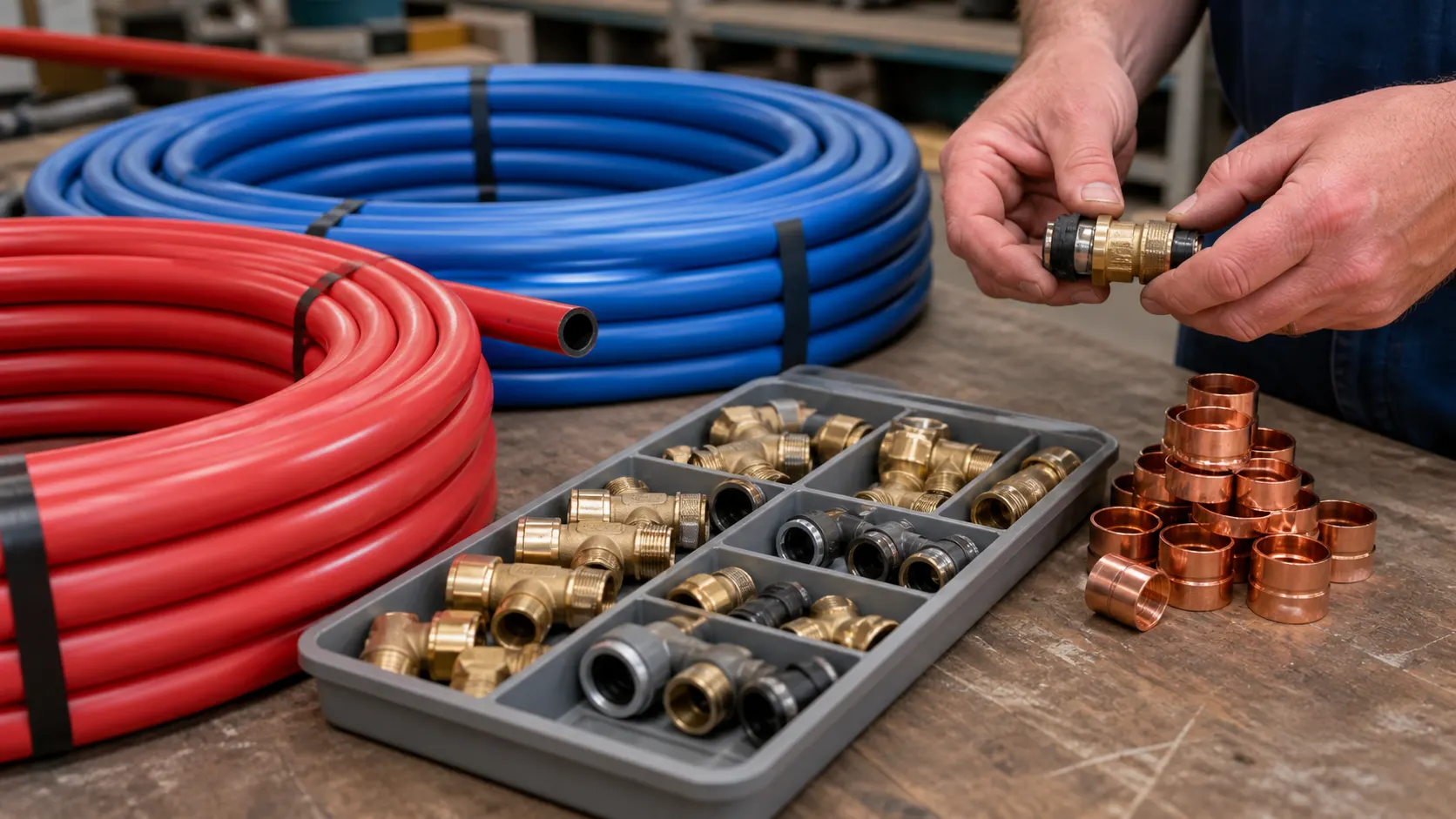
There are five types of PEX fittings once you count them the way a plumbing code does, by the standard that lists each one. The five: cold expansion, insert bodies gripped by a copper crimp ring, the same bodies gripped by a stainless steel clamp, push-fit, and threaded or transition adapters. One adopted US fitting list names exactly ten standards for PEX and five more for PEX-AL-PEX.
Which families may share one line inside a wall is settled by a clause most buyers never read. Under the model plumbing code’s PEX mechanical-joint clause, the tubing must be factory marked with the fitting standards its own manufacturer specifies. The pipe carries the permission, printed at intervals of no more than 1.5 m (5 ft). Our PEX pipe guide covers the tubing side of that print line.
Key Takeaways
- Five families, five listing routes: cold expansion (ASTM F1960-26, F2080-23), copper crimp ring (F1807-26a, F2159-23a, F2735-23), stainless clamp (F2098-26), push-fit (ASSE/ANSI 1061-2025), threaded and transition adapters.
- IPC 2024 section 605.16.2 makes the tubing’s factory marking the authority, so two families share a wall legally when the print line names both.
- Size scope differs by standard: F2159-23a stops at 1 in, F2735-23 covers 1/2, 3/4 and 1 in only, F1960-26 runs 3/8 in to 3 in.
- ASTM withdrew F2434 on 3 December 2025 with no replacement, and fitting lists adopted before then still name it.
- Press-sleeve standards F3347-23 and F3348-26 are Active but absent from that adopted list; press qualifies through the F877-26 or CSA B137.5:26 system route.
- Every PEX fitting in a water supply system also has to comply with NSF 61, on top of its family standard.
- Mixing brands inside one proprietary system is never allowed, even where the parts look identical.
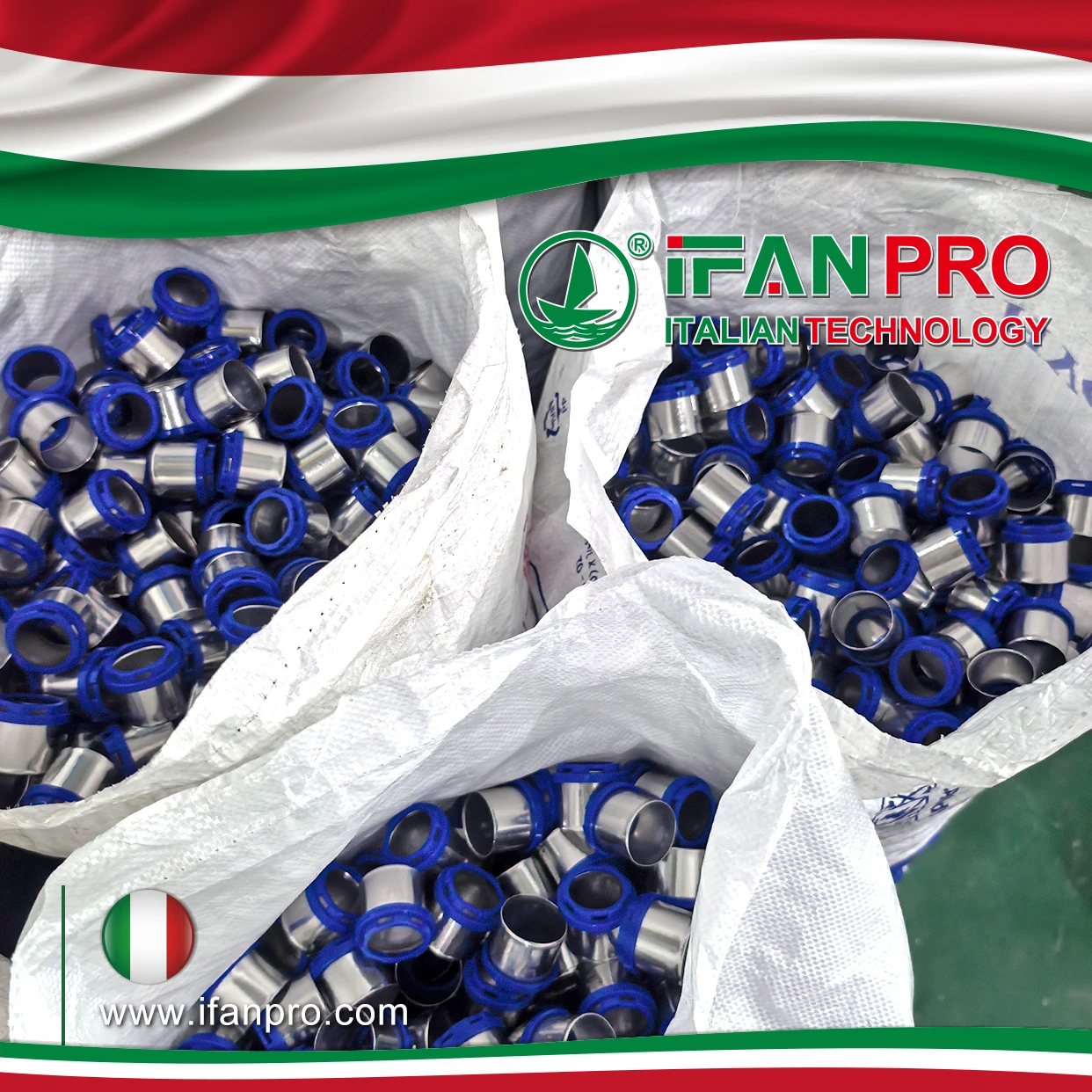
Watch the crimp joint made on the brass F1807 and polymer F2159 bodies below.

The Criteria That Decide Compatibility Are Printed on the Pipe
Most trade pages sort PEX fittings by how the joint is squeezed, which helps at the tool crib and settles nothing at plan review. This page sorts them by the standard that lists them, because that is what an inspector, a specification and a purchase order run on. For the mechanical comparison, we cover crimp vs clamp vs push vs expansion separately.
The listing layer has three levels. Section 605.5 of the 2024 IPC says fittings shall comply with the applicable standards in Table 605.5 and, in a water supply system, with NSF 61. Section 605.16.2 adds the marking rule and makes the manufacturer’s instructions binding. The ICC text sits behind a subscription, so that sentence is quoted here from the PPI/PPFA transcription of the 2024 edition, checked against the same clause published free and verbatim in Ohio’s adopted plumbing rule.
An adopted state code turns that into an enforceable list. Michigan’s pipe-fitting rule, adopted into state plumbing code on 29 August 2025, names ASSE 1061, ASTM F877, F1807, F1960, F2080, F2098, F2159, F2434, F2735 and CSA B137.5 for PEX, with F1974, F1281, F1282, CSA B137.9 and CSA B137.10 for PEX-AL-PEX.
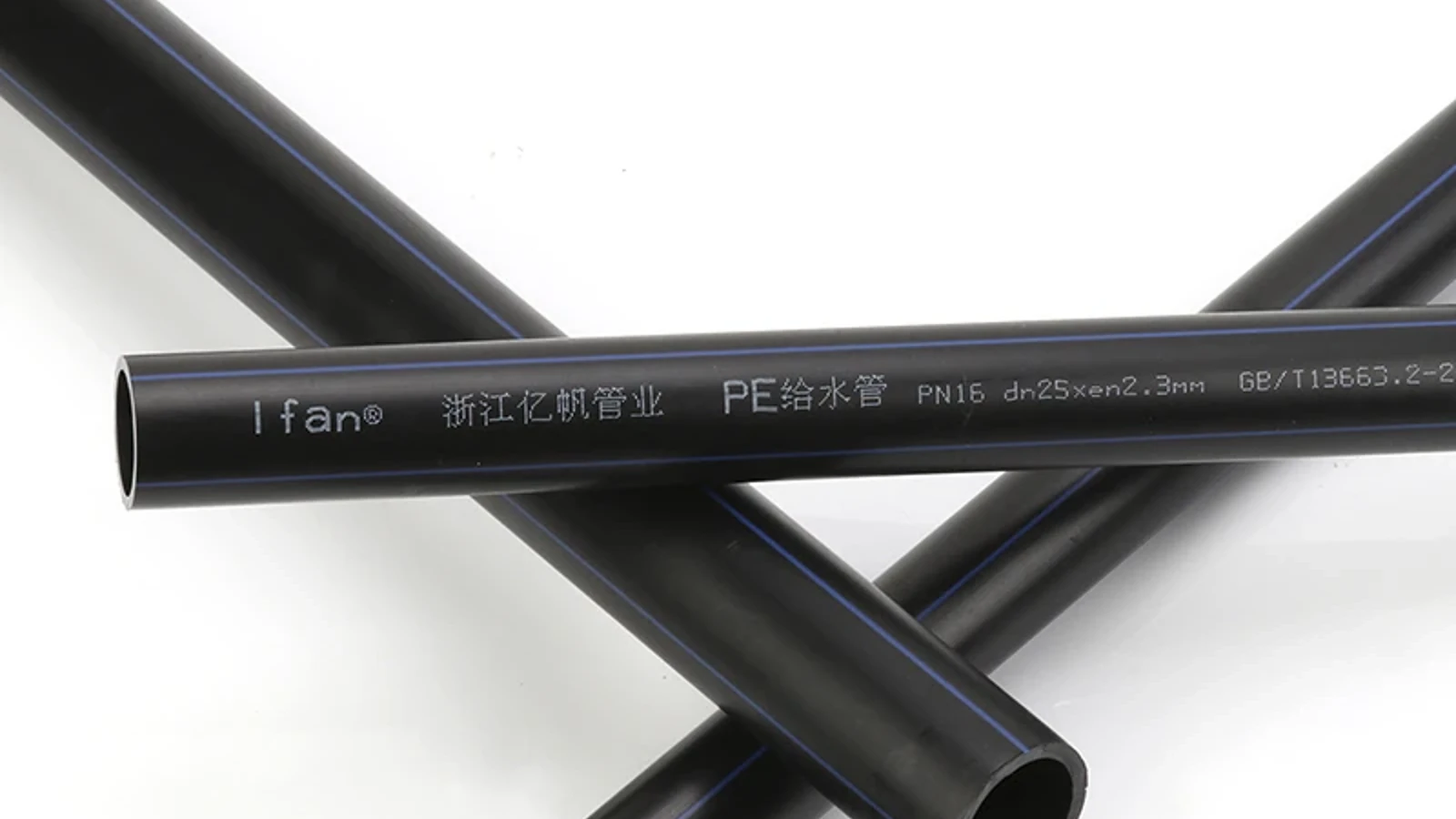
So read the pipe before you read the fitting. ASTM F876-26 and CSA B137.5:26 both require the print line to repeat every 1.5 m (5 ft). It carries the standard designations of the fitting systems the tubing manufacturer recommends, alongside the size, SDR 9, the material designation code and the ratings at 73 °F and 180 °F. That short string is the compatibility answer for the line in front of you.
| Family | Governing standard (current edition) | How the tubing is held | Size scope (in) | Best for |
|---|---|---|---|---|
| Cold expansion | ASTM F1960-26; ASTM F2080-23 | Tube expanded, shrinks back onto the insert | 3/8 to 3 (F1960) | Large-diameter trunks and full-bore flow |
| Copper crimp ring | ASTM F1807-26a; ASTM F2159-23a; ASTM F2735-23 | Ring compressed over a barbed insert | 3/8 to 2 (F1807) | Mixed-brand repair stock and open inventory |
| Stainless steel clamp | ASTM F2098-26 | Ratcheted clamp over the same insert bodies | Fits F1807 and F2159 bodies | Tight joist bays and one-hand access |
| Push-fit | ASSE/ANSI 1061-2025 | Grip ring and O-ring on the tube outside diameter | Up to 2 nominal | Retrofits that cross into copper or CPVC |
| Threaded / transition | ASTM F1974-23; family standard plus NSF 61 | A listed PEX end plus a thread, sweat or flange | Matches the PEX end it carries | Valves, manifolds, water heaters and meters |
Family 1: Cold Expansion (ASTM F1960-26 and F2080-23)
Cold expansion runs on two separate standards. ASTM F1960-26, updated 28 August 2026, covers fittings used with a PEX reinforcing ring from 3/8 in to 3 in at 100 psi and 180 °F. ASTM F2080-23, updated 23 February 2023, uses a metal compression sleeve instead and stops at 2 in for PEX and 1 1/4 in for PE-RT.
The widely repeated claim that both are PEX-A only does not come from the standards, which reference ASTM F876 or F3253 tubing and therefore every crosslinking route. That restriction arrives one level down, in the tubing manufacturer’s marking and instructions, and IPC 2024 section 605.16.2 is what gives those instructions legal force. Get the direction of the rule right before you argue it with an inspector; the reasoning sits in our note on PEX-B fittings on PEX-A tubing.
Verdict: The only family listed to 3 in, and the one to specify where flow area matters. Confirm the tubing print line names F1960 or F2080 before the expander tool leaves the van.
Family 2: Copper Crimp Ring on an Insert Fitting
Three standards sit under this one squeeze. ASTM F1807-26a, updated 21 August 2026, covers metal insert bodies in copper, stainless, lead-free brass or bronze from 3/8 in to 2 in. Plastic bodies split across ASTM F2159-23a, whose scope stops at four sizes (3/8, 1/2, 3/4 and 1 in), and ASTM F2735-23, which covers 1/2, 3/4 and 1 in. Those ceilings are written into the scope clauses, so a 1 1/4 in plastic crimp body has no home standard.
The 2026 revision also changed the paperwork in a way a stocking distributor should notice: F1807 and F2159 now both carry the words “or Alternate Stainless Steel Clamps” in their titles. Sizing that stock is usually the first decision; our chart of 1/2 in PEX fitting sizes and standards sets out where those bores land.
Verdict: The widest listing base and the easiest to source across brands, provided the body standard on the paperwork matches the size you buy.
Family 3: Stainless Steel Clamp on an Insert Fitting
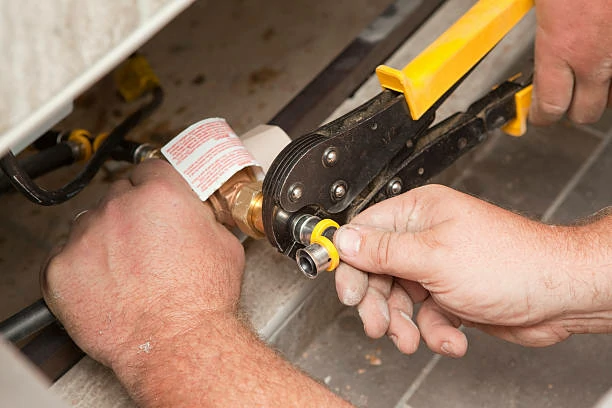
ASTM F2098-26, updated 23 March 2026, specifies the stainless clamp as the declared alternative to the copper-alloy crimp ring at 100 psi and 180 °F. Read its scope and the family boundary appears: the clamps are written against fittings that already comply with F1807 or F2159. Same insert bodies, different ring, different tool. It still earns its own line on a specification: a tubing print line can name F2098 without naming F1807, and an inspector reads the two strings separately. The ratcheting tool also closes one-handed in a joist bay where a full crimp jaw will not fit.
Verdict: Treat the clamp as a second ring on the same body rather than a second inventory. Buy bodies to F1807 or F2159, rings to F2098, and let the crew pick the tool.
Family 4: Push-Fit (ASSE/ANSI 1061-2025)
Push-fit is the one family the code names on its own. IPC 2024 section 605.16.3 says push-fit joints shall conform to ASSE 1061 and be installed to the manufacturer’s instructions, with no ASTM number in the sentence. The current edition is ASSE/ANSI 1061-2025, ANSI approved in June 2025, and the fittings run up to 2 in nominal. An older claim that IAPMO IGC 188 sits alongside it no longer holds: IGC 188 is absent from IAPMO’s current IGC list as of 5 September 2026.
Scope is why this family survives a listing-driven article. ASSE 1061 reaches PEX to F876 or F3253, copper to ASTM B88, CPVC to ASTM D2846 or CSA B137.6, and PE-RT to ASTM F2769, supplementing F877, D2846 and B88 rather than replacing them.
Verdict: No other PEX joining standard covers four pipe materials, so specify push-fit where the joint crosses a material boundary or must be made without a tool.
Family 5: Threaded and Transition Adapters
A transition adapter is a listed PEX end from one of the four families above, joined to a thread, a solder cup, a flange or a press end. It carries two listings at once. The documented failure here is a thread problem. PPI and PPFA warn against putting a standard female plastic tapered NPT fitting onto a metal male taper, because the taper can split the plastic body; a plastic female NPT fitting with a brass liner may be used where the fitting manufacturer approves it.
Sequence matters too: solder or cement the other material first and let it cool below 180 °F before the PEX goes on. On composite pipe the listing changes again, to ASTM F1974-23 and its neighbours; our guide to PEX-AL-PEX press profiles covers that, and the copper case sits in PEX to copper transition standards.
Verdict: Specify the transition by both ends. A plastic female NPT body on a metal male taper is the joint that splits, and it splits during assembly rather than in service.
| Boundary of the size scope written into each standard | F1960-26 (in) | F1807-26a (in) | F3347-23 (in) | F2159-23a (in) |
|---|---|---|---|---|
| Smallest listed size | 0.375 | 0.375 | 0.3125 | 0.375 |
| Largest listed size | 3 | 2 | 2 | 1 |
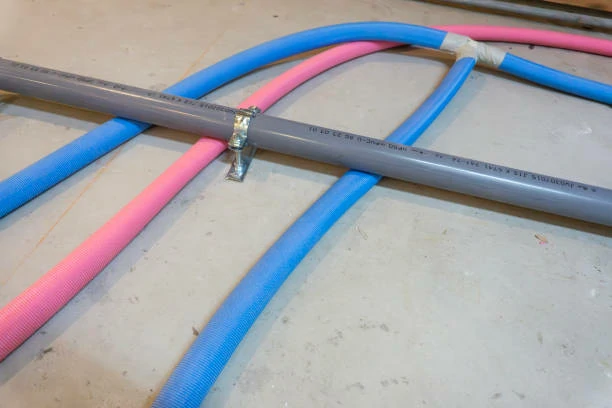
Nothing in the code forbids two fitting families on one system; it moves the decision onto the tubing instead. Section 605.16.2 requires the tubing to be factory marked with the fitting standards its manufacturer specifies. So a crimp branch and an expansion branch may share a wall when the pipe between them carries both designations on a print line that repeats every 1.5 m (5 ft). Where the print line names one family and the crew fitted another, the joint is unlisted, and the plan-review argument is short.
The PPI/PPFA design guide, third edition, April 2026 puts it plainly: not all fittings are compatible with all PEX tubing, so read the markings that show which fitting system types are approved. A harder boundary sits inside proprietary systems that have no ASTM dimensional standard, where the same guide warns that parts may not interchange with similar-looking parts from another maker, and that components should not be mixed across brands.
| Pairing on one system | What the tubing print line must show | Verdict |
|---|---|---|
| Copper crimp ring + stainless clamp | F1807 or F2159, and F2098 | Routine. Same insert bodies, two listed rings. |
| Cold expansion + copper crimp ring | F1960 or F2080, and F1807 or F2159 | Allowed where both appear. Two tools, two ring stocks. |
| Push-fit + any insert family | ASSE 1061, plus the insert standard | Allowed. The usual repair and transition joint. |
| Press sleeve + any listed family | F3347 or F3348 is not on the adopted list | Check the AHJ first. Approval runs through F877 or CSA B137.5. |
| Two brands inside one proprietary system | Not resolvable from the print line | Not allowed. Parts may look identical and not interchange. |
A withdrawn standard is still on the adopted list
ASTM F2434, the crimp-insert standard for SDR9 PEX and PEX-AL-PEX, was withdrawn with no replacement on 3 December 2025; F2434-19 was its last edition. The Michigan rule naming it took effect on 29 August 2025, four months earlier, and code lists are amended on a cycle rather than on the day a standard dies. So a purchase order written in 2026 can quote a standard that a plumbing code still lists and ASTM no longer publishes. On composite pipe the surviving route is F1974-23 with CSA B137.9 and B137.10.
Press sleeves: Active standards, absent from the list
ASTM F3347-23 for metal press bodies and ASTM F3348-26 for plastic ones are both Active, and neither appears on the adopted fitting list quoted above. Systems in that position take the performance route: PPI and PPFA record that they are typically listed against ASTM F877-26 or CSA B137.5, while their dimensions and materials are not fixed by an ASTM specification. Press is approved as a system, not as a generic cross-brand part.
For a distributor the consequence is inventory shape, not compliance. A crimp or clamp line can be filled from several makers against one standard number; a press or proprietary expansion line locks the run to one supplier. That is the choice behind most PEX pipe and fittings stocking decisions, and it is cheaper made before the first container.
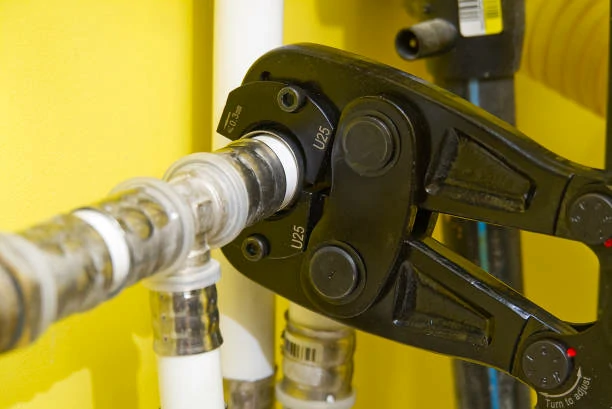
The Five Checks Before You Approve a PEX Fitting Line
Each is a document check that takes a minute, and each wrong answer costs a failed inspection or a returned container. Run them against the quotation.
- Standard and edition on the paperwork. A fitting quoted as “F1807” with no edition is a claim rather than a citation. Check it against the current set: F1807-26a, F2159-23a, F2098-26, F1960-26, F2080-23, F2735-23, ASSE/ANSI 1061-2025, CSA B137.5:26.
- The tubing print line names that same standard. Read the pipe you intend to run, not the pipe in the brochure. The designations repeat every 1.5 m (5 ft).
- NSF 61 listing, held separately. IPC 605.5 requires it on top of the family standard, so ask for the listing number rather than a general statement about lead-free brass.
- Size scope against the standard’s own scope clause. Ask for the size range each line is listed to. A plastic crimp body quoted at 1 1/4 in falls outside F2159-23a and F2735-23; a 2 1/2 in expansion body is inside F1960-26 and outside F2080-23.
- No line item quoted against a withdrawn standard. F2434 has been withdrawn since 3 December 2025 and still appears on code lists and in old catalogues.
- What governs the commercial terms. MOQ and lead time on fittings are set per project against your size and material mix rather than published as one number, so ask for them against your actual bill of materials, and ask for the third-party test report and a pre-shipment inspection window in the same email.
Conclusion
Group PEX fittings by the standard that lists them and the sourcing decision resolves itself: buy crimp and clamp bodies against a standard number so several makers can fill one line, and accept single-supplier lock-in only where press or proprietary expansion earns it. The answer flips when the tubing print line names one family and one only, because the pipe has already made the choice for you.
Read the print line on the pipe you intend to run, then check the edition on the quotation against the current one. Those two settle most of what an inspector will ask.
Frequently Asked Questions
What happens if you use PEX-A tubing with PEX-B fittings?
Mechanically the joint usually makes up, because F1807 insert bodies are dimensioned to SDR9 tubing regardless of crosslinking route. The listing question is separate: IPC 2024 section 605.16.2 makes the tubing’s factory marking the authority, so check that the print line names F1807.
What are the names of the different types of PEX pipe fittings?
By listing route there are five: cold expansion (F1960-26, F2080-23), copper crimp ring on an insert body (F1807-26a, F2159-23a, F2735-23), stainless steel clamp (F2098-26), push-fit (ASSE/ANSI 1061-2025), and threaded or transition adapters.
Can crimp and cold-expansion fittings be used on the same PEX system?
Yes, where the tubing’s print line names both fitting standards. The code does not restrict a system to one family; it requires the tubing to be factory marked with the standards its own manufacturer specifies, and that marking is the permission.
Is ASTM F2434 still a valid standard for PEX-AL-PEX fittings?
No. ASTM withdrew F2434 with no replacement on 3 December 2025, and F2434-19 was the last edition. Some adopted plumbing codes still name it because they were published earlier, so ask which standard a quotation actually means.
Do PEX fittings need NSF 61 certification as well as an ASTM standard?
Yes for water supply systems. Section 605.5 of the 2024 IPC requires pipe fittings to comply with the applicable standard listed in Table 605.5 and to comply with NSF 61 as well, so ask for the listing number.
Are press-sleeve PEX fittings code approved?
They are approved as systems rather than through the fitting list. ASTM F3347-23 and F3348-26 are Active but absent from that list, so press is typically listed against ASTM F877-26 or CSA B137.5:26 performance. Confirm with your AHJ.









 English
  Français
  Русский
  Español
Recent Comments