
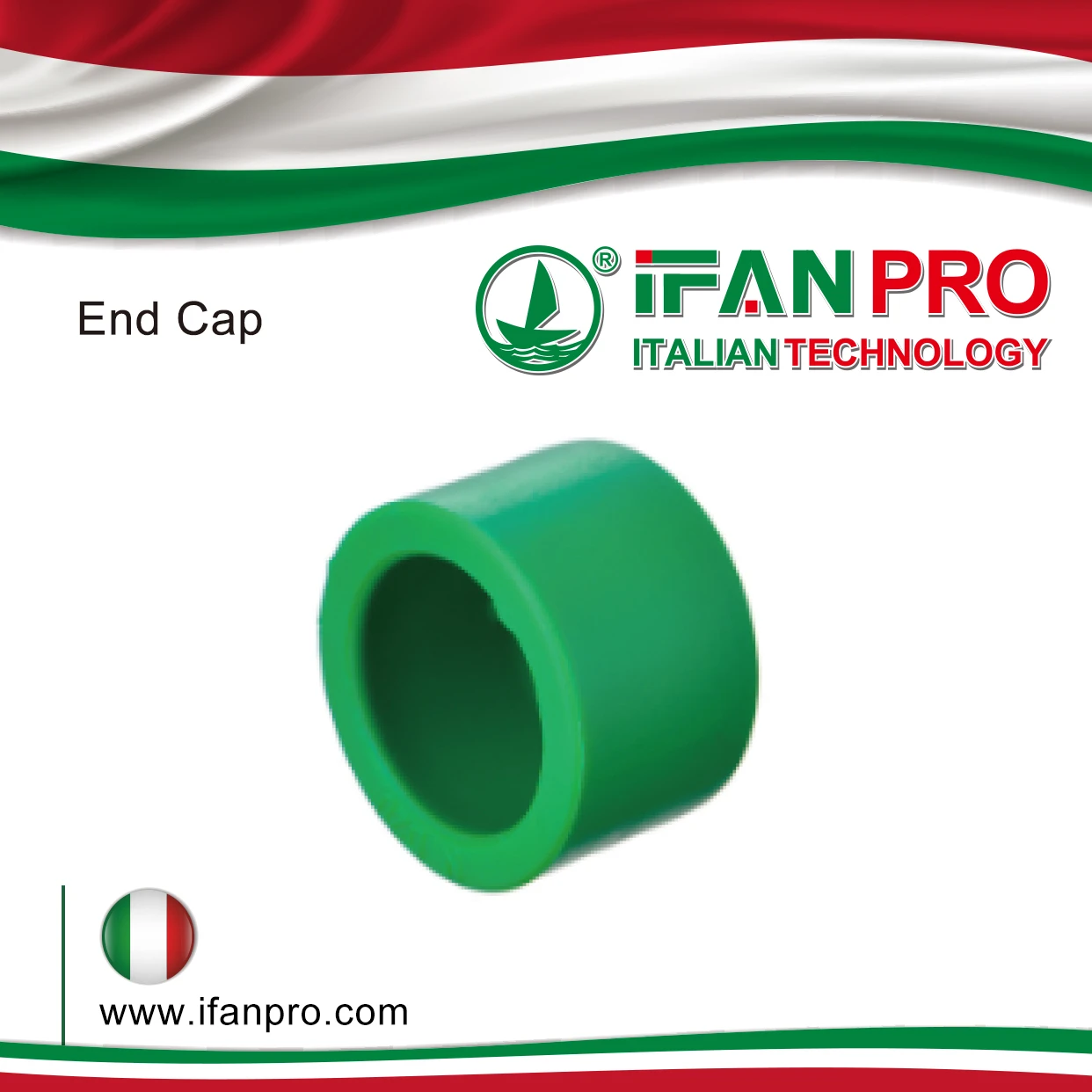
I once saw a major plumbing test fail because of a single, poorly made end cap that burst under pressure. That small, inexpensive part halted an entire project, teaching me that every component matters.
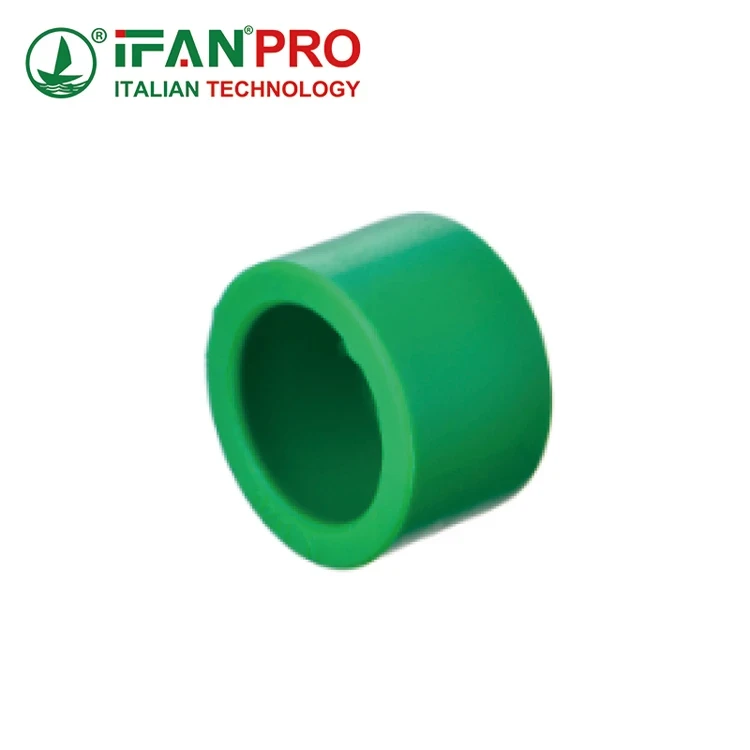
PPR end caps are essential fittings used to permanently seal the end of a PPR pipe, ensuring system integrity, preventing leaks, and protecting internal threads. Selecting the right cap requires understanding key material specs, pressure ratings, and proper installation techniques to create a reliable, long-term seal.
While they seem simple, choosing and installing the correct PPR end cap is critical for a leak-proof system. Let’s explore everything you need to know.
What are the key material specifications for durable PPR end caps?
A client complained about end caps cracking within a year. The problem wasn’t the design, but the inferior material used.
The key material specifications for durable PPR end caps are the Pressure Nominal (PN) rating, the Standard Dimension Ratio (SDR), the PPR raw material grade (like Type 3, Class 2), and relevant certifications (like NSF/ANSI 61). These specs ensure the cap can withstand system pressure, resist thermal stress, and maintain safety for drinking water.
Breaking Down the Specifications
To choose a durable end cap, you must look beyond just the diameter. The material specifications tell you about its strength, compatibility, and safety.
First, the Pressure Nominal (PN) rating is the most critical spec. It indicates the maximum continuous operating pressure in bars at 20°C water. Common ratings are PN 10, PN 16, PN 20, and PN 25. For example, a PN 20 end cap is designed for systems with a working pressure of 20 bar. Always match the PN rating of your end caps to the PN rating of your pipes and the designed pressure of your system. Using a PN 10 cap on a PN 20 pipe line is a guaranteed point of failure.
Second, the Standard Dimension Ratio (SDR). This number relates the pipe’s outside diameter to its wall thickness. A lower SDR means a thicker wall. For example, SDR 6 is thicker and stronger than SDR 11 for the same diameter. End caps must be compatible with the SDR series of your pipe to ensure a perfect fit and weld. Mismatched SDR can lead to weak fusion joints.
Material Grade and Additives
Third, the PPR material grade. High-quality end caps are made from PPR Type 3, Random Copolymer Polypropylene. This material offers excellent resistance to heat and pressure. Look for Class 2 or Class 3 classification (according to ISO 15874), which defines the minimum required strength (MRS). Reputable manufacturers, like IFAN, use 100% virgin PPR raw materials, not recycled plastic. Recycled material makes the cap brittle and prone to sudden failure.
Fourth, check for certifications. For drinking water systems, the cap must have NSF/ANSI 61 or similar regional certification (like WRAS, KIWA). This proves the material does not contaminate the water. For heating systems, check for temperature and pressure cycle test certifications.
Key Specification Table
Here is a table summarizing what to look for:
| Specification | What It Means | Why It Matters |
|---|---|---|
| PN Rating (e.g., PN20) | Maximum working pressure at 20°C. | Ensures the cap won’t burst under normal system pressure. |
| SDR (e.g., SDR7.4) | Ratio of diameter to wall thickness. | Ensures dimensional compatibility and joint strength with the pipe. |
| Material (PPR Type 3) | High-temperature, pressure-resistant plastic. | Provides long-term durability and thermal stability. |
| Certifications (NSF/ANSI 61) | Independent safety and performance approval. | Guarantees the cap is safe for potable water and meets quality standards. |
Ignoring these specs often leads to the main client pain point: premature failure. A cap that cracks or deforms can cause catastrophic leaks inside walls or ceilings. Always insist on documented material specifications from your supplier.
How do you select the correct pressure rating and size for PPR end caps?
Selecting the wrong size or pressure rating is the fastest way to cause a system leak. I’ve fixed many leaks that started with this basic error.
To select the correct PPR end cap, first match the pipe’s outer diameter (e.g., 20mm, 25mm) and SDR series exactly. Then, choose a pressure rating (PN value) that meets or exceeds the system’s maximum operating pressure and temperature. Always consider the highest stress point in the system, not just the average pressure.
A Step-by-Step Selection Process
Choosing the right cap is a simple but precise process. Follow these steps to avoid mistakes.
Step 1: Identify the Pipe Size. This is not just the nominal diameter. You must measure or know the exact outer diameter (OD) of the PPR pipe. Common metric ODs are 20mm, 25mm, 32mm, 40mm, 50mm, 63mm, etc. An end cap for a 20mm pipe will not fit a 25mm pipe. Using a caliper to measure the OD is the most reliable method.
Step 2: Confirm the SDR Series. As discussed, the SDR (like SDR 6, SDR 7.4, SDR 11) must match. A pipe and cap from different SDR series will have different wall thicknesses at the joint. This creates an uneven heating profile during fusion, resulting in a weak, unreliable connection that is prone to leaks.
Step 3: Determine the Required Pressure Rating (PN). This is where system design matters. You must know:
- The maximum operating pressure of your system (e.g., from pump specs).
- The maximum operating temperature. PPR strength decreases as temperature rises. A system with constant 70°C hot water needs a higher safety margin than a cold water line.
As a rule of thumb, the cap’s PN rating should equal or be greater than the system’s designed PN. For residential hot and cold systems, PN 20 is a common and safe choice.
Accounting for System Stress
Step 4: Consider Special Conditions. Is the cap at the end of a long, vertical riser where static pressure is higher? Is it on a line that might experience water hammer (pressure surges)? For these high-stress points, selecting a cap with a higher PN rating (like PN 25 instead of PN 20) provides an extra safety buffer. It is a low-cost way to prevent a major failure.
Selection Guide Table
Use this table as a quick reference guide:
| System Type | Typical Pipe Size (OD) | Recommended SDR | Recommended Minimum PN Rating | Notes |
|---|---|---|---|---|
| Residential Cold Water | 20mm, 25mm | SDR 6 or SDR 7.4 | PN 16 | Standard pressure is sufficient. |
| Residential Hot & Cold | 20mm, 25mm, 32mm | SDR 6 or SDR 7.4 | PN 20 | Handles heat and pressure in combi-boiler systems. |
| Apartment Building Risers | 32mm, 40mm, 50mm | SDR 6 | PN 20 or PN 25 | Higher static pressure from building height. |
| Industrial/Central Heating | 40mm+ | SDR 6 | PN 25 | For high-temperature, high-pressure applications. |
The main pain point here is assumption. Never assume size or pressure. Always verify. A professional supplier like IFAN provides clearly labeled products with all this information stamped or printed on the cap itself, making selection foolproof.
What are the step-by-step methods for installing PPR end caps securely?
A perfect end cap can fail if installed poorly. I train installers that 90% of a fitting’s reliability comes from the installation technique.
To install a PPR end cap securely, first cut the pipe square and clean it. Set the fusion welder to the correct temperature (typically 260°C ± 5°C). Simultaneously heat the pipe end and the cap socket for the specified time, then quickly join them together without twisting. Hold them firmly in place for the full cooling time to create a perfect, monolithic seal.
Pre-Installation Preparation
Proper preparation is non-negotiable. Skipping steps here is the main cause of installation failures.
Step 1: Cut the Pipe. Use a dedicated PPR pipe cutter. This ensures a perfectly square (90-degree) cut. A crooked cut means only part of the pipe end will fuse with the cap, creating a weak, uneven joint that will likely leak under stress. Do not use a saw, as it leaves burrs and an uneven surface.
Step 2: Deburr and Clean. After cutting, use a deburring tool to remove the internal and external plastic ridges or burrs. Then, wipe both the pipe end and the inside of the end cap socket with a clean, dry cloth. Any dirt, dust, grease, or water will contaminate the fusion zone, severely weakening the bond.
Step 3: Mark the Depth. Insert the pipe into the cold end cap to see how deep it goes. Use a marker to draw a line on the pipe showing the full insertion depth. This line is your visual guide during the hot fusion process to ensure you’ve pushed the pipe in far enough.
The Fusion Welding Process
Now, proceed to the critical heating and joining phase.
Step 4: Set Up the Welder. Ensure your socket fusion welding machine is clean and the heating plate attachments are the right size for your pipe and cap. Set the temperature to 260°C (the standard for PPR). Let it fully heat up.
Step 5: Heat the Components. Push the pipe end and the end cap socket onto the hot welding attachments at the same time. Apply gentle, straight pressure. Do not twist them. The heating time depends on the pipe diameter. Refer to the manufacturer’s chart. For example:
- 20mm pipe: 5 seconds heating time
- 25mm pipe: 7 seconds heating time
- 32mm pipe: 8 seconds heating time
Overheating burns the material, making it brittle. Underheating fails to create a proper melt.
Step 6: Join and Hold. After the heating time, quickly remove both parts from the welder and immediately push the pipe into the cap socket in one smooth, straight motion up to the depth mark. Do not twist. Hold them together firmly and immovably for the specified cooling time (usually equal to the heating time plus a few seconds). This cooling period is when the molecular bond forms. Moving or stressing the joint during this time will ruin it.
Common Installation Errors Table
Avoid these common mistakes:
| Error | Consequence | How to Prevent |
|---|---|---|
| Crooked Pipe Cut | Uneven melt, weak joint on one side. | Always use a proper pipe cutter. |
| Dirty Components | Contaminated fusion zone, poor bond. | Always clean with a dry cloth before heating. |
| Incorrect Temperature | Burned or under-melted material. | Use a calibrated welder set to 260°C. |
| Twisting During Joining | Disturbs the molten layer, creates gaps. | Push straight in, never twist. |
| Insufficient Cooling Time | Joint is stressed before bond sets. | Hold firmly for the full recommended time. |
Following these steps meticulously eliminates the pain point of post-installation leaks. A properly fused PPR end cap becomes the strongest part of the pipeline.
How do PPR end caps enhance system integrity and prevent leaks?
A plumbing system is only as strong as its terminal points. Well-chosen and installed end caps are the final, crucial step in sealing the system’s integrity.
PPR end caps enhance system integrity by providing a permanent, monolithic seal that is immune to corrosion and scaling. They prevent leaks by eliminating the weak point of an open pipe end, protect internal threads from damage during construction, and allow for safe system pressure testing and compartmentalization during maintenance or future extensions.
Creating a Permanent Barrier
The primary role of an end cap is to be a perfect, permanent barrier. Unlike temporary plugs, a fused PPR end cap is designed to last as long as the pipe itself.
Once fused, the cap and pipe become one piece of material. This joint has no gaskets, O-rings, or threads that can wear out, dry out, or loosen over time. It is a homogeneous seal. Because it’s made from the same corrosion-resistant PPR material, it shares the same immunity to rust, electrolysis, and chemical attack that makes PPR pipes so durable. This is a stark contrast to using a metal threaded cap on a plastic pipe, which creates a point of differential corrosion and potential stress.
Preventing Common Leak Paths
End caps directly address specific leak risks in a plumbing system.
First, they seal off the system from the environment. An open pipe end is an invitation for dirt, debris, insects, or even small animals to enter, potentially causing blockages or contamination. During pressure testing, an open end is obviously a leak. The cap provides the final closure.
Second, they protect valuable internal threads. Many PPR fittings, like elbows or tees, have female threads (e.g., for connecting to a valve or a radiator). During construction, plaster, dust, or paint can easily get into these threads, damaging them and making future connections difficult or leaky. Screwing a protective plastic end cap (a different, non-fused type) or permanently fusing a solid end cap onto an unused branch seals these threads from damage. This is a simple but highly effective practice for maintaining future serviceability.
Enabling System Management and Safety
End caps play a key role in system testing, maintenance, and design.
For Pressure Testing: Before a system is put into use, it must be pressure tested. End caps are used to seal all terminal points. Their reliability ensures the test accurately checks for leaks in the joints and pipes, not at the temporary closures.
For System Compartmentalization: In larger systems, end caps can be used to blank off future extension points or to isolate sections of the system for maintenance. For example, if one wing of a building’s plumbing needs repair, a valve can be closed and an end cap can be fused further down the line to absolutely ensure no water enters the work zone. This enhances safety for maintenance personnel.
Leak Prevention Mechanisms Summary
The following table summarizes how end caps combat different leak risks:
| Leak Risk | How an End Cap Prevents It | Result |
|---|---|---|
| Open Pipe End | Provides a permanent fused seal. | Eliminates the leak path entirely. |
| Thread Corrosion/Damage | Seals and protects unused threaded ports. | Preserves threads for future leak-free connections. |
| Pressure Surges (Water Hammer) | A properly rated, fused cap withstands surge pressure. | Prevents blow-offs at pipe terminals. |
| Material Degradation | Made from same corrosion-proof PPR as pipe. | No galvanic or chemical corrosion at the terminal point. |
By addressing these points, a simple end cap moves from being just a “stopper” to a critical component for long-term system reliability, addressing the core client pain point of unexpected leaks and costly repairs.
Conclusion
Choosing and installing the right PPR end cap is a small detail with a huge impact on system safety and longevity. For guaranteed quality and reliability, specify IFAN‘s PPR end caps for your next project.







 English
  Français
  Русский
  Español
Recent Comments