
A few years ago, a client called me in a panic. A cheap valve had failed, flooding their new building before occupancy. That call taught me why valve selection matters more than most realize.
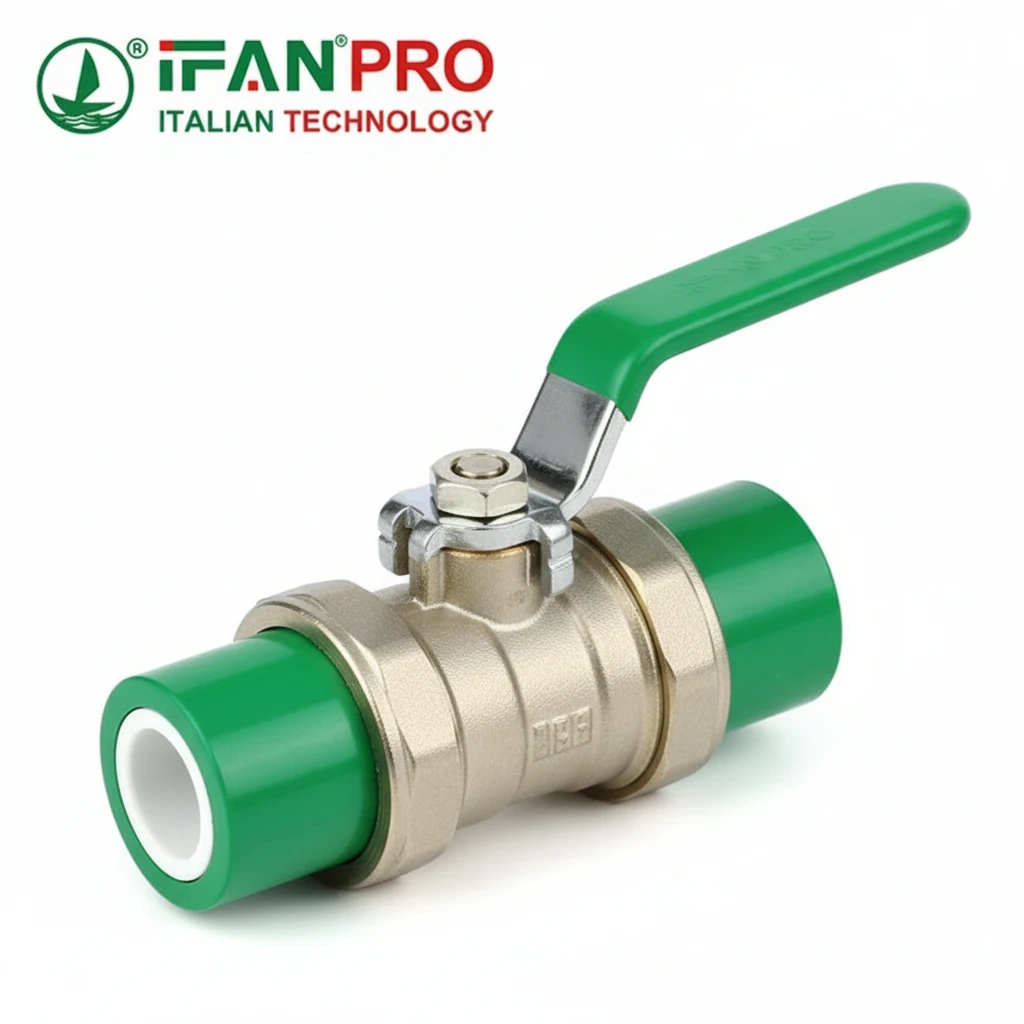
The IFANPRO 88067 PPR brass valve delivers exceptional reliability through precision-engineered design, high-quality materials, and rigorous manufacturing standards. Procurement teams specifically request this model because it eliminates common failure points, ensures leak-free performance, and provides long-term durability that protects their projects from costly callbacks and repairs.
Let’s examine what makes this valve stand out and why it has become a preferred choice for demanding applications.
What Are the Key Design Features of the IFANPRO 88067 Brass Valve?
I’ve opened up dozens of failed valves to find the root cause. The 88067’s design directly addresses every failure point I’ve seen.
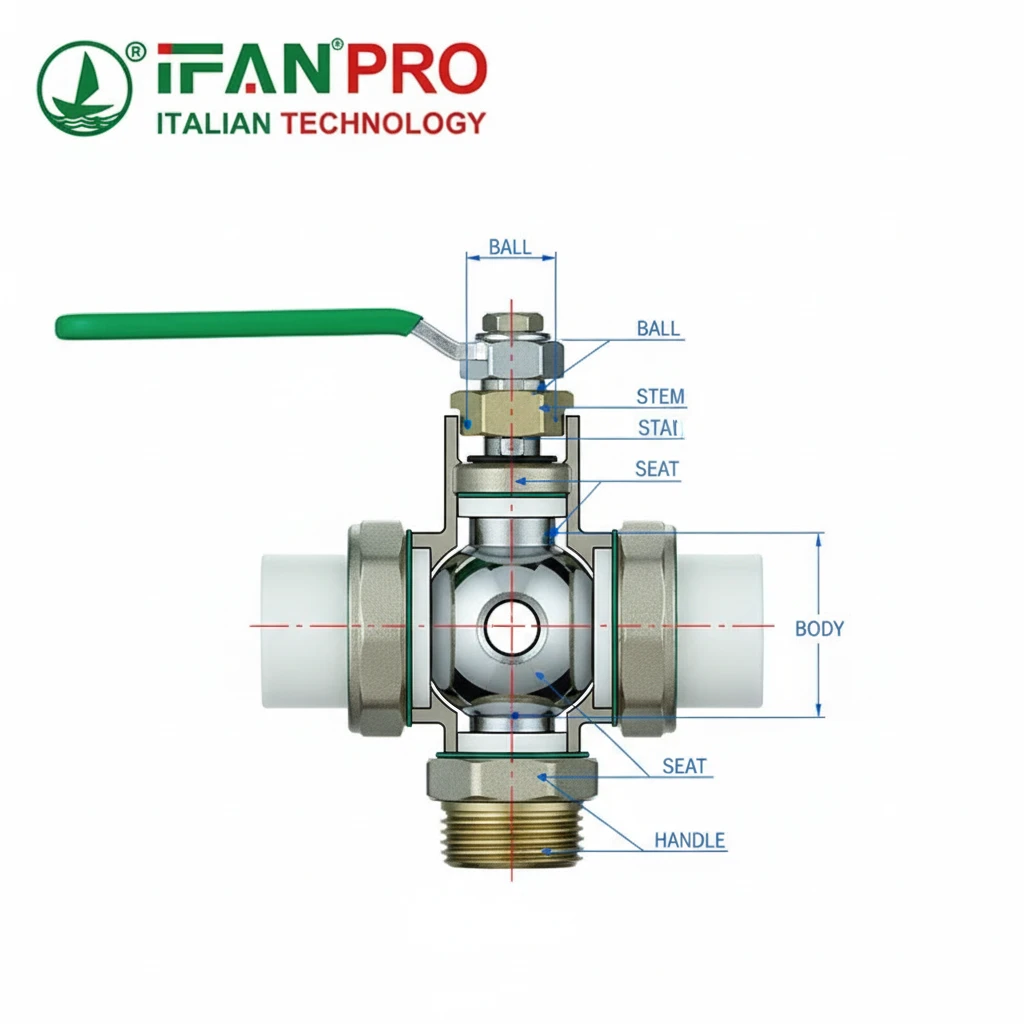
The IFANPRO 88067 features a full-port design for minimal pressure drop, a robust brass body with precision-machined threads, and a high-quality PPS (Polyphenylene Sulfide) handle and stem mechanism. It integrates seamlessly with PPR piping systems through specially designed fusion sockets, creating a permanent, leak-proof connection between the brass valve and the plastic pipe.
Examining the Core Components
The 88067’s design excellence starts with its fundamental architecture. Each component serves a specific purpose and works together to create a reliable system.
The Brass Body: The valve body uses high-quality CW617N brass, a European standard alloy known for its excellent hot forging properties. This material contains no lead and resists dezincification, a common problem where zinc leaches out of lower-quality brass, leaving a weak, porous structure. The body undergoes hot forging rather than casting, which eliminates internal porosity and creates a denser, stronger component.
The Full-Port Design: Many valves reduce internal diameter, restricting flow and creating pressure drops. The 88067 maintains a full port, meaning the internal diameter matches the pipe size. This design choice ensures:
- Maximum flow rates without restriction
- Reduced turbulence and noise
- Lower pressure loss across the valve
- Better system efficiency
The PPS Handle and Stem: Polyphenylene Sulfide is a high-performance engineering plastic. Unlike cheaper alternatives, PPS offers:
- Excellent heat resistance up to 200°C
- Superior dimensional stability
- Chemical resistance to common water treatments
- Long-term strength without creep or deformation
The table below compares the 88067’s features against standard market alternatives:
| Feature | IFANPRO 88067 | Typical Budget Valve |
|---|---|---|
| Body Material | CW617N forged brass | Unknown alloy, cast brass |
| Port Design | Full-port, no restriction | Reduced port, 20-30% flow loss |
| Handle Material | High-temperature PPS | Standard ABS plastic |
| PPR Connection | Integrated fusion socket | Threaded adapter required |
| Stem Design | Double O-ring sealing | Single O-ring or packing gland |
Integration with PPR Systems
A unique strength of the 88067 is its integration with PPR piping. The valve includes factory-molded PPR sockets on both ends. This design allows installers to fuse the valve directly to PPR pipes using standard socket fusion equipment. The result is a homogeneous connection between the brass valve and the plastic pipe, eliminating potential leak paths at threaded adapters.
How Does the 88067 Model Ensure Leak-Free Performance in Plumbing Systems?
Leaks are the enemy. I’ve traced countless leaks back to a single point of failure in valve design.
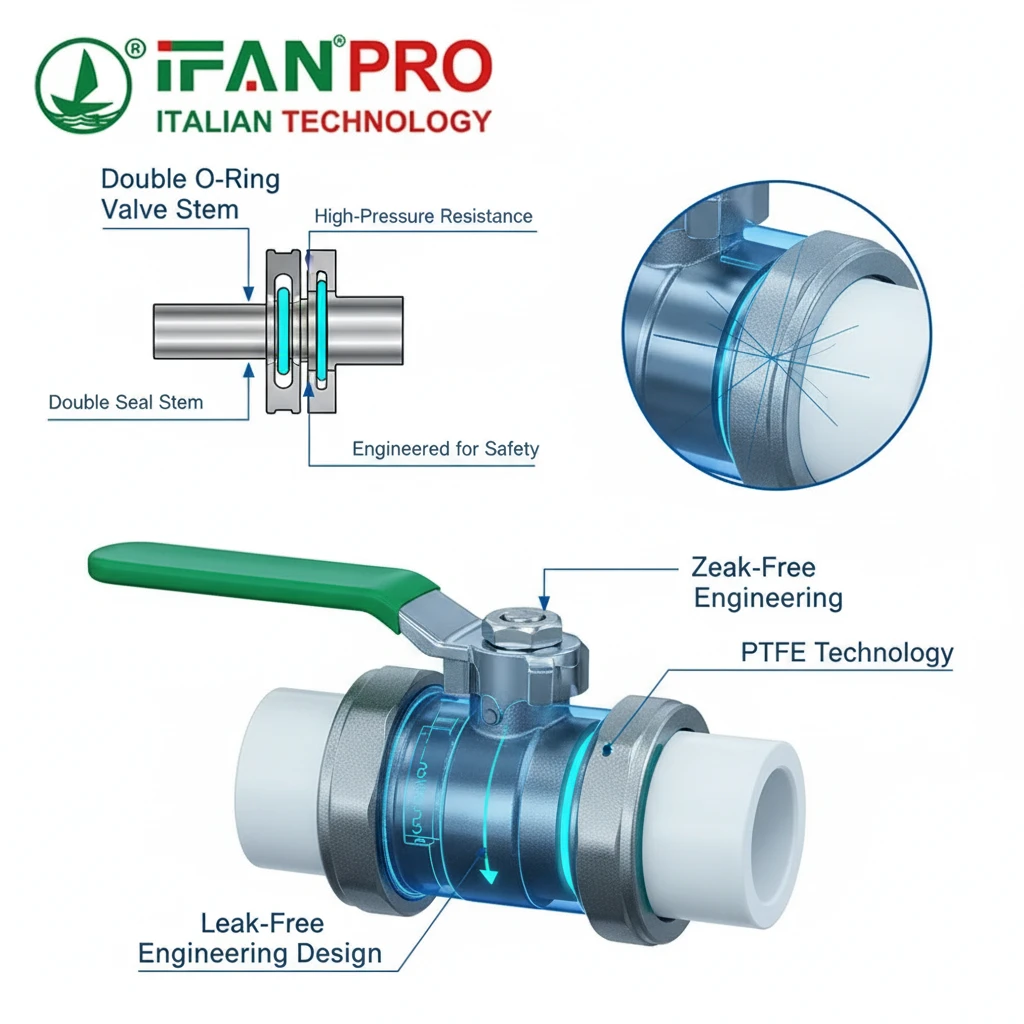
The 88067 ensures leak-free performance through multiple engineering strategies: a precision-machined ball with mirror finish, high-density PTFE seats that provide consistent sealing pressure, double O-ring stem seals with EPDM material, and the integrated PPR fusion sockets that eliminate threaded connections. Together, these features create a valve that seals reliably even after hundreds of operating cycles.
The Sealing System Explained
A valve is only as good as its seals. The 88067 employs a comprehensive sealing strategy at every potential leak point.
The Ball and Seat Interface: The chrome-plated brass ball has a mirror finish achieved through precision machining and polishing. This smooth surface mates with machined PTFE (Teflon) seats. PTFE offers several advantages:
- Extremely low friction for smooth operation
- Excellent chemical resistance
- Wide temperature tolerance
- Self-lubricating properties that prevent sticking
When you close the valve, the PTFE seats compress against the ball, creating a bubble-tight seal. The seat design includes a slight interference fit, meaning the seats apply constant pressure to the ball even when the valve is open, preventing any bypass.
The Stem Sealing System: The stem connects the handle to the ball and must rotate while preventing water from escaping. The 88067 uses a double O-ring system on the stem. Two EPDM O-rings sit in precision grooves on the stem. The primary O-ring handles the main sealing duty. The secondary O-ring acts as a backup and provides additional protection. This redundancy means that even if the primary seal wears over decades of use, the secondary seal maintains integrity.
The Body Seal: The valve body consists of two forged brass components joined together. Rather than relying on threads or simple press-fits, the 88067 uses a sophisticated joining method with a captured O-ring seal. The two body halves are mechanically compressed during assembly, squeezing the O-ring into a controlled gap. This creates a permanent, leak-proof body seal that cannot loosen over time.
Testing Protocols for Leak Prevention
Every 88067 valve undergoes rigorous testing before leaving the factory. The testing protocol includes:
| Test Type | Method | Acceptance Criteria |
|---|---|---|
| Shell Test | Valve pressurized with air at 1.5x working pressure | No bubbles detectable in water immersion |
| Seat Test | Valve closed, pressure applied to one side | Zero detectable leakage past the ball |
| Operational Cycle Test | 1000 open-close cycles under pressure | Maintains seal integrity throughout |
| Torque Test | Operating torque measured | Consistent, smooth operation verified |
The Importance of the PPR Fusion Connection
The 88067’s integrated PPR sockets deserve special attention. Traditional brass valves require threaded adapters to connect to PPR pipes. Each threaded connection represents a potential leak point. Threads can loosen over time due to thermal cycling. Thread seal tape or paste can degrade or fail.
By integrating PPR sockets directly onto the valve body, the 88067 eliminates this risk entirely. The fusion joint creates a monolithic connection. The brass valve body and the PPR pipe become one continuous system with no mechanical joint to fail. This single design choice eliminates the most common source of valve-related leaks in PPR systems.
What Materials and Manufacturing Standards Validate Its Long-Term Reliability?
Material quality determines longevity. I’ve seen valves fail simply because someone chose the cheapest brass alloy.
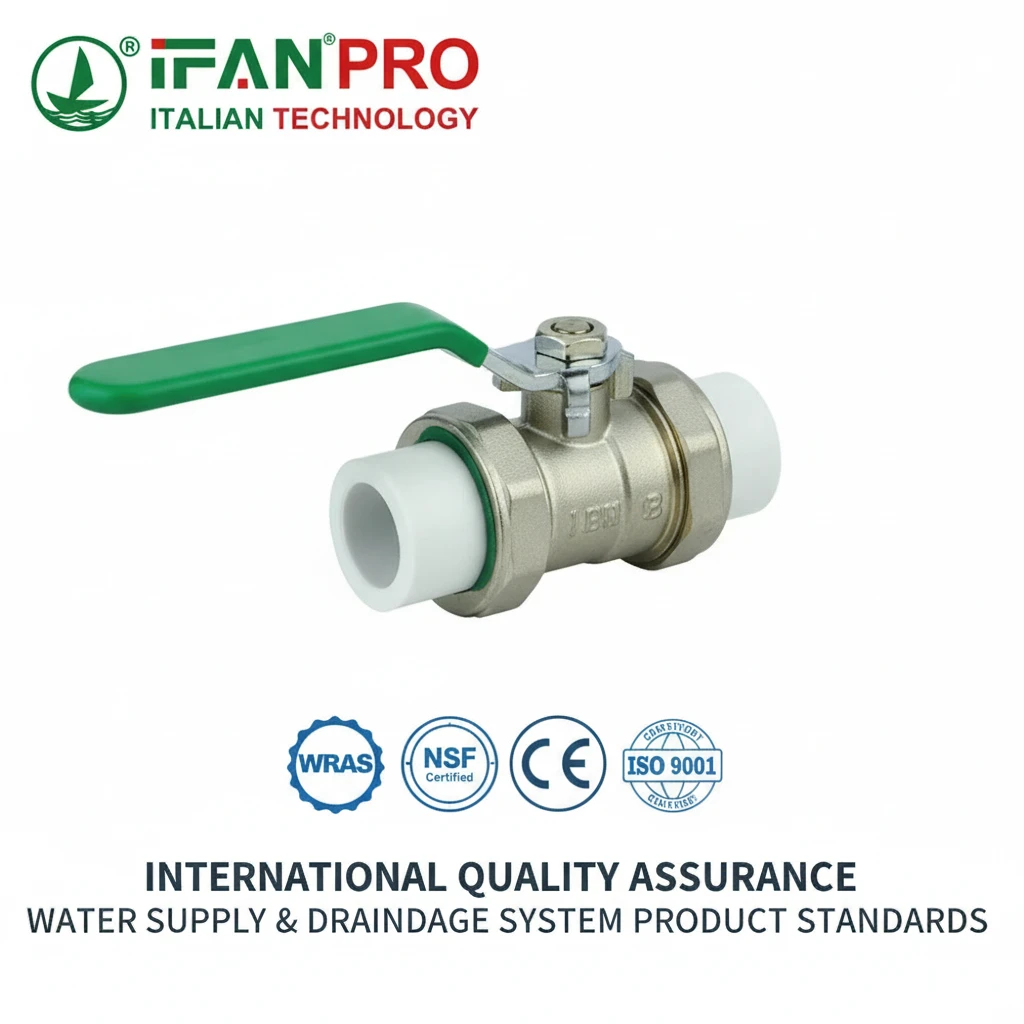
The 88067’s long-term reliability is validated through its use of certified materials and adherence to international manufacturing standards. The CW617N brass body meets EN 12165 standards for forged brass fittings. The EPDM seals comply with W270 and KTW regulations for drinking water contact. The complete valve carries ISO 9001 certification for manufacturing quality and undergoes third-party testing to verify compliance with relevant product standards.
Material Specifications and Their Importance
Understanding material specifications helps explain why the 88067 performs reliably over decades.
CW617N Forged Brass: This is not ordinary brass. CW617N is a lead-free brass alloy specifically formulated for hot forging. Its composition includes:
- Copper: 57-59%
- Lead: < 0.1% (meets strict drinking water requirements)
- Other elements carefully balanced for forgeability
Hot forging, rather than casting, produces a denser material with no internal voids. When you look at a cross-section of a forged valve body, the grain structure flows around corners and features, following the shape of the part. This grain flow follows the same principle as forged steel components in critical automotive and aerospace applications. It creates a stronger part that resists stress cracking and pressure fatigue.
EPDM Seal Material: The rubber seals use EPDM (Ethylene Propylene Diene Monomer) compounds specifically formulated for potable water contact. These compounds meet:
- KTW Guidelines: German federal health office standards for drinking water materials
- W270: Testing for microbiological growth promotion
- WRAS Approval: UK water regulations advisory scheme compliance
- NSF/ANSI 61: US standard for drinking water system components
The specific EPDM formulation resists ozone, UV exposure, and temperature extremes. It maintains its elasticity for decades without hardening or cracking.
PPS Handle Material: The handle uses glass-fiber reinforced PPS. This engineering thermoplastic offers:
- Continuous service temperature up to 200°C
- Excellent creep resistance under load
- Dimensional stability across temperature swings
- Chemical resistance to cleaning agents and water treatments
Manufacturing Standards and Quality Control
The 88067 manufacturing process follows strict quality protocols at every stage.
| Production Stage | Quality Control Measure | Standard Applied |
|---|---|---|
| Raw Material | Spectrometer analysis of each batch | EN 12165 chemical composition |
| Forging | Dimensional inspection, visual defect check | ISO 9001 process control |
| Machining | CMM verification of critical dimensions | ±0.1mm tolerance on sealing surfaces |
| Assembly | Torque monitoring, seal compression check | Manufacturer specifications |
| Final Testing | 100% pressure testing | 1.5x working pressure minimum |
Certifications and Third-Party Validation
The 88067 carries multiple certifications that verify its quality and safety:
- ISO 9001: Certifies the manufacturing quality management system
- CE Marking: Indicates compliance with European health, safety, and environmental standards
- WRAS Approval: Confirms suitability for UK drinking water systems
- NSF/ANSI 61: Validates safety for US potable water contact
- EN 12165: Certifies material compliance for forged brass fittings
These certifications come from independent testing bodies, not self-declaration. They provide procurement teams with confidence that the valve meets recognized international standards.
Why Do Procurement Teams Specifically Request the 88067 for Critical Projects?
Procurement professionals don’t specify products without reason. I’ve talked with dozens who insist on the 88067.
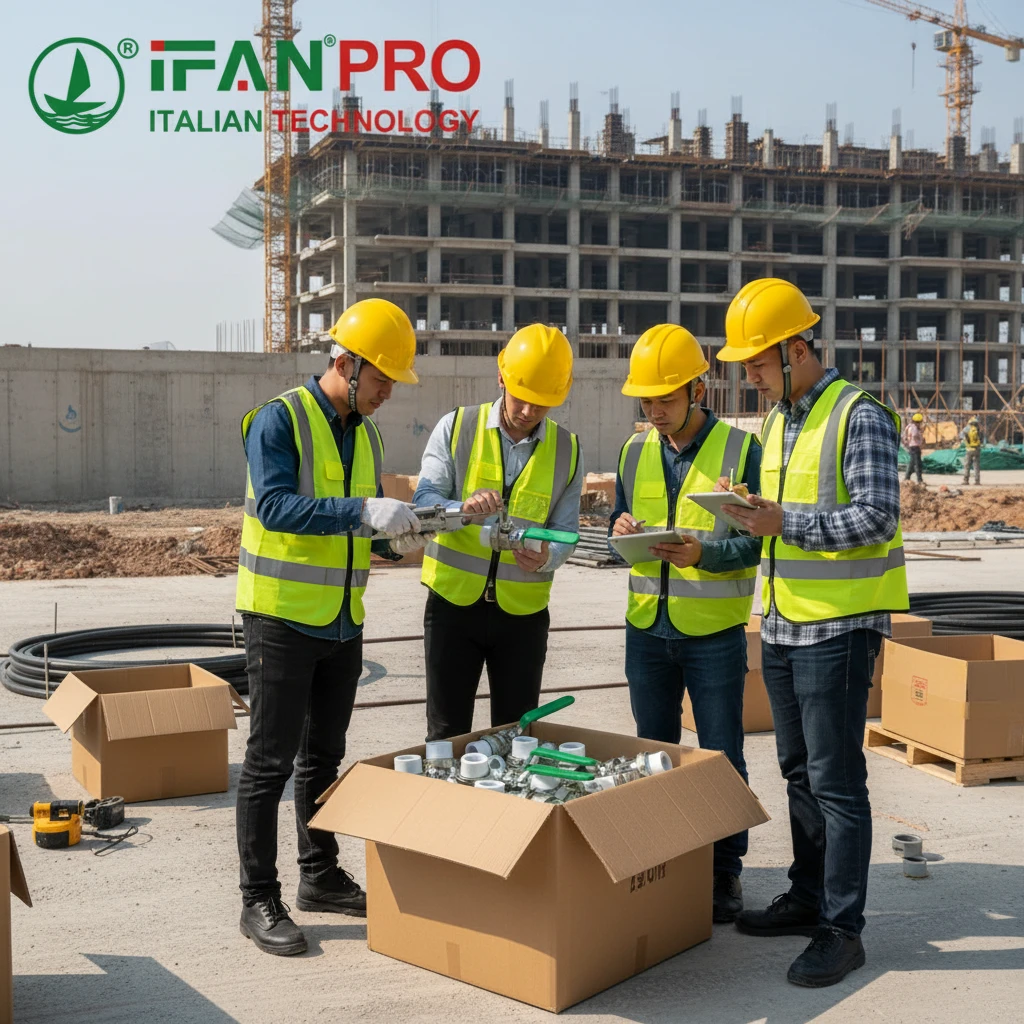
Procurement teams specifically request the 88067 because it eliminates the variables that cause project failures. They value its proven track record in demanding applications, the comprehensive certification package that simplifies regulatory approval, the engineering support IFAN provides, and the supply chain reliability that ensures consistent product availability. For critical projects, the 88067 represents risk reduction they cannot achieve with generic alternatives.
Risk Reduction as the Primary Driver
When procurement teams select components for critical projects, their primary concern is avoiding failure. A valve failure in a hospital, school, or commercial building can cause:
- Property damage from water leakage
- Business interruption costs
- Reputation damage to builders and designers
- Legal liability and warranty claims
The 88067 addresses these risks through its design and track record. Procurement professionals know they can install this valve and move on to other concerns. They don’t worry about callbacks or failures.
The Value of Engineering Support
IFAN provides procurement teams with technical resources that generic suppliers cannot match. When a project engineer has questions about pressure ratings, temperature limits, or installation methods, IFAN’s engineering team provides answers. This support includes:
- Detailed technical data sheets with performance curves
- Installation instructions with clear diagrams
- Material certifications and test reports
- On-site training for installation crews when needed
For procurement teams, this support means they can specify the valve with confidence. If questions arise during design or construction, they have a knowledgeable partner to provide answers.
Supply Chain Reliability
Critical projects cannot wait for backordered components. IFAN maintains inventory levels that ensure consistent availability of the 88067. The supply chain includes:
| Supply Chain Element | IFAN Approach | Benefit to Procurement |
|---|---|---|
| Inventory Management | Safety stock maintained at regional warehouses | Immediate availability for urgent needs |
| Production Capacity | Multiple production lines with dedicated tooling | Consistent supply even during demand spikes |
| Quality Consistency | Batch traceability throughout production | Confidence that every valve meets specifications |
| Logistics Support | Coordinated shipping with tracking | Reliable delivery dates for project planning |
Comparison with Generic Alternatives
The table below summarizes why procurement teams choose the 88067 over generic imports:
| Factor | IFANPRO 88067 | Generic Import Valve |
|---|---|---|
| Material Certification | Full certification, traceable | Often unknown or self-declared |
| Quality Consistency | Verified by third-party audits | Varies by batch |
| Engineering Support | Dedicated technical team | None available |
| Supply Reliability | Maintained inventory | Uncertain availability |
| Warranty | Comprehensive, backed by IFAN | Limited or non-existent |
Real-World Performance Validation
The 88067 has proven itself in thousands of installations across Russia, Southeast Asia, the Middle East, Africa, Europe, and the Americas. This broad deployment means the design has been validated across diverse conditions:
- Extreme cold in Russian winters
- High temperatures in Middle Eastern water systems
- Variable water quality in developing markets
- Stringent European drinking water standards
Procurement teams value this real-world validation. They know the 88067 has performed reliably in conditions similar to their own projects.
Conclusion
The IFANPRO 88067 PPR brass valve delivers exceptional reliability through thoughtful design, quality materials, and rigorous manufacturing. For your next critical project, specify IFANPRO 88067 and eliminate valve-related risks from your plumbing system.






 English
  Français
  Русский
  Español
Recent Comments